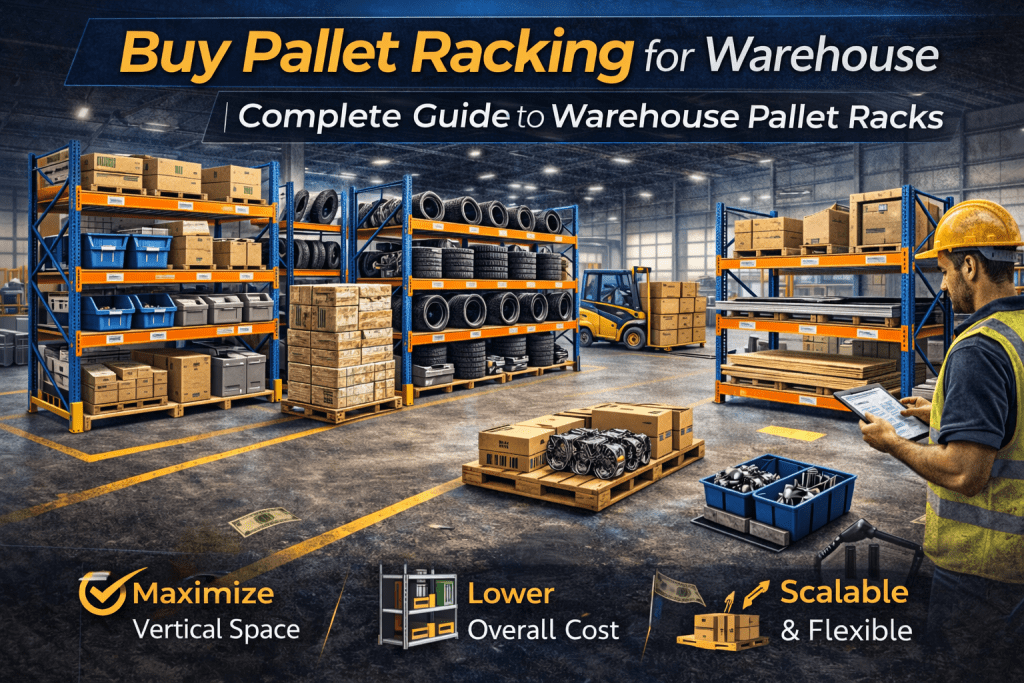
Choosing the right pallet racking system is more than a simple purchase; it’s a strategic investment in your warehouse’s efficiency, safety, and profitability. A well-designed system is the backbone of any modern storage operation, allowing you to maximize vertical space, improve inventory accuracy, and streamline order fulfillment. This guide provides the expert insights you need to select and buy pallet racking for your warehouse with confidence, ensuring your solution supports you today and scales with you tomorrow.
What Is Pallet Racking and Why Buy It for Your Warehouse?
At its core, a pallet racking system is an industrial storage solution designed to hold palletized products in an organized, multi-level configuration. It transforms a building from a simple storage space into a dynamic, high-functioning operational hub. The basic components—uprights, beams, and decking—come together to create a robust infrastructure that forms the core of your logistical power. By utilizing your building’s vertical height, these systems unlock cubic footage you may not have realized you had, directly boosting storage capacity without the need for a costly facility expansion.
This space optimization is a significant advantage. As your business grows, storing more products in the same footprint means you can delay or even avoid the massive expense of moving or expanding. Better storage also leads to tighter inventory control, less product handling time, and faster pick rates, all of which contribute to a healthier bottom line. Investing in the right pallet racking systems for your warehouse is a foundational step toward a more efficient and profitable operation.
Types of Pallet Racking (With Pros and Cons)
When you’re ready to buy pallet racking, the most critical decision is matching the system to your operational needs. Not all racking is created equal, and the right choice depends entirely on your inventory type, daily workflow, and warehouse layout. Here’s a breakdown of the most common warehouse pallet racking solutions.
Selective Pallet Racking
This is the most popular and versatile system. It provides direct access to every pallet, making it ideal for facilities with a high number of different products (SKUs) and a need for frequent, fast retrieval. Its strength is accessibility over density.
Double Deep Pallet Racking
This configuration stores pallets two-deep, increasing storage density compared to selective racking. It requires a deep-reach forklift and is best suited for operations with moderate SKU counts where last-in, first-out (LIFO) inventory management is acceptable.
Push-Back Systems
A high-density solution where pallets are stored on nested carts that slide along inclined rails. When a new pallet is loaded, it pushes the others back. This LIFO system is an excellent choice for bulk goods that are not sensitive to expiration dates.
Pallet Flow Racks
Engineered for first-in, first-out (FIFO) inventory rotation, this system uses gravity-fed rollers. Pallets are loaded from one side and glide down to the picking aisle on the other, ensuring the oldest stock is used first. It’s perfect for date-sensitive products like food and pharmaceuticals.
Cantilever Pallet Racking
Designed for storing long, bulky, or irregularly shaped items like lumber, pipes, or furniture. This system uses strong horizontal arms extending from vertical columns, creating unobstructed storage. Explore our specialized cantilever pallet racking for challenging storage needs.
Use this quick comparison to see which pallet racking type best aligns with your inventory and operational model.
| Racking Type | Best For | Storage Density | Accessibility | Inventory Method |
|---|---|---|---|---|
| Selective | High SKU count, frequent access | Low | High | FIFO |
| Double Deep | Moderate SKU count, higher density | Medium | Medium | LIFO |
| Push Back | High density, limited SKUs | High | Medium | LIFO |
| Pallet Flow | Date-sensitive products, high volume | Very High | Low | FIFO |
| Cantilever | Long, bulky, or irregular items | Varies | High | N/A |
Choosing the right system prevents operational bottlenecks and wasted space. Browse warehouse pallet racking solutions in our catalog to see these systems in detail.
Key Buying Considerations Before You Purchase
A successful pallet racking project is built on careful planning. Before you add a single component to your cart, a thorough assessment of your warehouse and operational needs is essential. This initial planning is the single most important step toward a positive return on your investment.
Load Requirements
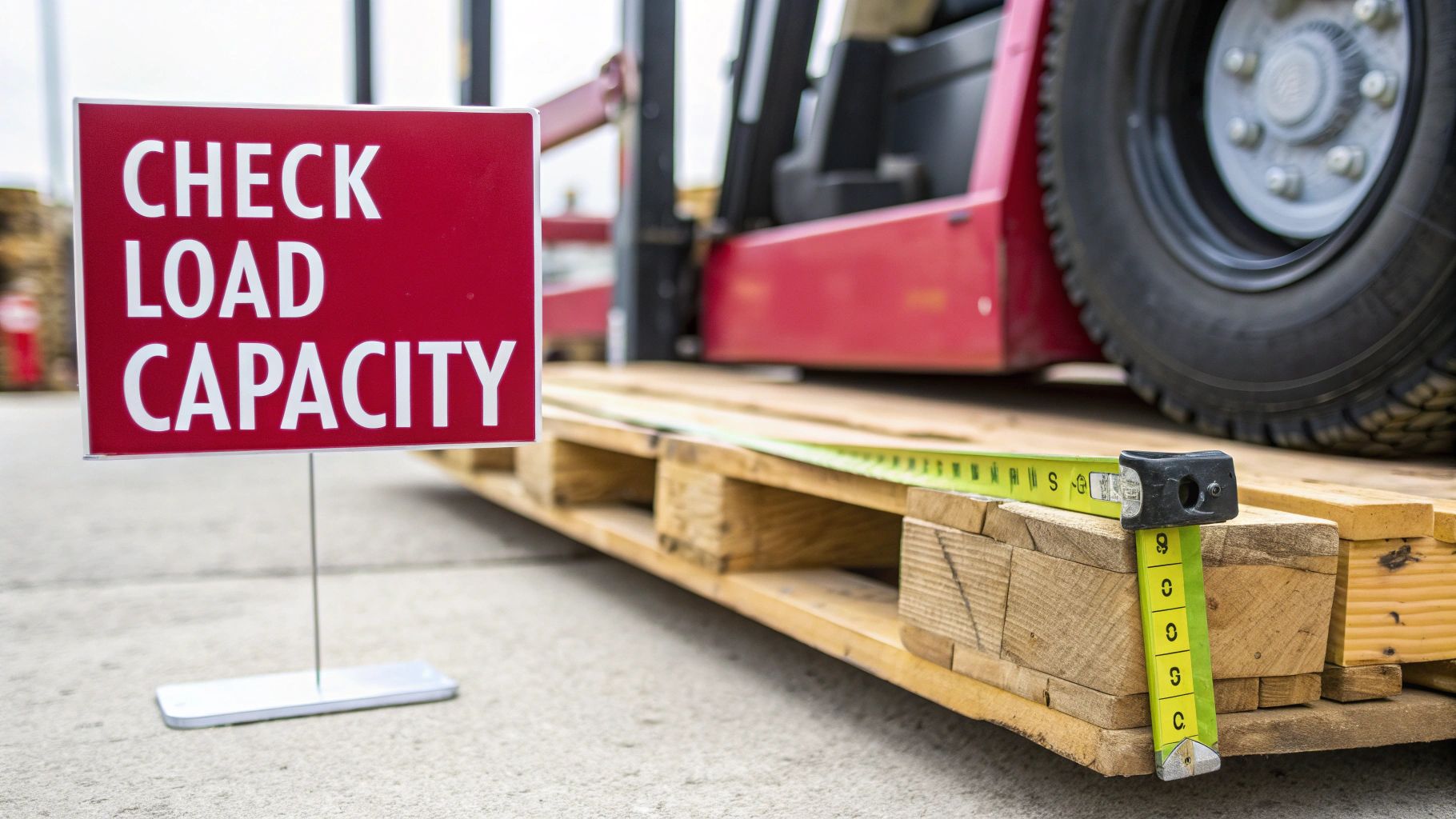
Your first priority is determining your load capacity. Underestimating the weight your beams and uprights must hold is a serious safety risk. Calculate the total weight of a fully loaded pallet, multiply it by the number of pallets per shelf to find your beam capacity, then sum the weight of all beam levels to determine the necessary upright capacity. Always include a safety margin.
Warehouse Layout
The physical layout of your space dictates operational efficiency. Measure your facility carefully, accounting for:
- Aisle Width: Ensure your forklifts have adequate space to turn and maneuver safely.
- Building Obstructions: Identify support columns, fire suppression systems, and low-hanging pipes.
- Ceiling Height: Measure the clear usable height to determine how high you can build your racks while maintaining required clearances.
- Floor Integrity: Confirm your concrete slab can support the concentrated loads from the rack uprights.
Safety & Compliance
Safety should be integrated into your plan from the start. Comply with all relevant OSHA guidelines for material stacking and storage and industry standards. A well-planned layout is about creating a productive and safe ecosystem for your team and equipment.
Adjustability
Choose systems with adjustable beams. This flexibility allows you to adapt your storage configuration as your inventory needs change over time, protecting your investment for the long term.
Accessories
Essential accessories are not optional upgrades; they are fundamental to a safe and efficient system. Plan for:
- Wire Decking: Provides a stable surface and prevents items from falling.
- Row Spacers: Maintain uniform distance between back-to-back rows.
- Column Protectors: Absorb forklift impacts and protect vulnerable upright frames.
- Anchors: Securely fasten uprights to the floor for stability.
If you need help turning these considerations into a concrete plan, our experts provide free layouts and designs with no obligation. Request a custom layout and quote today.
Components You’ll Need to Purchase
When you buy pallet racking for a warehouse, you are purchasing a system of interconnected components. Understanding each part is key to building a solution that meets your specific needs.
- Uprights: These are the primary vertical load-bearing frames of the system. Their height and capacity are determined by your ceiling height and load requirements. Explore our Pallet Rack Uprights to see available options.
- Beams and Decking: Horizontal beams connect the uprights and support the pallets. They come in various lengths and capacities. Wire decking sits on top of the beams to create a stable shelf surface. You can find options in our Pallet Rack product category.
- Rack Accessories: These include safety add-ons like column protectors, row spacers, and safety clips that prevent beams from being accidentally dislodged.
Specialized Warehouse Racking Options
Sometimes, standard pallet racking isn’t enough to solve unique workflow challenges. Specialized pallet racking systems are engineered to address specific operational needs and can dramatically improve efficiency and safety.
A prime example is the Roll-Out Pallet Rack Mounted system. This innovative solution allows entire shelves to slide out from the rack, providing direct, ergonomic access to heavy items like dies, molds, or large tools. These slide-out options improve access and efficiency in certain workflows, reducing physical strain on operators and minimizing the risk of injury. Investing in specialized systems like this is a commitment to both productivity and your team’s well-being.
Where to Buy Your Pallet Racking
When you’re looking for where to buy pallet rack, choosing the right supplier is as important as choosing the right system. You need a partner who offers quality products, expert guidance, and reliable service.
At MH-USA, we are one of the leading pallet rack suppliers in the industry. We provide a comprehensive selection of warehouse pallet racking for sale, from individual components to complete, customized systems. We pride ourselves on competitive pricing and the fastest shipping and delivery in the industry, ensuring you get what you need, when you need it. With a solid plan in place, you can secure your system sooner, leading to faster installs and avoiding potential delays driven by growing market demand.
Safety & Installation Considerations
The installation process transforms a pile of steel components into a safe and stable warehouse asset. Proper pallet rack installation is a precision job that should not be taken lightly. It ensures the system performs as designed and complies with all safety standards.
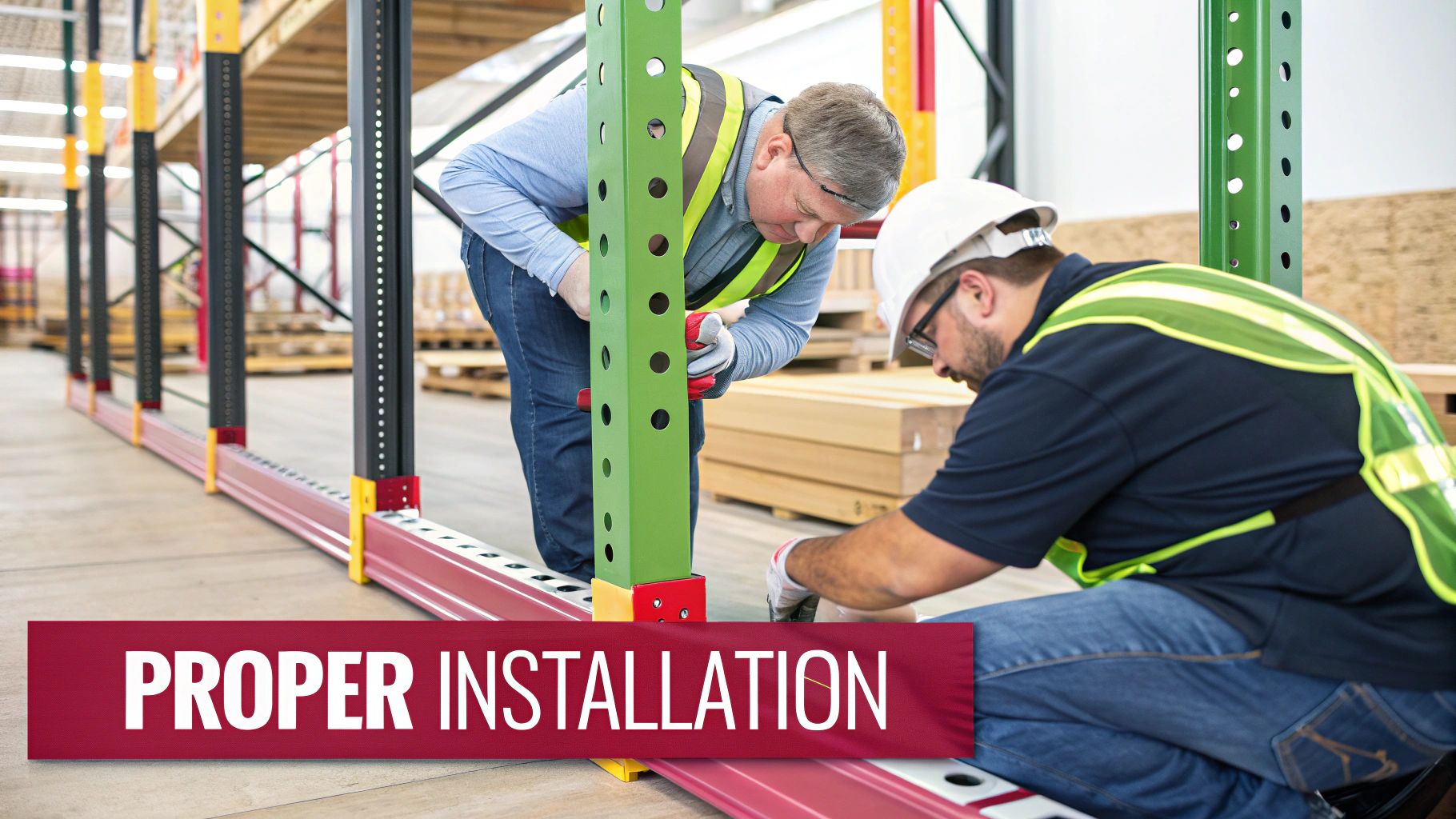
Key steps for safe installation include:
- Proper Anchoring: Every upright frame must be securely anchored to the concrete floor to prevent shifting or tipping.
- Plumb and Level Assembly: Professional installers use laser levels to ensure every upright is perfectly vertical and all beams are horizontal.
- Secure Beam Installation: Beams must be fully seated in the uprights with safety clips engaged to prevent accidental dislodgement.
After installation, ongoing safety is your responsibility. Establish a routine for regular rack inspections to identify and address damage from forklift impacts before it can lead to a serious failure.
Frequently Asked Questions
What size pallet racking do I need for my warehouse?
The right size depends on your pallet dimensions, maximum load weight, ceiling height, and forklift turning radius. A professional layout design is the best way to determine the exact specifications for an efficient and safe system.
Is new or used pallet racking better?
Used racking can seem like a cost-saver, but it often comes with an unknown load history, potential hidden damage, and no warranty. New pallet racking guarantees certified load capacities, perfect condition, and compliance with current safety standards, making it a safer long-term investment.
How much does pallet racking cost?
The cost varies based on the type of rack, system size, capacity requirements, and current steel market prices. A simple starter bay may cost a few hundred dollars, while a full warehouse system can be a significant investment. The only way to get an accurate number is to Request a Quote based on your specific needs.
What safety standards should pallet racks meet?
Your pallet racks must be designed to meet the standards set by the Rack Manufacturers Institute (RMI). Additionally, installation must comply with local building codes and OSHA guidelines, which includes proper anchoring and displaying clear load capacity plaques. Learn more in our guide to the Top 10 Questions About Pallet Rack.
Can I install pallet racks myself or do I need professionals?
For anything beyond a very small, simple setup, professional pallet rack installation is highly recommended. A professional crew ensures every component is assembled correctly, anchored securely, and fully compliant with safety codes, minimizing risk and protecting your investment.
What accessories improve pallet rack performance?
Key accessories include wire decking for shelf stability, column protectors to guard against forklift damage, and safety clips to secure beams. These components are essential for a safe and durable racking system.
Conclusion: Build Your Ideal Warehouse with MH-USA
Selecting the right pallet racking solution comes down to a few key principles: choosing the best system for your inventory, accurately assessing your load and layout requirements, and never compromising on safety. Getting these fundamentals right from the start prevents costly rework, operational downtime, and logistical challenges down the road.
At MH-USA, we are more than just a supplier; we are your dedicated partners in this process. We’ve built our reputation on quality materials, competitive pricing, and the fastest shipping in the industry. Our free, no-obligation layout and design process is a critical first step. Getting our experienced design team involved early helps you create a clear, efficient, and safe blueprint for your operation. This proactive planning helps you get your system installed faster and avoid project delays that can disrupt your supply chain.
Ready to build a smarter, more efficient warehouse?
Request a Quote for your free, custom layout today, or Call (800) 326-4403 to talk to an MH-USA specialist about your warehouse storage needs.