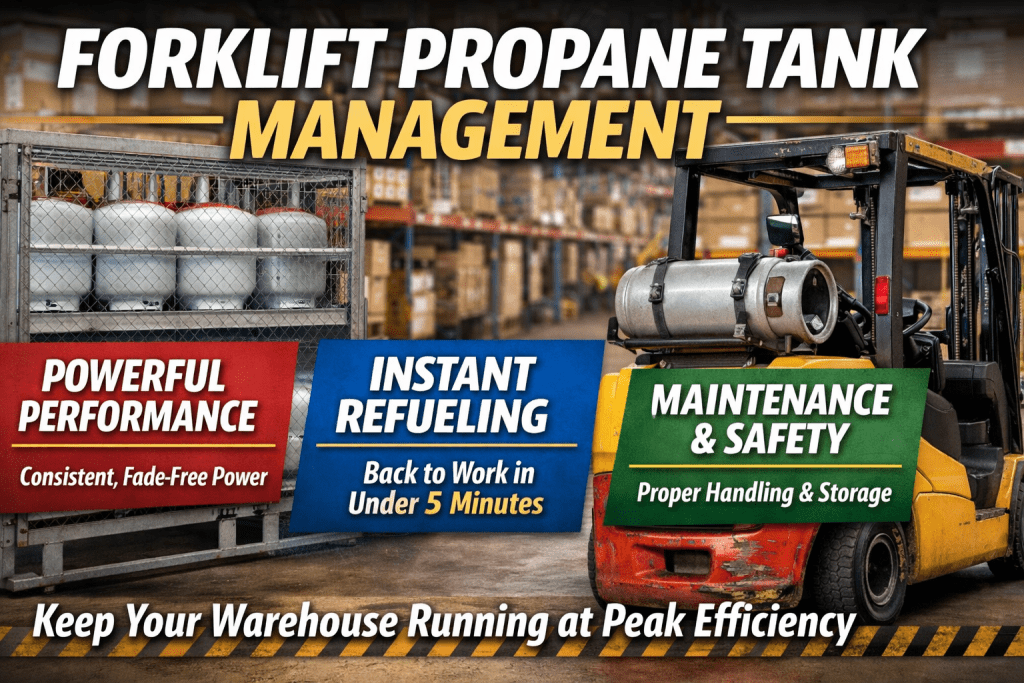
A forklift propane tank is the lifeblood for many of the world’s most productive warehouses. It’s the power source that delivers consistent energy and, most importantly, allows for lightning fast refueling to keep operations running at peak capacity. While battery powered lifts have their place, they require long charging cycles. A propane forklift, on the other hand, can be back on the floor in under five minutes. That speed is what keeps your fleet moving and your productivity numbers high.
Why Propane Is Still a Powerhouse in Modern Warehouses
In a fast paced warehouse, every single minute counts. The fuel you choose for your material handling equipment has a direct impact on your bottom line, and for many high throughput operations, liquefied petroleum gas (LPG) remains the undisputed champion of efficiency.
A forklift propane tank delivers what we call “fade free” power. This means your equipment operates at full strength from the moment a shift starts until the very end. This consistent performance is a major advantage over some battery powered forklifts, which can lose power and speed as their charge drains.
Think of it like a marathon runner. A propane forklift runs at a steady, strong pace for the entire race. An electric counterpart might start strong but slow down noticeably during those crucial final miles of a shift.
The Unbeatable Advantage of Uptime
The single biggest reason facilities stick with propane is the speed of refueling. Swapping an empty forklift propane tank for a full one is a straightforward job that an operator can complete in about five minutes. For any warehouse running multiple shifts, this near instant turnaround is a total game changer.
Compare that to the 3 to 8 hours it often takes to fully recharge an electric forklift battery. That’s a huge chunk of downtime that can create serious bottlenecks, often forcing you to buy expensive spare batteries, or even entire backup forklifts, just to keep things moving.
Propane’s role is absolutely critical in the American supply chain. Industry data shows that over 300,000 forklift operators in the U.S. rely on propane for their indoor material handling needs. A standard 33 lb cylinder provides up to 8 hours of continuous runtime, which perfectly covers a full work shift and highlights just how dependable this fuel source is.
This reliability is what makes propane an essential ingredient for an efficient warehouse. By slashing downtime, you maximize the output of your team and your entire fleet of lifting and material transport equipment.
Decoding Forklift Propane Tank Sizes and Components
Picking the right propane tank for your forklift isn’t just about size. It’s about matching your fuel capacity to the pace of your operation. When you get this right, your fleet runs like clockwork, and you sidestep the kind of unnecessary downtime that eats into profits.
You’ll almost always run into two common sizes: the 33 lb and the 43 lb cylinders. The 33 lb tank is the workhorse of the industry, typically packing enough fuel to get a forklift through a standard eight hour shift. But for those tougher, multi shift operations, the larger 43 lb tank is the way to go. It offers a longer runtime, meaning your team spends less time changing out tanks and more time moving product.
This is all about keeping the power steady and the forklifts moving, which is the lifeblood of any busy facility.
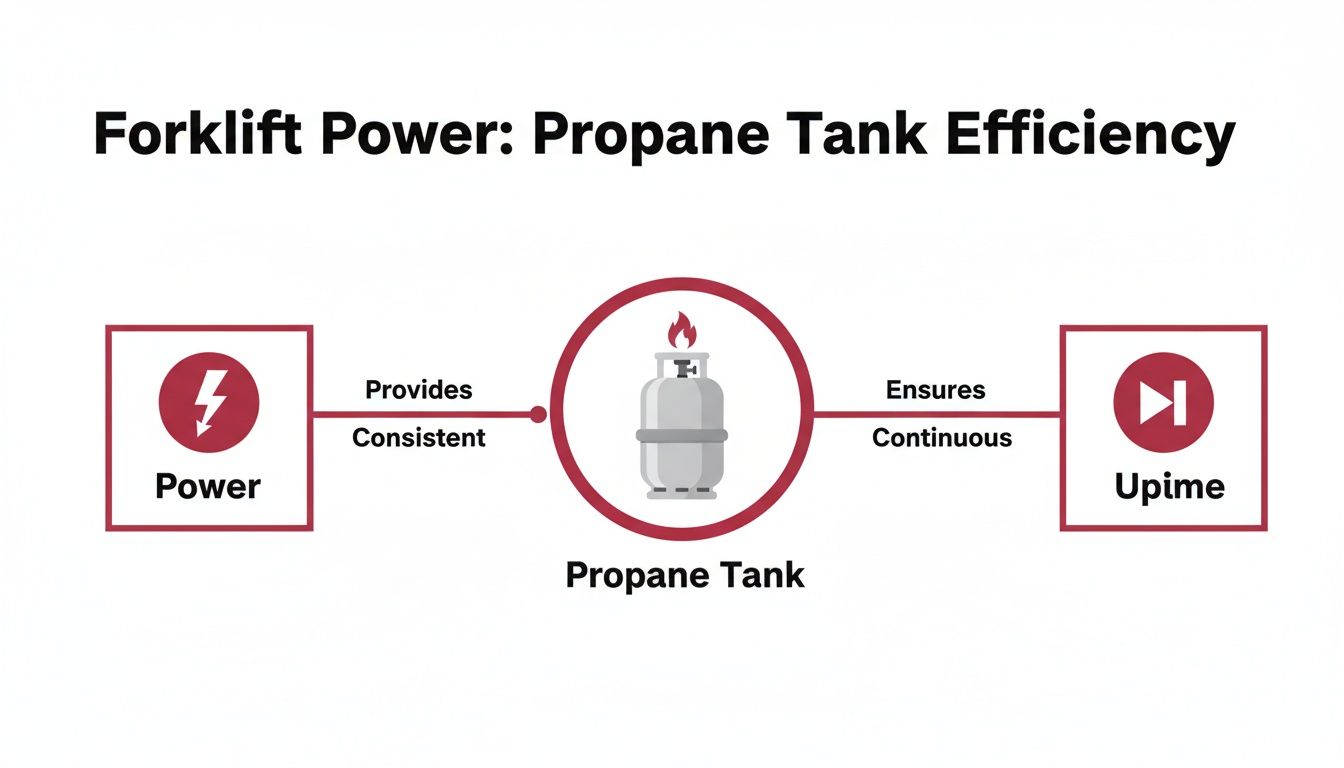
Understanding Key Tank Components
Beyond just the size, you have to know the parts that make these tanks safe and reliable. Think of these components as the tank’s built in control system, working together to deliver fuel exactly when it’s needed and, more importantly, keeping everything secure.
Here’s a quick rundown of the critical parts on every forklift propane tank:
- Service Valve: This is where the fuel line connects. It’s the main tap that controls the flow of liquid propane from the tank to your forklift’s engine.
- Pressure Relief Valve: This is a non negotiable safety feature. If the pressure inside the tank gets too high, this valve automatically vents propane to prevent a dangerous rupture.
- Fill Valve: Used by technicians to refill the cylinder, this valve ensures propane can be pumped into the tank safely and efficiently.
- Float Gauge: This is your fuel gauge. It gives operators a clear visual of how much propane is left, so they know exactly when it’s time to swap it out.
If you want to get deeper into the nitty gritty of safety mechanics, it’s worth reading up on LPG cylinder regulators and over-pressure shut-off (OPSO) devices.
Choosing The Right Tank For Your Fleet
So, which size is right for your operation? It really comes down to your daily workload and how you structure your shifts. A small warehouse running a single shift has completely different fuel needs than a massive 24/7 distribution center.
To make it simple, we’ve put together a quick comparison of the two most common forklift propane tank sizes. This should help you figure out the best fit for your team’s needs.
Forklift Propane Tank Specifications at a Glance
| Specification | 33-lb Propane Tank (Standard) | 43-lb Propane Tank (Extended Use) |
|---|---|---|
| Fuel Capacity | Approx. 7.9 Gallons | Approx. 10.2 Gallons |
| Typical Runtime | 6-8 Hours | 8-10+ Hours |
| Best For | Single-shift operations, standard use | Multi-shift or high-demand environments |
| Weight (Full) | Approx. 60-70 lbs | Approx. 75-85 lbs |
By taking a hard look at your fleet’s daily runtimes, you can make a smart decision that boosts both productivity and your fuel management strategy.
Once you know what you need, the final step is sourcing high quality, certified tanks. This isn’t the place to cut corners. Getting the right equipment is key to maximizing safety and performance for the long haul.
Getting a Handle on Propane Tank Safety and Storage
Propane is an incredibly safe and reliable fuel for forklifts, but that safety record hinges on one thing: strict, consistent handling procedures. Getting these protocols right isn’t just about checking a compliance box, it’s about protecting your people, your equipment, and your entire operation. This is your playbook for building rock solid safety measures based on what actually works on the warehouse floor.
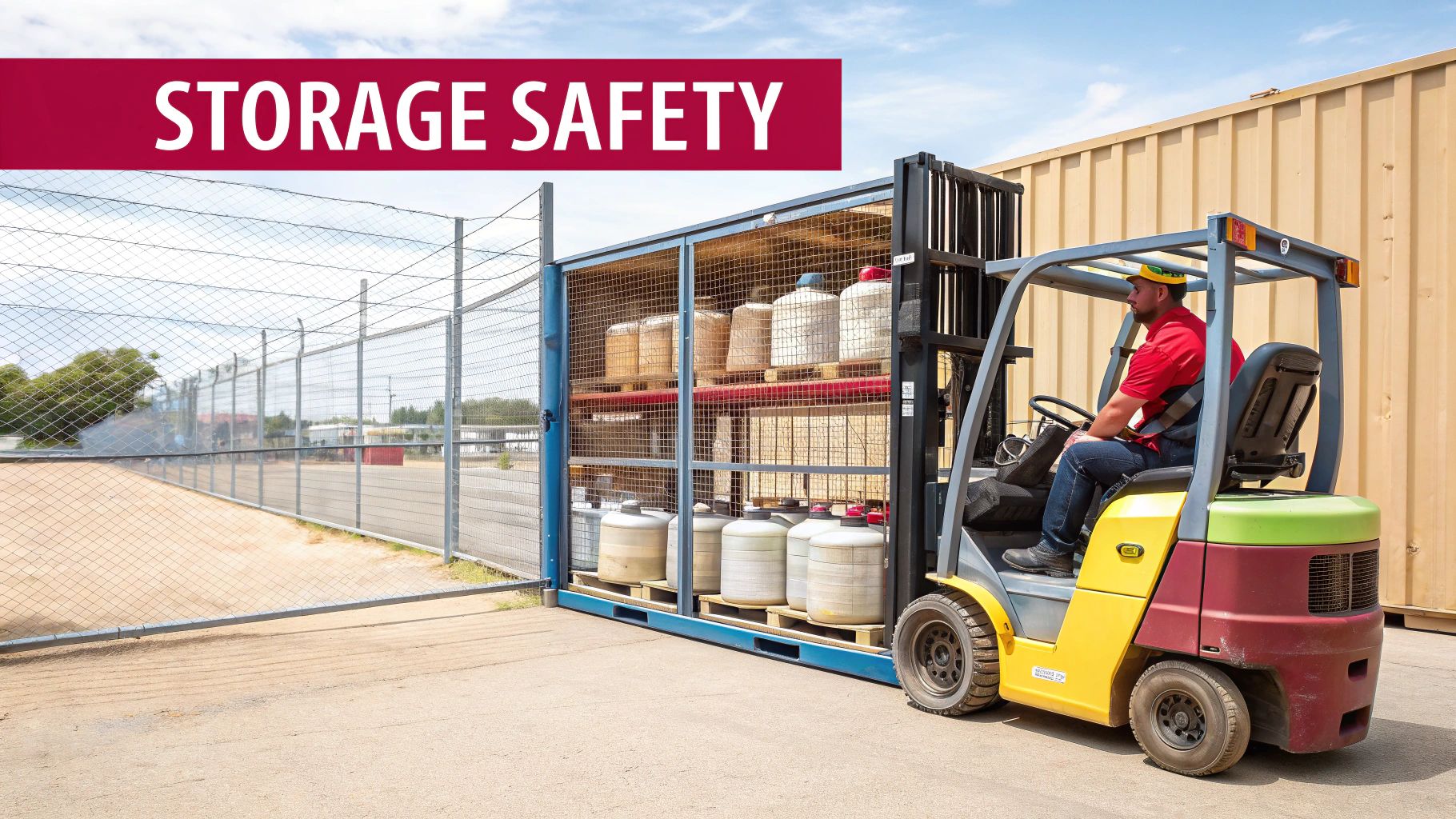
We’re going to move past the generic advice and get into the specific, step by step actions for safely lifting, moving, and connecting a forklift propane tank. Mastering these small but critical moments is your first line of defense against accidents and the key to creating a real culture of safety.
Proper Handling and Connection Techniques
Every single time an operator swaps a tank, they need to follow a precise sequence. There’s no room for shortcuts here, as even a small mistake can create a big risk.
Here’s the step by step process your team should follow, no exceptions:
- Gear Up with PPE: Before touching a tank, always put on safety glasses and heavy duty, insulated gloves. Liquid propane can cause severe burns if it makes contact with skin, so this is non negotiable.
- Give the Tank a Quick Inspection: Take a few seconds to visually check the cylinder. Look for any obvious signs of damage like deep dents, gouges, or significant rust. Make sure the valve looks intact, too.
- Position the Tank Correctly: Place the tank firmly onto the forklift’s locating pin. This pin is crucial, it ensures the tank is oriented perfectly to feed liquid propane to the engine, not vapor.
- Secure the Connection: Tighten the hose fitting onto the tank’s service valve. You want it snug, but don’t go overboard. Overtightening can damage the O-ring and create a leak.
- Open the Valve Slowly: Turn the valve handle slowly to let the system pressurize gradually. As you do, listen and smell for any signs of a leak. If anything seems off, shut the valve immediately.
Designing a Compliant Storage Area
Where and how you store your propane cylinders is just as critical as how you handle them. A well thought out storage area minimizes risk, keeps you compliant, and even helps with inventory management so you don’t run out of fuel at a bad time.
Your storage blueprint needs to include these core elements:
- Ventilation is Everything: Tanks must be stored in a well ventilated area, which usually means outdoors in a secure storage cage. This setup prevents flammable vapors from building up if a leak were to occur.
- Keep Them Secure and Upright: Cylinders must always be stored upright and secured in a rack or cage. This stops them from tipping over, which could easily damage the valves.
- Stay Away from Ignition Sources: The storage area has to be a safe distance from any open flames, sparks, high traffic zones, or building exits. A solid plan for warehouse fire safety is a must have piece of your facility’s overall strategy.
Safety data really drives home why this matters. According to the U.S. National Safety Council, in 2019 alone, forklifts were involved in 79 work related deaths and 8,140 nonfatal injuries. While propane itself is safe when used correctly, it is highly flammable. Disciplined handling and inspection procedures are absolutely essential to prevent the leaks and fire hazards that contribute to these statistics.
Getting the Most Out of Your Tanks with Smart Inspection and Maintenance
Think of a forklift propane tank as a long term asset, not a disposable item. With the right care, you can stretch its service life way beyond the basics, seriously lowering your total cost of ownership. A simple, consistent maintenance program is all it takes to make sure your tanks are pulling their weight and giving you a great return on your investment.
This all starts with a daily pre shift inspection. Your operators are your first line of defense, and empowering them to spot small issues is the best way to stop them from becoming big, expensive problems. A quick but thorough check is all it takes to catch potential failures early and keep everyone on the floor safer.
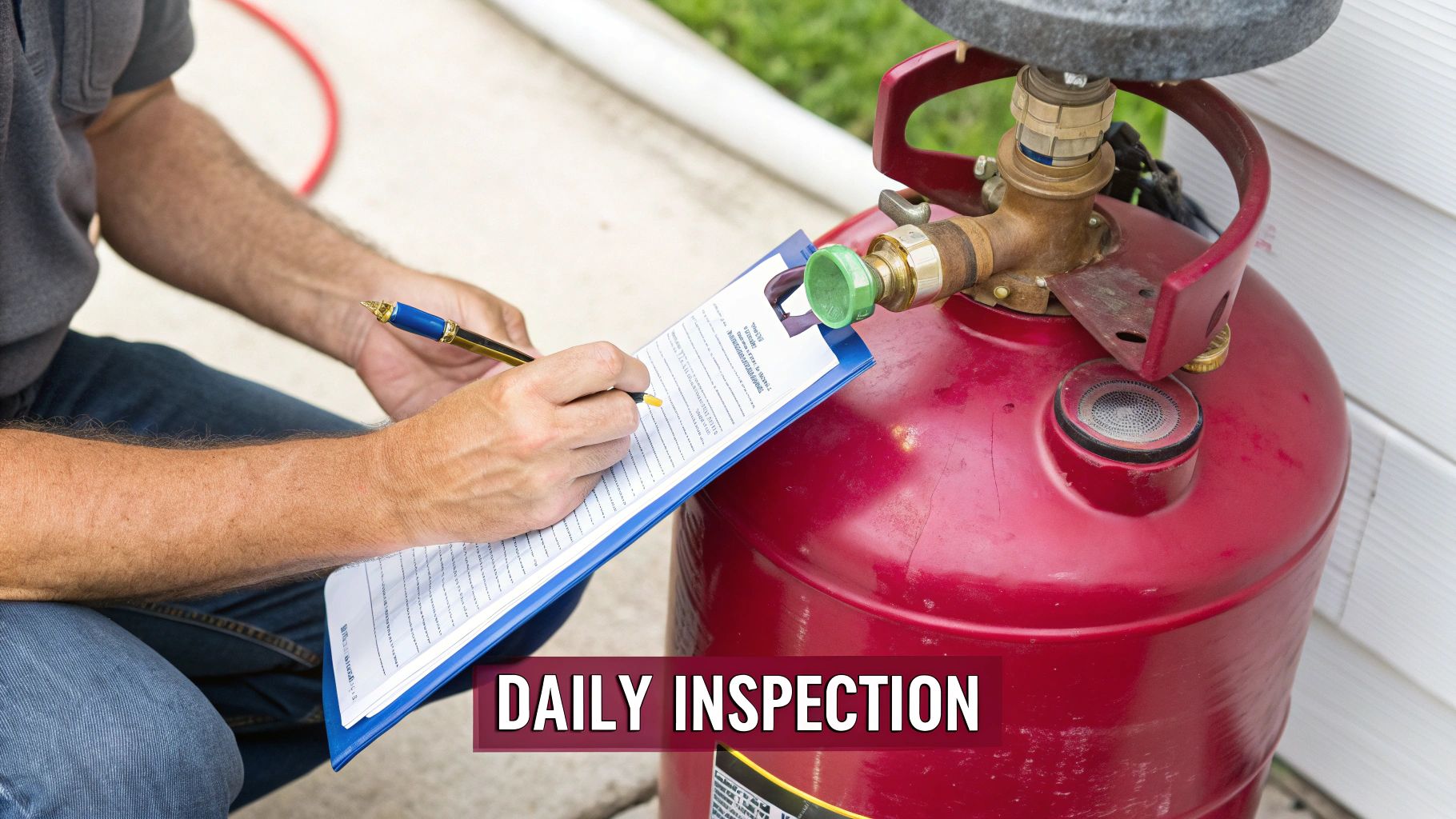
What to Look for in a Daily Tank Inspection
Get your team into the habit of running through this checklist before every shift. It’s a simple routine that takes just a minute but can save you from a world of costly downtime and accidents.
- Dents, Gouges, or Scrapes: Any real damage to the tank’s body could compromise its structural integrity. It’s not just cosmetic.
- Visible Rust or Corrosion: Check the base and around the valve collar with extra care. This is where moisture loves to hang out and cause trouble.
- Damaged or Bent Valves: Both the service valve and the pressure relief valve need to be in perfect shape to do their jobs correctly.
- Missing or Damaged O-Rings: A cracked or worn O-ring in the service valve is one of the most common causes of dangerous leaks.
If an operator does find a leak, having clear safety protocols is non negotiable. Keeping the right equipment handy, like the solutions found in our guide to spill control and secondary containment, helps you manage these situations safely and by the book.
The Importance of Tank Recertification
Beyond the daily checks, every forklift propane tank has to meet federal recertification requirements. When a tank is brand new, its certification is good for 12 years from the date it was manufactured. After that first dozen years, it has to be professionally reinspected and recertified to stay in service.
When you look at the big picture of asset management, a well cared for propane tank can easily last up to 20 years. That single steel LPG cylinder can outlive two, three, or even four full battery cycles. The life expectancy of a propane cylinder is roughly three times longer than an electric forklift battery.
This recertification process is what keeps the tank safe and compliant, helping you avoid fines and ensuring it can be legally refilled. A fleet of well maintained tanks isn’t just a safety win; it’s a significant long term investment.
With demand for industrial equipment being what it is, taking great care of your current assets allows for better planning and helps you sidestep future supply chain headaches. When you’re ready to grow your fleet, Material Handling USA can provide a free quote to get you exactly what you need. Call (800) 326-4403 to talk to a specialist today.
Choosing Your Fueling Strategy: Refill vs. Exchange
How you keep your propane forklifts fueled is one of the biggest operational decisions you’ll make. You really have two main paths: setting up your own on site refilling station or partnering with a cylinder exchange service. Each has its own set of pros and cons, and the best choice boils down to your company’s scale, budget, and how much hands on management you’re comfortable with.
An exchange program is all about simplicity. A supplier drops off full tanks and carts away the empties on a regular schedule. This means minimal upfront investment and you don’t have to worry about training your team on specialized fueling procedures. It’s a fantastic model for smaller operations or any business that just wants a predictable, hands off solution. That convenience, however, often comes with a higher price per gallon over time.
The On-Site Refill Model
Going with an on site refilling station puts you in the driver’s seat of your fuel supply. This route does require a significant upfront investment in a bulk storage tank and the right dispensing equipment. You also take on the responsibility of training and certifying employees to handle propane safely, which adds a layer of compliance and liability to your plate.
But here’s the payoff: the long term cost per gallon for propane drops through the floor. For high volume warehouses running multiple shifts, the savings can be massive, often paying back the initial investment faster than you’d think. Plus, you’ll never have to worry about a late delivery grinding your operations to a halt, the fuel is always right there when you need it.
An on site refilling station fundamentally changes how you view fuel. It stops being a recurring service bill and becomes a commodity you manage directly. This gives you far greater control and can shield your operation from the supply chain hiccups that sideline other businesses.
The Cylinder Exchange Program
The cylinder exchange model is convenience defined. Think of it as a “plug and play” solution that keeps your forklifts moving with almost zero internal effort. All you have to do is designate a secure spot for your full and empty tanks, and your supplier handles everything else. For facilities where the staff is already wearing multiple hats, this simplicity is a huge win.
While you get to skip the large capital expense, you’re essentially paying a premium for that service. It’s critical to run the numbers on your forklift propane tank usage to see if the ease of use justifies the higher ongoing fuel costs.
Making the Right Decision
To nail down the best fit, you’ve got to weigh the trade offs between cost, convenience, and control. When looking at different fueling options for your fleet, a detailed Propane vs CNG fueling comparison can provide valuable insights to help you make a well informed decision.
Here’s a simple breakdown to help you compare the two paths:
| Factor | On-Site Refilling Station | Cylinder Exchange Program |
|---|---|---|
| Upfront Cost | High (equipment & installation) | Low to None (cages often provided) |
| Long-Term Cost | Lower cost per gallon of fuel | Higher cost per gallon of fuel |
| Convenience | Lower (requires certified staff) | High (supplier manages logistics) |
| Liability | Higher (you own the refueling process) | Lower (supplier handles filling) |
| Best For | Large fleets, high-volume operations | Small to medium fleets, convenience-focused operations |
Ultimately, the right strategy is the one that clicks with your operational rhythm and financial goals. For a personalized consultation to design a storage solution or to get a free quote on your equipment needs, Contact Us or give our specialists a call at (800) 326-4403.
Fueling Your Forklift Fleet is Our Business
Keeping your forklift propane tanks managed effectively is more than just a task, it’s a critical part of a smooth, safe, and productive warehouse. When you nail down the right tanks, enforce smart safety rules, and stay on top of maintenance, you’re really investing in your own operational uptime. It’s how you make sure your equipment is always fired up and ready to go, sidestepping those little hiccups that can throw off your entire day.
Finding the right supplier is half the battle. You need someone who gets you high quality equipment right when you need it. At Material Handling USA, we’ve built our reputation on competitive pricing and the fastest shipping in the industry. Locking in your supply chain now isn’t just good planning; it helps you dodge the delays that are bound to happen as demand for equipment keeps climbing.
Let our team show you how to build a tougher, more efficient operation from the ground up. We offer free layouts and designs with zero obligation, just to make sure you get the perfect setup for your facility.
Ready to fine tune your fueling strategy? Contact Us for a free quote, or give our specialists a direct call at (800) 326-4403 to talk through what you need.
Forklift Propane Tank FAQs
When you’re running a busy warehouse, you and your team will bump into practical, on the ground questions about your propane tanks. To keep things running smoothly and safely, we’ve put together some clear, straightforward answers to the most common questions we hear from managers and operators.
How Can I Tell If a Forklift Propane Tank Is Empty?
Your first stop is the fuel gauge, but let’s be honest, they’re not always 100% accurate. The most reliable sign of a tank running on fumes is a noticeable loss of power. If the forklift starts to sputter or feels sluggish, it’s a good bet the tank is nearly empty.
Another tell tale sign operators might notice is a layer of frost forming on the outside of the cylinder. This happens when the last bit of liquid propane vaporizes, which rapidly cools the tank’s metal surface. Just remember, for safety’s sake, never shake or hit the tank to try and guess the fuel level.
Can You Use a BBQ Propane Tank on a Forklift?
Absolutely not. This is a common question, but it’s a dangerously bad idea. Forklift propane tanks are specifically engineered for liquid withdrawal, pulling fuel from the bottom of the tank to power the engine correctly.
A standard BBQ tank, on the other hand, is built for vapor withdrawal from the top. Trying to run a forklift on a BBQ tank will starve the engine of fuel, lead to serious damage, and create a major safety hazard on your floor.
What Do the Dates Stamped on a Propane Tank Mean?
Those dates stamped into the collar of a forklift propane tank are more than just numbers, they’re your key to compliance and safety. They tell you the cylinder’s original manufacturing date and when it’s due for recertification.
A brand new tank is good to go for 12 years from its manufacture date. After that initial period is up, it has to be professionally inspected and recertified every five, seven, or ten years. The exact interval depends on the recertification method used and the tank’s overall condition. If a tank is past its expiration date, it cannot be legally refilled.
Is It Safe to Use Propane Forklifts in Cold Storage?
Yes, and they’re actually a fantastic choice for cold storage and freezer environments. One of the biggest perks of propane is its ability to deliver consistent, reliable power even in freezing temperatures, a condition where electric battery performance can take a serious hit.
Of course, proper ventilation is still a must, just like in any other indoor setting. You need to ensure there’s enough airflow to safely disperse any exhaust fumes.
At Material Handling USA, we get that managing your forklift fleet is a critical part of your operation’s success. Having the right equipment and a dependable fuel supply chain is what keeps productivity high, especially as the demand for industrial resources keeps climbing. Let our experts help you design an efficient, compliant fueling solution that works for you.
Contact Us today for a free quote and no-obligation layout design.