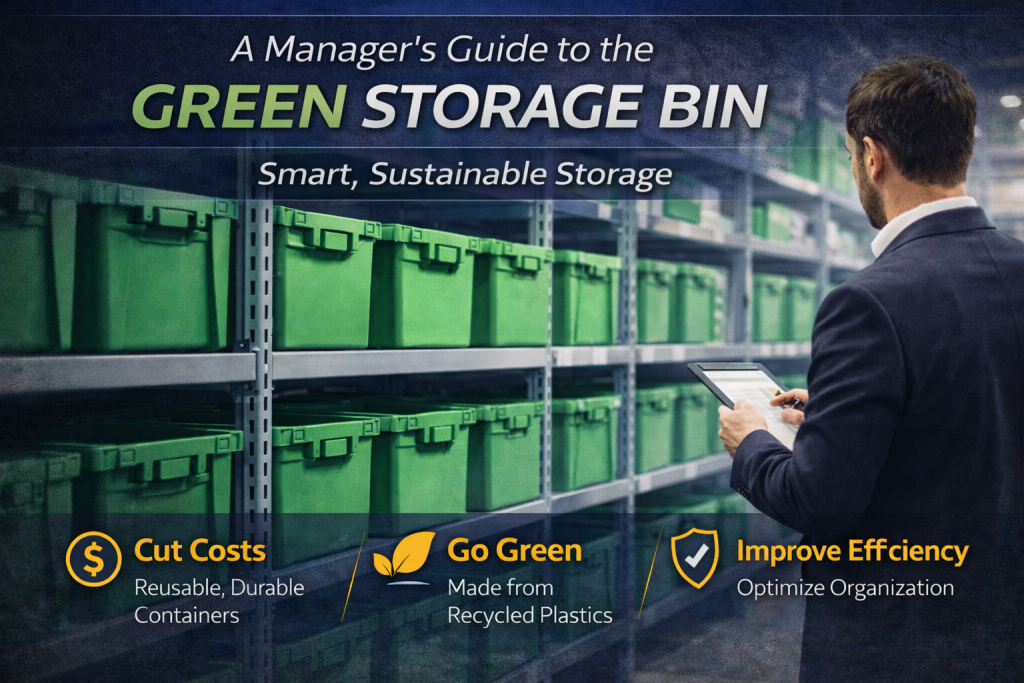
When you hear "green storage bin," your first thought might be about the color. Fair enough. But in today's business landscape, a green storage bin represents a powerful strategic choice that goes far beyond aesthetics. Think of these bins as a cornerstone of smart, sustainable logistics—built for the long haul, designed for reuse, and engineered for real cost savings.
What a Green Storage Bin Really Means for Your Business
A "green storage bin" isn't just an eco-friendly purchase; it's a fundamental upgrade to how your operation runs. These bins are typically made from recycled or biodegradable materials, signaling a deliberate move away from throwaway packaging and toward a more resilient, circular system. Making this shift is a critical step in building leaner, more robust operations, whether you’re in a warehouse, a lab, or a secure facility.
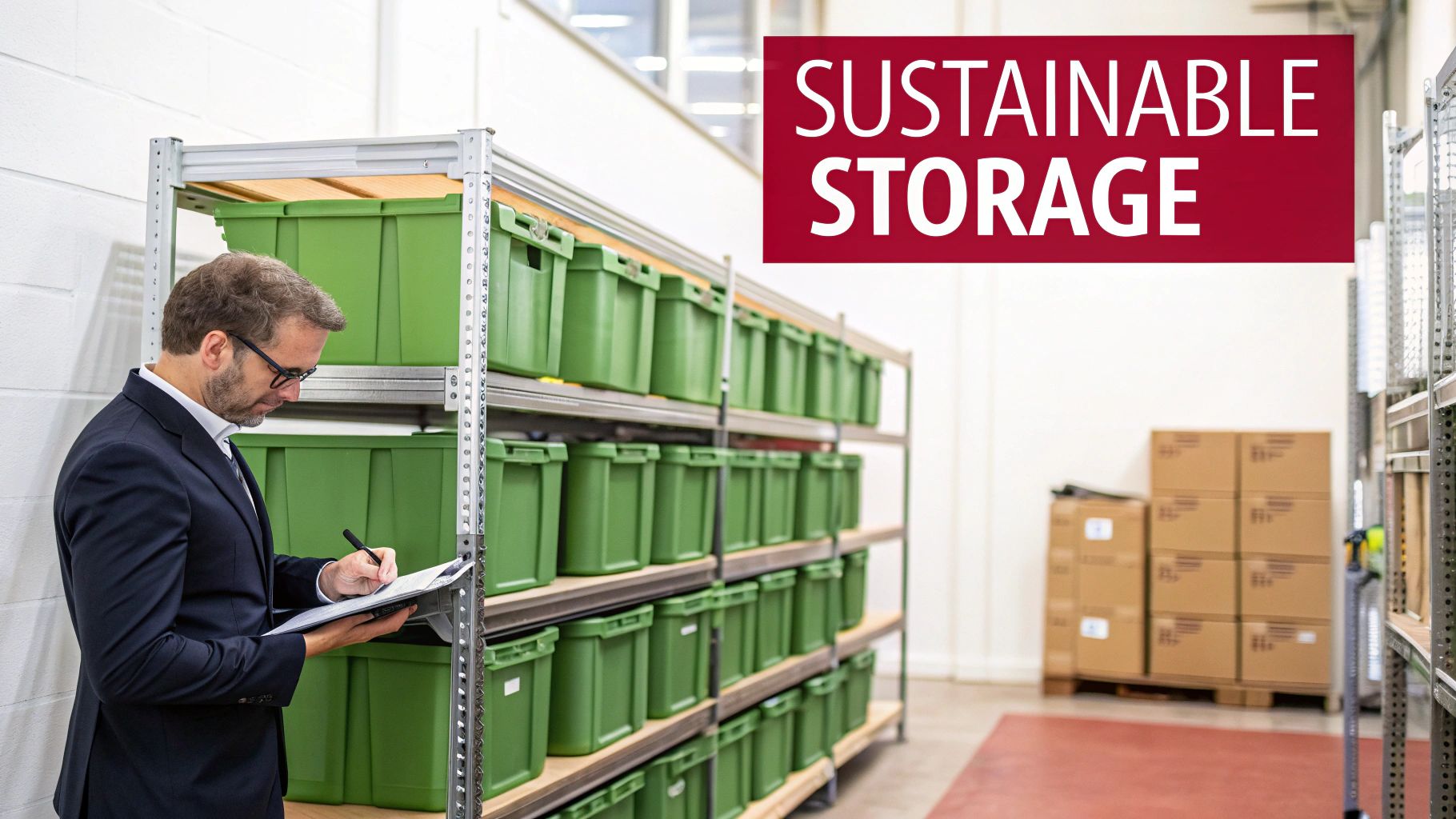
The business case is immediate and compelling. By bringing these durable, reusable systems into your workflow, you unlock significant benefits that hit your bottom line and boost your brand's reputation.
The Business Case for Sustainable Bins
Switching to sustainable storage solutions isn’t just a feel-good move; it translates directly into tangible operational advantages. The packaging bins market, which includes green storage bins, was valued at USD 2,256 million in 2025 and is projected to hit USD 3,627 million by 2035. That growth is fueled by industries like logistics and retail—our core customers—who see the clear benefits.
Here’s what you stand to gain:
- Significant Cost Reduction: Stop the endless cycle of buying and trashing cardboard boxes. Reusable bins cut down on procurement and waste disposal fees for good.
- Enhanced Brand Reputation: Showing a real commitment to sustainability isn't just a trend; it's a trust signal for customers and stakeholders who want to partner with responsible companies.
- Regulatory Compliance: Environmental standards are only getting stricter. Using green products helps future-proof your operations and keeps you compliant.
- Improved Operational Efficiency: Durable, standardized bins mean better organization, faster pick times, and a cleaner, safer work environment for your team.
This strategic pivot connects your storage system directly to broader business goals. By choosing sustainable options, you are investing in a system that pays dividends in cost savings, operational smoothness, and market perception.
To help visualize this shift, we've broken down how these bins turn a standard operational cost into a real competitive advantage.
From Cost Center to Competitive Advantage
| Strategic Benefit | How It Works | Your Operational Impact |
|---|---|---|
| Financial Savings | Eliminates recurring costs of disposable packaging (cardboard, tape, filler) and reduces waste management fees. | Lowers your Cost of Goods Sold (COGS) and improves your profit margins from day one. |
| Operational Uptime | Strong, uniform bins prevent damage from crushing or moisture, protecting inventory from loss or contamination. | Reduces product write-offs, minimizes costly returns, and ensures order accuracy. |
| Brand Equity | Visibly demonstrates your commitment to sustainability, appealing to eco-conscious consumers and business partners. | Strengthens customer loyalty and opens doors to new markets that prioritize green partnerships. |
| Workplace Safety | Standardized, stackable bins create tidy, predictable workspaces, reducing trip hazards and clutter-related accidents. | Improves employee safety, lowers the risk of workers' compensation claims, and boosts morale. |
Adopting green bins is more than an equipment upgrade—it's a clear signal that your business is built for the future: efficient, responsible, and financially sound.
Understanding these implications touches every part of your supply chain. Learning how your business can start empowering a green supply chain provides a wider perspective on how these choices create a genuine competitive edge. Ultimately, a green storage bin is a tool for building a smarter business from the ground up—an approach we detail in our article on the principles of a green warehouse.
Real-World Applications in Demanding Industries
The true test of a storage bin isn't just how it looks on a shelf—it's how it performs under pressure in complex, fast-paced environments. These durable containers aren't just passive objects; they are critical tools solving real-world challenges for industry leaders every single day. They are active components in high-stakes workflows where efficiency, accuracy, and security are absolutely non-negotiable.
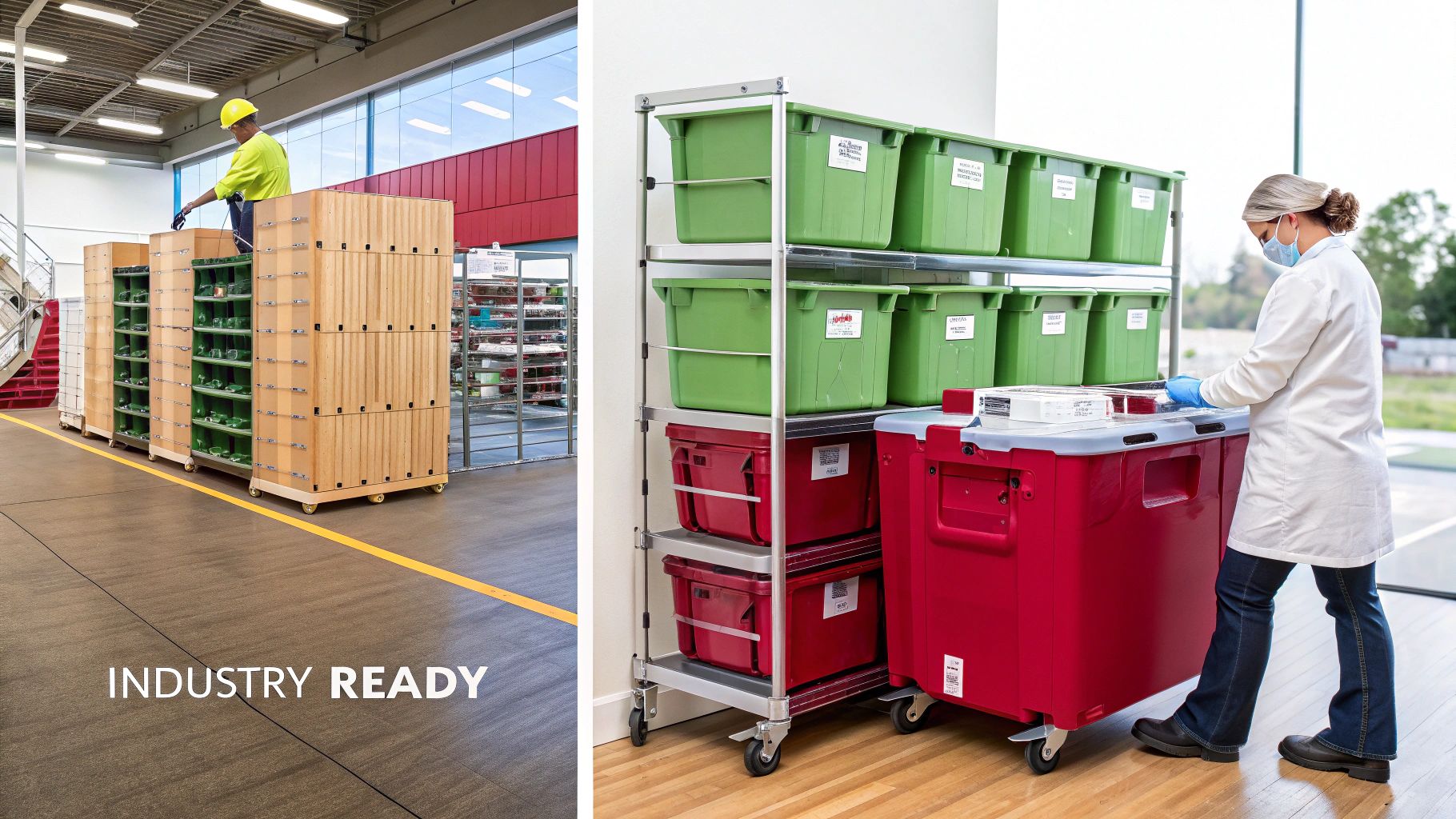
Let's break down how these versatile bins are put to work across key sectors, showing just how adaptable and indispensable they really are. From buzzing distribution centers to sterile labs, the right bin system is a cornerstone of modern operations.
High-Velocity Distribution Centers
In the world of e-commerce and third-party logistics (3PL), speed is everything. A high-velocity distribution center uses a green storage bin system to sharpen its entire order picking process. Out with flimsy, single-use cardboard and in with rugged plastic bins that create a standardized system for kitting, sorting, and fulfillment.
This shift to consistency delivers some major advantages:
- Accelerated Picking: Uniform bins mean you can create denser, more organized shelving layouts. Pickers find items faster, which slashes travel time between picks and jacks up order fulfillment rates.
- Reduced Product Damage: Sturdy bins protect contents from getting crushed or damaged during transit inside the warehouse, cutting down on costly write-offs.
- Seamless Automation: Standardized bins are a perfect match for integration with automated storage and retrieval systems (AS/RS), conveyors, and robotic picking arms.
A well-implemented system turns a chaotic warehouse floor into a highly efficient, organized machine. For any facility looking to stay competitive, a robust green storage bin solution is a critical investment.
By organizing inventory with a clear, color-coded system, facilities can slash picking errors and boost overall throughput. This simple change has a direct, positive impact on customer satisfaction and operational costs.
Healthcare and Laboratory Environments
In clinical labs and medical supply rooms, there is zero tolerance for error or contamination. Here, a green storage bin is essential for maintaining supply chain integrity and ensuring patient safety. Bins made from specific, non-porous polymers are easy to sanitize, helping to prevent cross-contamination between sterile supplies.
These bins are crucial for managing everything from personal protective equipment (PPE) to sensitive diagnostic kits. The ability to color-code helps technicians quickly identify critical supplies—a vital feature in time-sensitive situations. In this world, organization isn’t just about efficiency; it’s a core component of safety and compliance.
Law Enforcement and Secure Evidence Management
For law enforcement agencies, maintaining an unbroken chain of custody for evidence is fundamental. Secure storage solutions aren't just a good idea; they're a requirement. Tamper-evident bins provide a reliable method for storing and transporting sensitive items from a crime scene to the evidence locker and, eventually, to the courtroom.
Each bin can be sealed and labeled with case numbers, dates, and handling information, creating a clear and verifiable trail. This level of security and organization ensures that the integrity of the evidence is never compromised, which supports the very foundation of the justice system. The durability of a high-quality green storage bin also guarantees that contents are protected for long-term storage.
What Are These Sustainable Bins Actually Made Of?
When we talk about a "green" storage bin, we're going way beyond the color. We're talking about the science behind the material itself. A true green bin isn't just an eco-friendly statement; it's a piece of industrial-grade equipment, engineered to perform day in and day out.
Choosing this kind of equipment is part of a massive, industry-wide shift. Green storage bins belong to the booming reusable packaging market, a sector valued at a staggering USD 135.8 billion in 2024. That number is expected to jump to USD 190.1 billion by 2030, fueled by global sustainability initiatives that directly impact warehouses, labs, and secure facilities just like yours.
The Workhorses: Recycled HDPE and PP Plastics
Look at any tough, reliable green storage bin, and you're likely looking at recycled High-Density Polyethylene (HDPE) or Polypropylene (PP). These aren't just any plastics; they're industrial powerhouses known for incredible performance. Using their recycled forms is the bedrock of sustainable manufacturing.
- High-Density Polyethylene (HDPE): This is your go-to for toughness. Known for its incredible impact resistance and ability to handle freezing temperatures, recycled HDPE is built for demanding environments—even freezer storage. It’s durable, reliable, and stands up to most chemicals.
- Polypropylene (PP): Lighter than HDPE, this material brings superior rigidity and excellent resistance to heat and chemicals. That makes recycled PP a top choice for laboratory bins or any application where contents might be corrosive.
By opting for bins made from these recycled materials, you're doing more than just checking a box. You’re actively participating in a circular economy, diverting waste from landfills, and reducing the energy footprint that comes with producing virgin plastics. Best of all, these bins deliver the same high-octane performance you'd expect from their non-recycled counterparts. There's no compromise on quality.
Choosing a bin made from recycled, industrial-grade plastic is one of the smartest ways to hit your sustainability targets while ensuring your gear can handle the daily grind. It's a practical, powerful solution.
What About Biodegradable Polymers?
There's a newer player on the field: biodegradable polymers. These materials are engineered to break down under specific environmental conditions, offering a different end-of-life story than traditional plastics. It's an exciting innovation, but it's important to understand the trade-offs. Right now, these materials generally don't offer the same long-term durability, impact strength, or chemical resistance as industrial workhorses like recycled HDPE and PP.
For those looking to improve sustainability across their entire storage infrastructure, this complete guide to shipping container insulation offers some fantastic insights. Remember, your bins' performance is only as good as the system they're part of. Pairing them with the right infrastructure, like our rust- and corrosion-resistant plastic shelving systems, creates a truly robust and sustainable operation.
Ultimately, the right material comes down to your specific operational needs. Our team is here to help you sort through the options and find that perfect balance between sustainability and performance. Request a Quote today for a free, no-nonsense consultation.
How To Select The Perfect Bin For Your Workflow
Choosing the right bin is about more than matching a size and color. If you want to really optimize your workflow, you need a container that’s an active part of your operational goals. Think of it less like buying a box and more like selecting a specialized tool engineered for a specific job. The right choice pays you back every day in efficiency, durability, and organization.
Making a smart decision starts with a solid understanding of your day-to-day demands. Everything from the weight of your inventory to the speed of your picking process matters. Let’s walk through the key decision points to turn this from a complex purchase into a confident, straightforward choice.
Evaluate Your Load And Capacity Needs
The first step is the most fundamental: match the bin to the inventory. Overloading a bin doesn't just lead to damage and premature failure; it’s a potential safety hazard. On the flip side, using a massive bin for small, lightweight items is a waste of valuable shelf space.
Start by figuring out the average and maximum weight of the items you plan to store. A green storage bin built for heavy industrial parts will have reinforced bottoms and thicker walls. One designed for tiny electronic components might focus more on anti-static properties than raw strength. Always check the manufacturer's specified load capacity and pick a bin that can comfortably handle your heaviest application.
Consider Stacking, Nesting, And Space Density
In any warehouse or facility, space is money. How your bins fit together has a direct impact on your storage density, which is where the design features of stackable versus nestable bins become critical.
- Stackable Bins: These are your go-to for maximizing vertical space. They have straight walls and reinforced rims or locking features, letting you stack them securely on top of one another even when they're full. They’re perfect for creating dense, stable blocks of inventory on shelving or pallets.
- Nestable Bins: Built with tapered sides, these bins are all about efficiency when empty. They slide neatly into one another, which can slash their storage footprint by up to 75%. This makes them ideal for operations with fluctuating inventory levels or for return logistics where empty bins need to be shipped back.
For the ultimate in flexibility, some bins are designed to be both stackable when full and nestable when empty, giving you the best of both worlds.
This decision tree helps visualize how to select bin materials based on their end-of-life properties and what you plan to use them for.
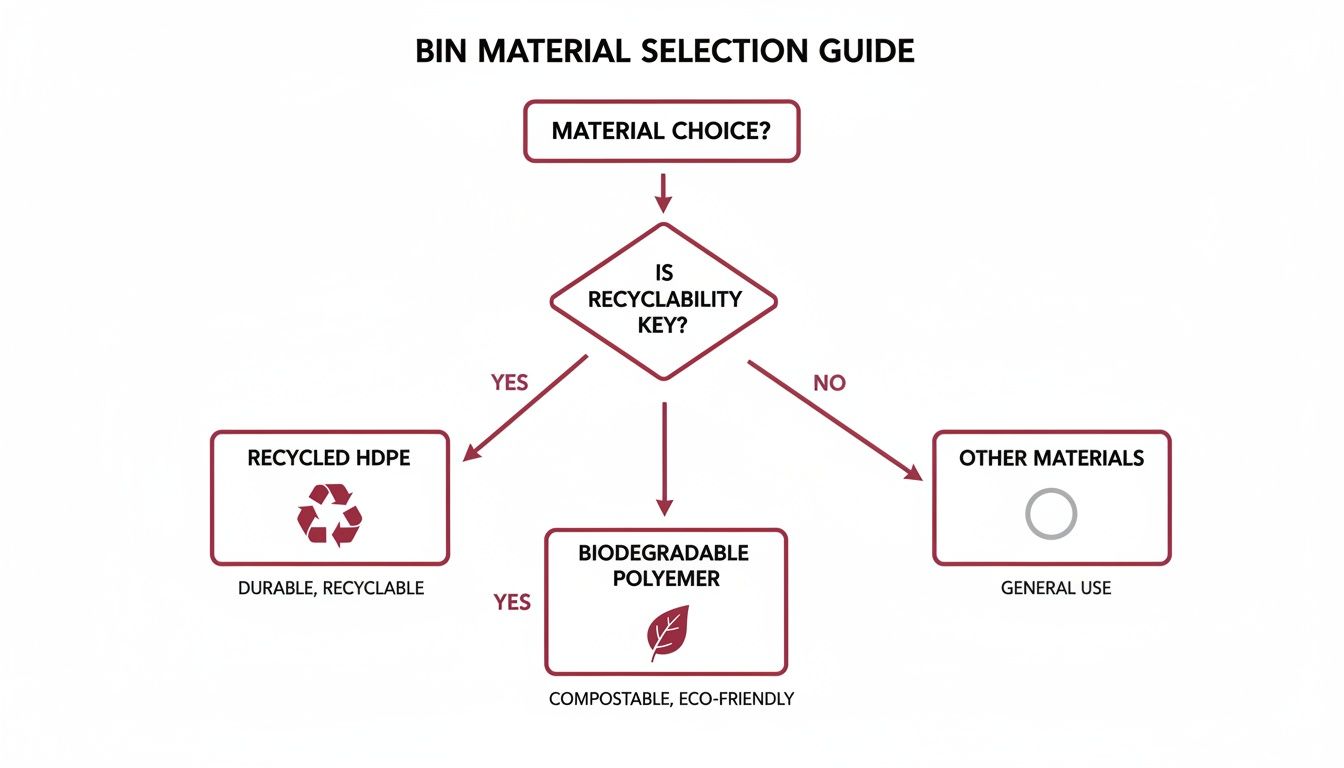
As the flowchart shows, you can easily distinguish between recycled HDPE for durable, long-term use and biodegradable polymers for more specific, eco-conscious disposal needs.
Plan For Identification And Security
Finally, think about how your team will identify and handle the contents inside the bins. In modern inventory management, barcode or RFID systems are king, so bins with smooth, flat label areas are a must-have. Clear label holders are also great for protecting paper labels from shop floor dust and moisture, ensuring they stay readable for years.
If you’re handling sensitive items, like in a lab or evidence room, look for built-in security features. Lids that can be secured with tamper-evident ties are non-negotiable for maintaining a clear chain of custody and protecting contents from contamination.
Before you make a final decision, run through this quick checklist with your team. It’s a simple way to make sure the bins you choose are perfectly aligned with your actual operational needs.
Your Green Storage Bin Selection Checklist
Use this checklist to match your operational needs with the right bin features, ensuring you make the best investment for your facility.
| Evaluation Criterion | Key Questions for Your Team | Essential Bin Features to Look For |
|---|---|---|
| Durability & Load | What's the heaviest item this bin will hold? Will it face impacts or rough handling? | Reinforced base, thick walls, high-density polymer construction, specified load capacity. |
| Space Efficiency | Do we need to maximize vertical space or save room when bins are empty? | Stackable design for vertical density; Nestable design for compact empty storage. |
| Workflow Integration | How fast do we need to pick items? Is the bin front open or closed? | Hopper front for easy picking; Dividers for part segregation. |
| Inventory Management | How will we track what's inside? Barcodes? RFID? Manual labels? | Large, smooth label areas; Integrated label holders; RFID-compatible materials. |
| Security & Safety | Are the contents sensitive, valuable, or hazardous? | Lockable lids, tamper-evident tie compatibility, FDA-approved materials for food/pharma. |
| Environmental Impact | Is sustainability a priority? What happens to the bin at its end-of-life? | Made from recycled materials (like recycled HDPE), fully recyclable design. |
Thinking through these points ensures that your new bins won't just hold inventory—they'll actively improve how you manage it.
Need a hand navigating all the options? Our experts provide free layout designs with no obligation. Call (800) 326-4403 to start planning your perfect storage solution today.
Integrating Bins to Maximize Warehouse Efficiency
A great product is only as good as its implementation. Simply buying a stack of green storage bins won't magically organize your facility. The real value comes from weaving them into the very fabric of your warehouse to create a smarter, faster, and safer workflow.
When done right, a well-planned layout can transform a simple container into a powerful tool for hitting lean operational goals.
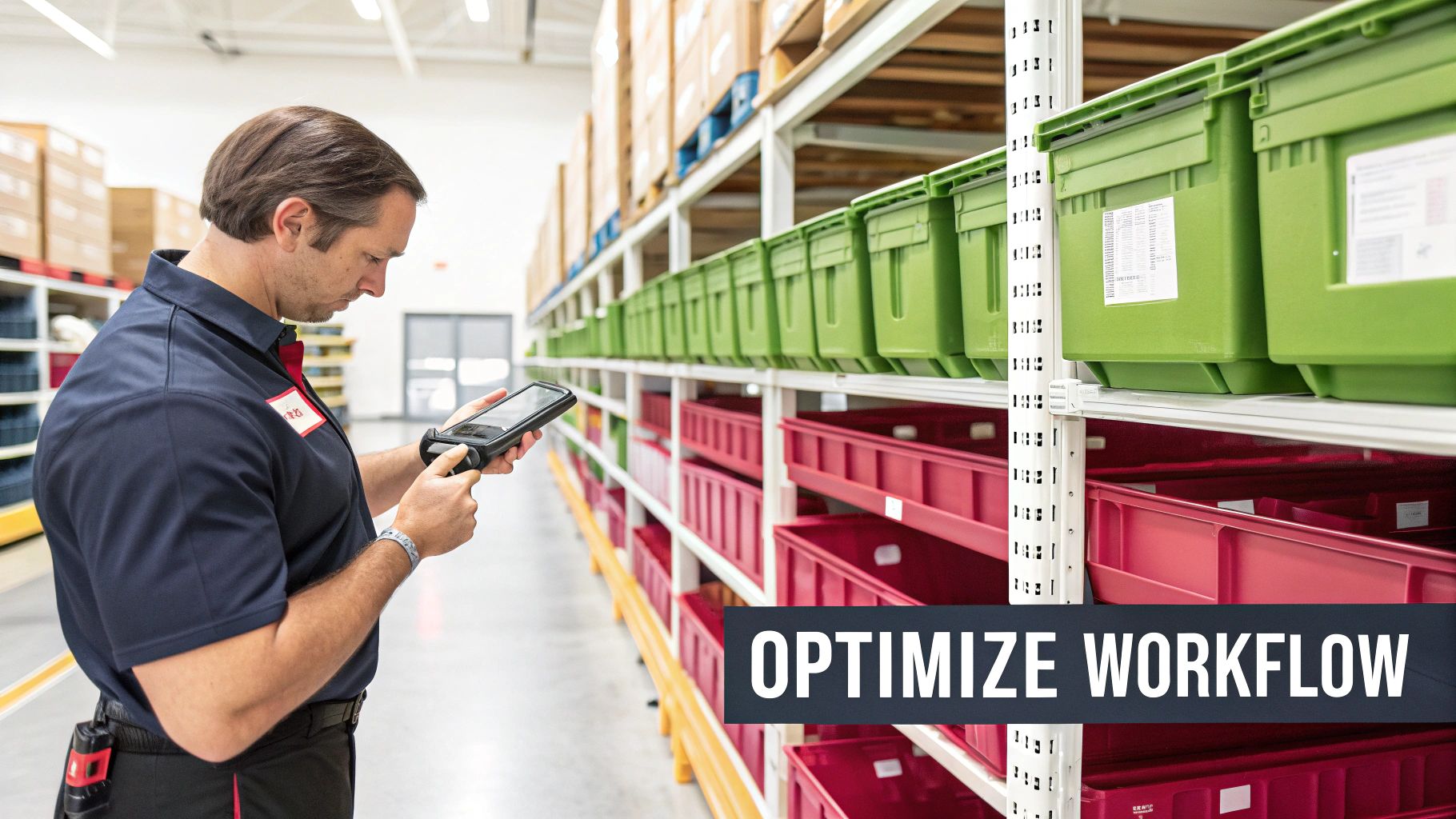
This kind of strategic integration is becoming more critical as the market evolves. The global green packaging sector—which includes eco-friendly storage like these bins—is projected to jump from USD 354.70 billion in 2025 to a massive USD 594.50 billion by 2035. This growth points to a major industry shift toward sustainable and efficient operations, a trend you can explore further with these green packaging market insights.
Color-Coding for Visual Speed
One of the most effective strategies you can implement right away is a robust color-coding system. It’s incredibly simple but profoundly impactful.
Assigning specific colors to different product categories, zones, or stages of the fulfillment process lets your team identify things at a glance. For instance, you could use green for incoming raw materials, blue for work-in-progress, and red for finished goods ready to ship. This simple system allows employees to locate items almost instantly, drastically cutting down search time and minimizing picking errors. It’s a foundational principle of 5S organization that delivers measurable results with minimal investment.
Optimizing Bin Placement and Ergonomics
Where you place your bins matters just as much as what’s inside them. You'll want to position your high-velocity items in bins placed at waist level—often called the "golden zone"—to minimize bending and reaching. This ergonomic consideration not only reduces picker fatigue but also speeds up fulfillment cycles.
Take a hard look at your workflow and place frequently picked-together items in adjacent bins. This small adjustment can slash travel time between picks, directly boosting productivity. Integrating these concepts is a core component of effective warehouse optimization strategies.
By thoughtfully designing picking stations and storage layouts, you can create an environment where efficiency and safety go hand in hand. The goal is to make the easiest path for your employees also the most productive one.
This level of detailed planning ensures your investment in quality bins pays dividends across your entire operation. Ready to design a layout that works for you? Contact Us for a free, no-obligation layout and design consultation to see how a smarter setup can transform your facility.
Let's Build Your Sustainable Storage System
By now, you see that a green storage bin isn't just a container—it’s a strategic asset for building a more efficient, cost-effective, and sustainable operation. We've walked through everything from choosing the right materials to integrating these systems seamlessly into your workflow. You have the framework to make a smart investment, one that delivers real benefits in demanding industries.
The next step is turning that knowledge into action. This is where the planning pays off, and your investment starts delivering dividends in productivity and savings. Our team at Material Handling USA is ready to help you design a system that fits your operation perfectly.
We’re here to back that up with competitive pricing and the fastest shipping in the industry. Put our expertise to work and build a better, more organized warehouse today.
Let's get you started with a free, no-obligation layout and design. Our specialists will make sure your new system maximizes every single square inch of your facility for peak performance.
Ready to build a smarter storage system? Request a Quote or call our experts at (800) 326-4403 to kick off your free consultation.
Quick Answers to Common Questions About Green Bins
When you're looking to make a smart investment in your facility's storage, it's natural to have questions. We get it. Below, we've tackled some of the most common things managers and buyers ask when they're considering a move to a more sustainable and efficient green storage bin system.
Are Green Storage Bins as Strong as Traditional Bins?
Yes, absolutely. Don't let the word "green" fool you—it refers to the material's sustainable origin, not its strength. Bins made from high-grade recycled plastics like HDPE (High-Density Polyethylene) are just as tough, impact-resistant, and have the exact same load capacities as those made from virgin materials. We ensure there is zero compromise on durability; the green bin you choose will be more than tough enough for the job.
What Is the ROI on Switching to Reusable Green Bins?
The return on investment often arrives faster than you'd think, frequently within the first year. The biggest savings come from breaking the expensive cycle of constantly buying and discarding single-use packaging like cardboard boxes. You'll also see a drop in your waste management fees and a real boost in operational efficiency from having everything properly organized. Our team can help you map out a precise ROI based on your current volume and costs during a free consultation.
Investing in reusable green bins isn't just another purchase—it's shifting a recurring operational cost into a one-time capital investment that pays you back for years. It's a strategic move that directly cuts your material and disposal costs.
How Do I Ensure My Bins Meet Industry Regulations?
Staying compliant is non-negotiable, and the rules can change dramatically from one industry to another. For instance, food processing and healthcare facilities often need bins made from FDA-compliant materials. In contrast, secure applications like law enforcement might require specific tamper-evident features to maintain the chain of custody. Our specialists understand these requirements and will guide you to a fully compliant green storage bin solution, ensuring your final choice ticks every box for your industry's standards.
Are Custom Colors or Sizes Available?
Definitely. For larger projects, customization is a game-changer for getting the most out of your storage system. Custom colors are perfect for implementing effective 5S and visual management systems, while custom sizes help you use every last square inch of your shelving, improving storage density. Get in touch with our team to talk about your project specs. We can explore custom options to create the perfect-fit solution for your operation.
At Material Handling USA, we’re experts in creating storage solutions that are both efficient and sustainable. We offer free layouts and designs to help you see exactly how the perfect system would look in your facility. Contact Us to learn more or give us a call at (800) 326-4403 for immediate assistance.