Setting up or upgrading a warehouse is one of the biggest investments a business can make. Whether you are building a new facility from the ground up or improving an existing space, getting the storage system right matters more than most people realize.
A well-planned warehouse storage system keeps products safe, speeds up daily operations, reduces errors, and helps your team work more efficiently. A poorly planned one wastes space, slows down fulfillment, and costs you money every single day.
This guide walks you through the main components of a complete warehouse storage system. We cover the major product categories, explain how they work together, and share practical tips for choosing the right setup for your facility.
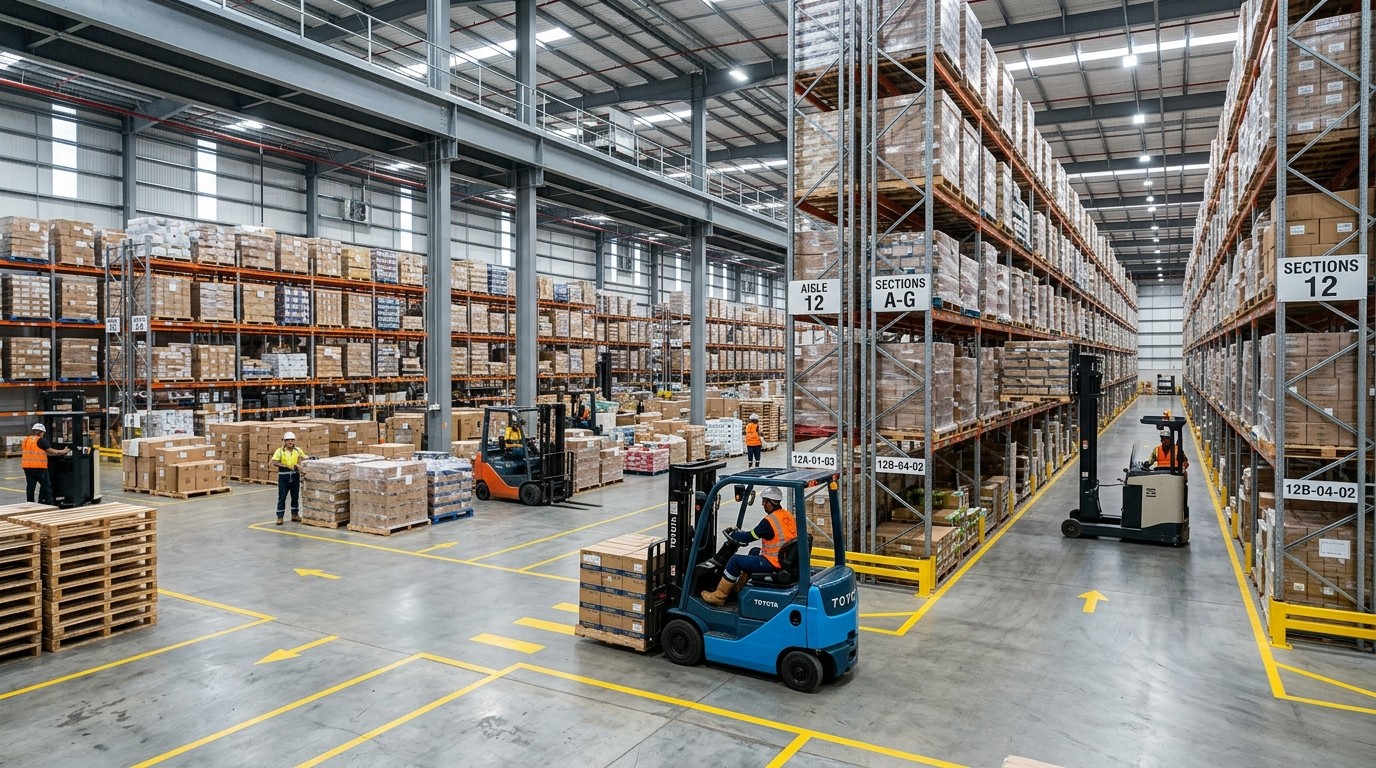
Why Warehouse Storage System Planning Matters
Warehouse storage is not just about buying racks and putting them in rows. A good storage system is designed around how your facility operates. That means thinking about:
- What types of products you store (size, weight, quantity)
- How often inventory moves in and out
- How many workers operate in the space
- What safety and security requirements you need to meet
- How much room you have for growth
Skipping the planning step often leads to bottlenecks, wasted vertical space, and expensive rework down the road. Taking time to plan upfront saves money and keeps operations running smoothly for years.
Pallet Rack: The Foundation of Warehouse Storage
For most warehouses, pallet rack is the backbone of the entire storage system. Pallet racking uses heavy-duty steel uprights and beams to create multiple levels of storage for palletized goods.
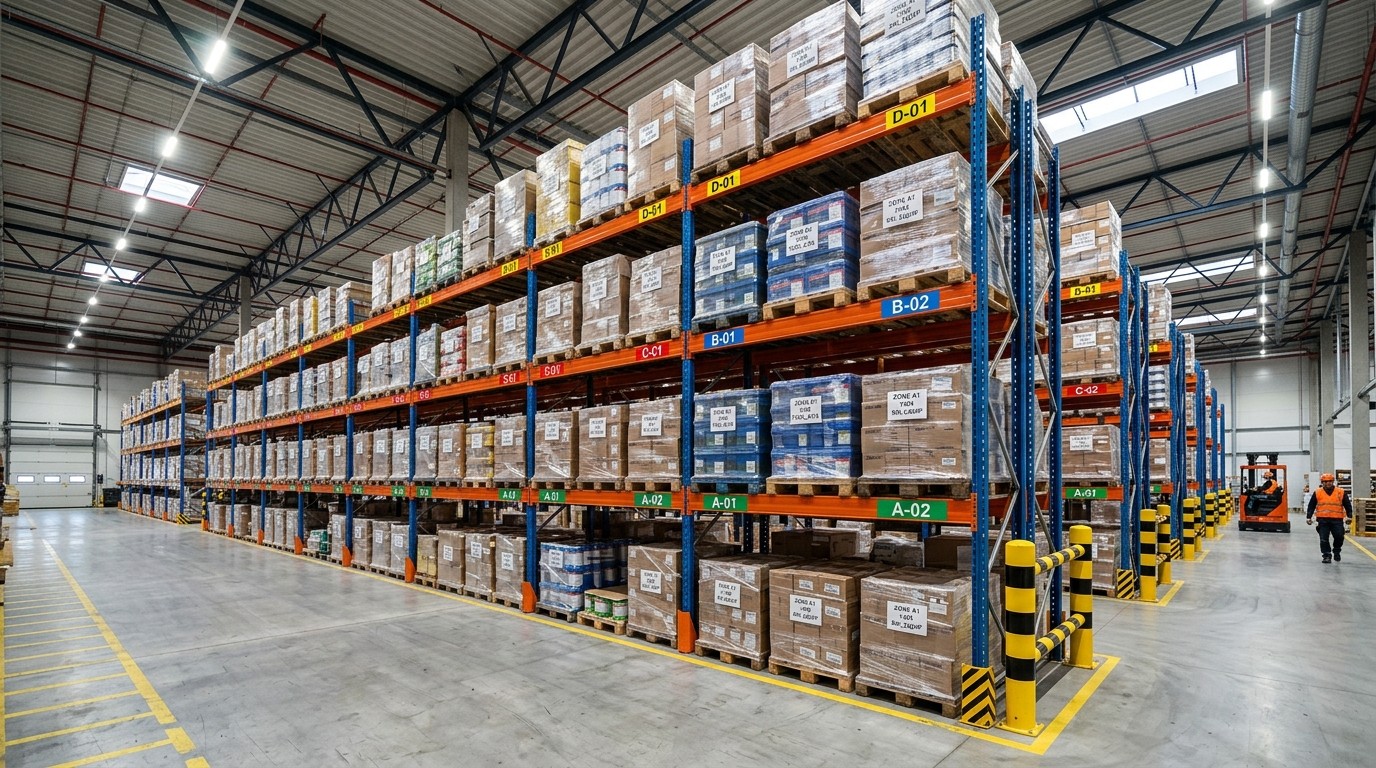
Why Pallet Rack Works
- Maximizes vertical space by storing pallets several levels high
- Keeps inventory organized and accessible by forklift
- Supports heavy loads across a wide range of beam sizes and configurations
- Adapts to different product sizes with adjustable beam heights
Types of Pallet Rack
There are several types of pallet rack to consider:
- Selective pallet rack is the most common. It gives you direct access to every pallet position from the aisle.
- Drive-in rack is designed for high-density storage of similar products. Forklifts drive into the rack structure to load and unload pallets.
- Push-back rack uses a gravity-fed system that lets you store multiple pallets deep on each level.
- Cantilever rack is built for long, bulky items like lumber, pipe, or carpet rolls. It uses arms instead of beams to hold materials.
Choosing the right type depends on your inventory profile and how quickly items need to move. Material Handling USA offers pallet rack design services to help you figure out the best configuration for your space.
Shelving Systems: Organized Storage for Smaller Items
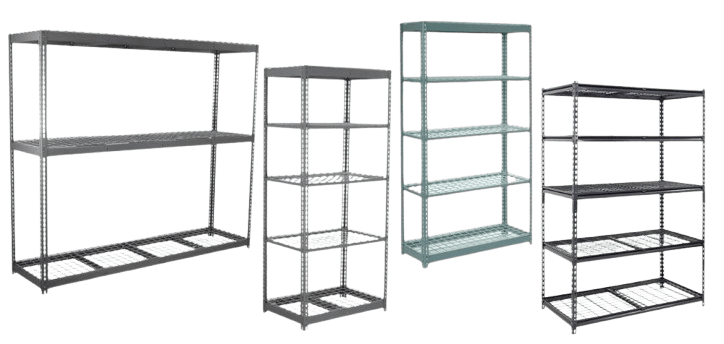
Not everything in a warehouse sits on a pallet. Smaller parts, tools, documents, and supplies need organized shelving systems. Shelving solutions fill the gaps that pallet rack cannot.
 wire shelving for warehouse storage solutions” width=”800″ />
Common Shelving Types
- Boltless shelving sets up quickly without tools and handles medium-duty loads. Great for stockrooms and backroom storage.
- Wire shelving allows air and light to pass through, making it ideal for food service, healthcare, and clean environments.
- Steel clip shelving handles heavier loads and works well for parts storage and industrial environments.
- Mobile shelving systems sit on tracks and slide together to eliminate wasted aisle space, increasing storage capacity by up to 50 percent in the same footprint.
Shelving works best when paired with bins, dividers, and labeling systems that make it easy for workers to find what they need fast.
Security Cages: Protecting High-Value and Restricted Inventory
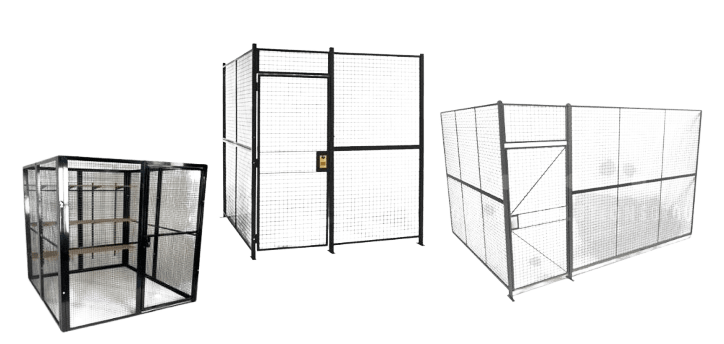
Every warehouse has items that need an extra layer of protection. Whether it is expensive electronics, controlled substances, legal evidence, or sensitive documents, security cages provide a locked, visible barrier that keeps unauthorized access out.
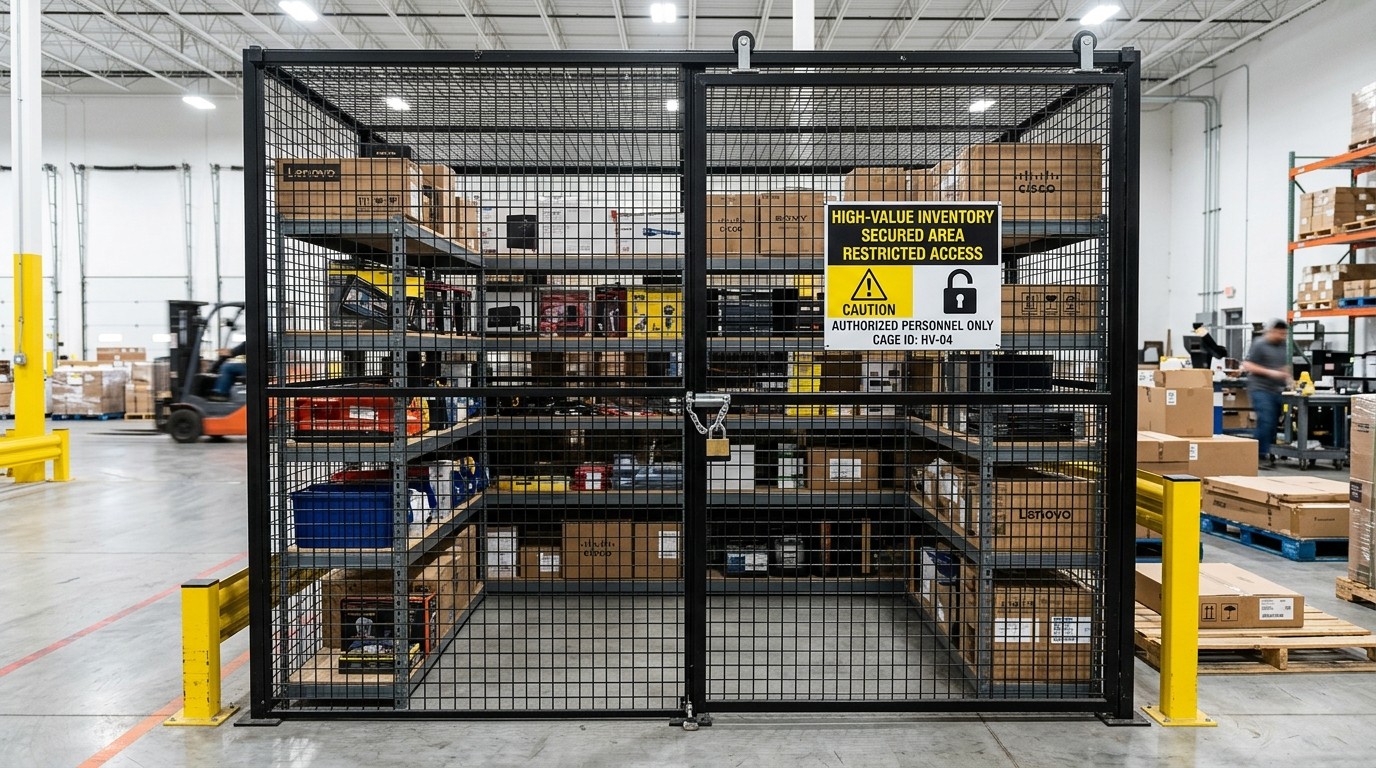 security cage area protecting high-value warehouse inventory” width=”800″ />
Common Applications
- Tool cribs where workers check out and return tools
- Server cages in data centers that protect IT equipment
- Evidence storage rooms in law enforcement facilities
- Controlled substance storage in healthcare and pharmaceutical settings
- High-value inventory areas in distribution centers
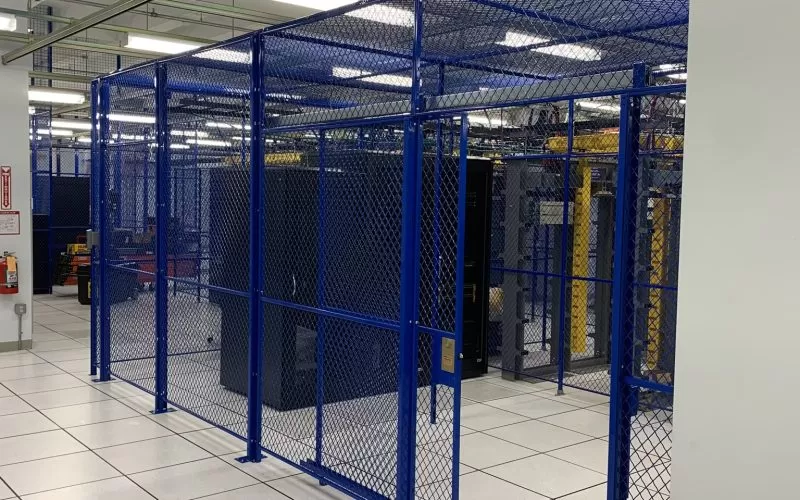
Wire mesh security cages are made from welded wire panels with locking doors. They can be configured as standalone rooms, wall-mounted enclosures, or cages built around existing shelving and racking. Many facilities add security cages inside their warehouse without any permanent construction.
Mezzanines: Doubling Your Usable Space
When your warehouse runs out of floor space, the answer is often right above your head. Industrial mezzanines are elevated steel platforms that create a second level of usable space inside your existing building.
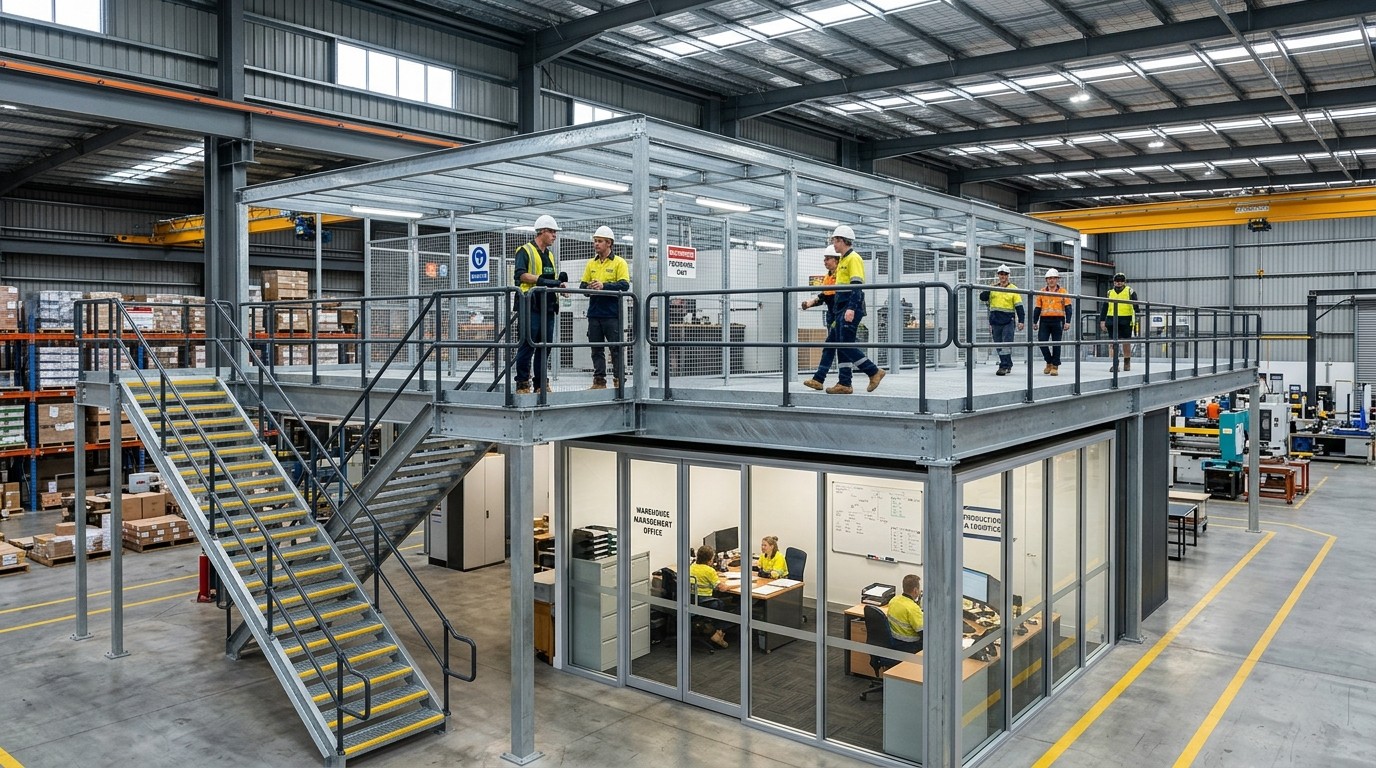 mezzanine platform with stairs and safety handrails” width=”800″ />
Where Mezzanines Add Value
- Extra storage on the upper level while keeping the ground floor clear for operations
- Elevated office or break room space overlooking the warehouse floor
- Pick and pack stations that are separated from bulk storage areas
- Overflow storage during seasonal peaks
Mezzanines can be designed as freestanding structures or integrated with your racking system. They include stairs, handrails, gates, and decking options to meet building codes and safety requirements.
A well-placed mezzanine can effectively double your usable square footage without the cost of expanding your building.
Modular Buildings: Offices, Enclosures, and Specialty Rooms
Sometimes a warehouse needs more than open storage space. Offices for managers, meeting rooms, quality control labs, break rooms, or secure enclosures may need to sit inside the warehouse footprint. That is where modular buildings come in.
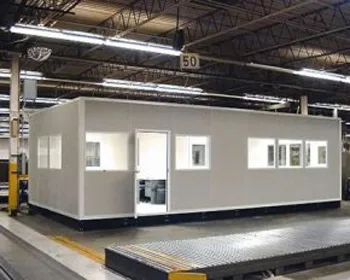 modular office workspace inside a warehouse” width=”800″ />
What Modular Buildings Offer
- In-plant offices with climate control, lighting, and windows looking out onto the warehouse floor
- Guard shacks for entry and exit checkpoints
- Clean rooms for controlled manufacturing or assembly
- Break rooms and restrooms inside large facilities
- Server rooms with secure walls and climate control

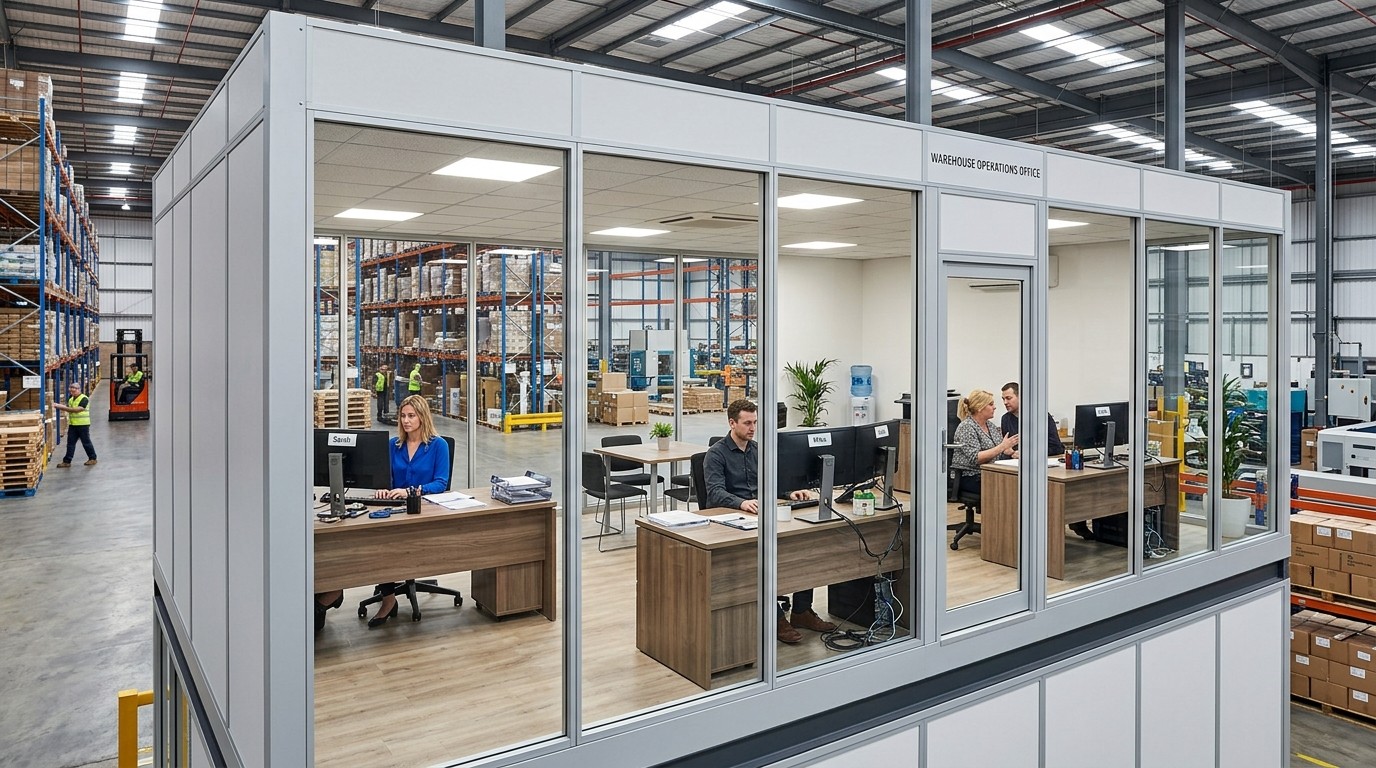
Modular buildings are prefabricated and bolt together on site. They install faster than traditional construction and can be relocated if your layout changes. They are a practical way to add enclosed space without a major building project.
Putting It All Together: Warehouse Layout Design
Individual products only work well when they are part of a thoughtful layout. Warehouse design services bring all the pieces together into a plan that fits your space, your workflow, and your budget.
Key Layout Considerations
| Factor | What to Think About |
|---|---|
| Product flow | How does inventory enter, move through, and leave the facility? |
| Aisle width | Narrow aisles save space but require special forklifts |
| Picking paths | Short, logical paths reduce labor costs and speed up fulfillment |
| Dock access | Loading docks need clear staging areas for inbound and outbound freight |
| Safety zones | Fire lanes, sprinkler clearances, and pedestrian walkways are required |
| Growth room | Leave room for future expansion so you do not have to start over |
A professional design team can create CAD drawings and walk you through options before you commit to a layout. Material Handling USA provides full warehouse design solutions that include measurements, specifications, and drawings tailored to your facility.
Checklist: Planning Your Warehouse Storage System
Use this checklist to make sure you cover the basics before ordering equipment:
- Measure your facility dimensions including ceiling height
- Document what you store (sizes, weights, quantities, turnover rates)
- Identify any special storage needs (temperature control, security, hazardous materials)
- Map your workflow from receiving to shipping
- Set a budget range for equipment, installation, and design
- Check local building codes and fire safety requirements
- Plan for at least 20 percent growth beyond current needs
- Get professional design help for complex layouts
Benefits of Working with a Single Source
One of the biggest advantages of working with a full-service supplier like Material Handling USA is getting everything from one source. When your pallet rack, shelving, security cages, mezzanines, and modular offices all come from the same team, the pieces fit together. There is one point of contact for design, one team that understands your layout, and one company accountable for making it all work.
With 25 years of experience and over 61,000 products available, Material Handling USA helps businesses nationwide plan, source, and set up complete warehouse storage systems.
Frequently Asked Questions
What is the most important part of a warehouse storage system?
For most facilities, pallet rack is the foundation because it holds the majority of inventory. But the overall layout and how products flow through the space matters just as much as any single product.
How much does it cost to set up a warehouse storage system?
Costs vary widely depending on the size of your facility, the types of products you need, and whether you need design services or installation. Contact Material Handling USA for a free consultation and quote based on your specific needs.
Can I add security cages to an existing warehouse?
Yes. Wire mesh security cages are modular and can be added to almost any warehouse without permanent construction. They bolt together on site and can be reconfigured or moved later.
How do I know if I need a mezzanine?
If you are running out of floor space but have unused vertical space above your operations, a mezzanine may be a good fit. They work best in buildings with ceiling heights of 16 feet or more.
What is the lead time for warehouse equipment?
Lead times vary by product. Some shelving and security cages ship within days. Pallet rack and mezzanines may take a few weeks depending on the configuration. Material Handling USA can help you plan around your timeline.
Do you offer warehouse design services?
Yes. Material Handling USA provides free warehouse design and layout services including CAD drawings, measurements, and specifications. Visit our design services page or contact us to get started.
Can modular buildings be installed on a mezzanine?
Yes. Modular offices and enclosures can be placed on mezzanine platforms to create elevated workspaces that overlook the warehouse floor.
What industries do you serve?
Material Handling USA serves warehouses, distribution centers, manufacturing plants, data centers, government facilities, healthcare, education, retail, law enforcement, and more.
Ready to plan your warehouse storage system? Contact Material Handling USA for a free consultation. Our team will help you design a storage layout that fits your space, your products, and your budget.
Who This Is For
Our how to plan a complete warehouse storage system in 2026 solutions are ideal for:
- Warehouse managers
- Facility planners
- Property managers
- Government coordinators
- Manufacturing managers
- Distribution operators