
Every warehouse needs more than pallet rack. Small parts, loose inventory, tools, documents, and supplies all need organized shelving systems to stay accessible and accounted for. The right shelving keeps your operation moving. The wrong shelving wastes space, slows down picking, and creates disorganized work areas.
This guide covers the main types of warehouse and industrial shelving, explains where each type works best, and helps you choose the right system for your facility.
Why Shelving Matters in Warehouse Operations
Shelving is the bridge between bulk pallet storage and hand-picked inventory. While pallet rack handles full pallets efficiently, shelving handles everything else:
- Individual items and small cartons in pick and pack operations
- Spare parts and maintenance supplies in tool cribs
- Documents, records, and archival materials
- Personal protective equipment and safety supplies
- Returns and quality hold inventory
- Office and break room supplies
A warehouse without good shelving forces workers to dig through boxes, stack items on the floor, and waste time searching for what they need. Organized shelving turns chaos into efficiency.
Boltless Shelving
Boltless shelving (also called rivet shelving) is the most popular choice for general-purpose warehouse storage. As the name suggests, it assembles without bolts — the components snap or clip together, so you can set up a complete unit in minutes with no tools.
Key Features
- Tool-free assembly with boltless rivet connections
- Adjustable shelf heights in 1.5-inch increments
- Typical load capacity: 500 to 1,000 pounds per shelf
- Available in single-rivet (lighter duty) and double-rivet (heavier duty)
- Shelf options include particle board, wire mesh, and steel decks
Best Applications
Stockrooms, backroom storage, tool cribs, retail back rooms, archive storage, and anywhere you need quick, affordable, medium-duty shelving.
Wire Shelving
Wire shelving uses chrome-plated or epoxy-coated steel wire shelves on adjustable posts. The open wire design allows air, light, and sprinkler water to pass through — making it popular in regulated environments.
Key Features
- NSF certified models available for food service and healthcare
- Open design prevents dust accumulation and allows airflow
- Easy to clean and sanitize
- Adjustable shelf heights in 1-inch increments
- Typical load capacity: 300 to 800 pounds per shelf
- Available in stationary, mobile, and wall-mounted configurations
Best Applications
Food service kitchens, hospitals, pharmaceutical storage, clean rooms, cold storage, and any environment where cleanliness and airflow are priorities.
Steel Clip Shelving
Steel clip shelving (also called closed steel shelving) uses solid steel shelves on steel posts. It is the heavy-duty option for industrial and high-capacity storage needs.
Key Features
- Solid steel shelves support heavy loads without sagging
- Typical load capacity: 350 to 1,000+ pounds per shelf
- Available in open (no sides) and closed (with sides, back, and top) configurations
- Shelf heights adjustable on 1-inch centers
- Bin fronts and dividers available for parts organization
Best Applications
Parts departments, industrial supply rooms, military storage, evidence rooms, and heavy-duty applications where shelves need to support significant weight.
Mobile Shelving Systems
Mobile shelving (also called compact shelving or high-density shelving) puts shelving units on tracks so they slide together and eliminate wasted aisle space. When you need access to a specific section, the units slide apart to create an aisle.
Key Features
- Increases storage capacity by 40 to 50 percent in the same footprint
- Available in manual (hand-crank), mechanical-assist, and powered configurations
- Floor-mounted tracks guide the units smoothly
- Safety features include anti-tip mechanisms and aisle-entry sensors on powered systems
- Compatible with most shelving types (wire, steel, boltless)
Best Applications
Evidence rooms, medical records, law offices, museum archives, libraries, pharmaceutical storage, and any facility where floor space is at a premium and maximum density is needed.
Pallet Rack Shelving Levels
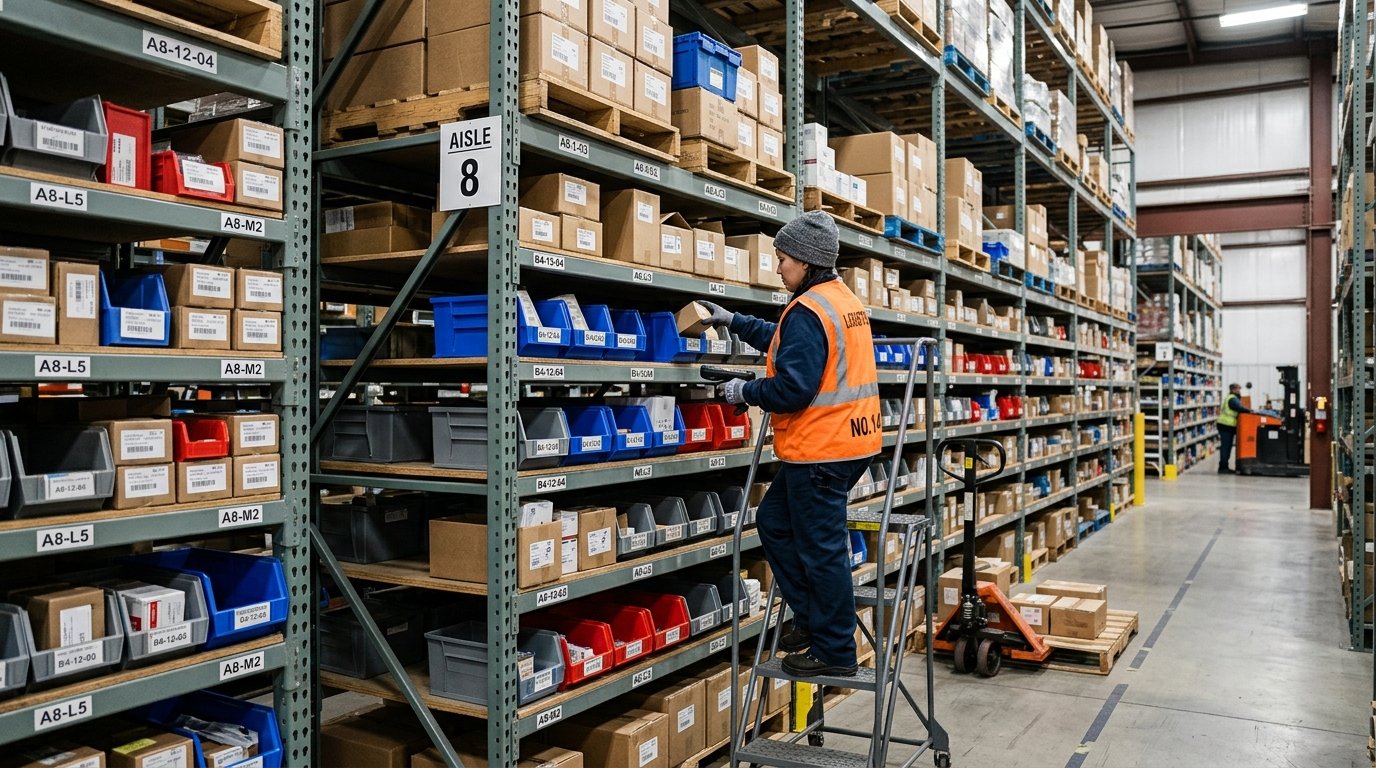
Many warehouses add shelving levels within their existing pallet rack system. Wire decking, particle board, or steel shelves are placed across the rack beams to create pick-friendly levels for cartons and individual items.
Key Features
- Uses your existing pallet rack infrastructure
- Wire decking is the most common deck type — fire safe and allows sprinkler penetration
- Converts bulk pallet positions into pick slots for individual items
- Carton flow and gravity roller inserts can be added for FIFO inventory management
Best Applications
Distribution centers, e-commerce fulfillment, pick modules, and any warehouse that needs both pallet storage and carton-level picking in the same racking system.
Cantilever Shelving
Cantilever shelving uses arms extending from a central column to hold long, awkward items. Unlike standard shelving with flat horizontal decks, cantilever arms are open-ended so long materials slide in and out easily.

Key Features
- No front columns to obstruct loading and unloading
- Arms adjust vertically to accommodate different material heights
- Available in light-duty (shelving) and heavy-duty (rack) configurations
- Single-sided and double-sided options
Best Applications
Lumber yards, pipe storage, carpet rolls, metal stock, PVC, conduit, furniture, and any long or irregularly shaped items that do not fit on standard flat shelves.
How to Choose the Right Shelving
Use this decision framework to narrow down your options:
| Question | If Yes, Consider |
|---|---|
| Do you need quick, affordable general storage? | Boltless shelving |
| Is cleanliness, airflow, or food safety a priority? | Wire shelving (NSF certified) |
| Do you store heavy parts or industrial components? | Steel clip shelving |
| Is floor space extremely limited? | Mobile shelving |
| Do you have existing pallet rack to convert? | Wire decking or rack shelving |
| Do you store long, bulky materials? | Cantilever shelving |
Shelving Accessories That Improve Organization
- Bin fronts and dividers create individual compartments on each shelf for small parts
- Label holders make shelf positions identifiable at a glance
- Shelf liners prevent small items from falling through wire shelves
- Casters convert stationary shelving to mobile carts for flexible use
- Back and side panels enclose open shelving units for security or dust protection
- Modular drawers add pull-out storage within shelving bays for small components
Planning Your Shelving Layout
Before ordering shelving, consider these factors:
- Inventory profile — What are you storing? List the sizes, weights, and quantities.
- Access frequency — How often does each item get picked? High-frequency items should be at ergonomic heights.
- Space available — Measure the area including ceiling height, column locations, and aisle requirements.
- Growth — Plan for 20 to 30 percent more capacity than you currently need.
- Integration — Will the shelving work with your WMS, barcode system, or picking process?
Material Handling USA provides warehouse design and layout services that include shelving layout planning as part of a complete storage system design.
Frequently Asked Questions
What is the difference between shelving and racking?
Shelving is designed for hand-loaded items — workers place and pick individual items or small cartons directly. Racking (pallet rack) is designed for fork-truck-loaded pallets. The main difference is load size and how items are moved.
How much weight can warehouse shelving hold?
It depends on the type. Boltless shelving typically holds 500 to 1,000 pounds per shelf. Wire shelving ranges from 300 to 800 pounds per shelf. Steel clip shelving can handle 1,000+ pounds per shelf. Always check the manufacturer’s load ratings for your specific model.
Do I need permits for shelving?
Standard shelving typically does not require building permits. However, some jurisdictions may require permits for large high-density or mobile shelving installations, especially if they affect floor loading or fire suppression systems. Check with your local building department.
Can shelving be combined with security cages?
Yes. Security cages can be built around shelving units to create locked storage for high-value or restricted items. This is common for tool cribs, evidence rooms, and pharmaceutical storage.
How long does shelving last?
Quality industrial shelving lasts 15 to 25 years or more with normal use. Steel construction and durable finishes resist wear, corrosion, and impact in warehouse environments.
Need help choosing shelving for your facility? Contact Material Handling USA for a free consultation. With 61,000+ products and 25+ years of experience, we will help you find the right shelving system for your space and budget.