
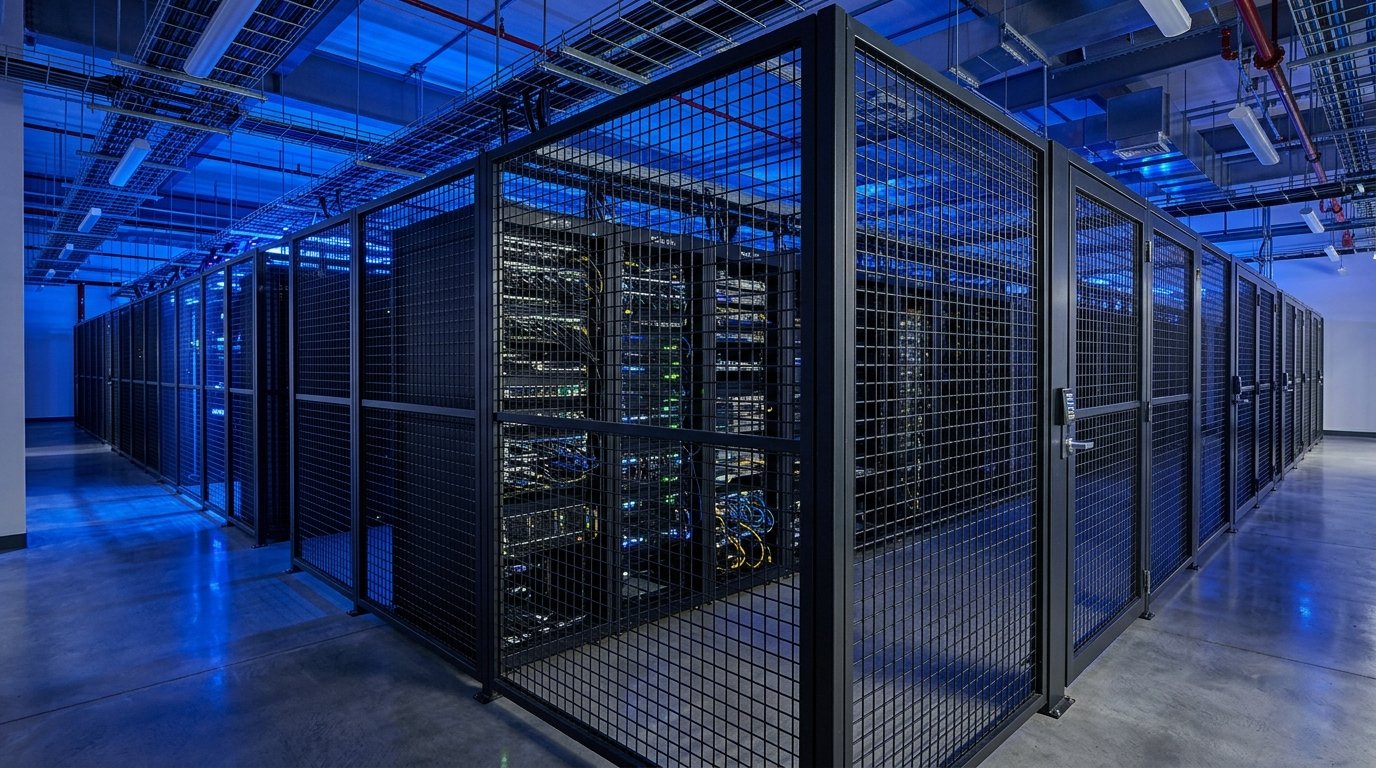
Data centers house some of the most valuable equipment and sensitive information in any organization. Protecting that infrastructure requires more than locked doors and security cameras. Wire mesh security cages provide a physical barrier inside the data center that controls access to individual server cabinets, rows, or entire sections of the facility.
This guide covers everything you need to know about choosing, specifying, and installing wire mesh security cages for data centers, colocation facilities, and server rooms.
Why Data Centers Need Security Cages
A data center is not one company’s space. Colocation facilities house equipment from dozens or even hundreds of tenants. Even private data centers have different teams, departments, and clearance levels that need physical separation.
Wire mesh security cages solve several problems at once:
- Tenant isolation in colocation facilities where multiple customers share the same building
- Access control so only authorized personnel can reach specific server cabinets
- Compliance requirements for regulations like HIPAA, PCI DSS, SOC 2, and FISMA that mandate physical access controls
- Visual accountability because wire mesh is transparent, allowing security cameras to monitor activity inside the cage
- Airflow preservation since mesh panels do not block the HVAC airflow that servers need to stay cool
Types of Data Center Security Cages
Single-Tenant Cages
A single-tenant cage encloses one customer’s server cabinets in a dedicated area. These are the most common type in colocation facilities. The cage includes walls on all sides, a lockable door, and usually a ceiling panel to prevent over-the-wall access.
Multi-Rack Enclosures
For smaller deployments, a multi-rack enclosure surrounds a group of two to ten server cabinets. These are cost-effective for customers who do not need a full cage but still require physical separation from neighboring equipment.
Aisle Containment Cages
Hot aisle and cold aisle containment systems can be combined with security caging. This approach provides both thermal efficiency and access control in a single installation.
Full-Room Partitions
Some facilities use wire mesh partitions to divide an entire data hall into separate zones. This works well for government and military data centers where different classification levels need physical separation.
Wire Mesh Specifications for Data Centers
Not all wire mesh is the same. Data center cages need specific characteristics:
| Specification | Typical Requirement | Why It Matters |
|---|---|---|
| Wire diameter | 6 gauge or 10 gauge | Thicker wire resists cutting and forced entry |
| Mesh opening | 2″ x 1″ or smaller | Prevents reaching through to access equipment |
| Panel height | 8 to 12 feet | Must reach ceiling or include a top panel |
| Finish | Powder coated or galvanized | Corrosion resistance and professional appearance |
| Door width | 3 to 4 feet single, 6 to 8 feet double | Wide enough for server cabinet delivery |
Access Control Integration
The cage itself is only part of the security system. Most data center cages integrate with electronic access control:
- Card readers on cage doors tied to the building’s access control system
- Biometric locks for higher security environments
- Keypad locks with unique codes for each authorized user
- Audit trail logging that records who entered the cage and when
- Camera positioning at cage entry points for visual verification
Wire mesh makes camera monitoring effective because guards and cameras can see through the cage walls, unlike solid partitions that create blind spots.
Compliance Standards That Require Physical Security
Several industry standards specifically require physical access controls in data environments:
- PCI DSS (Payment Card Industry) requires restricting physical access to cardholder data environments
- HIPAA requires physical safeguards for systems that store protected health information
- SOC 2 includes physical security controls in the trust services criteria
- FISMA and FedRAMP require physical protection for federal information systems
- ISO 27001 includes physical and environmental security controls
Installing security cages is often the most straightforward way to meet these physical access requirements without major construction.
Airflow Considerations
One of the biggest advantages of wire mesh over solid walls is airflow. Data center cooling systems rely on precise air circulation to keep servers at safe operating temperatures.
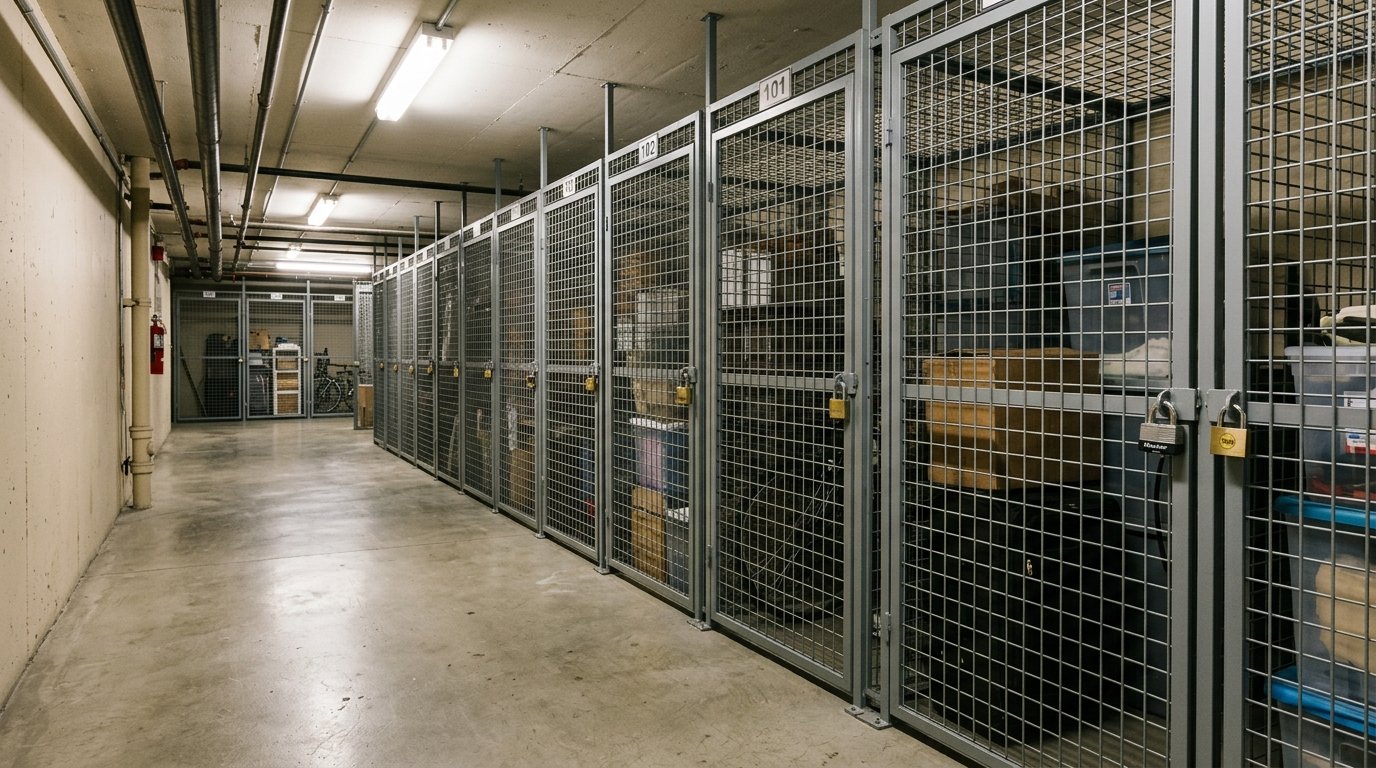
- Wire mesh panels allow air to pass through freely, maintaining hot aisle and cold aisle separation
- Solid panels or walls can create hot spots and disrupt cooling efficiency
- Mesh ceiling panels allow overhead cooling systems to work properly
- Blanking panels within the cage should still be used on empty rack spaces to maintain proper front-to-back airflow
Installation and Layout Planning
Data center security cages are modular and bolt together on site. Most installations can be completed without shutting down operations in the rest of the facility.
Planning Steps
- Measure the area including cabinet positions, aisle widths, and overhead clearances
- Identify door locations that align with traffic patterns and emergency egress
- Plan for cable routing — cages need openings or cable trays for network and power cables
- Coordinate with the facility’s fire suppression system — cages cannot block sprinkler coverage
- Verify that the cage layout meets local building codes and fire marshal requirements
Common Installation Configurations
- Floor-mounted posts bolt directly to the data center floor
- Raised floor installations require special mounting hardware that distributes load across floor tiles
- Ceiling-mounted options hang panels from the overhead structure to avoid floor penetrations
Material Handling USA provides design and layout services to help you plan the right cage configuration for your data center.
Cost Factors
The cost of a data center security cage depends on several variables:
- Size — larger cages with more panels and doors cost more
- Wire gauge — heavier gauge wire costs more but provides better security
- Door type — sliding doors cost more than swing doors but save aisle space
- Access control hardware — electronic locks and card readers add to the total
- Ceiling panels — adding a top increases material and labor costs
- Finish — custom colors or specialized coatings may add to the base price
Despite the investment, security cages are significantly less expensive than building permanent walls and provide the same or better access control with added visibility and airflow benefits.
Frequently Asked Questions
How long does it take to install a data center security cage?
Most cages can be installed in one to three days depending on size and complexity. The modular panel design means no welding, cutting, or heavy construction is needed on site.
Can security cages be moved or reconfigured?
Yes. Because the panels bolt together, cages can be disassembled and reconfigured as your data center layout changes. This is a major advantage over permanent walls.
Do wire mesh cages affect cooling performance?
No. Wire mesh allows air to pass through freely. In most cases, mesh cages maintain better airflow than solid partitions because they do not create pressure differentials or block HVAC systems.
What size cage do I need for a colocation deployment?
It depends on the number of cabinets and your growth plans. A typical single-tenant cage in a colocation facility ranges from 4 cabinets to 50 or more. Contact Material Handling USA for a custom quote based on your specific requirements.
Are data center security cages UL listed?
Standard wire mesh cages are not UL listed as fire barriers. They are access control devices. Fire protection in data centers is handled by the building’s sprinkler and suppression systems, which work effectively through wire mesh panels.
Need security cages for your data center? Contact Material Handling USA for a free consultation. We will help you design a cage layout that meets your security, compliance, and operational requirements.