Explore Custom Solutions Today!
Ready to select the perfect material for your lab countertops? Contact us today for expert guidance and high-quality solutions that meet your needs.

Home | Laboratories | Materials To Consider For Your Lab Countertops
Discover the best materials for lab countertops!

Designing a lab requires careful consideration of various factors, and one of the most crucial is selecting the right material for your lab countertops. Whether you’re outfitting a lab for education, research, testing, or production, the countertops you choose must withstand the rigors of your specific environment. This guide will help you navigate the top materials available, their advantages and disadvantages, and which might be best suited for your lab’s needs.

The right lab countertop material ensures that your workspace can handle daily tasks without wear and tear. Durability is key, especially when dealing with chemicals, high temperatures, or heavy equipment. A well-chosen material can last for years, reducing the need for frequent replacements and ensuring consistent performance.
Safety is paramount in any lab. The countertop material you select should meet industry safety standards and be resistant to the specific hazards your lab faces, such as chemical spills or heat exposure. Compliance with these standards helps prevent accidents and maintains a safe working environment.
While budget is always a consideration, it’s important to think long-term. Investing in a high-quality, durable material can save you money over time by reducing maintenance costs and the need for replacements. Balancing cost with functionality and durability ensures you get the best value for your investment.
Ready to select the perfect material for your lab countertops? Contact us today for expert guidance and high-quality solutions that meet your needs.
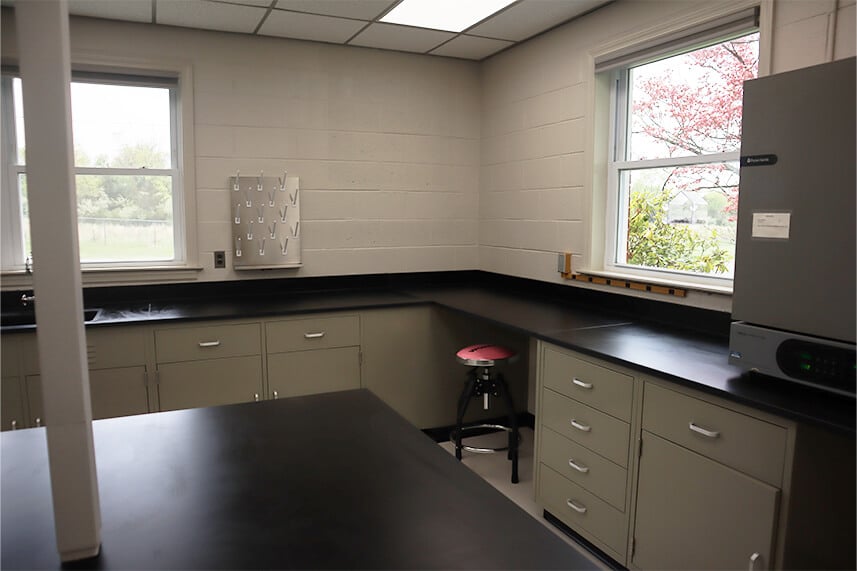
Phenolic resin countertops are crafted by layering kraft paper saturated with phenolic resin and processing it under high heat. This creates a solid, lightweight countertop that offers excellent durability and resistance to various chemicals.
Advantages:
Disadvantages:
Best Applications: Phenolic resin is ideal for biological, chemical, clinical, and analytical labs where non-contamination and high chemical resistance are critical.
Epoxy resin countertops are made by curing a mixture of materials into a solid, non-porous product. They are highly durable and perform well under extreme conditions, making them the go-to choice for labs with high moisture and harsh environments.
Advantages:
Disadvantages:
Best Applications: Epoxy resin is suited for biological science, hospital, industrial testing, and research and development labs that use harsh chemicals and open flames.

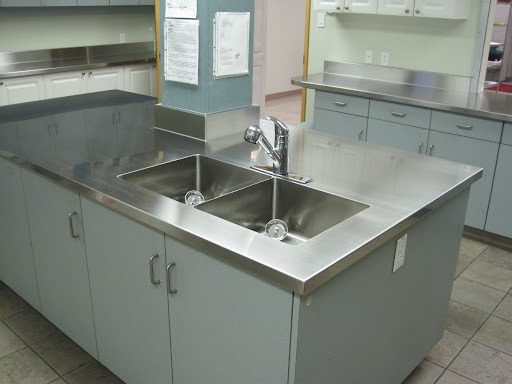
Stainless steel countertops are constructed from low carbon steel alloyed with chromium and nickel. These materials provide resistance to rust, corrosion, stains, and heat, making stainless steel a versatile and hygienic option.
Advantages:
Disadvantages:
Best Applications: Stainless steel is perfect for biological science, clean room, food testing, hospital, medical, and pharmaceutical labs that require non-contaminating, heat-resistant surfaces.
Chemical laminate countertops are made by applying a melamine resin over decorative surface paper, which is bonded to a phenolic resin core. This creates a durable and chemically resistant surface, though it is less suited for extreme conditions.
Advantages:
Disadvantages:
Best Applications: Chemical laminate is best for beauty product, dental, pathology, and product testing labs that need a decorative and hygienic surface for dry applications.


High pressure laminate countertops are similar to chemical laminate but are primarily used for general-purpose applications. They offer a balance of functionality and aesthetics but are best suited for environments with minimal exposure to harsh chemicals or heat.
Advantages:
Disadvantages:
Best Applications: High pressure laminate is ideal for product testing and technology labs where general functions and aesthetic appeal are priorities.
Over 30 Years Of Experience
We design and install the right storage solutions for your specific needs
Custom
Options
We offer a range of customizable options to meet your unique needs
Customer Satisfaction
We are committed to excellent service and support, ensuring satisfaction with every purchase
Competitive Pricing
We offers competitive pricing, making it easy to find a solution that fits any budget
Experience the streamlined process of Material Handling USA’s Warehouse Solutions, guiding you from consultation to implementation with personalized solutions and ongoing support.

ESD laminate countertops are designed for environments where static-sensitive materials are handled. This material protects sensitive components from static discharge while providing a durable work surface.
Solid surface countertops offer durability and ease of maintenance, with the added benefit of seamless construction. This material is popular for labs that require a clean, hygienic appearance.
Butcher block countertops, made from wood, are traditionally used in woodworking and assembly areas. While not suitable for chemical labs, they can be used in non-work areas or labs focused on less abrasive tasks.
Stone countertops, such as granite or quartz, provide exceptional durability and heat resistance. They are ideal for labs that require both functionality and a high-end appearance.
When selecting your lab countertop material, consider the following:
*Consulting with a lab furniture professional can help you navigate these considerations and choose the best material for your needs. A high-quality manufacturer will ensure your lab design is functional, safe, and compliant with industry standards.
Bring Your Vision to Life! Unsure which material is right for your lab? Schedule a consultation with our lab furniture experts and get personalized recommendations.
Epoxy resin is considered the most durable material, ideal for extreme lab conditions.
Stainless steel handles the highest temperatures, making it the best choice for heat resistance.
Consider chemical and heat resistance, durability, maintenance, cost, appearance, and availability.
Working with a professional ensures you choose the right material for your lab’s specific needs and standards.
High pressure laminate is the most economical option, ideal for general-purpose labs.