Implementing effective warehouse organization tips delivers measurable gains. Smart zoning and streamlined workflows shrink picker travel, reduce errors, and speed order fulfillment. Facilities that add forward-pick zones often see 30–45% faster turn rates within weeks. Ready to optimize? Request a Quote for a free layout design.
Understanding Warehouse Organization Benefits
Every warehouse has unique challenges, but these core tactics work almost anywhere. Here’s a quick look at top tipsand their key benefits.
| Tip | Benefit |
|---|---|
| Smart Zoning | 30% Reduction in Picker Travel Time |
| Forward-Pick Zones | 45% Faster Order Turn Rates |
| Cross-Aisle Paths | Improved Traffic Flow and Safety |
| Optimized Storage | 20% Boost in Cubic Utilization |
| Streamlined Workflows | 15% Lower Labor Costs |
By grouping SKUs by pick frequency, you slash restocking labor by 25%. Breaks in racks improve equipment flow and safety immediately. A Midwest distributor cut walking distance by 42% after adding just two cross-aisles.
Key Selling Points
Competitive pricing on racksand shelving
Fastest shipping and delivery in the industry
Quality materialsand products
Free layoutsand designs with no obligation
Free quotes
Measuring Success
Track these metrics to confirm your changes deliver ROI:
- Picks Per Hour: Aim for 100+
- Order Accuracy: Maintain above 99%
- Labor Cost Per Order: Target a 15% reduction
- Travel Distance Per Pick: Stay under 150 ft
Regular check-ins keep teams focused on continuous improvement. Involve floor staff in mapping daily bottlenecks—they spot issues before the data does.
Assessing Warehouse Needsand Objectives
Profiling Current Performance
Use WMS reportsand floor surveys to build your baseline:
| Metric | Current Value | Target Value |
|---|---|---|
| Travel Distance | 180 feet | Under 150 feet |
| Pick Time | 75 seconds | 60 seconds |
| Error Rate | 2.5% | Under 1% |
- Order Volume shows busy windows
- SKU Velocity identifies hot movers
- Pick Time and Error Rate highlight pinch points
Talk with your team for quick insights before finalizing your objectives.
Analyzing Traveland Pick Times
Map picker routes with wearable scanners or tape measures to spot high-traffic corridors. One site cut 200 feet per picker per day with a single cross-aisle.
Setting Performance Targets
Align goals with budget and timeline:
- Increase pick rates by 15% weekly
- Cap travel distance at 150 feet
- Keep error rates under 1%
- Schedule quarterly reviews with operationsand safety teams
Budget for racking costs, factor in lead times from MH-USA, and build in training buffers. A mid-size retailer saved $20,000 by syncing schedules with Material Handling USA.
Request a Quote or Call (800) 326-4403 for free design and estimate.
Designing Efficient Warehouse Layouts
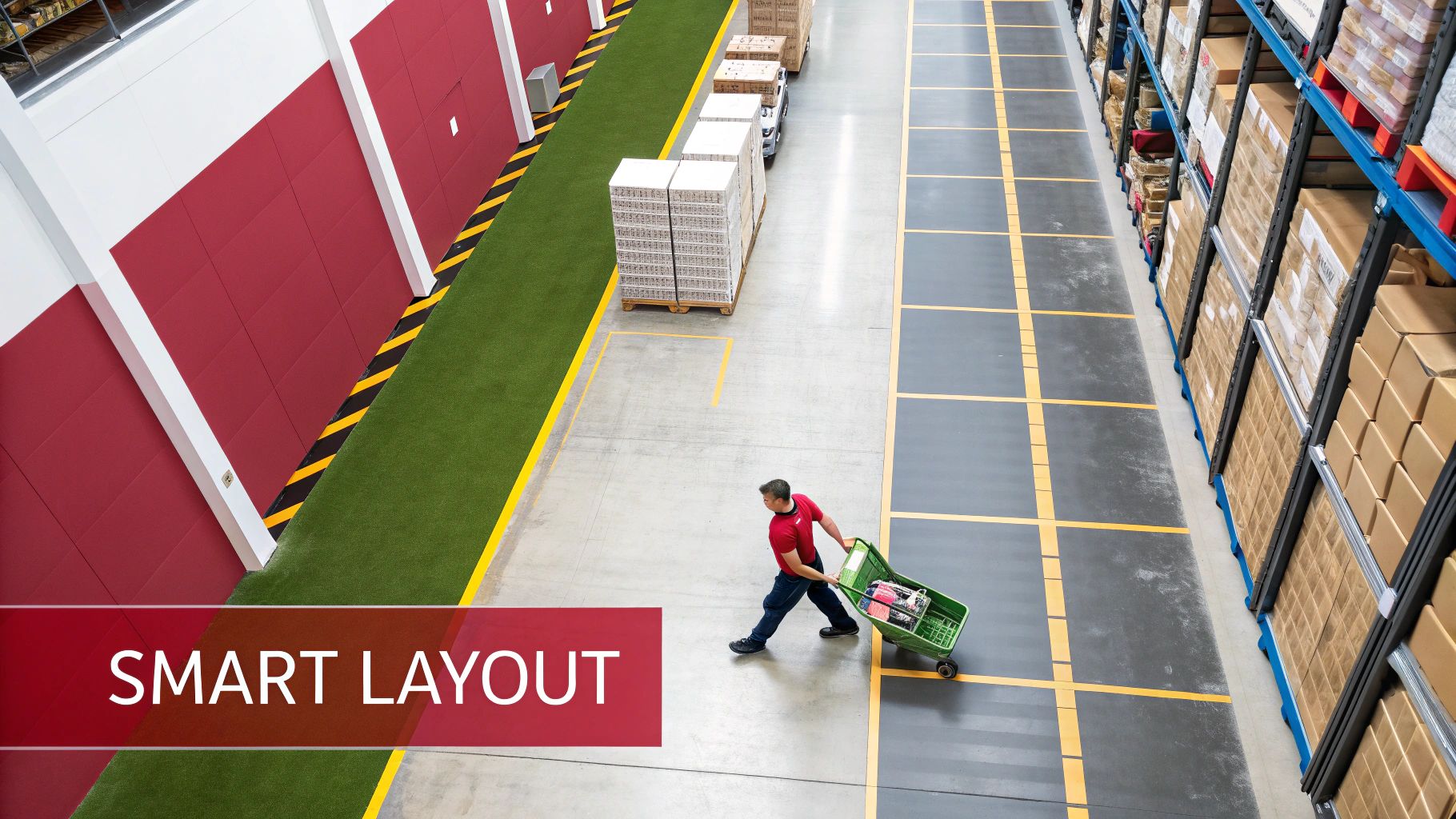
Place fast movers closest to packing stationsand reserve slow movers in bulk storage. Sketch new aisle paths with floor tape and test pick times before full rollout.
Modeling Traffic Flow in Software
Use digital tools to simulate heat mapsand traffic counts. Tweak aisle widths, slot heights, and rack densities until you strike the right balance between capacity and flow. Share dashboards with leadership for buy-in.
Comparison of Layout Optimization Strategies
| Strategy | Description | Expected Improvement |
|---|---|---|
| Slotting and Zoning | Assign SKUs to zones based on velocity | Up to 50% travel time reduction |
| Cross-Aisle Routing | Breaks between aisles to shorten picker routes | 15-20% walking reduction |
| Forward-Pick Shelving | Position fast movers near docks | 25-30% pick time savings |
Piloting Pick Technologies
Start with a single aisle pilot for pick-to-light or voice. Record picks per hour, error rates, and gather operator feedback. Adjust batch sizesand wave planning based on real-time data.
Choosing the Right Racking Solutions
Space is limited so choose racks that match SKU size, weight, turnover, and shape.
Matching Rack Types to Inventory
- Selective Pallet Racks: High access flexibility
- Drive-In Systems: High-density storage lanes
- Cantilever Shelving: Ideal for long or odd-shaped items
Switching from fixed beam racks to adjustable systems boosted cubic storage by 30% without footprint changes.
Rack Configuration Comparison
| Feature | Selective Pallet | Drive-In System | Cantilever Shelving |
|---|---|---|---|
| Access Level | High | Tradeoff for Density | Moderate |
| Storage Density | Moderate | High | Low |
| SKU Flexibility | Very High | Low | Specialized |
| Expansion Ease | Simple Add-Ons | Lane Extensions | Extend Arm Length |
Plan aisles at least 12 ft for standard forklifts. For tight spaces, combine narrow-aisle trucks with high-density racks. Learn more in our Comprehensive Guide to Selecting Pallet Rack for Your Warehouse. Shop Now
Implementing Inventory Labeling and Control
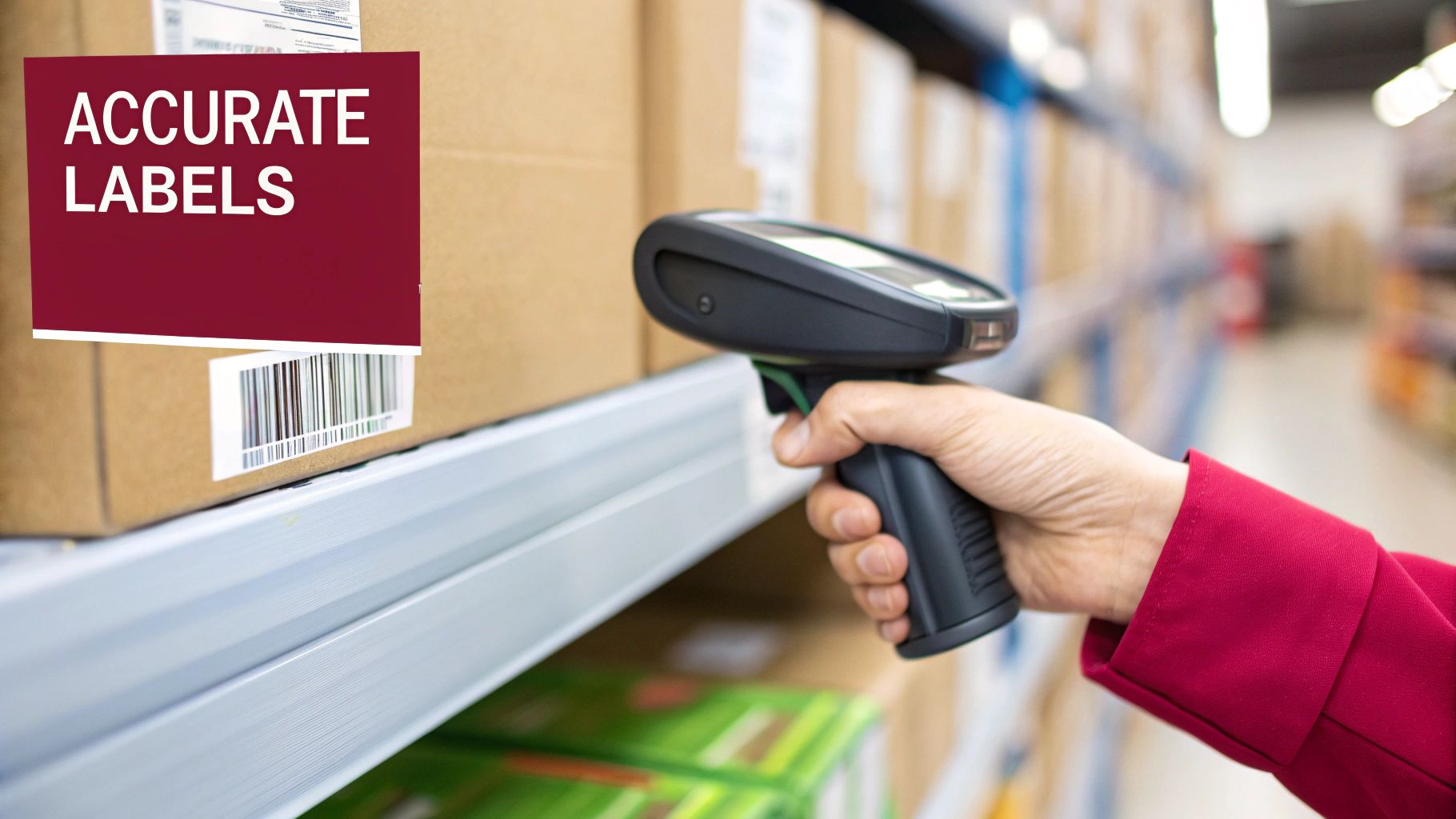
Barcodesand RFID tags improve scan accuracy by up to 50%. Follow GS1 128 standardsand ISO RFID guidelines to track batch data and speed pallet scans.
Cycle Count Protocol
- Focus counts on high-value SKUs daily or weekly
- Use handheld scanners for instant validation
- Sync counts to your WMS for variance reports
Automating Replenishment
Set thresholds to trigger restock alerts automatically. For parts rooms, see our guide on labeling and bin location systems for efficient parts rooms.
| Feature | Barcode Systems | RFID Systems |
|---|---|---|
| Cost per tag | $0.05 average | $0.15 average |
| Scan range | Line-of-sight, up to 1 ft | No sight needed, up to 20 ft |
| Data capacity | Up to 48 characters | Expanded memory for batch data |
| Ideal use case | Item-level picksand audits | Pallet or case-level throughput |
For labeling suppliesand supplies, Buy Online from our store or Contact Us for a free consultation. Call (800) 326-4403.
Optimizing Picking and Replenishment Workflows
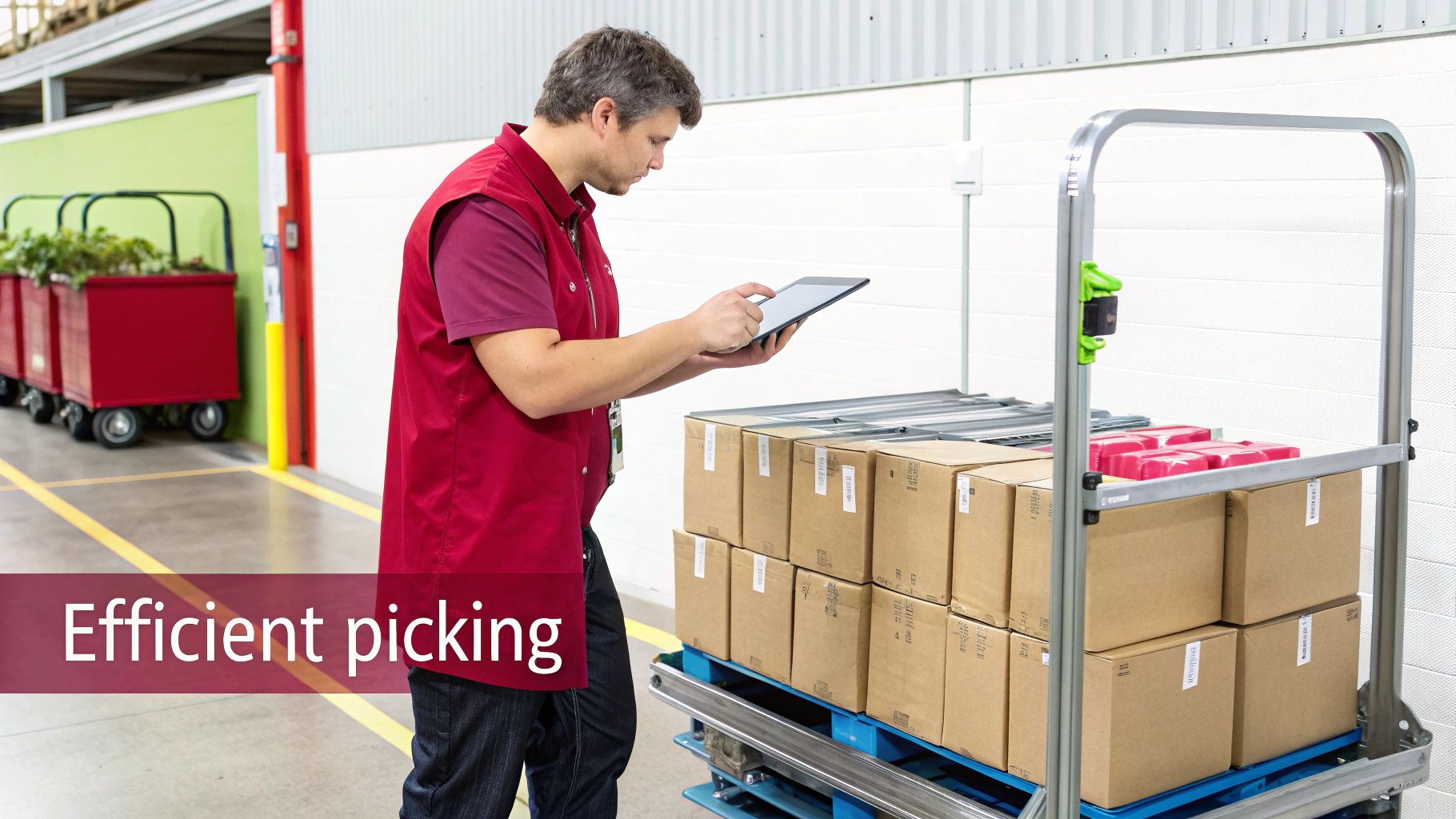
Combine zone picking with batch waves to balance speed and workload. At one electronics center, wave picking software lifted throughput by 35% on peak days.
Zone Picking with Batch Waves
- Define clear zone boundaries with signage
- Run waves every two hours to cut 20% off travel
- Review zones quarterly for demand shifts
Pick-to-Voice Integration
Hands-free voice prompts drive 25% faster picksand 99% first-pass accuracy. Pilot with your top 50 SKUsand pair with wearable scanners.
| Technology | Benefit | Adoption Tip |
|---|---|---|
| Pick-to-Voice | 25% Faster Picks | Pilot with top SKUs |
| Wearable Scanners | 99.8% Scan Accuracy | Pair with voice commands |
| Tablets | Lower Paper Waste and Mistakes | Offer on-the-job training |
Request a Quote for a free workflow design or Call (800) 326-4403 to explore solutions.
Warehouse Organization Frequently Asked Questions
What Is the First Step in Reorganizing a Warehouse Layout
Walk the floor, map picker routes, and record travel times for your top SKUs. Set clear goals before touching any racks.
How to Choose Between Pallet Racksand Drive-In Racks
Selective racks suit high-SKU variety and frequent picks. Drive-in racks deliver density for identical pallets.
Which Metrics Should I Track to Measure Success
- Travel Distance
- Picks Per Hour
- Order Accuracy
- Labor Cost Per Order
How to Pilot Layout Changes Without Full Downtime
Test in one aisle or zone, track results, refine processes, then roll out site-wide.
For OSHA safety guidelines see OSHA Warehouse Safety Guidance: https://www.osha.gov/warehousing
Conclusion
Effective warehouse organization boosts efficiency, accuracy, and throughput. By profiling performance, designing smart layouts, choosing proper racks, implementing labeling, and optimizing workflows, you’ll see tangible ROI. MH-USA offers competitive pricing, fastest shipping, quality materials, and free layoutsand quotes. Ready to transform your operation? Request a Quote, Call (800) 326-4403, or Contact Us today. Continuous improvement starts now.
Who This Is For
Our warehouse organization tips solutions are ideal for:
- Warehouse managers
- Facility planners
- Property managers
- Government coordinators
- Manufacturing managers
- Distribution operators