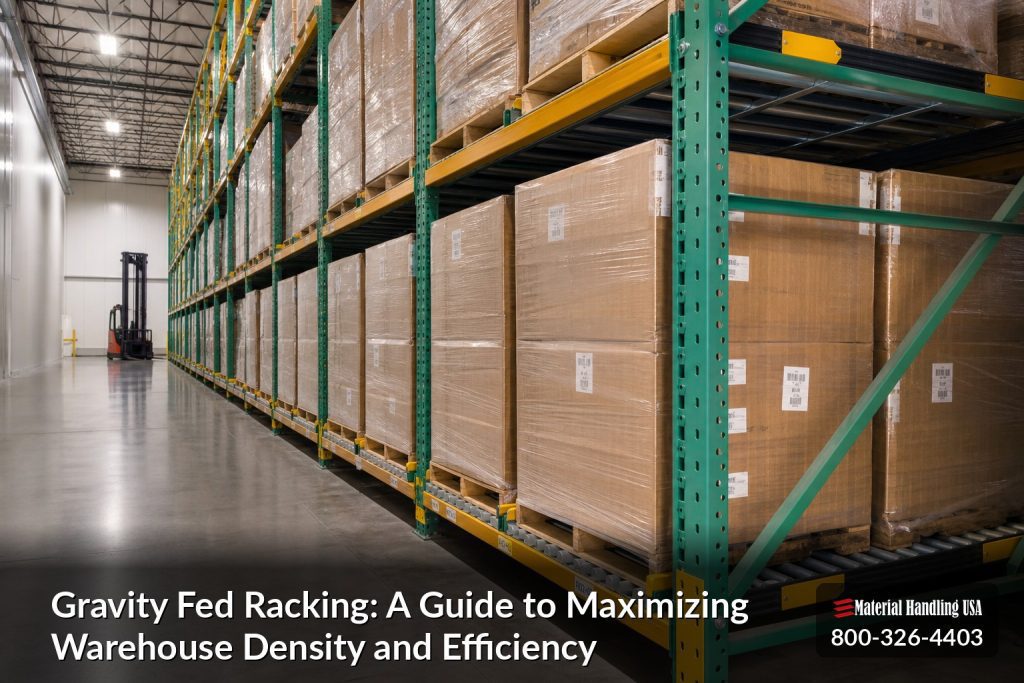
Imagine a system that works like a giant, super efficient vending machine for your warehouse. You pick an item from the front, and gravity smoothly slides the next one forward, ready to go. That’s the simple, powerful idea behind gravity fed racking, often called flow racking.
This is not just about clever shelving; it is a fundamental shift in how your inventory moves, designed to boost throughput and get the absolute most out of your current square footage. By creating dedicated aisles for stocking and picking, this system immediately cuts down on forklift and foot traffic congestion, leading to a safer, more organized workflow.
How Gravity Fed Racking Optimizes Your Warehouse
At its core, gravity fed racking is engineered for efficiency. The design naturally enforces a First In, First Out (FIFO) inventory system, which is essential for any business dealing with perishable goods, electronics, or products with expiration dates. This automatic rotation ensures your oldest products are always picked first, minimizing spoilage and waste.
When you invest in gravity fed racking, you are not just buying steel; you are investing in a strategy. It is a commitment to a leaner, more productive operation that leverages physics to save time and labor.
Core Concepts of Flow Racking
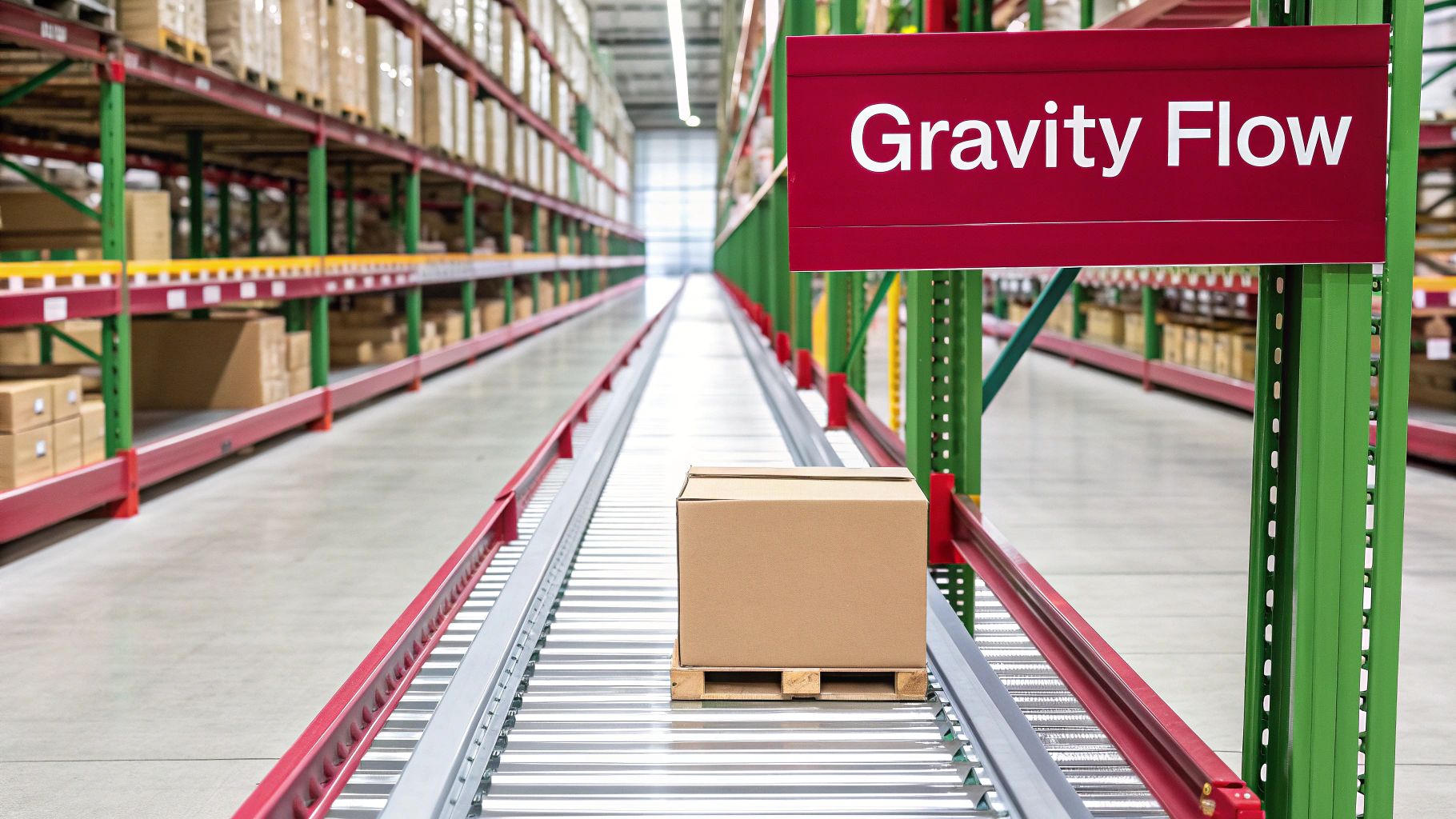
The magic is in the simplicity. We set up angled racks with rollers or wheels, letting physics do the heavy lifting. Goods are loaded at a higher point in the back and gently glide down to the picking face at the front. This turns your static shelving into a dynamic, active part of your operation.
The payoff is significant:
- Exceptional Storage Density: By eliminating most of the aisles you would need with traditional racking, you can pack far more product into the same footprint. This often leads to a serious increase in capacity.
- Lower Labor Costs: Your pickers are not wasting time walking or driving deep into rack systems. The product always comes to them. With stocking and picking happening in different aisles, they are not tripping over each other, either.
- Perfect Inventory Rotation: FIFO happens automatically. This simple feature drastically cuts the risk of product spoilage or obsolescence and makes inventory counts much easier.
The rise of gravity fed racking is a direct answer to the pressures of modern logistics. This is reflected in the growth of the global market for these systems, with projections showing continued expansion as more businesses seek to optimize their supply chains.
To give you a quick overview, here is a simple breakdown of what gravity fed racking is all about.
Gravity Fed Racking At a Glance
| Core Principle | Primary Benefit | Inventory Method | Ideal For |
|---|---|---|---|
| Uses a slight incline and rollers to move goods from a loading aisle to a picking aisle. | Maximizes storage density by reducing the number of required aisles. | First In, First Out (FIFO) is automatically enforced. | Operations with high volume, uniform products and a need for strict inventory rotation. |
This table captures the essence of the system, but the real power comes from tailoring it to your specific product and workflow.
Pallet Flow vs. Carton Flow
Gravity fed systems are not one size fits all. They are typically broken down into two main categories based on what you are moving.
Pallet Flow Racking: This is the heavy duty workhorse. Built to handle full pallets, it is the go to solution for high volume distribution centers and busy manufacturing plants. We can design lanes to hold just a few pallets or create deep systems that hold over twenty pallets in a single lane.
Carton Flow Racking: Think smaller. This system is designed for individual boxes, cases, or totes. It is an absolute game changer for piece picking or split case fulfillment, which is the bread and butter of e-commerce and parts distribution operations.
We have seen firsthand how dedicating separate aisles for loading and picking can slash forklift travel and associated labor costs by 25-40%. That is not just a budget win; it is a major boost to workplace safety.
Choosing the right system is your critical first step. While gravity racking offers huge advantages on its own, it is also smart to explore broader strategies to maximize your storage capacity. As you weigh your options, think about how a dynamic storage system fits into your larger vision for warehouse optimization.
Project planning and installation schedules, especially for custom systems, can fill up months in advance. Getting the conversation started early ensures we can lock in a spot on our installation calendar and help you avoid seasonal backlogs, allowing your facility to become more efficient sooner.
Breaking Down a Gravity Flow System: What Makes It Tick?
It is one thing to say you are using gravity. It is another thing entirely to build a gravity fed racking system that you can trust day in and day out. A reliable system is all about its precisely engineered components, with each part working in perfect harmony to move your inventory safely and smoothly.
A well designed system is not just a bunch of angled steel; it is a dynamic machine. Every single component, from the frame to the smallest wheel, is chosen specifically for your inventory and how you operate. Getting those details right is what turns a racking expense into a real investment with a solid return.
The Structural Foundation
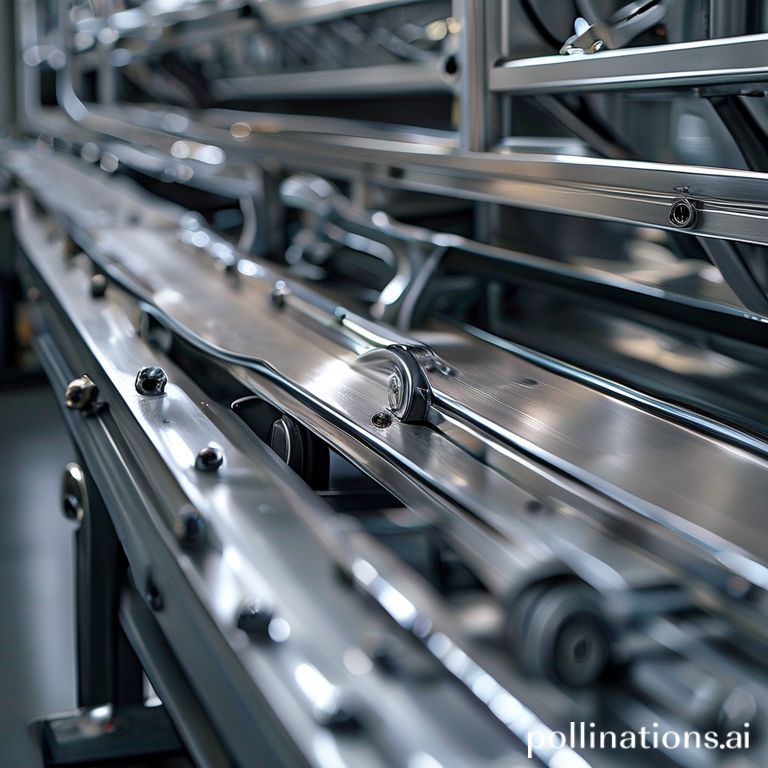
The backbone of any gravity flow system is its rack structure. Think upright frames and horizontal beams made from high strength steel, providing all the muscle needed to support the setup. The big difference here, compared to standard static racking, is that the beams are installed at a slight, carefully calculated incline.
This slope is not just a guess. It is dialed in based on the weight, size, and even the bottom surface of what you are storing. To get a better sense of how these frames stack up against other options, you can dive into the fundamentals of various pallet rack and pallet rack systems.
Roller Tracks: The Heart of the System
This is where the magic happens. The rollers are literally what put the “flow” in gravity flow. These tracks are the highway your products travel on, and their design is absolutely critical for consistent, predictable performance.
You will find a few different types, each built for a specific job:
- Skate Wheels: Imagine small, tough steel or polyurethane wheels set in a staggered pattern inside a channel. They are perfect for lighter items with flat, solid bottoms, like the cardboard boxes you would see in a carton flow system.
- Full Width Rollers: These are the heavy hitters, solid, tube like rollers that span the whole lane. They offer much greater surface contact, making them the go to choice for moving heavy, bulky, or unevenly sized pallets in a pallet flow setup.
The spacing of these rollers is just as important. We adjust their density based on your product’s weight to guarantee a smooth ride without any snags or stalls.
Crucial Safety and Control Features
Letting gravity do the work with heavy loads demands some serious, built in safety measures. These are not optional add ons; they are non negotiable components for protecting your products, your equipment, and most importantly, your people.
A gravity flow system without proper safety controls is just an accident waiting to happen. Key features like entry guides and braking systems transform it from a simple ramp into a controlled, professional material handling solution.
Here are the essential safety elements we build into every design:
- Entry Guides: We install these tough steel guides at the loading end of the lane. They act like bumpers, forcing forklift operators to place pallets perfectly onto the rollers every time. Good alignment is everything; it prevents pallets from jamming up or veering off course.
- Braking Systems: In deeper pallet flow lanes, a pallet can pick up a surprising amount of speed. To counter this, we strategically place speed controllers (or braking rollers) down the lane. These devices apply just enough friction to the pallet’s underside to keep it moving at a safe, controlled pace from start to finish.
- Ramp Stops: At the picking end, a heavy duty steel stop brings the pallet to a safe, secure halt. These are built tough, designed to absorb the full kinetic energy of a loaded pallet.
By understanding how these parts work together, you can confidently invest in a gravity fed racking system designed for long term safety and peak performance. When you are ready to see what a custom layout could do for your operation, our team is here to put together a free, no obligation design and quote. Contact Us or give us a call at 800-326-4403 to get started.
Choosing Between Pallet Flow and Carton Flow Racking
Picking the right gravity fed racking system, either pallet flow or carton flow, can completely reshape how your warehouse operates. While both systems cleverly use gravity to keep inventory moving, they are engineered for fundamentally different jobs. Getting a handle on their unique strengths is the first step to unlocking serious efficiency in your facility.
Pallet flow is the undisputed heavyweight champion of the two. It is built to manage the heavy lifting of full pallets in high density storage environments. On the other hand, carton flow racking is all about speed and precision for smaller items. This system is designed for piece picking or split case operations, making it the perfect sidekick for e-commerce fulfillment and parts distribution.
Key Differences in Unit Load Handling
The most basic difference boils down to what you are moving. Pallet flow is engineered to handle hefty loads, typically ranging from 500 to 5,000 pounds, all neatly stacked on a standard pallet. Carton flow deals with much lighter fare, usually individual cartons or totes that weigh less than 50 pounds.
This flowchart helps visualize that first critical decision, which is based entirely on the load itself.
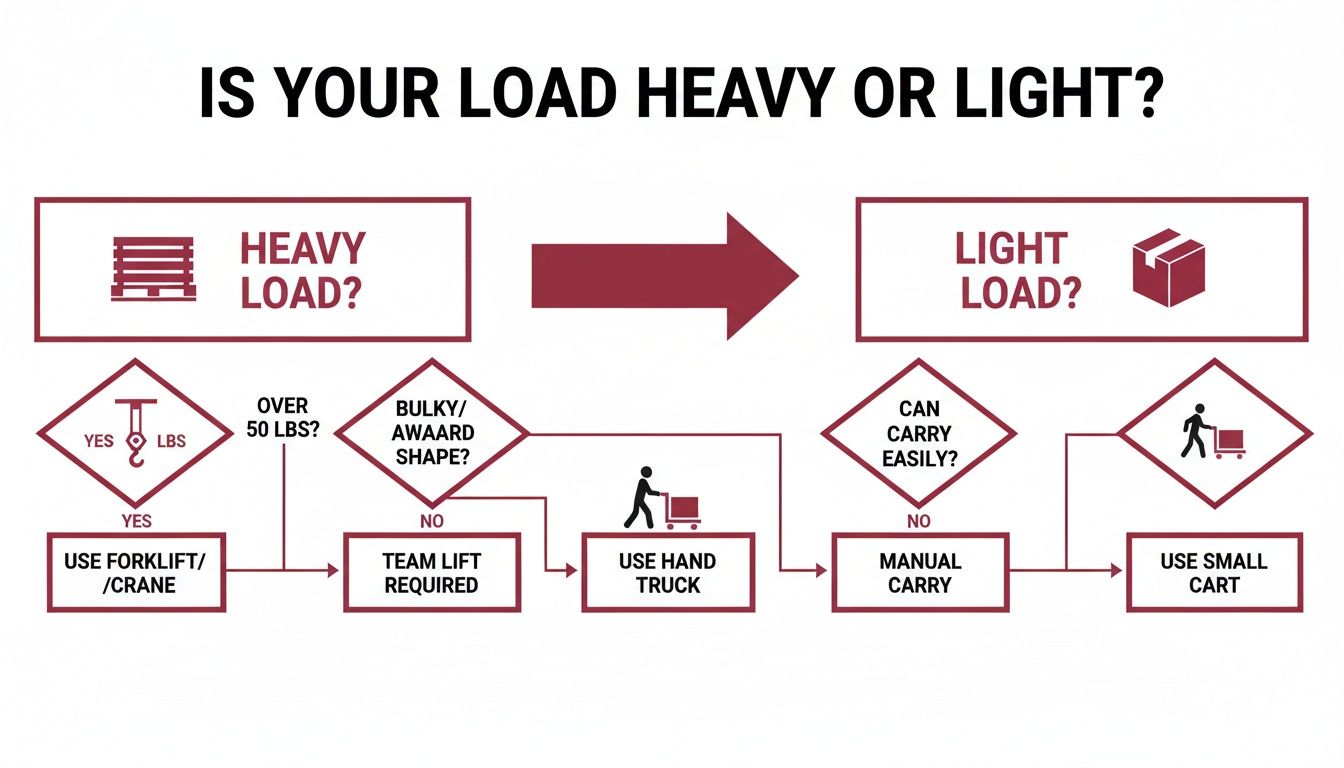
As you can see, the weight and size of your inventory, heavy pallets versus light cartons, is the primary fork in the road that points you toward one system or the other.
To make the choice even clearer, here is a direct comparison of the two systems across a few important operational factors.
Feature Comparison: Pallet Flow vs. Carton Flow Racking
| Feature | Pallet Flow Racking | Carton Flow Racking |
|---|---|---|
| Unit Load | Full pallets, typically heavy and uniform. | Individual cartons, cases, or totes. |
| Ideal Application | High volume, low SKU distribution and manufacturing. | High volume piece picking, split case fulfillment, and assembly lines. |
| Storage Density | Extremely high, with lanes that can be 20+ pallets deep. | High, often integrated into selective racking or pick modules. |
| Equipment Used | Forklifts and pallet jacks for loading and unloading. | Manual loading and picking by personnel. |
Choosing the right system means your investment will directly tackle your biggest operational headaches, whether that is boosting pallet storage density or supercharging your piece pick speeds.
Real World Applications and Scenarios
Let’s walk through a couple of common scenarios to see how these systems shine in the real world.
Scenario 1: A Beverage Distributor
A beverage distributor moves thousands of pallets of just a few SKUs. Their main goal is to cram as much product as possible into their space while ensuring the oldest stock ships first to manage expiration dates.
- The Solution: Pallet flow racking is the perfect fit. Deep lanes provide massive storage density, and the automatic FIFO rotation guarantees product freshness. Forklifts load new pallets from the back while others are unloaded from the front, creating a seamless, high throughput workflow.
Scenario 2: An E-commerce Fulfillment Center
An online retailer ships thousands of individual orders a day, each with a mix of different items. Pickers need lightning fast access to hundreds of SKUs to assemble orders accurately.
- The Solution: Carton flow racking is the clear winner here. Lanes of carton flow can be installed within traditional pallet racking, presenting a huge variety of SKUs right at the pick face. This setup dramatically cuts down on travel time for pickers and boosts order accuracy. To see exactly how this system improves picking operations, check out our detailed guide on carton flow rack.
The right gravity fed racking system does not just store your product; it actively improves your workflow. Pallet flow streamlines bulk handling, while carton flow optimizes the complex dance of piece picking.
Making the right choice is critical, and our team is here to ensure you get it right. Because design and installation projects are often planned months in advance, starting the conversation now ensures your project gets on the schedule without delay. Let us put together a free, no obligation layout and quote to find the perfect solution for your operation.
The Operational Benefits of Gravity Fed Racking
Putting gravity fed racking in your warehouse is about so much more than just adding steel; it is about unlocking serious operational and financial wins. Think of it as a strategic tool that fundamentally changes your workflow to create a leaner, safer, and more profitable operation. The benefits ripple out far beyond simple storage, touching everything from your labor costs to inventory accuracy.
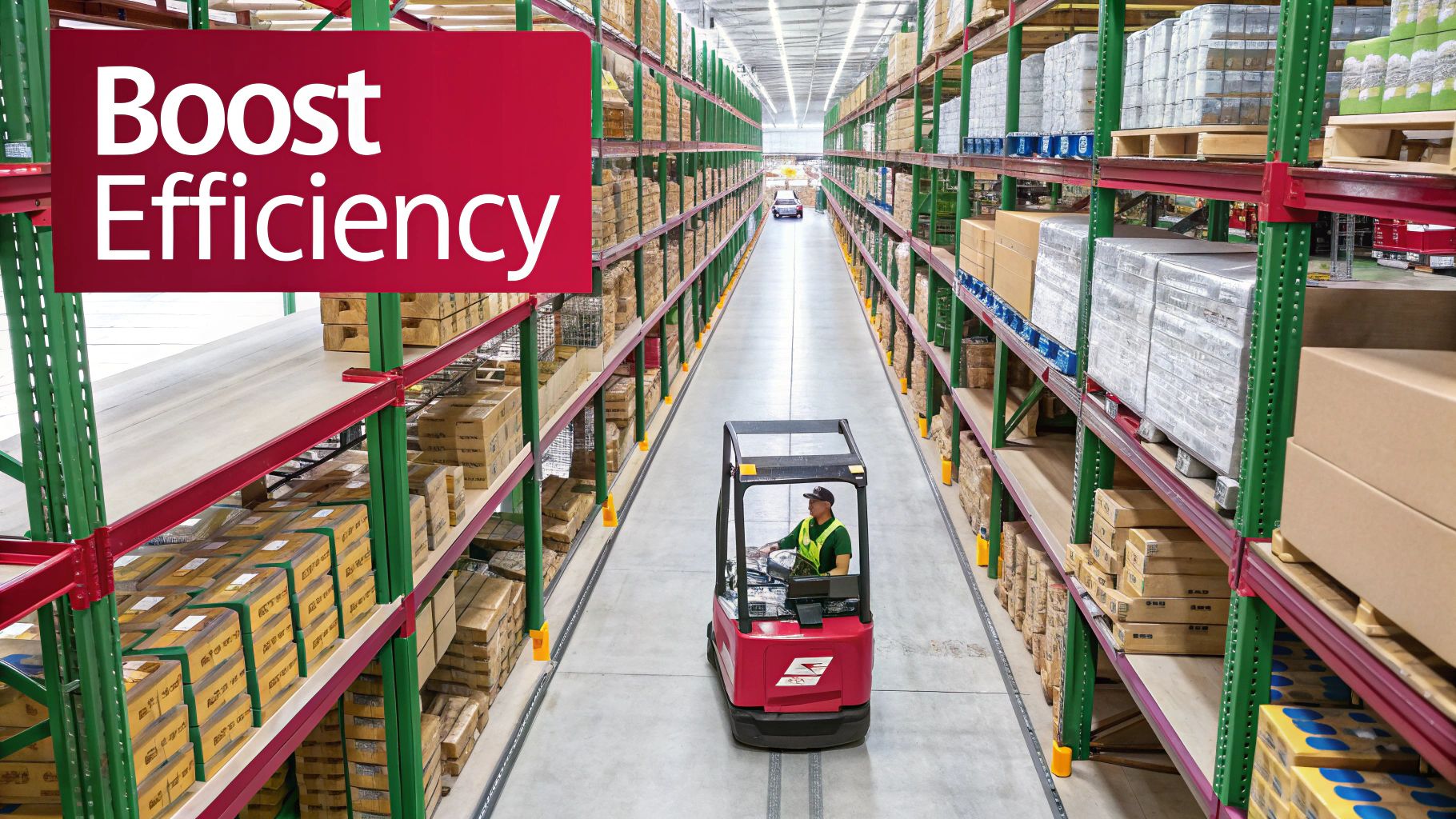
One of the biggest reasons facilities make the switch is the incredible gain in storage density. By consolidating your inventory and getting rid of redundant aisles, a gravity fed racking system can boost your storage capacity by up to 60% compared to traditional selective rack. That means you can get more out of your existing footprint, possibly delaying or even avoiding the massive cost of expanding your building.
Boosting Labor Efficiency and Safety
Gravity fed racking works by creating separate, dedicated aisles for loading and picking. This simple change is a game changer for labor efficiency because it slashes travel time for both your team and your forklifts. Pickers have products presented right to them at the pick face, while loaders replenish from the back, which means no more traffic jams.
This streamlined workflow delivers some key improvements:
- Reduced Travel Time: Your crew spends less time walking or driving deep into aisles to grab items, freeing them up to fulfill more orders in the same amount of time.
- Less Forklift Traffic: With fewer aisles and a more organized flow, forklift movement is cut down. This does not just lower your fuel and maintenance bills; it dramatically improves workplace safety by minimizing the risk of collisions.
- Increased Pick Accuracy: Presenting products in a clear, organized sequence at the pick face helps slash errors and ensures the right items get picked every single time.
In the real world of live pallet racking, a major type of gravity fed system, cutting down forklift travel can reduce labor costs by 25-40%. The entire market for these innovative systems is growing rapidly, which you can read more about in the complete live pallet racking forecast.
Enforcing Flawless Inventory Rotation
If you are dealing with perishable goods, electronics, or anything with a shelf life, you know that proper inventory rotation is non negotiable. Gravity fed racking automatically enforces a strict First In, First Out (FIFO) system. The very first pallet or carton loaded into a lane is guaranteed to be the first one picked.
This built in FIFO rotation is not just a feature; it is a powerful inventory management tool. It virtually eliminates the risk of product spoilage, obsolescence, and the financial hit that comes with them, making sure your inventory stays fresh and valuable.
This automated process also tightens up inventory accuracy, making your cycle counts faster and far more reliable. When you take human error out of the rotation equation, you gain much better control over your stock and cut down on waste.
When you add it all up, gravity fed racking is a smart investment. As the demand for efficient warehouse solutions keeps growing, planning ahead is everything. Getting in touch with our team now for a free layout and design ensures your project gets the priority it deserves, helping you sidestep potential delays. Request a Quote or give us a call at 800-326-4403 to get the ball rolling.
How to Plan Your Gravity Flow System Design
A successful gravity flow system is never an off the shelf solution. It all starts with a smart, solid plan that is built around your specific operation. Think of this section as a guide to the key factors our design experts look at when creating a custom gravity fed racking solution for your facility.
The goal here is to show you what goes into a great design so you can see the value in our free, no obligation layout and design services. With the right data in hand, we can deliver a system that hits the ground running from day one.

Analyzing Your Inventory Data
The first step, always, is getting to know your inventory. The unique characteristics of your products will dictate nearly everything about the system’s design, from its physical size to the type of rollers we use. We always start by looking at a few critical data points.
- SKU Count and Turnover Rates: How many different products will live in this system? How fast does each one move? This tells us the ideal number of lanes and exactly how deep they should be.
- Load Weight and Dimensions: The weight, width, and depth of your pallets or cartons are non negotiable details. These numbers are essential for calculating the precise incline and for selecting the perfect rollers.
- Pallet or Carton Type: What does the bottom of your load look like? A standard wooden pallet moves differently than a slick plastic one. The bottom surface has a direct impact on roller selection and the lane’s pitch.
Calculating System Dimensions and Flow
Once we have a clear picture of your inventory, our designers can get to work on the system’s physical specs. This is where we balance pure storage density with the practical needs of your team. A huge piece of this puzzle is the incline, or pitch, of the flow lanes.
A typical pallet flow lane has an incline of about 3/8 to 1/2 inch per foot. This slight angle is just enough to get pallets moving on their own but gentle enough to keep them under complete control. The exact pitch gets fine tuned based on your specific load weight and roller type.
This precise calculation ensures that a 2,500 pound pallet moves just as smoothly and safely as a much lighter one. A well designed gravity fed system can boost throughput by up to 30-50% in high turnover operations when compared to static shelving.
Factoring in Facility and Equipment Constraints
Finally, we have to make sure the design works in the real world. A perfect system on paper is worthless if it does not fit your physical space or work with your current equipment.
We map out several practical factors:
- Aisle Width: We ensure your loading and picking aisles are wide enough for forklifts and other equipment to move around safely.
- Floor Load Capacity: Gravity flow systems pack a lot of weight into a small footprint. We will verify that your building’s concrete slab can safely support the total weight of the system.
- Obstructions: We design around any columns, doorways, or utility lines that could get in the way, creating a seamless layout.
As you think about your layout, you might also consider what modern tools can do for warehouse optimization. Exploring concepts like building a digital twin for modern warehouse visualisation can offer incredible insights into how your new layout will perform.
Getting this information together is the first step toward a more efficient, productive operation. Contact Us or call 800-326-4403 today to start a conversation with our experts and get your free, custom design.
Partnering with MH-USA on Your Gravity Fed Racking Project
Picking the right racking system is a huge decision, but choosing the right partner to design and build it is just as critical. A successful gravity fed racking project hinges on deep expertise, high quality materials, and a smooth process from the first conversation to the final installation. At Material Handling USA, we are not just selling you equipment; we are your partner, fully invested in making your operation a success.
Our approach is built around delivering real value. We start with competitive pricing and combine it with some of the fastest shipping in the industry, making sure your project stays on track and within budget. Every single component we use is built from quality materials, ready to handle the daily grind of a busy warehouse for years to come.
 warehouse layout on a tablet with a client, with gravity fed racking in the background.” />
Our Commitment to Your Success
What really makes the difference are the services we wrap around the product. A great system starts with a great design, which is why we offer free layouts and designs with no obligation. Our in house specialists take the time to get on the same page with you, digging into your unique challenges. We are with you for the whole ride, from the initial discovery call all the way to a detailed, actionable quote.
Getting our team involved early is a game changer. It gives you direct access to expert insights that can sharpen your plans and even uncover efficiencies you might not have seen on your own.
Bringing our design team into the conversation early is not just a good idea, it is a strategic advantage. It gives us more time for design iterations and helps lock in your spot on installation schedules, so your project moves forward without hitting any unexpected roadblocks.
As more warehouses look to get more efficient, project timelines and installation slots are often booked out months in advance. Starting the conversation sooner helps you skip the seasonal backlogs and secure a spot on our calendar. It is a proactive step that makes the entire journey from concept to completion much smoother.
It is time to take the next step toward a more efficient, productive warehouse. Let our experts show you what is possible with a custom designed gravity fed racking system.
Ready to see how we can optimize your space? Request a Quote for a free design or call our expert team directly at 800-326-4403 to talk about your project today.
Frequently Asked Questions About Gravity Fed Racking
Even after seeing all the benefits, it is natural to have a few practical questions before you move forward with a new racking system. Here are some straightforward answers to the questions we hear most often from warehouse managers and buyers, so you can feel confident you are making the right call.
What kind of maintenance does gravity fed racking require?
One of the best things about gravity flow racks is how little upkeep they need. For the most part, you are just looking at routine visual checks. Make sure the structure is sound, give the rollers a spin to ensure they move freely, and test the braking systems to confirm they are engaging properly. Because we use quality, durable materials, our systems are built for the long haul with minimal fuss.
Can I use different pallet sizes in the same flow lane?
That is a definite no go, and for good reason. Each gravity flow lane is engineered with a specific pallet size and weight in mind to guarantee a smooth, controlled flow. Mixing pallet sizes is asking for trouble; you will end up with jams, stuck pallets, or loads moving at unsafe speeds. If you handle a variety of pallet types, we will design a system with dedicated lanes for each one to keep your entire operation running smoothly.

How is the right lane depth determined for my operation?
Finding the ideal lane depth is all about balancing storage density with your inventory rotation needs. We will look at your number of pallets per SKU, how fast your products turn over, and any shelf life constraints to find that perfect sweet spot. Lanes can be anywhere from three to over twenty pallets deep. Our goal is to design a system that maximizes every square foot without letting your product sit for too long. This analysis is a core part of our free design consultation.
Is gravity fed racking cost effective for a small warehouse?
Absolutely. The upfront investment might be more than standard static racks, but the ROI often speaks for itself, especially if you are dealing with high turnover goods. You will see the savings add up quickly from better space utilization, less labor needed for picking, and faster throughput. By making the most of the space you already have, you can often put off a costly move or expansion. We are happy to run the numbers with a free quote to show you exactly how it pencils out for your operation.
Conclusion: Your Partner for Efficient Warehouse Storage
Gravity fed racking is more than just shelving; it is a strategic investment in efficiency, safety, and inventory control. By leveraging the simple power of gravity, these systems boost storage density, streamline labor, and enforce perfect FIFO rotation, directly impacting your bottom line. Whether you need the heavy duty capacity of pallet flow or the precision of carton flow, the right design can transform your warehouse.
At Material Handling USA, we pride ourselves on competitive pricing, the fastest shipping in the industry, and a commitment to quality products. But our real value lies in our partnership. With our free, no obligation layouts and designs, our experts work with you to create a solution tailored to your exact needs. As demand for these systems grows, planning ahead is key to avoiding delays and ensuring a smooth installation.
Ready to see what gravity can do for your warehouse? Let’s start the conversation. Contact Us today or call our specialists at 800-326-4403 for your free quote and design consultation.
Who This Is For
Our gravity fed racking solutions are ideal for:
- Warehouse managers
- Facility planners
- Property managers
- Government coordinators
- Manufacturing managers
- Distribution operators