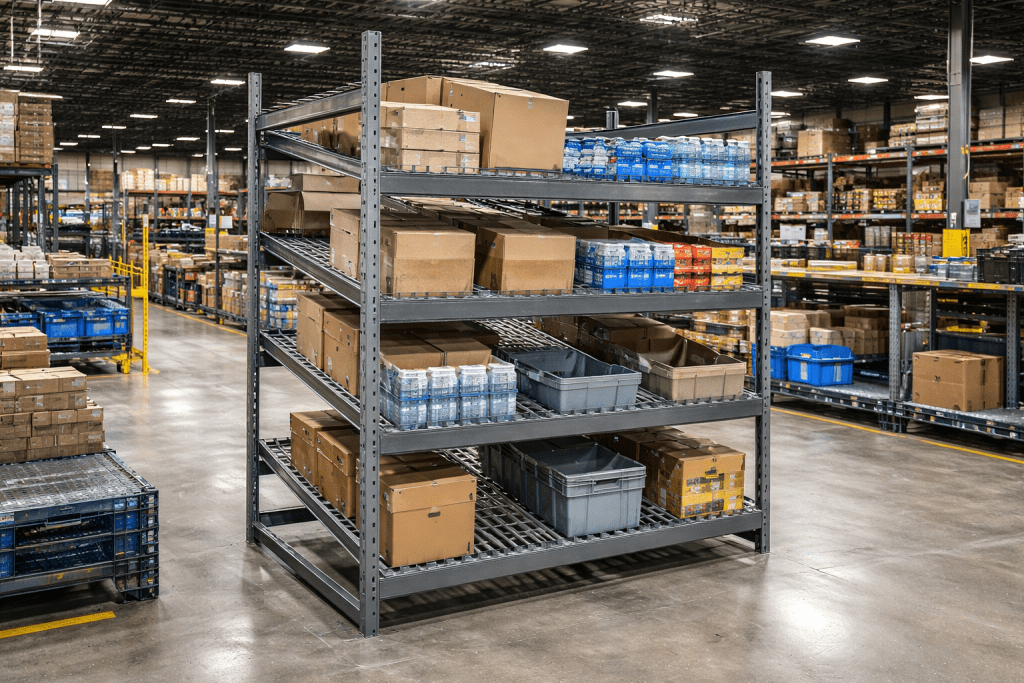
Imagine a storage system so smart it does half the work for you, using nothing but gravity to keep your inventory perfectly lined up and ready to go. That’s the simple genius behind gravity flow racks. These systems use inclined rollers to automatically slide products forward, making sure your oldest stock is always the first one out.
This is a game changer for any business dealing with date sensitive goods.
How Gravity Flow Racks Can Reshape Your Warehouse
Think of gravity flow racks like a giant, industrial vending machine. When a picker grabs an item from the front, the next one smoothly glides into place, ready for the next order. This simple, automatic movement is the key to unlocking some serious operational wins and solving common warehouse headaches.
The system is built on a strict First In, First Out (FIFO) principle, which is not just a nice to have, it is essential for industries like food and beverage, pharmaceuticals, or anything with an expiration date.
By designing separate, dedicated aisles for loading (restocking) and picking (fulfillment), these racks instantly cut down on congestion. Forklifts and pickers are not tripping over each other in the same aisle, which makes the whole operation safer and a whole lot faster.
The Real World Advantages for Your Facility
The benefits here go way beyond just being organized. Gravity flow racks tackle the big problems that hold warehouses back: wasted space, inefficient labor, and poor stock rotation. We see facilities get immediate, measurable results after making the switch.
There is a reason the market for this tech is growing. Valued at $1,525 million in 2024, the gravity flow racking market is on track to hit $2,108 million by 2031. This is not just hype; it is driven by proven results, like cutting down restocking time by as much as 75%. That is a huge labor saving that goes straight to your bottom line.
By completely separating the loading and picking jobs, gravity flow systems can slash travel time and labor costs by over 50% compared to standard selective racking. For facilities trying to boost throughput without a costly expansion, that efficiency gain is everything.
Gravity Flow Racks at a Glance
To make it even clearer, here is a quick summary of the core advantages you can expect when implementing a gravity flow rack system. These are the kinds of improvements that do not just help you today but also set you up for future growth.
| Benefit | Impact on Your Operations |
|---|---|
| Space Optimization | Doubles storage density compared to static shelving, maximizing your existing footprint. |
| Labor Efficiency | Reduces picking and restocking labor by up to 50% by separating loading and picking aisles. |
| Inventory Rotation | Guarantees First In, First Out (FIFO) product movement, crucial for perishable goods. |
| Increased Throughput | Boosts order fulfillment speed and overall productivity by 25-40% in optimized setups. |
As you think about your facility’s future, consider how these benefits line up with your long term goals. For more strategies, check out our guide on warehouse optimization.
With warehouse space at a premium, getting the most out of every square foot has never been more critical. We are seeing a lot more interest in these systems, and planning ahead helps ensure your project gets done on time.
Choosing Between Pallet Flow and Carton Flow Racks
Gravity flow racks are a powerful tool for any warehouse, but they are definitely not a one size fits all solution. The real magic happens when you match the right type of rack to the specific inventory you are handling. The decision boils down to two main categories: pallet flow racks for heavy, full pallet loads, and carton flow racks for lighter, individual items.
Getting this distinction right is the first step toward a system that actually works for you. One is built for bulk movement; the other is all about precision picking. Making the smart choice from the get go ensures you squeeze every drop of value out of your investment.
Pallet Flow Racks: The Heavy Duty Workhorse
Think of pallet flow racks as the titans of gravity fed storage. Engineered with heavy duty steel rollers and incredibly robust frames, these systems are built to handle the immense weight of fully loaded pallets, which can often top several thousand pounds. They are the go to solution for high volume, uniform products that move in and out of the warehouse as complete palletized units.
You will spot pallet flow racks in large scale operations where maximizing every inch of storage is the name of the game. We are talking massive distribution centers, food and beverage manufacturing plants, and especially cold storage facilities where every square foot of refrigerated space is worth its weight in gold. The global market for this segment of gravity flow racks hit $290 million in 2024 and is still growing, which tells you just how vital they are in modern logistics.
By enabling deep lane storage, sometimes up to 20 pallets deep, these systems can boost storage capacity by 2 to 3 times compared to standard selective racking in the exact same footprint. For a facility that is at or near capacity, that kind of density is a complete game changer.
The concept is beautifully simple. A forklift loads a pallet from the back (the higher end), and it glides gently forward toward the front picking aisle. This creates a perfect First In, First Out (FIFO) rotation, which is absolutely critical for managing products with expiration dates, like food or pharmaceuticals.
Carton Flow Racks: Precision for Piece Picking
Now, let us shift gears from massive pallets to individual items. That is where carton flow racks come in. These systems are designed for much lighter loads like individual boxes, totes, and bins. Instead of heavy steel rollers, they use lightweight polycarbonate wheels or smooth roller tracks set into shelves, perfectly suited for manual handling. Carton flow is the ideal setup for any split case or piece picking operation.
This infographic does a great job of visualizing when a gravity fed system is the right call for common warehouse headaches.
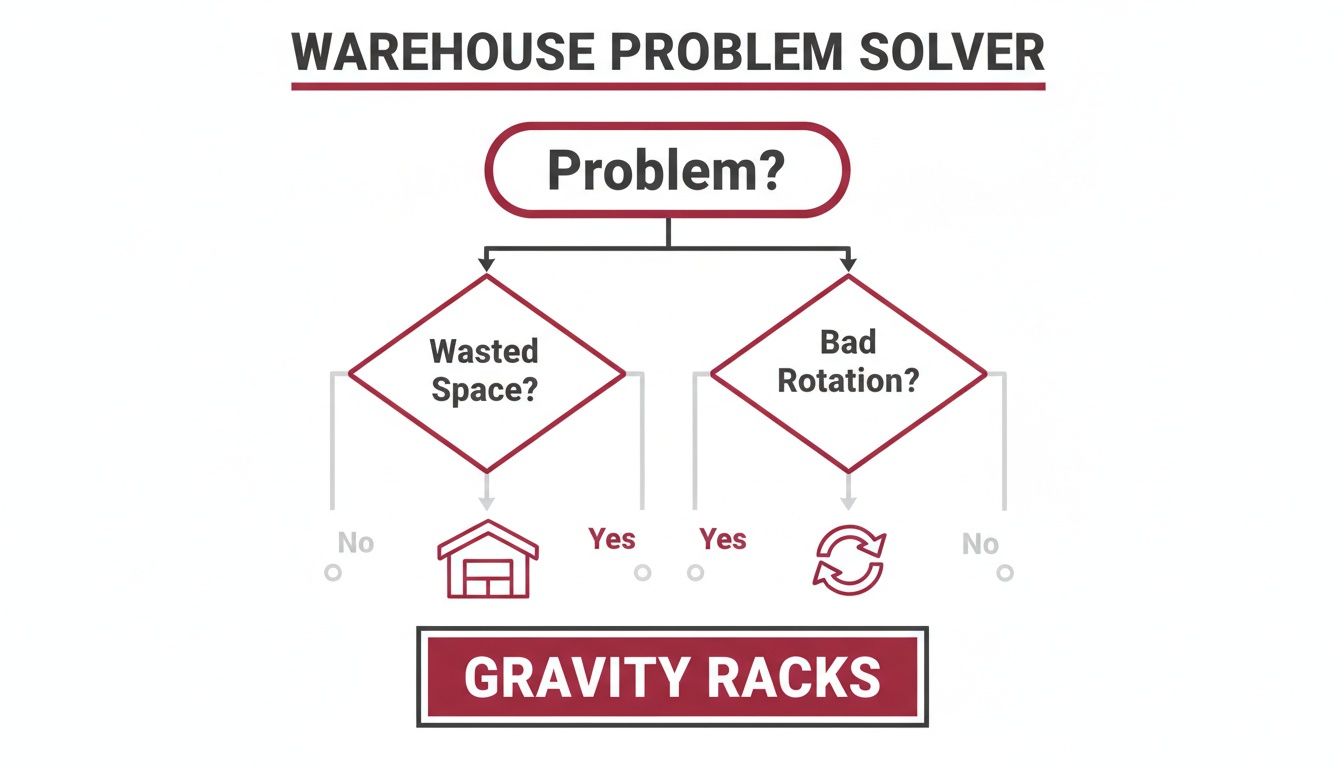
As the decision tree shows, whether your main problem is wasted space or poor inventory rotation, gravity flow systems offer a direct and highly effective fix.
These racks are frequently integrated into larger pick modules and are a cornerstone of e commerce fulfillment centers, pharmaceutical distribution, and parts assembly lines. By presenting tons of SKUs in a tightly condensed pick face, they dramatically cut down on how much your workers have to walk around. This improves ergonomics and makes order fulfillment significantly faster. For a closer look at these systems, check out our carton flow rack solutions.
With the constant pressure for faster order fulfillment, we are seeing more and more facilities start the planning process for systems like these early. It helps them lock in better project timelines and secure installation schedules before things get booked up.
A Side by Side Comparison
To make the choice even clearer, let us put these two types of gravity flow racks head to head. The table below breaks down the key differences to help you decide which system aligns with your inventory and operational flow.
Comparing Pallet Flow and Carton Flow Systems
| Feature | Pallet Flow Racks | Carton Flow Racks |
|---|---|---|
| Best For | Full pallet loads and heavy duty items. | Individual cartons, totes, and lightweight items. |
| Typical Load Capacity | 500 to 5,000 lbs per pallet position. | 10 to 75 lbs per carton or tote. |
| Common Industries | Food & Beverage (especially cold storage), Manufacturing, Distribution Centers. | E commerce, Pharmaceuticals, Automotive Parts, Retail Fulfillment. |
| Flow Mechanism | Heavy duty steel rollers or skate wheels. | Lightweight polycarbonate wheels or roller tracks. |
| Key Benefit | Maximum storage density for uniform, high volume products. | Improved ergonomics and speed for each pick operations. |
Ultimately, the right system comes down to your product and your process. If you move full pallets, pallet flow is your answer. If your team is breaking down those pallets into smaller units for individual orders, then carton flow is exactly what you need.
Still not sure? Our team is here to help with free layouts and designs, no strings attached. Just Request a Quote to get the conversation started.
The Real World Benefits of Gravity Flow Racking
So, what happens when the technical drawings become a reality in your facility? When you install gravity flow racks, the improvements are not just theoretical, they are measurable impacts that go straight to your bottom line. It is less of a purchase and more of a strategic investment in how your facility operates day to day.
The most immediate change you will notice is a massive increase in storage density. Think about it: by getting rid of the access aisles between every single row of shelving, gravity flow systems can literally double the amount of product you store in the same footprint. For many businesses, this is the difference between a costly expansion and optimizing the space they already own.
Boosting Operational Efficiency
One of the smartest features of these systems is how they separate loading from picking. This simple design choice creates dedicated aisles, which instantly declutters your workflow. Forklift operators can restock inventory from the back without ever getting in the way of order pickers working at the front. The result is a dramatic drop in aisle congestion and travel time.
This separation does more than just speed up fulfillment. It makes the entire operation safer by minimizing the interactions between your people and heavy machinery. With a clear, predictable traffic flow, the risk of accidents drops significantly, contributing to a better safety record all around.
Guaranteeing Perfect Inventory Rotation
If you handle perishable or date sensitive goods, the built in First In, First Out (FIFO) rotation is an absolute game changer. Products are loaded from the back and picked from the front, so the oldest stock is always used first. This automatic process practically eliminates losses from product spoilage, damage, or obsolescence.
For facilities in the food and beverage or pharmaceutical industries, strict FIFO is not just a nice to have; it is a necessity. Gravity flow racks enforce this rotation perfectly, helping you slash product waste and maintain full compliance with regulatory standards. It protects both your inventory and your reputation.
The market data backs this up. The global demand for gravity flow racks is projected to hit $2.5 billion by 2025, growing at a healthy 7% CAGR. Why? Because facilities that make the switch report huge gains, with some cutting picking times by up to 50%. You can dive deeper into these trends by reading the full research on gravity flow racks.
This kind of operational advantage lets your business handle sudden spikes in demand and scale up without a proportional jump in labor costs.
A Foundation for Future Growth
Ultimately, investing in gravity flow racking is about more than just finding a place to put your products. It is about building a more resilient, efficient, and profitable operation that is ready for whatever comes next. The combined benefits of maximizing your space, saving on labor, and getting perfect inventory control create a powerful return on your investment.
Many of our clients find that planning for these systems early allows for smoother project timelines and helps avoid potential installation backlogs. To see how these benefits could look in your facility, Request a Quote for a free, no obligation layout and design from our experts. Or, just give our team a call at 800-326-4403 to talk through your project.
Critical Design and Layout Considerations
A high performance gravity flow rack system is the result of careful engineering, not guesswork. Getting the design and layout right from the very beginning is everything. Key variables like lane depth, incline, and load capacity have to be calculated precisely to match your specific products and operational goals.
This is where expert planning is non negotiable. A poorly designed system can lead to stalled products, dangerously fast pallet speeds, or even structural failure. To make sure your system delivers on its promise of safety and efficiency, several critical factors must be addressed.
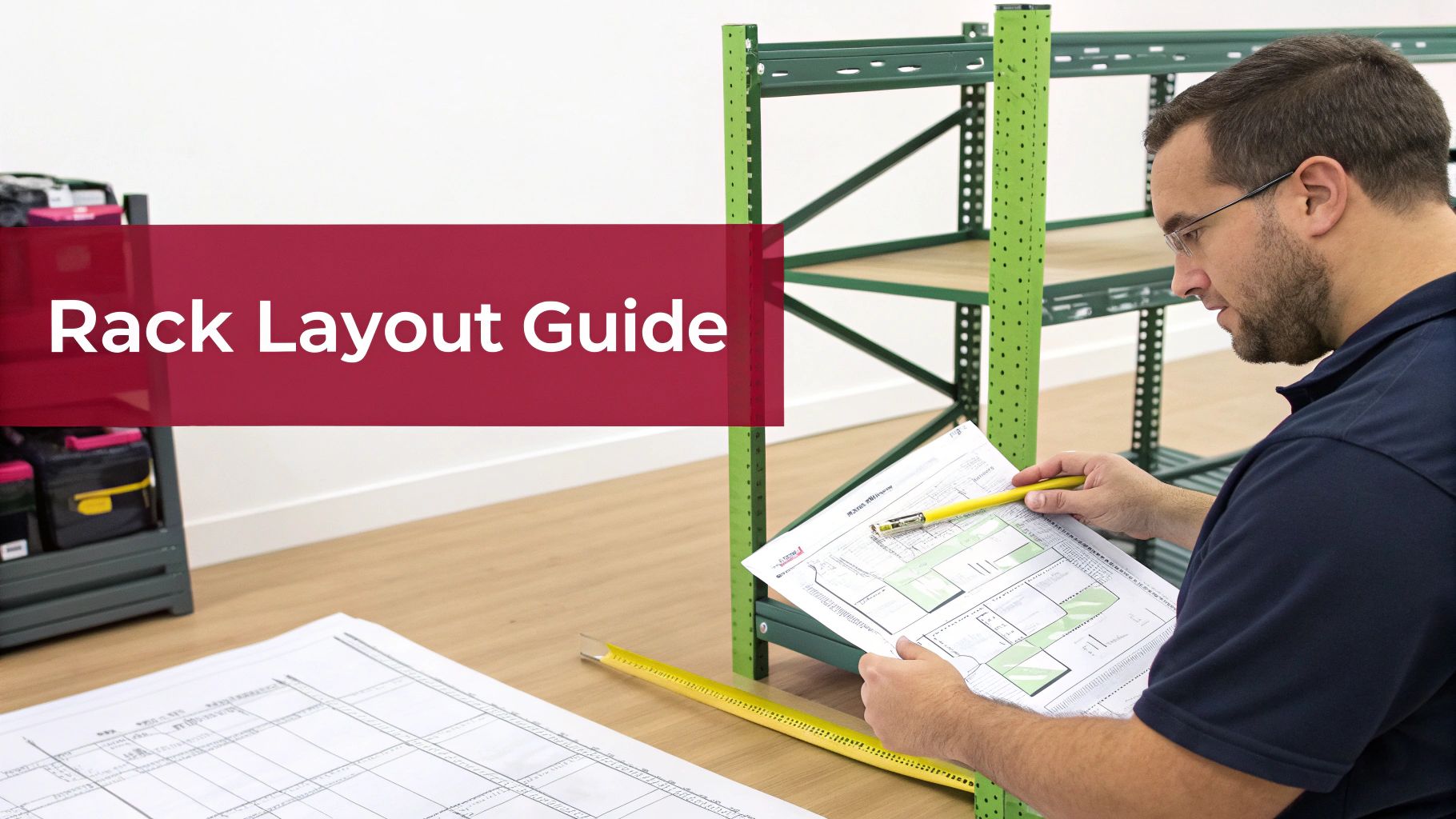
Determining Lane Depth and Count
First things first: we need to figure out how deep and how many lanes you need. This decision is driven entirely by your inventory data, specifically, your SKU velocity (how quickly each product moves) and your desired on hand stock levels.
- High Velocity SKUs: For products that fly off the shelves, you will want deeper lanes. This lets you hold more inventory and drastically cuts down on restocking labor, keeping your fast movers consistently available at the pick face.
- Low Velocity SKUs: It makes more sense to store slower moving items in shallower lanes. This approach prevents you from tying up too much valuable space with products that tend to sit for longer periods.
The goal here is to strike that perfect balance. You want to ensure product is always available for picking without creating unnecessary bottlenecks or wasting an inch of warehouse space.
The Science of the Perfect Incline
The incline, or “pitch,” of the lanes is probably the most critical calculation in the entire design process. This is the precise angle that lets a pallet or carton glide smoothly from the loading aisle to the picking aisle. It is a delicate balance; too shallow, and your products will grind to a halt. Too steep, and they will accelerate to dangerous speeds, creating a huge safety risk.
The ideal pitch depends on a few key factors:
- Product Weight: Heavier items naturally require a gentler slope.
- Pallet or Carton Type: The surface material, whether it is a wood pallet, a plastic tote, or a cardboard box, creates different levels of friction.
- Roller Type: The type and configuration of the rollers themselves also play a big part in influencing flow speed.
Our engineers perform these exact calculations to guarantee your system provides a safe, consistent, and reliable flow every single time. It is a core part of the value we provide. For a deeper dive into this process, learn more about our professional warehouse design and layout services.
A properly engineered pitch is the heart of a gravity flow system. It ensures that a 2,500 lb pallet moves just as predictably and safely as a lightweight carton, protecting your products, equipment, and team members.
Load Capacity and Safety Mechanisms
Beyond the physics of flow, the structural integrity of your gravity flow racks must be matched to your heaviest loads, period. We design every system to handle your maximum pallet or carton weight with a significant safety margin built in. This prevents structural stress and ensures the system will last for years to come.
But controlling the load as it moves is just as important. Several safety features are absolutely essential for any well designed system:
| Safety Feature | Purpose |
|---|---|
| Entry Guides | These guides at the loading end ensure forklift operators place pallets correctly onto the rollers, preventing misalignment and potential jams before they happen. |
| Speed Controllers (Brakes) | Installed within the lane, these devices apply gentle friction to keep heavy pallets moving at a safe, controlled speed from back to front. |
| Pallet Stops | Located right at the pick face, these heavy duty stops safely halt the pallet at the front of the lane, preventing it from overrunning into the aisle. |
These components are not just optional add ons; they are integral parts of a system designed for peak performance and safety. As demand for these efficient systems continues to rise, scheduling your design consultation early ensures better project timelines and helps you avoid potential delays in a busy market.
Maintaining Your System for Peak Safety and Performance
Putting in a quality gravity flow rack system is a big win for your facility’s efficiency, but the work does not stop there. Think of it as an investment, and like any good investment, it needs to be protected. Proper, routine maintenance is what guarantees the safety, long life, and ongoing ROI of your system.
A well maintained system is a reliable one. Small issues like a bit of debris or a sticky roller can quickly snowball into bigger problems, causing jams, premature wear, or even downtime. By setting up a regular inspection schedule, you will catch these things early and keep your operation running like a well oiled machine.
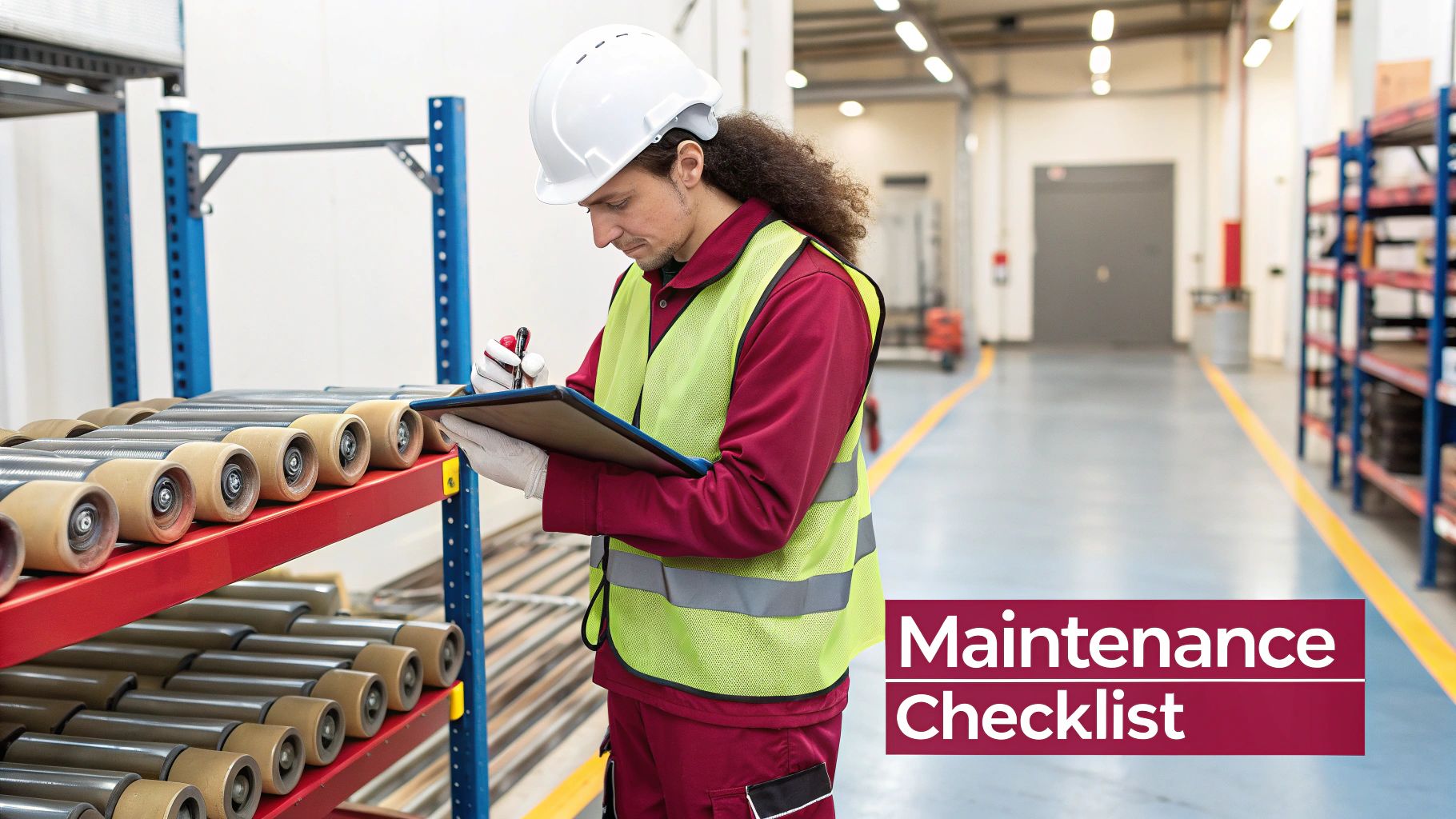
Conducting Regular System Inspections
Your maintenance or facility teams are your first line of defense. The best way to empower them is with a simple but thorough inspection checklist. This proactive approach is the foundation of a safe, efficient gravity flow operation, ensuring nothing gets missed during regular walkthroughs.
Here are the key areas to zero in on:
- Rack Structure Integrity: Get up close and inspect the upright frames, beams, and anchors for any signs of damage. You are looking for dents, bends, or scrapes from forklift impacts, as these can seriously compromise the system’s structural stability.
- Roller and Wheel Condition: Check every single lane for rollers or wheels that are damaged, stuck, or missing altogether. A little bit of dirt or debris can throw off the flow, so make sure all tracks are clean and clear for smooth product movement.
- Braking System Functionality: On pallet flow systems, you absolutely have to test the speed controllers (brakes). Make sure they are engaging properly. These are critical for controlling the momentum of heavy pallets and bringing them to a safe, gentle stop at the pick face.
- Load and Unload Zones: The loading and picking aisles must be kept free of clutter, stray pallets, and any other obstructions. Clear pathways are non negotiable for the safety of your forklift operators and your team members on the floor.
A consistent inspection routine does more than just spot damage. It builds a culture of safety and operational excellence, showing your team that their work environment is a top priority. This commitment is a hallmark of high performing facilities.
The Importance of Operator Training
Even the most perfectly engineered gravity flow racks can fail if they are not used correctly. That is why comprehensive, ongoing operator training is just as vital as physical maintenance. Your team is on the front lines, and their actions directly impact the system’s performance and safety every single day.
Proper training should hit on a few key topics to prevent the most common headaches like system jams and unnecessary wear and tear.
| Training Topic | Key Objective |
|---|---|
| Proper Loading Technique | Instruct forklift operators on how to place pallets squarely onto the entry guides. They need to be centered and aligned in the lane to prevent jams before they even start. |
| Correct Unloading Practice | Teach pickers how to safely remove the front pallet or carton without bumping or disturbing the items behind it. This maintains the smooth, continuous flow of the system. |
| Pallet Quality Standards | This is the big one. Train all staff to identify and pull broken or poor quality pallets before they ever enter the system. This is the number one cause of pallet flow jams, period. |
By committing to these best practices, you protect your investment and your people. This diligence after the installation is what ensures your system delivers peak efficiency for years to come. Because we see our clients as long term partners, we are always here to offer guidance.
To discuss a system designed for durability and ease of maintenance, Request a Quote or call our experts at 800-326-4403 for a free consultation.
Your Next Step to a More Efficient Warehouse
We have covered the core differences between pallet and carton flow and the operational gains you can expect in FIFO rotation, storage density, and labor savings. By now, you have probably started picturing how these systems could reshape your own facility’s workflow and bottom line. The theory is solid, but the real value is in the application.
It is time to see exactly how a gravity flow solution would perform in your unique operation.
From a Sketch to a Game Plan
It is one thing to read about a system, but it is another thing entirely to see it laid out in your own footprint. That is why our team is ready to create a free, no obligation layout and design for you. We will take your specific product dimensions, your SKU velocities, and your facility’s quirks to build a concrete plan that squeezes maximum value out of every square foot.
This is not just a rough sketch. It is a professional design that ensures your new gravity flow rack system is built for safety, peak efficiency, and your operational needs from day one.
Taking the time for a professional layout is the single most important step in ensuring a successful gravity flow rack installation. It removes the guesswork and provides a clear roadmap for achieving your efficiency goals.
Why Get the Ball Rolling Now?
With our competitive pricing and a reputation for the fastest shipping in the industry, taking action gives you an advantage. Kicking off the planning process today means you get better, more relaxed timelines and sidestep the project delays that can pop up from supply chain headaches. More and more facilities are recognizing the value of these systems, so a design consultation helps secure your spot in the implementation queue.
It is your chance to build a more resilient and profitable operation without the last minute scramble.
Your Custom Solution is Waiting
Ready to see what a properly designed gravity flow rack system can do for you? Let our experts build a solution that fits your business like a glove.
- Request a Quote: Fill out our online form to get a detailed proposal and your free custom layout.
- Talk to a Specialist: Call us directly at 800-326-4403 to speak with a design expert who can answer your questions.
Our team is on standby to guide you through every step. Contact Us today and let’s start building a more efficient, organized, and profitable warehouse together.
Common Questions About Gravity Flow Racks
When you are considering a big upgrade like gravity flow racks, you are bound to have questions. It is a major investment, after all. Below are the straight up answers to the most common questions we get from facility managers and buyers, helping you get a real feel for how these systems work in practice.
What Is the Typical Return on Investment?
While every operation is different, most of our clients see a full payback on their investment within 18 to 36 months. This is not just a ballpark guess; the ROI comes from very real, measurable savings.
The biggest wins are usually in labor, you just do not need as many people for picking and restocking. You also maximize your storage footprint, which can put off a very expensive facility expansion for years. And because you get guaranteed FIFO rotation, product spoilage and obsolescence drop significantly. If you want to see what the numbers would look like for your facility, we can run a detailed analysis as part of our free design consultation.
Can Gravity Flow Racks Be Integrated with Other Systems?
Yes, and they are designed to do it beautifully. Think of gravity flow racks as a key player on a team. They work perfectly as a buffer for products coming out of an Automated Storage and Retrieval System (AS/RS) or to feed cartons directly onto conveyor belts at the pick face.
We often enhance them with pick to light or voice picking technology to crank up order fulfillment speed and accuracy even more. Our design team excels at building cohesive warehouse systems where every piece of equipment communicates and works together without a hitch.
How Do You Determine the Correct Angle for a Flow Lane?
Getting the angle, or pitch, just right is where engineering meets physics, and it has to be precise. It is not a one size fits all number. The calculation depends on the product’s weight, its size, and even the material of the pallet or carton. Wood, plastic, and cardboard all have different friction coefficients.
If the angle is too shallow, things stall out and stop moving. Too steep, and you have created a safety nightmare. Our engineers handle these exact calculations for you, specifying the right combination of rollers and speed controllers to guarantee a safe, consistent flow. This is a critical part of our free, no obligation design process.
What Happens If a Pallet Gets Stuck in a Lane?
In a properly designed and maintained system, jams are pretty rare. When they do happen, it is almost always due to a low quality or broken pallet. If a pallet does get wedged, a trained operator needs to clear it from the loading aisle, following your established safety protocols.
The best strategy here is always prevention. The two most effective ways to stop jams before they start are enforcing the use of consistent, high quality pallets and sticking to a regular system maintenance schedule. We can walk you through the best practices for your specific operation during our consultation.
Investing in a gravity flow system is a smart, strategic move that delivers huge dividends in both efficiency and safety. As these systems become more popular, planning ahead is key to securing better project timelines and avoiding installation backlogs.
Ready to see how a custom designed gravity flow rack system could transform your warehouse? The team at Material Handling USA is ready to create a free, no obligation layout and design built for your exact needs. Request a Quote online or give us a call at 800-326-4403 to get started.