Organizing medical supplies is more than just tidying up. It’s a strategic process that begins with a detailed assessment of your inventory needs, followed by designing a smarter layout, choosing the right storage equipment, and implementing a reliable labeling and inventory system. When done correctly, this transforms a chaotic storeroom from a daily frustration into a strategic asset that directly enhances patient safety and reduces operational costs.
The True Cost of a Disorganized Medical Storeroom
A disorganized supply room is more than just an eyesore; it’s a significant operational risk that hinders your healthcare staff every day. When supplies are difficult to find, misplaced, or expired, the consequences impact every aspect of your facility, from patient outcomes to your budget. The simple act of retrieving a bandage can turn into a time consuming search, wasting valuable staff hours that should be dedicated to patient care.
This operational drag isn’t just about a few wasted minutes. It creates serious risks that no facility can afford to ignore.

Real-World Consequences of Poor Organization
The hidden costs of a cluttered, inefficient medical storeroom accumulate quickly. These are not hypothetical problems; they are daily challenges faced by clinics, labs, and hospitals nationwide.
- Patient Safety Risks: In an emergency, every second counts. A clinician searching for a specific catheter or medication wastes precious time, which can delay critical care.
- Financial Waste: Supplies that expire on the shelf because they were lost in the clutter are a direct loss to your budget. Inefficient ordering, driven by a poor understanding of on hand inventory, leads to overstocking some items while critically understocking others.
- Compliance and Regulatory Failures: Agencies like The Joint Commission have strict standards for supply storage, especially for sterile items and controlled substances. A disorganized room makes it nearly impossible to demonstrate compliance during an audit, putting you at risk for fines or loss of accreditation.
- Decreased Staff Morale: Nothing impacts a dedicated team more than constantly battling a flawed system. When your staff feels their environment is working against them, morale can decline, and turnover may increase.
A well designed supply management system is not a cost center; it is a strategic investment in efficiency and safety. By creating an intuitive and accessible storage area, you provide your team with the tools they need to perform their best work without unnecessary obstacles.
Addressing how to organize medical supplies requires shifting from a housekeeping mindset to a core strategic function. It demands a thoughtful process: assess, plan, and invest in the right equipment.
Facilities that plan ahead find that project timelines for installation are more manageable, avoiding the chaos that results from reacting to a crisis. The result is a system that not only functions effectively but also actively enhances the quality of care you provide. For a personalized plan, Request a Quote or call us at (800) 326-4403.
Conducting a Practical Needs Assessment
Before you begin rearranging shelves or investing in new equipment, the first and most critical step is to gain a clear understanding of your current situation. A thorough needs assessment is the foundation of any efficient medical supply system.
Skipping this stage is like building a house without a blueprint; it leads to costly mistakes, wasted space, and a system that ultimately fails to support your team. This is not just about tidying up; it’s about transforming the challenge of organizing medical supplies from guesswork into a strategic, data driven project.
Categorizing Your Current Inventory
First, you must understand exactly what you are storing. Not all supplies are the same, and their storage requirements can vary significantly. Start by grouping your entire inventory into logical categories to identify specific needs.
- High-Turnover Consumables: This includes items like gloves, gauze, syringes, and PPE. These items need to be highly accessible to prevent workflow interruptions.
- Sensitive Pharmaceuticals: Many medications require strict temperature control, enhanced security, or complete separation from other supplies to prevent cross contamination.
- Sterile Instruments and Kits: These items require storage that prevents dust and maintains sterility. Vented wire shelving is often an ideal solution for this reason.
- Bulk and Overflow Stock: Larger boxes and cases not needed for immediate use must be stored in an organized manner that does not clutter your primary, high traffic storage areas.
Creating these categories helps you quantify the volume of each type of supply you handle. This data will directly inform the type and quantity of storage equipment you will need.
Mapping Your Physical Space and Workflow
Next, analyze your physical environment in detail. Go beyond simply measuring the floor space. Document everything: ceiling height, the location of structural columns or doorways, and the position of every electrical outlet and HVAC unit. This detailed map is crucial for effective space planning.
As you map the space, physically trace the path your supplies take from the receiving dock to the point of use. Where do bottlenecks occur? Do staff members have to walk excessive distances to retrieve frequently used items? Identifying these workflow inefficiencies is key to designing a more logical and productive layout.
For a deeper dive, check out our guide on conducting a laboratory needs assessment. Our team also offers free layouts and designs to help you visualize a more efficient flow before making any commitments.
A well planned storeroom layout can reduce staff travel time by up to 50%, freeing up valuable minutes for direct patient care. The most successful systems place the most frequently accessed supplies closest to the point of need.
Analyzing Consumption Data
Finally, let your usage data provide the full story. Review historical ordering and consumption reports to identify which supplies are used quickly and which ones remain on the shelves. This information is essential for implementing an effective organization strategy.
The 80/20 rule often applies here: you will likely find that 80% of your usage comes from just 20% of your inventory items. These are the items that need to be prioritized for easy access.
This data driven approach is becoming a cornerstone of operational efficiency in healthcare. Facilities that implement modern tracking systems can reduce inventory discrepancies and trim excess stock by up to 30%, which also improves clinician satisfaction by preventing frustrating shortages.
Once you have categorized your inventory, mapped your space, and analyzed your consumption data, you have a complete picture. This assessment provides the solid foundation you need to move forward with confidence. If you are ready to turn your assessment into an actionable plan, Request a Quote for a free consultation and layout design.
Choosing the Right Medical Storage Equipment
Once you have a solid understanding of your inventory and workflow, you can move on to the tangible part: selecting the right equipment. This is much more than just buying shelves; it’s a strategic decision that directly impacts your facility’s efficiency, compliance, and patient safety. The goal is to match every supply with a storage solution designed for its specific needs.
When you invest in the right hardware, you are building a cohesive system where every item has a logical, designated home. This eliminates guesswork for your staff, significantly speeds up retrieval times, and protects the integrity of your valuable inventory.

Shelving for Sterile Environments and Airflow
When dealing with sterile supplies, surgical kits, and anything else where cleanliness is critical, wire shelving is the industry standard. Its open wire design is crucial for promoting airflow, which is the best defense against dust, moisture, and contaminants. This feature is essential for meeting the strict environmental standards set by healthcare regulators.
Additionally, unlike solid shelves, a wire build allows light to filter through, which greatly improves visibility. Your team can spot and retrieve what they need faster, reducing handling errors and keeping sterile packages in pristine condition.
Maximizing Space with High-Density Solutions
For labs, pharmacies, or any storeroom where space is at a premium, high-density mobile shelving is a transformative solution. These systems place shelving on wheeled carriages that glide along tracks, compressing the units together and eliminating all but one movable aisle.
This single change can effectively double your storage capacity within the same footprint. Alternatively, it can help you reclaim up to 50% of your floor space for other critical tasks. We have seen facilities transform cramped, chaotic rooms into highly organized, high capacity zones. If you are exploring this option, our resources on effective lab shelving solutions can provide more context.
Securing High-Value and Controlled Substances
A standard locked cabinet is often insufficient for controlled substances, expensive equipment, or sensitive patient files. For these items, you need heavy duty security cages and partitions. They provide the robust, compliant solution required to meet stringent DEA and healthcare regulations.
Constructed from heavy gauge woven or welded wire mesh, these enclosures offer tamper resistant storage while still providing full visibility and air circulation. They can be configured to any size you need, from a small cage for securing pharmaceuticals to large scale partitions that section off an entire area of your storeroom.
A Note From Experience: Investing in a properly designed storage system is a proactive step toward operational excellence. Facilities that map out their needs and secure the right equipment often see faster, smoother installations, avoiding the supply chain disruptions and project delays that can impact patient care.
Specialized Cabinets and Bulk Storage Racks
Not everything fits perfectly on an open shelf. Delicate instruments, sensitive electronics, and small components often require the added protection of specialized storage cabinets. These units offer various options, such as locking doors, clear panels for quick visual checks, and adjustable shelves to accommodate items of all shapes and sizes.
For bulk supplies that arrive on pallets, such as cases of IV fluids, boxes of PPE, or large medical devices, industrial grade pallet racking is the most effective solution. It utilizes your vertical space to store heavy loads safely, keeping your backstock organized and accessible for a forklift or pallet jack without cluttering your main picking areas.
To help you visualize the best options for your specific needs, here is a quick comparison of the most common medical storage solutions.
Choosing Your Medical Supply Storage Solution
| Equipment Type | Best For | Key Features |
|---|---|---|
| Wire Shelving | Sterile supplies, surgical kits, items needing airflow | Open design prevents dust buildup, improves visibility |
| High-Density Mobile Shelving | Maximizing storage in limited space (pharmacies, labs) | Movable carriages, eliminates fixed aisles, can double capacity |
| Security Cages | Controlled substances, high value equipment, sensitive records | Woven/welded wire mesh, tamper resistant, customizable sizes |
| Storage Cabinets | Delicate instruments, small components, sensitive items | Locking doors, clear panels, adjustable internal shelving |
| Pallet Racking | Bulk supplies, palletized goods, heavy medical devices | High load capacity, utilizes vertical space, forklift accessible |
The key is to build a multifaceted system. A smart combination of different storage types creates a tailored environment where every supply is housed appropriately. Our team offers free, no obligation layout and design services to help you map out this optimized setup. We can help you configure the perfect mix of shelving, cabinets, and racking to create a system that elevates your entire operation.
When you are ready to explore the specific equipment that will solve your storage challenges, Request a Quote or call us at (800) 326-4403 for a personalized consultation.
Implement a Smart Inventory Management System
Having the right storage equipment is foundational, but the systems you use to manage what is on those shelves are what truly drive efficiency. Effective inventory management is the difference between controlled operations and daily chaos. It minimizes waste, ensures critical items are always available, and transforms your storeroom into a predictable, reliable asset.
It all begins with proven principles like First-In, First-Out (FIFO) and First-Expired, First-Out (FEFO). These are not just industry terms; they are your first line of defense against waste. Following these rules ensures you use older stock before it expires, which can significantly reduce financial losses from discarded supplies. The goal is to create a logical flow where nothing gets lost at the back of a shelf.
Create a Foolproof Labeling Protocol
A clear, consistent labeling system is the backbone of an organized supply room. You can have the best shelving in the world, but without effective labels, it will quickly fall into disarray. Think of it as creating a simple visual language that your entire team can understand instantly, leaving no room for guesswork.
An effective labeling strategy should include several key points:
- Make it Easy to Read: Use bold, high contrast text that can be seen from a distance. Always include the item name, lot number, and a clear expiration date.
- Color-Code for Speed: Assign colors to different supply categories. For example, green for general consumables, yellow for PPE, and red for high priority or urgent use items. This helps staff quickly locate the right area.
- Integrate Barcodes or QR Codes: This is your first step toward automation. A quick scan connects the physical item to its digital record, paving the way for smarter tracking.
When you implement this correctly, you transform cluttered shelves into an intuitive map that guides people directly to what they need.
Use Technology for Real-Time Visibility
Manual systems are a good starting point, but technology is where the real gains are made. Integrating tools like barcode scanners or RFID (Radio-Frequency Identification) systems removes human error from inventory control. These tools feed data into specialized software, giving you a live, accurate count of everything you have in stock, 24/7.
This digital visibility is a significant operational advantage. Manual counts are not only time consuming but also notoriously inaccurate, leading to unexpected stockouts or costly over ordering. An automated system can flag items nearing their expiration date, track usage patterns, and even trigger reorder alerts when stock drops below a set level. Our information on Enasys Asset Tracking Software explores how these systems build a more responsive and efficient supply chain.
The greatest advantage of an automated system is the shift from reactive to proactive management. Instead of discovering you are out of an item during an emergency, you receive an alert weeks in advance. This provides ample time to restock without urgency.
The healthcare industry is rapidly adopting this technology. Many U.S. hospitals are using cloud based inventory platforms to achieve real time visibility and are reducing waste by up to 30%. This is part of a larger Healthcare Supply Chain Management market valued at USD 3.71 billion, where facilities consistently report fewer stockouts and better compliance after upgrading their systems. You can read more on the healthcare supply chain management market to see the data for yourself.
Implementing a smart inventory system is a critical step in modernizing any facility. For organizations looking to get ahead, planning for these systems now will lead to smoother installations and less operational downtime later. If you want to discuss how to integrate these solutions into your facility, Contact Us for a free consultation.
Designing Workflows That Enhance Safety and Compliance
An organized storeroom is a great start, but the human processes are what make it truly effective. You need clear, documented workflows that manage the entire supply lifecycle, from the moment goods arrive at your receiving dock to when they are picked for patient care.
Without these standardized procedures, even the most thoughtfully designed storage system can quickly become disorganized. You end up back where you started, facing the same risks you tried to eliminate. A solid workflow creates consistency, reduces errors, and provides a clear roadmap for training new staff. It transforms inventory management from a reactive chore into a proactive strategy that directly supports safety and regulatory adherence.
Building a Compliant Supply Lifecycle
Compliance with bodies like The Joint Commission or OSHA is not optional. A strategic workflow is your best defense, ensuring your daily operations meet and exceed these standards. The key is to integrate compliance checks directly into your processes, not treat them as an afterthought.
For example, your receiving process should include an immediate inspection for damage, verification against the purchase order, and quick segregation of any temperature sensitive items. Getting this right from the first touchpoint is crucial and often requires robust cold chain management protocols. The same applies to handling recalled items; a clear, immediate process is essential.
A designated and clearly labeled quarantine area for recalled or damaged goods is not just a best practice; it is a regulatory mandate. This simple workflow step acts as a firewall, preventing compromised supplies from ever reaching patient care channels and mitigating significant risk.
A Sample Workflow for Clinical Environments
Every facility has unique needs, but a foundational workflow can be adapted to fit your specific requirements. Consider this simple, four stage process as a starting point for building your own internal procedures.
- Receiving and Inspection: All incoming shipments are unboxed in a designated receiving area. Staff immediately verify the contents against the packing slip, check expiration dates, and inspect for any signs of packaging damage.
- Stocking and Rotation: Supplies are then moved to the appropriate storage zone, such as sterile storage, bulk racking, or refrigerated units. Here, staff must strictly follow FIFO/FEFO principles, placing new stock behind existing items to ensure the oldest products are used first.
- Picking and Distribution: When a supply request is made, staff retrieve items using a pick list. This is an ideal time for barcode scanning, which updates your inventory management system in real time and maintains accurate stock counts.
- Replenishment and Auditing: Your inventory system should automatically flag items that fall below a set par level, triggering a reorder request. You should also schedule regular cycle counts and audits to compare digital records with physical stock, catching any discrepancies early.
This structured approach connects every aspect of your inventory management, from labeling and tracking to automation, for maximum efficiency.
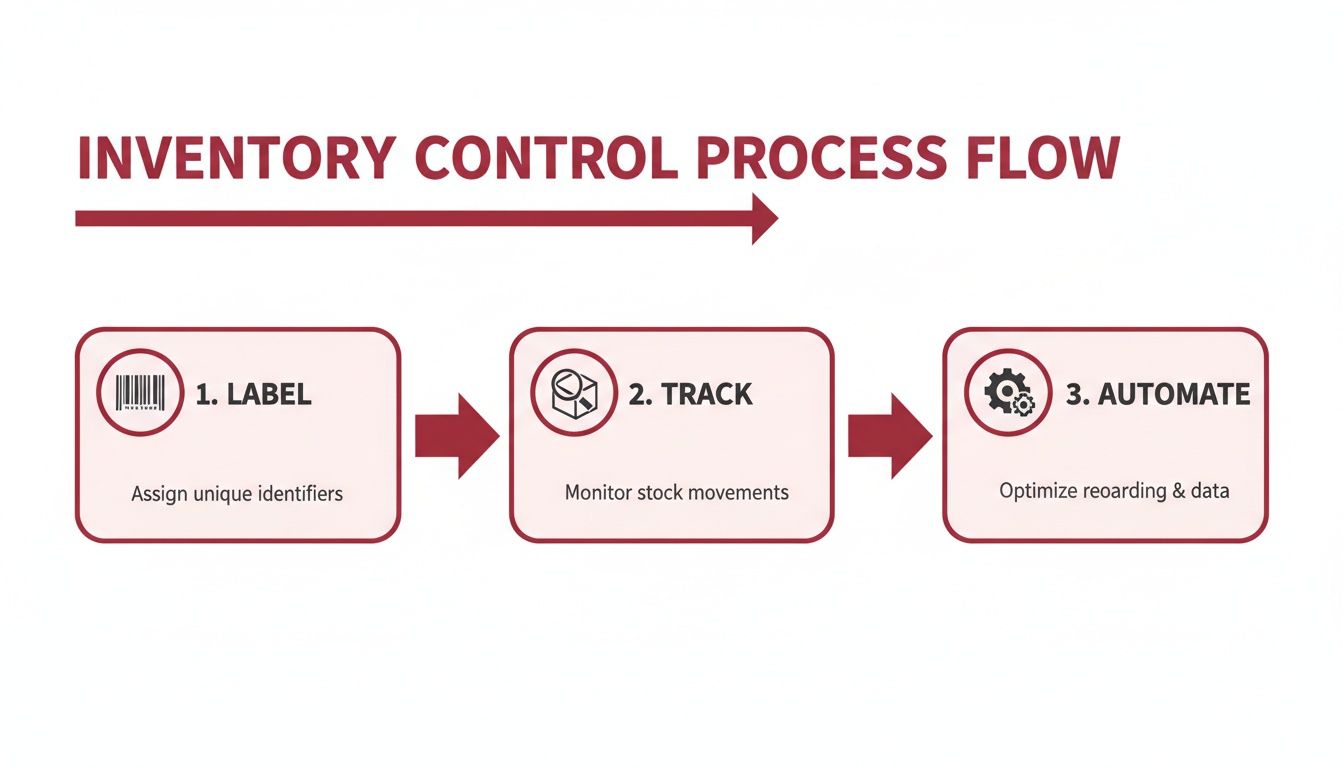
This systematic flow demonstrates the importance of integrating technology with physical processes. Together, they create a supply chain you can rely on.
Designing a physical layout that is compliant from the start is essential. Our team provides free layouts and designs to help you configure a space that supports safe and efficient workflows, helping you avoid fines or operational shutdowns. Contact Us today to start planning your compliant storage solution.
Maintaining and Optimizing Your System
Implementing a new medical supply storage system is a significant achievement, but the job is not finished once the last shelf is installed. The true measure of a successful system is how it performs and adapts over the long term. This is not just about keeping things tidy; it is a continuous process of auditing, training, and fine tuning to ensure your storeroom continues to meet its goals.
A static system is an ineffective system. Patient needs change, new treatments emerge, and facilities grow. Your storage strategy must keep pace. Consistent reviews and a commitment to improvement are what turn a temporary fix into a permanent operational asset.
Run Regular Audits and Keep Your Team Sharp
The best way to maintain control is with routine inventory audits. These are not just about counting boxes; they are an opportunity to spot slow moving items, identify workflow bottlenecks, and ensure everyone is following FIFO and FEFO protocols.
- Scheduled Cycle Counts: Move away from the disruptive annual inventory. Instead, conduct smaller, frequent counts on specific sections. You will catch problems earlier and with less disruption.
- Performance Reviews: Analyze the data. Look at stockouts, expired products, and retrieval times. Do you see trends that indicate a need to adjust par levels or the layout?
- Ongoing Training: Do not assume everyone remembers the new system. Quick, regular training sessions reinforce good habits and bring new staff up to speed quickly, ensuring the system is used as designed.
Adapt as Your Needs Evolve
Your initial needs assessment was a snapshot in time. To remain efficient, you must periodically re-evaluate what you stock and how you use your space. A new service line can completely change your supply needs, or a shift in patient volume can alter your consumption rates.
The push for smarter inventory management is accelerating, especially in clinics and pharmacies. More facilities are using automated tracking and cloud based systems to reduce costs and eliminate stockouts. Upgrades like RFID can boost inventory accuracy by 30%, and better data helps you set smarter reorder points that lead to significant savings. You can find more insights on the growth in healthcare inventory management here.
A well organized supply system is a living part of your facility. By embracing a cycle of assessment, selection, implementation, and maintenance, you create a powerful engine for efficiency that directly benefits patient safety and your budget.
Facilities that build this continuous improvement cycle into their operations are always better prepared for the future. They find that subsequent projects proceed more smoothly and quickly, avoiding the operational gridlock that can impact an entire organization, from staff morale to patient care.
Conclusion: Building a Solution That Lasts
Organizing your medical supplies is not just a housekeeping task; it is a strategic initiative with significant benefits. From reducing waste and preventing stockouts to ensuring regulatory compliance and protecting patients, a smart system is the foundation of operational excellence. It all comes down to a clear process: assess your needs, select the right equipment, implement intelligent workflows, and maintain the system continuously.
If you are ready to build a system that delivers real, lasting value, we are here to help. With competitive pricing and the fastest shipping in the industry, we can get your project started quickly. We offer free, no obligation layouts and designs to help you visualize how an efficient, compliant solution will look in your unique space.
Take the next step toward a more organized and effective facility. Request a Quote online or Call (800) 326-4403 to speak with one of our specialists today.
Frequently Asked Questions
Even with careful planning, questions about organizing medical supplies often arise. Addressing these common concerns upfront can help ensure your project runs smoothly and delivers the desired results, from improved efficiency to solid compliance.
Here are answers to some of the questions we hear most often from facility managers and buyers.
How often should we conduct a full inventory audit?
The traditional, once a year full inventory count is becoming outdated. It is disruptive, and the data becomes stale almost immediately. A more effective approach is to implement regular cycle counting.
Instead of a massive, shutdown style event, cycle counting involves auditing small, manageable sections of your inventory on a rotating basis, perhaps weekly or even daily. This provides a continuous, accurate picture of your stock levels without halting operations. You will spot discrepancies, identify slow moving items, and adjust your par levels much faster, preventing both stockouts and costly overstocking.
What is the best way to handle expired or recalled supplies?
Handling compromised supplies requires a strict, documented protocol to ensure they never reach a patient. The standard practice is to establish a clearly marked and physically separate quarantine area.
The moment an item is identified as expired or recalled, it must be moved to this zone without exception. This simple step prevents accidental use and keeps it completely isolated from your active inventory until it can be properly disposed of or returned according to manufacturer and regulatory guidelines. This is a critical part of patient safety and compliance.
A Quick Tip: Facilities that plan their layouts with designated zones for receiving, active inventory, and quarantine from the outset often get up and running much faster. This foresight helps avoid the operational headaches and delays that come with retrofitting a space for compliance later.
How do we get staff to follow the new system?
The success of any new organization system depends on your team. If they do not buy in, it will not be sustainable. The key is a combination of clear communication, thorough training, and making the new system as intuitive as possible.
Start by involving your team in the planning process early to get their feedback; they are the ones who will be using it every day. Once the system is ready, hold hands on training sessions to walk everyone through the new workflows, from receiving an order to picking an item. Finally, use clear labels, color coding, and visual aids to make following the correct procedure the easiest and most obvious choice.
At Material Handling USA, we do not just sell equipment; we provide the expertise to help you build a medical supply system that is built to last. With our competitive pricing, free layout designs, and some of the fastest shipping in the industry, we help you achieve operational excellence without the usual delays.
Request a Quote or call our specialists at (800) 326-4403 for a free consultation.