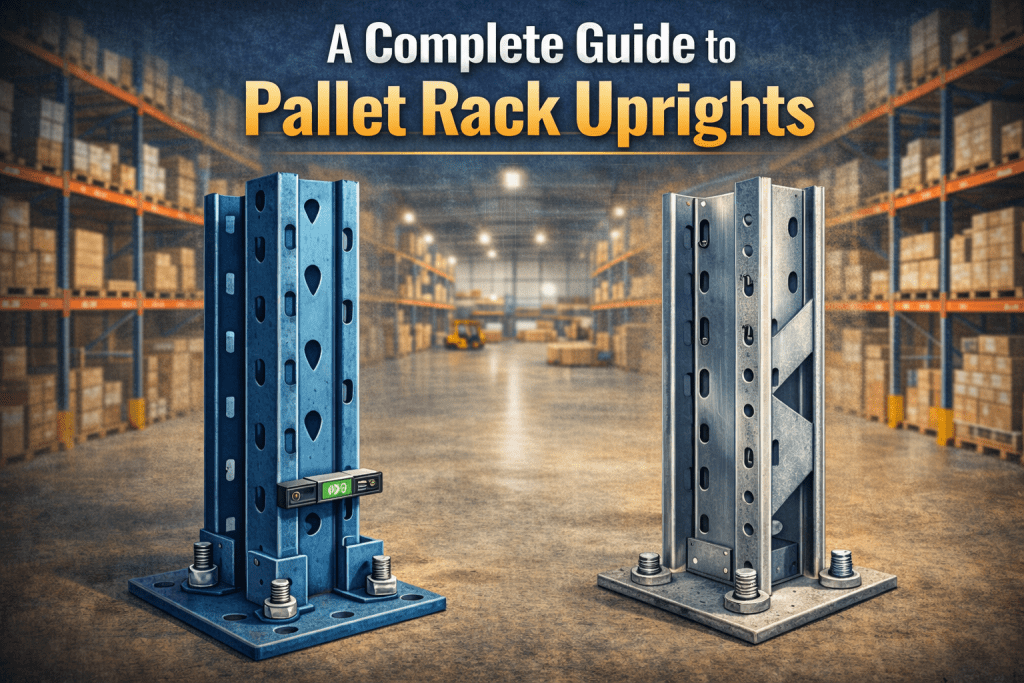
What Are Warehouse Racking Uprights
Warehouse racking uprights are the vertical steel columns that form the structural backbone of any pallet rack system. Also called upright frames or end frames, they support horizontal beams and carry the weight of everything stored on the rack. Choosing the right uprights directly affects load capacity, safety, and how well your storage system performs over time.
Standard Upright Sizes and Configurations
Racking uprights typically range from 8 feet to 24 feet tall, with depths between 36 and 48 inches. The most common warehouse configurations use 42-inch deep frames, which fit standard 48 x 40-inch pallets. Frame gauge (steel thickness) varies from 14 gauge for light loads to 3-inch columns for heavy-duty applications. Teardrop-style connection holes are the most widely used design, making beams easy to adjust without tools.
How to Choose the Right Uprights
Start with load requirements. Calculate the maximum weight per beam level and total weight per bay. Factor in seismic requirements if your facility is in an earthquake zone. Column width, gauge, and bracing pattern all affect capacity. Always match uprights to your beam type and connector style. Mixing brands or styles can compromise structural integrity and void warranties.
Upright Inspection and Maintenance
Damaged uprights are one of the leading causes of rack collapse. Inspect frames regularly for dents, bends, rust, and missing anchor bolts. Any upright with visible damage beyond manufacturer tolerances should be unloaded and replaced immediately. Column protectors and end-of-aisle guards reduce forklift impact damage and extend frame life.
Related resources from Material Handling USA: