
Safety Cans and Containers
Compare Justrite container families for dispensing, parts cleaning, and used-liquid collection. Build a clear specification around your application, chemical, and work area.
Choose the container around the work
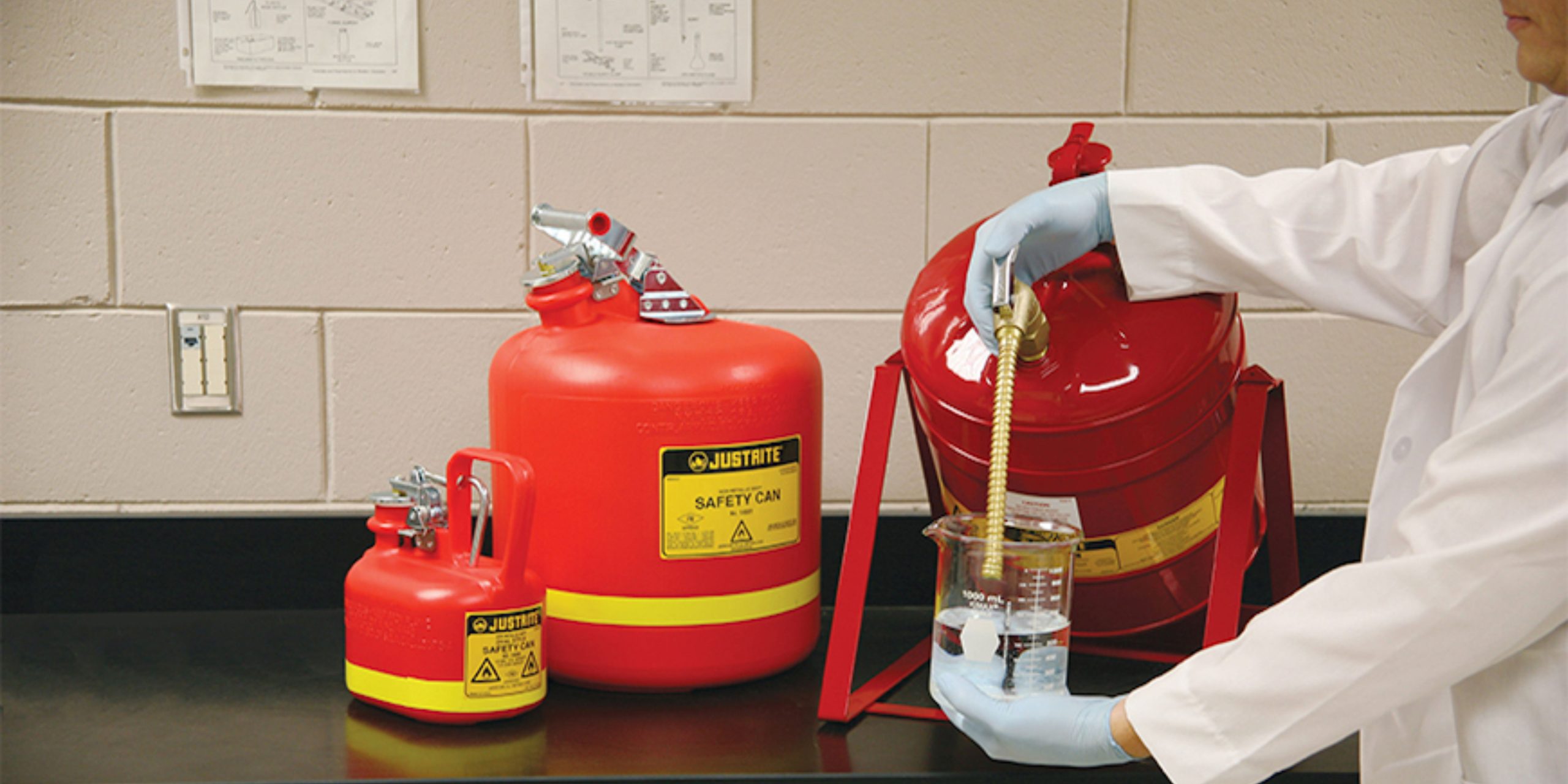
Safety cans and containers support different tasks: holding a supply of liquid, dispensing it into equipment, wetting a cleaning cloth, washing small parts, or collecting used liquid. Start with the task and the actual chemical, then compare the appropriate container family. A familiar color or similar shape is not enough to establish that two products serve the same purpose.
For a useful selection discussion, describe where the container will be used and what happens before and after that step. A maintenance technician filling equipment has different requirements from a laboratory collecting solvent waste. Record the product name and concentration, the amount handled, the receiving opening, and any handling restrictions from your facility's safety team.
Material Handling USA can help you organize those requirements into a product inquiry. Bring the chemical's safety data sheet and any existing manufacturer or model information. Ask for the proposed container's documentation before approving a substitution.
Type I safety cans: one opening

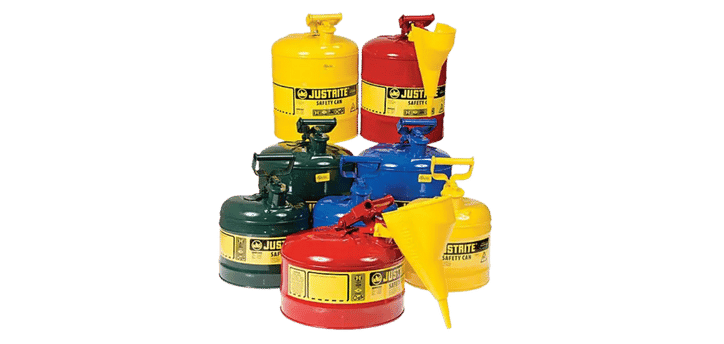
A Type I safety can uses one opening for filling and dispensing. Justrite offers these cans in several sizes and colors. Its steel product family includes a flame arrester and a lid with pressure-relief features; check the selected model's documentation for its construction and approvals.
Consider the receiving opening as well as the can's capacity. An appropriate manufacturer-specified funnel may help with smaller openings. Check whether the funnel is included in the quoted model or listed separately. A product photograph is useful for identifying the configuration, but the final model description should state the accessories you are buying.
Type II safety cans: a separate dispensing opening
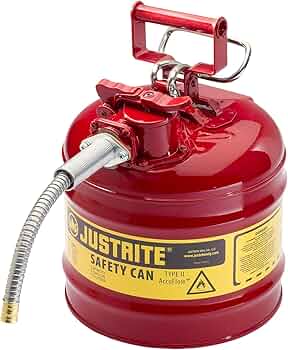
Type II cans separate the filling opening from the dispensing spout. Justrite's AccuFlow family uses a trigger-controlled pouring arrangement and a flexible metal hose. This is a useful configuration to compare when access to the receiving opening is restricted or the application calls for more controlled dispensing.
Specify the hose configuration along with the capacity and color. Do not assume every listing or replacement hose has identical dimensions. Have the supplier confirm the exact model, included hose, and available replacement parts. Keep any adjustment or maintenance work within the manufacturer's instructions rather than modifying a fitting to make it suit a different task.
Compare the task before comparing the price
A purchase description such as “red safety container” leaves too much open to interpretation. Add the intended task and container family so competing quotations refer to comparable products. A dispensing can, a cleaning container, and a waste-collection can may all appear in the same catalog while serving different workflows.
Evaluate the supplied configuration, not just the product name. One quotation may include a funnel or hose while another lists it separately. Ask the supplier to identify those differences explicitly. If a substitute is proposed, review its documentation against the original requirements before accepting it.
Bench cans for small-parts cleaning
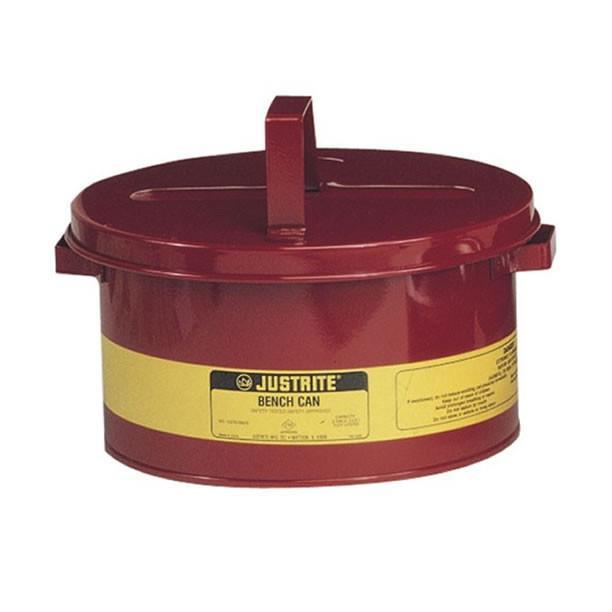
Bench cans belong to the parts-cleaning side of the selection process. The existing product photo shows a Justrite bench can, rather than a pouring can. For this application, describe the parts being cleaned, the cleaning agent, and the available work surface when requesting a recommendation.
Include the largest part dimensions and explain how the operator will place and retrieve the parts. Ask for the selected model's operating instructions and usable dimensions. If the process needs a wash tank, basket, or another cleaning arrangement instead, resolve that distinction before choosing by nominal liquid capacity alone.
Plunger cans for dispensing onto a cloth
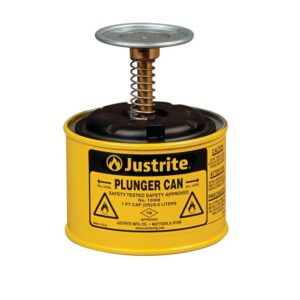
A plunger can uses a small tray to deliver liquid to a cleaning cloth at the work area. It is a different tool from a closed storage can. Justrite specifically states that its plunger cans are intended for dispensing during the workday, not for storage as approved closed containers.
Plan the end-of-task handling step as part of the purchase. Ask your safety team to define the procedure, using the manufacturer's instructions and a suitable approved container where storage is required. Do not assume that placing a dispensing device inside a cabinet changes the device's intended use.
Disposal cans for used liquid
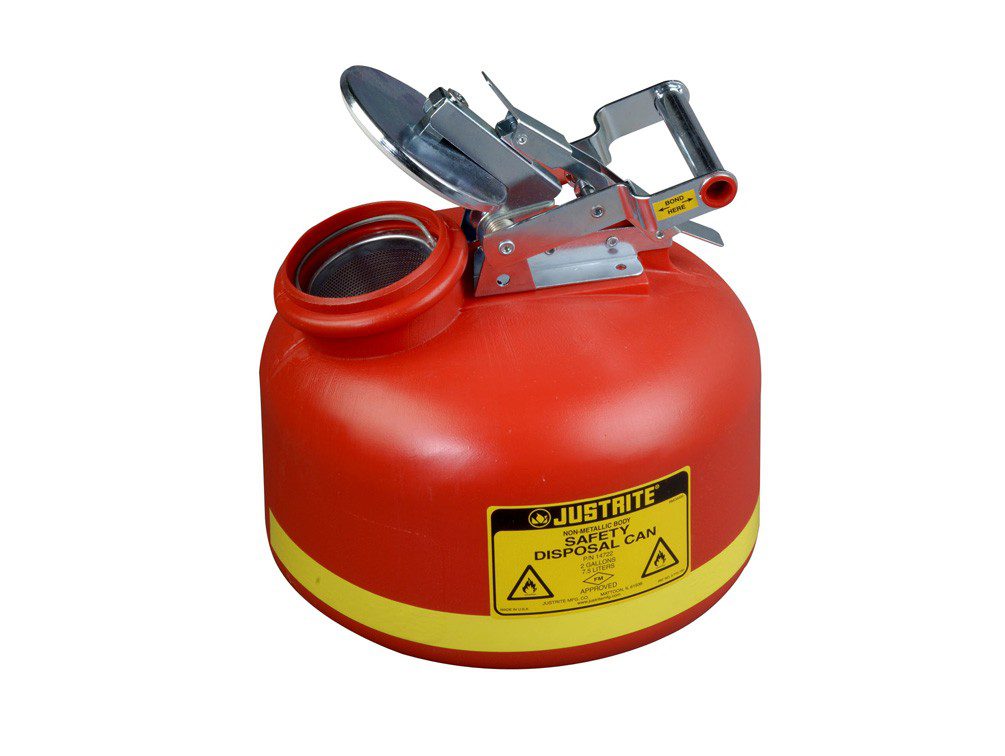
Waste collection deserves its own container selection. Justrite's range includes containers intended for used flammable liquids as well as other waste-container families. Match the proposed product to the actual waste stream; the general word “waste” is not a specification.
Describe how the used liquid reaches the container, whether the stream contains a mixture, and how the filled container moves into your facility's waste-handling process. Have the responsible safety or environmental personnel review suitability. Buying a disposal can does not by itself establish the correct classification, labeling, storage location, or disposal route for the material collected.
Size and configuration: build a short specification

Record the amount needed for the task, the frequency of replenishment, and the route between the supply point and the work area. These details help explain why a particular capacity is being requested. Avoid defaulting to the largest available can simply because the price per gallon appears attractive.
Check the space where the container will sit, including shelves, cabinet openings, and the workbench. Request overall dimensions from the selected product documentation. The photograph on a category page cannot establish whether a handle, hose, or lid will clear a tight opening.
Ask the people doing the work to review the proposed arrangement before an order is finalized. Capture access concerns, the need for an accessory, and any restrictions already defined in the facility's procedures. A short written specification makes replacements and future reorders easier to compare, especially when the original buyer is unavailable.
Color helps identification; read the label
Common United States conventions associate red with gasoline, yellow with diesel, blue with kerosene, and green with oil. Justrite's color guide also emphasizes that conventions are not universal and that the contents must be confirmed. Color should support your facility's identification system rather than replace an accurate label.
Record the required color in the purchase specification and have your safety team define the labeling requirements. Check an existing container's label before using it as a reorder reference. A green can, for example, does not identify a particular oil formulation or establish chemical compatibility.
Review the complete work area
The container is one part of the workflow. During planning, identify the supply location, dispensing or cleaning station, receiving equipment, and destination for used liquid. A simple diagram or written sequence can reveal where a hose, opening, shelf, or handling step needs closer review.
Bring questions about ventilation, ignition sources, spill response, storage arrangements, and applicable requirements to the people responsible for the facility's safety program. Product selection should fit those decisions. This page does not assign a universal storage quantity or claim that every container in a category satisfies every installation requirement.
For a replacement project, document why the existing arrangement is being changed. Is the receiving opening difficult to reach? Are workers requesting a different capacity? Is a part no longer available? Those are different purchasing problems. Explaining the problem helps the supplier respond with relevant options instead of simply matching a photograph.
Inspection, documentation, and replacement planning
Keep the model number, purchase information, and current manufacturer instructions together. This makes it easier to identify a replacement hose, lid component, or complete container without guessing from appearance. Where several departments use similar equipment, include the work area or application in your records.
Use the inspection and maintenance procedures specified for the actual product and your facility. If a container has damage, leakage, an unreadable identification label, or a closure that does not function as intended, refer it to the responsible person and follow your removal-from-service process. Do not make an improvised repair to a safety component.
When requesting replacement parts, provide the model information and describe the condition clearly. Ask whether the proposed part is intended for that exact product. If the original identification is missing, resolve suitability with the manufacturer or supplier before returning the equipment to use.
What to include in a quote request
A clear inquiry reduces the chance of receiving a product that looks right but has the wrong configuration. Send the following information to Material Handling USA:
- Intended task: storage, dispensing, parts cleaning, or used-liquid collection.
- Chemical identity and available safety data sheet.
- Requested container family, capacity, material, and color.
- Receiving-opening dimensions and any space restrictions.
- Required hose, funnel, or other manufacturer-specified accessory.
- Existing model numbers and whether substitutions may be considered.
- Quantity, delivery location, and the date the equipment is needed.
Ask the quote to identify the proposed model and included accessories, with current product documentation. Have your facility's responsible reviewer confirm suitability before ordering. Prices, availability, and delivery timing should be confirmed for the actual request rather than inferred from a generic category description.
Receiving the order and keeping a useful record
Before equipment enters service, compare the delivered items with the approved quotation. Check the model identification, quantity, color, and accessory list. Report a missing component or unexplained substitution before the package is treated as a complete replacement. A similar-looking can should not automatically inherit the approval given to a different model.
Keep a copy of the documentation with the purchasing record and make the operating instructions available to the people responsible for using the equipment. If the order serves several work areas, record which configuration belongs to each task. That helps purchasing distinguish a routine reorder from a change in application.
For example, an order originally intended for dispensing one named cleaning liquid should be reviewed again if the department switches to a different chemical. The old invoice remains useful for identifying what was bought, but it does not establish that the same product is suitable for the new use.
Before a later reorder, ask whether the process, liquid, receiving equipment, or supplier's model specification has changed. Record the answers alongside the new quotation. This small administrative step gives the next buyer a clear basis for comparison and reduces reliance on informal descriptions such as “the usual red can.”
Frequently asked questions
What is the difference between Type I and Type II cans?
Type I cans use one opening for filling and dispensing. Type II cans have a separate dispensing opening. Compare the receiving opening and the required accessories when deciding between the two families.
Can I choose a container by color alone?
No. Color can help with identification, but it does not establish the contents, chemical compatibility, or intended use. Check the label, selected model documentation, and your facility requirements.
What information helps establish chemical compatibility?
Provide the actual chemical identity, concentration, and safety data sheet to the responsible reviewer and manufacturer or supplier. Do not assume that a material suitable for one liquid is suitable for a different liquid or mixture.
Is a plunger can the same as a storage safety can?
No. Justrite describes its plunger cans as point-of-use dispensing equipment, not approved closed storage containers. Follow the manufacturer instructions and the procedure established by your safety team for end-of-task handling.
Does a product photograph show everything included?
Not necessarily. Confirm the model number and the written list of included accessories in the quotation. Use photos to understand the arrangement, then verify dimensions and configuration in the product documentation.
Can Material Handling USA quote replacement equipment?
Send the existing model number, intended task, requested quantity, and any configuration or access problems. Ask for the proposed replacement documentation and have the responsible facility reviewer approve suitability before ordering.
Product documentation and related resources
Ask for current documentation for the exact model quoted. The Justrite safety cans and containers brochure provides a starting point for the product discussion. For a wider facility project, see our design services.
Request a safety-container quote
Tell us the task, chemical, requested configuration, and quantity. Material Handling USA can help organize a product inquiry for your facility review.