A Complete Guide to Data Center Security Cage Systems
In a world that runs on data, the physical security of your IT hardware is the foundation of your digital trust and operational stability. This guide explores data center security cage systems, the smart, modular solution for building secure, private spaces within shared colocation facilities or your own enterprise data center.

We will break down how these systems create a crucial layer of defense, helping you meet compliance standards and protect your most valuable servers and networking gear. You will get a practical framework for evaluating your needs, planning a smart layout, and getting the right cage system installed without project delays.
Finalizing your physical security plan early is key to avoiding costly setbacks and ensuring you can scale operations smoothly. As demand for secure data hosting continues to grow, having your infrastructure ready allows you to capitalize on opportunities faster. While a complete plan includes processes like secure data center equipment recycling, the physical barrier is your first and most important line of defense.
What Are Data Center Security Cages?
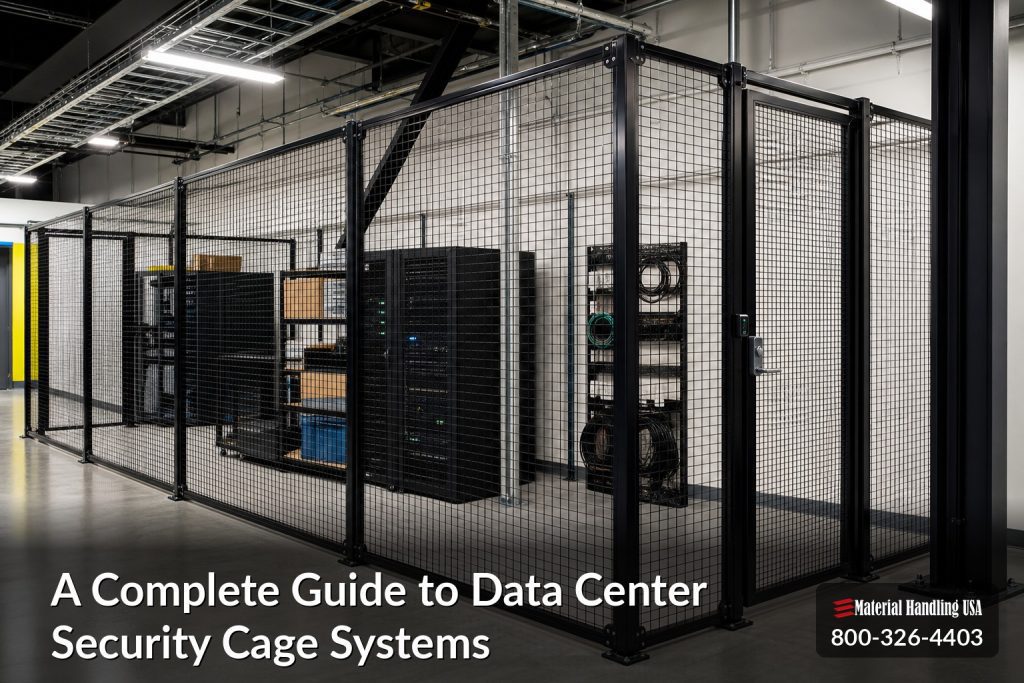
A data center security cage is a modular wire partition system used to physically wall off server racks and IT equipment. Think of it as a secure, customizable perimeter built right inside a larger room, creating a cage within a shared space like a colocation facility or enterprise data center.

Unlike building permanent drywall, these cages offer a flexible, scalable, and more cost-effective way to control access. They are commonly used for:
- Tenant Separation: Isolating one client's equipment from another in a multi-tenant colocation environment.
- High-Value Equipment Areas: Protecting core networking gear, SANs, or other critical infrastructure from general access.
- Restricted Access Zones: Creating compliant zones for regulations like PCI DSS, HIPAA, or FISMA that require strict physical access controls.
The open design of wire mesh modular cages maintains critical airflow for cooling and allows existing fire suppression systems to function without modification, a significant advantage over solid walls.
Security Cage vs. Dedicated Room vs. Open Rack
When planning physical security, you have several options. A comparison table helps clarify the trade-offs between a modular cage, a traditional drywall buildout, and leaving racks in an open-floor environment.
| Feature | Data Center Security Cage | Dedicated Room (Drywall) | Open Rack Area |
|---|---|---|---|
| Security | High (Controlled Access) | Highest (Fully Enclosed) | Low (Shared Access) |
| Scalability | High (Modular, easy to expand) | Low (Requires construction) | N/A |
| Cost | Medium | High | Low |
| Installation Time | Fast (Days) | Slow (Weeks/Months) | Immediate |
| Airflow | Excellent (Open mesh) | Requires dedicated HVAC | Excellent (Unobstructed) |
| Flexibility | High (Easy to reconfigure) | Low (Permanent structure) | High (Easy to move racks) |
Core Benefits of Modular Cage Systems
Modular cages deliver significant advantages beyond simply dividing floor space. Their design directly addresses the core operational needs of a modern data center.
First is enhanced physical security. The tamper-resistant, welded wire mesh creates a formidable barrier that is difficult to breach. More importantly, it serves as a clear visual deterrent, signaling that the hardware within is secured and monitored.

Second is the flexibility and scalability that traditional construction cannot match. As your equipment footprint grows or layout needs change, modular panels allow you to expand, shrink, or completely reconfigure your secure space without the disruption and cost of a major construction project.
Finally, these systems are engineered for operational efficiency. The mesh design works with your existing HVAC and fire suppression systems, so you avoid re-engineering expensive building infrastructure. This smart design keeps both initial investment and long-term operational costs under control.
5-Step Checklist for Evaluating Your Cage System
Choosing the right security cage requires balancing security, budget, and future needs. This checklist will help you make an informed decision.
- Define Security & Compliance Needs: What are your non-negotiable security requirements? Are you meeting specific compliance standards like HIPAA, PCI DSS, or FedRAMP? This dictates mesh type, hardware, and lock systems. For an in-depth look at material options, review our security cage specifications.
- Assess Build Quality and Materials: Look for fully welded wire mesh and a durable powder-coat finish. These details distinguish a cage that lasts for decades from one that shows wear in just a few years. Quality materials are a non-negotiable for protecting high-value assets.
- Plan for Access Control Integration: How will staff get in and out? Your cage's locks must integrate with your building’s existing access control system, whether it is a simple key, a card reader, or a biometric scanner.
- Confirm Scalability and Modularity: The cage you buy today must support you tomorrow. Is the system truly modular? Can you easily add or remove panels to expand or reconfigure it as your server rack footprint evolves?
- Evaluate Vendor Support and Logistics: A good partner is as important as good hardware. Do they offer free design services and fast quotes? A vendor with industry-leading shipping speeds keeps your project on schedule, preventing costly delays that can impact deployment timelines.
Critical Planning Factors for Your Cage System
A successful cage installation depends on thoughtful planning. Getting these details right from the start will save you from major operational headaches down the road.
Layout and Footprint
First, map out your space. Your cage layout must account for proper hot and cold aisle clearance to ensure efficient server cooling. You also need to plan around building obstructions like support columns, piping, or HVAC units. A detailed server cages design ensures every square foot is optimized.
Doors and Access Points
Next, consider how your team will use the cage. Will traditional hinged doors work, or are sliding doors better for tight corridors? Do you need wider doors for moving large equipment, or are standard-width doors sufficient? The type of door is a critical detail that impacts workflow.
Service and Maintenance Access
Finally, plan for the technicians working inside the cage. The design must provide easy access for routine tasks like cable management, equipment maintenance, and hardware swaps. A well-planned layout allows this to happen without compromising security. Proper planning is also a key component of successful Data Center Migration Best Practices.

Our team provides free, no-obligation cage layouts and designs, helping you navigate these decisions to create a solution that works from day one.
Finding the Right Partner for Your Data Center Project
The partner you choose is as critical as the hardware itself. A great partner does not just sell a product; they become an extension of your team.
We start by using top-tier materials from premier brands like WireCrafters, so you know your infrastructure is built to last. Our key differentiator is speed. We offer the fastest shipping in the industry, a crucial advantage when project timelines are tight.
While other projects stall waiting for materials, yours can proceed to the installation phase. We support this with competitive pricing and a true partnership approach, offering free layouts and designs to ensure your solution is optimized for performance and budget from the start. Choosing to move forward sooner with a reliable partner ensures better planning timelines and avoids the supply chain delays affecting many projects today.
Frequently Asked Questions
What is the standard height for a data center security cage?
Most data center cages are 8 to 10 feet tall to prevent anyone from climbing over. However, panels can be stacked to reach the full ceiling height for a "floor-to-deck" enclosure, offering maximum security.
What kind of locks can be used on data center cages?
Cages can be fitted with a wide range of locks, including standard keyed locks, programmable electronic locks, card readers that integrate with your building's access control system, and biometric scanners.
How does a wire mesh cage affect fire suppression?
The open mesh design allows water from overhead sprinkler systems to pass through freely, so it does not interfere with your facility's existing fire suppression system. This is a major advantage over solid-walled rooms.
Can you run cabling through a security cage?
Yes. Cutouts for cabling trays and conduits can be precisely fabricated into the wire mesh panels during the manufacturing process, allowing for clean and secure cable runs.
How long does it take to install a data center cage?
Installation time depends on the size and complexity of the cage, but most standard installations can be completed in a few days. This is significantly faster than the weeks or months required for traditional construction. Our free server cage design consultation can help you plan your timeline.
Is it possible to reconfigure a cage after installation?
Absolutely. The modular design is one of the biggest benefits. Panels can be unbolted and reassembled in a new configuration to accommodate growth or changes in your layout.
Secure Your Infrastructure with the Right Partner
A data center security cage is more than just wire mesh; it is a fundamental part of your physical security strategy. It offers a flexible and cost-effective way to protect your most critical IT assets. Getting the design right ensures your operations run smoothly today and can adapt to future demands.
When you partner with us, you are not just buying materials. You are gaining expert design support, competitive pricing, and the fastest delivery in the industry to ensure your project moves forward without a hitch. We help you turn your requirements into a secure, functional environment you can depend on. The sooner your project is planned, the faster you can secure your assets and avoid potential delays.
Ready to take the next step? Request your free, no-obligation quote and layout design today. Or, call us at (800) 326-4403 to speak directly with a security cage specialist.
Need Help With Your Project?
Our team provides free layout designs, competitive pricing, and professional installation across the United States. Whether you’re outfitting a new facility or upgrading an existing one, we’re here to help.
Request a Free Quote → | Call (801) 328-8788
Who This Is For
Our data center security cage systems solutions are ideal for:
- Warehouse managers
- Facility planners
- Property managers
- Government coordinators
- Manufacturing managers
- Distribution operators