Tool Crib Security Cage: Ultimate Asset Protection
Meta title: Tool Crib Security Cage Guide for Buyers
Meta description: Learn how to choose the right tool crib security cage for safer, more efficient storage. Request a quote or call today.
URL slug: tool-crib-security-cage
A missing torque wrench. An empty bin where repair parts should be. A technician waiting while someone tracks down a key or checks who last signed out a tool. Most managers don't need a report to know this problem is expensive. They see it in delayed maintenance, messy counts, and the slow drain of replacing items that should still be on site.
A tool crib security cage fixes more than theft. It creates a controlled space for tools, MRO inventory, and high-use supplies so people can find what they need, supervisors can track access, and the operation runs with less friction. The return isn't only in the upfront purchase. It's in fewer interruptions, better accountability, and a storage system that still works as the facility changes.
If you're comparing a tool crib cage, a locked room, or cabinets, the right decision comes down to total cost of ownership. That means looking at security, labor time, future expansion, and how the enclosure fits your workflow.
What is a Tool Crib Security Cage and Why Use One?
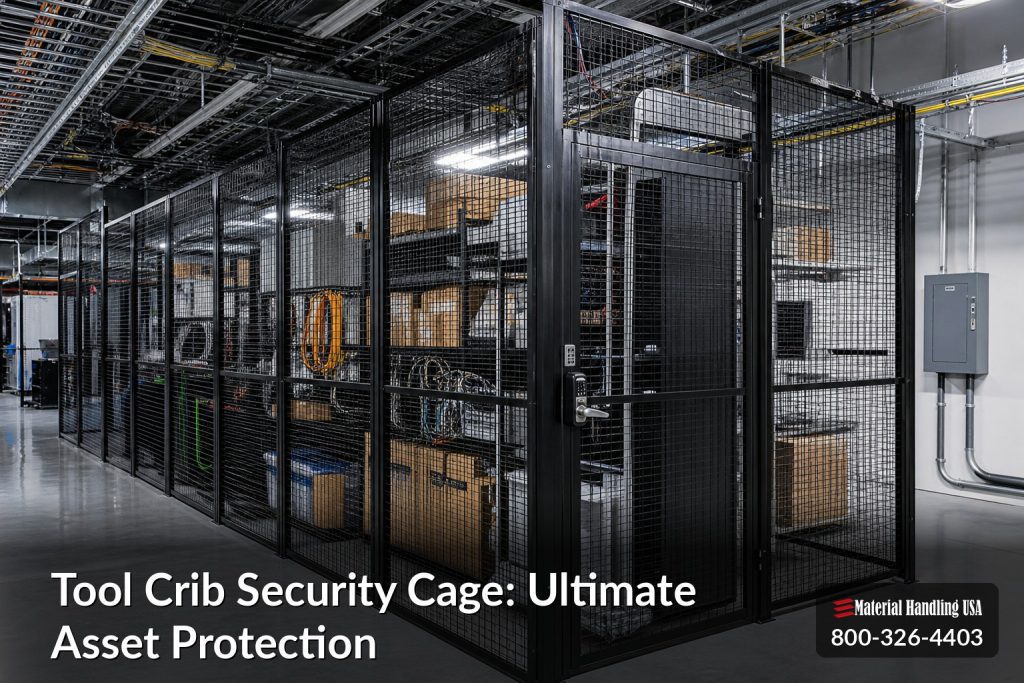
A tool crib security cage is a lockable, access-controlled enclosure built inside an existing warehouse, plant, or maintenance area. Most use modular wire mesh panels, framed doors, and configurable layouts to create a secure storage zone without building permanent walls.

Managers usually install one for four reasons. They need to secure shared tools, limit access to high-value parts, organize maintenance inventory, or create a controlled issue point for authorized staff. In practice, one cage often handles all four.
The safety side matters too. The warehousing sector experienced 4.8 injuries per 100 full-time workers in 2024, and tool crib security cages help create safer, more controlled work areas by limiting access to hazardous equipment and restricted zones, as noted in this warehouse safety and security cage overview. That makes the enclosure part of a broader facility control plan, not just a lockable storage area.
Where a tool crib cage works best
A wire mesh tool crib cage is a strong fit when you need security but still want visibility, airflow, and sprinkler coverage. Supervisors can see activity inside the enclosure. Cameras keep a clear line of sight. Teams don't lose floor flexibility to permanent construction.
Common use cases include:
- Shared maintenance tools that move across shifts
- Repair parts and MRO supplies that need tighter control
- High-value hand tools with repeat checkout activity
- Warehouse support items stored near dock or production zones
- Restricted stock that shouldn't sit in open shelving
Practical rule: If too many people can access the same tools without a clear handoff process, a tool crib security enclosure usually pays for itself in control and time savings.
Facilities that are also reviewing broader process discipline may find this guide for Dubai warehouse managers useful for maintenance and operational planning.
Comparing Secure Storage Options
Buyers usually aren't choosing between good and bad. They're choosing between different trade-offs. A tool crib security cage has clear strengths, but it isn't the only option.
Case studies of wire mesh tool cribs show why many facilities prefer them. Some documented a 50% reduction in inventory shrinkage within one month, with cycle count time dropping from 90 minutes to 20 minutes, according to this wire mesh tool crib case study summary. Those gains come from controlled access and cleaner inventory handling, not from the cage alone.
Comparison of secure storage solutions
| Feature | Wire Mesh Tool Crib Cage | Locked Drywall Room | Heavy-Duty Tool Cabinets | Modular Partitioned Enclosure |
|---|---|---|---|---|
| Visibility | High | Low | Low to medium | Varies by panel type |
| Airflow | High | Low | Limited | Varies |
| Scalability | High | Low | Low to medium | High |
| Access control | Good to advanced | Good | Basic to moderate | Good to advanced |
| Installation speed | Fast | Slow | Fast | Fast |
| Ideal use case | Shared tools, MRO, high-value inventory | Fully enclosed permanent room | Individual tool sets or small secure storage | Flexible industrial separation |
| Budget range | Mid-range | Higher when construction is required | Lower for small storage, higher if many units are needed | Mid to higher depending on panel type |
What usually works and what doesn't
A locked room makes sense when privacy or solid walls are required. The downside is slower buildout, less visibility, and less flexibility later.
Cabinets work when the inventory is small and assigned to specific users. They don't work as well when many people need access, or when stock grows past a few tool sets.
A wire mesh tool crib cage lands in the practical middle. It secures the inventory, preserves sightlines, and can often expand with the operation. Some facilities that need tighter issue control also compare cages to industrial vending machines and smart lockers for total asset control, especially for high-turn consumables.
A Buyer's Checklist for Selecting the Right Cage
Choosing the right cage starts with how it will be used on a busy day, not how it looks on a quote sheet. The details that matter most are the ones your team will live with every shift.

Five-step checklist for buyers
-
Define what goes inside
Separate hand tools, repair parts, consumables, and high-value assets. A cage meant for shared tool control needs a different layout than one used for boxed inventory. -
Match security to real risk
Standard tool crib security cages often use 10-gauge wire welded into a 2" x 2" mesh secured to a 13-gauge steel angle frame, which keeps hardware inaccessible from the outside and provides stronger construction than chain-link style alternatives, as shown in these security cage specifications. -
Choose the right access method
A simple keyed lock may work for a small maintenance crew. A keypad, card access, or managed issue point is better when multiple shifts use the same space. -
Plan for growth now
Tool rooms rarely shrink. If inventory will grow, choose a modular tool crib enclosure that can expand rather than a layout that hits its limit too soon. -
Review daily workflow before finalizing
Door swing, service windows, aisle width, and shelving placement affect labor every day. A poor layout can turn a secure cage into a bottleneck.
Features worth paying for
Some upgrades improve daily use enough to justify their cost.
- Service windows: Good for controlled issue and return without letting everyone enter the cage
- Sliding or double doors: Helpful where carts or larger items move in and out
- Integrated shelving layout: Better than buying the enclosure first and forcing storage into it later
- Electronic access control: Useful when accountability matters across shifts
- Modular panels: Easier to reconfigure if departments move or inventory changes
The best cage isn't the one with the most features. It's the one your team can use consistently without workarounds.
What buyers often miss
Many buyers focus only on enclosure price. That misses the operating cost of poor design.
Watch for these common mistakes:
- Undersized layouts that fill up too quickly
- One entry point in the wrong location that slows issue and return
- No plan for shelving inside the footprint
- Too much security for low-risk inventory which adds cost and friction
- Too little control for shared assets which defeats the purpose
A lockable tool crib cage should reduce exceptions, not create them.
Design, Layout, and Installation Planning
The best enclosure on paper can still fail if it's placed in the wrong part of the building. Layout should follow traffic, supervision, and issue frequency.

A warehouse tool crib cage should sit close enough to the work area that staff will use it properly, but not so close that it disrupts forklift routes, dock activity, or pedestrian flow. If tools are issued often, put the entry where the attendant or supervisor has a clear line of sight. If inventory comes in on carts or pallets, size the door for that movement from the start.
Layout choices that affect daily performance
Door type is one of the biggest decisions. Hinged doors are simple and common. Sliding doors help when aisle space is tight. Service windows work well when one person issues tools and wants to limit full entry.
The enclosure should also fit the building, not fight it. Wire mesh modular systems are useful because they can be configured around columns, existing walls, and operational constraints. Buyers researching wire mesh modular cages often choose them for this reason alone.
Site planning before install
Before install, confirm:
- Floor condition for anchors and panel alignment
- Clearances around sprinklers, lights, and equipment
- Access path for bringing panels and shelving to the area
- Traffic flow during shift changes and receiving peaks
- Future expansion area if inventory is expected to grow
A taped floor mockup is one of the cheapest planning tools you can use. It reveals door conflicts, aisle pinch points, and service counter problems before hardware arrives.
Free layouts and design support matter. A good plan usually prevents more cost than it adds.
The Material Handling USA Advantage
Most cage suppliers can describe panel sizes and lock options. Fewer help buyers think through operational impact over time.
That matters because the next step in tool control isn't only stronger wire. It's better accountability. Warehouses can lose $1,000 to $5,000 per employee annually in tools, and the same source notes that planning for integrated access control and inventory systems early is a practical differentiator for facilities that want tighter control over tool movement, according to this digital tool management perspective.
For buyers comparing suppliers, the useful questions are simple:
- Can the supplier help with custom sizes and layouts?
- Can the cage support future access control upgrades?
- Can the team coordinate installation details and configuration?
- Can you get a free quote and layout input before committing?
Material Handling USA offers security cages, modular enclosures, layout help, and quote support for buyers who need a tool room security cage, maintenance tool cage, or secure storage cage built around an existing operation.
Conclusion: Secure Your Assets and Streamline Your Operations
A good tool crib security cage does more than lock up tools. It creates control where many facilities currently have guesswork. That shows up in cleaner inventory handling, better access discipline, faster counts, and less wasted labor.
The right choice depends on how your team works. If you need visibility, airflow, modular expansion, and controlled access inside an active warehouse or plant, a wire mesh tool crib cage is often the most practical option. If you need a small secure point for assigned tool sets, cabinets may be enough. If you expect inventory growth, shared access, or changing layouts, modular design becomes more important than the lowest upfront price.
Planning early usually gives buyers better options. It helps avoid rushed layouts, limited availability on preferred configurations, and preventable installation delays. It also makes it easier to line up shelving, access control, and workflow before the enclosure arrives.
If you're evaluating a tool storage security cage or full tool room security cage, get the layout right first. The purchase goes smoother, and the system tends to perform better from day one.
FAQ
How is a tool crib security cage different from a locked room?
A cage keeps tools secure while preserving visibility and airflow. A locked room provides more privacy, but it usually takes more construction and is harder to modify later.
What size tool crib cage should I buy?
Start with current storage needs, then leave room for growth. Buyers often regret sizing only for today's inventory.
Are wire mesh tool crib cages secure enough for high-value tools?
They can be, especially when they use welded wire panels, strong framing, and the right lock or access control setup. Security level should match the value and traffic around the inventory.
What lock options are available?
Common options include keyed locks, padlock hasps, keypads, card readers, and other controlled access methods. The best option depends on how many people need entry and how closely you want to track it.
Can I add shelving and bins inside the cage?
Yes. In many projects, the interior storage plan matters as much as the cage itself. Shelving, bins, labels, and issue counters all affect daily efficiency.
Is a modular tool crib enclosure better than a permanent buildout?
If your facility layout may change, modular usually gives you more flexibility. It can also be easier to expand or relocate later.
Who should use a tool inventory security cage?
Warehouse teams, maintenance departments, manufacturing plants, and facilities managing shared tools or MRO inventory are all common users.
Can a cage support better accountability?
Yes. Controlled access, better organization, and a defined issue point make it easier to know who took what and when.
For help planning a tool crib security cage that fits your workflow, contact Material Handling USA. You can Request a Quote, Contact Us, or Call (800) 326-4403 to discuss layouts, access options, and availability. If you're ready to move from open storage to controlled tool management, now is a good time to get a free design and quote before scheduling becomes tighter.
Related Resources
Frequently Asked Questions
Does Material Handling USA offer free quotes?
Yes. Material Handling USA provides free, no-obligation quotes for all warehouse storage and material handling projects. Contact us online or call 801-328-8788.
Do you handle delivery and installation?
Yes. Material Handling USA provides professional delivery and installation for pallet rack, shelving, mezzanines, security cages, and all warehouse equipment. Our team manages the project from layout to final walkthrough.
Related Solutions
Need Help Choosing the Right Solution?
Material Handling USA provides free warehouse design consultations, competitive pricing, and expert project management from layout to installation.
Get a Free Quote or call 801-328-8788