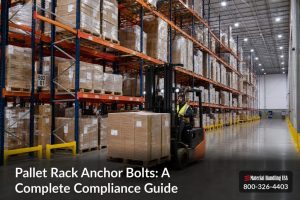
Proper pallet rack anchor bolts are not a minor hardware choice. They are part of the rack system's safety, stability, and compliance path, and the right answer depends on the rack design, slab condition, load, layout, and local seismic rules.
If you're planning a new rack install, changing an existing layout, or getting ready for a safety review, this is usually the point where the job stops being just “steel and beams” and starts becoming a floor, engineering, and risk-management decision. For facilities managing broader site exposure, planning rack safety alongside operational risk coverage can also support better decision-making, especially for regional operations such as Coverage Axis Hawaii warehouse solutions. For rack system planning, product options, and layout support, it also helps to review available pallet racking systems early so anchoring decisions match the equipment you'll install.
Your Guide to Pallet Rack Anchoring and Compliance
A facility manager usually notices the anchoring issue at one of three moments. During a new installation. After a forklift impact. Or when someone asks a simple question that turns out not to have a simple answer, “Are these racks anchored the right way?”
That question matters because pallet rack anchor bolts are not selected by habit alone. They must match the rack base plate, the concrete, the loading pattern, and in many areas, the project's seismic design. A standard warehouse row and a high-capacity rack in a seismic area can look similar from a distance but need different anchoring details.
This guide gives you the practical framework. It covers what anchor bolts do, when racks need to be anchored, what changes the requirement, where managers make avoidable mistakes, and when you need engineering or permitting help instead of field judgment.
Practical rule: Use this article for the what and the why. Use a qualified rack provider, installer, engineer, or local authority for the project-specific how.
Why Pallet Rack Anchoring is Non-Negotiable
Anchoring is a core safety measure. Without it, the rack can move at the floor line, pivot after impact, or lose stability when the system is loaded, bumped, or shaken.
Safety and compliance
A documented compliance point is that OSHA can cite unsecured rack systems under the General Duty Clause and 29 CFR 1910.176(b), which requires storage not to create a hazard. In a documented 2015 citation, inspectors specifically noted racks that were “not anchored and bolted to the ground,” and the corrective reference pointed to ANSI MH16.1-2012 guidance requiring column base plates to be anchored to the floor with anchor bolts, as summarized in this OSHA pallet rack anchor requirements review.
That matters for more than inspections. It affects injury risk, product loss, and the condition of neighboring bays if one damaged upright starts a larger failure.
Why walls are not the answer
Some buyers ask whether bolting the rack to a wall replaces floor anchoring. It usually doesn't solve the actual structural need at the base plate. Floor anchorage and wall attachment serve different purposes, which is why it helps to review whether pallet rack should be bolted to a wall before making field changes.
What anchoring protects
- People on the floor: Forklift operators, pickers, and maintenance staff work close to uprights every day.
- Inventory and equipment: A rack upset can damage stock, pallets, lift trucks, and adjacent rows.
- Your schedule: If an installation fails inspection or a repair needs rework, projects slow down fast.
Unanchored racks may appear stable during normal use. Problems show up when impact, heavy loading, or floor movement tests the system.
Understanding Pallet Rack Anchor Bolt Types
Managers don't need to become anchor engineers, but they do need to know the language. The most common anchor styles come up in quotes, shop drawings, repair discussions, and permitting conversations.

Wedge anchors
These are commonly used in solid concrete. Installers often use them for standard rack applications because they are familiar, widely available, and suited to many typical slab conditions.
Strike anchors
These are also seen in rack work, usually where the installation method and the rack manufacturer's details support their use. They can be fast in the field, but speed should never decide the anchor by itself.
Chemical or epoxy anchors
These are typically considered for special conditions, repairs, or engineered applications where the project calls for a different anchoring method. They are not a default shortcut for every slab problem.
The practical takeaway
The correct anchor type is tied to the full system. That includes:
- Rack design: Base plate geometry and upright behavior matter.
- Concrete condition: Cracking, spalling, unknown slab quality, and repairs can change the approach.
- Project requirements: Seismic design, local code review, and engineered calculations often control the final answer.
If a supplier gives one “standard” anchor answer before asking about slab condition, loads, and location, that's a warning sign.
Key Factors Influencing Anchoring Requirements
There is no universal rack bolt down requirement for every warehouse. The right anchoring plan changes with the floor, the rack, the traffic pattern, and the building location.
Floor slab condition and concrete thickness
Anchors only work if the concrete can support them. A clean-looking floor isn't enough. Managers should check slab drawings if available and look for visible issues such as cracks, spalling, patching, and moisture damage.
If the slab is thin, deteriorated, or undocumented, anchoring decisions get more complicated. That's often where field assumptions create expensive rework.
Rack height, load capacity, and configuration
A short, lightly loaded rack doesn't behave the same way as a tall system carrying heavy pallets. Taller and more heavily loaded racks place more demand on the upright and base connection.
A widely cited engineering baseline is that ANSI/RMI guidance calls for at least one anchor per upright column, while common field practice often uses 3/8-inch anchors tightened to about 40 ft-lb. Some systems use two anchors per column to reduce pivoting after impact. Industry training cited in a rack safety review also noted forensic findings that improper or missing anchor bolts were a major factor in collapses, with one presentation stating the chance of catastrophic failure increased by 67%, according to this rack anchor engineering overview.
Forklift traffic and impact risk
Busy aisles increase the chance of contact with uprights. Even a minor impact can change how a rack behaves at the floor. In high-traffic areas, the anchoring detail should reflect actual operating conditions, not just the clean drawing on day one.
Seismic zone and local code considerations
In some locations, seismic pallet rack compliance is a design issue from the start. In others, it becomes critical when permits are reviewed or when a system is modified.
Here is a simple way to organize the decision.
| Requirement Factor | Why It Matters | What to Verify |
|---|---|---|
| Floor slab | Anchors depend on sound concrete and enough supporting depth | Slab drawings, visible cracking, patching, spalling, moisture issues |
| Rack height and load | Taller and heavier systems create more overturning demand | Rack elevations, load data, approved layout, capacity assumptions |
| Traffic and impact | Forklift contact raises the chance of movement and damage | Aisle width, truck type, protection strategy, impact history |
| Seismic location | Local rules may require engineered anchoring and rack design review | Jurisdiction, permit requirements, engineer-of-record involvement |
Field judgment works best before drilling starts, not after failed anchors force a redesign.
A Plain Language Guide to Seismic Compliance
Seismic language can make a straightforward project sound more complex than it is. The basic idea is simple. During ground movement, the rack doesn't only carry vertical load. It also has to resist side-to-side and other dynamic forces.

What seismic anchoring is doing
At a practical level, the anchor bolts connect the rack base plate to the slab so the system stays attached to the floor as the structure responds to movement. That does not mean anchors alone create compliance. The rack frame, bracing, base plates, beam levels, and overall layout all matter too.
What managers should focus on
- Location matters: The same rack may need a different design in a different jurisdiction.
- Permitting matters: Local building review may require calculations and stamped drawings.
- Changes matter: Raising beam levels, increasing loads, or moving rows can affect seismic review.
If your facility is in an area where seismic review applies, involve the right parties early and review pallet rack seismic compliance before finalizing equipment or installation schedules.
A plain warning
Don't treat “seismic” like an upgrade you add at the end. If the project needs it, it changes the design path from the beginning.
5 Step Pre-Installation and Modification Checklist
A rack project can go off track before anyone drills the first hole. I see it happen during expansions and layout changes. The rack arrives, the installer is ready, and only then does someone ask whether the slab is thick enough, whether the existing anchors can be reused, or whether the revised beam elevations changed the engineering basis.

Use this checklist to slow the decision down and catch the issues that are expensive to fix later. It gives you the what and why. The project-specific how still belongs with your rack supplier, installer, and, when required, a licensed engineer.
Step 1 Verify the slab condition and history
Start with the concrete, not the anchor catalog.
Look for cracking, spalling, patched areas, moisture damage, uneven sections, and signs of previous heavy impact. If drawings are available, confirm slab thickness, reinforcement, and concrete strength before final layout approval. If drawings are missing, or the floor condition raises questions, treat that as a risk item rather than an assumption.
Older slabs and repaired slabs deserve extra scrutiny. A floor can look serviceable and still be a poor anchoring surface.
Step 2 Confirm what is actually being installed or changed
Anchoring requirements follow the rack design. They do not sit outside it.
Verify row locations, rack height, bay configuration, base plate type, beam elevations, posted load levels, and required clearances. For modifications, compare the current field condition to the original approved intent. A small change in use can become a big anchoring issue if the rack is taller, carries more load, or has a different impact exposure than before.
This is also the point to ask a management-level question: is this a simple like-for-like replacement, or has the operating condition changed enough to justify engineering review?
Step 3 Review the anchor specification against field conditions
Match the specified anchor to the rack, the slab, and the site conditions. Do not substitute a familiar anchor because it is stocked in the installer's truck.
For common 3/8-inch pallet rack anchors, one industry installation reference notes a tightening torque of about 40 ft-lb and stresses basic controls that often decide whether the anchor performs as intended: drill the correct hole diameter, drill slightly deeper than embedment, clean debris from the hole, and maintain adequate concrete below the anchor tip. That same reference also addresses interference from rebar or abandoned holes and gives spacing guidance for new holes near old ones, as explained in this anchor bolt installation benchmark.
If the field conditions do not match the anchor detail, stop and resolve it before installation. That includes unknown slab thickness, damaged concrete, interference with reinforcement, and existing holes at the base plate.
Step 4 Decide how to handle existing anchors and holes
At this point, many modification projects get sloppy.
If you are relocating racks, replacing damaged uprights, or changing base plates, inspect every existing anchor location. Do not assume an old hole is acceptable because it lines up. Worn holes, elongated holes, damaged concrete around the base, or anchors that never achieved proper torque are warning signs. After impact or repair work, reused anchor locations often need a closer review than managers expect.
For a facility manager, the practical question is simple. Can the installer show that the existing condition still matches the approved anchoring approach? If not, get direction before the crew proceeds.
Step 5 Prepare the tools, layout control, and records
Good anchoring work depends on ordinary discipline.
Keep the work area clear. Mark the layout accurately. Use the specified drill and a calibrated torque wrench. Record what anchor was installed, where it was used, and any field deviations that required approval. Those records matter later during inspections, repairs, insurance reviews, and future reconfigurations.
Quick pre-install checklist
- Inspect the slab: Verify condition, repairs, and available slab information before layout is locked in.
- Confirm the actual rack plan: Check that field dimensions, loads, and elevations match the approved design.
- Review the anchor detail: Make sure the specified anchor fits the slab condition and base plate arrangement.
- Flag old holes and existing anchors: Treat reuse as a decision that needs verification, not a shortcut.
- Control installation quality: Use the right tools, proper hole prep, correct torque, and written records.
Common Anchoring Mistakes and How to Avoid Them
Most failures in pallet rack anchoring are not dramatic design errors. They are ordinary jobsite mistakes that get missed because the rack stands up and the project moves on.

Mistakes that show up often
- Wrong anchor for the application: A familiar part number is not the same as an approved design choice.
- Weak or damaged concrete: Anchoring into poor slab conditions creates false confidence.
- Bad installation practice: Dirty holes, poor embedment, and incorrect torque can leave the anchor ineffective.
- Ignoring impact history: A rack that has been hit may need more than a quick visual check.
Reusing old anchor holes
This is one of the most overlooked issues in rack repairs and reconfiguration. Neutral industry guidance says damaged rack repairs should avoid reusing anchor holes in most cases, and if proper torque cannot be achieved, the anchor should be relocated to a new hole. This is especially important after impacts, rack repairs, or seismic events, as noted in this guidance on replacing or relocating pallet rack anchors.
That point matters because warehouse changes often happen fast. Rows are moved. Damaged uprights are replaced. Aisles get widened. The old hole looks usable, so someone tries to save time. That shortcut can create a weak point right where the system needs reliable restraint.
What works better
If an anchor will not achieve proper torque, stop. If the old location is questionable, use a new approved hole location. If the slab condition is uncertain, get the rack supplier, installer, or engineer involved before continuing.
A rack repair is not complete when the steel is upright again. It is complete when the floor connection is acceptable too.
For broader operating guidance, review this related article on pallet rack safety.
When to Involve a Professional Engineer
A lot of rack anchoring decisions look simple until one detail changes the risk. The row is taller than the last job. The slab drawings are missing. The layout was modified to gain aisle space. At that point, a field crew can install anchors correctly and still be working from the wrong assumptions.
A professional engineer should be involved any time the anchoring question depends on calculations, slab capacity, code interpretation, or a condition that cannot be verified by normal site observation. The engineer gives you the project-specific how. This guide helps you identify when that step is warranted and why it protects the schedule, permit path, and long-term safety of the system.
Common triggers for engineering review
- Seismic design applies: If the site is in a seismic design category that affects rack anchorage, get engineering involved before layout and procurement are locked in.
- Concrete condition is uncertain: Missing slab documents, visible cracking, past repairs, uneven thickness, or signs of deterioration all justify review.
- Rack geometry is outside the usual range: Very tall frames, narrow aisles, custom row configurations, special clearances, or modified base plates often need engineering checks.
- Loads have changed: If the current or planned pallet loads are heavier, less uniform, or stacked higher than the original design basis, the anchor demand may change.
- Permits, landlord approvals, or insurer requirements apply: Many projects need stamped drawings or formal design review to move ahead without delays.
The gray areas matter most. For example, a manager may ask whether a rack reset after impact needs an engineer, or whether an existing anchor pattern can stay after a layout change. There is no single rule that fits every facility. The right answer depends on the rack manufacturer's requirements, the slab, the loading, and local code enforcement. That is why engineering review is often less about installation and more about deciding what assumptions are still valid.
Material Handling USA can help coordinate rack selection, layout discussions, and permitting support. The final engineering path still depends on the site conditions, the system configuration, and the authority having jurisdiction.
Decision Scenarios for Warehouse Managers
The fastest way to decide what to do is to match your situation to the right response.
New rack installation
Start with the approved rack layout and confirm the floor condition before procurement is locked in. Don't let anchoring become a field decision after trucks are already scheduled.
Existing rack with a new layout
A warehouse reconfiguration often looks simple because the steel already exists. It usually isn't simple. Once rows move, aisle widths change, or loads shift, the anchoring plan may need review as well. Old anchor holes are not automatic reuse points.
High seismic location
If the building location raises seismic questions, assume the project needs a more formal review path. The earlier you address it, the easier it is to avoid permitting delays, redesign, and installation changes.
Damaged or missing anchors
Treat missing anchors as a system problem, not just a punch-list item. Inspect the rack condition, ask what caused the issue, and verify whether the slab and hole location are still acceptable before reinstalling anything.
Warehouse expansion or phased growth
Planning ahead pays off. If you know more rows or additional load demand may come later, align your design and permitting process now. That can reduce disruption and shorten future install windows.
Decision table
| Scenario | Best next move |
|---|---|
| New rack | Verify slab, layout, and project requirements before installation |
| Existing rack reconfiguration | Reassess anchoring and avoid assuming old holes can be reused |
| High seismic area | Involve engineering and permitting early |
| Damaged anchors | Inspect cause, slab condition, and replacement approach |
| Expansion planning | Coordinate future layout needs before current work is finalized |
Questions to Ask Your Pallet Rack Provider
A good buyer asks direct questions before the purchase order is issued. That usually leads to better drawings, fewer change orders, and a cleaner installation.
Ask these before work begins
- What anchor approach is specified for my project: The answer should reflect rack design, slab condition, and local requirements.
- Who verifies the slab condition: If nobody owns that step, problems usually surface late.
- Does the design account for local seismic review if needed: A vague answer here is a red flag.
- What installation documentation will I receive: Records matter after the install, not just during it.
- How are repairs or relocations handled if an anchor location fails in the field: This tells you whether the provider has a real process.
What a strong answer sounds like
You want specifics about process, responsibility, and documentation. You do not want universal bolt recommendations with no questions asked.
Good providers don't rush to a bolt size. They ask about the slab, the loads, the layout, and the jurisdiction first.
Frequently Asked Questions about Pallet Rack Anchors
How many anchor bolts are needed per footplate
A widely cited baseline is at least one anchor per upright column, but some systems use two anchors per column to reduce pivoting after impact. The final requirement depends on the rack design and project conditions.
Do pallet racks need to be anchored
In most warehouse applications, anchored racks are the expected condition for safety and compliance. Project details still matter, but unanchored racks can create both operational and regulatory risk.
What happens if drilling hits rebar or an old hole
The location should be reviewed instead of forcing a bad installation. Technical guidance cited earlier says a new hole should be spaced appropriately from the old one depending on whether the old hole is unused or filled.
Can I install pallet rack anchors myself
Simple does not mean low-risk. Installation quality depends on the right tools, the right hole preparation, correct torque, and a proper match to the rack design and slab. Many projects should be handled by experienced installers and reviewed by engineering when required.
How often should anchor bolts be inspected
There is no single universal schedule that fits every facility. High-traffic operations, impact-prone aisles, damaged racks, and post-event conditions such as seismic movement should trigger inspection sooner.
What is the difference between anchor embedment and anchor length
Embedment is the portion of the anchor installed into the concrete to develop holding performance. Overall anchor length is the full hardware length. They are not the same thing.
Can damaged anchor holes be reused
Usually, that should be avoided in repairs or reconfiguration unless the approved repair approach specifically allows it. If proper torque cannot be achieved, the anchor should be relocated.
Can pallet rack be anchored on any floor
No. The floor condition matters. Weak, damaged, thin, or unknown slabs need review before anchoring decisions are made.
{ “@context”: “https://schema.org”, “@type”: “FAQPage”, “mainEntity”: [ { “@type”: “Question”, “name”: “How many anchor bolts are needed per footplate”, “acceptedAnswer”: { “@type”: “Answer”, “text”: “A widely cited baseline is at least one anchor per upright column, but some systems use two anchors per column to reduce pivoting after impact. The final requirement depends on the rack design and project conditions.” } }, { “@type”: “Question”, “name”: “Do pallet racks need to be anchored”, “acceptedAnswer”: { “@type”: “Answer”, “text”: “In most warehouse applications, anchored racks are the expected condition for safety and compliance. Project details still matter, but unanchored racks can create both operational and regulatory risk.” } }, { “@type”: “Question”, “name”: “What happens if drilling hits rebar or an old hole”, “acceptedAnswer”: { “@type”: “Answer”, “text”: “The location should be reviewed instead of forcing a bad installation. Technical guidance cited earlier says a new hole should be spaced appropriately from the old one depending on whether the old hole is unused or filled.” } }, { “@type”: “Question”, “name”: “Can I install pallet rack anchors myself”, “acceptedAnswer”: { “@type”: “Answer”, “text”: “Simple does not mean low-risk. Installation quality depends on the right tools, the right hole preparation, correct torque, and a proper match to the rack design and slab. Many projects should be handled by experienced installers and reviewed by engineering when required.” } }, { “@type”: “Question”, “name”: “How often should anchor bolts be inspected”, “acceptedAnswer”: { “@type”: “Answer”, “text”: “There is no single universal schedule that fits every facility. High-traffic operations, impact-prone aisles, damaged racks, and post-event conditions such as seismic movement should trigger inspection sooner.” } }, { “@type”: “Question”, “name”: “What is the difference between anchor embedment and anchor length”, “acceptedAnswer”: { “@type”: “Answer”, “text”: “Embedment is the portion of the anchor installed into the concrete to develop holding performance. Overall anchor length is the full hardware length. They are not the same thing.” } }, { “@type”: “Question”, “name”: “Can damaged anchor holes be reused”, “acceptedAnswer”: { “@type”: “Answer”, “text”: “Usually, that should be avoided in repairs or reconfiguration unless the approved repair approach specifically allows it. If proper torque cannot be achieved, the anchor should be relocated.” } }, { “@type”: “Question”, “name”: “Can pallet rack be anchored on any floor”, “acceptedAnswer”: { “@type”: “Answer”, “text”: “No. The floor condition matters. Weak, damaged, thin, or unknown slabs need review before anchoring decisions are made.” } } ] }Secure Your Warehouse with Expert Pallet Rack Design
Pallet rack anchor bolts are a small part with a large job. They connect the rack to the slab, support system stability, and play a direct role in pallet rack safety, pallet rack installation quality, and seismic pallet rack compliance where required.
The key point is simple. There is no one-size-fits-all answer. The correct anchoring path depends on the rack, the floor, the loads, the operating environment, and local code review. Getting that sorted early helps avoid failed inspections, repair rework, and scheduling delays that can push a warehouse project off track.
If you're buying new rack, modifying an existing system, or trying to resolve unclear rack bolt down requirements, get professional review before field decisions lock you into the wrong plan. For layout, permitting, and project coordination support, request pallet rack design services. Earlier planning usually means smoother installs, clearer approvals, and better use of available product lead times.
Need help with pallet rack anchor bolts, layout review, or permitting questions for an upcoming project. Material Handling USA can help you evaluate your rack system, discuss design options, and support planning before installation begins. Contact Us for a free layout and design consultation, Request a Quote, or call 800-326-4403. You can also email Sales@MH-USA.com for project support.