The right carpet roll storage system starts with four facts: roll size, roll weight, how often each SKU gets picked, and how much floor space you can afford to lose. If those four don't drive the decision, the system usually looks better on paper than it works on the floor.
A lot of flooring operations are dealing with the same scene. Rolls are lined up on the slab, some are hard to identify, access depends on moving other rolls first, and the cutting area keeps losing space to overflow inventory. That setup slows picking, raises handling risk, and makes damage more likely. A better layout fixes more than storage. It improves flow from receiving to cutting to shipping.
Your Guide to Efficient Carpet Roll Storage
Managers usually start by shopping for a rack. The better approach is to start with the handling process. Where do rolls arrive, where do they wait, who needs access, and how close should storage sit to the cutting or staging area?
That process-first view matters because carpet rolls are awkward inventory. They are long, heavy, and easy to damage through poor support, repeated handling, or bad storage conditions. Some teams need simple upright storage with clear visibility. Others need high-density systems that free floor space and reduce manual roll movement.
If you want a broader operations view beyond carpet, this expert guide to storage solutions is a useful reference for how storage choices affect layout and daily flow.
Practical rule: If employees have to move one roll just to reach another, your current setup is already costing time.
Why Proper Carpet Roll Storage is a Competitive Advantage
A truck unloads at 8:00, the cutting table is already busy, and the crew needs one specific roll buried behind three others. That is when storage stops being a shelving decision and starts affecting throughput.
Poor carpet roll storage slows every step after receiving. Rolls on the floor are harder to inspect, harder to label, and harder to put away in a consistent location. They also pick up dirt, take hits from lift trucks, and can flatten or distort if they sit with poor support for too long. If your team is still debating whether standard pallet rack is suitable, this guide on whether pallet rack is strong enough for rolls of carpet covers the structural concern directly.
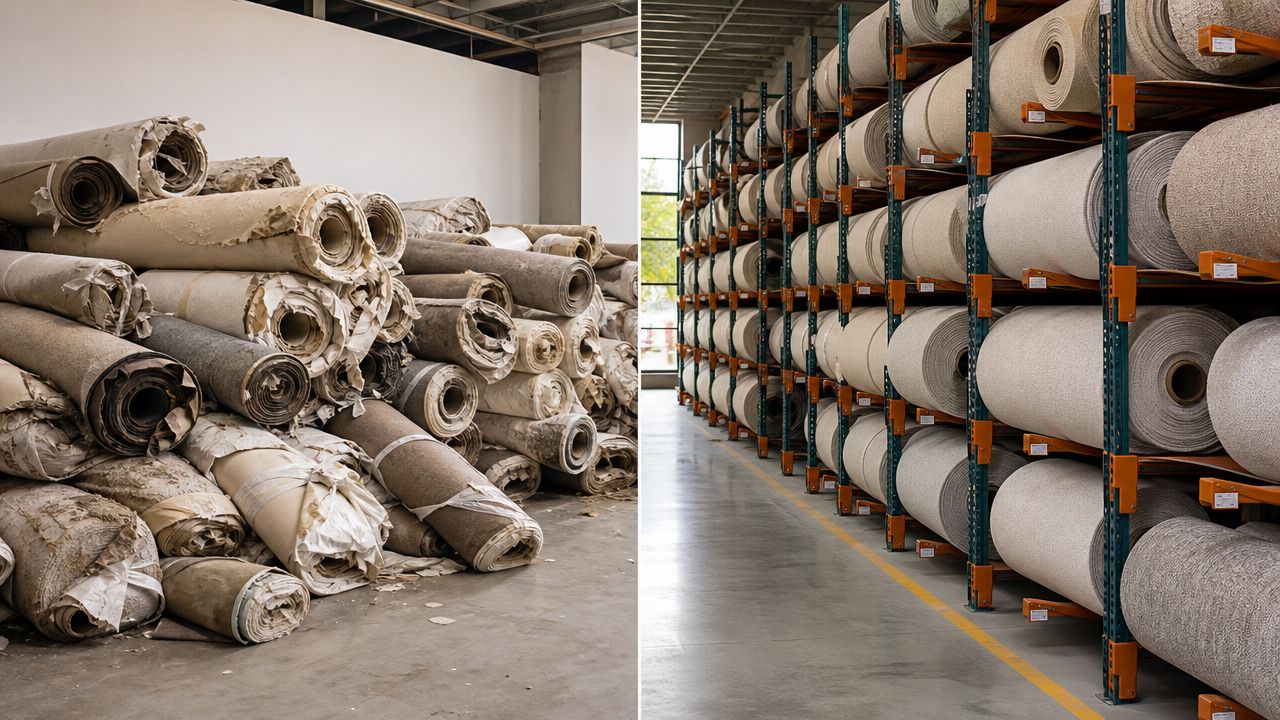
The operational cost shows up in small delays that add up across the day. Receiving holds product longer because there is no clear putaway path. Pickers make extra moves because one roll blocks access to another. Cutting crews lose space to overflow storage. Shipping gets pushed back because staged orders compete with loose inventory for the same floor area.
What poor storage does to daily workflow
The pattern is predictable in stores and warehouses that rely on floor stacking or improvised rack layouts:
- Search time increases: Labels are harder to see, and rolls are often stored out of sequence.
- Handling steps multiply: Staff move the wrong roll just to reach the right one.
- Traffic gets tighter: Receiving, cutting, and staging start sharing the same aisle space.
- Damage risk rises: Compression, abrasion, dirt, and fork contact become routine problems.
These are workflow problems first. Storage is either supporting the process from receiving to cutting and shipping, or it is forcing the crew to work around it.
What a better system changes
A defined storage system gives each roll a location that matches how the operation runs. Fast movers can sit closer to the cutting area. Reserve stock can move higher or deeper into storage. Incoming rolls can be checked, tagged, and put away without blocking outbound work.
That is the improvement. Fewer touches, cleaner aisles, better stock visibility, and more usable floor space for the jobs that make money. A good carpet storage setup does not just hold inventory. It supports how your team receives, finds, cuts, stages, and ships each order.
Comparing Carpet Roll Storage Systems
The right system depends on inventory profile and picking style. A flooring dealer with moderate volume and many SKU changes often needs something different from a high-volume warehouse holding deep stock of similar roll lengths. Our guide to carpet storage racks breaks down how roll racks, cantilever and vertical storage compare for a flooring warehouse.
Carpet Storage System Comparison
| Storage Option | Best For | Key Benefit | Space Efficiency |
|---|---|---|---|
| Carpet storage rack | Stores that need organized, visible roll storage | Simple access and straightforward organization | Moderate |
| Cantilever rack | Long, heavy rolls and flexible bay layouts | Good support for long products and adaptable design | Moderate to high |
| Carpet carousel | High-density operations with limited floor area | Uses vertical height and reduces manual handling | High |
Carpet storage racks
A carpet storage rack is often the first step away from floor stacking. It gives each roll a defined home, improves visibility, and makes inventory look less chaotic. For stores and smaller warehouses, that alone can make daily work easier.
This option works well when the operation needs direct access to multiple SKUsand wants a simple system that staff can learn quickly. The trade-off is footprint. Traditional rack layouts can still consume valuable floor area if the operation carries many rolls.
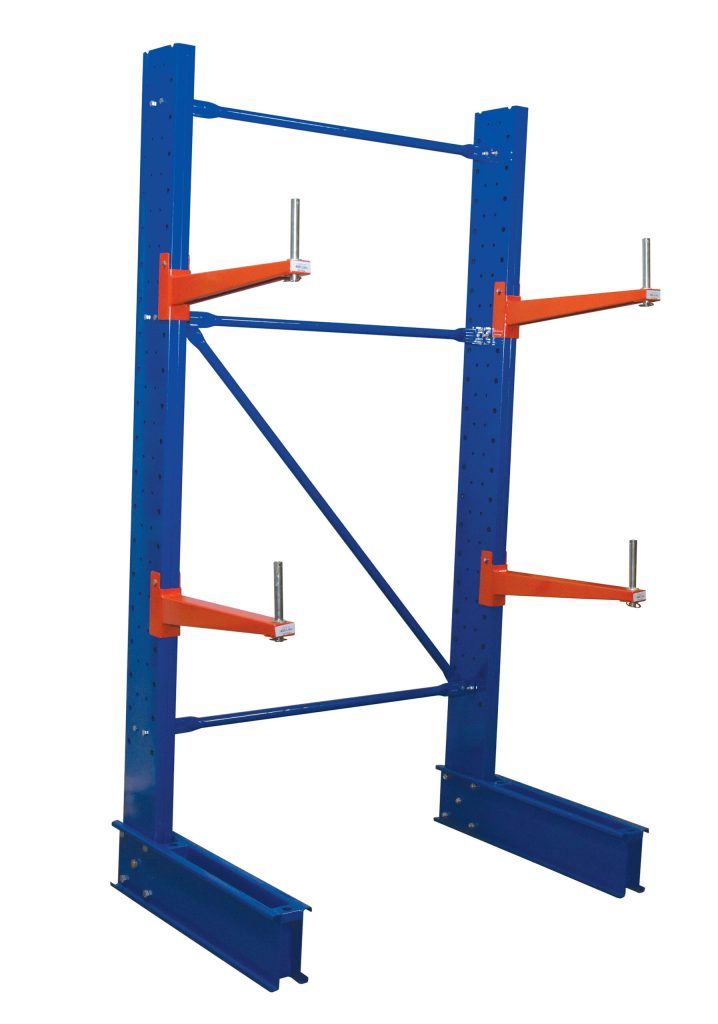
Cantilever rack for carpet rolls
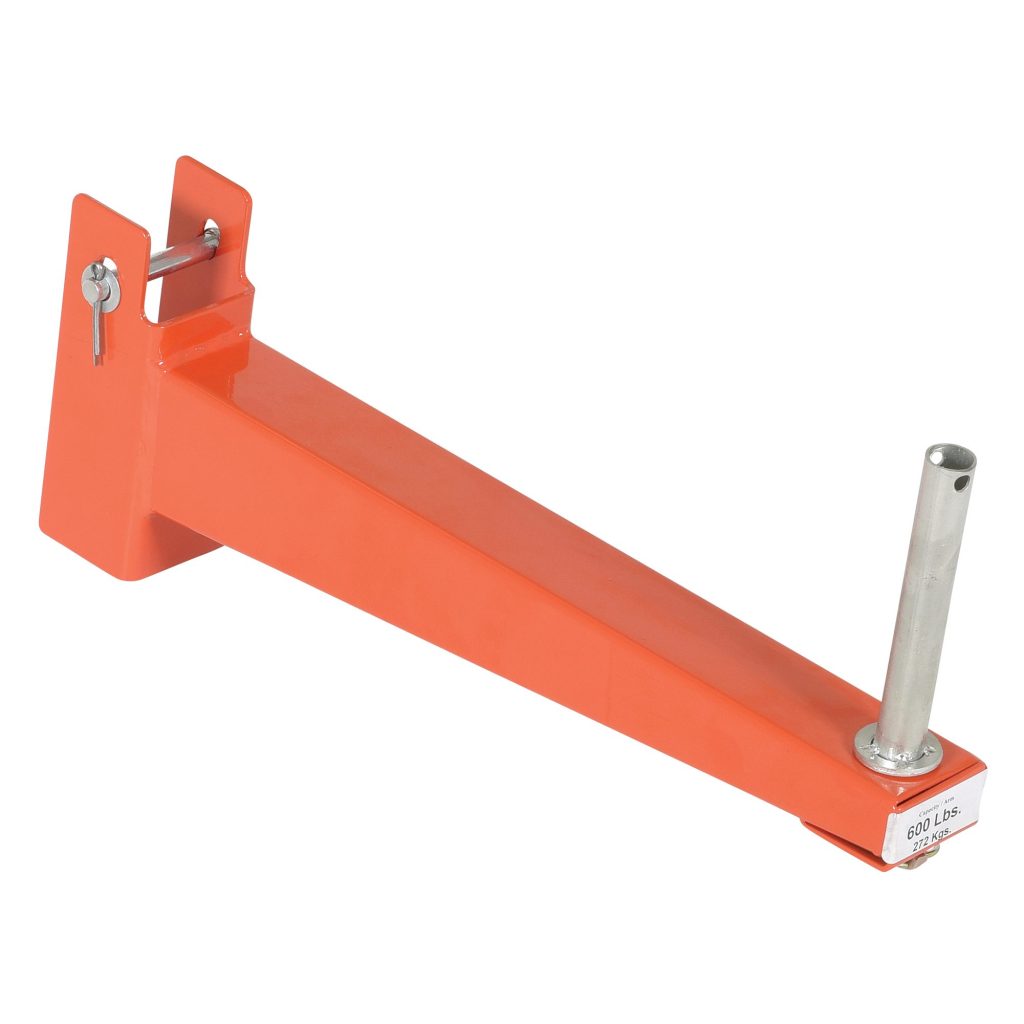
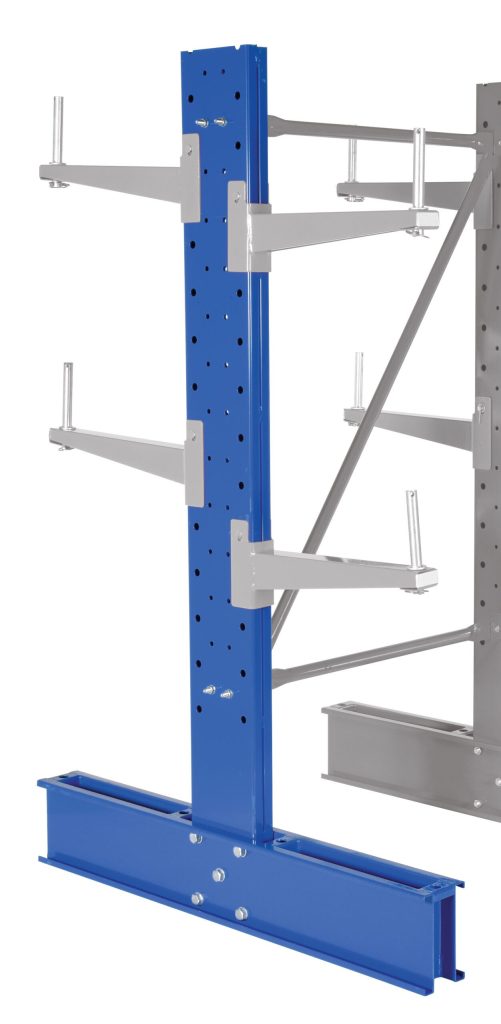
Cantilever rack is a strong fit when the inventory includes long rolls, varied diameters, or changing stock profiles. The open-front design makes it easier to load and unload long material, and the system can be configured around the roll dimensions instead of forcing standard pallet logic onto a non-pallet product. Our cantilever rack systems overview covers arm lengths, duty classes and layouts.
Many buyers ask if standard pallet rack can do the job. In most carpet applications, that's the wrong starting point. This guide on whether pallet rack is strong enough for rolls of carpet explains why roll loads need to be evaluated differently.
Carpet carousels and vertical storage
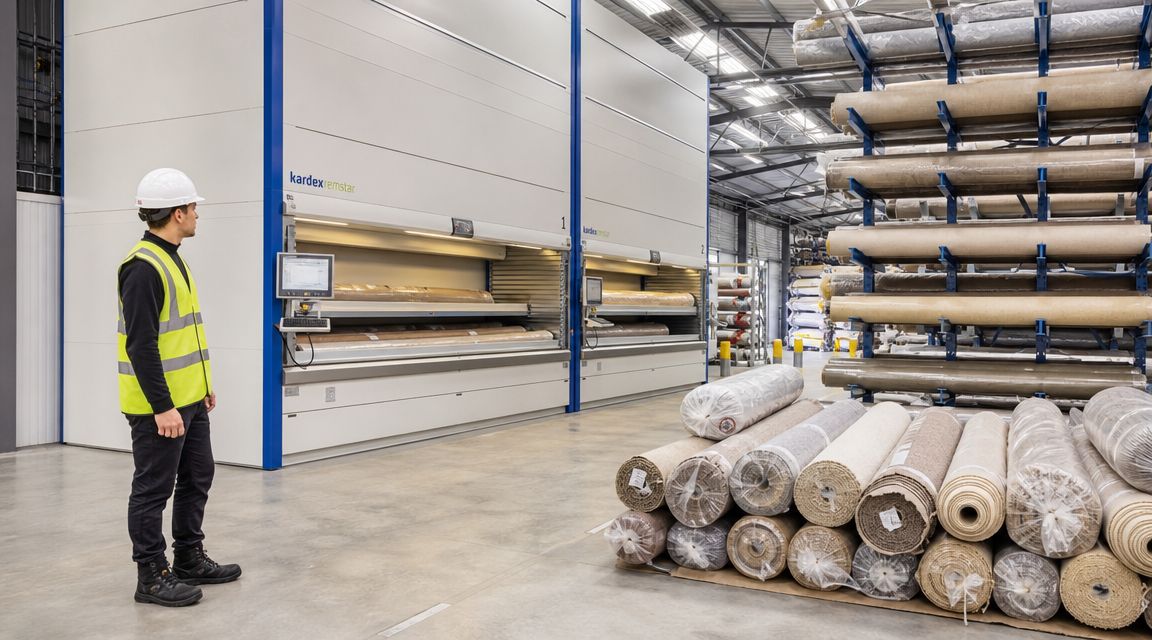
A carpet carousel is built for facilities where floor space is tight and access still needs to stay controlled. Instead of spreading rolls across the slab, vertical systems use building height. That often improves organization and reduces the amount of walking, reaching, and manual repositioning around the storage area.
These systems make the most sense when real estate inside the building matters more than the lower entry cost of static rack. They can also support better inventory presentation and controlled retrieval.
What works and what does not
What works:
- Fast movers near work zones: Keep the most-used rolls near cutting or staging.
- Like sizes together: Similar lengths and diameters simplify slotting.
- Clear identification: Labeling has to be readable from the aisle or access point.
- Handling matched to storage: Forklifts, poles, carts, or carousel retrieval should match the rack design.
What doesn't:
- One-size-fits-all layouts: Mixed roll profiles usually need zones.
- Storage chosen by price alone: A cheaper rack can cost more in handling time.
- Ignoring access frequency: Deep storage is frustrating when picks are frequent.
- Treating carpet like palletized goods: Roll handling has different support and safety demands.
How Vidir Vertical Carousels Maximize Your Floor Space
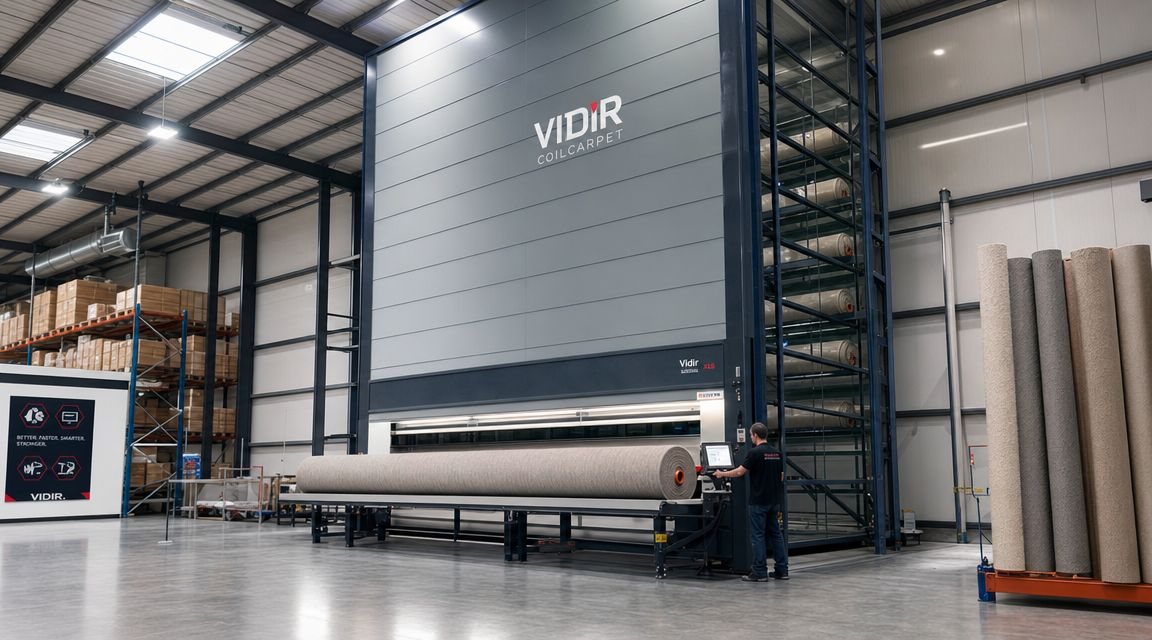
A common warehouse problem looks like this. Receiving is backed up, the cutting table needs more room, and finished orders are staged in any open area because carpet rolls are taking too much of the floor. In that situation, vertical storage is not just about fitting in more inventory. It changes how the whole operation moves.
Vidir vertical carousels store rolls upward instead of spreading them across valuable floor area. That gives managers a practical way to recover space for cutting, staging, packing, and forklift travel without expanding the building. As noted earlier, vertical systems are often chosen when the actual cost of storage is not the rack itself, but the floor space and handling time the rack consumes.
Why vertical storage changes the workflow
The main operational advantage is controlled retrieval. Instead of sending operators down aisles to search, reach, and reposition rolls by hand, the system presents the requested roll at an access point. That shortens travel, reduces unnecessary touches, and helps keep product flowing from storage to cutting with fewer interruptions.
It also helps with slotting discipline.
Fast-moving SKUs can be assigned where they are easier to retrieve, while slower movers stay dense and organized without clogging prime floor positions near production. For carpet operations that receive, cut, and ship throughout the day, that matters more than raw storage density alone. A storage system has to support the sequence of work, not just hold rolls.
Facilities comparing high-density options can review Vidir vertical storage solutions for carpet and roll handling.
When it makes sense
Vertical carousels usually make the most sense in facilities with a defined roll-handling process and limited room to waste. They are a strong fit when:
- Cutting and staging compete for space: Storage has to give floor area back to production.
- Operators retrieve specific rolls throughout the day: Controlled access helps reduce search time and mis-pulls.
- Manual roll movement creates safety exposure: Fewer reaches, less repositioning, and more predictable access improve day-to-day handling.
- Inventory needs tighter organization: Grouping by size, style, or movement rate is easier when locations stay fixed and visible.
Material Handling USA offers Vidir vertical carpet carousels and other vertical storage systems for facilities evaluating dense roll storage with a smaller footprint.
The best carousel projects start with workflow questions. Where do rolls enter the building, who retrieves them, where are they cut, and how quickly do they need to move back out for shipping? When a vertical system is matched to that path, the space savings show up in throughput, cleaner aisles, and safer handling, not just in a higher storage count.
Planning Your Carpet Warehouse Layout and Safety
Most layout problems start before installation. The rack or carousel may be fine, but the plan ignores how rolls move through the building.
Start with the rolls
Measure the inventory you stock. Roll length, diameter, weight, and quantity should drive the design. Then sort by handling pattern. Which rolls move every day, which sit longer, and which need protection because they're high value or specialty items?
That first review usually tells you whether you need open rack access, cantilever flexibility, or denser vertical storage.
Follow the workflow
Map the path from receiving to storage to cutting to shipping. If a roll comes off a truck at one end of the building but gets cut at the other, the storage system should reduce those extra moves, not add more.
Good planning usually includes:
- Receiving access: Can incoming rolls be unloaded and put away without crossing outbound traffic?
- Aisle clearance: Does your handling equipment have enough room to approach and remove rolls safely?
- Ceiling use: Are you making use of available height?
- Zone planning: Can fast-moving inventory stay closer to cutting and staging?
For broader facility planning, this resource on engineering safety into your warehouse floorplan is worth reviewing.
Fire and rack layout details matter
Carpet roll storage has long been treated as a specialized rack-storage fire hazard, not ordinary pallet storage. FM Global guidance for finished or unfinished carpet roll storage recommends a 2 to 4 in. transverse flue space at vertical supports and keeping the lowest storage level at least 4 in. above the floor. Those details help with airflow and can reduce water damage risk.
For taller rack storage, protection design becomes even more important. AXA XL notes that for carpet rack storage above 12 ft and up to 24 ft, ceiling protection alone is not enough and recommends 165°F quick-response in-rack sprinklers at about mid-height, with 6 in minimum clearance between deflectors and the top of rolls, designed for simultaneous operation at 30 psi.
Inspection and rotation
Stored rolls should also be checked on a routine basis. Consumer guidance commonly recommends periodic inspection and rotation, with more frequent checks for valuable rugs, and warns against damp, dark, or unventilated spaces. The Lock Up notes that attics, basements, and garages are only short-term options unless humidity is controlled.
Your 5-Step Checklist for Choosing a Carpet Storage Solution
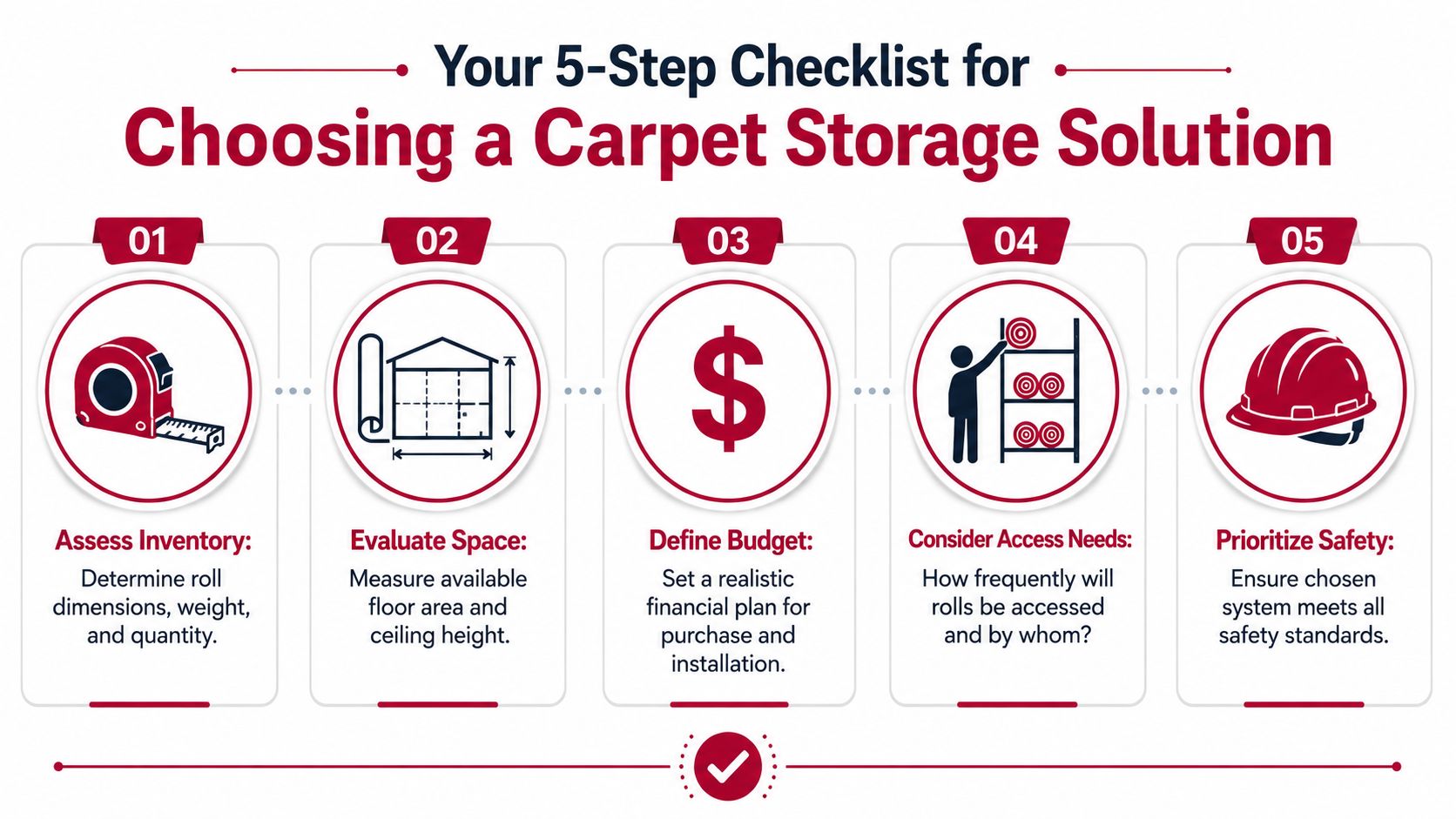
A good buying process is simple when you keep it tied to daily operations.
Five steps that lead to a better fit
-
Measure the inventory
Document roll length, diameter, weight, and total quantity. Separate standard rolls from odd sizes. -
Review access frequency
Identify what gets picked daily, weekly, and occasionally. Fast movers should never live in the hardest location to reach. -
Check the building limits
Measure usable floor area, ceiling height, column spacing, and equipment approach paths. Many storage problems come from assuming the building is more flexible than it is. -
Match storage to handling
If the team uses forklifts, carts, or dedicated roll handling tools, the storage system should support those methods cleanly. If you want less manual lifting, look harder at vertical systems. -
Request a layout, not just a price
A quote is more useful when it reflects real roll sizes and workflow. That helps avoid underbuilt systems, wasted space, and access issues after installation.
Buying advice: The right quote should answer how the system will work, not only what it will cost.
Questions to Ask Before Requesting a Quote
Come prepared with answers to a few practical questions. That usually leads to a faster and more accurate proposal.
Bring these details to the conversation
- What roll sizes do you store most often?
- What are the heaviest rolls in the mix?
- How many rolls need active access versus reserve storage?
- How do rolls move today, by forklift, cart, or manual handling?
- Where are the receiving, cutting, and staging points?
- How much floor space can storage take without hurting production or sales flow?
- Do you need to separate fast-moving SKUs from slow-moving inventory?
- Are there fire protection or sprinkler constraints in the storage area?
Those answers help determine whether a carpet roll rack, cantilever system, or carpet carousel is the right fit.
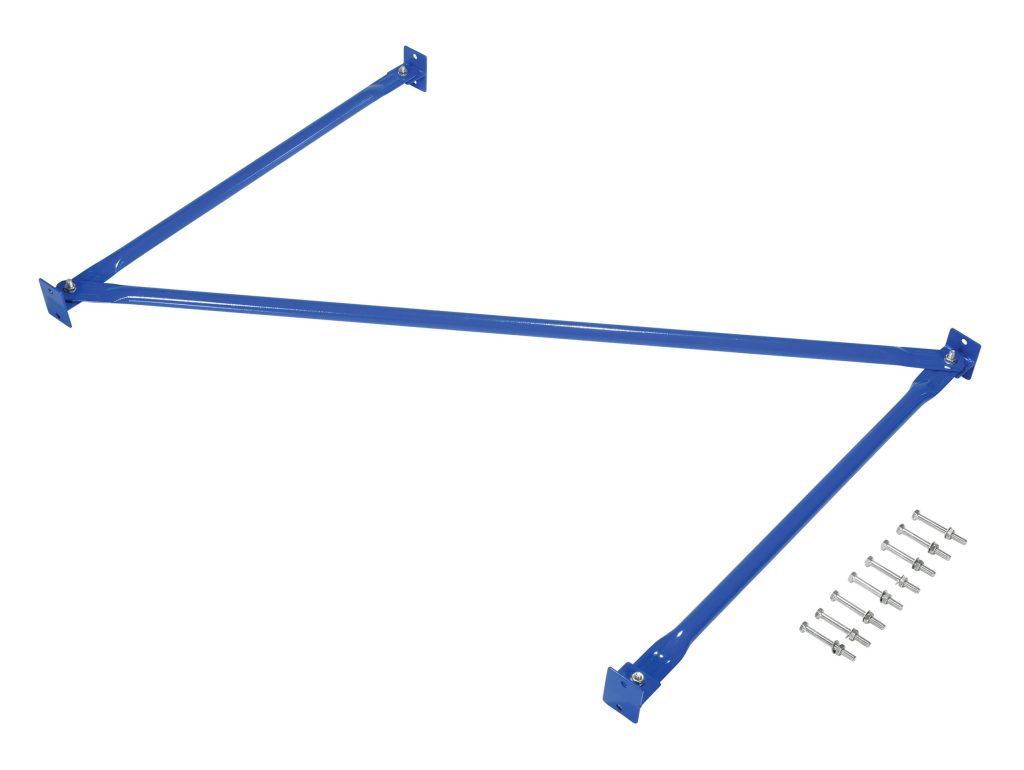
Shop Cantilever Rack for Long Rolls
If cantilever is the right fit for your rolls, each card opens a shop category; carousels and roll racks are quoted per project. Prices are current online prices; freight is quoted by destination and some common sizes in stock at select manufacturers, subject to confirmation. For a full layout, request a free quote or use the Cantilever Rack Configurator.
Carpet Roll Storage FAQ
Is rolling always the best way to store carpet?
No. At least one expert source notes that rugs with stiff backing should not be rolled because bending can cause permanent ripples or breaks in the backing. In those cases, Daburns recommends a tri-fold-and-roll method instead.
How often should stored carpet rolls be inspected?
It depends on the materialandstorage environment, but existing guidance commonly suggests checking stored rugs every few months, and monthly for valuable rugs.
Should carpet rolls be stored vertically or horizontally?
Both can work. Vertical storage often helps with density and access in the right system. Horizontal or cantilever-supported storage can be a better fit for long, heavy rolls and direct forklift access.
What is the biggest mistake buyers make?
They choose a system before studying the workflow. Storage has to support receiving, picking, cutting, and shipping. If it doesn't, employees spend the day working around the system.
When is cantilever rack the better choice?
Cantilever is often the better choice when roll sizes vary, loads are long and heavy, and the operation needs open-front access.
When is a carpet carousel worth considering?
It's worth considering when floor space is tight, SKU access must stay organized, and you want to reduce manual repositioning of rolls.
Can carpet rolls be stored in a garage or basement?
Only as a short-term solution if humidity is controlled. Damp or poorly ventilated spaces increase the risk of moisture and condition issues.
What should I track after installing a new system?
Track the number of rolls stored, the floor space used, the time needed to locate a roll, and how many handling steps each pick requires. Those are practical measures of whether the new layout is doing its job.
Get Your Free Carpet Storage Layout and Quote
A carpet storage system has to fit the way work moves through the building.
If receiving unloads full-width rolls in batches, but the cutting area needs fast access to a smaller set of active SKUs, the wrong layout creates extra touches at every step. Staff spend more time repositioning rolls, forklifts travel farther than they should, and open floor space disappears faster than expected. A good plan is important because it helps you match storage to the actual handling sequence, not just the number of rolls on hand.
Before you buy, review the operation around the system. Roll length and diameter matter, but so do pick frequency, replenishment patterns, lift equipment, staging needs, and where finished orders exit the building. Managers who plan early usually have more options on layout, equipment selection, and installation timing, especially when storage has to share space with other warehouse projects.
If you're weighing a carpet storage rack, cantilever rack, or a carpet carousel, get the layout reviewed first. It is usually easier and less expensive to correct a plan on paper than to fix congestion, blocked aisles, or awkward material flow after installation.
If you're ready to compare carpet roll racking systems, discuss Vidir options, or get a practical layout based on your workflow, Contact Us for a free quote and no-obligation design review, call (800) 326-4403, or email Sales@MH-USA.com.