
Cantilever Rack Components: Arms, Uprights, Bases and Brace Sets
What each cantilever rack part does, how to size it, how capacities are rated, and why parts from different manufacturers rarely mix. Shop in-stock Vestil uprights, arms, brace sets and complete kits below.
Planning a full row? Try the free 3D Cantilever Rack Configurator for a parts list in minutes.
4
Core parts in every bay
12 to 48 in
Vestil arm lengths we list
6 to 14 ft
Vestil upright heights we list
3½ in
Arm adjustment on Vestil MD/HD uprights
Shop Cantilever Rack Parts by Category
Each card opens a shop category with every matching Vestil or Little Giant item and its current online price; the price shown is the lowest-priced in-stock item in that category. Vestil sells uprights and arms each, not in pairs, so order the exact count your layout needs. Freight is quoted by destination; some common sizes in stock at select manufacturers, subject to confirmation. For engineered structural yards, longer arms or a full layout, request a quote.
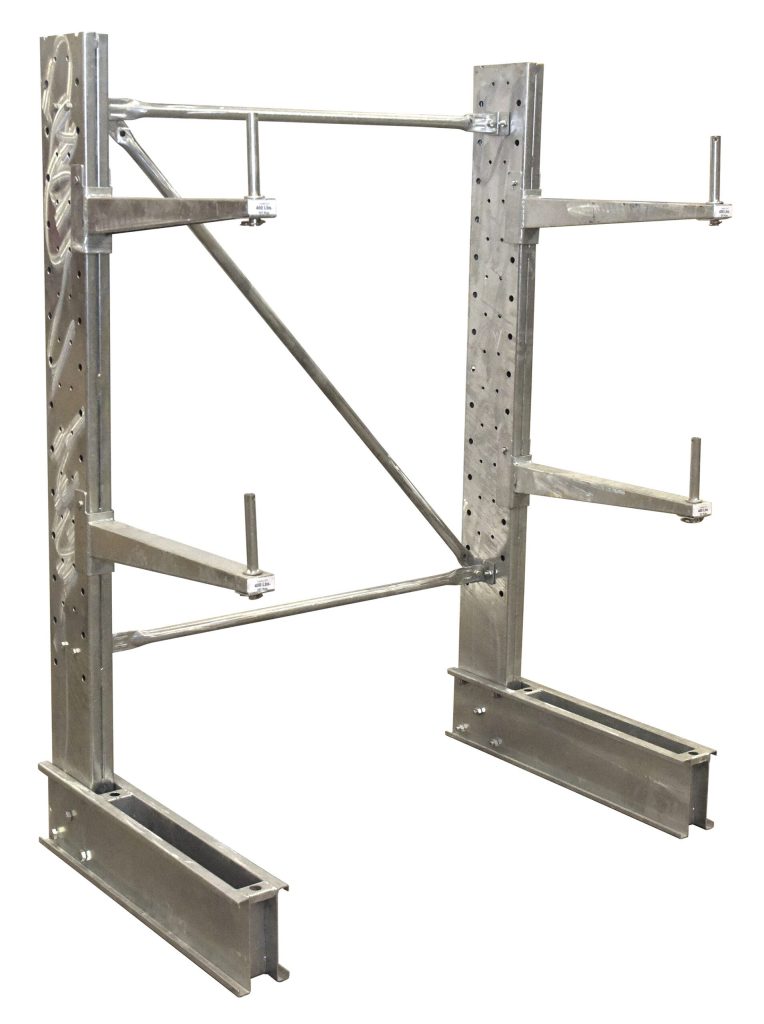
How a Cantilever Rack Fits Together
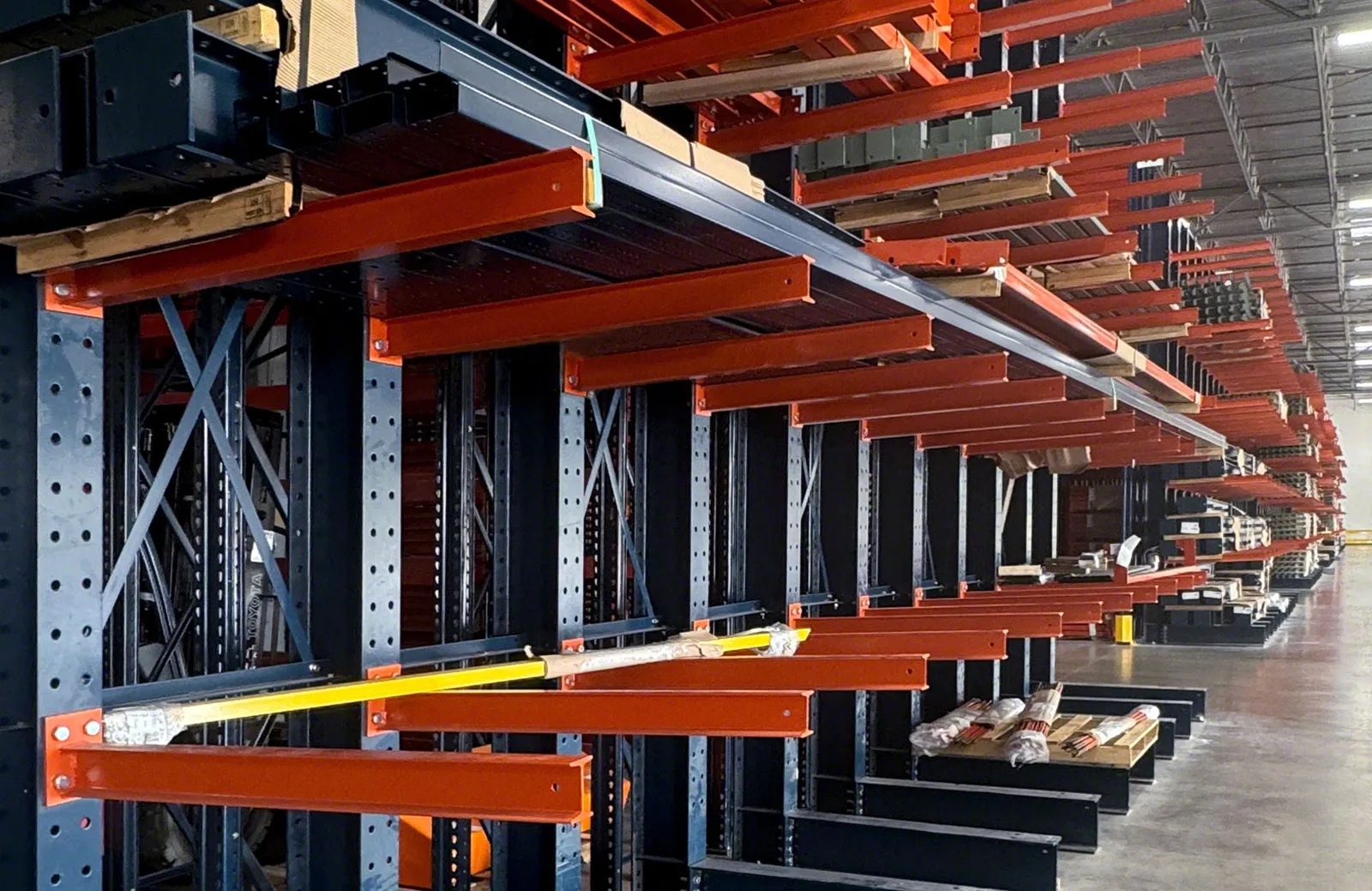
Every cantilever rack, from a light-duty shop unit to a structural lumber-yard row, is built from the same four parts: columns (uprights), bases, arms and bracing. The arms carry the load, the columns and bases carry the arms, and the bracing ties two or more columns into a stable bay. Accessories such as end stops, decking and protectors adapt the rack to a specific load. If you are still deciding whether cantilever is the right system, start with the cantilever rack systems overview or our cantilever vs pallet rack comparison.
| Part | What it does | What you specify |
|---|---|---|
| Column (upright) | Vertical member the arms bolt or lock onto | Height, single- or double-sided, duty class |
| Base | Horizontal leg at the foot of the column; resists tipping | Length matched to the arm length; anchoring |
| Arm | Cantilevered beam that holds the load | Length, straight or incline, capacity per arm, lip |
| Brace set | Horizontal and diagonal braces between two columns | Upright height and center-to-center spacing |
| Accessories | End stops, pipe stops, decking, protectors, roofs | Load type, environment, handling method |
Cantilever Uprights (Columns)
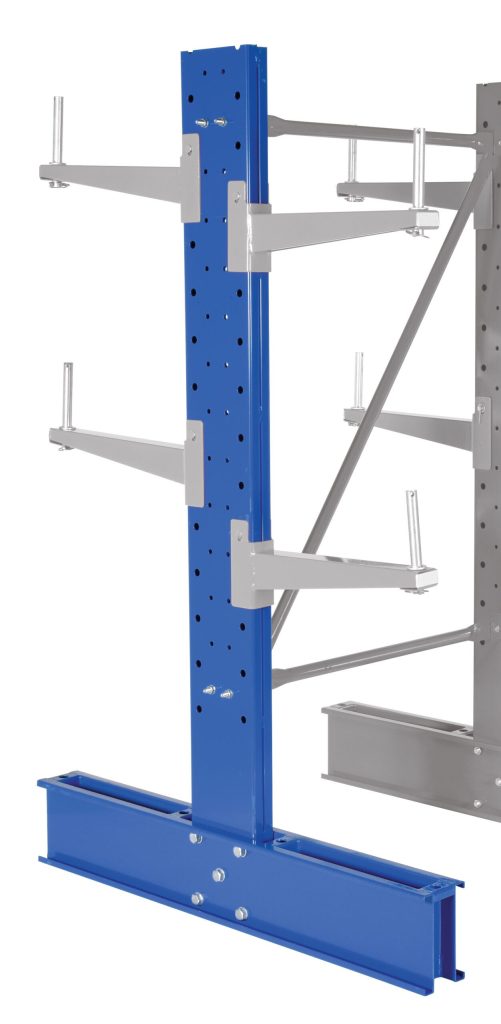
The column sets the height of the rack and how much the whole upright can carry. Single-sided uprights take arms on one face and usually run along a wall or fence. Double-sided uprights take arms on both faces and stand in the middle of the floor with an aisle on each side. A punched hole or slot pattern up the face lets you move arms to suit the load.
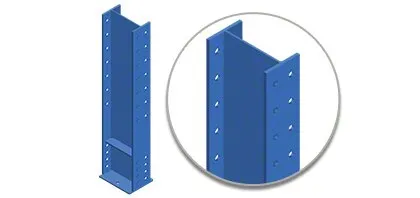
Upright capacity is published per upright, and it drops as the arm gets longer because a longer arm puts the load farther from the column. Vestil’s published ratings show the pattern clearly:
| Vestil upright (96 in tall) | Arm length | Uniform capacity per upright |
|---|---|---|
| Standard single-sided SU-C-8-24 | 24 in | 3,500 lb |
| Standard double-sided SDU-C-8-24 | 24 in | 7,100 lb |
| Medium single-sided MU-C-8-24 | 24 in | 5,300 lb |
| Medium double-sided MDU-C-8-24 | 24 in | 10,500 lb |
| Heavy single-sided HU-C-8-24 | 24 in | 21,500 lb |
| Heavy single-sided HU-C-8-48 | 42 / 48 in | 14,200 / 12,800 lb |
| Heavy double-sided HDU-C-8-24 | 24 in | 43,000 lb |
Source: Vestil catalog (manufacturer data, uniform loads). Confirm current ratings on the product page or your quote.
- Height: top arm should sit at a height your forklift or crew can load safely, with clearance to sprinklers and lights.
- Arm length ties to the upright: Vestil uprights are sold for a specific arm length (for example “8 ft, 24 in arm”) because the base length changes with it.
- Roll-formed vs structural: light and medium racks are often formed steel; heavy yards use structural I-beam columns that take more abuse. See the duty classes below.
Cantilever Bases and Anchoring
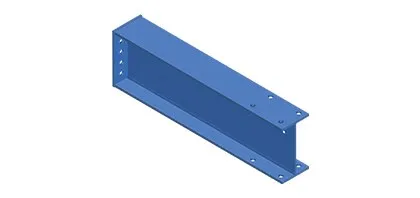
The base is the horizontal leg at the foot of the column. Because the load hangs out in front of the column, the base acts as the counterweight lever that keeps the upright from tipping. That is why a base must be at least as long as the arms above it. On double-sided uprights the base runs out both faces.
| Vestil upright (example) | Arms to use | Base length |
|---|---|---|
| Standard single-sided SU-C-8-12 | 12 in | 25⅝ in |
| Standard single-sided SU-C-8-24 | 24 in | 37 in |
| Standard double-sided SDU-C-8-24 | 24 in each side | 58 in |
| Heavy single-sided HU-C-8-48 | 42 / 48 in | 60½ in |
| Heavy double-sided HDU-C-8-48 | 42 / 48 in each side | 106 in |
Source: Vestil catalog (manufacturer data).
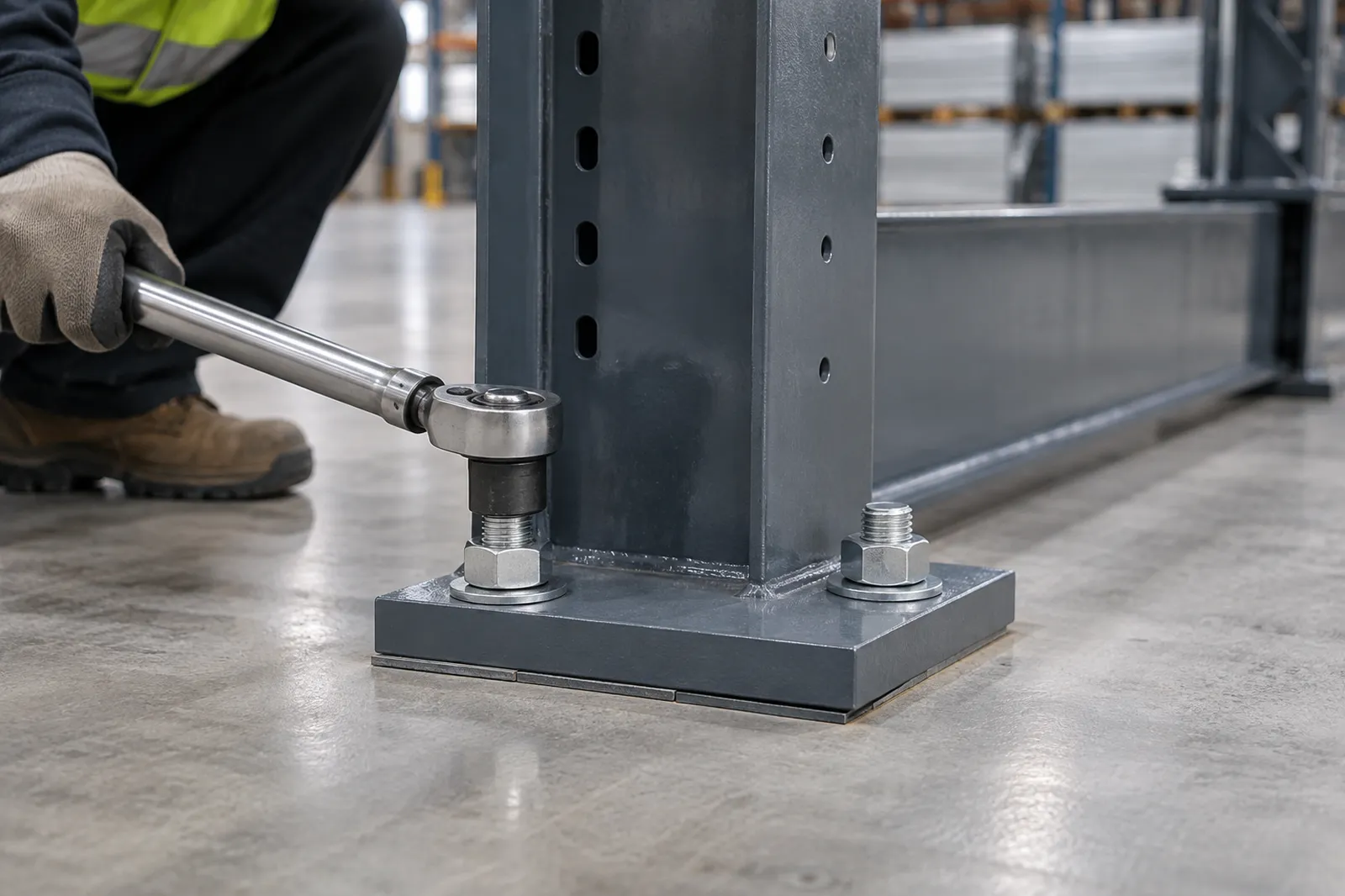
Anchoring. Bases bolt to a level concrete slab or footing through pre-drilled holes. Indoors that is usually the existing slab; outdoor yards often need footings. Local code, seismic zone and the rack’s engineering decide anchor size and count. Our cantilever installation guide covers permits, anchors and inspection.
Cantilever Arms: Straight, Incline, Length and Capacity
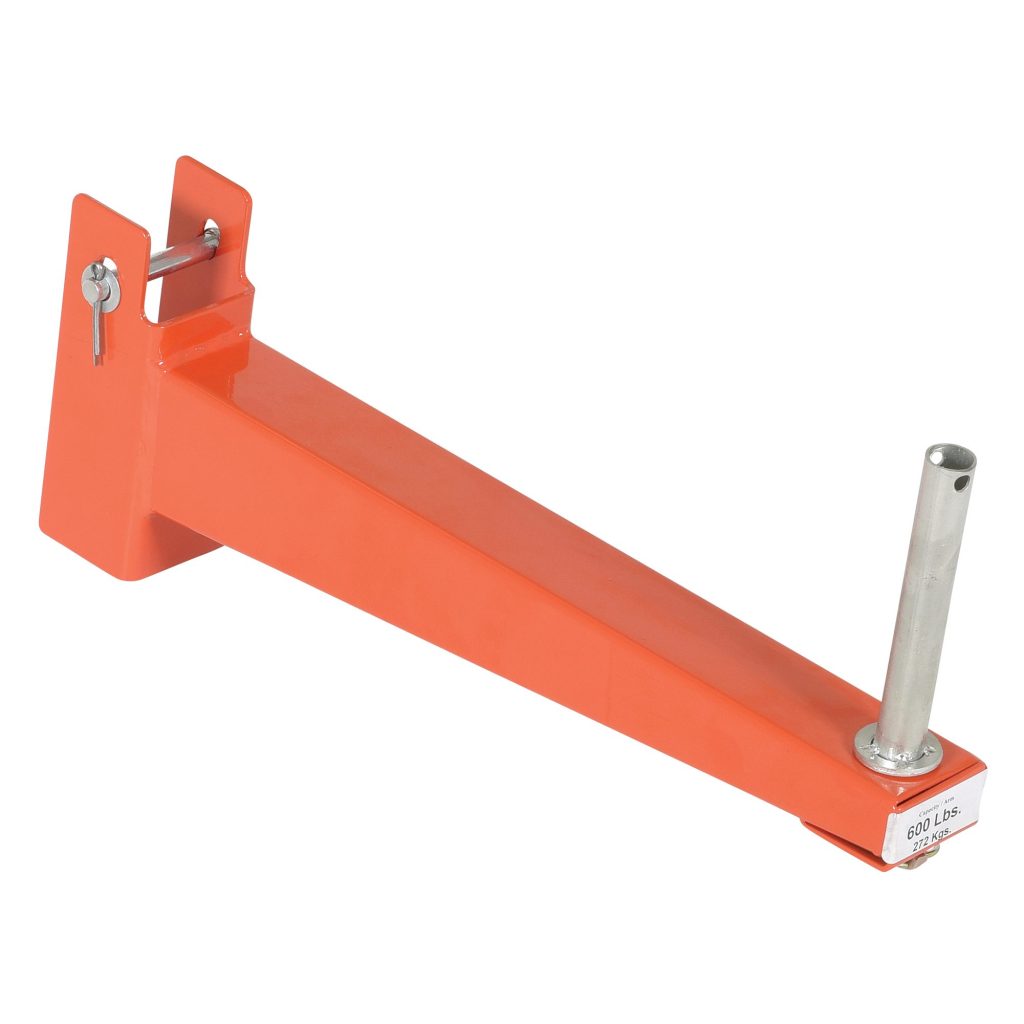
Arms are where the load actually sits. Straight arms are level and suit lumber, sheet goods, flat bar and boxed stock. Incline arms slope back toward the column (Vestil uses 10°) so pipe and round bar roll inward instead of off the tip. Arms attach with bolts, key locks or clamps depending on the system, and most have a lip or stop at the tip.

Arm capacity is published per arm for a load spread evenly along the arm. Longer arms of the same section carry less. Here is how that looks across Vestil’s duty classes:
| Arm length | Standard (SSA/SIA) | Medium (MSA/MIA) | Heavy (HSA/HIA) | Heavy HDSA / Extra-heavy XHDSA |
|---|---|---|---|---|
| 12 in | 800 lb | 1,000 lb | n/a | n/a |
| 18 in | 600 lb | 750 lb | 2,500 lb | n/a |
| 24 in | 400 lb | 600 lb | 2,000 lb | n/a |
| 30 in | 300 lb | 500 lb (incline) | 1,500 lb | n/a |
| 36 in | 200 lb | 400 lb (incline) | 1,200 lb | 2,175 lb / 3,400 lb |
| 42 in | n/a | n/a | 1,100 lb | 1,865 lb / 2,900 lb |
| 48 in | n/a | n/a | 1,000 lb | 1,630 lb / 2,500 lb |
Source: Vestil catalog pp. 377 to 379 (uniform load per arm). Our cantilever load capacity by arm length guide explains why capacity falls with length.
- Length: match the arm to the depth of the load. A load hanging past the tip is a falling-load risk; an arm far longer than the load wastes capacity and aisle.
- Count: each load should rest on at least two arms, and long or flexible stock needs more.
- Attachment: on Vestil’s medium line arms drop into slots spaced 3½ in apart and lock with a key; heavy and extra-heavy arms bolt on through holes on the same 3½ in spacing.
- Lips: Vestil lists a 2¾ in lip on medium arms, 3⅛ in on standard heavy-line arms and 3¼ in on heavy-duty and extra-heavy arms.
Cantilever Brace Sets

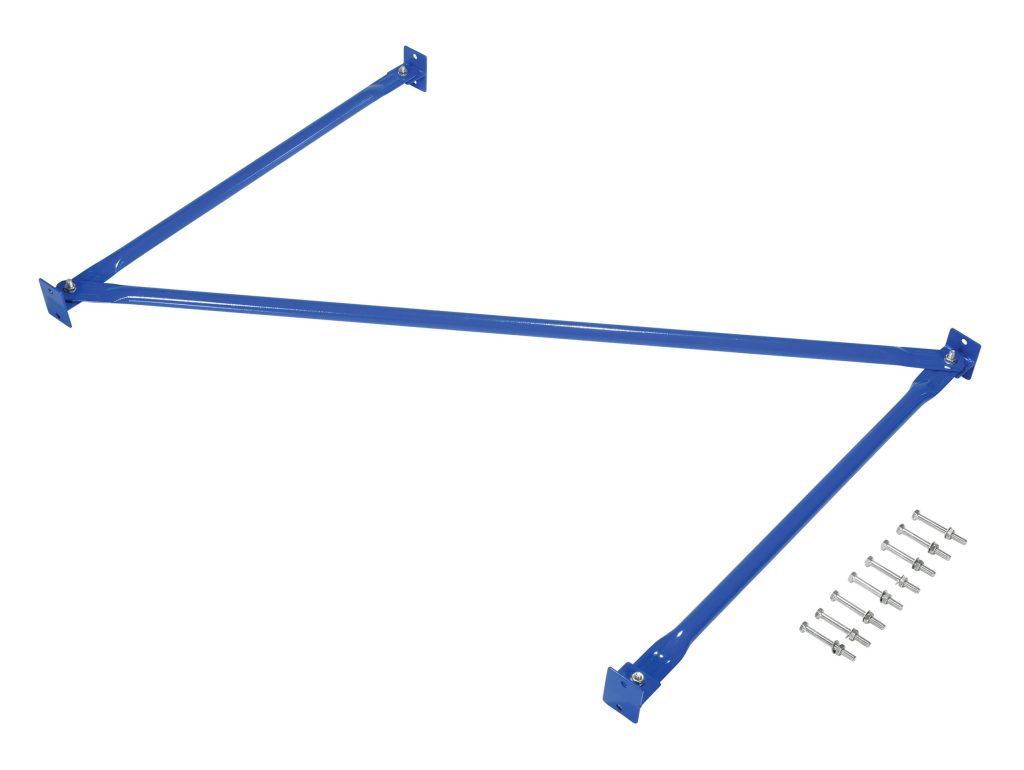
A brace set ties two columns together with horizontal braces and diagonal X-bracing so the bay does not rack side to side. One brace set goes between each pair of neighboring uprights, so a row of four uprights needs three sets. Brace length fixes the center-to-center spacing of the columns, which in turn fixes how far apart your arms are along the row.
How to read Vestil brace set sizes. A name like “Standard Cantilever Brace Set 96 x 48” means the set fits 96-in (8 ft) uprights and spans 48 in between them. Standard and medium sets come for 6, 8 and 10 ft uprights in 36 to 96 in lengths. Heavy-duty sets are grouped by upright height range: the HB-C-8 series fits 96 to 120 in uprights and the HB-C-14 series fits 144 to 168 in uprights, in nominal 36 to 96 in lengths.
| Bay spacing (center to center) | Typical use | Watch for |
|---|---|---|
| 36 to 48 in | Short or flexible stock, sheet goods, small pipe | More uprights per run, higher cost per foot |
| 60 to 72 in | Lumber, tube and bar in common 12 to 20 ft lengths | Load must still rest on 2+ arms |
| 84 to 96 in | Long, stiff stock such as structural steel | Overhang at row ends; arm capacity per level |
Spacing is a sag and overhang question as much as a capacity one. Our sheet goods on cantilever and pipe and tubing cantilever racking guides show spacing choices for flexible stock.
Cantilever Rack Accessories
Accessories adapt the four core parts to the load. Most are specific to one manufacturer’s arm and column profile, so they are quoted with the system rather than bought separately. Our online catalog currently lists uprights, arms, brace sets and complete kits; ask us for the accessories below.
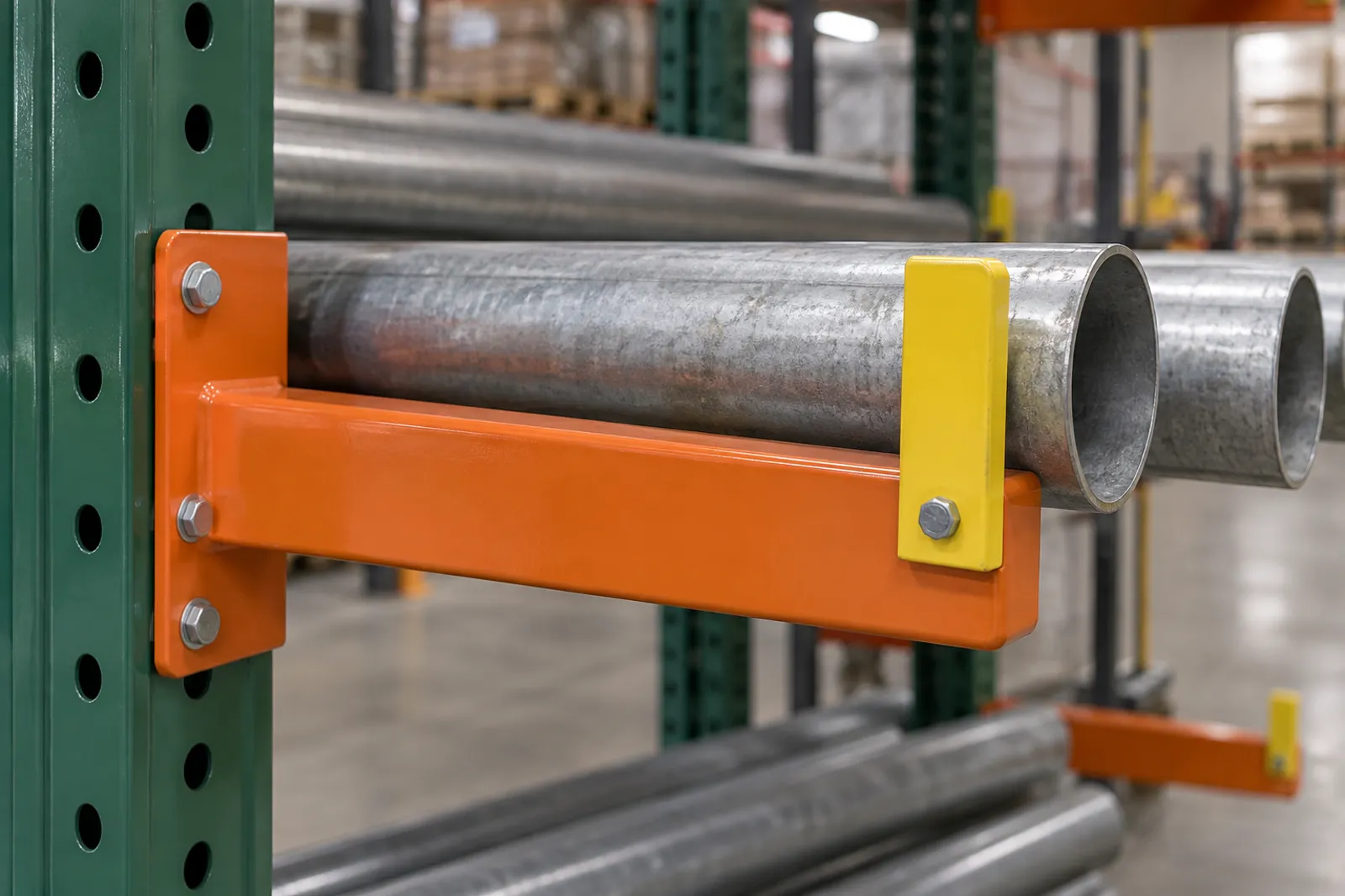
End stops and pipe stops. A pin or plate at the arm tip keeps round stock from rolling off and gives straight arms a positive stop. Bolt-on stops let you add them only where you need them, for example on the pipe levels of a mixed row. See how a fence and pipe distributor used pipe stops on structural arms.
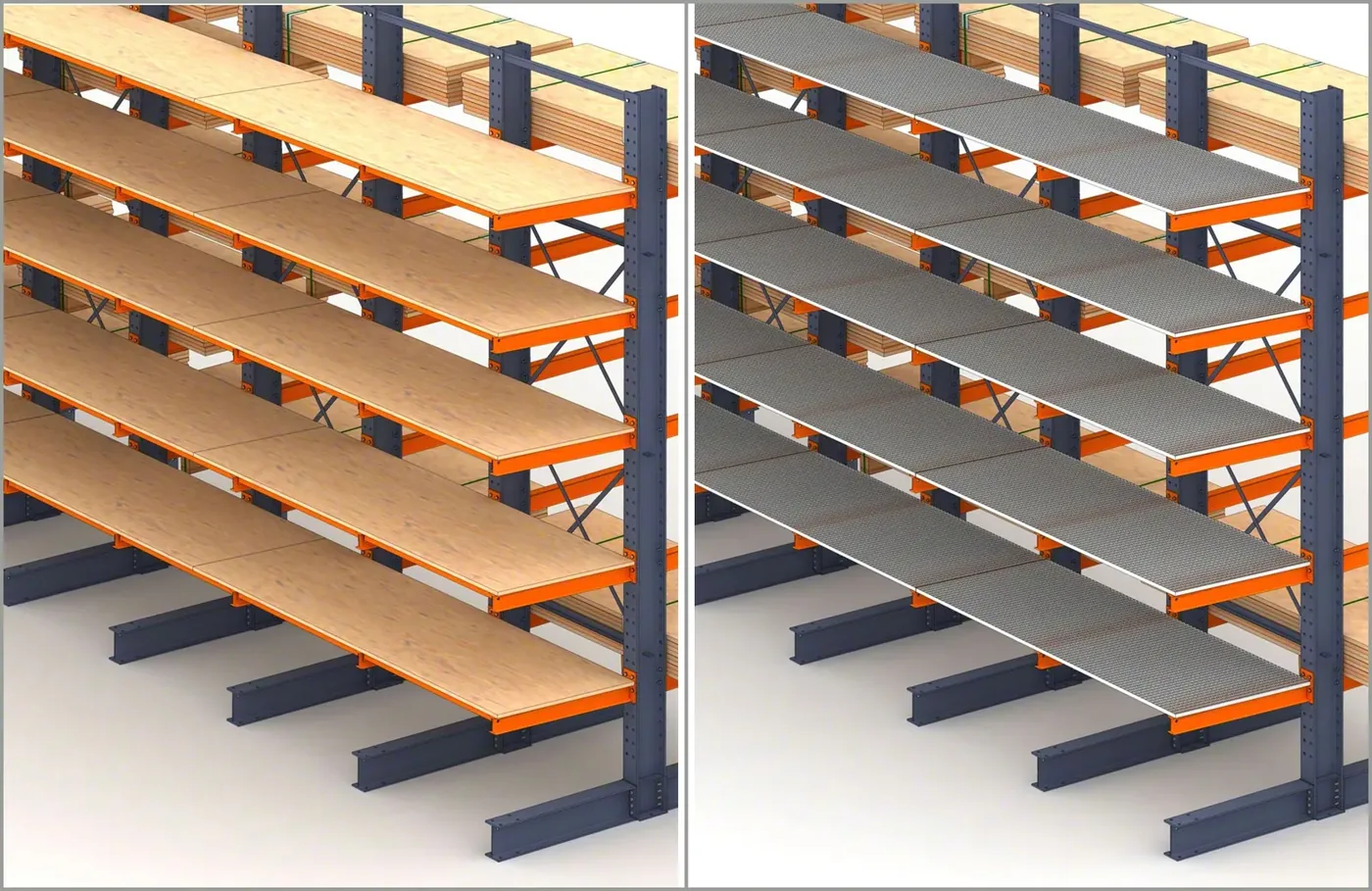
Decking. Wood, steel or wire decking laid across the arms turns a level into a continuous shelf for boxed goods, short pieces and thin sheets that would sag between arms. Decking adds weight and does not raise the arm rating, so count it as part of the load.
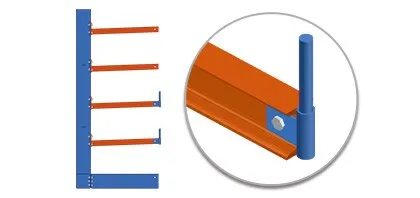
Arm stops and lips. Some systems use a removable pin stop instead of a fixed lip so you can slide sheet goods off the end. Others offer taller lips for stacked bundles. Ask which style the arm you are buying uses before you plan handling.
| Accessory | What it solves | Notes |
|---|---|---|
| Column protectors / rack guards | Forklift strikes at the base | Fit varies by column size |
| Roof or canopy | Snow, rain and UV on outdoor stock | See cantilever rack with a roof |
| Pipe sockets / dividers | Keeps mixed lengths separated on one level | Common in pipe and bar storage |
| Label holders | Faster picking, fewer wrong pulls | Mount on arm fronts or columns |
| Galvanized finish | Corrosion outdoors | Vestil lists galvanized complete kits |
Duty Classes: Light, Medium, Heavy and Structural
Manufacturers group cantilever parts into duty classes, and parts are only rated to work with others in the same class. Vestil’s lines, as listed in their catalog and our shop, look like this:
| Vestil line | Upright heights | Arm lengths | Arm attachment | Example rating |
|---|---|---|---|---|
| Standard (SU-C / SDU-C) | 6, 8, 10 ft | 12 to 36 in | Adjustable arms | 24 in arm: 400 lb per arm |
| Medium (MU-C / MDU-C) | 6, 8, 10 ft | 12 to 36 in | Slots every 3½ in, key lock | 24 in arm: 600 lb per arm |
| Heavy (HU-C / HDU-C) | 8, 10, 12, 14 ft | 18 to 48 in | Bolt-on, holes every 3½ in | 24 in arm: 2,000 lb per arm |
| Extra-heavy arms (XHDSA) | Heavy uprights | 36 to 48 in | Bolt-on | 36 in arm: 3,400 lb per arm |
| Structural (SAC / DAC uprights, SSAL arms, HBS braces) | 8, 10, 12 ft | 12 to 48 in | C-clamp, infinitely adjustable | Rated per upright and arm on each listing |
Source: Vestil catalog. Our catalog lists 8, 10, 12 and 14 ft heavy uprights; other sizes on request.
Beyond these, structural cantilever (hot-rolled I-beam columns, bases and arms) is the norm for lumber yards, steel service centers and outdoor yards where forklifts load full bundles all day. Vestil’s bolt-together structural uprights, lipped arms and brace sets are listed in our shop; full engineered yard rows are still quoted per project. Real examples: a metal and steel storage layout and a compact structural rack for round stock.
Why Cantilever Parts From Different Makers Rarely Mix
Arms, columns and braces look generic, but each manufacturer uses its own hole spacing, arm socket, lock or bolt pattern and brace connection. An arm that seems to fit another maker’s column may not seat fully, and its published rating no longer applies. Capacity labels are tied to tested combinations of that maker’s parts.
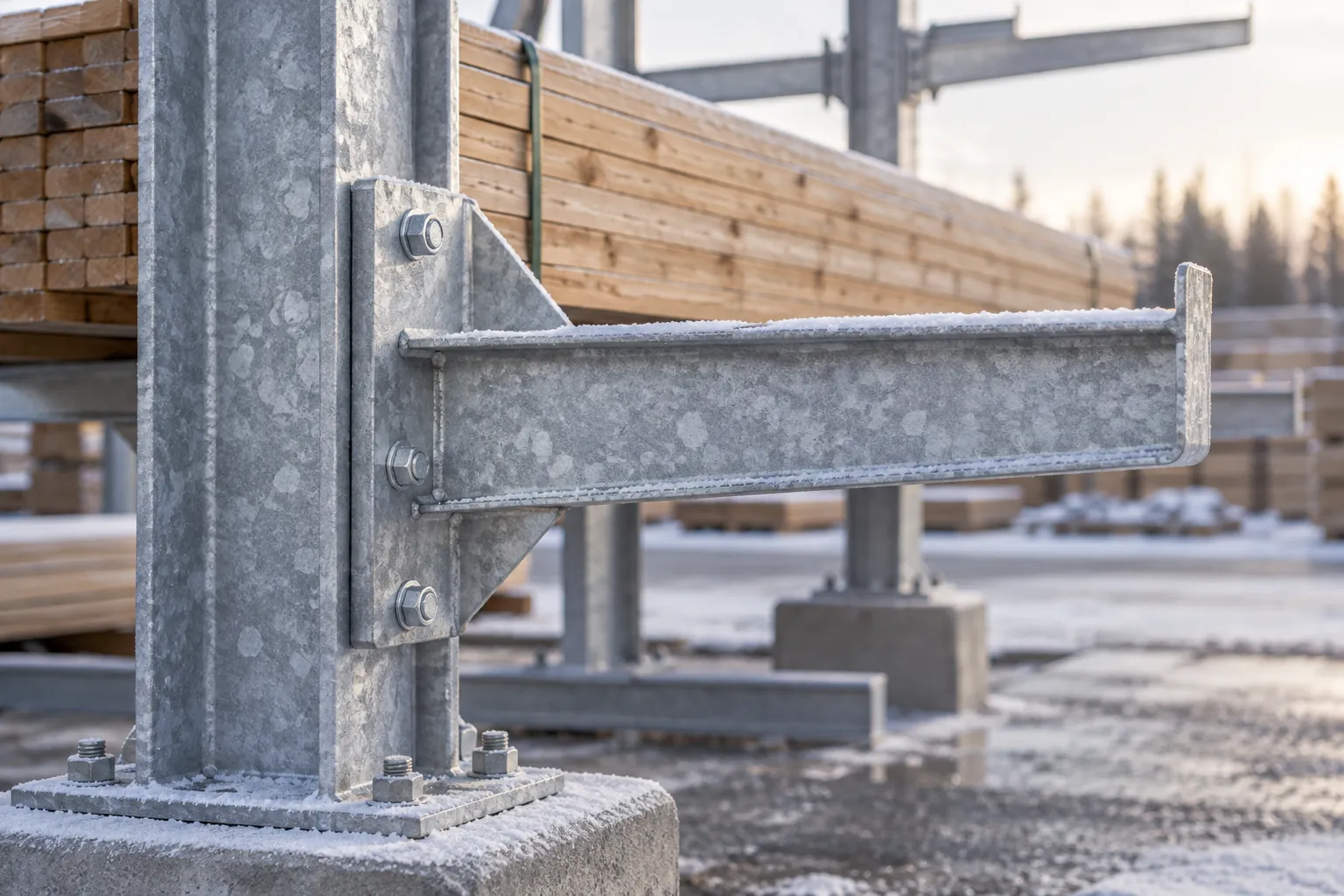
- Hole or slot pitch: Vestil’s medium and heavy lines use 3½ in spacing; other brands differ, so arms will not line up.
- Arm connection: key locks, bolt-on plates and clamp styles are not interchangeable.
- Brace connection: brace sets bolt to specific holes on the column; wrong spacing leaves the bay unbraced.
- Ratings: a mixed rack has no published capacity. Per ANSI MH16.3 and RMI cantilever best practices, capacity should come from the manufacturer or an engineer.
- Adding to an existing rack: send us the brand, column size, hole spacing, arm length and photos of the connection and any labels. We will match the original maker where possible.
The same fit-up problem is why used cantilever often costs more to install than expected. If you are weighing used parts, read our honest used vs new cantilever rack comparison first.
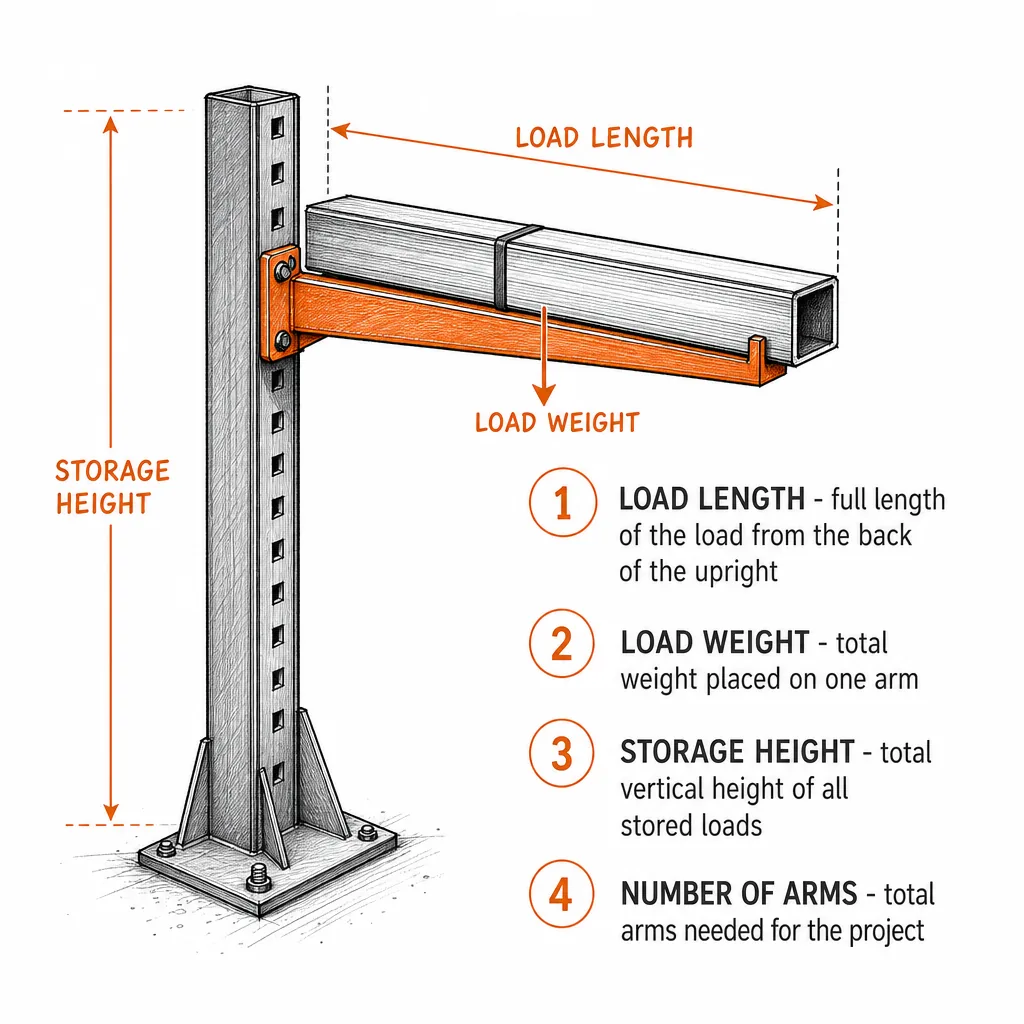
How to Size Cantilever Components
Measure the load
Longest and shortest piece, depth of a bundle or unit, and its weight.
Count arms per level
Enough arms that every load rests on at least two, with modest overhang at each end.
Pick arm length and duty
Arm about as long as the load is deep; per-arm rating above the weight it carries.
Check the upright
Add up all arm loads on one column and stay under the per-upright rating.
Worked example with published numbers. Vestil’s standard single-sided kit SU-C-8-24-SET is two 8 ft uprights, one 96 x 48 brace set and four 24 in straight arms, rated 800 lb per level. That is two arms per level at 400 lb each. The upright (SU-C-8-24) is rated 3,500 lb, so the column is not the limit; the arms are.
That example shows the most common sizing mistake: buyers check the upright rating and forget that each arm has its own, lower limit. If your bundles weigh 1,200 lb and rest on two arms, every arm under them must be rated for at least 600 lb, which rules out standard 24 in arms and points to medium or heavy arms. Our cantilever rack design guide goes deeper on spacing and aisles, and the Cantilever Rack Configurator builds a bill of materials as you configure a row.
Starter Bays, Add-On Bays and Complete Kits

A starter bay is the first section: two uprights, one brace set and the arms for both columns. Each add-on bay shares the last column of the run, so it needs only one more upright, one more brace set and its arms. A four-upright row is one starter plus two add-ons.
| What you are buying | Uprights | Brace sets | Arms |
|---|---|---|---|
| Starter bay, single-sided, 3 levels | 2 | 1 | 6 (3 per upright) |
| Each add-on bay, single-sided, 3 levels | 1 | 1 | 3 |
| Starter bay, double-sided, 3 levels | 2 | 1 | 12 (6 per upright) |
| Each add-on bay, double-sided, 3 levels | 1 | 1 | 6 |
Complete kits, such as the galvanized Vestil sets in our shop (from $1,067.97), bundle a starter bay in one SKU. They are the quickest way to buy one section. For a run of several bays, buying uprights, brace sets and arms individually usually fits the layout better. Keep every part in one product line from one manufacturer.
Related Cantilever Guides and Tools
Cantilever Rack Components: FAQs
What are the main components of a cantilever rack?
Are cantilever rack arms sold individually?
What is the difference between straight and incline cantilever arms?
How much weight can a cantilever arm hold?
What does 96 x 48 mean on a cantilever brace set?
How many brace sets do I need?
Can I mix cantilever arms and uprights from different manufacturers?
How long should the base be on a cantilever upright?
Do cantilever racks need to be anchored?
What is the difference between single-sided and double-sided uprights?
What accessories are available for cantilever rack?
Is a complete cantilever kit cheaper than buying parts?
Do you have cantilever parts in stock?
Can you help me design a full cantilever rack system?
Need Help Matching Cantilever Parts?
Send us your load sizes and weights, or photos of the rack you already have. We will size or match the arms, uprights and brace sets and quote freight and installation.