
Phased Cantilever Rack Expansion: Gator Kennels, Loveland, CO
A Colorado kennel manufacturer grew its cantilever rack across four orders in three years. How the parts were matched each time, why two orders had no arms, and what to plan before your own second phase.

Loveland, CO
Project location
4 orders
2021 to 2024
9 columns
Added over time
30 arms
All the same part
Shop Cantilever Rack Parts for Expansion
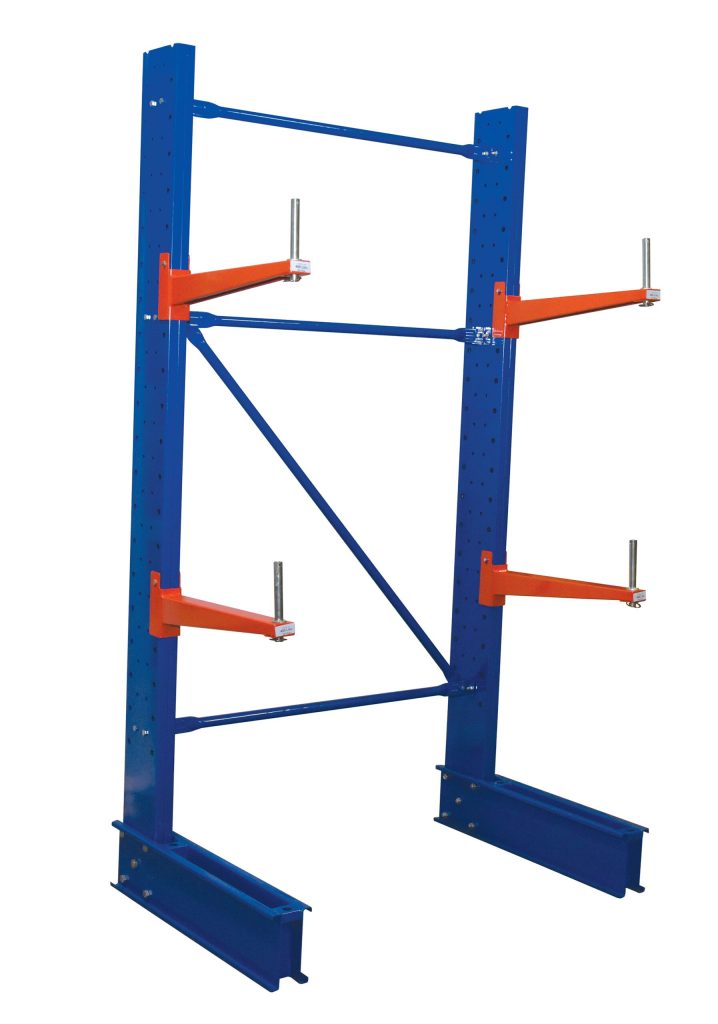
Adding to a row you already own? Match the column, arm and brace style first. These are the cantilever parts we stock online; for structural rack like the project below, request a quote.


The Project: A Kennel Manufacturer That Kept Coming Back
Gator Kennels builds commercial dog kennels to order in Loveland, Colorado, for dog daycares, boarding facilities, veterinarians and animal rescues. According to the company’s own public materials, it has built kennels since 2010, and its designs use metal framing with reinforced aluminum supports and high-density polyethylene (HDPE) panels and doors. A shop like that lives on long material: extrusions, tube and sheet that do not fit on pallets and should not lean against a wall.
Most cantilever projects we write about are a single order. This one is different. Between September 2021 and August 2024 the company placed four separate orders for structural cantilever rack, each one adding to what was already there. That makes it a useful record of how a cantilever system grows in real life: not as one big plan, but a few columns at a time as the business and the shop grow. If you are starting the same way, this page shows what to decide in phase one so phase two goes smoothly. For racking that holds palletized stock, see our pallet rack section.
One honest limit: the order records list the rack parts, not what goes on each arm. We know the company’s products and materials from its public information, but we do not claim what is stored on any particular level, and nothing below depends on it.
| Project detail | From the order records |
|---|---|
| Client | Gator Kennels (Loveland, CO) |
| Industry | Manufacturing, commercial dog kennels |
| Rack type | Structural cantilever rack from United Material Handling (green columns and bases, orange arms) |
| Orders | Four: September 2021, February 2023, August 2023, August 2024 |
| Columns | Nine total: six 96-in (8-ft) and three 120-in (10-ft), all 10-in deep |
| Bases | Nine 48-in single-sided bases |
| Arms | Thirty 48-in arms with a 4-in face, one part number throughout |
| Bracing | Six bays: four at 48 in and two at 36 in |
| Scope | Material and freight delivery; no installation was quoted |
Four Orders, Three Years: The Timeline
Every order below comes from the customer quote, our purchase order to the manufacturer and the manufacturer’s sales order acknowledgement. Each frame order was three columns and three bases with bracing for two bays, which is the smallest practical unit of cantilever rack: two bays of storage on three columns.
September 2021: the starter row
Three 8-ft structural columns, three 48-in bases, twelve 48-in arms (four levels per column) and bracing for two 48-in bays. Quoted delivery was about 6 to 7 weeks.
February 2023: taller frames, no arms
Three 10-ft columns, three more 48-in bases and bracing for two 48-in bays. No arms on this order. Quoted delivery was about 3 to 4 weeks.
August 2023: the arms follow
Eighteen 48-in arms, the same part number as the 2021 arms. Eighteen arms is exactly six levels on three columns, enough to fit out the 10-ft frames.
August 2024: one more section
Three 8-ft columns, three 48-in bases and bracing for two bays, this time at 36 in. No arms on the order. Quoted delivery was about 1 to 2 weeks.
Read as a whole, the four orders tell a simple story. The first section was sized small and filled out right away. When it was time to grow, the customer bought frames first and arms second, six months apart. The last section went in with tighter bay spacing. Every column, base and arm stayed inside one manufacturer’s structural line, so each new part bolted to the last.
That is the pattern we recommend to anyone who expects to grow but cannot justify the full system on day one. The rest of this page walks through the decisions that make it work.
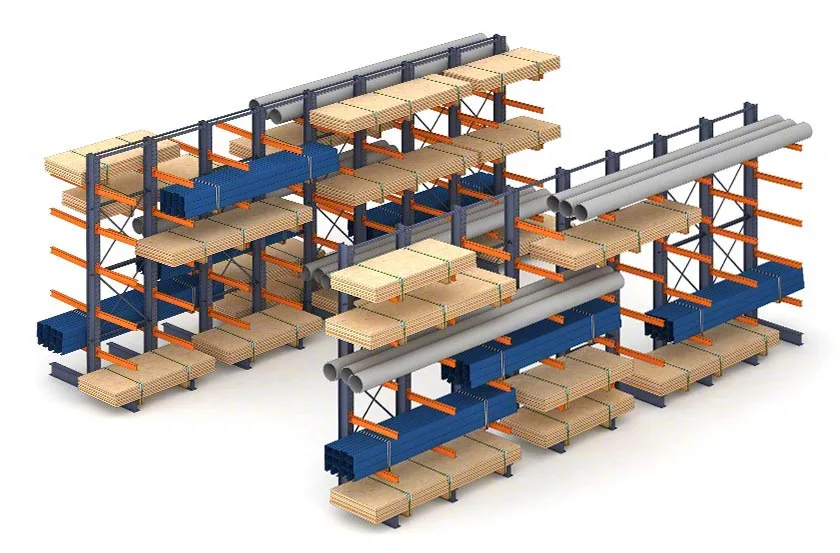
Image: Interlake Mecalux (authorized use). Representative illustration, not the customer’s installation.
Matching Parts Across Orders
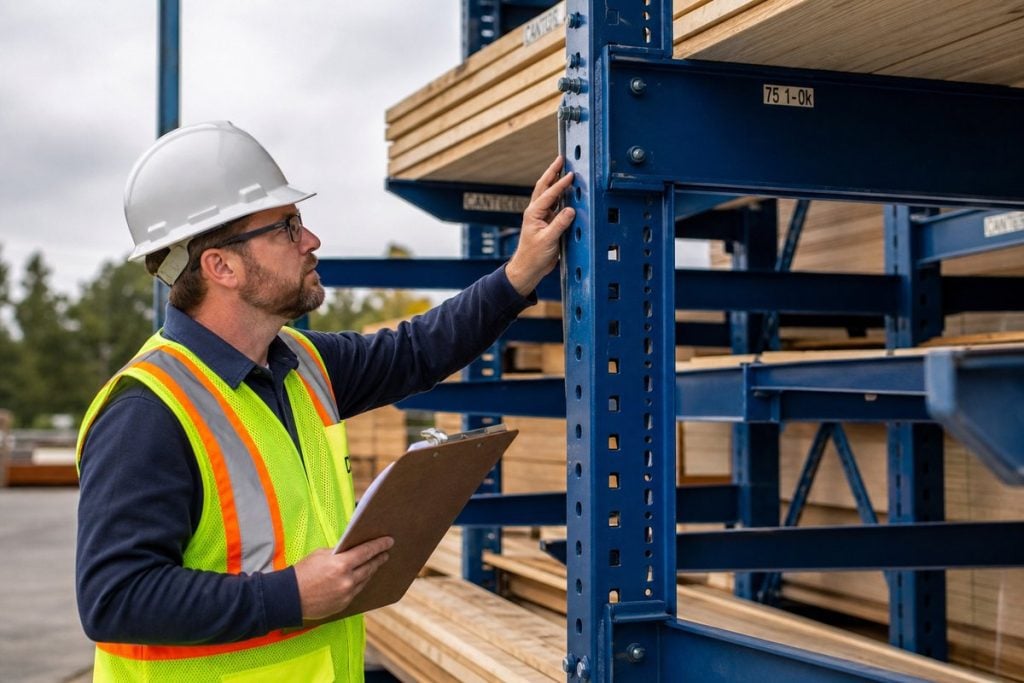
Cantilever rack is not a universal standard. The way an arm locks onto a column, the hole or slot pitch that sets the arm heights, the column depth and the base connection all vary from one manufacturer and one product line to the next. Arms from one brand rarely fit columns from another, and even within a brand, structural and roll-formed parts are different systems. When you add to a row years later, the safest move is to buy from the same line you started with, and that is what happened here: every order used the same 10-in structural column profile, the same 48-in base and the same 48-in arm.
| Part | 2021 | Feb 2023 | Aug 2023 | Aug 2024 |
|---|---|---|---|---|
| Columns (10-in deep) | 3 x 96 in | 3 x 120 in | None | 3 x 96 in |
| Bases (single-sided) | 3 x 48 in | 3 x 48 in | None | 3 x 48 in |
| Arms (48 in, 4-in face) | 12 | None | 18 | None |
| Bracing (bays x spacing) | 2 x 48 in | 2 x 48 in | None | 2 x 36 in |
- Keep your first order’s paperwork. The part numbers on a quote or packing list are the fastest way to order a matching part years later.
- Arm length follows base length. Here both are 48 in. A longer arm on a short base shifts the load past the footprint the column was designed around.
- Arms carry their own rating. A 48-in structural arm has a published capacity at its length; our guide to cantilever load capacity by arm length explains how to read it.
- Do not mix brands in one bay. If the original line is discontinued, treat the addition as a new run with its own columns rather than hanging new arms on old columns.
Our cantilever rack components guide covers what each part does and how they connect. If a used rack is tempting for the addition, read our used vs new cantilever rack guide first: a used rack from another line is exactly the kind of mismatch that causes trouble.
Mixing 8-ft and 10-ft Columns
The 2023 frames were 10 ft tall instead of 8 ft. That is a common choice when a business grows into a shop: the second phase often gets the taller columns the first phase could have used. Mixed heights are fine in a cantilever system as long as each section stands on its own columns and bracing. You do not brace an 8-ft column to a 10-ft column; each run of three columns is a complete braced unit.
What changes with height is the bracing. On the 8-ft orders, two bays came with two X-braces and four horizontal braces. On the 10-ft order, two bays came with four X-braces and six horizontals, so the taller frames got more bracing for the same bay count. The manufacturer sets the brace pattern by column height and bay width, and it is not optional. Leaving braces out to save money or to open up a bay is one of the mistakes that make tall cantilever rack unstable.
| 8-ft frame (2021, 2024) | 10-ft frame (2023) | |
|---|---|---|
| Column height | 96 in | 120 in |
| Column weight each | About 154 lb | About 190 lb |
| Arms per column as filled | 4 levels (2021 order) | 6 levels (2023 arms) |
| Bracing per two bays | 2 X-braces, 4 horizontals | 4 X-braces, 6 horizontals |
Taller columns are not automatically better. The top arm has to be reachable with the forklift or lift you actually own, and heavier loads belong low. Our cantilever rack design guide covers how to size column height to your equipment and ceiling.
Why Two Orders Had No Arms
In February 2023 the customer bought three columns, three bases and bracing, and nothing to hang material on. The arms came six months later. That sounds odd until you look at how cantilever rack is priced and used. Columns, bases and bracing are the structure: they set the footprint and the height. Arms set the number of levels and the spacing between them, and that depends on what you store. Buying the frame first lets a shop stand it up, live with it, and then order exactly the number of arms the material needs.
The 2024 order also came without arms. The records do not say why, and we do not guess. Arms are simple to add to an existing frame later, provided they are the same part, which is why the arm part number matters more than any other line on the original quote. Whatever the reason, the rule stands: never load a column without the right arms, and never mix arm lengths on one level, since the load must sit evenly across matching arms.
48-in vs 36-in Bay Spacing
The first three orders used 48-in bracing, which sets the columns 48 in apart. The 2024 section used 36-in bracing. Bay spacing is the distance material spans between arms, so it decides how well a load is supported along its length.
The working rule is that a load should rest on enough arms that it does not sag between them or tip over the end arm. Stiff, heavy stock such as steel tube can span wider bays. Flexible or thin material, such as plastic sheet, thin-wall extrusions or trim, needs arms closer together, and short pieces need closer arms simply to reach two of them. A tighter section next to a wider one gives a shop two kinds of storage in one area without buying a different product. For plate and sheet at the heavy end of the scale, see how a crane manufacturer sized arms per level and span in our plate steel cantilever case study.
| Bay spacing | Typically suits | Watch for |
|---|---|---|
| 48 in (2021 and 2023 frames) | Longer, stiffer material that spans two or more bays | Sag on thin or flexible stock |
| 36 in (2024 frame) | Shorter lengths, flexible sheet and extrusions, lighter bundles | More columns for the same row length |
Lead Times Changed a Lot
Each customer quote gave an estimated delivery window. In September 2021 it was about 6 to 7 weeks, in February 2023 about 3 to 4 weeks, and in August 2024 about 1 to 2 weeks. Structural steel lead times followed the wider market in those years, and they will move again. The point for planning is not the number but the spread: if your second phase has to be standing before a busy season, ask for a current lead time before you commit to a date.
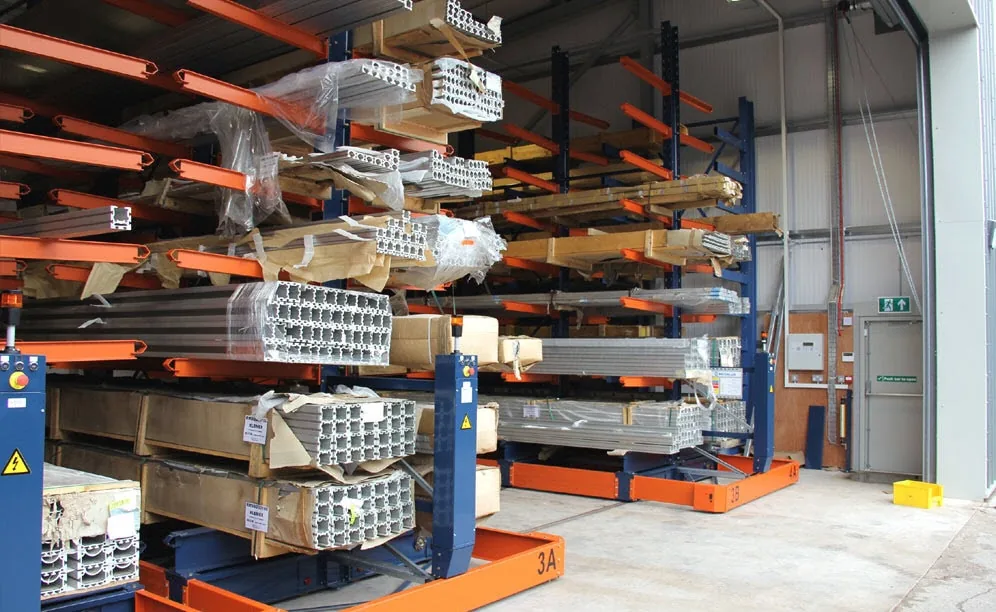
Freight matters too. Structural parts are heavy: the PO lists the 8-ft columns at about 154 lb each, the 48-in bases at 76 lb and each 48-in arm at 34 lb. Even a small frame order ships at close to half a ton, so plan for a forklift or enough hands to unload, and check that the delivery truck can reach your dock.
All four orders here were delivered by freight with no installation in the quote. Structural cantilever goes together with hand tools, but each column has to be plumb and anchored before arms go on. Our cantilever rack installation guide walks through the assembly order, anchoring and the checks before first load.
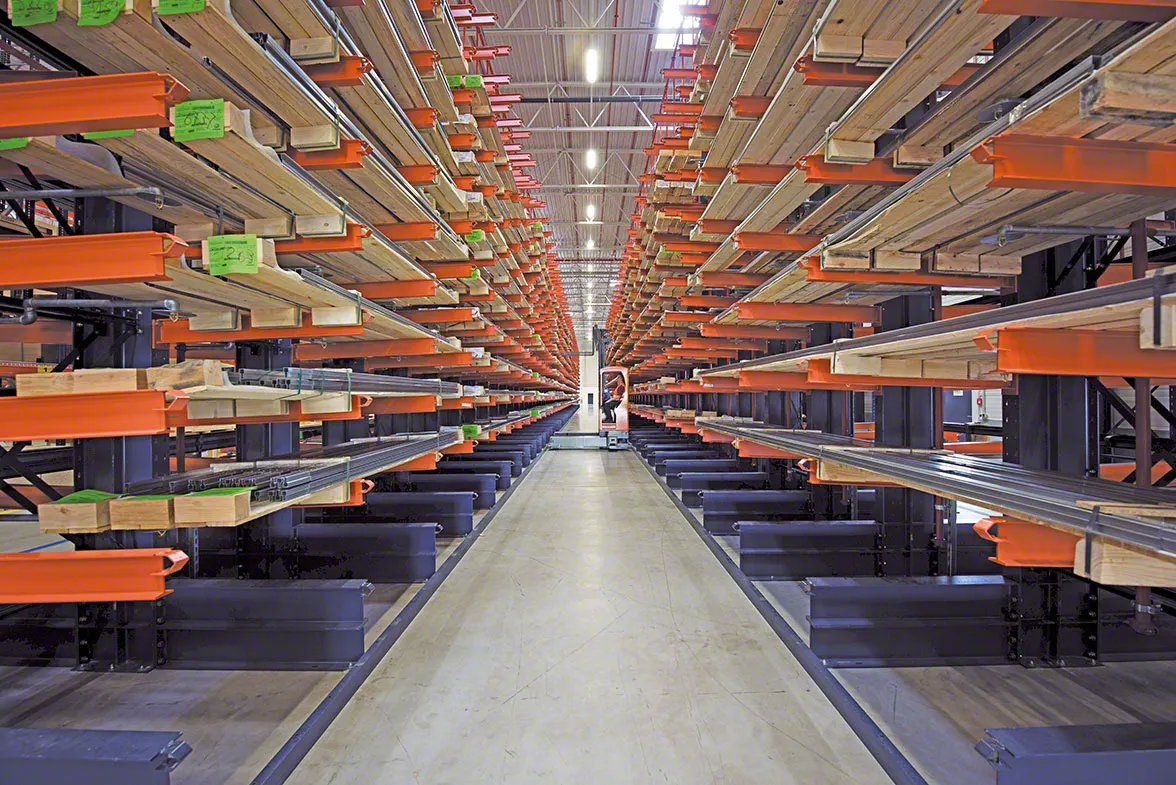
Photo: Interlake Mecalux (authorized use). Representative image, not the customer’s shop.
Phase-One Checklist for a Rack You Plan to Grow
If you expect to add to your cantilever rack later, these decisions in the first order save money and trouble in the next one.
| Decide in phase one | Why it matters later |
|---|---|
| Manufacturer and product line (structural or roll-formed) | Future arms, columns and braces must come from the same line |
| Arm length and base length | Keeping one arm and base size makes every later order a repeat |
| Single- or double-sided | Adding a second face later usually means different bases; plan the aisle for it now |
| Column height you will eventually want | Taller sections can be added later, but each needs its own bracing |
| Where the row will extend | Leave clear floor, and keep the aisle width your loads and forklift need |
| Floor and anchoring | New sections need the same anchors into sound slab as the first ones |
| Keep the paperwork | Part numbers on the original quote or packing list make reorders exact |
The single- or double-sided decision deserves a second look. The columns in this project are a double-sided style on single-sided bases, so they are loaded from one face. Arming the second face is not just a matter of adding arms: the base must support loads on both sides, so ask the manufacturer what a conversion requires before you count on it. A Utah timber shop planned that expansion path inside a single order, which you can read about in our heavy timber cantilever case study.
Safety rules apply to every phase. OSHA’s material storage rule, 29 CFR 1910.176, requires stored material to be stable and secure against sliding or collapse, and the Rack Manufacturers Institute’s best practices for cantilevered storage racks cover load signs, inspection and what to do with damaged arms. Post the capacity of the new section the day it goes up, even if it matches the old one.
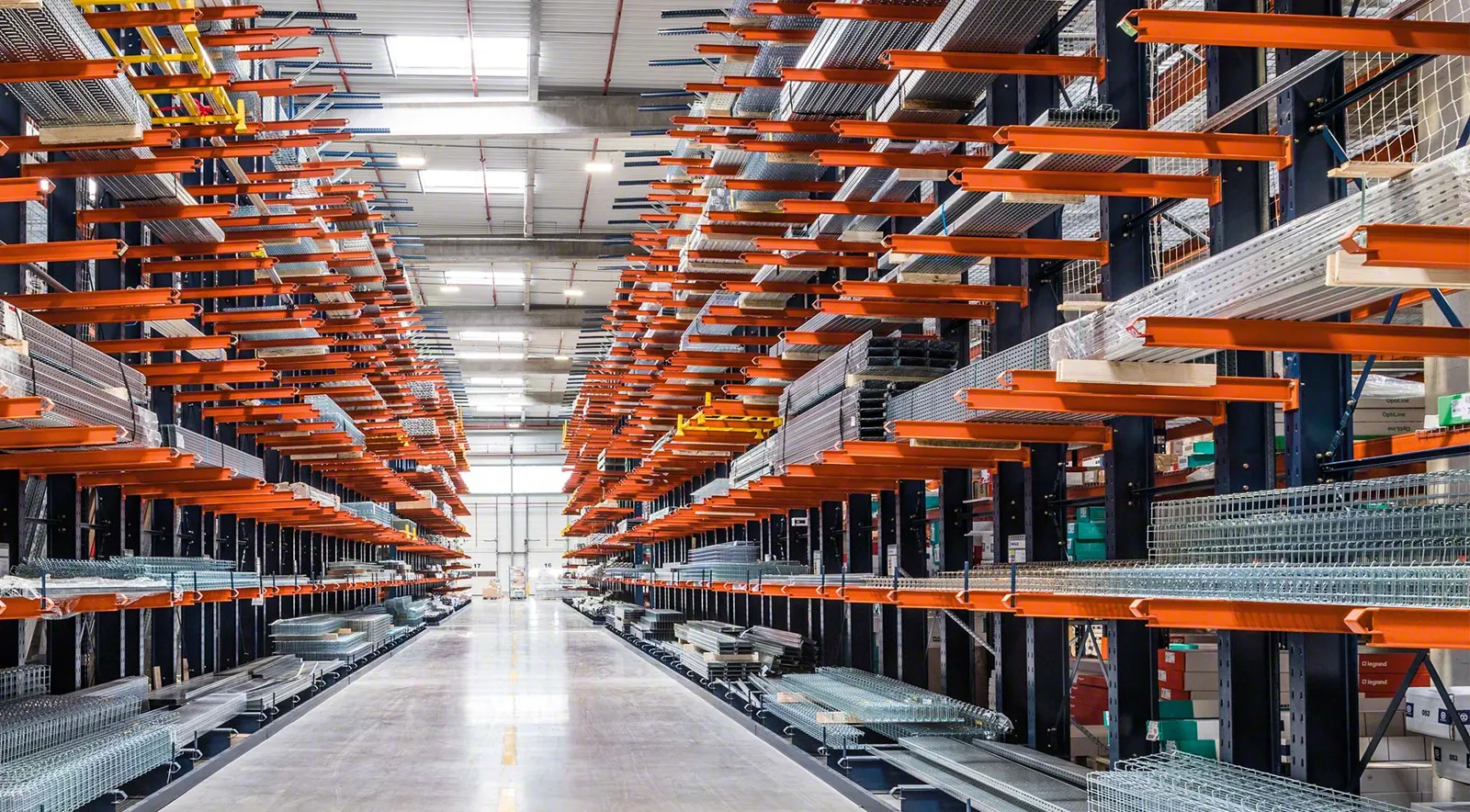 Metal and Steel Cantilever RackingBar, tube, angle and profiles for fabricators and service centers.
 Cantilever Rack ComponentsColumns, bases, arms and braces, and how they fit together.
 Cantilever Rack in DenverSupply and planning for Colorado and the Front Range.
Planning your own first phase? Sketch a row in our free 3D cantilever rack configurator, browse every arm, upright and brace in the cantilever rack shop, or send us your current part numbers and we will match the addition.
Phased Cantilever Rack Expansion: FAQs
Can I add to a cantilever rack I bought years ago?
Can I mix arms from different cantilever brands?
Can 8-ft and 10-ft cantilever sections stand in the same area?
Is it OK to buy cantilever columns now and arms later?
What bay spacing should I use?
Can a single-sided cantilever rack be made double-sided later?
Did MH-USA install this rack?
Adding to a Cantilever Rack?
Send us your current part numbers or a photo of a column label and arm. We will match the next phase, or plan a first phase that is easy to grow. Call 800-326-4403.