
Plate Steel Cantilever Rack: Crane Equipment & Service, Eureka, IL
An Illinois crane manufacturer needed single-sided storage for 10-ft plate steel at 6,000 lb per level. Three structural columns, seven levels of 60-in arms, three arms under every plate.

Eureka, IL
Project location
2026
Ordered
6,000 lb
Requested per level
7 levels x 3 arms
As ordered
Shop Heavy-Duty Cantilever Rack by Category
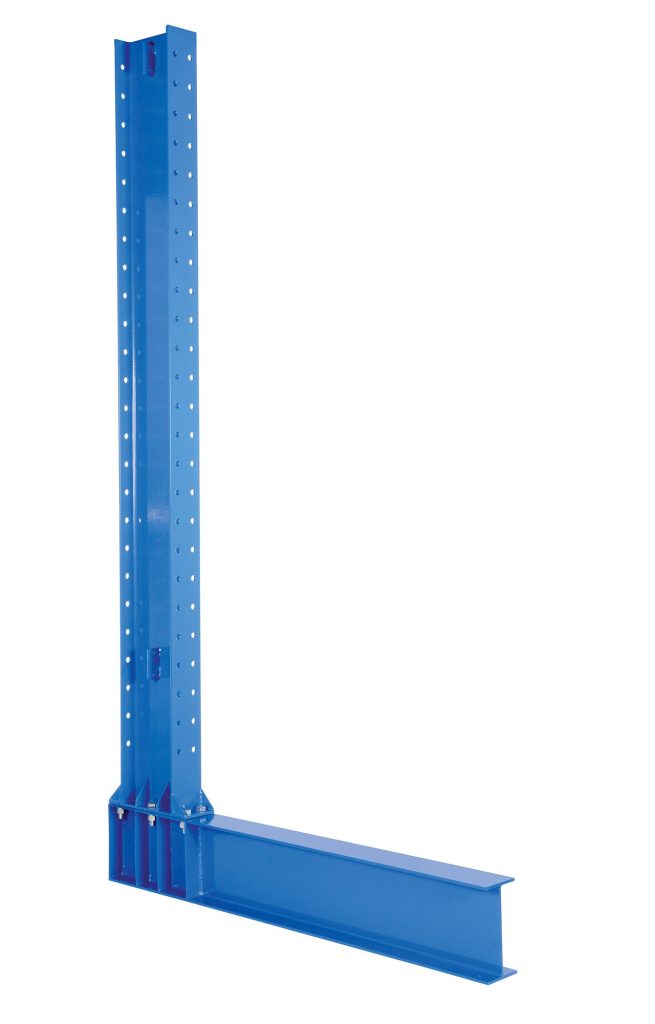
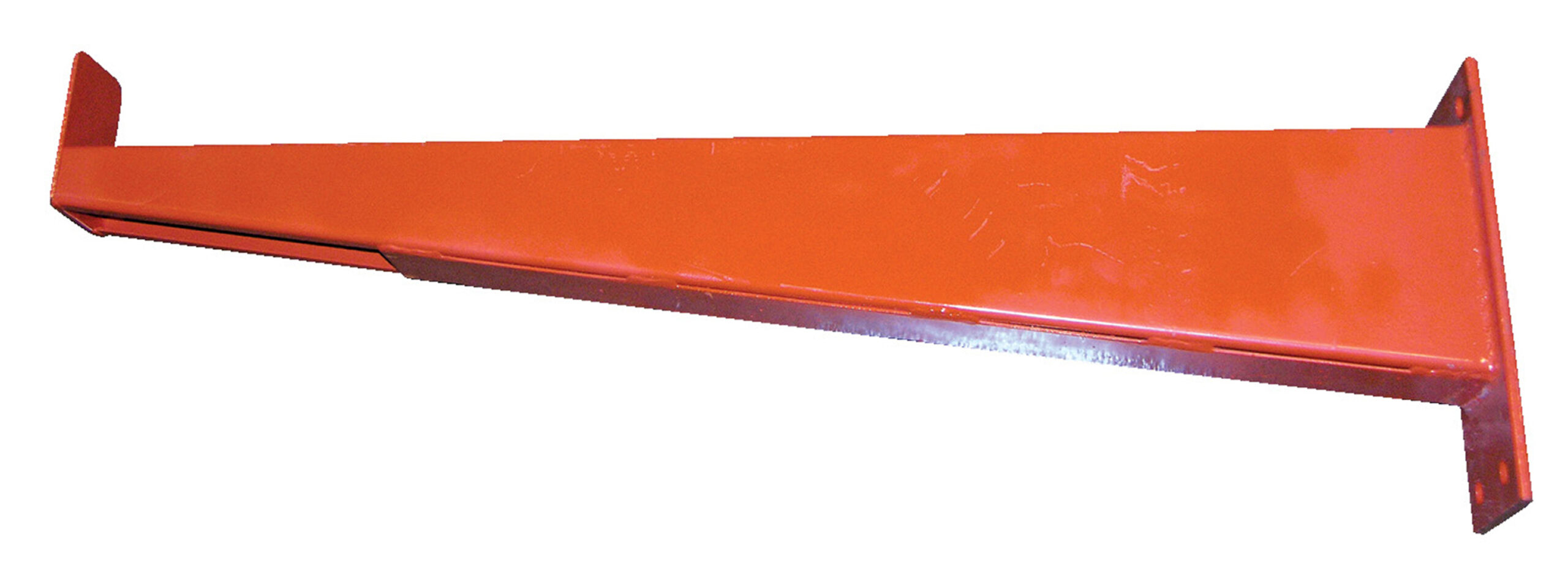
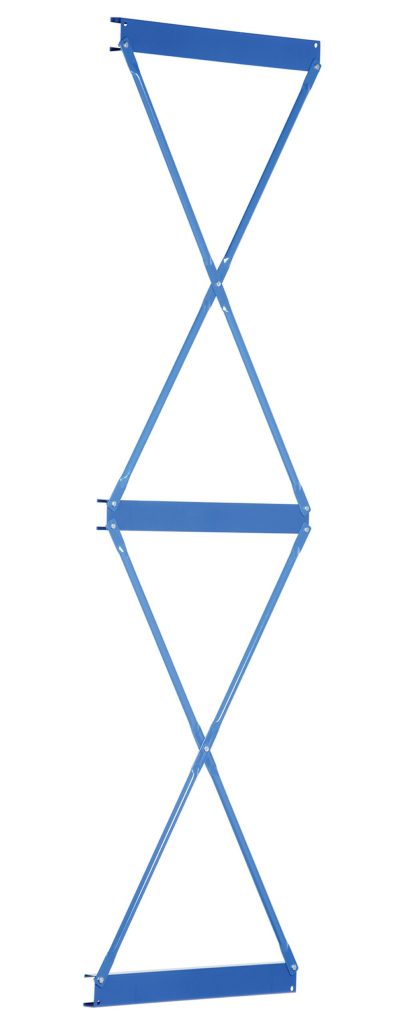
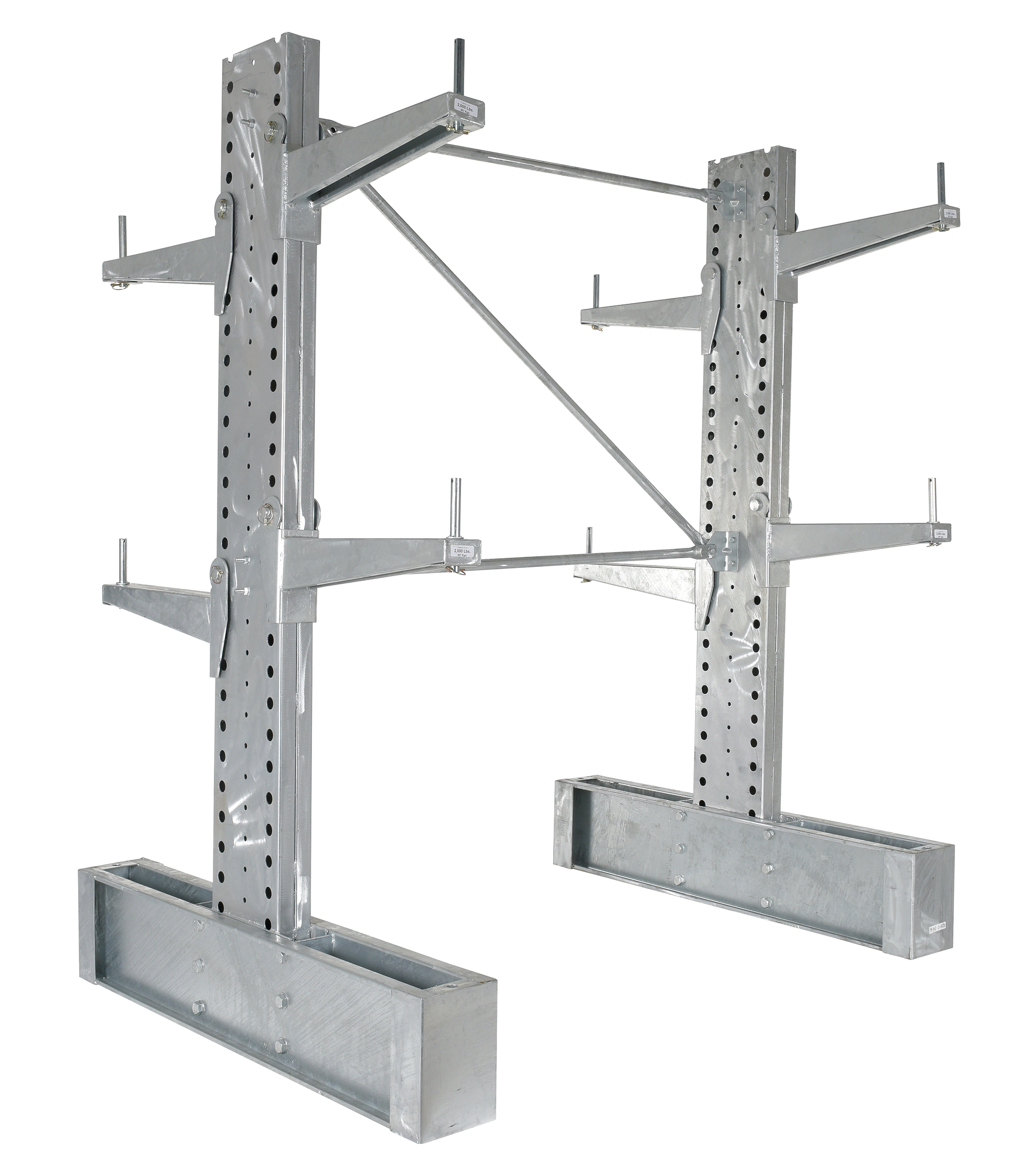
Plate and heavy steel need heavy-duty or structural arms rated for the load per arm, not just the total. Each card opens a shop category. Plate that must stay flat in shelves can also go on a Vestil horizontal sheet rack ($1,298.58). Prices are current online prices; freight is quoted by destination and some common sizes in stock at select manufacturers, subject to confirmation. For a full layout, longer arms or freight-rated orders, request a free quote or plan it in the Cantilever Rack Configurator.
The Project: Plate Steel Storage for a Crane Manufacturer
Crane Equipment & Service, Inc. builds overhead and jib cranes in Eureka, Illinois, and is the manufacturer of Abell-Howe cranes. Crane building runs on steel plate, and plate is one of the hardest materials in a plant to store well. It is flat, heavy, and wider than a pallet, so it does not belong on pallet rack beams, and stacking it on the floor turns every pick into a dig through the pile.
In May 2026 the company’s team wrote to Material Handling USA with a clear brief. They had already read about roll-formed and structural cantilever rack and wanted capacity and pricing for a single-sided rack for plate steel: about 6,000 lb per level, roughly 12 ft tall, 60-in arms, and seven or eight levels. Our sales director answered the same morning. The weight was not a problem, but two more facts were needed before a quote made sense: how many arms should carry each level, and how far the rack had to span. The customer replied within hours: three arms, and the sheets are 10 ft wide. A quote went out that afternoon and the purchase order followed in June.
This page walks through that order and why each part was chosen, as a guide for anyone storing plate, sheet or other flat, heavy stock. It supports our cantilever rack systems overview, where we cover column, arm and base selection for lumber, pipe, plate and other long or flat stock, and the full range of cantilever applications we supply nationwide.
| Project detail | As ordered |
|---|---|
| Client | Crane Equipment & Service, Inc. (Eureka, IL) |
| Industry | Manufacturing, overhead and jib cranes |
| Stored material | Sheets of plate steel, about 10 ft wide |
| Requested load | About 6,000 lb per level |
| Columns | Three 144-in (12-ft) structural columns, W10x17 wide-flange section |
| Bases | Three 60-in structural bases (single-sided) |
| Arms | Twenty-one 60-in structural arms, seven levels per column |
| Bracing | Two 36-in bays: four X-braces and six horizontal braces |
| Scope | Material and freight; customer assembled |
Arms per Level and Span: The Two Questions That Size a Plate Rack
Most first requests for cantilever rack arrive with a height, an arm length and a weight. Those matter, but for flat stock the two questions that actually fix the design are how many arms support each level and how far apart they sit. They decide how many columns you buy, how wide the brace bays are, and how much of each plate hangs past the outer arms.
The rule of thumb our team gave this customer is simple: the span between the outer arms should be a little shorter than the material, so the load overhangs a short distance at each end instead of hanging far past the last arm. Twelve-foot stock, for example, would usually get a span of about 10 ft. Long flexible bar can tolerate more overhang than plate, but plate is heavy, and a big overhang puts more of that weight on the end arms and less on the middle one.
For 10-ft plate the customer chose three arms per level. Three arms need three columns, and three columns make two brace bays. The order used 36-in bracing between columns, so every plate lies across all three arms with a moderate overhang past each end, as in the illustration below.
From 6,000 lb per Level to Load per Arm
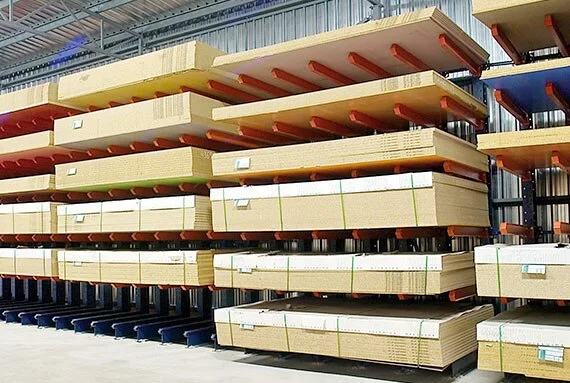
Plate buyers usually think in pounds per level, because that is how a stack of plate is weighed and moved. Cantilever rack is rated differently. Each arm carries a rated load at its length, and each column has a total capacity that depends on arm spacing and the number of levels. Converting one to the other is the most important check on a plate rack.
On this order the customer asked for about 6,000 lb per level across three arms. If the plate sits centered and the weight is shared evenly, that is roughly 2,000 lb per arm. Real loads are rarely perfectly even. A stack set off center, or a plate that bows, puts more weight on one arm than the others, so the arm rating needs headroom above the even-share figure. Weight also has to sit well back on the arm, not near the tip, because arm ratings assume a load spread along the arm.
Our team confirmed the requested weight was within the capability of the structural components quoted. The order documents do not list arm ratings, so we do not publish one here. If you are sizing your own rack, our guide to cantilever arm capacity by arm length shows how the rating drops as arms get longer.
Photo: Interlake Mecalux (authorized use). Representative image, not the customer’s installation.
| Check | What to confirm | On this order |
|---|---|---|
| Load per level | Heaviest realistic stack, not the average | About 6,000 lb requested |
| Arms per level | Number of arms sharing each stack | Three |
| Even-share load per arm | Load per level divided by arms | About 2,000 lb |
| Headroom | Arm rating above the even share, for off-center loads | Confirmed by our team before quoting |
| Column capacity | Total of all levels on each column | Structural W10x17 columns |
| Arm length | Deep enough for the plate, no longer than needed | 60 in |
Arm length follows the depth of the plate on the arm, and the base follows the arm. This order matched 60-in arms with 60-in bases, which keeps the loaded center of gravity over the base. Longer arms only add leverage on the column that flat plate does not need.
Why Structural Steel Cantilever for Plate
The customer arrived having read about both roll-formed and structural cantilever. Roll-formed rack is made from cold-formed sheet steel and suits lighter building products and hardware stock. Structural rack is built from hot-rolled steel sections and suits dense, heavy loads and forklift or crane handling, where an arm may take a knock from the load being set down.
The order went structural throughout. The columns are W10x17 wide-flange sections, a 10-in deep hot-rolled beam shape, and the bases use the same section. The 60-in arms are structural as well. For a rack that will carry seven levels of plate at thousands of pounds per level, that is the conservative choice, and it gives the rack more tolerance for the occasional hard landing.
For a deeper look at the structural versus roll-formed decision with round stock, see our fence post and pipe cantilever project in Murray, Utah. For heavy timber on structural arms, see the Western Timber Frame project in Lehi, and for metal service centers generally, cantilever racking for metal and steel.
Photo: Interlake Mecalux (authorized use). Representative image, not the customer’s installation.
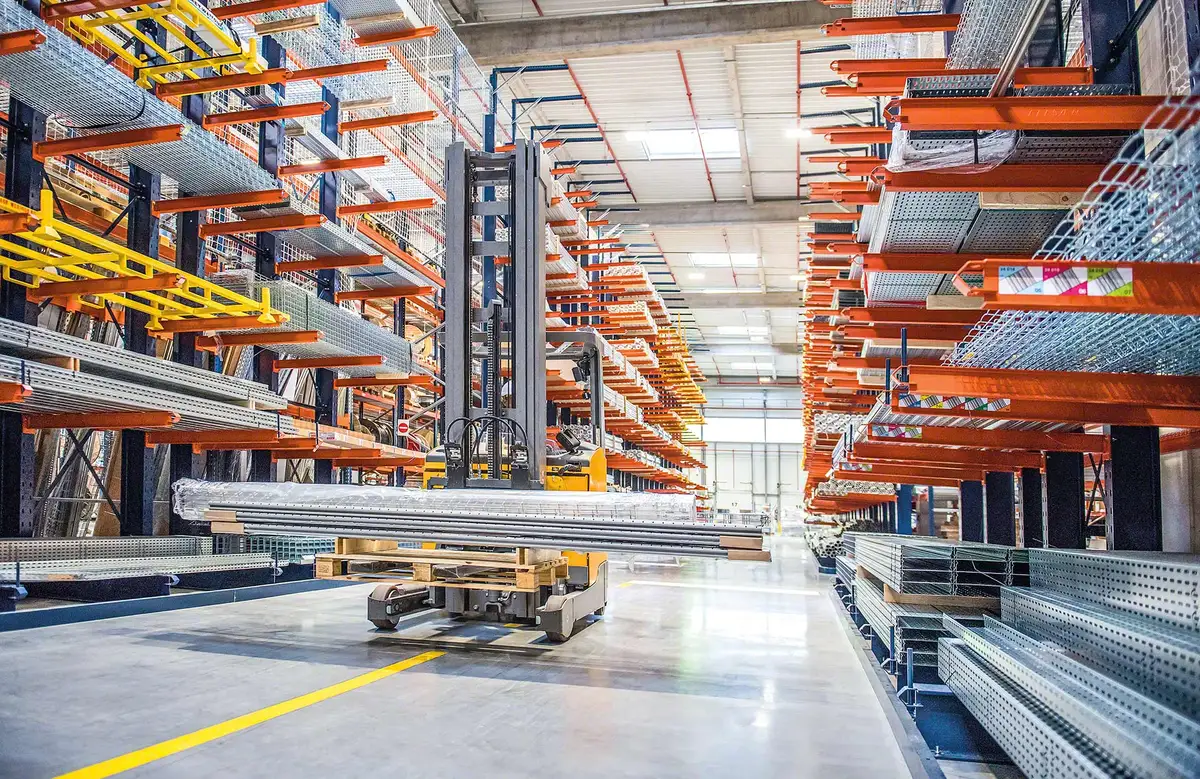
| Question | Roll-formed cantilever | Structural cantilever |
|---|---|---|
| Material | Cold-formed sheet steel | Hot-rolled steel sections |
| Typical loads | Light to medium | Heavy and dense, such as plate and bundles of bar |
| Impact tolerance | Lower | Higher, better for forklift or crane loading |
| Arm connection | Often drop-in with a pin or wedge; quick to move | Bolted to the column; moving a level is deliberate work |
| Fit for this order | Not chosen | Chosen: W10x17 columns and bases, 60-in arms |
A Single-Sided Row With Seven Levels
The customer asked for a single-sided rack from the first email. A single-sided cantilever row has arms on one face only, with bases reaching forward under the arms, so it can stand along a wall or a building line and be loaded from one aisle. A double-sided row has arms on both faces and suits an open floor or yard where both sides can be reached.
Seven levels on 12-ft columns is a dense arrangement for plate. Plate stacks are relatively short, so more levels fit in the same height than would with bundled lumber or pipe. Our team quoted exactly what was asked: seven arms on each column, twenty-one in all. Because arms bolt to the column face, the spacing between levels can be adjusted during assembly to suit the thickness of the stacks the plant actually keeps, and levels can be added later if the column has room.
| Decision | Single-sided | Double-sided |
|---|---|---|
| Placement | Against a wall or building line | Open floor or yard, both sides reachable |
| Aisles needed | One | Two |
| Base | Reaches forward under one set of arms | Reaches both ways |
| Good for | Plants that load from one side with a forklift or crane | Higher storage per column |
| This order | Chosen | Not needed |
If you are still deciding between cantilever and conventional rack for a mixed stock list, our pallet rack systems page covers selective rack for palletized loads, which many plants run alongside a cantilever row.
Loading Plate Steel Safely on Cantilever Arms
Plate is unforgiving to handle, so the loading routine matters as much as the rack. The practices below are general guidance for plate and sheet on cantilever. They are not a record of this customer’s procedures, which the project documents do not describe.
Heaviest stacks low
Put the thickest, heaviest plate on the lowest levels and lighter gauges above.
Across every arm
Set each plate or stack across all arms on the level, centered along the row.
Back toward the column
Keep the weight well back from the arm tips.
Use dunnage
Spacers between stacks let forks or lifting gear get under the plate without dragging it.
Design, testing and use of industrial steel cantilever racks is covered by ANSI MH16.3, and stored material must be stacked so it is stable and secure against sliding or collapse under OSHA 29 CFR 1910.176.
Ordering, Delivery and Customer Assembly
The purchase order arrived in mid-June 2026, a little over two weeks after the first email. The customer’s schedule mattered: they did not want to pay an expedite fee, but asked whether the rack could arrive before July 8. The quote had listed a lead time of about two to three weeks, and our team confirmed that date would not be a problem. The manufacturer shipped the parts direct to the plant, about 2,540 lb of steel in all.
The customer planned to assemble the rack with its own team and asked two practical questions: would there be assembly instructions, and how long would it take. Our team sent the manufacturer’s instructions and estimated an hour or two for a handy crew, since three columns and two brace bays is a compact row. The one firm instruction was to anchor the rack to the concrete floor for safety.
| Step | What happened on this order | Tip for your project |
|---|---|---|
| Inquiry | Height, arm length, weight per level and number of levels sent in the first email | Include the material width and how many arms you want per level |
| Clarifying questions | Arms per level and span answered the same day | Answer both before asking for a price |
| Quote and PO | Quote the same day, purchase order about two weeks later | Confirm lead time against your deadline |
| Delivery | Delivery before the customer’s date without an expedite fee | Plan a forklift for 12-ft columns |
| Assembly | Customer assembled with the manufacturer’s instructions | Count every part before you start |
| Anchoring | Rack to be anchored to the concrete floor | Use anchors sized for the rack in sound concrete |
If you are in Utah, our guide to cantilever rack installation in Utah covers permits, anchoring, assembly order and inspection, including seismic requirements along the Wasatch Front.
What This Project Shows
A good plate rack starts with the right questions. This order came together quickly because the customer could say how heavy each level would be, how wide the plate was and how many arms should carry it. From there, the design followed: three columns for three arms, 36-in bays for 10-ft plate, 60-in arms on matching bases, structural sections for heavy loads, and seven levels on a single-sided row that loads from one aisle.
If you store plate, sheet or other flat, heavy stock anywhere in the country, send us the material size, the heaviest stack per level, how many levels you want and how you load it. We will turn that into a quote for columns, arms, bases and bracing. Our rack design services team can also start from your material list.
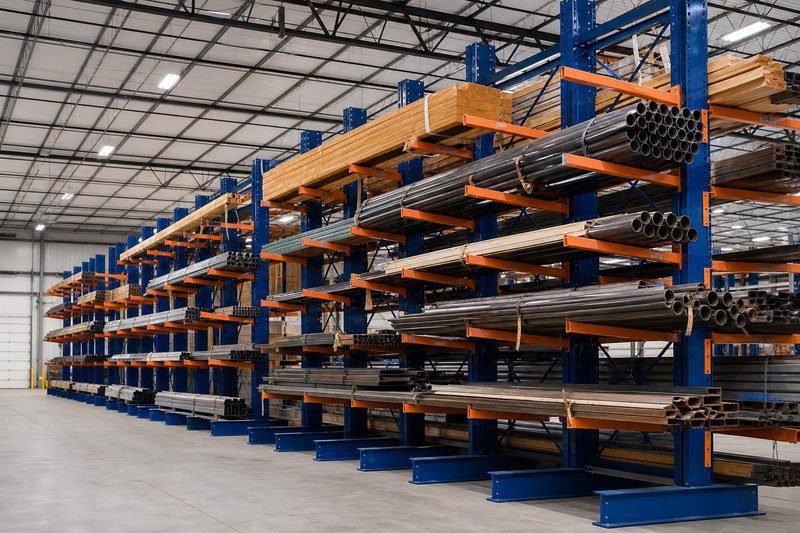 Metal & Steel Storage Cantilever RackingArm, column and capacity choices for bar, plate, sheet and structural steel.
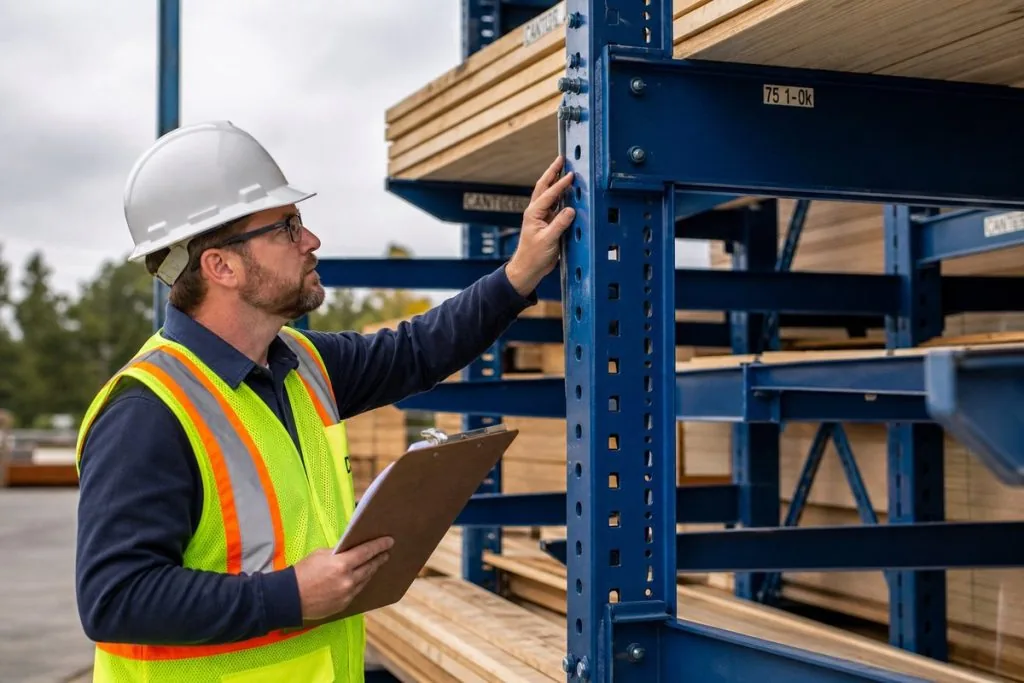 Cantilever Rack SystemsColumns, arms, bases and bracing for long and heavy material.
 Pallet Rack SystemsSelective pallet rack, beams and wire decking for palletized loads.
Plate Steel Cantilever Rack FAQs
Can cantilever rack hold plate steel?
How many arms should support each level of plate?
How do I convert weight per level into weight per arm?
Should I use roll-formed or structural cantilever for plate?
How long should the arms be for plate storage?
How long does it take to assemble a small cantilever row?
Does Material Handling USA ship cantilever rack outside Utah?
Storing Plate or Sheet Steel?
Send us the plate size, the heaviest stack per level and how many levels you need. We will size columns, arms, bases and bracing and quote them. Call 800-326-4403.