
Used vs New Cantilever Rack: An Honest Comparison
Used cantilever rack looks cheaper on the lot, but the savings are usually gone by the time it is installed. Here is where the money goes, why parts rarely fit back together, when reusing rack you own can work, and when new costs less.
Have used or existing rack? Email photos to sales@mh-usa.com for a straight answer.
Install
Where used savings usually go
1 maker
Per rack; parts rarely mix
ANSI MH16.3
The US cantilever rack standard
Photos
Fastest way to a real answer
Used vs New Cantilever Rack at a Glance
Cantilever rack is heavy, long-lived steel, and plenty of it changes hands when lumber yards, steel service centers and distributors move or close. That makes used rack easy to find. Whether it is a good buy has less to do with the price on the lot than with what it takes to get it standing, braced, anchored and rated in your building.
Our honest take
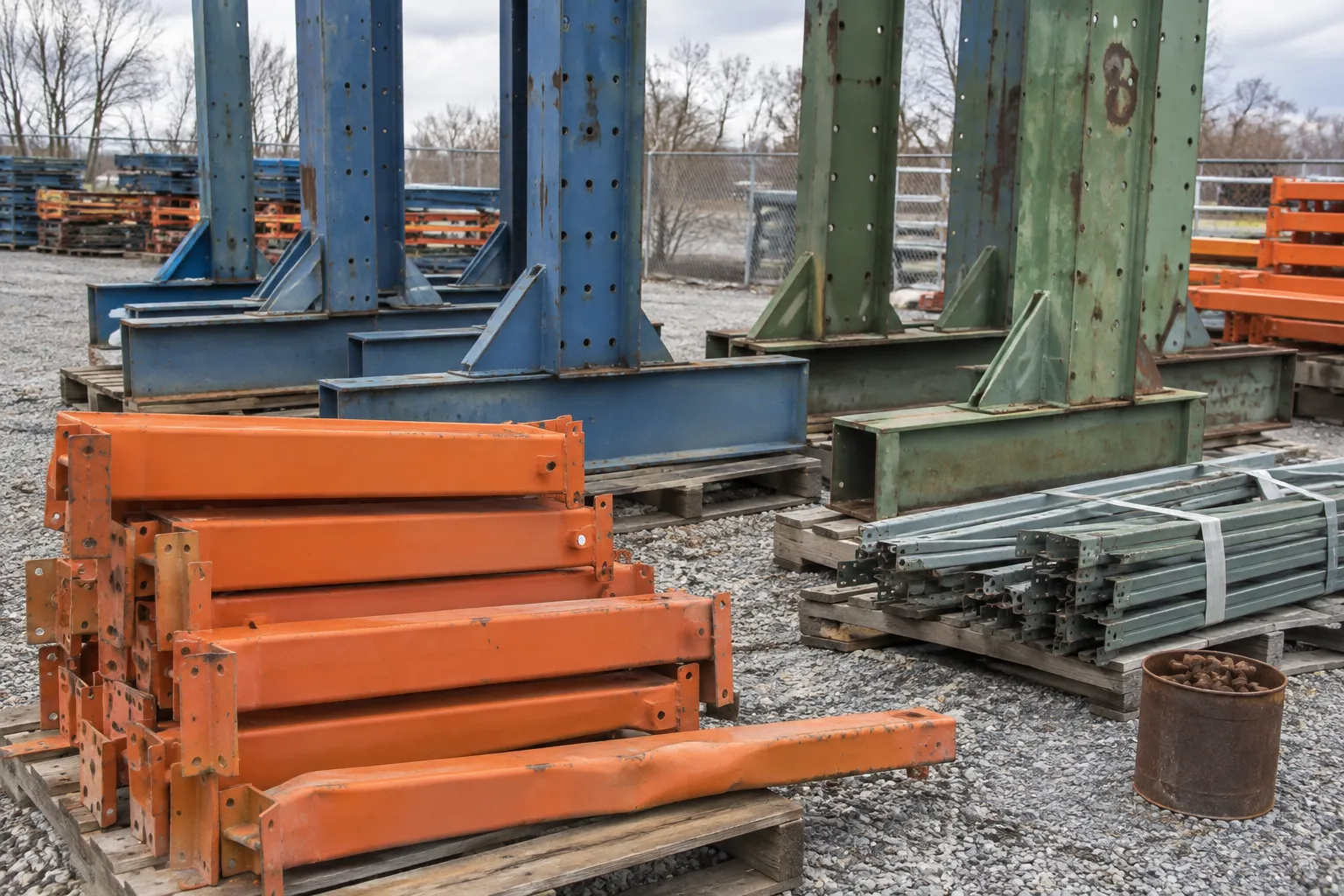
In our experience the savings from buying used cantilever rack are typically used up by the time it is installed. Parts rarely fit back together well after disassembly, and the installer time it takes to straighten, sort and fit everything ends up costing more than new would have. Reusing rack you already own can work, but even then new is sometimes cheaper once the fix-up time is counted. A quick call to our sales team with a few pictures usually tells you which way to go.
| Question | Used cantilever rack | New cantilever rack |
|---|---|---|
| Purchase price | Lower on the lot | Higher per part; known before you commit |
| Installed cost | Often higher than new once fit-up labor is added | Predictable: parts fit the first time |
| Load rating | Often unknown once labels and drawings are gone | Published per arm and per upright |
| Parts match | Lots can mix brands, series and duty classes | One manufacturer and product line |
| Sizes | You take the heights and arm lengths on offer | Chosen for your loads, ceiling and aisles |
| Hardware | Bolts, arm locks and brace sets often missing | Supplied complete for the configuration |
| Adding on later | Hard if the maker or series is unknown | Add-on bays match the original order |
| Installer time | Straightening, sorting and forcing parts to fit | Assembles as designed |
Compare: New Cantilever Rack Priced Online
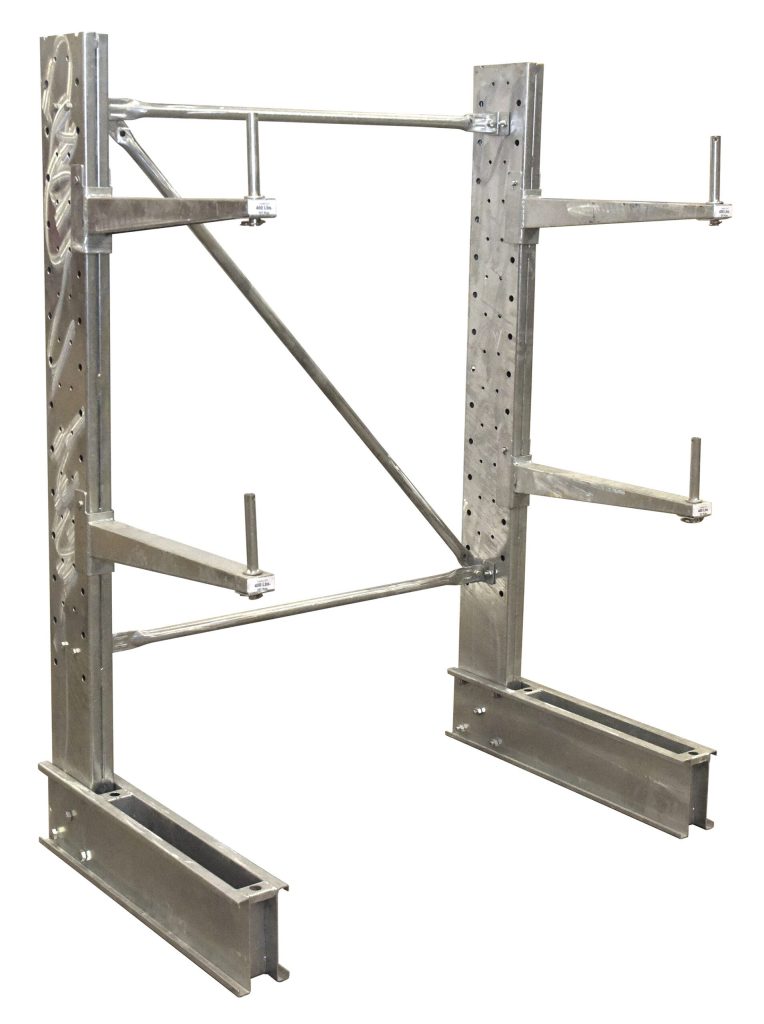
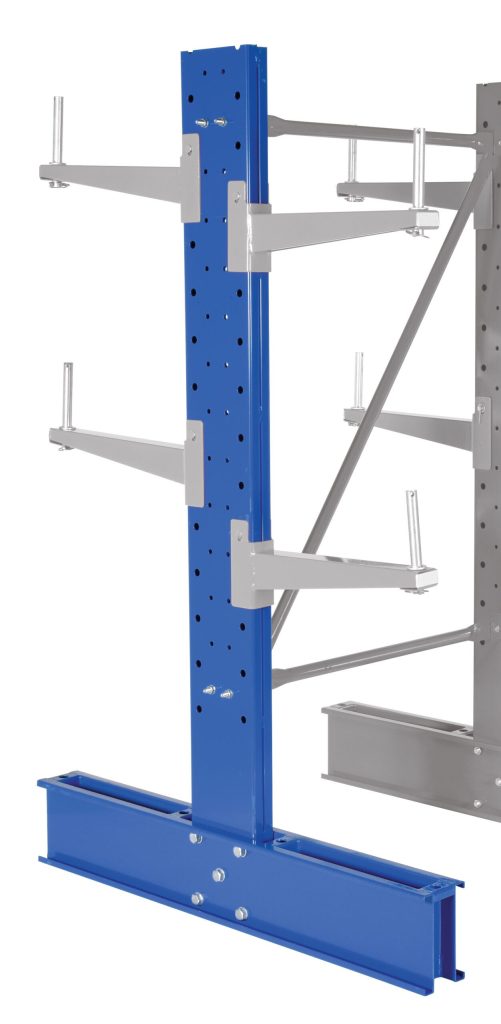
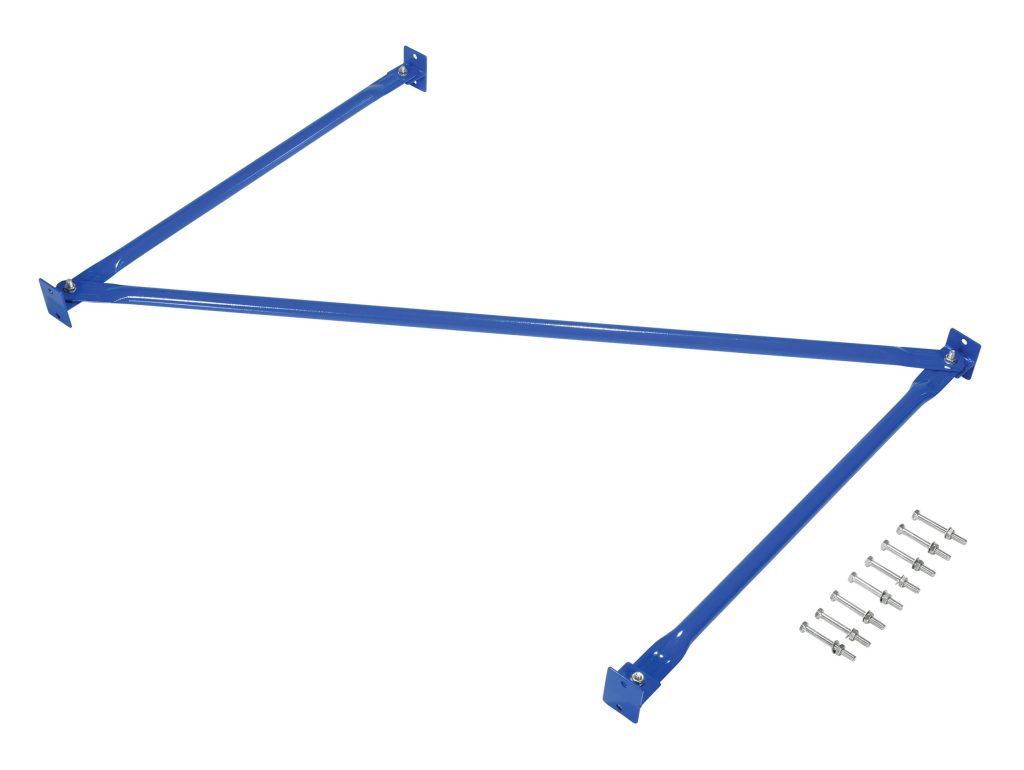
Before you price a used lot, compare it with new. Complete Vestil sections include matching uprights, arms and bracing at current online prices; freight is quoted by destination and some common sizes in stock at select manufacturers, subject to confirmation. Need single parts? See cantilever rack components.
Where the Used Savings Go
A used listing prices the steel. It rarely prices the work between the seller’s yard and a rack you can load. These are the line items that close the gap, and why we do not treat used as the automatic budget choice:
| Cost item | Why it shows up with used | With new |
|---|---|---|
| Teardown and loading | Someone has to unbolt, band and load long, heavy columns and arms | Ships banded from the manufacturer |
| Freight | Long steel ships by length and weight, often on a flatbed, from wherever the lot is | Quoted from the plant or a stocking point |
| Sorting and matching | Arms, bases and braces must be matched by maker, series and length | Packed by configuration |
| Straightening or replacing | Bent arms, dented columns and warped bases cannot go back up as-is | No damage to correct |
| Missing hardware | Bolts, arm locks, brace sets and anchors are often lost | Included or listed |
| Engineering and permits | Unknown ratings may need an engineer before a permit is issued | Manufacturer data supports the submittal |
| Installer fit-up time | Forcing worn holes and mismatched parts to line up | Assembles as designed |
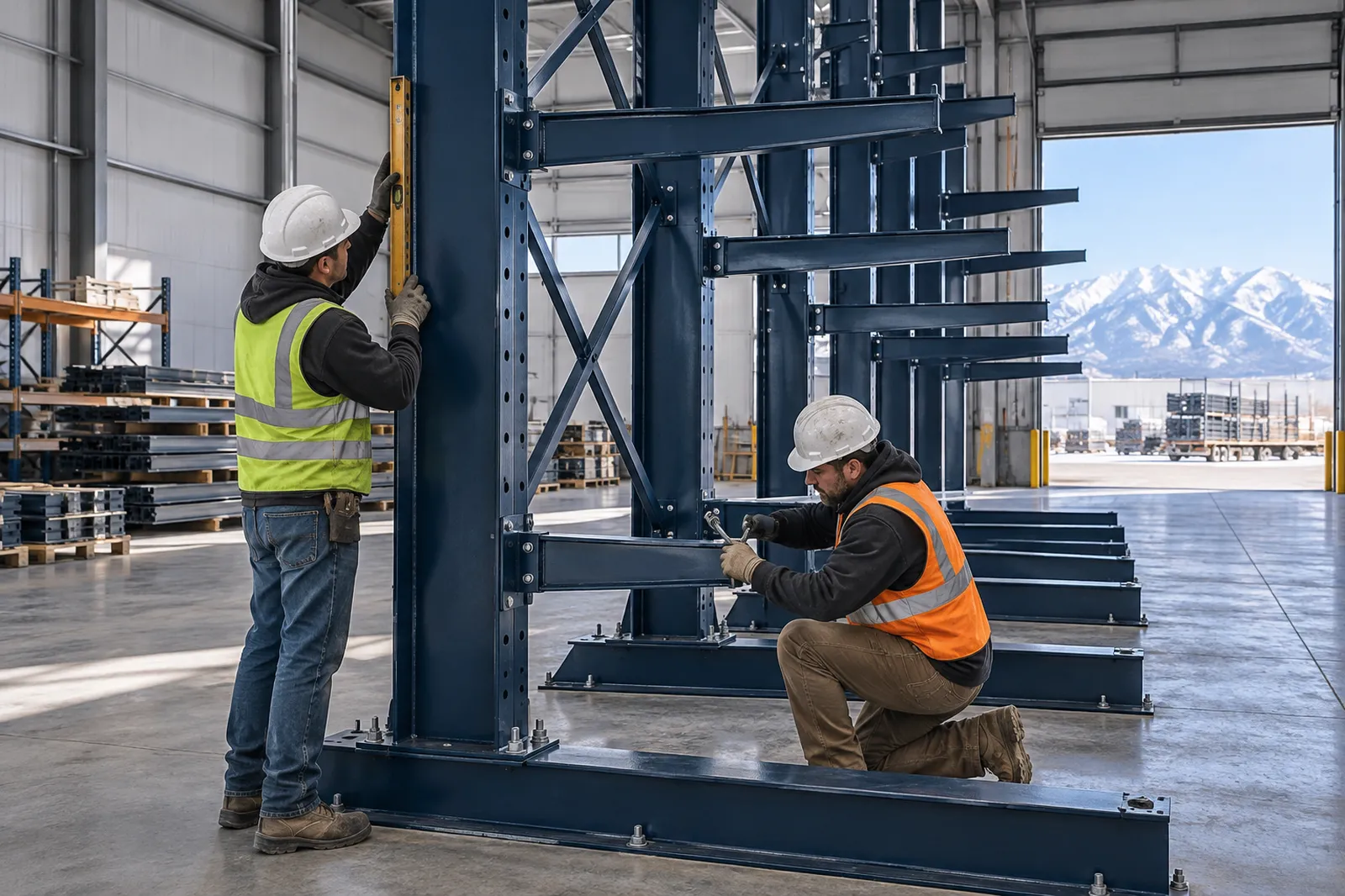
Installer time is the big one. On new rack, a crew stands columns, bolts bases, hangs braces and sets arms in a planned sequence. On used rack, the same crew stops to sort parts, chase missing bolts, ream holes and work around bent members. Those hours are billed either way, and they are the reason used rack so often ends up costing more installed.
Why Cantilever Parts Rarely Fit Back Together
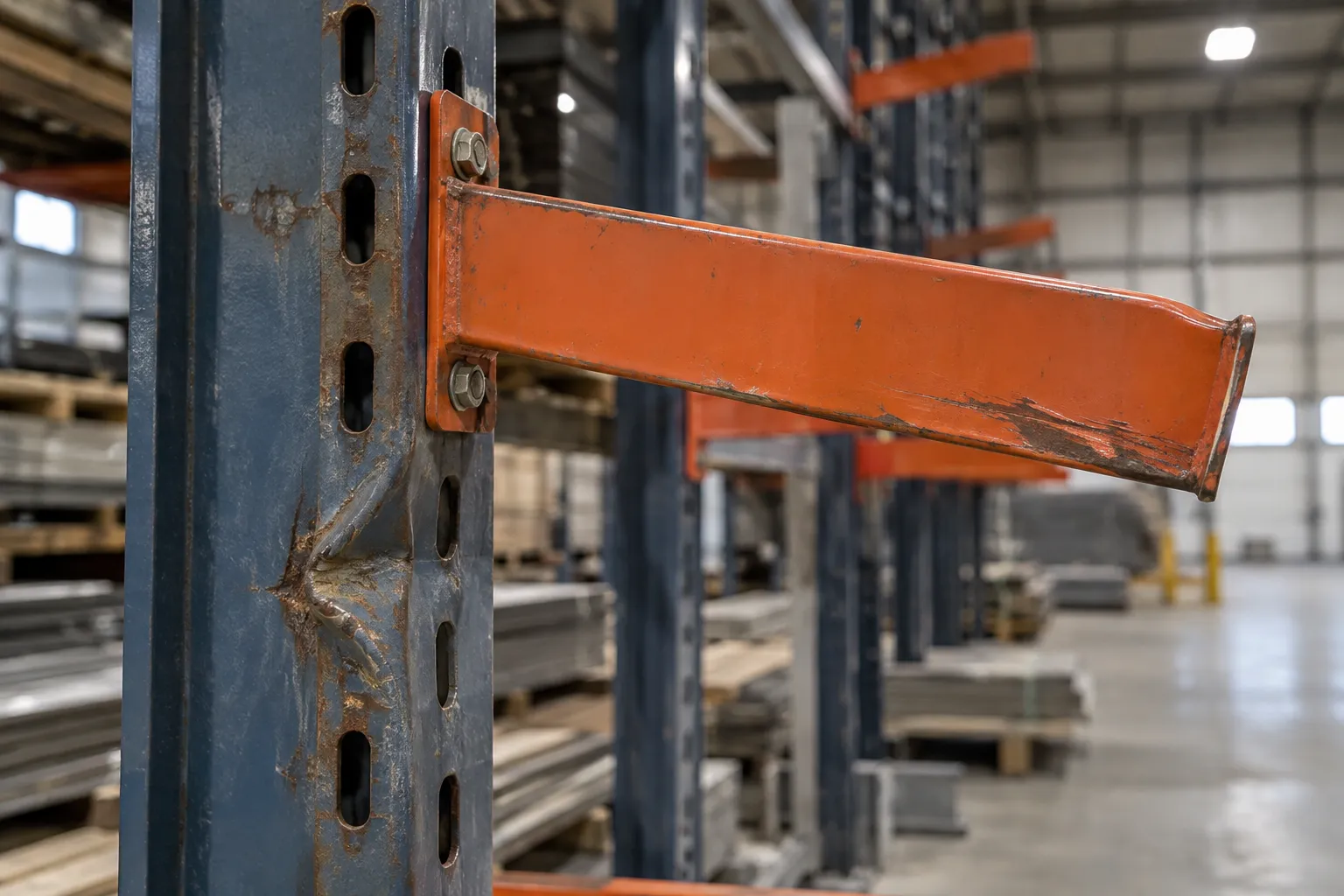
Cantilever rack is designed as a system: one maker’s columns, bases, arms and braces, rated together. Once it has been loaded for years, taken down, stacked and shipped, the parts are no longer quite the same shape they left the factory in. Small changes add up when you try to bolt them back together.
- Elongated bolt holes: years of load and forklift bumps stretch holes, so arms sit loose or droop.
- Bent arms and dented columns: one bent arm changes the level for the whole load; a dented column is a structural concern, not a cosmetic one.
- Warped base plates: bases that rocked on an uneven slab will not sit flat on yours without shimming or replacement.
- Mixed brands and series: used lots often combine two makers or two duty classes. Hole spacing, arm connections and brace fittings differ, so the parts do not interchange.
- Missing pieces: brace sets, arm locks and lips go missing first, and matching replacements may no longer be made.
Our cantilever rack components guide explains how arms, uprights, bases and brace sets are matched and rated, and why parts from different makers rarely mix. To compare new prices part by part, see the cantilever rack shop category.
If You Are Still Looking at Used: An Inspection Checklist
Inspect before you pay, ideally with the rack still standing so you can see it loaded and plumb. Bring a tape, a straightedge and a camera. If the seller cannot tell you the manufacturer and series, assume you will need an engineer to rate it, and add that to the cost.
- Manufacturer, series and duty class identified on every part, with any capacity labels or drawings
- Columns straight and plumb, with no dents, kinks, cracks or crushed flanges
- Arms straight, level and not twisted; lips or stops intact
- Welds at base-to-column and arm plates free of cracks
- Base plates flat, anchor holes round, no heavy rust or lost galvanizing on outdoor rack
- Bolt holes round, not stretched or torn
- Complete brace sets for every bay, with hardware and arm locks counted
- Arm lengths and column heights that actually fit your loads, ceiling and aisles
The Rack Manufacturers Institute cantilever best practices and the revised ANSI MH16.3 cantilever standard set the expectations for design, installation and use. Damaged members are repaired or replaced per the manufacturer or an engineer, not straightened by guesswork.
Capacity Labels, Drawings and Permits
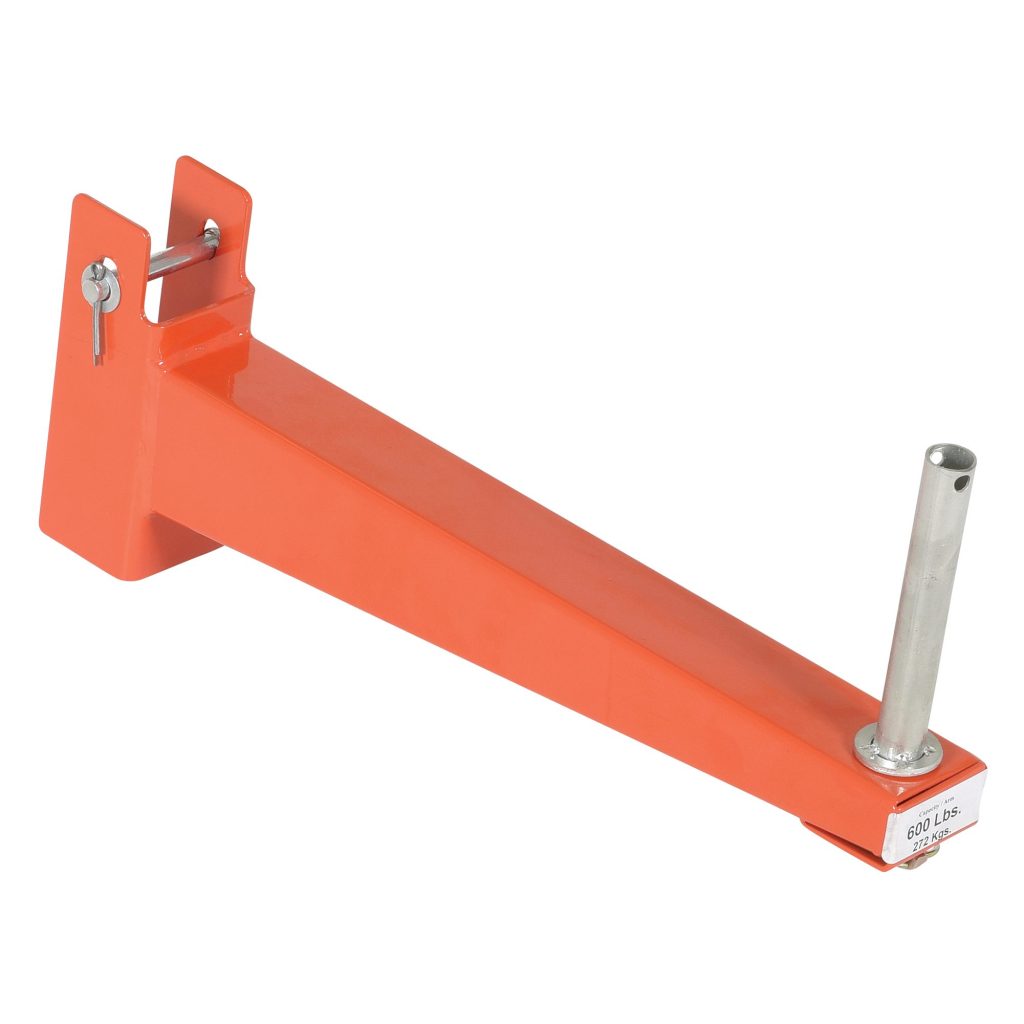
New cantilever comes with published capacities: per arm for a uniform load, and per upright for the whole column. Vestil, for example, rates its 24 in heavy-duty straight arm at 2,000 lb and its 8 ft heavy single-sided upright for 24 in arms at 21,500 lb. Used rack often arrives with neither labels nor drawings, and a rating from one configuration does not carry over to a new arm spacing or height.
Our cantilever rack installation guide walks through permits, anchoring and inspection, and the load capacity by arm length guide explains how ratings change with arm length.
Reusing Cantilever Rack You Already Own
Reuse is the case where used can make sense. You know the history, the parts usually come from one maker, and you are not paying a seller’s margin or long-haul freight. A relocation inside your own building, with the rack moved intact or carefully labeled, has the best odds.
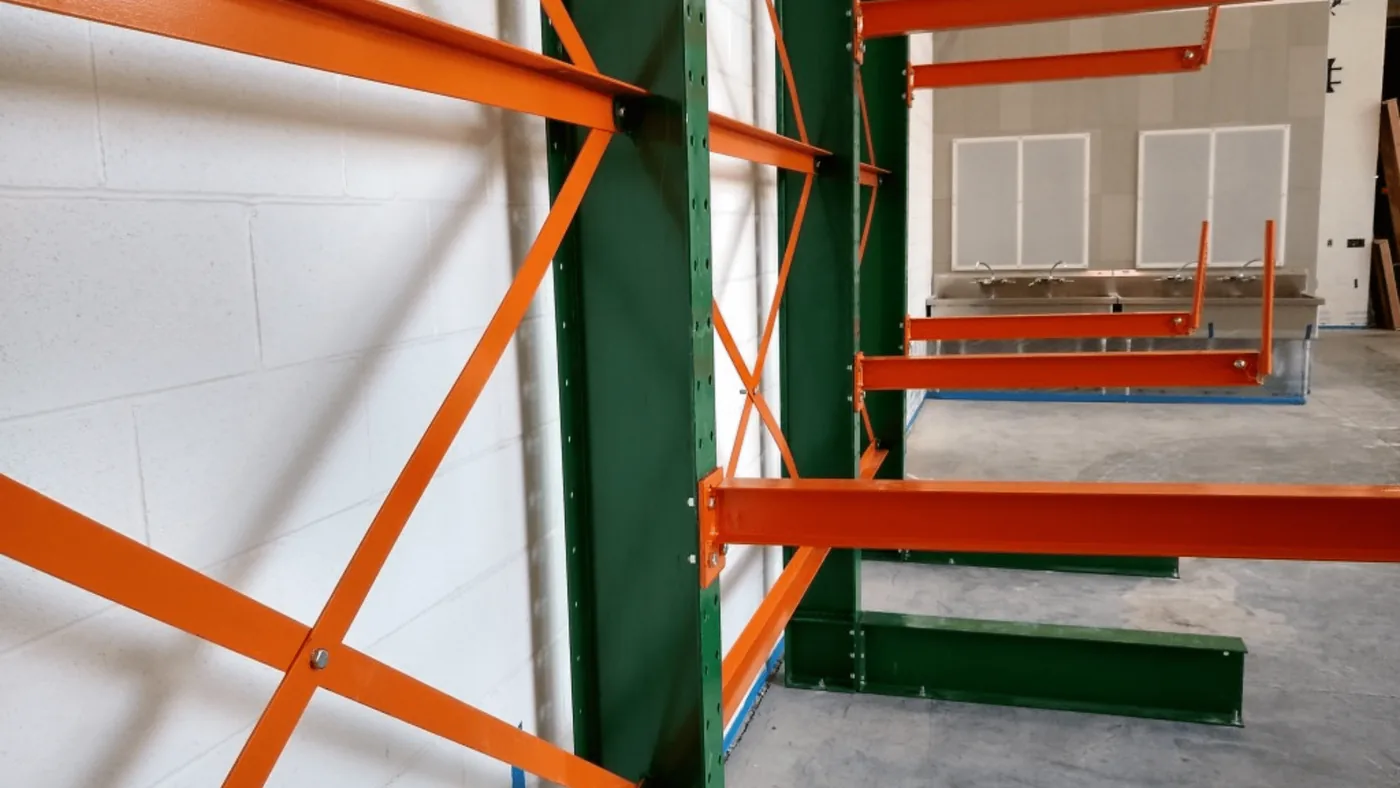
Even then, new is sometimes cheaper. Teardown, re-anchoring, replacing damaged arms and the fit-up time to make worn parts line up again can approach the cost of new parts that assemble as designed. Before you commit a crew, send us photos of the columns, bases, arm connections and any labels, plus the arm lengths and column heights. We will tell you plainly whether reusing it is likely to save money or whether new is the better buy.
Photograph
Columns, bases, arm connections, braces and any labels or tags.
Measure
Column height, arm length, base length and bay spacing.
Describe the load
What you store, longest and heaviest pieces, how you load.
Get a straight answer
We compare reuse with fix-up against new and quote both if useful.
When New Cantilever Rack Is the Better Buy

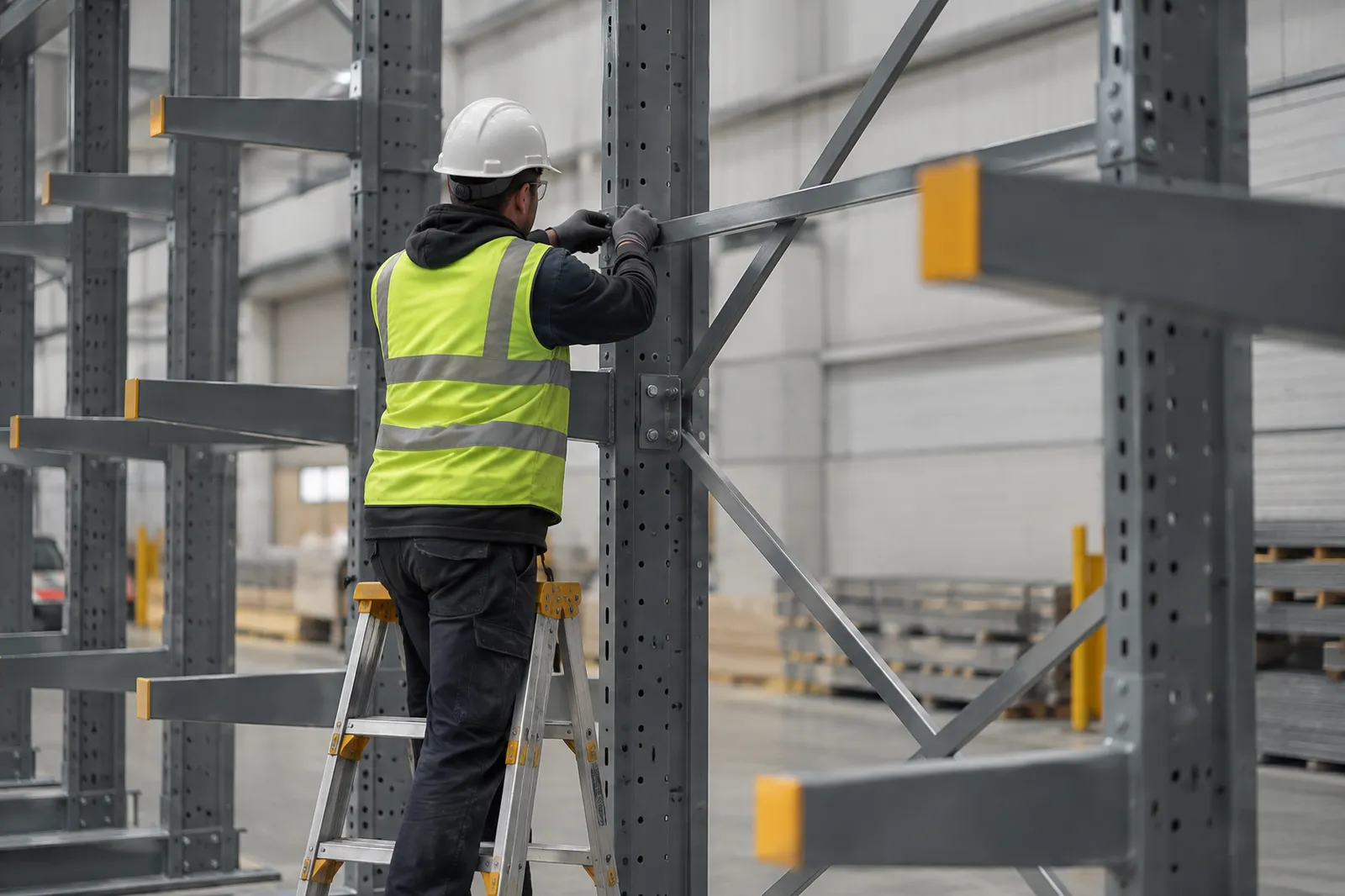
New rack is sized to your loads instead of the other way around. Arms are the right length for your bundles, columns the right height for your building, and every part carries a published rating. When you add bays later, they match.
- Known capacity: per-arm and per-upright ratings support your permit and load signs.
- One installation pass: the crew assembles once, without sorting or straightening.
- The right finish: galvanized for outdoor yards, painted indoors; see our cantilever rack with a roof guide for covered yards.
- Availability: some common sizes in stock at select manufacturers, subject to confirmation. Structural systems are quoted to your layout.
- Room to grow: add-on bays share the last column of the run and match the original parts.
Plan it before you price it. Our free Cantilever Rack Configurator lets you set column height, arm length, levels and bays and see a parts list, which makes it easy to compare a used offer against new on equal terms.
Decision Guide: Used, Reuse or New
| Your situation | What we usually recommend |
|---|---|
| A used lot from an unknown seller, mixed colors or brands | New. Fit-up time and unknown ratings usually erase the savings. |
| A used lot from one maker, standing, with labels and drawings | Send photos; compare a full installed quote against new. |
| Your own rack, moving within the same building | Reuse can work; count teardown, damage and re-anchoring first. |
| Your own rack plus a few add-on bays | Match the original maker; we will look for compatible parts. |
| Outdoor yard, rack has rust or lost galvanizing | Usually new, galvanized, sized for your loads. |
| Tight schedule and a permit required | New, with manufacturer data for the submittal. |
Whichever way you lean, the fastest route to a real answer is the same: photos, a few measurements and a short call. Reach us at (800) 326-4403 or sales@mh-usa.com.
Used vs New Cantilever Rack: FAQs
Is used cantilever rack cheaper than new?
Why don’t used cantilever parts fit back together?
Can I reuse the cantilever rack I already own?
Can I mix used arms with new uprights?
How do I know what a used cantilever rack can hold?
What should I inspect on used cantilever rack?
Does used cantilever rack need a permit?
Is used cantilever rack safe?
Is new cantilever rack in stock?
What is the cheapest way to get cantilever rack installed?
Should I buy used cantilever rack for an outdoor yard?
Can you add bays to my existing cantilever rack?
Not Sure Whether Used Will Really Save You Money?
Send a few photos of the used or existing rack and your loads. We will compare it honestly against new and quote whichever makes more sense.