
Cantilever Rack vs Bar Rack: Terra Diamond, Salt Lake City, UT
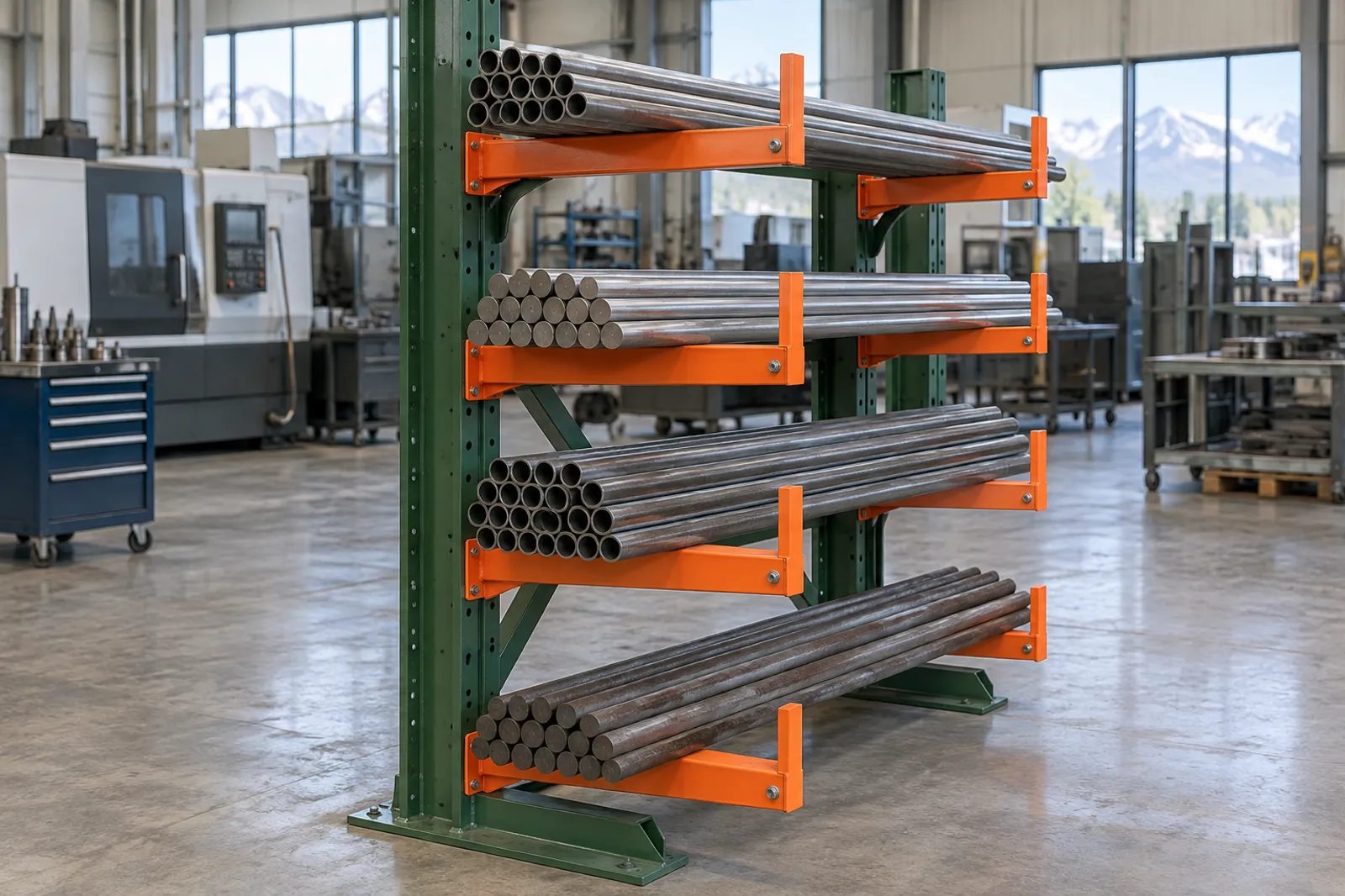
A Salt Lake City diamond tool manufacturer compared a heavy-duty bar rack with a compact structural cantilever row, chose cantilever, and added arms and pipe stops before the order was placed.
Salt Lake City, UT
Project location
2024
Ordered
8-ft
Structural columns
16 arms, 20 stops
As ordered
Shop Compact Cantilever Rack by Category
Short cantilever runs are built from the same four part types as long rows. Each card opens a shop category. If short bar stock suits a bin-style unit better, compare the Vestil double-sided horizontal bar rack ($467.19). Prices are current online prices; freight is quoted by destination and some common sizes in stock at select manufacturers, subject to confirmation. For a full layout, longer arms or freight-rated orders, request a free quote or plan it in the Cantilever Rack Configurator.
The Project: A Diamond Tool Manufacturer Choosing Long-Stock Storage
Terra Diamond manufactures diamond cutting tools in Salt Lake City, Utah: saw blades for asphalt, cured concrete, masonry and stone, plus core bits and related equipment. A manufacturer like this keeps raw material and work in process that does not sit well on a shelf, and in early 2024 the company asked Material Handling USA for a better way to store it.
What makes this project useful to other buyers is that two different storage systems were on the table at the same time. Our sales team requested a quote for a single-faced heavy-duty bar rack from Equipto, and the same week quoted a compact structural cantilever row from United Material Handling. Terra Diamond chose the cantilever row, then asked for more arms and more pipe stops before signing. The rack shipped from Southern California, arrived in March 2024, and was assembled by the customer’s own team. In February 2026 the customer confirmed the project was complete.
If you are planning long-stock storage anywhere along the Wasatch Front, our cantilever rack page for Salt Lake City and Utah covers local supply, delivery and installation. This page walks through the decisions on this order and what they mean for a shop of similar size.
| Project detail | As ordered |
|---|---|
| Client | Terra Diamond (Salt Lake City, UT) |
| Industry | Manufacturing, diamond cutting tools |
| Alternative considered | Single-faced heavy-duty bar rack (four sections plus an end unit) |
| Columns | Four 96-in (8-ft) structural columns, 10-in deep, double-sided profile |
| Bases | Four 36-in single-sided structural bases |
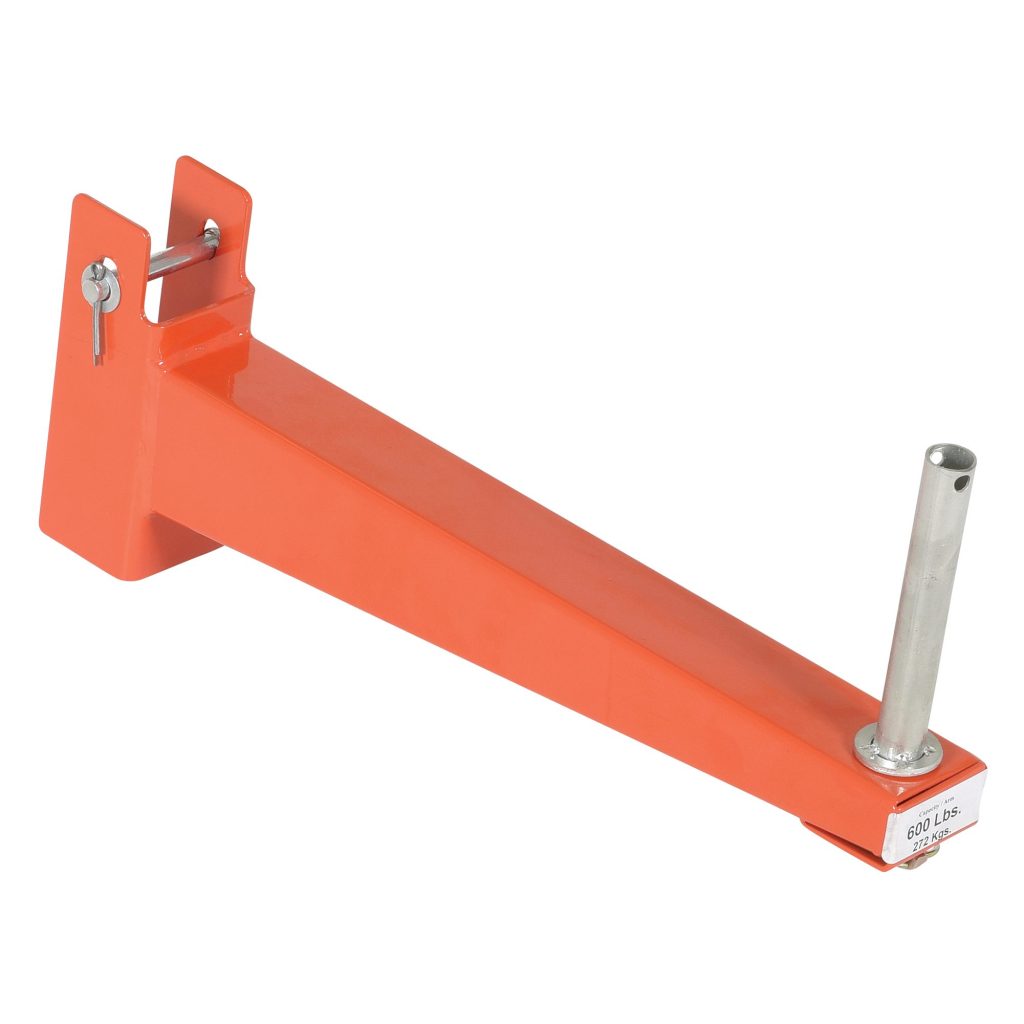
| Arms | Sixteen 36-in structural arms with a 4-in face (four per column) |
| Bracing | Three 72-in X-brace sets and six 72-in horizontals |
| Accessories | Twenty 18-in pipe stops |
| Scope | Material and freight; customer assembled |
Bar Rack or Cantilever Rack: The Decision on This Order
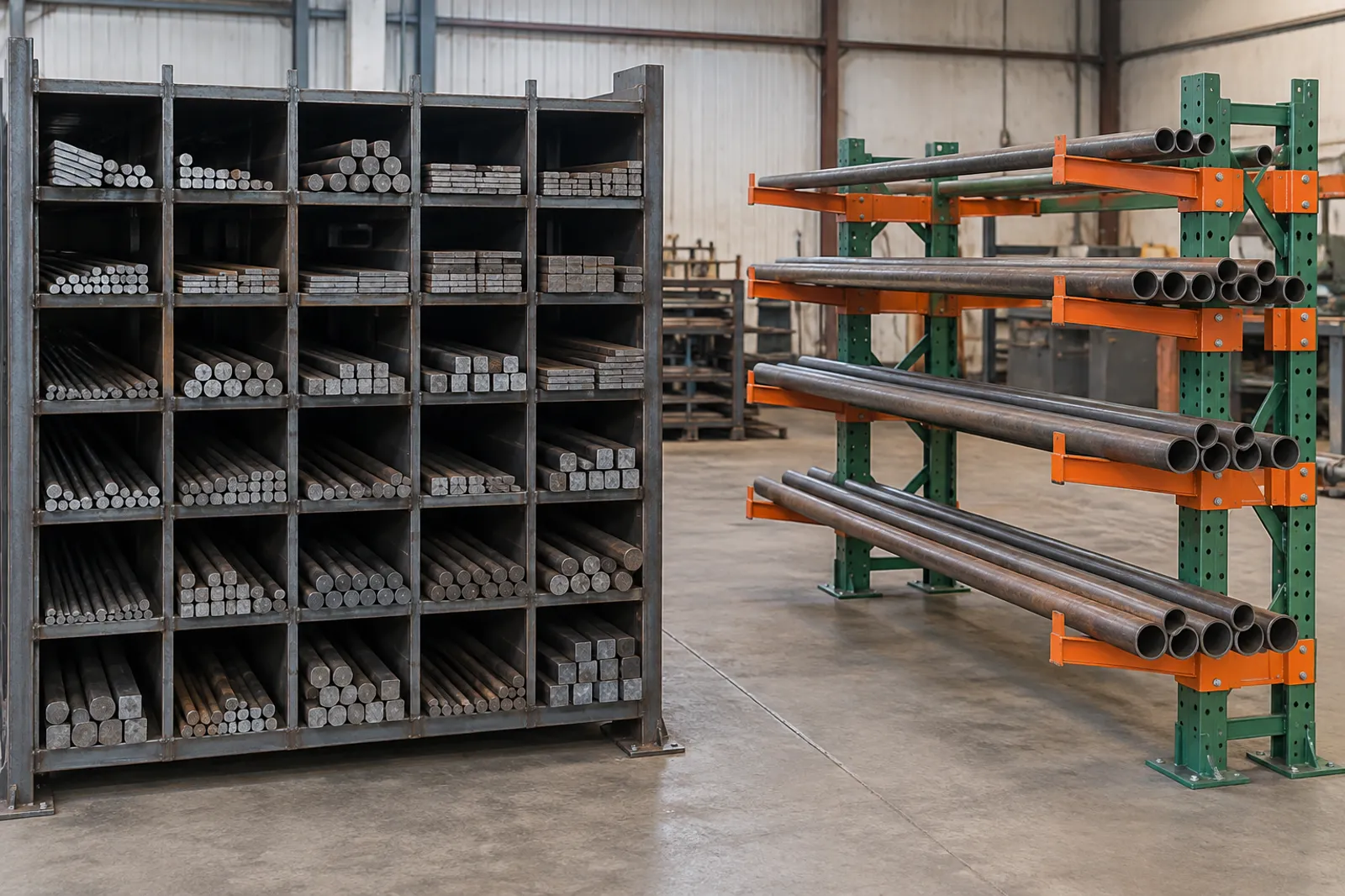
The first request on this project was for a bar rack. A heavy-duty bar rack is a steel frame divided into cubby-style openings, and each opening holds a stack of bars or tube loaded from the front. The quote was for a single-faced unit, meaning it loads from one side and can stand against a wall. Alongside it, the customer received a quote for a cantilever row: columns on long bases with arms reaching forward and nothing at the front of each level.
The day after the quotes went out, the customer signed the cantilever quote. When an automatic reminder to sign the bar rack quote went out the following week, they replied that it was the one they had decided not to go with. The correspondence does not record every reason for the choice, so we will not invent one. What we can do is set out the trade-offs that usually decide it, because this is one of the most common questions we get from machine shops, fabricators and metal buyers.
In short, bar rack is a sorting system and cantilever is a handling system. A bar rack is excellent when you have many small lots of different diameters or grades that need their own slot, and the material is short and light enough to slide in by hand. Cantilever is better when bundles are longer or heavier, when you want to set material down with a forklift or crane rather than feed it into an opening, and when you expect to change the layout later.
| Question | Bar rack | Cantilever rack |
|---|---|---|
| How material goes in | Slid into a fixed opening from the front | Set down onto open arms from the side |
| Best lot size | Many small lots, one size per opening | Fewer, larger bundles per level |
| Loading method | Mostly by hand | By hand, forklift or overhead crane |
| Long or heavy bundles | Limited by opening size and frame depth | Suited to it; arms are rated per arm |
| Changing the layout | Openings are fixed by the frame | Arms move up or down the column; bays can be added |
| Floor space | Compact, deep frame | Needs room for the base and a loading aisle |
| Typical fit | Sorting cut bar and small tube by size | Full-length tube, bar, pipe and bundles |
If your decision is between cantilever and conventional shelving or selective rack rather than bar rack, our cantilever rack vs pallet rack comparison covers that choice.
Sizing a Compact Cantilever Row for a Manufacturing Shop
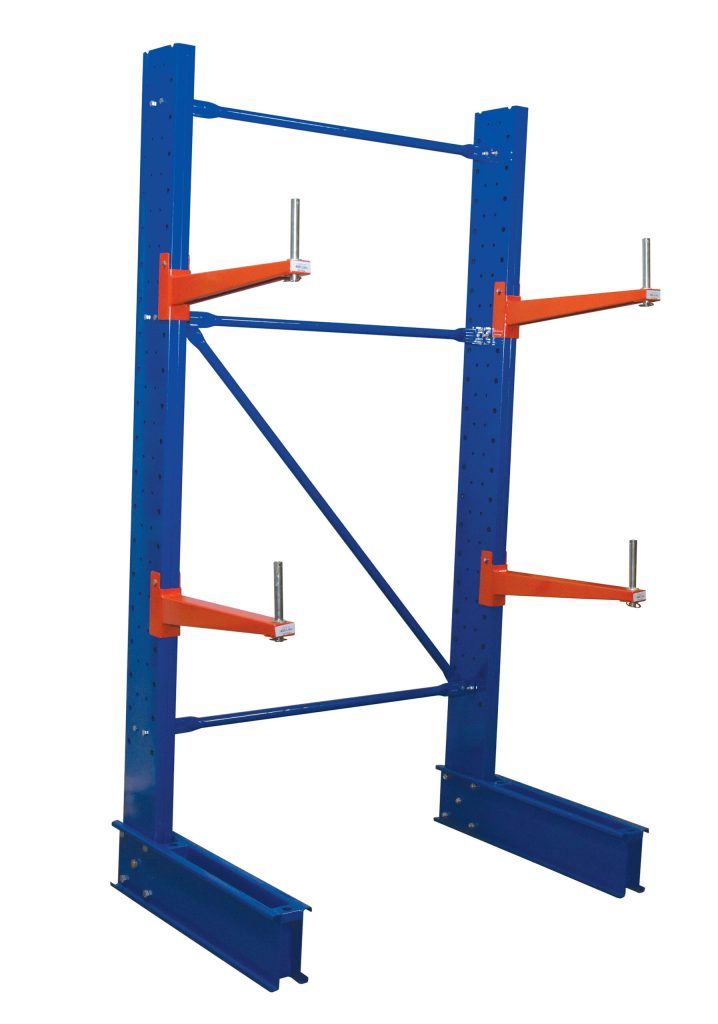
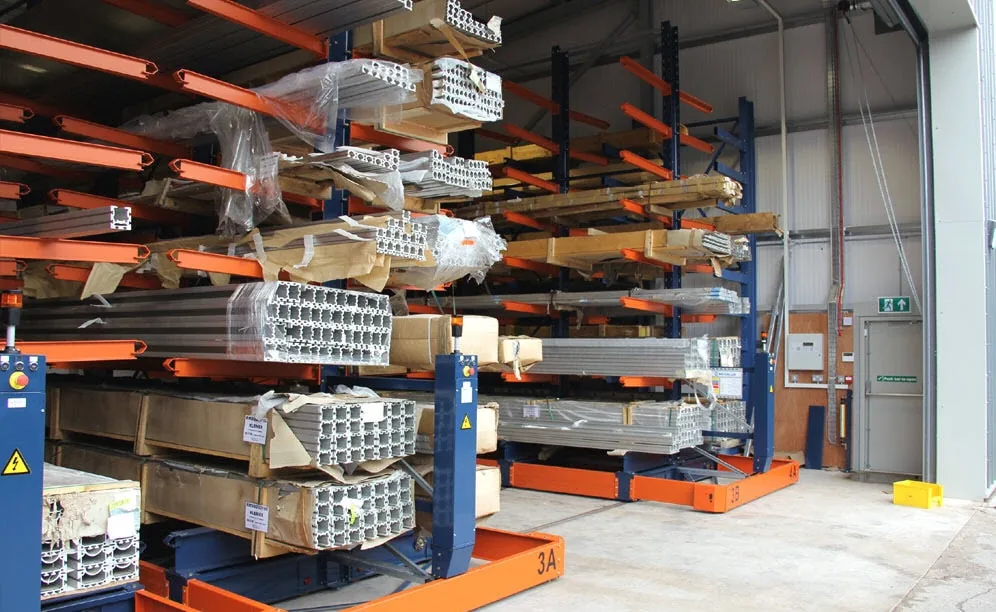
Most cantilever projects on this site are lumber yards and metals distributors with 12-ft to 16-ft columns. This one is deliberately small. The columns are 8 ft tall, the arms reach 36 in, and the bases are 36 in long. Four columns joined by three 72-in brace bays make a single row with four arm levels on each column. That is a size that fits inside a working plant without dominating it, and it can be loaded from the floor or with a small lift truck.
Three sizing relationships drove the order. First, arm length follows the depth of the material on each level. A 36-in arm carries a stack of tube or bar that is up to about three feet deep, and longer arms only add leverage on the column that the material does not need. Second, the base is matched to the arm. A 36-in base under 36-in arms keeps the loaded center of gravity over the base, which is the reason bases are specified by length in the first place. Third, the brace bay sets the column spacing. Bracing comes in fixed widths, so choosing 72-in X-braces and horizontals fixed the columns at 72 in apart.
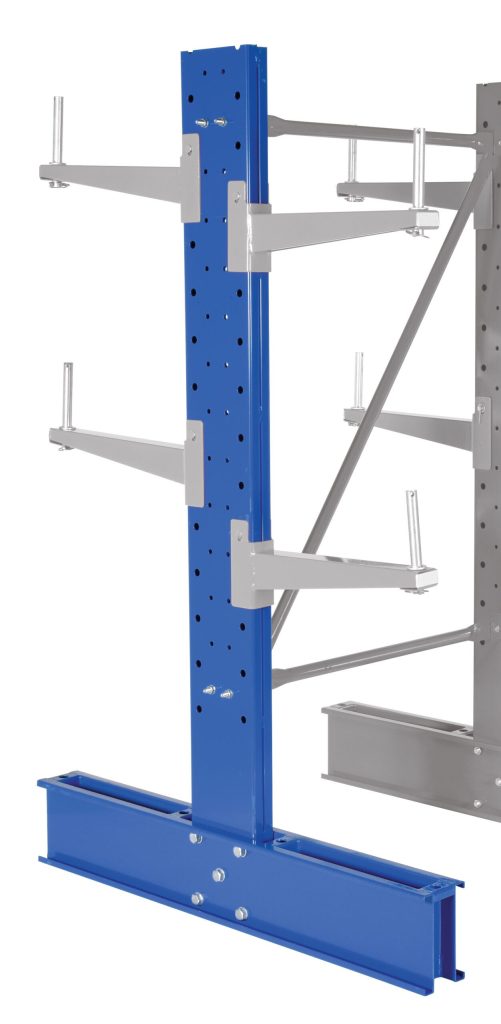
The column itself is a double-sided profile, but the order paired it with single-sided bases and armed one face, so the row works as a single-sided run.
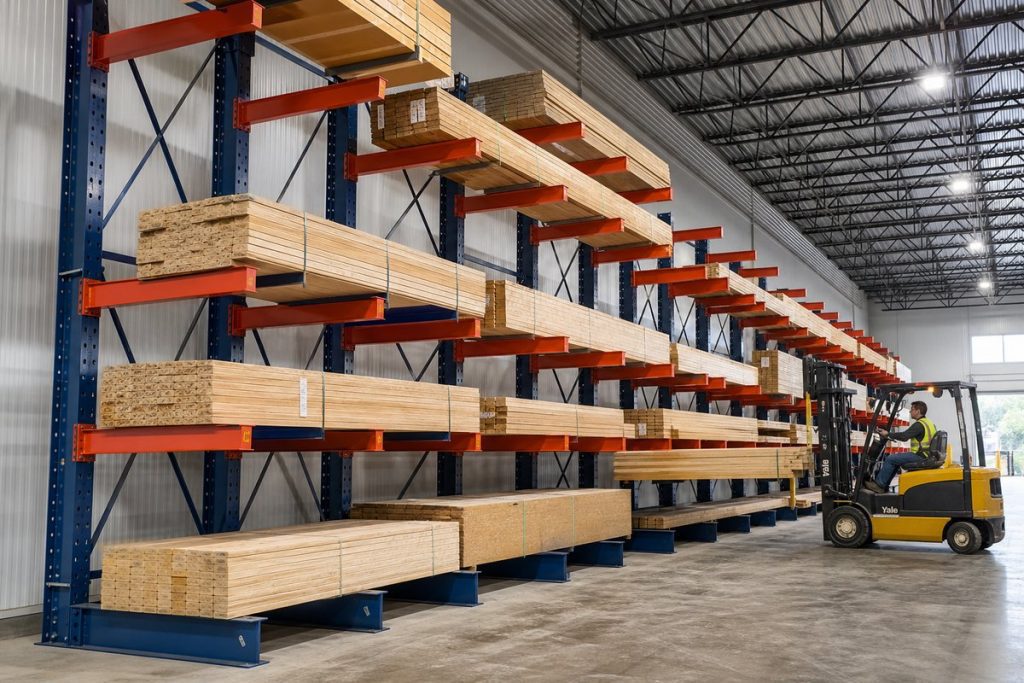
Column spacing is also chosen from the length of the stock. As a rule of thumb, long material should rest on at least two arms, and the overhang past the end arms should be no more than about half the column spacing, so flexible tube or bar does not sag at the ends. Before ordering, confirm the arm rating for the arm length you choose and compare it with your heaviest realistic load per arm. Our guide to cantilever arm capacity by arm length shows how that check works. The order documents on this project do not list arm ratings, so we do not quote one here.
Changes Before the Order Was Placed
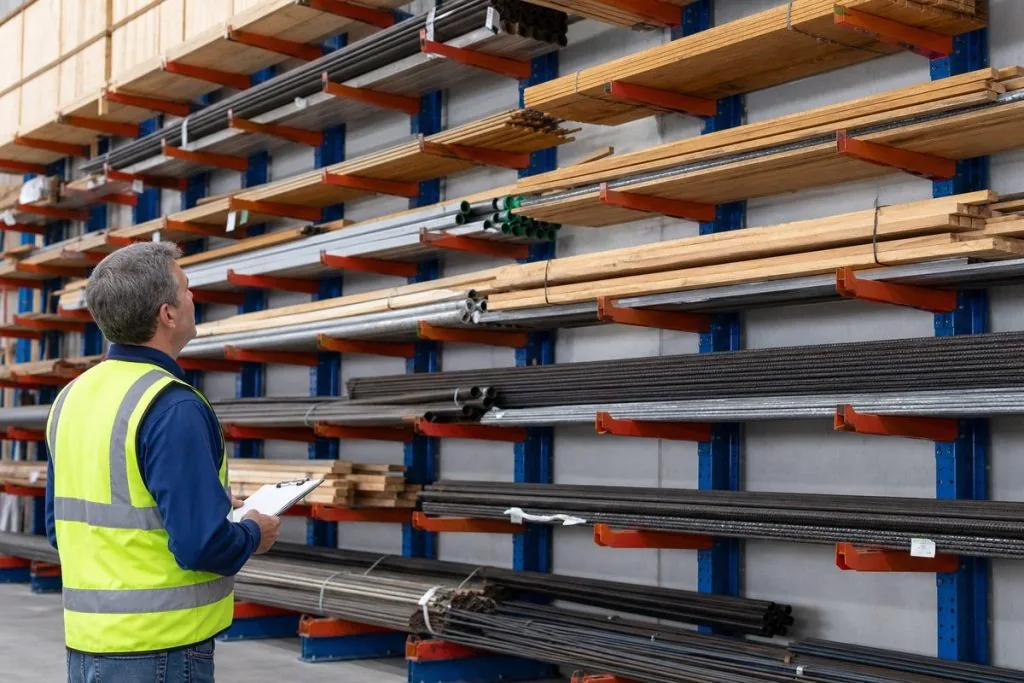
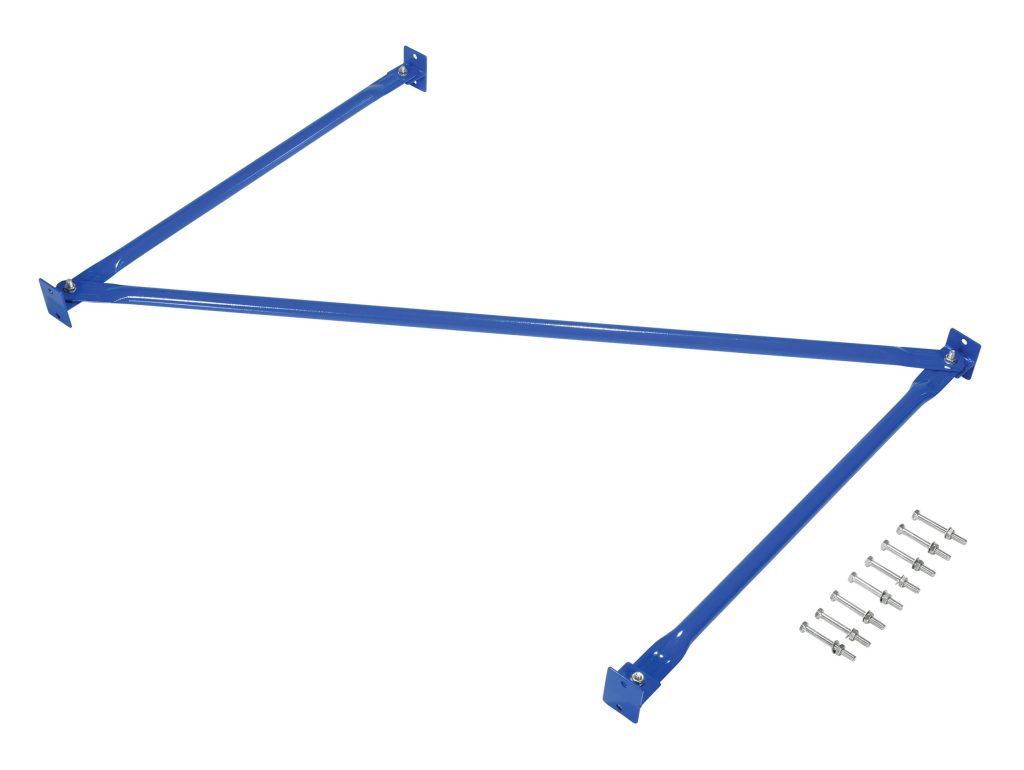
The first manufacturer quote for the cantilever row was built around 12 arms and 12 pipe stops, which is three arm levels on each of the four columns. Before the order was placed it grew to 16 arms, adding a fourth level on every column, and the pipe stop count rose to 20. The revised quote sent to the customer spelled out the 16 arms with the additional pipe stops.
Adding arms at this stage is the cheapest time to do it. Arms mount along the face of the column, so a fourth level only needed more arms and stops, not a different column or base. Changing your mind after delivery means a second freight shipment for a few small parts. If you are unsure how many levels you will use, count the lots you actually store, allow for growth, and ask for the extra arms in the first order.
The same revision corrected the freight. An earlier version of the quote showed freight as zero, which was an error, and the corrected quote showed the real figure. The customer noted the freight was significant. That is typical for cantilever: the parts are long, heavy steel, the manufacturer’s warehouse on this order was in Southern California, and the carrier charges for length as well as weight.
| Item | First manufacturer quote | As ordered |
|---|---|---|
| Columns | 4 | 4 |
| Bases | 4 | 4 |
| Arms | 12 (three levels) | 16 (four levels) |
| X-brace sets / horizontals | 3 / 6 | 3 / 6 |
| Pipe stops | 12 | 20 |
Freight on this order moved as one bundle of about 1,454 lb, roughly 8 ft long. The carrier added a delivery appointment and an excessive-length charge. Bundles at 8 ft and above commonly trigger that charge on less-than-truckload freight, so it is worth asking about it when you compare quotes, especially for taller columns.
Pipe Stops: Keeping Round Stock on the Arms
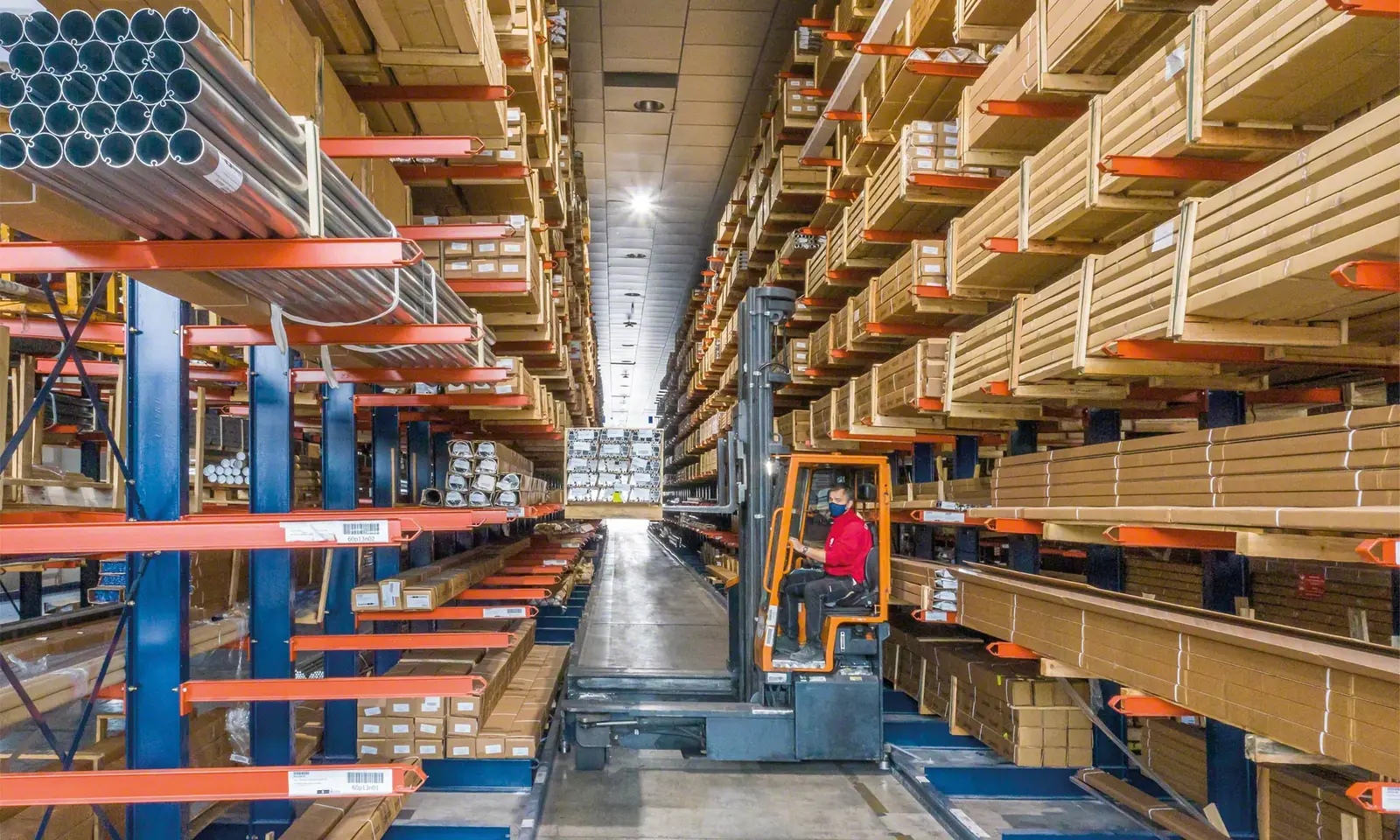
A pipe stop is a short upright post that bolts near the tip of a cantilever arm. Round tube, pipe and bar want to roll, and on a flat arm the only thing holding them back is friction. The stop gives the stack a positive edge at the front of the arm. This order used 18-in stops, tall enough to retain a stack several layers deep on a 36-in arm.
The count is worth a look. Sixteen arms, twenty stops. One stop per arm covers every level, and the extra four give spares for arms added later or stops damaged by a forklift. Stops are small parts that are easy to lose track of and annoying to reorder on their own, so ordering a few extra is a sensible habit.
Pipe stops are not the only option. Inclined arms tilt the load back toward the column, and some shops use both. Stops are simpler to add to straight arms after the fact and keep the arm surface flat for square or flat stock that might share the rack. For a larger round-stock example with structural arms, see our fence post and pipe cantilever project in Murray, and for general guidance see cantilever racking for pipe and tubing.
Pick the stop height
Taller than half the height of the stack you will load.
One per arm, plus spares
Every loaded arm carrying round stock needs its stop.
Bolt it near the tip
Leave the full arm depth usable behind it.
Load from the column out
Set stock against the column first so the stop is a backup, not a brake.
Receiving the Order and Checking Every Part

The rack left the manufacturer’s Moreno Valley, California warehouse in mid-March 2024 and was delivered to Terra Diamond three days later by appointment. The customer handled assembly. Our sales team sent the manufacturer’s assembly instructions along with a plain parts list: four 96-in columns, four 36-in bases, sixteen 36-in arms, three 72-in X-brace sets, six 72-in horizontals and twenty pipe stops.
That list paid for itself the same afternoon. The customer’s team counted the parts and found the pipe stops were five short. The box was marked with a quantity of 15 and 5 pending, meaning the manufacturer had shipped what it had and backordered the rest. Because the count happened before assembly, the shortage was reported right away and we took it up with the manufacturer, rather than being discovered with the rack half loaded.
This is the most useful habit to copy from the whole project. Short or backordered small parts are common on rack orders, and a box label is easy to miss.
| Receiving step | What to check |
|---|---|
| Before the truck arrives | Forklift or enough people ready; an 8-ft bundle cannot be hand-carried safely |
| At delivery | Count bundles and look for damage; note any damage on the delivery receipt |
| Before assembly | Count every part against the parts list, including hardware and accessories |
| Box labels | Look for backorder or “pending” quantities and report them the same day |
| After assembly | Confirm columns are plumb, braces tight and every arm locked in |
Anchoring and Safety for an Indoor Cantilever Row
A small cantilever row still needs to be anchored. The loads on cantilever arms push the column forward, and the base and its anchors are what resist that. Indoors, bases are anchored to a sound concrete slab with anchors sized for the rack, not to asphalt or a thin topping. The brace sets tie the columns together along the row, so they go in as the columns are stood up, not at the end.
Along the Wasatch Front, seismic design matters even for modest racks. Design, testing and use of industrial steel cantilever racks is covered by ANSI MH16.3, and storage must be stable and secure against sliding or collapse under OSHA 29 CFR 1910.176. Our guide to cantilever rack installation in Utah covers permits, anchoring, assembly order and inspection in more detail.
Day to day, the rules are simple: load the heaviest material low, keep the weight on each arm under its rating, load both ends of a bundle across at least two arms, and never climb the arms.
What This Project Shows
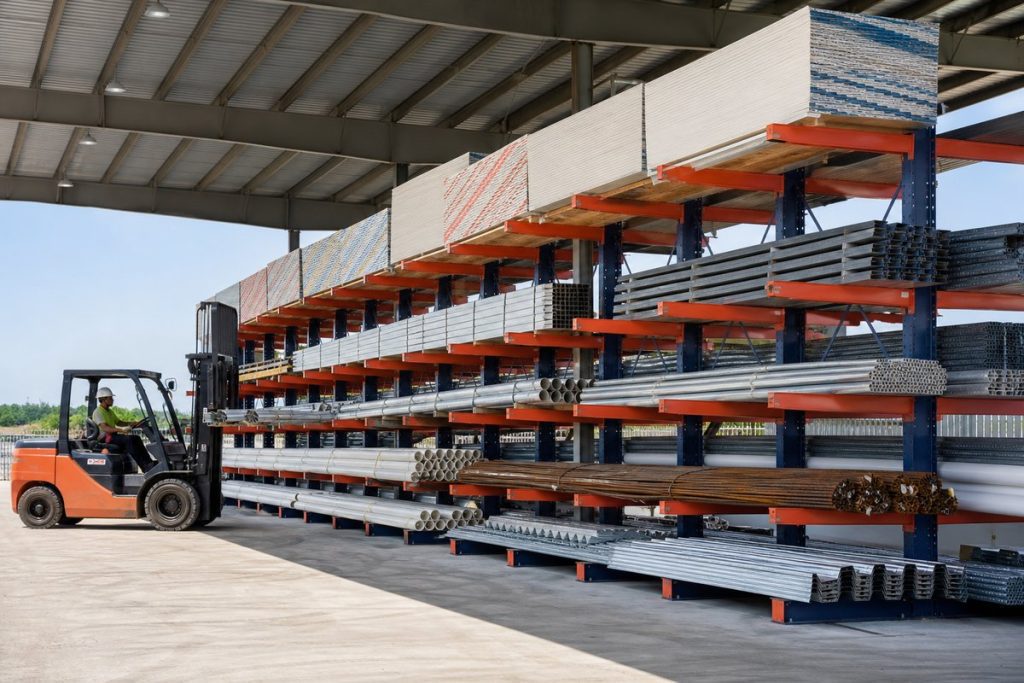
A compact cantilever row can be the right answer for a manufacturer even when a bar rack is also on the table. This order shows the pieces that matter: a clear comparison of the two systems before buying, arms and bases matched to the depth of the stock, a fourth arm level added while it was still cheap to do, pipe stops counted with spares, freight understood before signing, and a parts check that caught a backorder before assembly.
If you run a machine shop, fabrication shop or manufacturing plant in Salt Lake City, Provo, Ogden or anywhere in Utah, tell us what you store, the longest and heaviest pieces, and how you load them. We can quote bar rack and cantilever side by side, as we did here. You can also browse cantilever racking for metal and steel, our full range of cantilever rack systems, and Utah pallet rack. For help with a layout, our rack design services team can start from your material list.
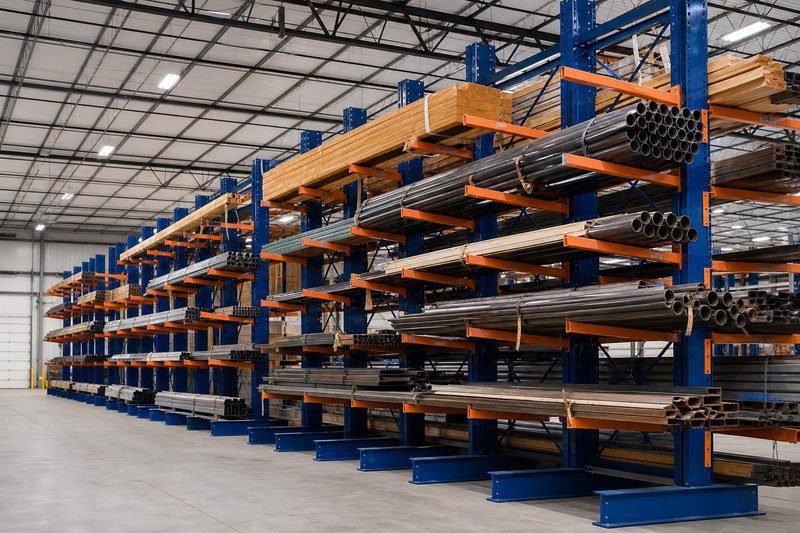 Cantilever Rack in Salt Lake CitySupply, delivery and installation along the Wasatch Front.
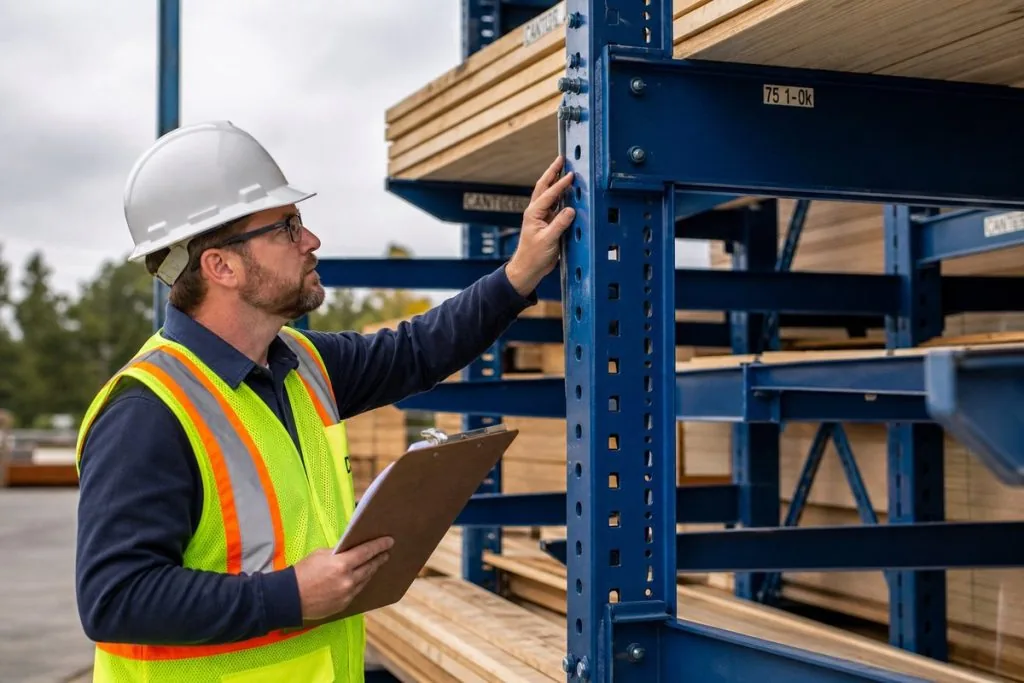 Cantilever Rack SystemsColumns, arms, bases and bracing for long material storage.
 Pallet Rack SystemsSelective pallet rack, beams and wire decking for palletized loads.
Cantilever Rack vs Bar Rack FAQs
Should I buy a bar rack or a cantilever rack for tube and bar stock?
How tall can a small cantilever rack be?
How long should cantilever arms and bases be?
How many pipe stops do I need?
Can I add arms to a cantilever rack later?
Why is freight on cantilever rack expensive?
Does Material Handling USA supply cantilever rack in Salt Lake City?
Comparing Cantilever and Bar Rack for Your Shop?
Tell us what you store, the longest and heaviest pieces and how you load them. We will quote the options side by side and size columns, arms, bases and accessories. Call 801-328-8788.