For any small business manager or buyer, the shipping supplies you choose are more than just boxes and tape—they represent the first physical interaction a customer has with your brand after a purchase. Getting this right is the bedrock of your customer experience and daily operational efficiency. The right packaging ensures products arrive intact, reinforces your brand's commitment to quality, and prevents the headache of costly returns.
This guide is your roadmap to building a fulfillment strategy that not only protects your goods but also supports your business's growth.
Building Your Fulfillment Foundation
Selecting your shipping supplies is one of the most critical decisions for your operation. It directly impacts your bottom line, influences customer satisfaction, and shapes your brand's perception. A smart strategy goes beyond simply finding the cheapest box; it's about creating a reliable system that works for you today and can scale as your business expands.
The first step is understanding the difference between packaging and a complete shipping solution. While packaging contains the product, your shipping supplies are the armor that protects it throughout its entire journey. You can learn more about these critical differences in our detailed guide: https://www.mh-usa.com/the-difference-between-packaging-supplies-and-shipping-supplies/.
Why Your Supply Choices Matter
The right materials do more than just prevent a cracked coffee mug or a bent art print. They create a smooth workflow in your packing area and can even trim your shipping costs. When you have the right tools ready—from the perfect-sized mailer to reliable tape and clear labels—your entire operation moves faster.
The e-commerce boom has put a spotlight on the need for solid shipping solutions. The global market for these supplies hit a staggering $61.5 billion in 2024 and is on track to reach $95.3 billion by 2033. This growth shows how vital a well-oiled fulfillment operation is for small businesses competing online.
Part of that foundation is choosing the right label printing machines for your business, a move that can seriously boost your efficiency and professionalism. Having the right equipment on hand means no more last-minute delays and ensures every package leaving your facility looks sharp and is ready for transit.
At Material Handling USA, we provide the expertise to help you build your entire shipping operation from the ground up. If you need assistance designing an efficient packing station or determining the best materials for your products, our team is here to help. Contact us today for a free layout and design consultation with no obligation.
Choosing Your Primary Packaging
Your first, and arguably most important, decision is what you put your product in. This isn't just about picking a box; it's a choice that directly shapes product safety, shipping costs, and your customer's perception the moment the package arrives. Getting this right prevents damage and keeps shipping fees in check.
Think of this decision as the foundation of your fulfillment strategy. It's the starting point that must balance your operational efficiency with the customer’s unboxing experience.
This diagram shows just how critical your shipping supplies are—they are the base layer supporting both your internal operations and the experience you deliver to your customers.
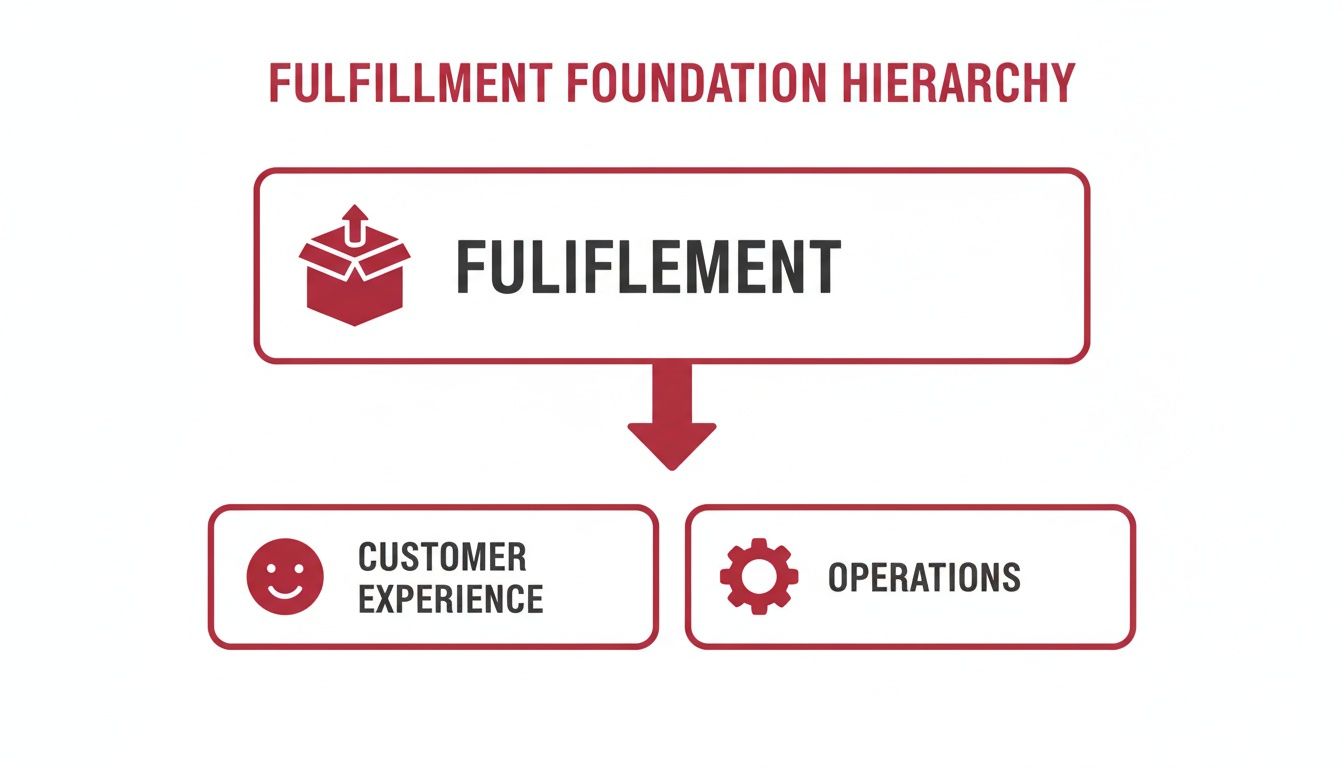
As you can see, a solid fulfillment plan supports every part of your business, from an efficient warehouse to a satisfied customer who is likely to order again.
Corrugated Boxes: The Industry Standard
When you picture shipping, you are probably thinking of a corrugated box. And for good reason. Made with a fluted paper layer pressed between two flat linerboards, these boxes are the workhorses of the shipping world. They are strong, versatile, and cost-effective.
But not all cardboard boxes are the same. The key is matching the box's strength to your product’s weight and fragility.
- Standard Boxes: These are your go-to for most everyday items, like clothing, home goods, or anything not particularly delicate. They are lightweight and economical, perfect for products that do not need maximum protection.
- Heavy-Duty Boxes: If you are shipping fragile electronics, heavy parts, or bulk items, you need to upgrade. These boxes often have double or even triple-wall construction, giving them superior crush resistance and the strength to be stacked high.
Picking the right size is just as vital as picking the right strength. A box that’s too big is a common mistake. You end up paying for extra void fill and, even worse, getting hit with higher dimensional weight fees from carriers. For a closer look at your options, our guide to wholesale corrugated boxes and bulk shipping solutions is a great place to start.
Lightweight and Flexible Mailers
For smaller, lighter, or less fragile goods, mailers are a fantastic alternative. They cost less to purchase and ship, take up less storage space, and can seriously speed up your packing line.
Poly Mailers are the top choice for apparel, textiles, and other soft goods. They are made from durable, water-resistant polyethylene that protects products from moisture and tearing while keeping postage costs low.
Bubble Mailers offer a built-in layer of cushioning. They are perfect for items that need more padding, like jewelry, books, or small electronics, without the bulk and expense of a box.
Stay-Flat Mailers (or rigid mailers) are made from stiff paperboard to prevent bending. They are the best choice for shipping important documents, photographs, art prints, or anything else that must arrive without a crease.
Selecting the right primary packaging is a strategic move. A well-chosen box or mailer not only prevents damage but also optimizes freight costs by minimizing dimensional weight, directly impacting your profitability on every order.
A Quick Guide to Primary Packaging Choices
Making the right call often means balancing protection against cost. Use this table to match your product's needs with the best packaging type.
| Packaging Type | Best For | Key Benefit | Material Handling USA Solution |
|---|---|---|---|
| Standard Box | Clothing, books, durable goods | Versatile and cost-effective for a wide range of products | Standard Corrugated Boxes |
| Heavy-Duty Box | Electronics, glass, heavy items | Superior crush resistance and stacking strength | Heavy-Duty Corrugated Boxes |
| Poly Mailer | Apparel and soft goods | Lightweight, flexible, and water-resistant | Poly Mailers |
| Bubble Mailer | Jewelry, small electronics | Built-in cushioning protects against minor impacts | Padded & Bubble Mailers |
| Stay-Flat Mailer | Documents, photos, art prints | Rigid construction prevents bending and creasing | Rigid & Stay-Flat Mailers |
This decision matters more than ever. The global shipping supplies market was valued at $25.3 billion in 2023 and is projected to skyrocket to $38.7 billion by 2032. This explosive growth shows just how crucial these staples are for businesses like yours trying to keep up with increasing order volumes.
Ultimately, your packaging is the very first physical item a customer touches after they have trusted you with their money. The right box or mailer sends a clear message that you care about quality, down to the last detail. If you need help determining the perfect fit for your products, our experts are here to help.
Securing and Protecting Your Shipments
Once your product is in its primary box or mailer, the journey begins. Now, it is all about ensuring that package can withstand the unpredictable transit process. This is where cushioning, sealing tape, and reinforcement come into play. Think of these materials as your insurance policy against the bumps, drops, and tumbles that happen between your warehouse and your customer's doorstep. Getting this right prevents costly damages and frustrating returns.
Mastering Cushioning and Void Fill
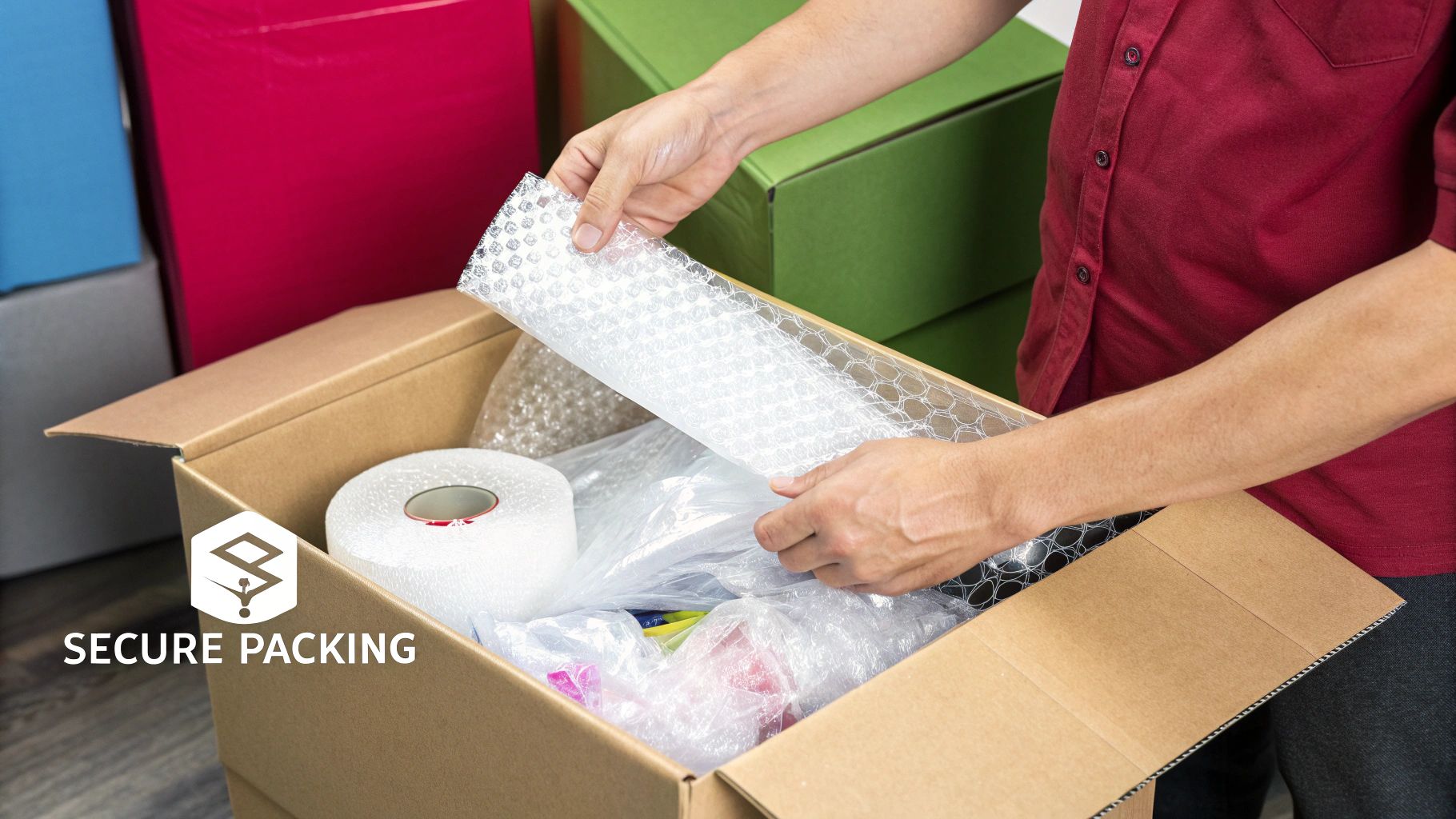
Empty space inside a shipping box is your worst enemy. It gives your products room to shift, slide, and collide, which is how most damage occurs. The goal of cushioning, also known as void fill, is not just to take up space—it is to create a protective cradle that absorbs shock and keeps your product completely immobilized.
Different products demand different kinds of protection. Here are a few of the most reliable options for small businesses:
- Bubble Wrap: A classic for a reason. Bubble wrap provides an excellent air-filled barrier against impact, making it perfect for fragile items. It is lightweight, flexible, and ideal for wrapping individual products.
- Air Pillows: These are your go-to for filling larger gaps inside a box. Because they are mostly air, they are incredibly lightweight and will not drive up your shipping costs. They work best to brace items and stop movement.
- Packing Peanuts: For oddly shaped items, packing peanuts are perfect for filling all the small, irregular voids around them. They interlock to form a dense cushion that stops products from sinking to the bottom of the box.
Choosing the right cushioning is a balancing act between protection, weight, and cost. If you're looking to explore a wider range of options, you can find more details on our selection of bulk bubble wrap and protective packaging supplies.
Sealing the Deal with the Right Packing Tape
A box is only as secure as its seal. Skimping on tape is a common mistake that can lead to packages bursting open mid-transit, exposing your products to damage or theft. Not all tapes are the same, and knowing the difference is critical.
For most small businesses, the decision usually comes down to three main types:
| Tape Type | Adhesive Strength | Best For | Key Considerations |
|---|---|---|---|
| Acrylic Tape | Good | General-purpose, lightweight boxes under 40 lbs | Performs well in a wide range of temperatures. |
| Hot Melt Tape | Very Good | Medium-weight boxes, high-volume packing | Strong initial tack, ideal for automated dispensers. |
| Water-Activated Tape | Excellent | Heavy or high-value shipments, dusty environments | Creates a permanent, tamper-evident bond with the box. |
For most standard corrugated boxes, a quality acrylic or hot melt tape will do the job. But if you are shipping heavier loads or high-value items, water-activated tape (often called gummed tape) is the champion of security. It forms a physical bond with the cardboard, making the seal as strong as the box itself.
Your choice of tape should directly correspond to the weight of your package and the conditions it will face. Investing in the right tape is a small price to pay to ensure your package arrives intact and secure.
Reinforcing Bulk Shipments with Strapping
When you graduate from shipping individual boxes to sending out palletized loads, you need to bring in heavier-duty solutions. Strapping holds bulk shipments together, preventing stacks of boxes from shifting or toppling during transit.
For most light to medium-duty jobs, polypropylene (poly) strapping is the most common and economical choice. It is flexible, easy to work with, and perfect for bundling boxes or securing a stable pallet load. For heavier or less stable loads, polyester strapping offers superior tensile strength and rigidity to keep everything locked down.
By properly cushioning, sealing, and reinforcing your shipments, you create a complete protective system. This thoughtful approach minimizes risk and ensures your products arrive exactly as you intended. Ready to upgrade your security supplies? Request a Quote or call us at (800) 326-4403 to discuss your needs.
Streamlining Your Packing Workflow
Having the right shipping supplies for your small business is only half the battle. How you organize them determines whether your fulfillment process is a well-oiled machine or a daily bottleneck. An efficient packing workflow is the secret to scaling your shipping operations without chaos, turning your stockroom into a high-performance fulfillment center.
This is not just about moving faster. It is about building a repeatable, scalable system that reduces errors, minimizes wasted motion, and ultimately saves you money.
Designing an Ergonomic Packing Station
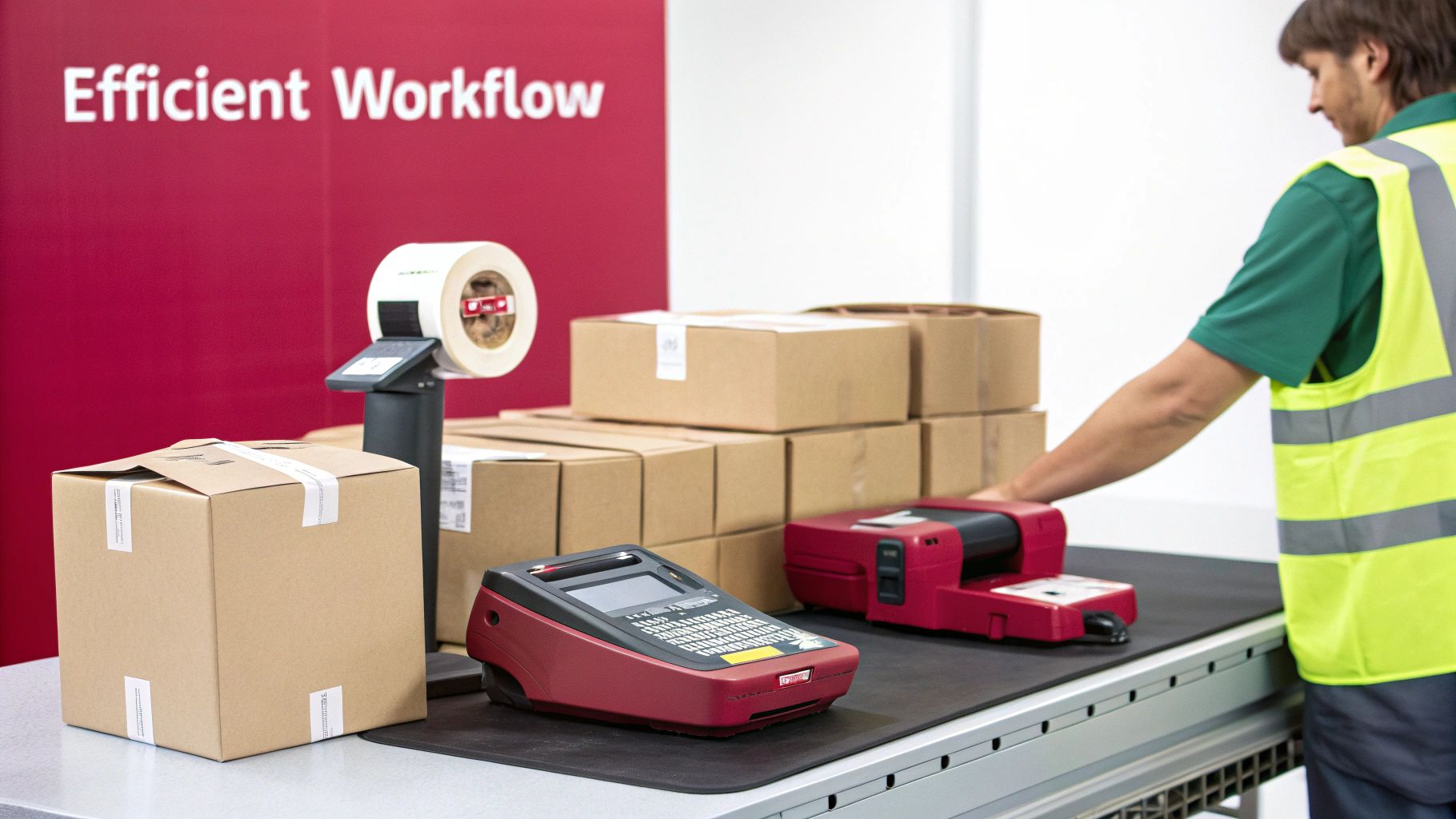
The heart of your workflow is the packing station. A poorly designed setup forces employees to constantly bend, stretch, and hunt for tools, which leads to fatigue and costly mistakes. An ergonomic layout keeps everything within easy reach to maximize both speed and accuracy.
A well-designed station includes:
- Ample Surface Area: A large, clear workbench at a comfortable height is essential.
- Accessible Supplies: Keep your most-used boxes, mailers, and void fill on shelves directly above or below the workstation.
- Integrated Tools: Position scales, tape dispensers, and label printers within arm's reach to eliminate unnecessary steps.
This thoughtful arrangement creates a natural rhythm, allowing your team to pack orders consistently and efficiently. Even small tweaks can have a massive impact on your daily output.
Implementing Efficient Packing Processes
Beyond the physical layout, your packing process itself offers huge opportunities for improvement. Instead of treating each order as a unique task, you can create systems that make fulfillment predictable and smooth. One of the most effective strategies is batching.
Batching is grouping similar orders together and processing them all at once. For example, you could pack all orders that use the same box size or contain the same single item in one go.
By batching similar tasks, you create an assembly-line effect. Your team can build momentum, moving from one identical order to the next without having to constantly switch gears, find different supplies, or rethink their process.
This simple change dramatically reduces the mental and physical effort required for each package. It establishes a consistent rhythm that is crucial for maintaining quality and speed as your order volume grows.
Checklist for a High-Efficiency Workflow
Optimizing your workflow does not require a massive overhaul. Start with these simple, actionable steps to see immediate improvements.
- Map the Flow: Walk through the entire process from picking an item to sealing the box. Identify and eliminate any backtracking or redundant movements.
- Organize by Frequency: Place your most frequently used shipping supplies for small business in the most accessible locations. Your top three box sizes should be easier to grab than sizes you only use once a week.
- Create Packing Kits: For products you ship often, pre-assemble "kits" with the correct box, void fill, and any necessary inserts. This saves valuable time during peak hours.
- Keep it Clean and Stocked: A cluttered workspace is an inefficient one. Implement a "clean as you go" policy and assign someone to restock stations at the end of each shift.
A streamlined workflow does more than just get packages out the door faster. It reduces employee stress, cuts down on packing errors, and lays the groundwork for sustainable growth.
If you are ready to transform your packing area into a model of efficiency, we can help. Our experts provide free layouts and designs with no obligation. Contact Us or call (800) 326-4403 to learn how a thoughtful layout can boost your productivity.
Adopting Sustainable Shipping Practices
Your packaging is often the first physical touchpoint a customer has with your brand. In a world where buyers are more environmentally aware, the choices you make here speak volumes. Shifting to sustainable shipping is a smart way to connect with your audience, cut down on waste, and often, use materials more efficiently.
This move toward sustainability is completely changing the game for shipping supplies for small business. The global sustainable packaging market is projected to hit $126.50 billion in 2025 and $240.52 billion by 2034. It's easy to see why when 65% of companies say they are going green to meet customer demands and regulations, which ends up slashing waste and long-term costs.
Practical and Protective Eco-Friendly Alternatives
Going green does not mean sacrificing protection. Today's sustainable shipping supplies are engineered to be as tough and reliable as traditional options. You get the product security you need while aligning with the values your customers care about.
Here are a few easy wins:
- Recycled Corrugated Boxes: Made from post-consumer materials, these boxes deliver the same strength you rely on but with a significantly smaller environmental footprint.
- Biodegradable Packing Peanuts: Unlike styrofoam, these are usually made from cornstarch and dissolve in water, leaving no toxic residue.
- Paper-Based Void Fill: Materials like crinkled kraft paper or honeycomb paper wrap are fantastic, plastic-free replacements for bubble wrap and air pillows.
Building a Greener Shipping Strategy
Weaving sustainability into your shipping process is a strategic move. It sharpens your brand reputation and can boost operational efficiency, showing customers you are a responsible business. This can be a real competitive edge. If you are serious about this, a great first step is researching the best eco-friendly shipping supplies to see what innovative materials are available.
Adopting sustainable practices often encourages a "less is more" mindset. By right-sizing packages and choosing versatile materials, businesses not only reduce their environmental impact but also minimize material waste and shipping costs.
This is not just about the planet; it is about running a leaner, smarter operation. At Material Handling USA, we carry a wide range of sustainable options to help you build a greener shipping strategy without compromising on quality. Our team can point you toward the right eco-friendly solutions that fit your products and your budget.
Ready to make your shipping more sustainable? Request a Quote to explore our eco-friendly product lines, or call us at (800) 326-4403 for a personalized consultation.
Your Partner in Scalable Shipping
Getting your shipping strategy right comes down to three things: picking the right materials, creating an efficient workflow, and having a reliable partner you can count on. When you choose the correct packaging and ensure your shipments are secure, you are doing more than just sending a product—you are protecting your bottom line and your reputation.
By optimizing the layout of your packing station and your processes now, you are setting the entire operation up for scalable growth. This guide has laid out the blueprint for a stronger fulfillment system. Now, we want to help you build it.
From Blueprint to Reality
Whether you need to restock essential shipping supplies for your small business or you are looking for expert advice on a more efficient warehouse layout, our team is here to help. We understand that growth requires a partner who can keep up, offering both the products and the know-how to support you.
A reliable supply partner is more than a vendor. They are an extension of your operations team, giving you the tools and support you need to scale up without hitting roadblocks or letting customers down.
Our commitment is simple: provide quality materials at competitive prices, all backed by the fastest shipping and delivery in the industry. This allows you to run a much leaner inventory, freeing up cash and warehouse space without the stress of running out of critical supplies. We help you turn an operational expense into a strategic advantage.
We believe in building partnerships, not just making sales. That is why we offer free layouts and designs with no obligation to help you visualize a more productive workspace. Let our experts show you how to improve your workflow before you spend a dime.
Take the Next Step Today
You have the knowledge and the vision. Let Material Handling USA provide the tools and support to make it happen.
Contact Us for a free, no-obligation quote and see how our competitive pricing and industry-leading shipping speed can elevate your entire operation. For immediate assistance, call us at (800) 326-4403.
Frequently Asked Questions About Shipping Supplies
Sourcing, inventory control, and keeping costs in check are a constant balancing act. Let’s tackle some of the most common hurdles managers and buyers face with their shipping supplies.
How Can My Small Business Save Money on Shipping Supplies?
Saving money is not just about finding the cheapest box. A smart strategy is about reducing the total cost to get a package out the door. This means looking at your materials, the labor it takes to pack, and the final shipping fees together.
You can make an immediate impact by focusing on three key areas:
- Right-Size Your Packaging: The most overlooked cost in shipping is often dimensional weight. When you use a box that is even an inch too big, you are paying to ship air. Always match your box as closely as possible to your product to avoid expensive carrier surcharges.
- Buy Key Items in Bulk: Pinpoint the supplies you use fastest, like your top two or three box sizes and packing tape. Buying these items in larger quantities lowers your per-unit cost, adding up to significant savings over the year.
- Find a Fast, Reliable Supplier: Partnering with a supplier who offers competitive pricing and the fastest shipping in the industry is a game-changer. It lets you keep less inventory on hand, which frees up both cash and valuable warehouse space.
What is the Best Way to Manage My Supply Inventory?
Good inventory management is about avoiding two problems: running out of a crucial box size during a sales rush and tying up cash in materials you do not need yet. You need to find a balance.
A great first step is setting reorder points for your most important items. A simple spreadsheet can track your usage and tell you when it is time to buy more. For example, once your stack of 8x6x4 boxes gets down to 50 units, that is your trigger to place a new order.
This is where your supplier's speed and reliability become a massive asset. When you work with a partner known for the fastest shipping and delivery, you can run a much leaner operation. You can keep less stock on hand with confidence, knowing that replacements will arrive right when you need them.
Is It Better to Use One Supplier or Multiple Vendors?
While it might seem smart to shop around for the lowest price on every single item, this approach often has hidden costs. Juggling multiple vendors means more paperwork, more purchase orders to track, and separate shipping fees that can wipe out any savings.
Consolidating with a single, comprehensive supplier like Material Handling USA simplifies your entire purchasing process and comes with distinct advantages:
- Consistent Quality: You know what you are getting. All your materials will meet the same high standard every time.
- Simplified Ordering: One order, one invoice, one point of contact. It saves a significant amount of administrative time.
- Expert Advice: A single partner gets to know your business. They can offer tailored recommendations that actually help your operation.
This kind of partnership provides value that goes beyond the products themselves. It gives you a reliable resource invested in helping your operation run smoothly.
Ready to stop juggling vendors and partner with a supplier that offers competitive pricing, expert advice, and the fastest delivery in the industry? The team at Material Handling USA is here to help. Contact Us for a free quote or give us a call at (800) 326-4403 to discuss your shipping supply needs today.