The Complete Guide to Industrial Security Cages
Whether you’re securing a warehouse, protecting pharmaceutical inventory, or building a compliant evidence room, choosing the right security cage system is critical. This guide covers everything you need to know — from cage types and materials to sizing, compliance, and installation — so you can make a confident purchasing decision.
Types of Security Cages & Wire Partitions
Industrial security enclosures come in several configurations, each designed for specific environments and security requirements:
Wire Mesh Security Cages
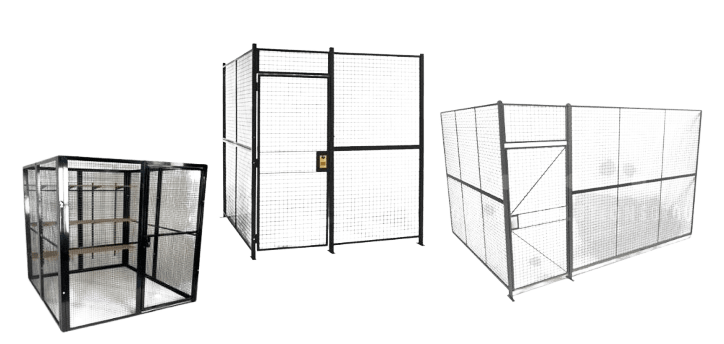
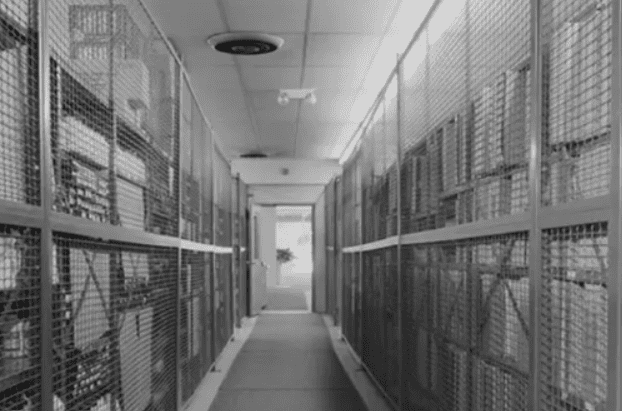
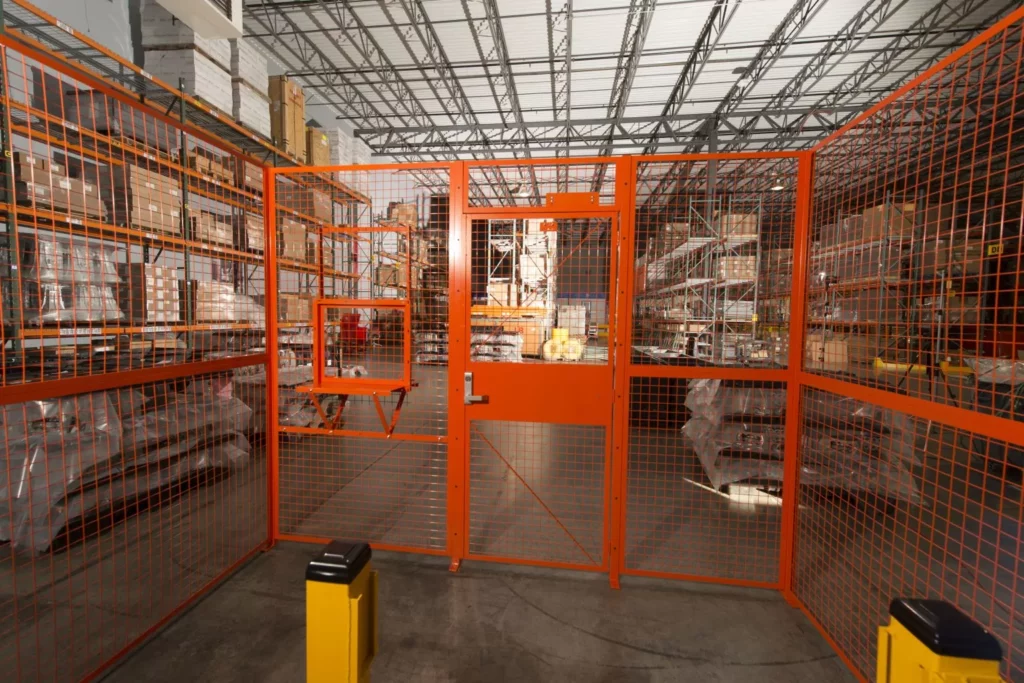
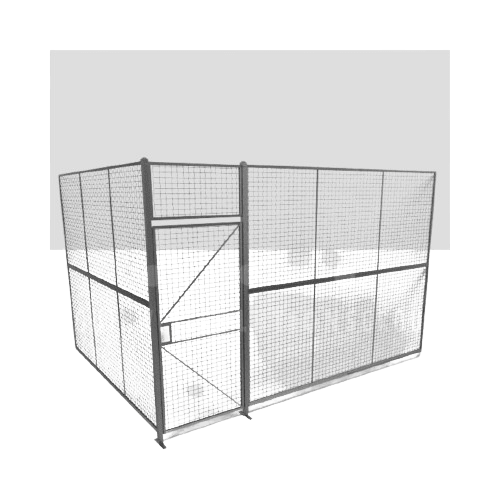
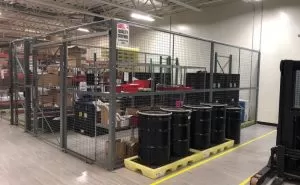
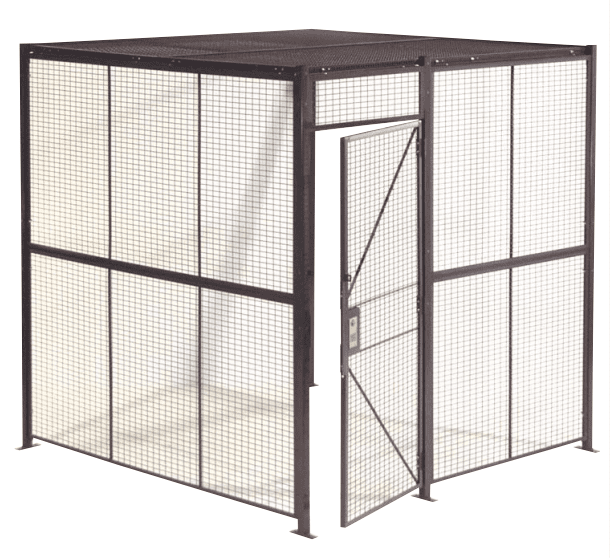
The most common type of warehouse cage. Welded wire mesh panels (typically 10-gauge) mounted on universal posts create secure enclosures with full visibility. Ideal for inventory protection, tool cages, and restricted-access zones. Available as floor-mounted or ceiling-hung configurations.
Wire Mesh Partitions & Room Dividers
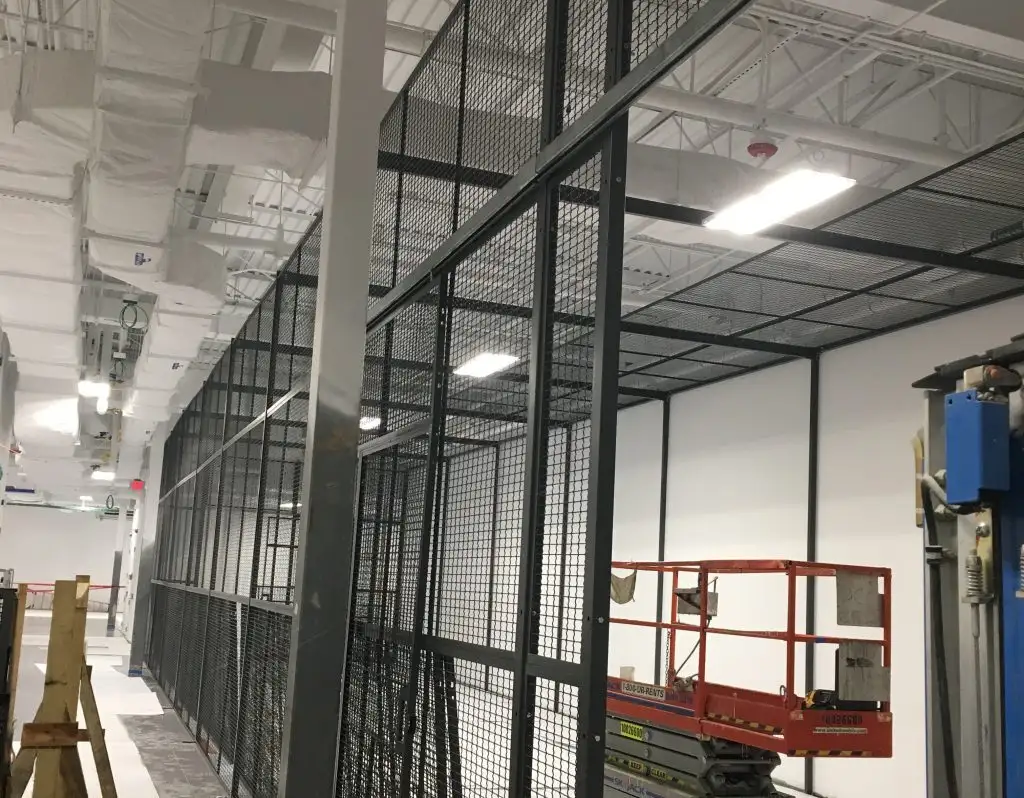
Wire partition systems divide large spaces into secure zones without sacrificing airflow or sprinkler coverage. Commonly used for tenant storage, wire mesh partition walls in multi-use facilities, and separating high-value zones within distribution centers.
Server & Data Center Cages
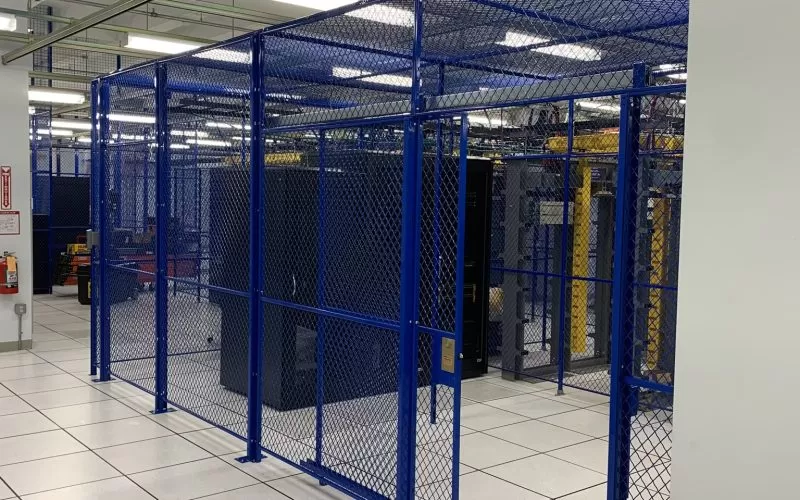
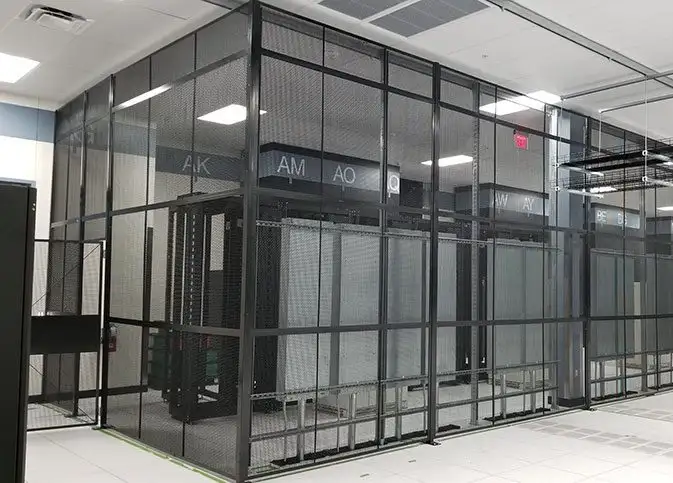
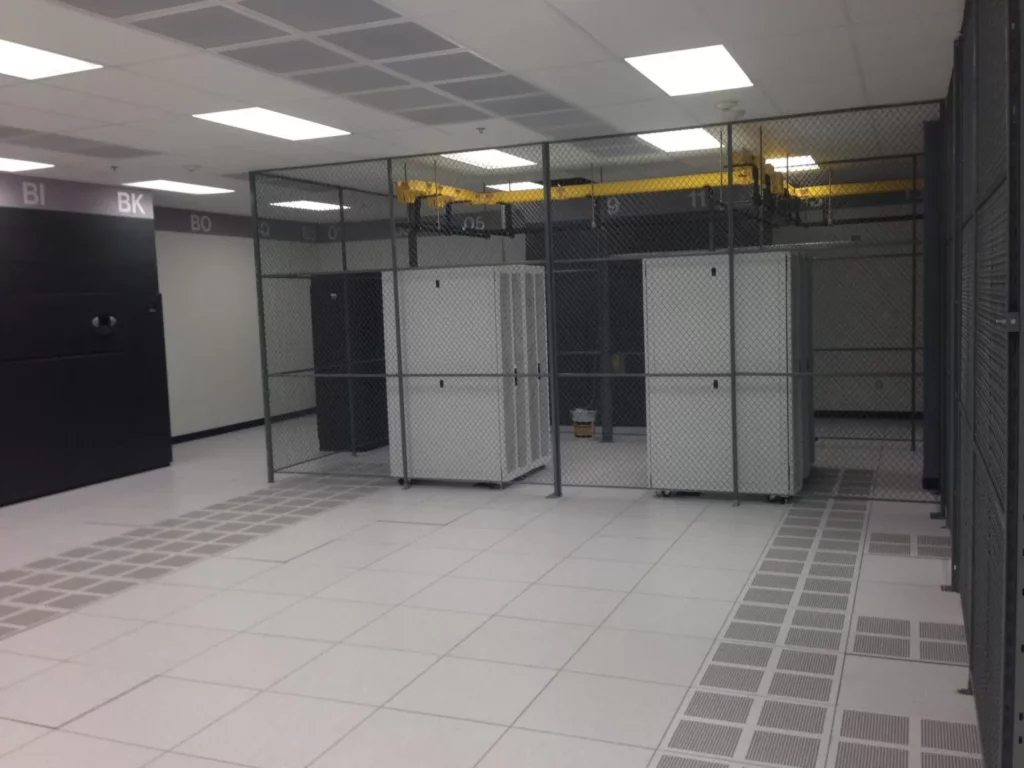
Server cage enclosures protect IT infrastructure in colocation facilities. These cage systems feature heavy-gauge welded mesh, electronic access control compatibility, and overhead containment options. Meet SSAE-18 and SOC 2 compliance requirements for data security.
DEA Compliance Cages
DEA cage enclosures meet 21 CFR 1301.72 requirements for Schedule II–V controlled substance storage. Constructed from heavy-gauge welded wire with commercial-grade locks, tamper-resistant hardware, and ceiling panels to prevent over-the-top access. Required for pharmacies, hospitals, and cannabis facilities.
Evidence & Property Storage Cages
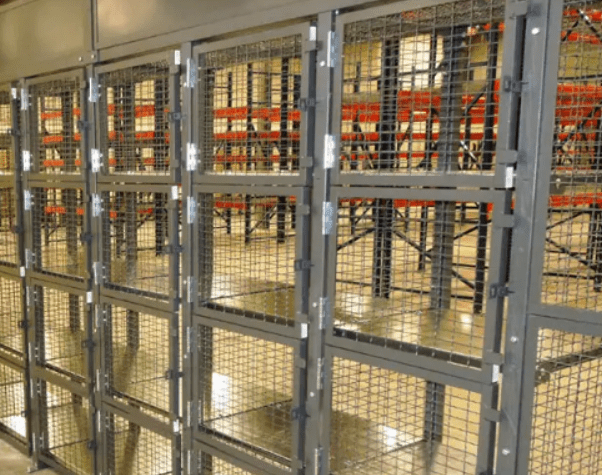
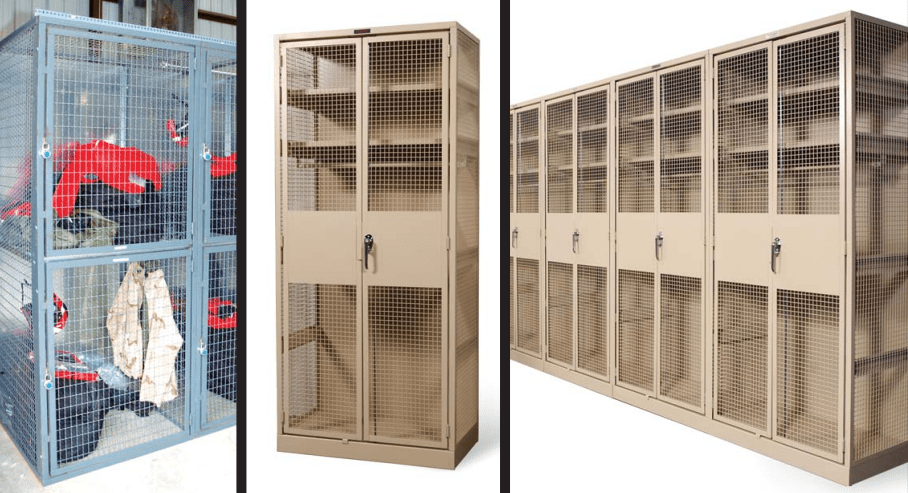
Evidence cage systems support chain-of-custody requirements for law enforcement. Features include pass-through windows, locker configurations, and multi-point locking. Designed to meet evidence storage best practices for police departments, sheriff’s offices, and federal agencies.
Tool Crib & Inventory Cages
Tool cage enclosures prevent theft and control access to valuable equipment in manufacturing and maintenance facilities. Include service windows, shelving integration, and key/card access. Industrial cage systems can be configured as walk-in tool cribs or counter-service windows for managed distribution.
Materials & Construction Standards
The durability of a security cage depends on its construction. Here’s what to look for:
| Feature |
Standard Grade |
Heavy-Duty Grade |
Maximum Security |
| Wire Gauge |
10-gauge |
8-gauge |
6-gauge welded |
| Mesh Opening |
2″ × 2″ |
2″ × 1″ |
1″ × 1″ |
| Post Size |
2″ × 2″ |
2″ × 2″ heavy wall |
3″ × 3″ |
| Door Types |
Hinged single |
Hinged or sliding |
Double hinged + service window |
| Best For |
General storage, tenant lockers |
Warehouses, tool cribs, data centers |
DEA, evidence, military |
All wire mesh security cage panels from Material Handling USA feature powder-coated finishes for corrosion resistance. Standard colors include gray, black, and safety yellow. Custom colors available for orders over 20 panels.
Sizing & Configuration Guide
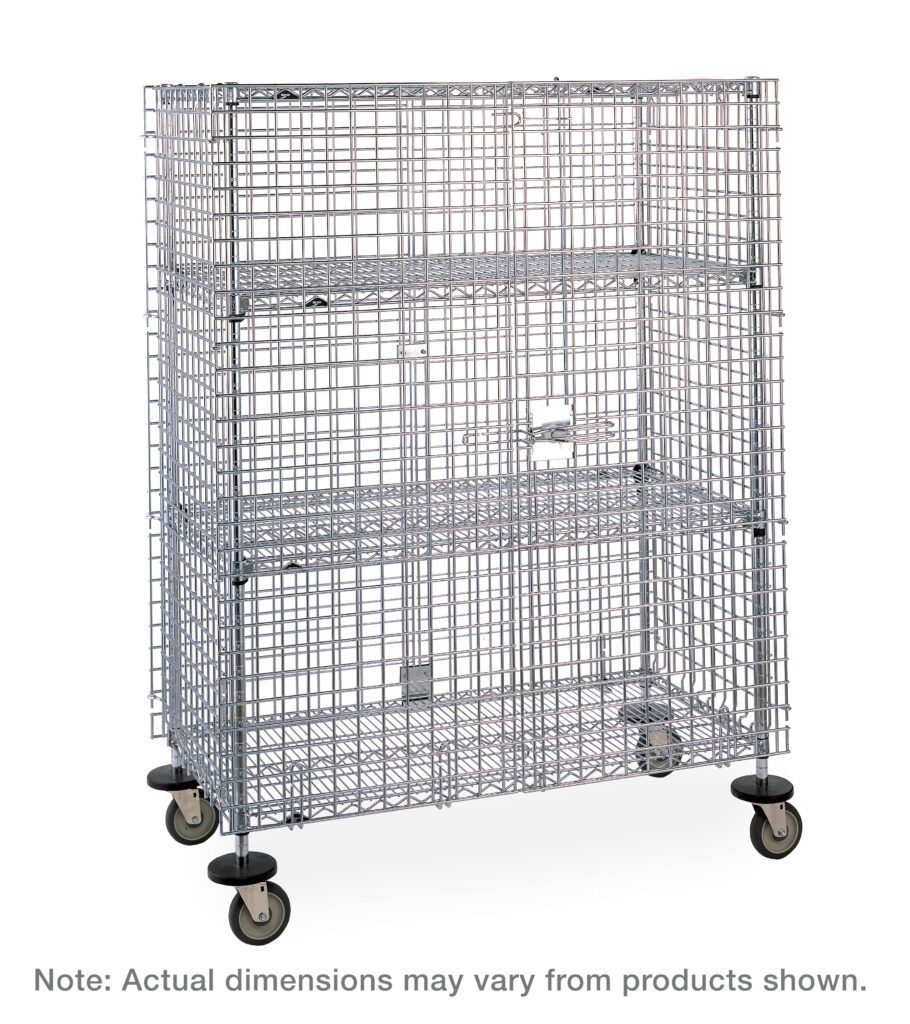
Security cage systems are modular — panels, posts, doors, and ceiling clips combine to create enclosures of virtually any size. Here’s how to plan your cage system:
📏 Quick Sizing Formula: Measure the length and width of your secure area. Add 6″ clearance on each side for post installation. Standard panel widths are 1′, 2′, 3′, 4′, and 5′. Heights range from 8′ to 12′ (10′ is most common for warehouse applications). We design custom configurations around existing racking, columns, and obstacles at no extra charge.
Common Configuration Examples
- 3-Wall Cage — Uses an existing building wall as the fourth side. Most cost-effective for warehouse corners and wall-adjacent areas.
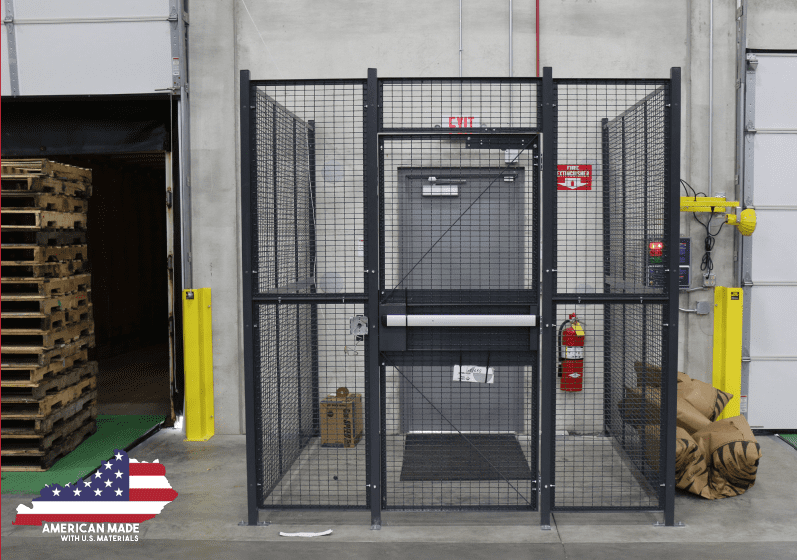
- 4-Wall Freestanding Enclosure — Complete enclosure with ceiling panels and one or two access doors. Standard for warehouse cage deployments.
- 2-Wall Partition with Gate — Creates a restricted zone within a larger room. Common for security fencing applications in distribution centers.
- Multi-Room Layout — Connected cages with shared walls and separate access points. Used for evidence rooms, multi-tenant storage, and inventory segregation.
Compliance & Regulatory Requirements
Depending on your industry, your security enclosure may need to meet specific regulatory standards:
- DEA 21 CFR 1301.72 — Controlled substance storage requires a cage or vault with a commercial-grade lock. Our DEA cage systems include ceiling panels, tamper-resistant hardware, and documentation for inspectors.
- NFPA / Fire Code — Wire mesh cages maintain sprinkler coverage, unlike solid-wall enclosures. This makes wire mesh partition systems code-compliant in most jurisdictions without additional fire suppression.
- CJIS / Law Enforcement — Evidence storage cages meet Criminal Justice Information Services standards for physical security controls. Our evidence storage guide covers full compliance details.
- SSAE-18 / SOC 2 — Server cage enclosures in colocation facilities must demonstrate physical access controls. Wire mesh cages with electronic locks satisfy auditor requirements.
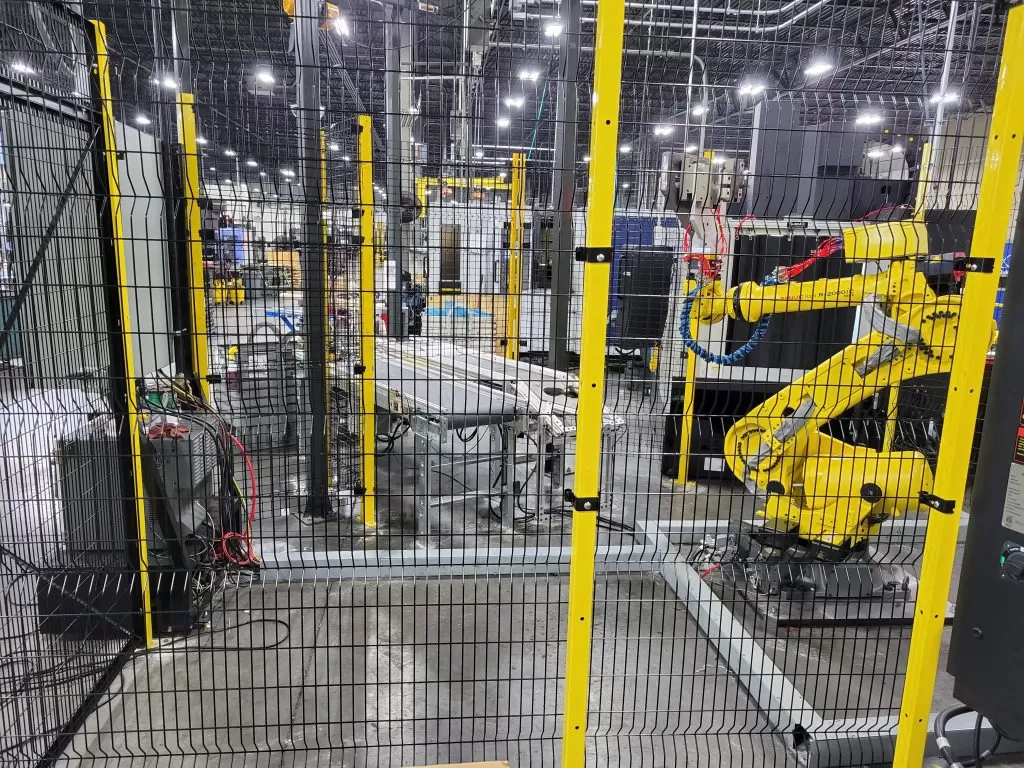
- OSHA Machine Guarding — Robotic and machine guarding cages protect workers from moving parts and meet OSHA 29 CFR 1910.212 requirements.
Security Cage Pricing: What to Expect
Security cage costs vary by size, materials, and configuration. Here are general budget ranges:
| Configuration |
Size Range |
Price Range |
| Single cage panel + door |
4′ × 4′ to 8′ × 4′ |
$800 – $2,500 |
| 3-wall cage (uses existing wall) |
10′ × 10′ to 20′ × 15′ |
$2,500 – $6,000 |
| 4-wall freestanding with ceiling |
10′ × 10′ to 30′ × 20′ |
$4,000 – $15,000 |
| Multi-room / large enclosure |
30′ × 30’+ |
$12,000 – $35,000+ |
| DEA / maximum security grade |
Any size |
Add 30–50% to standard pricing |
Pricing includes panels, posts, doors, and hardware. Professional installation is available throughout Utah and the Intermountain West. Free layout design included with every quote — call 801-328-8788 to get started.
Industries & Applications
Our industrial security cage solutions serve organizations across every sector:
🏭 Warehouses & Distribution
High-value inventory protection, shipping/receiving cages, warehouse cage partitions
🖥️ Data Centers
Colocation cages, server cage enclosures, hot/cold aisle containment
💊 Pharmaceutical & Healthcare
DEA cage enclosures, pharmacy cages, controlled substance vaults
🏗️ Manufacturing
Tool cage cribs, parts cages, machine guarding, robotic safety enclosures
🎖️ Military & Government
Weapons storage, classified material cages, GSA-approved enclosures
🏢 Multi-Tenant & Self-Storage
Tenant storage cages, bike rooms, residential building lockers
🌿 Cannabis & Dispensary
State-compliant grow room cages, vault enclosures, seed-to-sale secure zones
Frequently Asked Questions
What is the difference between a security cage and a wire partition?
A security cage is a fully enclosed structure with walls, ceiling, and a lockable door — designed to prevent unauthorized access from all sides. A wire partition is typically a wall or barrier that divides space but may not have a ceiling or complete enclosure. Both use welded wire mesh panels, but cages provide higher security levels. For most warehouse and compliance applications, a fully enclosed security cage is recommended.
How long does it take to install a security cage?
Most standard security cage systems install in 1–2 days for enclosures up to 30′ × 30′. Larger multi-room configurations or projects requiring concrete anchoring typically take 2–4 days. Our team handles layout design, engineering, and professional installation — or we ship panels with installation guides for your crew. Standard cage panels ship in 1–2 weeks; custom configurations in 3–4 weeks.
Can security cages be installed around existing racking and equipment?
Yes — this is one of the biggest advantages of modular wire mesh cage systems. Panels come in multiple widths (1′ to 5′) and can be configured around columns, existing shelving systems, ductwork, and other obstacles. Filler panels bridge gaps between standard sizes. We provide free CAD layout design for complex installations.
Do wire mesh cages affect fire sprinkler coverage?
No — this is a key advantage of wire mesh security cages over solid-wall enclosures. The open mesh allows sprinkler water to penetrate the cage, maintaining fire suppression coverage. Most fire marshals approve wire mesh cages without requiring additional sprinkler heads inside the enclosure, which saves significant cost compared to drywall rooms.
What access control options are available for security cages?
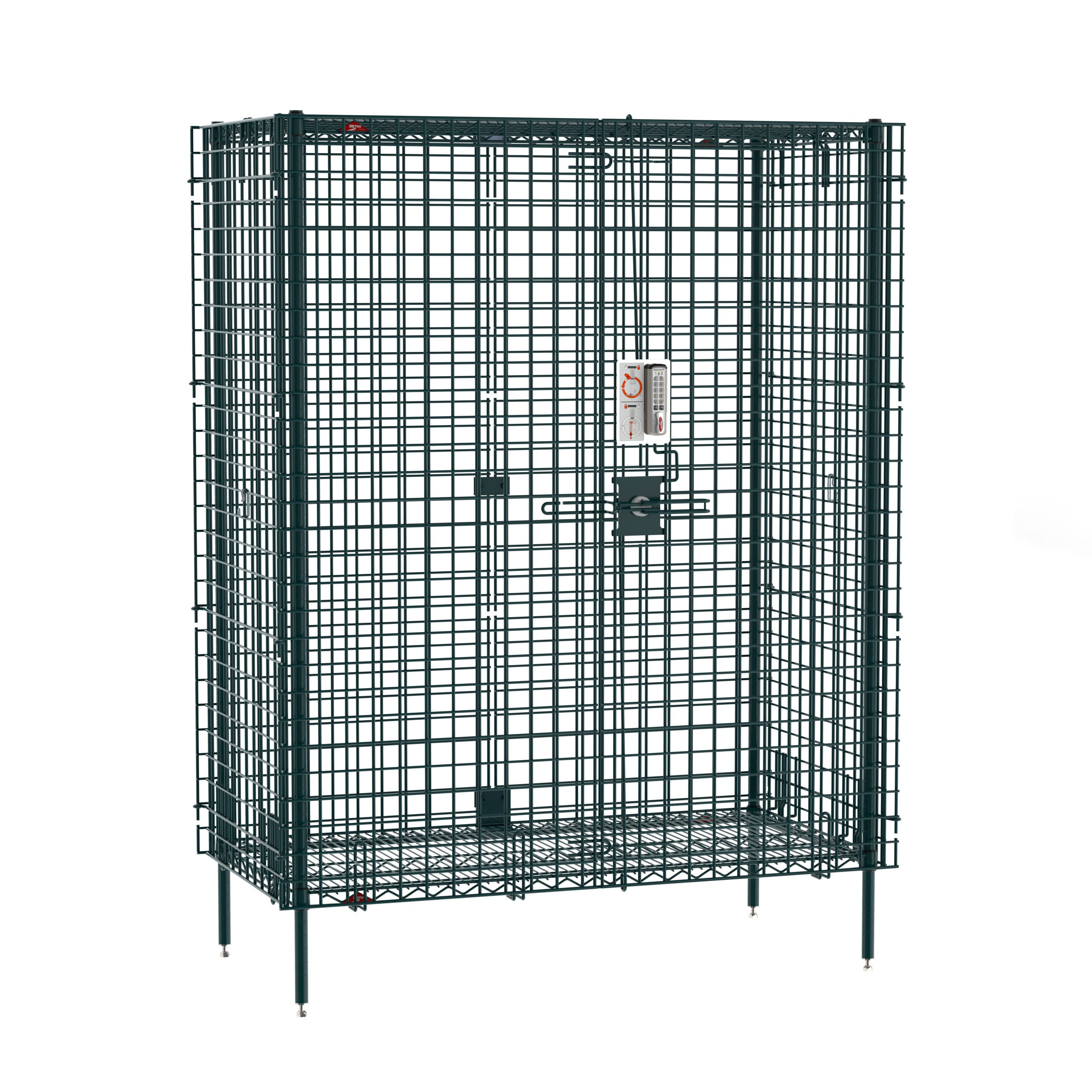
Security cage doors support multiple locking mechanisms: padlock hasps, cylinder locks, electronic keypad locks, card reader access control, and biometric systems. For high-security applications like DEA cages and evidence rooms, we recommend commercial-grade deadbolts with electronic access logging. Server cage installations often integrate with existing building access control systems.
How much do industrial security cages cost?
Security cage pricing depends on size, materials, and configuration. Small single-panel enclosures start around $800. Standard warehouse cage setups (10′ × 10′ to 20′ × 15′) range from $2,500 to $6,000. Full 4-wall enclosures with ceiling panels run $4,000 to $15,000+. DEA-grade and maximum security configurations add 30–50% to standard pricing. Call 801-328-8788 for a free custom quote.
Related Resources
Get a Free Security Cage Quote & Layout Design
Tell us your space dimensions and security requirements. We’ll design a custom layout, recommend the right cage system, and deliver a quote — all at no cost.
Serving Utah, the Intermountain West, and nationwide. Professional installation available.