Mezzanine Floor Systems: Types, Load Ratings & ROI Calculator
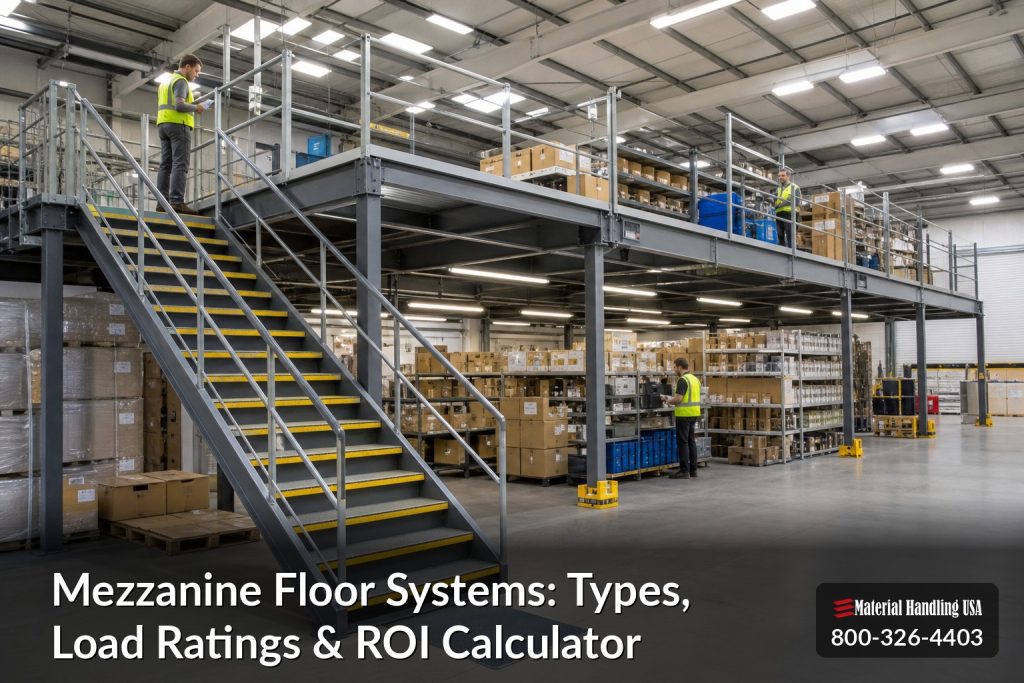
When your warehouse runs out of floor space, you have two options: build new square footage or look up. An industrial mezzanine system creates a new floor level within your existing building, effectively doubling your usable space at a fraction of the cost of traditional construction.
Most mezzanines pay for themselves within 12–18 months when compared to the ongoing cost of leasing additional space. Here’s everything you need to know about specifying, installing, and getting the most from a mezzanine system.
What Is an Industrial Mezzanine?
A mezzanine is a freestanding elevated platform built inside an existing building. Unlike building additions, mezzanines don’t require foundations, exterior walls, or roofing. They’re classified as equipment (not permanent construction) in many jurisdictions, which simplifies permitting and may offer tax advantages through accelerated depreciation.
Types of Mezzanine Systems
Structural Steel Mezzanines
Built from hot-rolled steel beams and columns, structural mezzanines handle heavy loads (250+ PSF) and large spans. They’re the standard for manufacturing, heavy warehouse storage, and multi-level offices inside industrial buildings.
Roll-Form (Bar Joist) Mezzanines
Lighter-duty systems using cold-formed steel joists. Ideal for light storage, offices, and retail stockrooms where loads are under 150 PSF. Lower cost than structural but limited in span and capacity.
Rack-Supported Mezzanines
A platform built on top of pallet rack. This hybrid solution combines ground-level pallet storage with an upper-level work or storage area. Great for order picking operations and small-parts storage above bulk pallets.
Custom Catwalk Systems
Elevated walkways for overhead access to equipment, piping, HVAC, or storage. Custom catwalks are engineered for specific facilities and can include stairs, ladders, gates, and safety rails.
Mezzanine vs. Building Expansion
| Factor | Mezzanine | Building Expansion |
|---|---|---|
| Cost per sq ft | $20–$60 | $100–$250 |
| Timeline | 4–8 weeks | 6–18 months |
| Permits | Building permit | Full construction permits |
| Disruption | Minimal (installed while operating) | Major (construction site) |
| Tax treatment | Often accelerated depreciation | Real property (27.5+ year) |
| Relocatable | Yes (bolted connections) | No |
Read our detailed comparison: Mezzanine vs Building Expansion: Which Saves You More?
Load Ratings & Engineering
Mezzanine load ratings are measured in PSF (pounds per square foot) and must account for:
- Live load: People, stored materials, equipment, forklifts
- Dead load: The mezzanine structure itself, decking, and fixtures
- Seismic load: Required in seismic zones (all of Utah and much of the Western US)
- Impact load: Additional factor if forklifts operate on the mezzanine
Common load ratings: 125 PSF (light storage), 150 PSF (standard), 250 PSF (heavy storage), 300+ PSF (manufacturing). All our mezzanines include PE-stamped engineered drawings.
Frequently Asked Questions
Do mezzanines require a building permit?
Yes, in virtually all jurisdictions. The good news is that mezzanine permits are simpler than new construction permits. We provide PE-stamped drawings and handle the permitting process as part of every project.
How long does a mezzanine take to install?
Most mezzanines install in 1–3 weeks depending on size and complexity. Installation can happen during normal business hours without disrupting operations on the ground level.
Can I put an office on a mezzanine?
Absolutely. In-plant offices on mezzanines are one of the most popular configurations. We add fire-rated walls, HVAC, electrical, and modular panels to create comfortable office space overlooking the warehouse floor.
Get a Free Mezzanine Design
Tell us your dimensions, load requirements, and intended use, and we’ll provide a free engineered layout with a complete cost estimate.
Request a free mezzanine quote → or call (801) 328-8788.
Who This Is For
Our mezzanine floor systems types load ratings solutions are designed for:
- Warehouse managers and operations directors
- Facility planners and engineers
- Property managers
- Government facility coordinators
- Manufacturing plant managers
- Distribution center operators
Common Applications
Warehouse & Distribution
Optimize storage capacity and material flow with mezzanine floor systems types load ratings.
Manufacturing
Improve organization and efficiency with industrial-grade mezzanine floor systems types load ratings.
Government & Military
Meet security and compliance requirements with certified mezzanine floor systems types load ratings solutions.
Common Applications
- Expanding vertical storage capacity in crowded e-commerce fulfillment centers
- Creating dedicated office space above active warehouse production floors
- Increasing inventory density for retail distribution and logistics facilities
- Adding elevated work platforms for manual order picking operations
- Optimizing floor space for automotive parts storage and organization
- Supporting heavy machinery and equipment on elevated structural platforms
- Developing secure mezzanine levels for high-value inventory storage areas
- Integrating multi-level shelving systems for maximum warehouse space utilization
- Providing additional assembly line space in manufacturing plant environments
Why Choose Material Handling USA?
Expert Guidance
Our team helps you choose the right products for your application, facility, and budget. We work with you from planning through installation.
Trusted Brands
We partner with leading manufacturers to offer high-quality, durable products backed by real warranties and factory support.
Nationwide Service
Based in Utah with service across the U.S. We handle quoting, project coordination, delivery, and installation support.
Free Quotes
Request a no-obligation quote for any project. We provide layout assistance, product recommendations, and competitive pricing.
Ready to Get Started?
Material Handling USA can help you find the right products for your facility. Get a free quote and expert guidance.
Or call 1-800-326-4403
Key Considerations for Planning Your Mezzanine Installation
Before initiating a mezzanine project, facility managers should evaluate local building codes and seismic requirements. These regulations often dictate the structural design and necessary safety features, such as specific handrail heights or fire suppression systems. Working with an experienced provider ensures that the structure meets all relevant safety standards while maximizing the vertical volume of the warehouse. Proper planning typically involves a thorough site survey to identify potential obstructions like HVAC ductwork, lighting fixtures, or overhead sprinklers that could impact the final installation height.
Selecting the appropriate decking material is a critical decision that depends on the intended use of the new floor level. Options may include heavy duty steel grating for airflow, resin board for a smooth walking surface, or diamond plate for high durability in industrial environments. The load rating must be carefully calculated based on the weight of the equipment, shelving, or personnel that will occupy the space. Most systems can be configured for light storage or heavy machinery, provided the underlying slab can support the concentrated point loads from the mezzanine columns.
A modular mezzanine system offers significant flexibility for businesses that anticipate future growth or changes in their operational layout. Unlike permanent concrete additions, these steel structures can often be disassembled, relocated, or expanded as storage needs evolve. This adaptability makes them a strategic investment for companies operating in leased facilities or those with fluctuating inventory levels. Integrating the mezzanine with existing material handling equipment, such as vertical reciprocating conveyors or forklifts, can further streamline the movement of goods between levels and improve overall warehouse efficiency.
- Custom engineering to match specific warehouse dimensions and column spacing requirements.
- Multiple staircase and gate configurations to ensure safe and efficient personnel access.
- Durable powder coated finishes that resist wear and tear in high traffic industrial environments.
- Integration options for essential utilities including lighting, fire protection, and electrical systems.
- Minimal disruption to existing ground level operations during the modular assembly process.