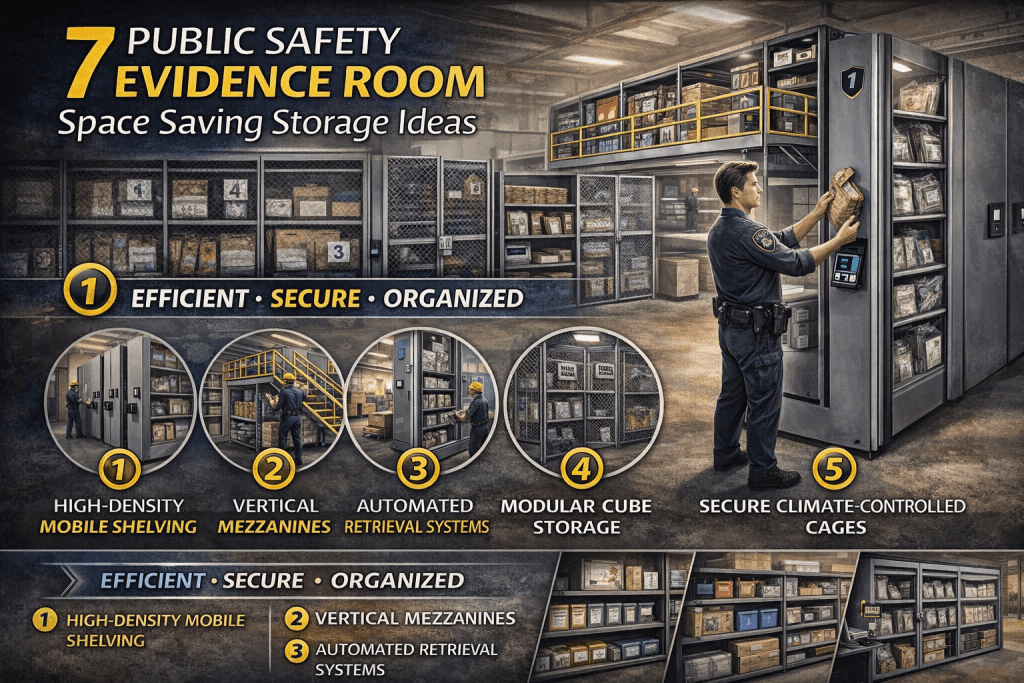
Managing a public safety evidence room is a critical task where space constraints directly impact the integrity of criminal justice operations. As caseloads increase and retention policies lengthen, finding efficient and secure storage becomes a pressing challenge. Overcrowded and disorganized evidence rooms risk compromising chain of custody, leading to lost evidence, case dismissals, and a loss of public trust. Implementing effective public safety evidence room space saving storage ideas is not just about tidiness; it is a fundamental requirement for operational excellence and legal compliance.
This guide provides a practical list of actionable strategies to reclaim valuable floor space, improve organization, and fortify security within your facility. We will move beyond basic shelving and explore advanced systems and methods designed specifically for the unique demands of evidence management. From high density mobile systems to vertical storage solutions, you will discover ways to optimize every square foot of your property room.
Before diving into specific equipment, it is important to have a solid organizational foundation. Each idea presented here includes a strategic breakdown, tactical insights, and replicable methods that your agency can adapt. By the end, you will have a clear roadmap for transforming your cluttered evidence room into a model of efficiency, security, and long term sustainability.
1. High-Density Mobile Shelving Systems
High-density mobile shelving is one of the most effective public safety evidence room space saving storage ideas for departments managing a high volume of physical items. Instead of static aisles that consume valuable floor space, this system places shelving units on wheeled carriages that move along a track. This design condenses storage by creating a movable aisle that opens only when and where access is needed. By eliminating multiple fixed aisles, agencies can recover up to 50% of their floor space or double their storage capacity within the same footprint.

Why It Works for Evidence Rooms
Evidence rooms are not just storage closets; they are secure facilities where the chain of custody is paramount. High-density systems support this need by offering locking mechanisms that can secure entire ranges of shelves, specific aisles, or the whole system. This feature provides an additional layer of security beyond the locked evidence room door, protecting sensitive items like narcotics, firearms, and biological evidence.
Many police departments have implemented these systems to manage immense quantities of evidence collected over decades. They turned overcrowded, inefficient spaces into organized, compliant facilities. Mobile shelving allowed them to consolidate evidence from multiple locations, improve retrieval times, and ensure proper preservation and security for items critical to criminal cases. For a detailed breakdown of different system types and their applications, Material Handling USA offers a complete mobile shelving system guide to help you make an informed decision.
5-Step Action Checklist for Mobile Shelving
To ensure a successful project, follow this clear planning process.
- Conduct a Capacity and Structural Audit: Assess your current and future storage needs. It is equally important to confirm that your facility’s floor slab can support the concentrated weight of a fully loaded system.
- Prioritize Chain of Custody: Choose a system with robust security features. Motorized systems can offer PIN code access control, creating an audit trail of who accessed which aisle and when.
- Plan for Utilities and Safety: Motorized systems require electrical connections. Plan for power outlets and consider a backup power source to maintain access during an outage. Ensure staff are fully trained on safety features.
- Verify Compliance: If your facility is in a seismically active area, request documentation that the system is certified to meet regional earthquake-resistance standards to protect both personnel and evidence.
- Request a Free Design Layout: Work with experts to create a custom layout that maximizes your specific room dimensions and workflow. This no-obligation step ensures the final design meets your exact needs.
2. Vertical Mezzanine Storage Platforms
When horizontal expansion is not an option, vertical mezzanine storage platforms offer one of the most practical public safety evidence room space saving storage ideas. Mezzanines are intermediate floors built between the main floors of a facility, effectively doubling or even tripling storage capacity by using the overhead vertical space that often goes to waste. For evidence rooms in older buildings or dense urban environments, this solution unlocks massive storage potential without altering the building’s external footprint.

Why It Works for Evidence Rooms
Evidence rooms are defined by their strict security protocols and the need for organized, accessible storage. Mezzanines support these requirements by creating distinct, controllable levels. This vertical segregation can be used to separate different types of evidence, such as general property on one level and high-security items like narcotics or firearms on another. Access can be controlled via dedicated stairs or lifts, reinforcing the chain of custody.
Many police departments have transformed single-story warehouses into multi-level, high-capacity facilities with industrial steel mezzanines. This allowed them to consolidate evidence, improve organization, and create safer workflows for staff. The ability to design custom layouts on the new level meant they could integrate specialized shelving and environmental controls, addressing both space and compliance needs simultaneously.
Implementing a Mezzanine Platform
A successful mezzanine installation requires careful engineering and logistical planning.
- Perform a Structural Engineering Assessment: Before any design work begins, a qualified structural engineer must verify that the building’s foundation and columns can support the added weight of the mezzanine structure and the evidence it will hold.
- Design for Security and Access Control: Plan for segregated access points, such as keycard-protected stairwells or material lifts, to maintain a strict chain of custody.
- Plan for Environmental and Safety Systems: If sensitive evidence like biological samples or electronics will be stored on the mezzanine, ensure separate climate control zones can be implemented. Install redundant lighting, emergency exits, and clear safety signage.
- Coordinate Installation Logistics: Schedule the installation during periods of lower evidence intake to minimize disruption to daily operations. A phased approach can help keep critical areas functional throughout the project.
3. Automated Retrieval Systems (AS/RS)
Automated Storage and Retrieval Systems (AS/RS) represent a significant step forward in managing large-scale evidence inventories. These systems use robotic technology and software to automate the deposit and retrieval of evidence with minimal human interaction. A software-controlled robotic mechanism retrieves specific bins or carriers and delivers them to a secure operator station. This revolutionizes evidence management by combining maximum storage density with precise, computer-driven inventory tracking.

Why It Works for Evidence Rooms
AS/RS technology directly addresses the core challenges of evidence management: space, security, and accuracy. By storing items in a highly dense, contained system accessible only via authenticated commands, AS/RS creates a near-impenetrable storage vault. This “goods-to-person” model drastically reduces the risk of contamination, misplacement, or unauthorized access, as personnel do not physically enter the storage area. Every transaction is logged by the system, creating a perfect, unbroken digital chain of custody.
Large metropolitan police departments are adopting AS/RS to solve issues of overcrowding, secure high-value evidence like firearms and narcotics, and reduce the manual labor and error associated with traditional evidence rooms.
Implementing an AS/RS
Adopting an AS/RS is a major capital project that requires meticulous planning and a forward-looking strategy.
- Conduct a Lifecycle ROI Analysis: Look beyond the initial investment. Calculate the total cost of ownership and return on investment over a 10-to-15-year period, factoring in reduced labor, improved space utilization, and enhanced security.
- Prioritize IT and Cybersecurity: An AS/RS is an IT system. Engage your IT department early to ensure adequate network support, data security protocols, and integration with existing case management and evidence software.
- Plan a Phased Rollout: Migrating an entire evidence inventory at once is a high-risk endeavor. Develop a phased implementation plan, moving evidence categories gradually to the new system.
- Establish Backup and Maintenance Protocols: Automated systems can experience downtime. You must establish clear manual retrieval procedures for emergencies and secure a comprehensive maintenance and vendor support agreement.
4. Modular Cube Storage and Compartmentalization
Modular cube storage is an effective granular strategy among public safety evidence room space saving storage ideas, especially for organizing a high volume of small to medium sized items. This method involves using configurable plastic or metal cubes, bins, and modular shelving units to create distinct, standardized compartments. By assigning specific evidence categories to designated cubes, agencies can maximize vertical and horizontal space while improving inventory control and retrieval speed.
Why It Works for Evidence Rooms
The primary function of an evidence room is to maintain an unbroken and verifiable chain of custody. Modular compartmentalization directly supports this by imposing a strict organizational structure. Each cube or bin acts as a discrete storage location, making it simple to track an item’s exact placement with barcodes and evidence management software. This system minimizes the risk of cross contamination and misplacement.
For instance, crime labs and state police agencies often use cube systems to manage large quantities of drug evidence. Each seized item is sealed in a bag and placed in its own numbered bin within a larger cube system. This one-to-one relationship between item and location simplifies audits and ensures that officers can quickly locate specific evidence for court appearances.
Implementing a Modular System
Adopting a modular cube system requires careful planning to be successful.
- Establish Clear Organizational Protocols: Before purchasing any materials, define your categorization rules. Decide how evidence will be grouped, whether by case number, evidence type, or date of collection.
- Use Color-Coding and Visual Cues: Assign specific colors to different evidence types, such as red for biohazards and blue for digital media. Combine this with clear labels on each cube and aisle to create an intuitive system.
- Integrate with Barcode Technology: Implement a barcoding system where every cube or bin has a unique barcode tied to your inventory management system. Scanning creates a precise digital record of movement.
- Choose Appropriate Materials: Select materials based on the evidence you store. Use durable plastic for general property but consider specialized containers for sensitive biological or chemical evidence.
5. Climate-Controlled Security Cages
Secure evidence storage often demands more than just saving space; it requires specialized environments for high-risk or sensitive items like narcotics, firearms, and biological samples. A hybrid approach combining shelving systems with integrated, climate-controlled security cages delivers both space efficiency and stringent chain-of-custody control. This solution segments the evidence room into general and highly secured zones, creating a fortified area within an already secure footprint.
Why It Works for Evidence Rooms
This dual-benefit solution directly addresses the complex needs of modern evidence management. High-risk items not only require restricted access but also protection from environmental factors that could degrade their integrity. DEA Regional Evidence Centers, for example, use secure cages to store controlled substances, preventing unauthorized access while maintaining conditions that preserve chemical stability.
Integrating security cages within a larger shelving system is a key public safety evidence room space saving storage idea because it avoids dedicating a separate, full-sized room for climate control. Instead, it creates a micro-environment exactly where needed. The combination of electronic locks, surveillance integration, and access logging on the cage establishes multiple layers of protection.
Implementing Secure, Climate-Controlled Cages
Implementing this hybrid system requires careful planning to ensure it meets both security and preservation standards.
- Establish an Access Hierarchy: Before installation, define and document access permissions that align with evidence classifications. Integrate electronic locks with your department’s security system to create an auditable access log.
- Optimize Placement and Utilities: Position the climate-controlled unit away from exterior walls and direct sunlight to maintain stable conditions. Plan for dedicated electrical circuits and a backup power source.
- Monitor Environmental Conditions: Install sensors to continuously log temperature and humidity levels. Review these logs regularly to ensure compliance with evidence preservation protocols.
- Conduct Regular Security Audits: Perform audits of the cage’s electronic access logs. Cross-reference these logs with evidence records to verify that every access was authorized and documented.
6. Strategic Evidence Categorization with Right-Sized Storage
A one-size-fits-all storage approach is a primary cause of inefficiency in evidence rooms. Strategic evidence categorization with right-sized storage media is one of the most practical public safety evidence room space saving storage ideas because it directly tackles wasted space. This method organizes all incoming evidence by its physical characteristics, such as size, weight, and preservation requirements. Each category is then assigned to a storage solution specifically designed for those traits.
This right-sizing approach ensures every square foot of storage is used effectively. Small items like DNA swabs are placed in shallow drawers. Bulky but lightweight items like clothing go on standard-duty shelving. Heavy or oversized evidence like engine blocks are stored on heavy-duty pallet racking. This categorization maximizes vertical and horizontal space.
Why It Works for Evidence Rooms
Evidence rooms must balance high-density storage with quick, accurate retrieval. By grouping items logically and placing them in appropriate storage media, staff can locate evidence much faster. This system also enhances chain of custody and preservation. For example, grouping all climate-sensitive biological evidence into a designated refrigerated or frozen unit prevents spoilage and cross-contamination.
Many law enforcement agencies have successfully implemented categorization strategies to overhaul their evidence management. They transitioned from uniform shelving to a zoned system based on evidence type. This change not only saved floor space but also improved inventory accuracy and reduced retrieval times. If your agency is planning a similar overhaul, it is helpful to explore the full range of available storage solutions to match each category with the ideal equipment. You can start by reviewing a mobile shelving buyer’s guide to understand the different options.
Implementing a Categorized Storage Model
Adopting a categorized storage model requires careful planning and a deep understanding of your agency’s evidence profile.
- Conduct a Comprehensive Evidence Audit: Perform a full inventory of your current evidence. Document the types, sizes, weights, and quantities of items you manage. This data will reveal your true storage needs.
- Design Categories Based on Crime Data: Analyze your jurisdiction’s crime statistics to anticipate future evidence intake. If property crimes are high, you will need more space for bulky items. If drug enforcement is a priority, plan for secure narcotics lockers.
- Create and Post Visual Maps: Develop a clear color-coded or zoned map of the evidence room layout. Post these maps in prominent locations and label all aisles and shelving units accordingly.
- Integrate Categories into Your Barcoding System: Update your evidence management software and barcoding protocol to include a category code for each item. This allows for rapid digital searches and directs personnel to the correct zone.
7. Vertical Carousel Storage Systems
Vertical carousel storage systems are enclosed, motorized units that bring a new level of efficiency to evidence management. This technology uses a series of vertically arranged carriers that rotate on a track, delivering stored items directly to an operator at an ergonomic height. For evidence rooms with high ceilings but limited floor space, these systems are an excellent public safety evidence room space saving storage idea, offering significant density gains while improving retrieval times and worker safety.
Why It Works for Evidence Rooms
A vertical carousel’s core advantage is its ability to convert unused overhead vertical space into secure, organized storage. By building up instead of out, agencies can increase storage capacity by up to 60% within the same footprint as traditional shelving. The enclosed design also adds a crucial layer of security. Evidence is shielded from dust, light, and unauthorized access, with many models offering keypad or badge-swipe access controls that create a digital record of every transaction.
Police departments have implemented vertical carousels to address severe space shortages. The system allowed them to store a high volume of small to medium sized evidence items in a fraction of the floor space. The automated retrieval process minimizes handling and reduces the risk of misfiling or loss.
Implementing a Vertical Carousel
Integrating a vertical carousel requires careful planning to maximize its benefits and ensure smooth operation.
- Evaluate Your Inventory and Workflow: Analyze the size, weight, and retrieval frequency of your evidence. Carousels are ideal for small items like handguns, drug evidence, and case files.
- Confirm Structural and Electrical Needs: Vertical carousels have specific floor load and power requirements. Work with a structural engineer to verify your floor can support the system’s weight and an electrician to install the necessary power source.
- Integrate with Evidence Management Software: Connect the carousel’s controls with your barcode or RFID tracking system. This integration automates data entry and provides a real time inventory audit trail.
- Prioritize Safety and Training: Ensure the chosen system has modern safety features, like light curtains that stop rotation if an object obstructs the opening. Thoroughly train all evidence technicians on proper operating procedures.
Evidence Room Storage Options: A Comparison
| Storage Solution | Best For | Space Savings | Security Level |
|---|---|---|---|
| High-Density Mobile Shelving | Maximizing capacity in existing footprints | High (Up to 50% floor space recovery) | High (Lockable aisles and carriages) |
| Vertical Mezzanines | Facilities with high ceilings and limited floor space | Very High (Doubles or triples usable area) | Moderate (Relies on access control to level) |
| Modular Cube Storage | Organizing small, numerous, and varied items | Low (Improves density on existing shelves) | Low to Moderate (Depends on shelving) |
| Vertical Carousels | High-density storage of small to medium items | High (Uses vertical space efficiently) | Very High (Enclosed, access-controlled) |
Conclusion: Securing Your Evidence and Your Space
The challenges facing public safety evidence rooms are significant, but they are not insurmountable. The integrity of criminal justice relies heavily on the meticulous preservation and management of evidence. The central takeaway is that strategic planning and the adoption of modern storage solutions are essential for any agency looking to reclaim control over its evidence management process.
We broke down how a thorough evaluation of your current inventory, growth projections, and workflow bottlenecks sets the stage for success. The most effective public safety evidence room space saving storage ideas are not just about adding shelves; they are about implementing a holistic system that addresses security, accessibility, and long term scalability.
Key Takeaways
- Embrace High-Density Storage: The single most impactful change an agency can make is transitioning from static shelving to high density mobile systems like mechanical assist mobile shelving.
- Think Vertically: Do not let high ceilings go to waste. Vertical mezzanines and carousels are powerful tools for maximizing cubic storage volume.
- Prioritize Layout and Workflow: A well designed layout is as crucial as the hardware itself. Grouping evidence by case status, type, or disposition date streamlines retrieval and auditing processes.
- Security is Non-Negotiable: Every storage decision must be viewed through the lens of chain of custody. Secure lockers, wire mesh cages, and integrated access controls are fundamental.
Ultimately, investing in better evidence storage is an investment in justice itself. A well organized room reduces the time officers spend searching for items and minimizes the risk of legal challenges due to compromised evidence. The solutions we have discussed offer a clear path forward. By taking a systematic approach, your agency can transform its evidence room from a source of stress into a model of efficiency. Acting sooner allows for better planning timelines and helps avoid future delays.
Ready to transform your evidence room with proven space saving storage ideas? The team at Material Handling USA offers free, no obligation layout and design services to help your agency find the perfect solution. Call (800) 326-4403 or Contact Us to get a free quote and see how our high density systems can maximize your capacity and secure your chain of custody.
Frequently Asked Questions (FAQs)
What is the most cost-effective way to double evidence storage capacity?
For most facilities, the most cost-effective method is to implement a high-density mobile shelving system. Instead of incurring the major costs of new construction or relocation, these systems typically double storage capacity within your existing footprint by eliminating wasted aisle space. This provides a high ROI by maximizing the value of your current facility.
How can I improve the chain of custody with new storage?
Modern storage solutions enhance chain of custody through integrated security features. For example, electric mobile shelving can be equipped with keypad or RFID access controls that create a digital audit trail, logging every time an aisle is opened. This documents who accessed specific evidence areas and when, creating a secure and defensible record.
What should I consider before installing a new evidence storage system?
Before installation, you should conduct a thorough assessment of your needs. This includes auditing your current evidence volume and types, projecting future growth, evaluating your floor’s load capacity, and defining your security and workflow requirements. Consulting with a storage expert can help ensure you select a system that is compliant, efficient, and scalable for long-term use.
Are there mobile shelving options for government agencies?
Yes, specific mobile shelving systems are available through GSA contracts, which simplifies the procurement process for federal, state, and local government agencies. These GSA mobile shelving solutions are pre-vetted for quality and compliance, ensuring you get a reliable system that meets government standards.