URL slug: wall-mount-stainless-steel-shelves
Meta title: Wall Mount Stainless Steel Shelves Guide
Meta description: Wall mount stainless steel shelves guide for smart buyers. Compare grades, loads, and layout options. Request a Quote today.
Every facility manager knows the feeling. Floor space is tight, work surfaces keep filling up, and the wall sitting right in front of the team is doing nothing.
That unused vertical space usually costs more than people think. It slows picking, crowds benches, creates avoidable cleaning issues, and makes a well-run operation feel improvised. In warehouses, labs, and evidence rooms, the wrong storage setup also creates a safety problem, not just an organization problem.
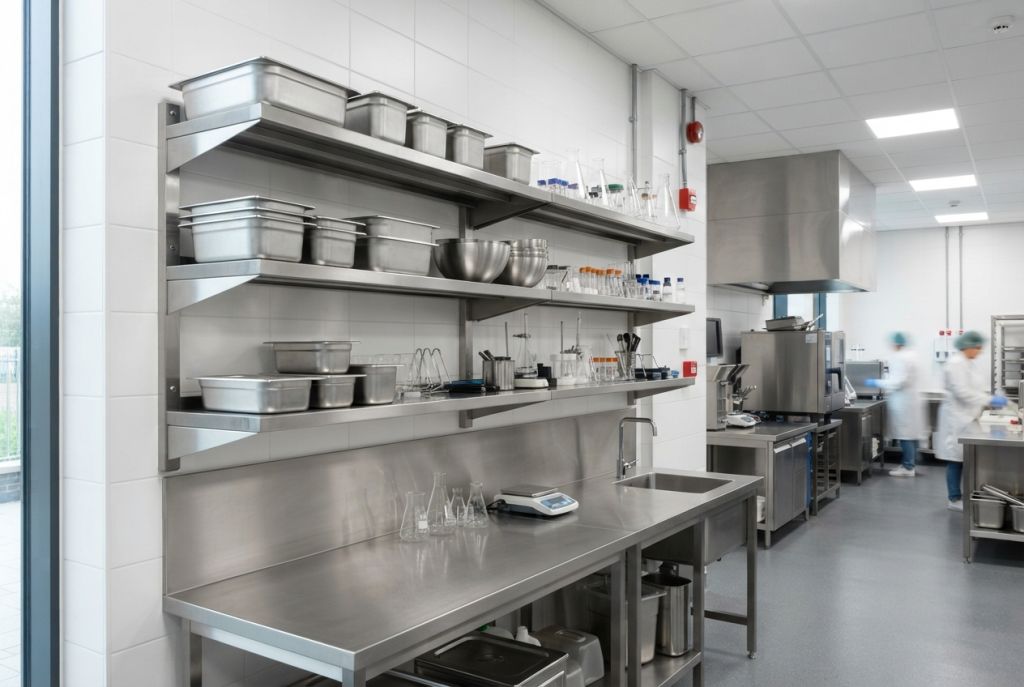
Wall mount stainless steel shelves solve that well when they're specified correctly. They aren't just a cleaner-looking alternative to freestanding shelving. They can become part of the facility's operating system by moving supplies into reach, opening floor area, and holding up in environments where painted steel, laminate, or wood start showing wear too early.
The first decision that matters isn't shelf size. It's steel grade and gauge. If that choice is wrong, the shelf may still look acceptable on day one, but the long-term cost shows up through corrosion, sag, cleaning issues, and replacement work. For readers also comparing broader kitchen storage ideas, the same principle applies. Material choice decides whether storage stays useful under real operating conditions.
Introduction Reclaiming Your Wasted Space
A receiving room is backed up, the bench in the lab is carrying overflow supplies, or an evidence room has cartons stacked where staff need clear access. In each case, the problem is not just lack of storage. It is wasted wall space turning into slower work, harder cleaning, and more risk around access and safety.
A wall mount stainless steel shelf should be evaluated as a long-term operating asset. The shelf price matters, but so do the costs that follow: failed anchors, corrosion in damp conditions, surfaces that are harder to sanitize, and layouts that force staff to take extra steps all day. Facilities that specify the right wall-mounted stainless steel shelving systems usually gain floor clearance, cleaner work zones, and more reliable day-to-day access to critical items.
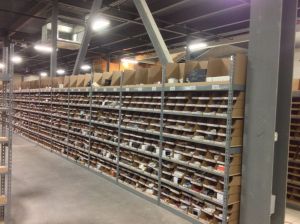
The use cases extend well beyond food prep. In warehouses, wall shelving can pull fast-moving supplies off the floor and out of aisle pinch points. In labs, stainless surfaces support regular cleaning and hold up better in controlled environments. In evidence rooms, they provide a stable, moisture-resistant storage point that will not chip like painted wood products or swell like laminate.
Buy for year three, not day one.
That standard changes the conversation. A low-cost shelf can become expensive if it needs replacement early, creates mounting problems on block or stud walls, or causes compliance headaches because staff cannot clean around it properly. Buyers comparing industrial shelving with broader kitchen storage ideas will run into the same principle. Material and mounting choices determine whether the system keeps supporting the operation after heavy use, routine cleaning, and repeated loading.
Understanding Steel Grades and Finishes
Shelf failures rarely start with the bracket. Many start with a material decision that looked acceptable on a quote sheet.

Grade and finish set the maintenance burden, the corrosion risk, and how long the shelf stays serviceable in a real facility. In a warehouse, that may mean resistance to humidity near exterior walls and dock areas. In a lab, it affects how the surface handles routine cleaning and incidental chemical exposure. In an evidence room, it affects whether shelving still presents a clean, stable storage surface years into service.
Type 304 versus Type 430
For wall-mounted shelving, the common decision is Type 304 or Type 430 stainless steel.
Type 304 is the safer specification where moisture, washdown, disinfectants, or cleaning chemicals are part of normal operations. It costs more up front, but it usually lowers replacement risk and reduces the chance that corrosion becomes a compliance or housekeeping problem later. That matters in labs, healthcare support spaces, evidence storage, and any area where visible rust staining creates extra work or unwanted scrutiny.
Type 430 fits dry, lower-exposure spaces where budget control matters and the shelf is not expected to deal with aggressive cleaning or chloride-heavy conditions. It can perform well in general supply storage, enclosed warehouse support rooms, and some back-of-house applications. The trade-off is narrower environmental tolerance. If conditions drift wetter or cleaning gets harsher over time, 430 shows its limits faster.
The wrong grade often looks fine at install. The cost shows up later in staining, harder cleaning, shorter service life, and earlier replacement.
What gauge really changes
Gauge affects stiffness more than buyers expect. Lower gauge numbers mean thicker steel.
That thickness matters because a wall shelf carries load out from the wall face, so deflection becomes a practical issue long before a shelf fully fails. A thinner shelf can still meet a catalog description and still create daily problems if it starts to dish, flex, or dip at the front edge under normal stored loads. Staff notice that quickly. Containers slide. Small items migrate forward. Heavier items get pushed back unevenly. Retrieval gets slower and less predictable.
This is one reason I push buyers to review material thickness as an operating decision, not a line-item detail. A slightly thicker shelf can reduce nuisance maintenance, improve confidence in daily use, and hold its shape longer in spaces with frequent loading and unloading.
Finish choices affect sanitation and appearance
Finish affects more than appearance.
A #4 brushed finish is common because it gives facilities a practical balance of cleanability, glare control, and acceptable appearance under regular use. It is often easier to keep presentable than highly polished surfaces, especially in inspected areas where fingerprints, splash marks, and wipe patterns become visible fast.
Finish selection also has workflow consequences. In labs and evidence environments, surfaces that clean evenly are easier to maintain to internal standards. In warehouse support areas, a finish that hides minor handling marks can keep shelving looking serviceable longer without extra labor. Buyers comparing commercial stainless steel shelving configurations should look at finish with the same seriousness as grade, because labor spent cleaning and managing cosmetic deterioration is part of ownership cost.
Comparison of Type 304 vs. Type 430 Stainless Steel
| Attribute | Type 304 (Austenitic) | Type 430 (Ferritic) |
|---|---|---|
| Corrosion resistance | Better suited to moisture, washdown, and routine chemical cleaning | Better suited to dry, general-purpose use |
| Typical best fit | Labs, healthcare support, evidence storage, demanding commercial settings | Dry storage, warehouse support areas, cost-sensitive installs |
| Upfront cost | Higher | Lower |
| Long-term trade-off | Higher purchase price, better durability in harsher environments | Lower initial cost, less margin for wet or aggressive conditions |
If the area sees moisture, strict cleaning protocols, or inspection pressure, grade and finish should be specified for the operating environment, not just the purchase order.
Load Capacity and Mounting Integrity
Shelf capacity is only part of the buying decision. In operating spaces that move fast or face inspection, the question is whether the shelf, fasteners, wall substrate, and loading pattern will hold up for years without creating safety issues, rework, or compliance headaches.

Uniform load is not the same as real storage behavior
Manufacturers usually rate shelves for a uniformly distributed load. Daily use rarely looks like that. Staff set down dense cartons near the front edge, stack containers in one zone, or keep the most-used items in the easiest reach position. Those habits change the stress on both the shelf and the mounting points.
That matters because failure usually starts as deflection, fastener loosening, or wall pull-out, not a dramatic collapse. Once that starts, teams lose usable clearance, cleaning gets harder around distorted brackets, and supervisors end up spending labor on repositioning stock and checking questionable installs.
The best buyers review shelf construction and wall condition together. A heavier-gauge welded shelf can improve stiffness, but that added strength only pays off if the attachment is matched to the actual wall assembly.
Three common real-world scenarios
Warehouse stockroom
In warehouse support areas, wall shelving often carries the items that interrupt flow if they are stored too far away. Labels, scanners, tape, paperwork bins, small parts, and maintenance supplies belong close to the work zone.
The weak point is usually the mounting surface, not the shelf body. Drywall, hollow block, old masonry, and lightly framed partitions all require different fastening methods. If the installation crew misses structural backing or relies on anchors that are not suited to vibration and repeated loading, the shelf becomes a maintenance item instead of a space-saving asset.
I usually advise managers to treat warehouse wall shelving as part of the material-handling system. Keep heavier items close to bracket lines, avoid long spans on questionable walls, and verify that replenishment habits will not concentrate weight at the front lip.
Laboratory support room
Labs put different demands on a wall-mounted shelf. The shelf has to stay dimensionally stable, clean easily around supports, and maintain predictable clearance above benches, sinks, and instruments.
Small amounts of sag can create real operating problems here. Containers tilt. Cleanability around joints gets worse. Staff start using nearby surfaces as overflow because they no longer trust the shelf to hold a consistent load.
For that reason, mounting integrity affects compliance as much as durability. A shelf that stays rigid and tightly fixed is easier to keep within housekeeping standards and easier to inspect with confidence.
Evidence room or secure storage area
Evidence rooms reward stable, low-maintenance installations. Shelves in these spaces support chain-of-custody discipline by keeping boxed materials, sealed items, and reference supplies organized and accessible.
A loose bracket, a shelf that racks under uneven loading, or hardware that corrodes and stains the wall creates more than an appearance issue. It slows retrieval, complicates cleaning, and increases the chance of mishandling during intake or audit activity.
In these rooms, long-term ownership cost often comes from disruption rather than replacement price. One poorly mounted shelf can force relabeling, temporary relocation of materials, or repeated service calls in a controlled area.
What works in practice
Reliable installations usually include:
- Structural attachment: Fasteners should engage studs, solid blocking, concrete, or sound masonry.
- Bracket spacing matched to load: Long shelves need support intervals that reflect actual storage density, not just overall shelf length.
- Load zoning: Dense items belong near supports and toward the back when shelf design allows.
- Wall verification before ordering: Existing conditions should be checked before finalizing shelf size, bracket style, and hardware package.
- A shelf depth that matches the use case: Extra depth increases moment load if staff naturally store items at the front.
Common specification and installation mistakes include:
- Assuming the published rating applies to any wall
- Using decorative or light-duty bracket systems in high-throughput areas
- Selecting long shelves before confirming backing or stud layout
- Treating occasional heavy point loads as if they were normal distributed loads
- Applying kitchen-style assumptions to warehouse, lab, or secure-storage conditions
For teams reviewing industrial wall shelving for demanding facility environments, the best approach is to confirm wall construction, bracket spacing, item weight patterns, and cleaning demands before approving the purchase.
A stainless wall shelf performs as a mounted system. Shelf gauge, bracket design, fasteners, and wall structure all determine whether the installation saves labor and floor space or creates an ongoing service problem.
Selection Criteria by Use Case
A shelf that looks fine on a product page can become a maintenance issue, a workflow bottleneck, or a compliance headache once it is mounted in a real facility. Selection should start with how the room operates over the next five to ten years, not with shelf price alone.

Warehouses and e-commerce stockrooms
In warehouses, wall-mounted stainless shelves work best for small, high-touch items that slow down packing benches and crowd floor racks. Typical examples include label rolls, handheld scanners, inspection tools, paperwork bins, tape, and reserve quantities of fast-moving consumables.
The value is not just storage. It is cleaner aisles, fewer reach-and-return steps, and less floor equipment competing for space. In active stockrooms, painted components chip, wood swells, and exposed surfaces collect grime that is hard to remove. Stainless usually costs more upfront, but it often reduces replacement frequency and keeps the area easier to inspect.
Shelf selection here should follow handling patterns. A shallow shelf near a packing station often performs better than a deep shelf that invites overloading and blocks sightlines. Teams working through broader space allocation issues often benefit from an office space planning guide before they finalize wall storage locations.
Laboratories and healthcare spaces
Labs impose a different standard. The shelf has to support cleaning protocols, resist corrosion, and avoid details that trap residue or slow wipe-downs.
304 stainless usually earns its premium in these rooms because the replacement cost is rarely limited to the shelf itself. Reinstallation in controlled areas can interrupt scheduled work, require additional sanitation steps, and create documentation burdens that do not show up on the original purchase order. A cheaper grade can become the expensive option if it pits early or stains under routine exposure.
Underside geometry matters too. Flat, accessible surfaces save labor on every cleaning cycle. Complex brackets and awkward corners add recurring labor cost, and that cost continues long after the invoice is paid.
Evidence rooms and government storage
Evidence rooms need durable surfaces, stable organization, and easy visual control. Stainless is often a practical fit because it resists moisture, does not shed coatings, and holds up better than composite shelving in long-service installations.
The better question is how the shelf supports chain-of-custody discipline. Staff need clear item separation, fast visual identification, and layouts that reduce unnecessary handling. In that setting, a shelf is part of the control system, not just part of the room.
Solid shelves are often the safer specification for evidence storage because they simplify inspection and reduce debris collection points. Open designs can work, but only if the stored items, cleaning method, and room protocol justify them.
In secure storage, shelf selection affects process reliability, inspection speed, and long-term room order.
Commercial kitchens and washdown areas
Commercial kitchens remain a common use case, but buyers should be careful about copying kitchen specifications into every other facility type. Sanitary design matters here, and so does certification, but kitchen suitability does not automatically mean warehouse or lab suitability.
NSF-certified stainless shelves are appropriate where food contact adjacency, frequent washdown, and routine sanitation inspections shape the specification. The trade-off is that some shelves built for cleanability are not designed for repeated point loading, equipment vibration, or rough material handling. Buyers should confirm that the shelf matches both the sanitation standard and the actual use pattern.
This is also where total cost of ownership becomes visible. A shelf that cleans quickly and resists staining saves labor every day. A shelf that meets food-safety expectations but loosens under heavy use creates service calls, downtime, and avoidable replacement work.
Quick selection checklist
- Choose 304 when the room has humidity, chemical exposure, strict cleaning routines, or long replacement cycles.
- Choose 430 when the area is dry, exposure is limited, and lower initial cost matters more than corrosion margin.
- Prioritize easy-clean geometry in labs, healthcare spaces, and washdown zones where sanitation labor is a recurring cost.
- Use solid shelves where visual inspection, debris control, or item containment matters more than airflow.
- Match shelf depth to item behavior so staff do not store products at the front edge or create reach hazards.
- Review workflow before ordering because the wrong location can waste labor even if the shelf itself is well built.
Use case summary table
| Environment | Best starting point | Main risk if underspecified | Main operational payoff |
|---|---|---|---|
| Warehouse stockroom | Stainless shelf sized for high-touch supplies near point of use | Floor congestion, awkward picking motion, premature finish wear | Faster packing support and cleaner circulation paths |
| Laboratory | 304 stainless with easy-clean surfaces and corrosion margin | Early corrosion, slower sanitation, disruptive replacement work | Better compliance support and longer service life |
| Evidence room | Stable solid shelf layout with clear visual organization | Poor separation, debris buildup, harder inspection routines | Better process control and easier audits |
| Commercial kitchen | NSF-oriented stainless shelf matched to washdown demands | Passing sanitation review but missing real load and use conditions | Faster cleaning and more reliable elevated storage |
Strategic Layout and Design Considerations
A wall shelf pays for itself only if it shortens motion, protects stored items, and stays out of the way. I have seen facilities buy good stainless shelves and still lose time every shift because the layout forced staff to reach across carts, walk around door swings, or restock from the wrong side.

Start with the task path
Place shelves where the task happens.
In a warehouse packing area, that usually means keeping labels, tape, scanners, and small consumables within a few steps of the pack station instead of on a shared back wall. In a lab, the better layout often separates low-touch clean stock from everyday support items so staff do not cross-contaminate the same zone with constant handling. In an evidence room, shelf placement should preserve sightlines, clear aisle control, and direct access for inventory checks without forcing staff to work around each other.
That layout work affects labor every day. A shelf that costs less up front can still be the expensive choice if it adds walking, slows replenishment, or creates awkward reach patterns that staff compensate for with unsafe habits.
Plan around movement and visibility
Shelf depth, height, and projection need to match how people and carts move through the room. A shelf that looks fine on a plan can become a shoulder strike hazard or a blind spot once bins are loaded and equipment is parked nearby.
Check door arcs, cart turning radius, cleaning access, and whether the front edge of the shelf will sit inside a normal travel path. Keep frequently picked items between comfortable knee and shoulder height when possible. Reserve higher locations for backup stock, lightweight supplies, or items handled less often.
For teams reworking an entire room rather than adding one shelf, this broader office space planning guide is a useful companion because storage layout works best when it supports circulation, supervision, and service access together.
Treat compliance as part of the layout
Layout decisions also affect inspection readiness and long-term risk.
High-consequence rooms often need more than a simple location choice. Labs may need clear separation between clean and process-adjacent items. Evidence rooms may need layouts that support chain-of-custody discipline and visual accountability. Warehouses may need shelf locations that do not interfere with fire protection coverage, posted clearances, or daily material flow.
Seismic restraint, impact exposure, and wall condition should be reviewed during planning rather than after finishes are complete. That early review reduces rework and helps the team choose shelf locations that can be anchored as intended. Facility teams that want to align layout planning with field execution should review these wall shelf installation instructions before finalizing locations.
Practical planning checklist
- Map the task sequence: Store items where they are used, refilled, and counted.
- Set access by frequency: Daily-use supplies belong in the easiest reach zone. Reserve upper positions for reserve stock.
- Protect the travel path: Confirm the loaded shelf will not project into cart routes, door swings, or service clearances.
- Preserve inspection and cleaning access: Leave enough room to wipe behind, under, and around the shelf.
- Plan for change: Hold back wall space for future stations, added SKUs, or revised procedures so one new shelf does not trigger a full rearrangement later.
Installation Overview and Maintenance
A professional-grade shelf deserves a professional installation standard. That's true whether the install is handled in-house or by a contractor.
Most failures don't start with the steel. They start with rushed layout, missed studs, wrong anchors, or fasteners selected from general maintenance stock instead of for the actual wall condition.
What proper installation usually includes
At minimum, the installer should verify wall structure, confirm bracket spacing, level the shelf accurately, and use hardware matched to the substrate.
On stud walls, attachment should align with structural members rather than relying on drywall alone. On block, brick, or concrete, anchor selection and embedment matter just as much as bracket quality. If the room is regulated or high-consequence, buyers should also document installation details for future inspections and maintenance records.
A practical reference point for facility teams is this set of installation instructions, especially when planning labor, tools, and handoff expectations.
Maintenance that preserves service life
Stainless steel is durable, but it still needs correct care.
Use cleaners intended for stainless surfaces and soft cloths or non-abrasive pads. Avoid harsh abrasives that scratch the finish and avoid chlorine-based products that can compromise the passive layer and encourage corrosion over time. In operations with frequent washdown or strict sanitation routines, consistency matters more than occasional deep cleaning.
Inspection habits that catch problems early
A shelf doesn't need much maintenance, but it does need periodic review.
Look for loosening at anchors, movement at brackets, finish damage near fastener points, and storage patterns that have shifted into front-edge point loading. If staff have started overloading one section because workflow changed, the right fix is often layout adjustment, not just retightening hardware.
Good maintenance is mostly observation. Catch movement early, and you avoid repairs, downtime, and replacement scheduling later.
Customization Cost and Ordering
Standard sizes solve many needs, but not all of them. Buyers often need a specific depth to clear equipment, a custom length to align with wall conditions, or a layout that works around doors, panels, sinks, or secure-room constraints.
That's where total ownership cost becomes a better lens than sticker price.
What drives cost
The biggest cost drivers are usually:
- Steel grade: 304 typically costs more than 430 because it offers stronger corrosion resistance.
- Gauge: Thicker steel generally costs more but improves stiffness and long-term durability.
- Shelf size: Larger shelves require more material and often more support.
- Construction details: Welded designs, specialty configurations, and finish requirements affect fabrication cost.
- Mounting complexity: Difficult wall conditions or compliance requirements can increase installed cost even if the shelf itself seems straightforward.
A cheap standard shelf that needs replacement or reinforcement later is rarely the low-cost option. The more demanding the environment, the more important it becomes to price the complete solution instead of just the base product.
When customization makes sense
Custom sizing is usually justified when a standard shelf would waste wall space, block access, interfere with equipment, or force awkward load distribution.
It also makes sense when wall structure dictates bracket positions. In those cases, matching the shelf to the building can prevent field modifications that weaken the final result or slow installation.
Ordering questions buyers should answer first
Before requesting pricing, it helps to have these details ready:
- Wall type
- Intended load
- Stored item type
- Shelf width and depth
- Environment conditions
- Cleaning or compliance requirements
- Any need for seismic or special bracing
Clear answers lead to better quotes, fewer revisions, and smoother installs. In a market where demand for durable storage remains high, earlier specification also helps avoid schedule friction when projects compete for fabrication and installation slots.
Conclusion Your Partner in Efficient Storage
Wall mount stainless steel shelves are one of the few storage upgrades that can improve space use, cleaning, workflow, and durability at the same time. The catch is that buyers only get those benefits when the shelf is chosen for the actual environment, mounted correctly, and laid out around the way the room works.
The smart decision goes beyond price per shelf. Grade, gauge, bracket design, wall structure, and compliance planning all shape the actual cost over the life of the installation.
Facilities that move sooner usually get a simpler path to layout planning, cleaner installs, and fewer workarounds later. Better vertical storage doesn't just reclaim wall space. It protects operating space that teams are already paying for.
Frequently Asked Questions
Are wall mount stainless steel shelves better than painted steel shelves?
Often, yes, especially where moisture, regular cleaning, or appearance matter. Stainless usually holds up better over time and avoids coating chips that can make painted steel look worn early.
Is 304 always the right choice?
No. If the area is dry and the application is straightforward, 430 can be a sensible value choice. If the room sees more humidity, stricter cleaning, or harsher exposure, 304 is usually the safer long-term bet.
Can these shelves be installed on drywall?
Only if the mounting system attaches to structural backing such as studs, or if the wall assembly and hardware are engineered appropriately. Drywall alone isn't the structure.
Do I need custom shelving?
Not always. Standard sizes work in many spaces. Custom shelving becomes worthwhile when wall conditions, workflow, or compliance needs make standard dimensions inefficient.
Are stainless wall shelves only for kitchens?
No. They're widely used in warehouses, labs, healthcare spaces, stockrooms, and secure storage areas because they combine durability, cleanability, and efficient use of vertical space.
Material Handling USA helps facilities turn underused wall space into reliable, compliant storage with quality products, competitive pricing, free quotes, and free layouts and designs with no obligation. If you're ready to compare options, Shop Now or Buy Online through the catalog at Material Handling USA. For a recommendation, Request a Quote, Contact Us, call (800) 326-4403, or email Sales@MH-USA.com. Fast shipping and faster planning can keep your project moving without avoidable delays.
Need Help With Your Project?
Our team provides free layout designs, competitive pricing, and professional installation across the United States.
Request a Free Quote → | Call (801) 328-8788
Who This Is For
Our wall mount stainless steel shelves solutions are designed for:
- Warehouse managers and operations directors
- Facility planners and engineers
- Property managers
- Government facility coordinators
- Manufacturing plant managers
- Distribution center operators
Common Applications
Warehouse & Distribution
Optimize storage capacity and material flow with wall mount stainless steel shelves.
Manufacturing
Improve organization and efficiency with industrial-grade wall mount stainless steel shelves.
Government & Military
Meet security and compliance requirements with certified wall mount stainless steel shelves solutions.