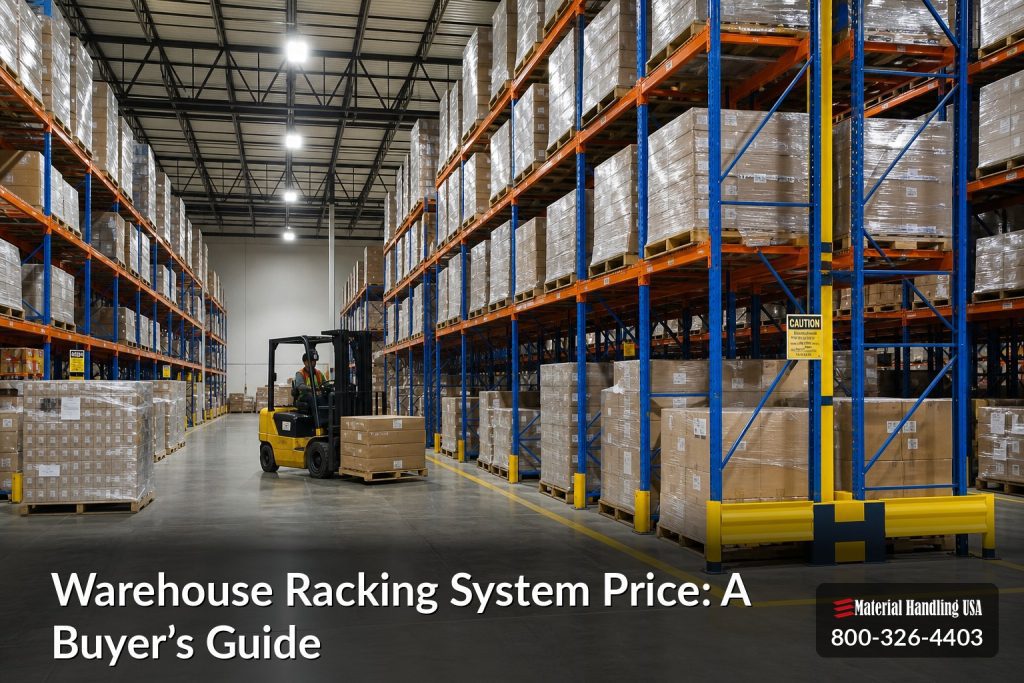
Most new warehouse racking systems are budgeted by pallet position, and many fall between $75 and $200 per storage spot. That's a useful starting point, but it's only the beginning of a real project budget.
If you're the person being asked for a number before layout, engineering, or permits are fully defined, you're in a common spot. Operations needs more capacity. Finance wants a defensible budget. Leadership wants to know whether this is a simple equipment purchase or a larger facility project. In practice, warehouse racking system price depends less on raw square footage and more on storage density, access requirements, load profile, and what your building and local code require.
The mistake I see most often is treating a rack quote like the full answer. It isn't. The steel matters, but so do installation, freight, permitting, seismic requirements, and long-term inspection costs. If you want a number that survives procurement review, you need to price the whole system, not just the uprights and beams.
Your Guide to Warehouse Racking System Pricing
A typical project starts the same way. Operations needs more pallet capacity, purchasing asks for a budget number, and a rack vendor sends over a steel quote. That first quote is useful, but it is only one piece of the cost.
Per-pallet-position pricing is the best early planning metric because it ties cost to storage output instead of floor area alone. Published market benchmarks place many new systems in a broad range of about $80 to $300 per pallet position in published pallet racking cost benchmarks. The same benchmark shows why a large project can swing widely in price. A 25,000 square foot warehouse with 5,000 pallet positions could land around $375,000 to $1,000,000 for racking equipment alone, depending on system type and layout assumptions.
That is equipment alone. It is not an all-in project number.
Why per-position pricing works
A per-position number gives buyers a clean way to compare options that do very different jobs. Two layouts can fit in the same building and produce very different storage counts, travel paths, and forklift productivity. Looking at cost per pallet position keeps those trade-offs visible early, before a team gets distracted by individual beam and upright prices.
It also helps expose weak quotes. If you're still early in planning, compare complete pallet rack and pallet rack systems against your pallet count, handling method, and selectivity requirements instead of comparing line items in isolation.
Practical rule: If the quote doesn't tell you how many pallet positions you're buying, it's hard to compare one proposal against another.
What the opening number does not include
The opening number usually covers rack materials. It often leaves out layout and engineering, freight, unloading, permits, seismic review, slab repairs, guardrail or column protection, sprinkler changes, and installation. In many projects, those items decide whether the budget holds or falls apart.
This is the part new buyers miss. A low steel number can still produce a costly project if the building needs prep work or local code review adds time and engineering.
The right budget question is simple. What will this system cost to buy, install, permit, and operate safely in this building?
The Core Factors Driving Racking Prices
A buyer can look at two quotes for the same pallet count and still be comparing very different projects. One uses basic selective rack in a clean box. The other needs taller uprights, heavier beams, row protection, and a layout that works around columns, dock doors, and lift equipment. That is why racking price moves so quickly once the conversation gets past the base steel.

System type changes the whole economics
Rack type sets the cost structure first. Selective rack is usually the lowest-cost entry point because it uses a simple upright-and-beam layout and gives direct access to every pallet. Drive-in, push-back, and pallet flow cost more because they trade simplicity for storage density, added mechanical components, and tighter installation requirements.
That trade-off matters in budgeting. A denser system can justify a higher price if it delays a building expansion or reduces the footprint needed for the same inventory.
Geometry and capacity drive the steel package
After system type, the biggest price drivers are height, depth, beam span, and required load rating. Common rack layouts for standard pallets often use 42-inch to 48-inch depths, beam lengths in the 96-inch to 144-inch range, and heights from lower starter systems up to tall layouts used in larger facilities, as outlined in Conger's warehouse racking guide. As those dimensions increase, the rack usually needs heavier sections, more bracing, or both.
Here is what that means in practice:
- Taller rack increases upright cost and usually brings more engineering review.
- Longer beam spans can reduce the number of uprights, but they also raise beam demand and load requirements.
- Deeper bays can improve storage density, though they may limit accessibility depending on the layout.
- Heavier pallet loads push the design into stronger frames, stronger beams, and stricter deflection limits.
Buyers often underestimate how much beam selection affects the quote. Comparing actual pallet rack beam sizes and capacities makes it easier to see why two systems with the same bay count can land at very different prices.
Accessories and protection are part of the real system
The working system is rarely just uprights and beams. Many projects add wire decking, pallet supports, row spacers, anchor bolts, end-of-aisle guards, column protectors, and rack repair kits. In food, beverage, and high-throughput operations, those items add up fast because they are tied directly to safety, product support, and forklift traffic.
Some accessories are optional. Others are driven by the product, the lift truck, or the local authority having jurisdiction.
Layout efficiency affects budget even before hidden project costs
A cheaper rack configuration can still produce a more expensive project if it wastes floor space or creates poor travel paths. I usually tell operations managers to price the rack and the layout together. A system that needs more aisles, more turns, or more building area may save money on steel while costing more in the full project.
Typical Price Ranges by Racking Type
A quick price check usually starts with rack type, because the storage method changes both the equipment cost and the size of the project around it. The numbers below are best used as screening ranges, not as a final budget.
Estimated Cost Per Pallet Position by Racking Type
| Racking System Type | Estimated Cost Per Pallet Position |
|---|---|
| Selective racking | $50 to $75 |
| Drive-in racking | $75 to $105 |
| Drive-through racking | $80 to $120 |
| Push-back racking | $110 to $220 |
| Pallet flow racking | $135 to $400 |
Cantilever rack does not translate cleanly into cost per pallet position because buyers usually specify it by arm length, column height, base style, and single-sided or double-sided layout. In the same published benchmark referenced earlier in this article, an 8-foot single-sided cantilever unit is priced at about $465 to $750.
The spread between these systems reflects more than steel tonnage. Selective rack is usually the least expensive starting point because it is straightforward to manufacture, install, inspect, and reconfigure. Push-back and pallet flow cost more because they add carts, rails, rollers, and tighter installation tolerances. Those systems can still be the better financial decision if they cut the building footprint, reduce travel time, or postpone a move to a larger facility.
Use the range with the operating profile. Selective fits operations that need direct access to every pallet and frequent SKU changes. Drive-in and drive-through suit deeper storage of like product. Push-back works well where density matters but selectivity still has value. Pallet flow earns its keep in FIFO environments with enough throughput to justify the added hardware.
Code exposure also changes price by type. High-density systems often trigger closer review of flue space, sprinkler performance, and structural loading, especially in taller layouts or seismic zones. If the building is in a regulated area, budget for seismic pallet rack compliance requirements before you compare one rack type against another on price alone.
One more budget point gets missed early. Rack type can affect insurance review, risk controls, and the paperwork tied to storage liability, especially for 3PL and public warehousing operations. Details on warehouse legal liability help frame that part of the exposure.
The practical takeaway is simple. A lower cost per pallet position does not always mean a lower project cost. A system with a higher slot cost can still produce the better all-in result if it stores more inventory in the same cube and avoids added building, labor, or compliance expense later.
Beyond the Steel Uncovering Hidden Project Costs
A rack quote is not a project budget. Buyers who miss that distinction are the ones who end up back in front of finance with a change order.
Published guidance from IMH Group on pallet rack costs notes that freight, installation, and permitting can add roughly 10 to 30% to total project value. That's a wide enough range to materially change your budget, especially on multi-row or code-sensitive installations.

The costs that show up after the equipment quote
These are the budget items that routinely surprise first-time buyers:
- Freight and delivery: Heavy steel moves differently than small parcel products. Site access, unloading conditions, and shipment timing all affect cost.
- Installation labor: Rack installation isn't just assembly. Crews have to anchor, square, level, and verify the system against the approved layout.
- Engineering and design: Some buildings need stamped drawings, fire review coordination, or layout revisions before anyone can install.
- Permits and compliance: Local jurisdiction matters. Seismic rules, egress, and fire code can all add scope.
- Site preparation: Floor condition, slab anchors, obstructions, and demolition of existing equipment can all move the final number.
Why compliance belongs in the budget from day one
If your building is in a seismic region or under stricter local review, compliance isn't optional. It changes the rack design, anchoring, and paperwork required. Buyers dealing with that issue should review pallet rack seismic compliance before assuming a standard rack package will translate directly into an installed system.
Risk planning belongs here too. If you're reviewing liability exposure around stored inventory, customer goods, or facility operations, Details on warehouse legal liability can help frame the broader operational side of the decision.
The cheapest steel package often becomes the most expensive project if it leaves out code-driven work that your jurisdiction will require anyway.
How to Estimate Your Racking Project Budget
A workable budget starts with operations, not with a catalog page. You need to know what you're storing, how many pallet positions you need, how fast product moves, and whether selectivity or density matters more.

A simple budgeting worksheet
Define pallet requirements. Count required pallet positions. Confirm pallet dimensions, load weight, and whether pallets are uniform or mixed.
Choose the operating model. Decide whether your team needs direct access to every pallet or whether denser storage is acceptable.
Match the rack type to the workflow. Selective, double-deep, drive-in, push-back, pallet flow, and cantilever all solve different problems.
Build the equipment estimate. Use per-position pricing as your first screening tool, then refine it with actual layout and component choices.
Add project costs. Include freight, installation, permitting, and engineering rather than treating them as afterthoughts.
Review the timeline impact. A project started earlier usually gives you more options on layout, approvals, and installation sequencing.
A practical budgeting habit
Use two numbers internally. Keep one figure for equipment cost and another for all-in installed cost.
That one change improves decision-making immediately. It also helps procurement compare bids fairly, because one vendor may quote only steel while another includes a broader scope.
Procurement Financing and Lifecycle Costs
Good buying decisions don't end at purchase order. Once the system is installed, your rack becomes part of the building's long-term operating environment.
Rack inspection pricing offers a useful benchmark for that lifecycle view. According to Mazzella's 2025 rack inspection pricing overview, a single-day inspection typically ranges from $6,800 to $7,800, while a two-day inspection usually costs $7,800 to $9,800. Larger or more complex sites may be custom quoted.

Think in total ownership, not just acquisition
A well-priced project still needs to stay safe and serviceable. Over time, operators may need inspections, repairs, part replacements, and layout modifications as inventory changes.
That's why buyers should ask procurement questions early:
- Can the supplier support future add-ons?
- Are replacement components easy to source?
- Will the original layout still work if SKU mix changes?
- Does the proposal include enough detail to support maintenance later?
Buying strategy that saves time later
Some suppliers sell online. Others focus on engineered project support. Both can be useful depending on the job.
Material Handling USA is one example of a supplier that combines product purchasing with layout and permitting support, which can help buyers who need both equipment access and design input. In busy markets, earlier planning often leads to smoother installation windows and fewer delays tied to redesign or approvals.
A rack system is a long-term asset. Buy it like equipment, but budget it like infrastructure.
Frequently Asked Questions about Racking Costs
Is new or used racking the better value
That depends on your risk tolerance, timeline, and project complexity. Used racking can look attractive when budget is tight, but it may create issues around compatibility, finish condition, available quantities, or matching components across expansions.
For highly specific layouts, code review, or seismic needs, buyers often prefer new systems because configuration and documentation are easier to control. Used inventory can still fit some projects, but it needs careful verification before it becomes a real savings.
How do seismic requirements affect warehouse racking system price
They can materially affect the final installed number. The impact usually shows up through anchoring, engineering review, permitting, and system design requirements rather than through a simple catalog premium.
This is one reason similar rack layouts can price differently in different jurisdictions. Building location matters.
Are custom sizes always more expensive
Usually, custom sizing increases complexity. Standard dimensions are generally easier to source and compare.
That said, custom isn't automatically the wrong move. If a purpose-built layout improves cube utilization, avoids building modifications, or solves a handling constraint, it may create better total economics than forcing a standard configuration into a nonstandard space.
What should I ask for in a quote
Ask for a clear scope. You want to know whether the proposal includes equipment only or a fuller project package with delivery, installation, layout support, and compliance-related work.
If the quote doesn't explain assumptions, it isn't ready for internal approval.
If you're comparing warehouse racking system price options, the smart move is to price the whole project, not just the steel. A clear layout, realistic installed budget, and early review of compliance needs can prevent delays and help you secure better planning windows while demand stays active. For help reviewing options, get a free quote, request a layout, Contact Us, or call 800-326-4403. You can also email Sales@MH-USA.com to discuss your project.