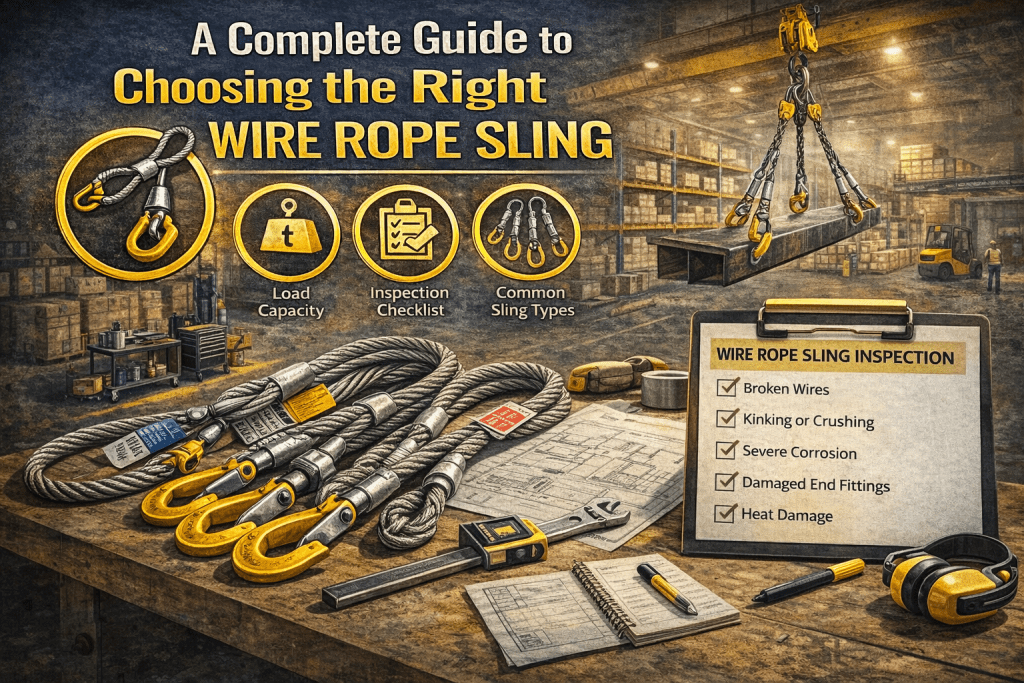
When you think about the real heavy lifters in any industrial setting—hoisting steel beams, positioning massive equipment, or moving shipping containers—what you’re picturing is the essential work of a wire rope sling. These aren’t just simple cables; they’re meticulously engineered tools that create the vital, secure link between your crane and your valuable assets.
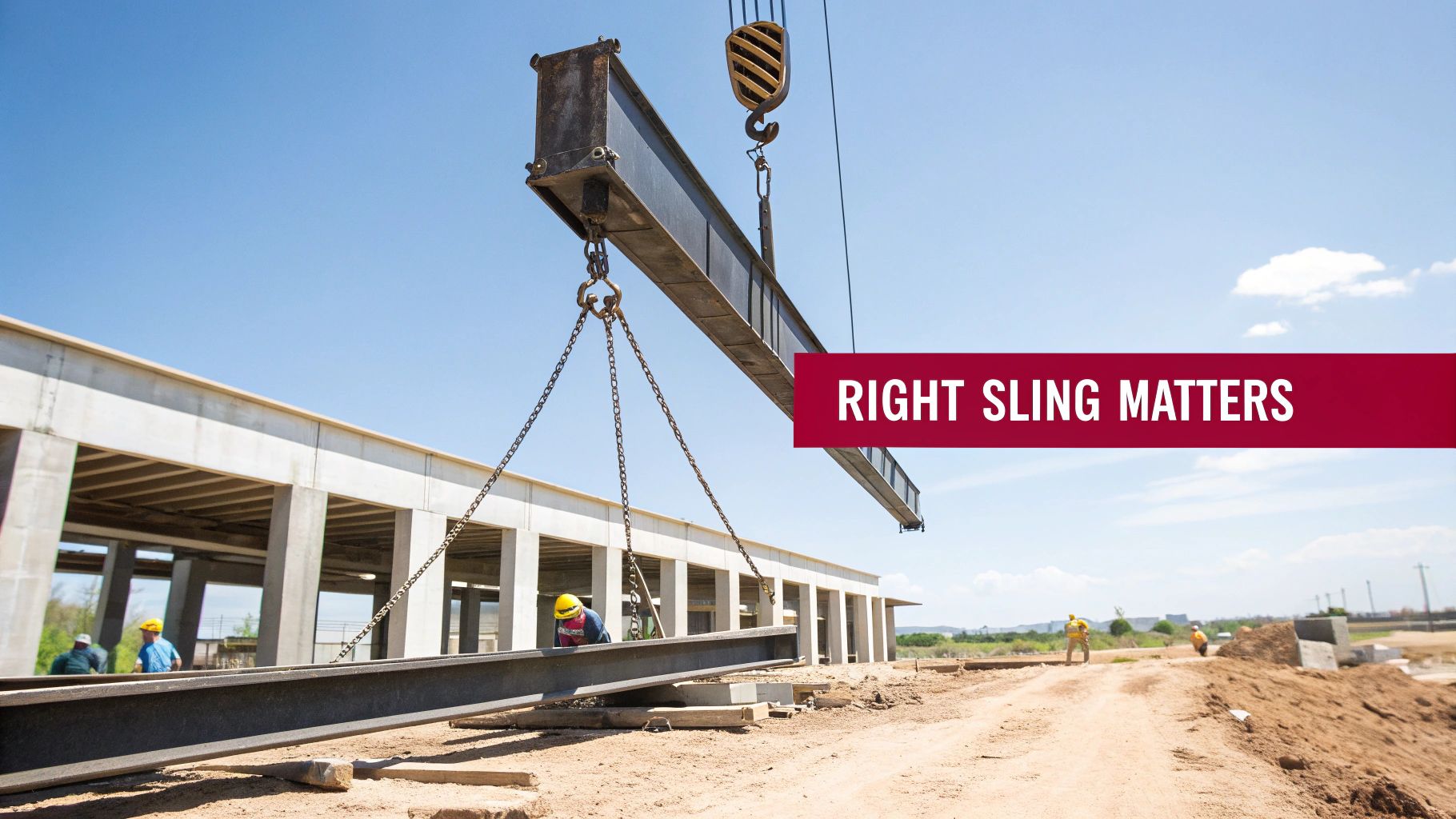
Choosing the right sling isn’t just a minor detail; it’s a critical decision that directly impacts the safety of your team and the efficiency of your entire operation. A mismatched or poorly maintained sling can quickly become the weakest link, leading to catastrophic failures, project delays, and costly downtime. This guide will walk you through exactly what you need to know to get it right every time.
Investing in Safety and Productivity
The sheer importance of this equipment is clear when you look at the numbers. The global wire rope sling market is valued at a robust USD 2,396 million in 2025, a figure that reflects its indispensable role in the sectors Material Handling USA serves every day. Projections show this market soaring to USD 3,616 million by 2035, fueled by a worldwide surge in infrastructure projects and industrial growth. You can see more details on these global market growth projections.
What does this growth mean for you? It underscores a key point for managers and buyers: the demand for high-quality lifting gear is only going up. Securing the right equipment now means getting ahead of potential supply chain delays later, which allows for smoother project planning and faster installations.
Of course, having the right tools is only half the battle. To truly lock in safety, it’s crucial to understand how your slings fit into a comprehensive Occupational Health and Safety Management System for your facility. A strong safety culture starts with the best equipment and the right knowledge.
Key Takeaway: A wire rope sling is more than a purchase; it’s an investment in your operational safety and efficiency. The right choice protects your team, your assets, and your timeline.
Your Partner in Lifting Solutions
Understanding sling construction, performing essential safety checks, and calculating load capacities are non-negotiable skills for any team involved in heavy lifting. We’re here to help you navigate these requirements with confidence.
At Material Handling USA, we provide competitively priced, quality products with the industry’s fastest shipping and delivery. Whether you’re outfitting a new warehouse or upgrading existing systems, our team is ready to help with free layouts and no-obligation quotes.
Ready to find the right lifting solution for your facility? Explore our full range of lifting and material transport equipment or call our experts at (800) 326-4403 for a personalized consultation.
A Look Inside: Sling Construction and Common Types
Not all wire rope slings are created equal. If you want to make the right call for your operation, you first have to understand how they’re built. Think of a sling as a high-performance team—every single component has a job to do, and they all have to work together to handle the load safely.
The backbone of any wire rope sling is its core. This is the central member that supports all the outer strands, and it typically comes in one of two flavors. A steel core (IWRC), which stands for Independent Wire Rope Core, gives you fantastic crush resistance and raw strength, making it the go-to for tough industrial jobs. On the other hand, a fiber core (FC) offers a lot more flexibility, which is a huge plus when the sling needs to wrap snugly around a load.
The Building Blocks of Strength
Wrapped around that core are individual steel wires, which are twisted together to form strands. Those strands are then wound helically around the core, and you have a wire rope. The specific pattern they’re wound in is called the lay, and it plays a big role in how the rope behaves—affecting everything from its handling characteristics to how well it stands up to abrasion.
This isn’t just trivia; the construction directly impacts the sling’s real-world performance. A rope made with more, smaller wires will bend more easily. One with fewer, larger wires will be stiffer but much tougher against wear and tear. Finding the right balance is the key to matching a wire rope sling to the task, whether you’re just lifting pallets or carefully positioning a multi-ton piece of machinery.
Breaking Down the Most Common Sling Setups
Once the rope itself is made, it’s fabricated into different sling configurations, each designed for specific lifting challenges. You’ve got everything from simple single-leg slings for straight vertical lifts to complex multi-leg bridles needed to keep an awkward, heavy load stable. Picking the right one is absolutely critical for a safe, efficient lift.
Knowing the difference between these common types will help you choose the best tool for the job every time.
- Single Leg Slings: This is the most basic setup. It’s perfect for straight, vertical lifts where the load is balanced and has one solid attachment point. Simple, effective.
- Two, Three, and Four Leg Bridle Slings: These multi-leg setups use a master link to join several sling legs. They are lifesavers when you need to stabilize a load with multiple lifting points, especially large or irregularly shaped items.
- Endless or Grommet Slings: These are made from a single, continuous loop of rope. Their versatility is off the charts—you can use them in vertical, choker, or basket hitches. Because it’s a continuous loop, the wear gets distributed over a much larger area, which really helps extend its working life.
- Eye and Eye Slings: These are probably the most common slings you’ll see out in the field. They have looped eyes at each end, which makes connecting them to hooks and other rigging hardware a breeze.
The popularity of eye and eye slings is no secret. They are on track to capture 46% of the market share in 2025. Why? Their simple, effective design is perfect for a huge range of general lifting and load-securing jobs. You can discover more insights about these market trends to see how they’re shaping the industry.
Comparing Common Wire Rope Sling Types
Use this guide to quickly compare sling types and identify the best fit for your lifting applications.
| Sling Type | Primary Use Case | Key Advantages | Important Considerations |
|---|---|---|---|
| Eye and Eye | General purpose lifting; vertical, choker, and basket hitches. | Versatile and widely available; easy to connect to hardware. | The eye is a fixed wear point; requires proper padding on sharp corners. |
| Endless (Grommet) | Versatile lifting, especially in choker and basket hitches. | Wear is distributed around the entire loop, extending sling life. | Can be more difficult to inspect internally than an eye and eye sling. |
| Multi-Leg Bridle | Lifting loads with multiple pick points; providing load stability. | Balances and secures irregularly shaped or large loads effectively. | Lift angle is critical; a poor angle drastically reduces capacity. |
| Single Leg | Simple, straight vertical lifts with a single attachment point. | Cost-effective and straightforward for basic lifting tasks. | Offers no load stability; unsuitable for unbalanced items. |
By getting familiar with these fundamental sling types, you can make a smarter, safer choice for your facility. If you’re ever unsure about the best configuration for your unique challenges, our team can provide the expert guidance you need. Request a Quote today for a free, no-obligation consultation on your lifting needs.
Calculating Load Capacity for Safe Lifting
In any lift, safety is everything. There are no second chances. And it all comes down to one non-negotiable rule: never exceed the Working Load Limit (WLL) of your equipment. This isn’t just a friendly suggestion; it’s the absolute bedrock of safe rigging.
But a wire rope sling’s true capacity isn’t just the number printed on its tag. The real world throws in forces and angles that can drastically change how much that sling can actually handle. Getting the math right is what keeps your people and your assets safe. The biggest factor you’ll always have to wrestle with is the sling angle, especially when you’re using multi-leg bridle slings.
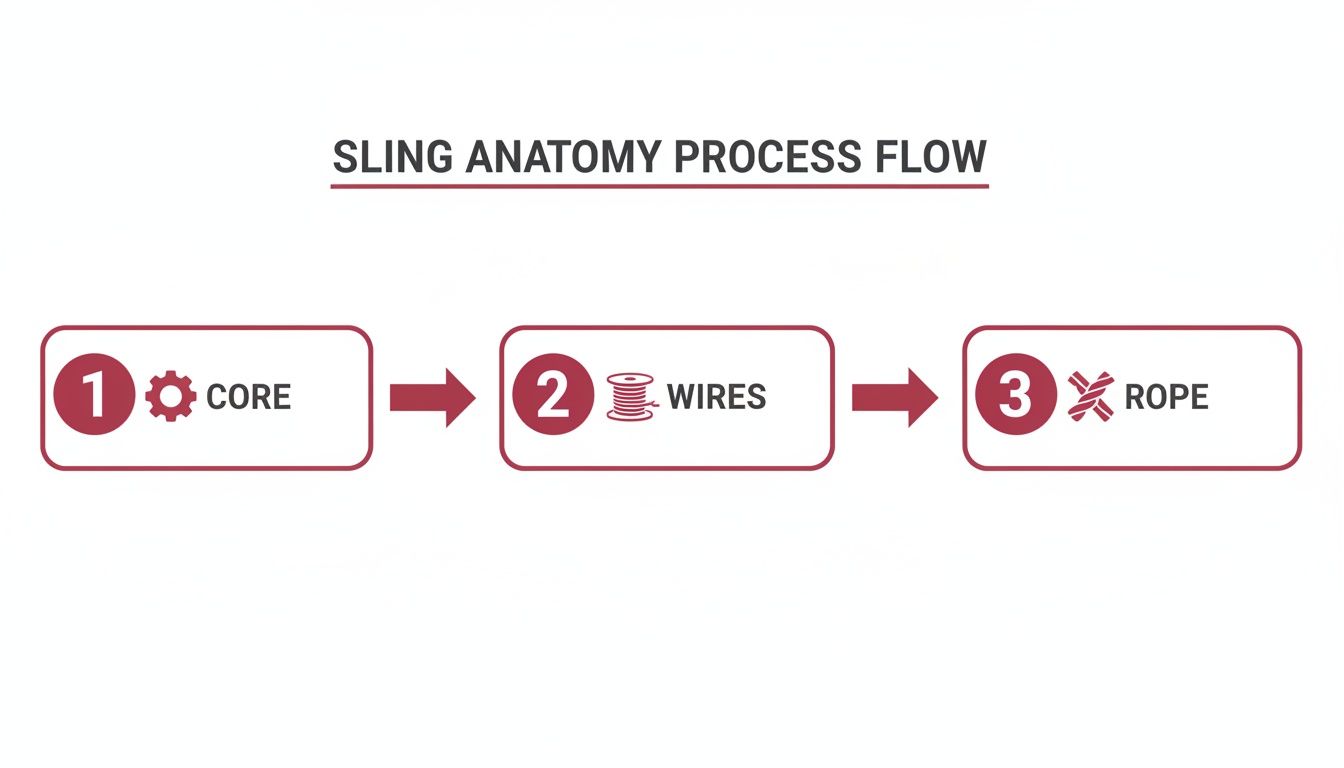
This diagram breaks down how the components of a wire rope sling work together to give it strength.
From that central core to the individual wires twisted into a rope, every part is built to take on stress. But the way you rig it ultimately decides its true, in-the-moment capacity.
Why Sling Angle Is the Most Critical Factor
Here’s a simple way to think about it. Imagine two people carrying a heavy box. If they hold it with their arms hanging straight down, it’s manageable. But what happens if they spread their arms wide apart? The strain on their arms skyrockets, even though the box weighs the same. A multi-leg wire rope sling works on the exact same principle.
As the angle between the sling legs and the load gets smaller (more horizontal), the tension on each leg shoots up. This dramatically reduces the sling’s effective lifting capacity. A shallow angle can multiply the force on each leg, pushing it right past its WLL, even if the load itself is well within the sling’s vertical rating.
Key Insight: At a 30-degree lift angle, the tension on each sling leg is double what it would be in a straight, 90-degree vertical lift. This means your sling’s real-world capacity has just been cut in half.
This is exactly why rigging experts and safety bodies like OSHA hammer home the danger of using sling angles less than 30 degrees. The ideal angle for maximum capacity and safety is a straight 90-degree lift, with 60 degrees being a common and highly effective working angle.
Performing a Pre-Lift Calculation
Before anything heavy leaves the ground, a quick calculation is non-negotiable. You have to account for the load’s weight, find its center of gravity, and factor in the type of hitch you plan to use.
Here’s how different hitches affect a sling’s capacity:
- Vertical Hitch: This is your baseline. A single, vertical sling leg attached to the load uses the sling’s full rated capacity (100%).
- Choker Hitch: When you wrap the sling around the load in a choker, it tightens as it lifts. That sharp bend creates stress points in the rope, which typically reduces the sling’s capacity to about 75% of its vertical rating.
- Basket Hitch: Here, the sling cradles the load with both eyes on the hook. If the legs are perfectly parallel (a true vertical basket), you can double the sling’s vertical capacity. But that’s rare in the real world. As the angle of the legs widens, the capacity drops.
A Simple Formula for Angle Tension:
To figure out the actual tension on each sling leg in a bridle, you can use a straightforward calculation:
Tension per Leg = (Load Weight) / (Number of Legs x sin(Angle))
In this formula, the “Angle” is measured from the horizontal. As you can see, a smaller angle means a smaller sine value, which sends the tension soaring.
Getting these calculations right is absolutely critical, especially when you’re coordinating complex lifts to install heavy machinery. For big projects that involve entire material handling systems, like those in our guide to Vestil cranes and lifting solutions, proper rigging ensures everything goes smoothly and safely. A little bit of math upfront prevents costly delays and protects your investment.
Your Guide to Sling Inspection and Maintenance
Think of a well-maintained wire rope sling as your first line of defense against a lifting accident. It’s more than just a piece of gear; it’s a critical safety device that demands your full attention. Taking care of it not only protects your team but also squeezes every bit of service life out of your equipment, saving you from the headaches of downtime and replacement costs.
The best way to keep your slings in safe, working condition is to build a rock-solid inspection routine. It’s not complicated. Industry standards boil it down to three distinct stages, and following them isn’t optional—it’s essential for a safe operation.
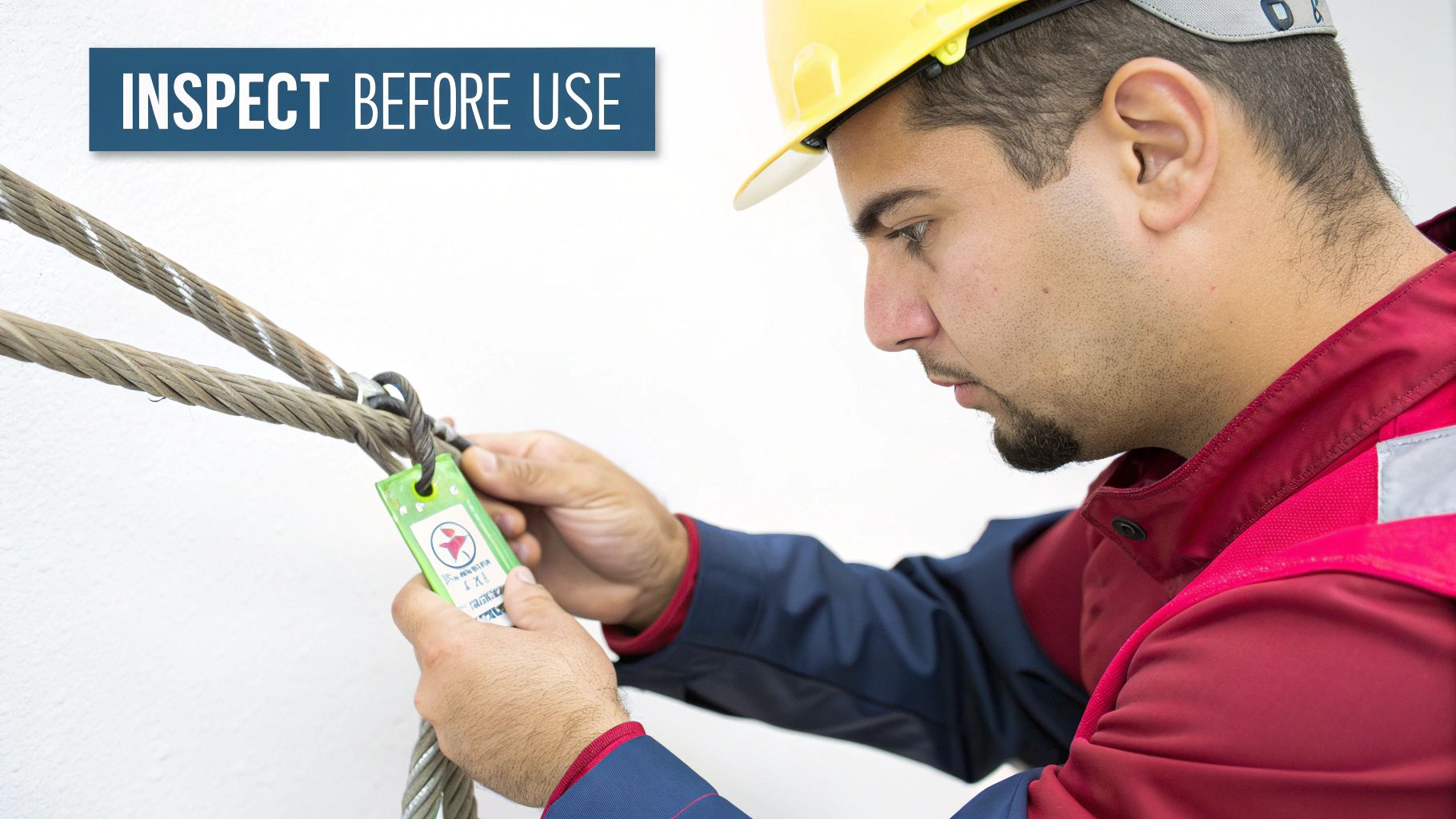
The Three Pillars of Sling Inspection
Each inspection type has its own job, creating a layered safety net designed to catch problems before they become catastrophes. Make all three a non-negotiable part of your standard operating procedures.
-
Initial Inspection: Before a new sling ever sees a load, it gets an initial once-over. This is your chance to confirm it’s exactly what you ordered and wasn’t damaged in transit. Think of it as setting the baseline for the sling’s entire life.
-
Frequent Inspection: This is the daily grind check. It’s a quick, hands-on visual inspection done by the operator before every shift or even before each lift. You’re looking for any obvious damage that might have happened during the last job.
-
Periodic Inspection: This is the deep dive. A qualified inspector must perform this much more thorough examination at least annually (or more often in harsh conditions). It involves detailed measurements and a meticulous hunt for subtle wear and tear, all documented in a formal record for that specific sling.
Knowing When to Retire a Sling
Spotting a problem is only half the battle; you have to know what constitutes a deal-breaker. A damaged sling must be pulled from service immediately and destroyed so no one can accidentally use it again. When it comes to sling integrity, there is zero room for guesswork.
Safety Mandate: Never try to repair a damaged wire rope sling. Any significant wear, kinking, or broken wires means the sling can no longer be trusted with its rated load. It must be retired. Period.
Use this checklist during every inspection. If you find any of these conditions, the sling is done:
- Broken Wires: Look for several broken wires bunched together in one rope lay. While standards have specific numbers, any noticeable cluster of breaks is a massive red flag.
- Kinking, Crushing, or Bird Caging: Any distortion that messes with the rope’s original shape is grounds for removal. A kink creates a permanent weak point you can’t undo.
- Serious Corrosion: Heavy rust isn’t just ugly; it pits the wires and hints at hidden internal damage. It reduces the rope’s diameter, kills its flexibility, and eats away at its strength.
- Heat Damage: Any discoloration, melted spots, or a weird glassy look means the sling got too hot. Heat can ruin the temper of the steel, dramatically weakening it.
- Damaged End Fittings: Check the eyes, hooks, and other hardware for any cracks, distortion, or excessive wear. The connection points are just as critical as the rope itself.
Of course, good maintenance goes a long way. Using a quality wire rope dressing protects the rope from friction and corrosion, which can massively extend its service life. Since their widespread adoption after WWII, wire rope slings have been workhorses of industry, and modern safety factors like the strict 5:1 ratio continue to make them a reliable choice for preventing incidents.
If you’re unsure about inspection criteria or need to replace a few retired slings, our team is here to help. Call us at (800) 326-4403 to make sure your lifting gear is up to snuff.
Common Applications in Your Industry
Reading technical specs for a wire rope sling is one thing. Seeing what it can actually do on the job? That’s where the real value becomes clear. These tools aren’t just about numbers and load charts; they’re about solving the real-world lifting challenges that slow down your entire operation.
Let’s break down where these workhorses shine. From the floor of a busy warehouse to a high-precision manufacturing line, a quality wire rope sling is often the unsung hero that keeps everything moving. Its unique mix of raw strength, flexibility, and sheer reliability makes it the go-to choice for thousands of heavy-lifting jobs.
Warehouse and Logistics Operations
In a warehouse, everything comes down to flow. When heavy or awkward items bring that flow to a grinding halt, a wire rope sling gets things back on track, especially for loads that a standard pallet jack or even a forklift can’t handle.
- Moving Heavy Equipment: Need to shuffle your floor layout or bring in a new piece of machinery? Slings give your overhead cranes the muscle to lift and position heavy assets with pinpoint accuracy. This minimizes risky manual labor and gets the job done faster.
- Loading and Unloading: Think massive crated goods, oversized machine parts, or palletized loads too heavy for a forklift. Slings are the critical link for moving these items from a flatbed truck to the dock or into your racking system.
Being able to plan these big moves with equipment you trust is huge. It helps you dodge those operational bottlenecks that kill productivity. When you know your lifting gear is up to the task, you can execute layout changes with less downtime.
Manufacturing and Production Lines
Step into any manufacturing plant, and you’ll find wire rope slings doing the heavy lifting every single day. They’re a cornerstone of the production process, handling everything from raw material intake to final assembly.
Most often, you’ll see them paired with overhead cranes to perform the critical lifts that keep the assembly line humming. To get a better feel for how these systems work together, you can check out our guide on the types of cranes and their uses.
Their role becomes absolutely vital during maintenance cycles. When heavy components like dies, motors, or massive rollers need to be swapped out, a properly rated sling is non-negotiable. It ensures those sensitive and expensive parts are handled safely, protecting both the equipment and your maintenance crew.
For maintenance teams in a manufacturing plant, this means relying on slings to handle thousands of pounds during crane operations. The right sling doesn’t just move a part; it helps reduce accident rates and keeps production cycles running smoothly.
Specialized and Secure Environments
The usefulness of wire rope slings goes far beyond the factory floor. A lot of specialized fields depend on their strength and control for unique challenges where there is absolutely no room for error.
- Laboratories: When you need to position a half-million-dollar mass spectrometer or a massive environmental chamber, you need a delicate touch. A wire rope sling provides the control required to place these valuable assets without causing the slightest bit of damage.
- Law Enforcement and Government: Inside secure storage facilities, slings are used to move large, heavy items like evidence lockers or bulky seized property. They make it possible to handle these objects safely within a highly controlled environment.
The demand for these tools is massive and growing. The global steel wire rope sling market recently topped USD 1,596.9 million. The construction sector alone was responsible for USD 499 million of that, and it’s expected to jump to USD 801 million by 2035 as more infrastructure projects get underway. Read the full research about these market dynamics. This surge in demand underscores why it’s smart to lock in your high-quality lifting gear now to avoid project delays down the road.
If you need a hand figuring out the right wire rope sling for your industry’s specific challenges, our experts are here to help. Request a Quote and we’ll get you set up with a free consultation.
Lifting Solutions with Material Handling USA
Getting wire rope slings right boils down to three fundamentals: knowing the construction, calculating your loads accurately, and sticking to a rigid inspection schedule. Nail these basics from the get-go, and you’ll sidestep costly project delays while building a safer, more productive work environment.
Here at Material Handling USA, we don’t just sell equipment; we deliver confidence. With our competitive pricing and what many tell us is the fastest shipping in the industry, you get the high-quality gear you need, right when you need it, keeping your operations on track.
Plan Ahead for Smooth Operations
Thinking ahead is everything, especially when your lifting needs are tied to a bigger project. Getting the right slings on-site before you need them means a smoother, faster installation of major systems like pallet racking, mezzanines, or modular offices. This kind of foresight prevents the common bottlenecks that can bring an entire facility upgrade to a screeching halt.
As more facilities managers move toward lean, sustainable layouts, the sheer durability of a wire rope sling becomes a huge plus. For instance, coated slings can deliver up to 20-30% longer life, which cuts down on replacement costs and makes them a smart choice for streamlined operations. You can dig into the market findings on wire rope sling longevity to see how they fit into modern facility management.
Key Takeaway: Investing in the right lifting equipment upfront isn’t just a purchase; it’s a strategic move. It tightens up project timelines, prevents installation headaches on larger systems, and supports your long-term operational efficiency.
Your Go-To Partner for Quality and Support
Let our team help set your facility up for success. We’ve got the quality materials and products you need to tackle any lifting challenge with complete confidence. Whether you’re after a standard eye-and-eye sling or need a custom multi-leg bridle for a complex lift, we have the inventory and expertise to back you up.
We also provide free layouts and designs with no obligation, helping you visualize and plan your space for peak efficiency. Our team is ready to pull together a free quote to get your project moving.
Demand for reliable industrial equipment is always high, so planning your purchases ensures you get the solutions you need without the wait. Browse our online store for immediate needs, or get in touch with our expert team to talk through your next big project.
Ready to secure the right lifting solutions? Request a Quote today or give us a call at (800) 326-4403 for one-on-one help.
Still Have Questions About Wire Rope Slings?
Choosing the right lifting gear is a big decision, and when it comes to something as critical as a wire rope sling, you need straight answers. Here are some of the most common questions we get from managers and buyers on the front lines.
What Is the Difference Between a Wire Rope Sling and a Chain Sling?
Think of it like choosing between running shoes and work boots. A wire rope sling is generally lighter and more flexible, making it a great all-around choice. Its wider surface area is also gentler on finished or fragile loads where you can’t afford to leave a mark.
On the other hand, chain slings are the heavy-duty work boots of the lifting world. They’re built for durability and can handle high heat and seriously rugged environments like nobody’s business. Plus, they’re the only sling type you can actually repair. The right choice really boils down to your specific lift, the environment you’re working in, and your budget.
How Often Do I Need to Inspect My Slings?
OSHA and ASME have this locked down with two types of inspections, and both are non-negotiable for safety.
First, there’s the frequent inspection. This is a quick hands-on check for obvious damage that a designated person on your team must do before every single use—or at the very least, at the start of each shift. No exceptions.
Second is the periodic inspection. This is a much more thorough, in-depth examination that must be done by a qualified person at least once a year. If your slings are seeing severe use (think high-volume lifting or harsh conditions), you’ll need to do these more often.
Can I Repair a Damaged Wire Rope Sling?
Absolutely not. You should never try to repair a wire rope sling. Things like broken wires, kinks, crushing, or heat damage permanently compromise the sling’s integrity. A “repaired” sling is an accident waiting to happen because its original rated capacity is gone for good.
To keep your team safe and prevent a damaged sling from being used by mistake, any sling that’s removed from service needs to be destroyed immediately. Cut it up, dispose of it, and replace it with a new, properly rated sling.
What Does the 5 to 1 Design Factor Mean?
The 5-to-1 design factor is a critical safety buffer built into every quality sling. It simply means the sling’s minimum breaking strength is five times greater than its official Working Load Limit (WLL).
This isn’t extra capacity for you to use—it’s a safety margin designed to handle the dynamic stresses of a real-world lift, like minor shock loading or everyday wear and tear. Think of it as an airbag in a car; it’s there for your protection, not to encourage reckless driving. Never use it as an excuse to overload a sling.
At Material Handling USA, we don’t just sell equipment; we provide the high-quality lifting solutions and expertise you need to make every lift a safe one. With our fast shipping and huge inventory, we help you eliminate downtime and keep your projects moving.
Contact Us online for a free layout design or give us a call at (800) 326-4403 for immediate help from a specialist.