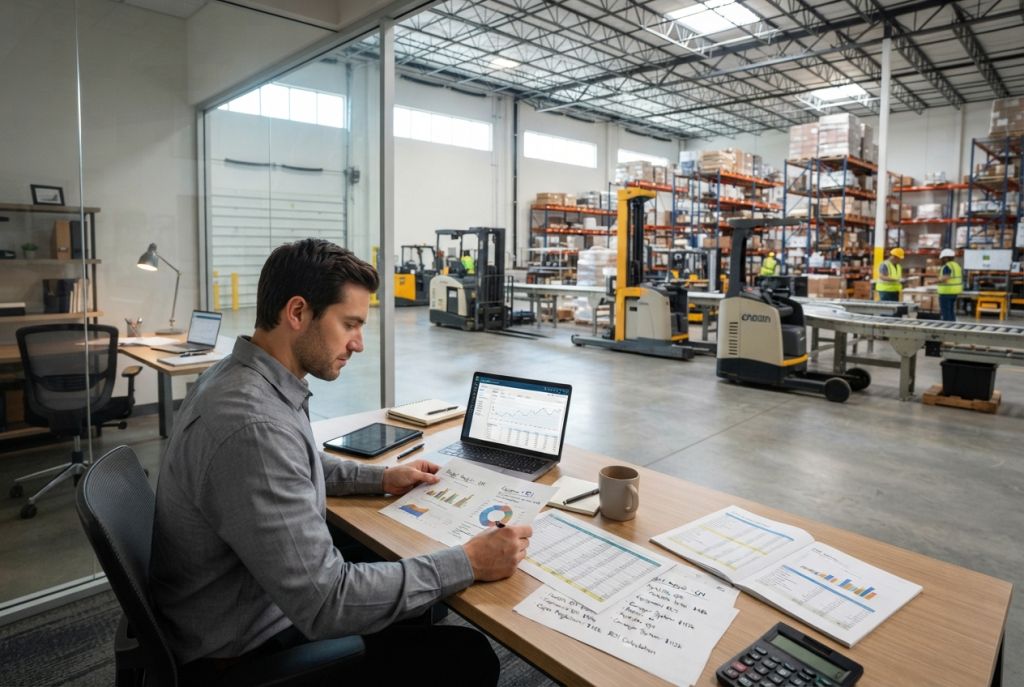
If your business is planning to invest in warehouse equipment this year, two federal tax provisions could significantly reduce your out-of-pocket cost: Section 179 and 100% Bonus Depreciation. Both allow businesses to deduct the full purchase price of qualifying equipment in the year it is placed in service — rather than spreading the deduction across many years.
This guide covers what qualifies, how the deductions work, the current limits, and which Material Handling USA products may be eligible.
Disclaimer: This article is for general informational purposes only and does not constitute tax, legal, or financial advice. Tax laws are complex and change frequently. Always consult a qualified tax professional or CPA to determine how these provisions apply to your specific business situation.

Section 179: Deduct the Full Cost of Equipment in Year One
Section 179 of the Internal Revenue Code allows businesses to deduct the full purchase price of qualifying equipment and property in the tax year it is purchased and placed in service. Instead of depreciating a $200,000 pallet racking system over 7 years, you could deduct the entire amount in year one.
2026 Section 179 Limits
| Detail | 2026 Amount |
|---|---|
| Maximum Deduction | $2,560,000 |
| Phase-Out Begins At | $4,090,000 in total qualifying purchases |
| Fully Phased Out At | $6,650,000 |
| New & Used Equipment | Both qualify |
These limits were significantly increased by the One Big Beautiful Bill Act (OBBBA) signed in 2025, which raised the cap from $1.25 million to $2.5 million (indexed for inflation). For 2026, the inflation-adjusted maximum is $2,560,000.
Section 179 Key Requirements
- Equipment must be purchased and placed in service during the 2026 tax year (by December 31, 2026 for calendar-year taxpayers)
- Must be used more than 50% for business purposes
- The deduction cannot exceed your business’s taxable income for the year — it cannot create a net operating loss
- Both new and used equipment qualify, as long as the equipment is new to your business
- Claim the deduction on IRS Form 4562, filed with your business tax return
100% Bonus Depreciation: No Dollar Cap
Bonus depreciation under Section 168(k) allows businesses to deduct 100% of the cost of qualifying property in the first year it is placed in service. The One Big Beautiful Bill Act permanently restored 100% bonus depreciation for qualified property acquired and placed in service after January 19, 2025.
Before this legislation, bonus depreciation was phasing down — it was 60% in 2024, 40% in early 2025, and headed to 0% by 2027. That phase-out is now eliminated.
Key Differences from Section 179
| Feature | Section 179 | 100% Bonus Depreciation |
|---|---|---|
| Dollar Limit | $2,560,000 (2026) | No limit |
| Income Limitation | Cannot exceed taxable income | Can create a net operating loss |
| New/Used Equipment | Both qualify | Both qualify |
| Must Be in Service By | Dec 31, 2026 | Dec 31, 2026 |
| Property Type | Tangible personal property | MACRS property with recovery period ≤20 years |
| Filed On | IRS Form 4562 | IRS Form 4562 |
Many businesses use Section 179 first (up to the $2,560,000 limit), then apply bonus depreciation to any remaining cost. Together, they can cover the full price of even large warehouse projects in a single year.
What Warehouse Equipment Qualifies?
Most tangible business property used in warehouse, distribution, and industrial operations qualifies for Section 179 and/or bonus depreciation. Under MACRS (Modified Accelerated Cost Recovery System), warehouse furniture, fixtures, and equipment are generally classified as 7-year property — but with Section 179 or bonus depreciation, you can write it off in year one instead.
Storage and Racking Systems

- Pallet racking systems — selective, drive-in, push-back, and other configurations
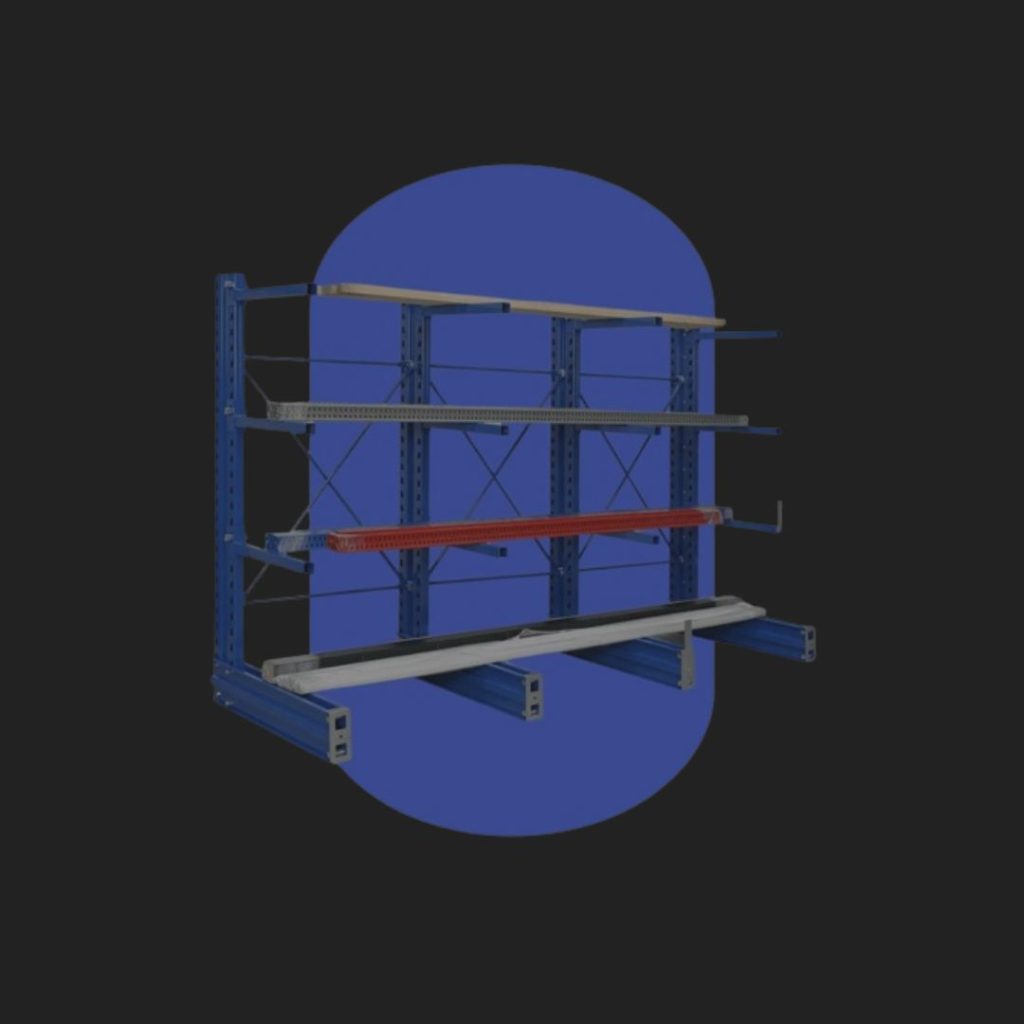
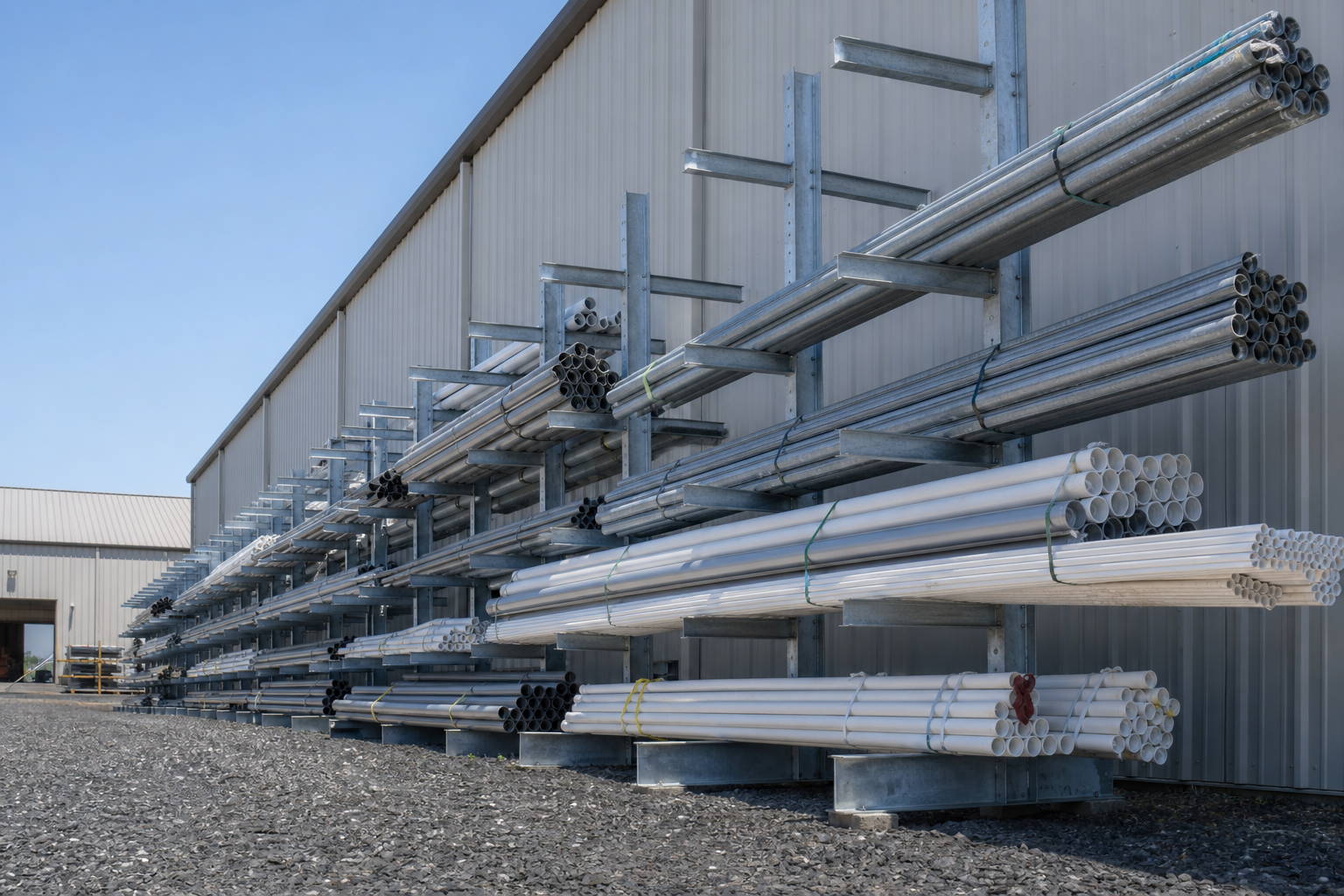
- Cantilever racking — for lumber, pipes, steel, and long materials
- Industrial shelving — rivet, boltless, wire, and clip shelving
- Bulk storage rack and die rack
- Multi-tier shelving systems
Infrastructure and Platforms
 Mezzanine.jpg” alt=”Steel mezzanine platform installed in a warehouse with stairs and safety rails” style=”max-width:100%;height:auto;border-radius:6px;margin:20px 0;” />
- Mezzanine systems — freestanding structural steel and roll-formed platforms*
- Modular buildings and in-plant offices
- Catwalks and industrial platforms
*Note: Freestanding modular mezzanines that are not permanently attached to the building structure are generally classified as tangible personal property. Consult your tax advisor for classification in your specific situation.

Security and Enclosures
 security cage with wire mesh panels and locked access door” style=”max-width:100%;height:auto;border-radius:6px;margin:20px 0;” />
- Security cages and wire partitions
- Server cages and controlled-access enclosures
- Wire mesh partitions for evidence rooms, tool cribs, and inventory control
Equipment and Material Handling
- Forklifts and warehouse vehicles
- Conveyor systems
- Smart lockers
- Workstations and packing stations

De Minimis Safe Harbor: Deducting Smaller Items
For smaller equipment and supply purchases, the IRS de minimis safe harbor allows businesses to immediately deduct items costing $2,500 or less per invoice/item (or $5,000 if your business has audited financial statements). There is no limit on how many qualifying items you can deduct in a year.
This can apply to smaller warehouse items like bins, labels, packaging tools, hand trucks, and minor accessories that fall below the threshold.
Example: How the Tax Savings Work
Consider a distribution center that purchases a $250,000 pallet racking and mezzanine system in 2026:
| Scenario | Year 1 Deduction | Estimated Tax Savings* |
|---|---|---|
| Standard MACRS depreciation (7 years) | ~$35,700 | ~$7,500–$10,700 |
| Section 179 or Bonus Depreciation (full write-off) | $250,000 | ~$52,500–$75,000 |
*Estimated savings assume a 21%–30% effective tax rate. Actual savings depend on your tax bracket, business entity type, and overall tax situation. Consult your tax advisor for exact figures.
How to Claim These Deductions

- Purchase qualifying equipment — from Material Handling USA or another supplier
- Place it in service before December 31, 2026 — equipment must be installed and in use, not just ordered
- Keep thorough records — purchase invoices, delivery confirmations, installation dates, and documentation of business use
- File IRS Form 4562 (Depreciation and Amortization) with your business tax return
- Work with a qualified tax professional — they can determine the best strategy for combining Section 179 and bonus depreciation to maximize your deduction
Frequently Asked Questions
Does pallet racking qualify for Section 179?
Yes. Pallet racking systems are classified as tangible personal property used for business purposes. As long as the racking is purchased and placed in service during the tax year and used more than 50% for business, it generally qualifies.
Can I deduct a mezzanine under Section 179?
Freestanding mezzanine platforms that are modular and not permanently attached to the building structure are generally classified as tangible personal property eligible for Section 179. However, the classification can depend on how the mezzanine is attached and used. Discuss this with your tax advisor.
Do both new and used equipment qualify?
Yes. Both Section 179 and 100% bonus depreciation apply to new and used equipment, as long as the property is new to your business.
What if I finance the equipment?
You can still deduct the full purchase price under Section 179 or bonus depreciation even if the equipment is financed. The deduction is based on the cost of the equipment, not how it was paid for.
What happens if my purchase exceeds the Section 179 limit?
You can use Section 179 up to the $2,560,000 limit, then apply 100% bonus depreciation on the remaining cost.
Get a Free Quote
Material Handling USA designs and supplies complete warehouse storage solutions — from pallet racking and mezzanines to security cages and modular offices. We help coordinate installation timelines so your equipment is in service before the year-end tax deadline.
📞 800-326-4403 | ✉️ Sales@MH-USA.com
Always consult a qualified tax professional to determine eligibility and maximize your deductions.
Who This Is For
Our tax deductions warehouse equipment section 179 2026 solutions are designed for:
- Warehouse managers and operations directors
- Facility planners and engineers
- Property managers
- Government facility coordinators
- Manufacturing plant managers
- Distribution center operators
Common Applications
Warehouse & Distribution
Optimize storage capacity and material flow with tax deductions warehouse equipment section 179 2026.
Manufacturing
Improve organization and efficiency with industrial-grade tax deductions warehouse equipment section 179 2026.
Government & Military
Meet security and compliance requirements with certified tax deductions warehouse equipment section 179 2026 solutions.
Frequently Asked Questions About Section 179 Warehouse Equipment
How do I start planning a warehouse layout?
Start by measuring your space, listing your inventory types and volumes, identifying workflow patterns, and noting any fixed constraints like columns or docks. A professional layout consultation can save significant time and cost.
What is the most efficient warehouse layout?
The most efficient layout depends on your operation type. For most warehouses, a U-shaped flow with receiving and shipping on the same wall minimizes travel. Place fast-moving items near shipping and use vertical space with mezzanines or high-rise racking.
Do you offer free warehouse layout design?
Yes, we offer free warehouse layout and storage design consultations. Our team uses your facility dimensions and inventory data to create optimized layouts that maximize space and improve workflow.
Related Resources
Need Help? Get a Free Quote
Material Handling USA can help you find the right solution. Call (800) 326-4403 or email sales@mh-usa.com to speak with a product specialist. We provide free quotes, layout assistance, and expert recommendations.