Explore Custom Solutions Today!
Upgrade Your Tool Storage – Invest in an automotive rolling tool cart and transform your workshop into an organized, efficient workspace.

Home | Automotive Supplies | Open vs. Closed Parts Room Layouts
What’s the best design for your workshop? This guide compares access models to help you choose the right layout for security, speed, and profitability.

When planning an automotive parts room design, one of the first and most fundamental decisions you will make is whether to implement an open or closed layout. This choice dictates who can access your inventory and how parts are retrieved, directly influencing everything from technician productivity to inventory accuracy. An open layout prioritizes speed and accessibility, while a closed layout emphasizes security and control. Neither is inherently better; the optimal choice depends entirely on your business goals, staffing model, and the types of parts you store. This guide provides a clear comparison to help you analyze the trade-offs and select the layout that will make your parts department a true center of efficiency.
Upgrade Your Tool Storage – Invest in an automotive rolling tool cart and transform your workshop into an organized, efficient workspace.
Understanding the operational differences between open and closed layouts.
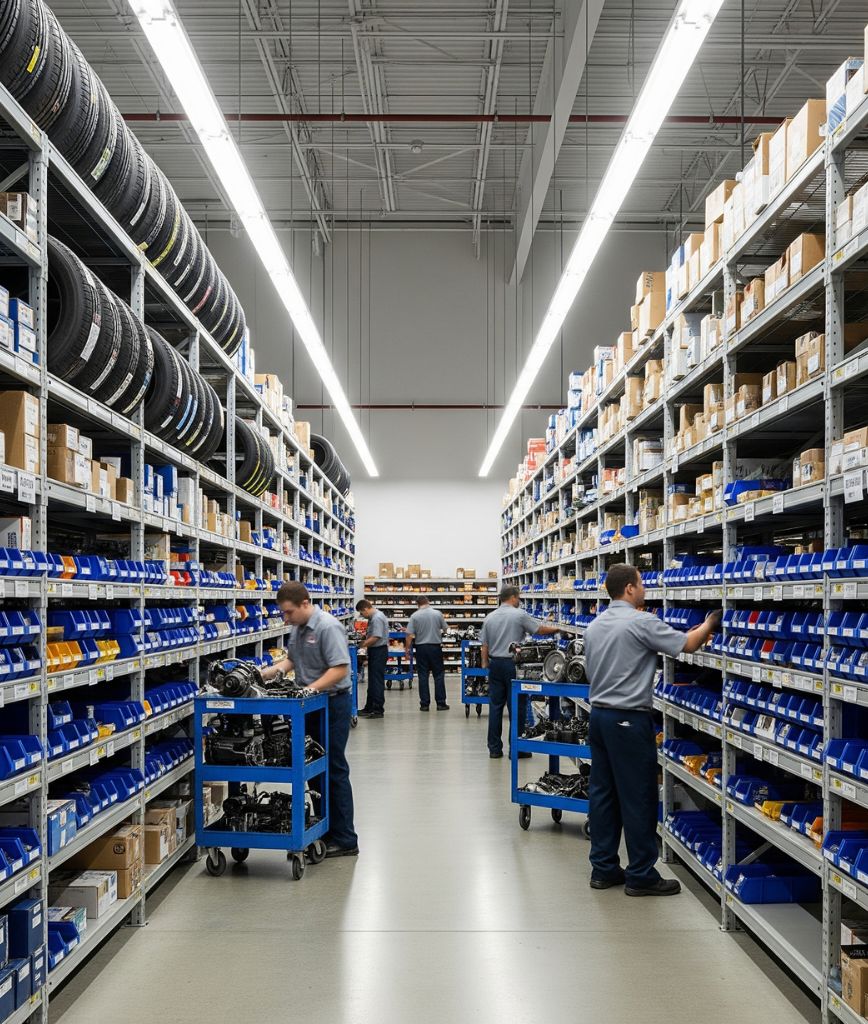
An open parts room, often called a self-serve or open-access model, allows service technicians direct access to the inventory. In this layout, technicians can walk into the parts room, find the components they need on the automotive shelving, and take them back to their service bay. This model is built on the principles of speed and trust. The primary goal is to minimize technician downtime by eliminating the need to wait at a parts counter.
Pros: The main advantage is speed. Technicians can retrieve parts instantly, which can significantly increase billable hours. It also requires fewer dedicated parts staff, as there is no need for a full-time counter person solely for retrieval.
Cons: The biggest drawback is the lack of inventory control. Without a formal checkout process, parts can be taken without being recorded, leading to significant inventory shrinkage and inaccurate counts. It can also lead to disorganization, as technicians may not return items to their proper locations. This model is generally only suitable for smaller shops with a high degree of team accountability.
A closed parts room is the industry standard for most dealerships and larger repair facilities. In this model, access to the parts storage area is restricted to dedicated parts department personnel. Technicians request parts from a service counter, and a parts professional retrieves the items for them. This creates a secure, controlled environment where every part that leaves the room is accounted for. This system prioritizes inventory accuracy, security, and process control.
Pros: This layout provides excellent inventory control, drastically reducing shrinkage and ensuring accurate records. It also maintains a higher level of organization, as only trained staff are handling the stock. This is critical when using high-density solutions like automotive modular drawers.
Cons: The primary disadvantage is the potential for technician downtime. If the parts counter is busy or understaffed, technicians may have to wait for parts, which reduces their productivity. This model requires a dedicated and efficient parts team to be successful.
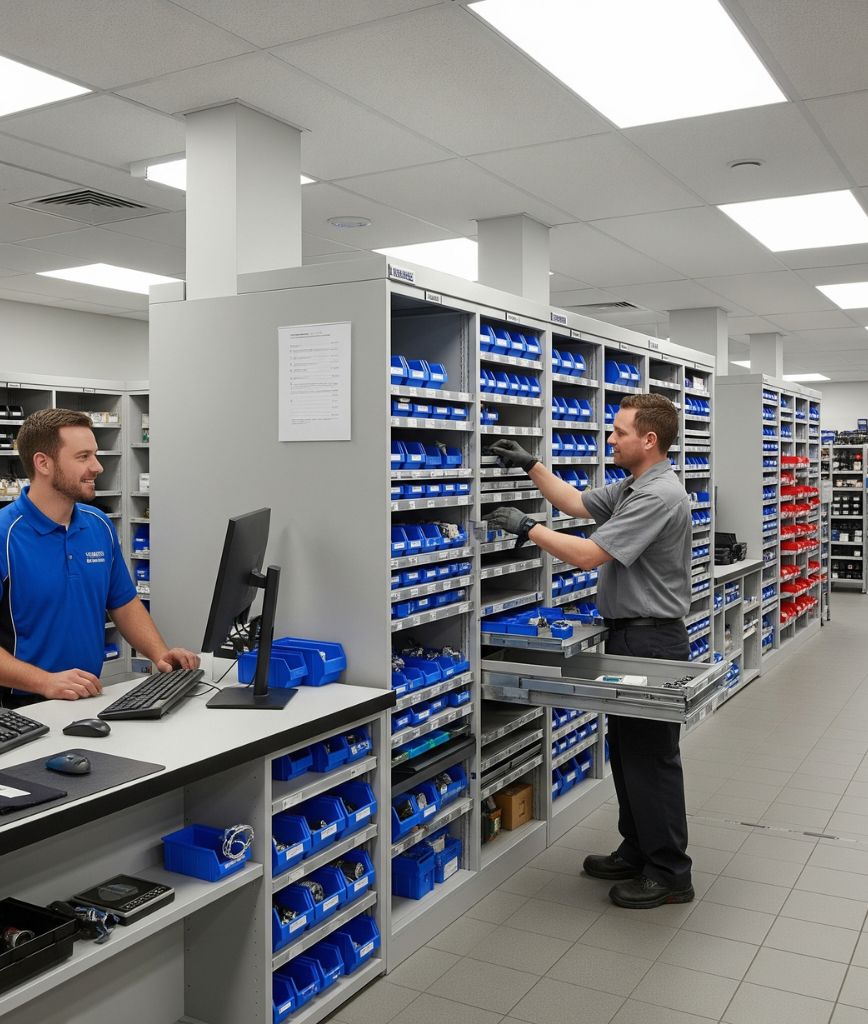
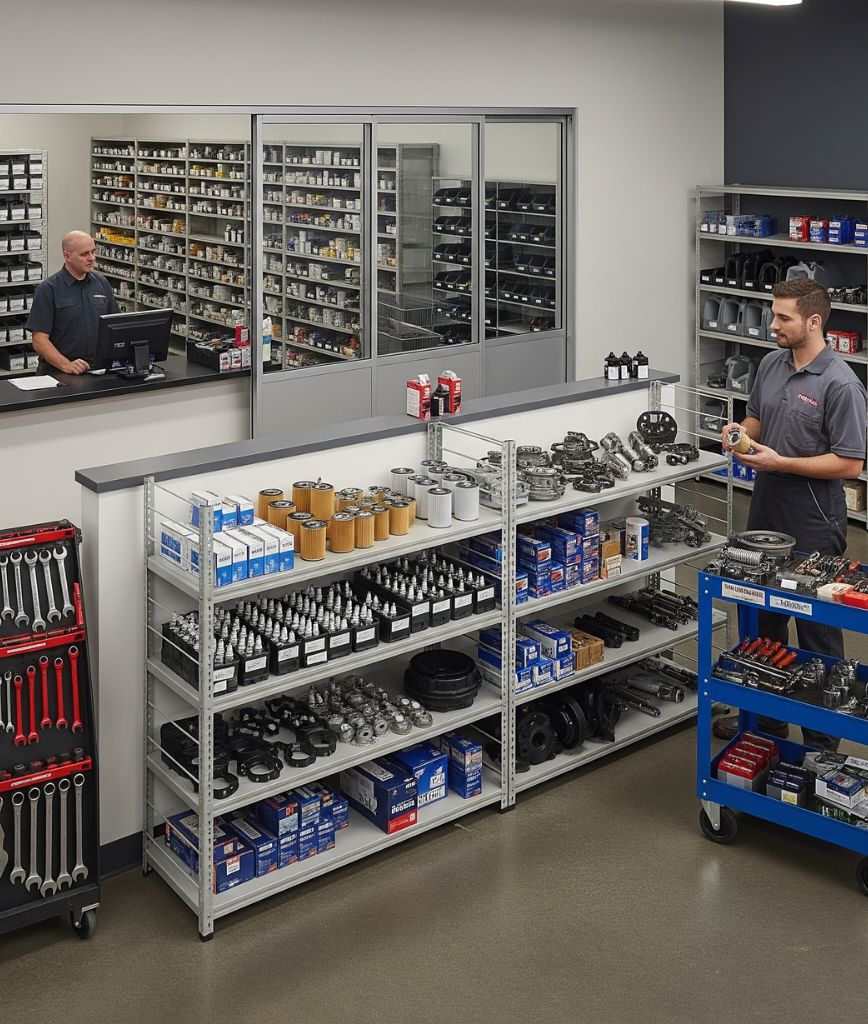
Many modern workshops adopt a hybrid approach that combines the best of both worlds. This model uses a closed parts room for the majority of the inventory but creates a small, open-access area for the most common, low-cost “A-group” parts. This area, often located near the service counter, might contain items like oil filters, spark plugs, gaskets, and common fasteners stored on simple wire shelving.
This allows technicians to quickly grab the everyday items they need without waiting, while keeping valuable and less common parts secure behind the counter. This approach can significantly improve workflow. Technicians can even be equipped with rolling tool carts to stock up on these common parts at the start of their day. This balanced system often provides the ideal mix of speed and control for a modern service department.
Explore our solutions and see how we have helped other dealerships transform their operations.
How the right access model impacts your bottom line.
The right layout ensures that your technicians are spending more time on billable repairs and less time waiting for parts.
A controlled layout leads to accurate inventory data, which prevents over-ordering and ensures you have the right parts on hand.
A closed or hybrid model significantly reduces the loss of parts due to misplacement or undocumented use, protecting your assets.
Whether through open access or an efficient closed system, the goal is the same: faster turnaround times for customer vehicles.
For a large dealership with high inventory value and many technicians, a closed or hybrid layout is almost always the best choice. The potential for inventory loss in a fully open system is too high. A closed system with a highly efficient parts team, possibly utilizing automated storage and retrieval systems, will provide the necessary control and security while still delivering parts quickly.
Speed in a closed system comes from organization and workflow. Ensure your fastest-moving parts are closest to the counter. Implement a digital parts request system so orders are in the queue before the technician arrives. Keep the parts room impeccably organized so staff can find items instantly. For a major upgrade, an automated tire storage carousel or a vertical lift module for small parts can reduce retrieval times from minutes to seconds.
A fully open layout can work in specific environments, such as a small, specialized repair shop with only a few technicians who have a strong sense of ownership and accountability. It can also be effective in fleet maintenance facilities where the technicians are all employees of the same company. However, for a typical retail dealership or independent repair shop, the risks associated with poor inventory control usually outweigh the benefits of speed.