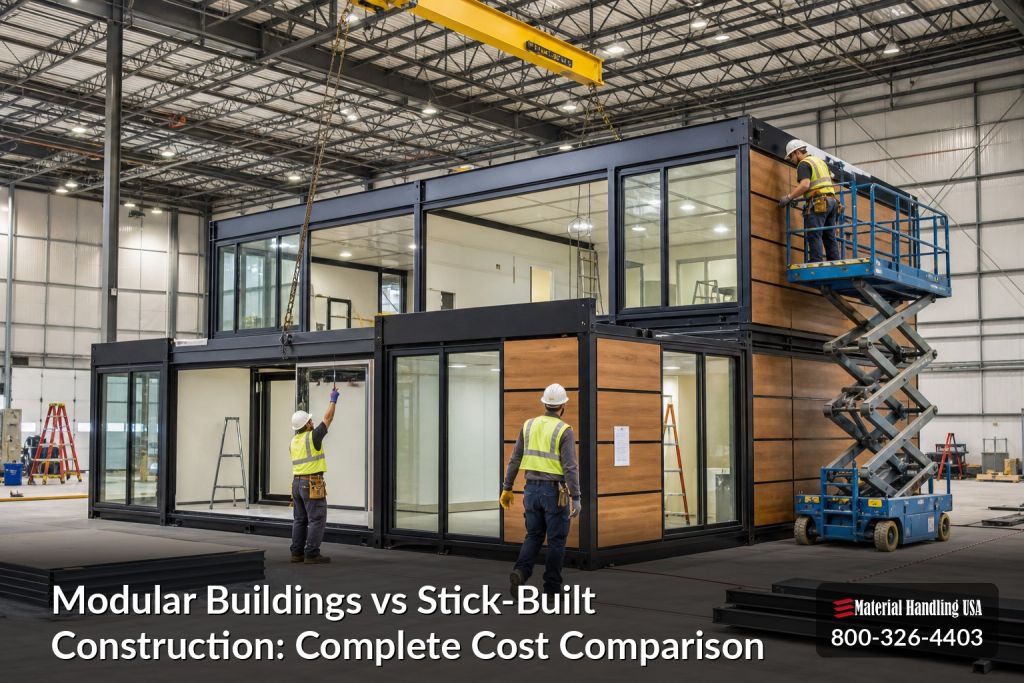
When you need additional space for offices, operations, or storage, the first big decision is how to build it. Modular buildings vs stick-built construction is a comparison that facility managers, warehouse operators, and business owners face regularly — and the cost difference is often larger than expected.
This guide provides a detailed, data-driven comparison of modular and conventional construction costs. We cover materials, labor, timeline, permitting, total cost of ownership, and the scenarios where each option makes the most financial sense.
What Are Modular Buildings?
Modular buildings (also called prefabricated or prefab buildings) are constructed in sections at a manufacturing facility, then transported to the job site and assembled. The building components — walls, floors, ceilings, electrical, plumbing, and HVAC — are completed in a controlled factory environment before delivery.
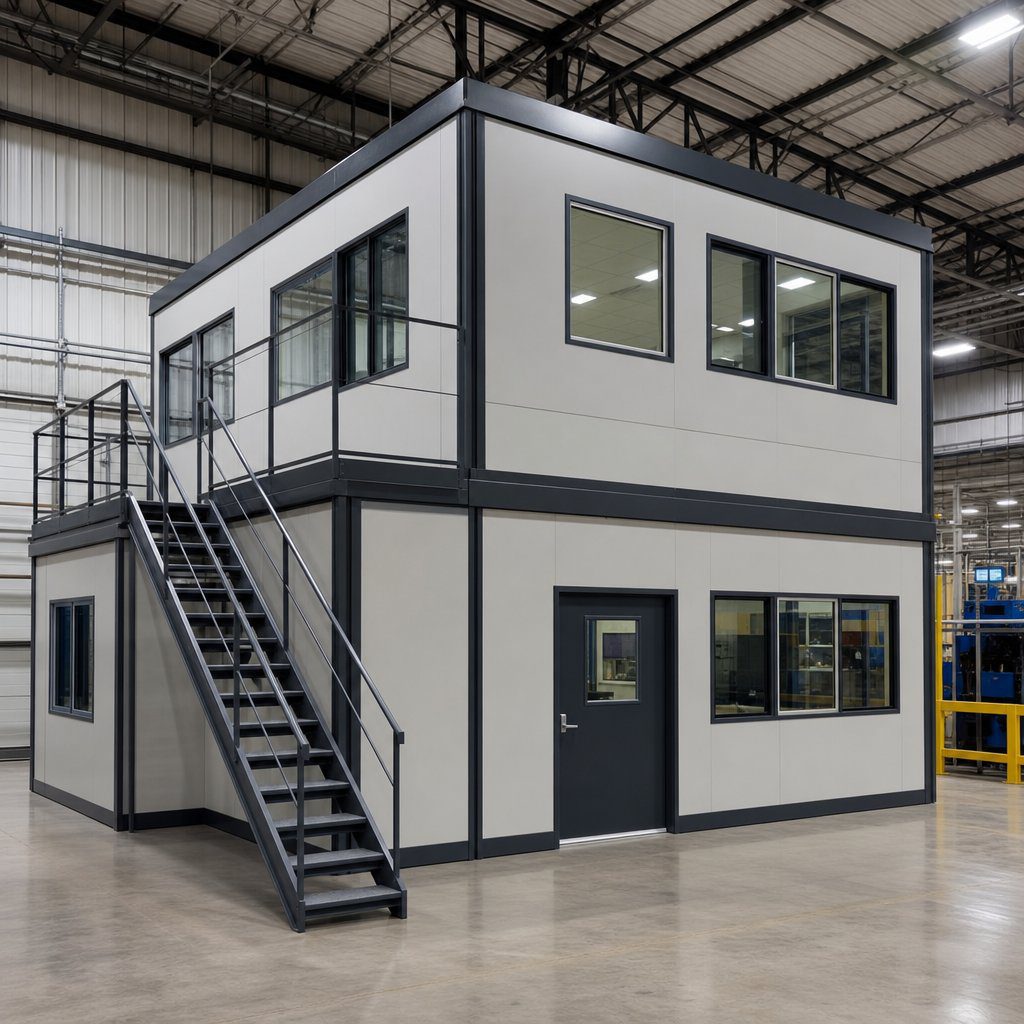
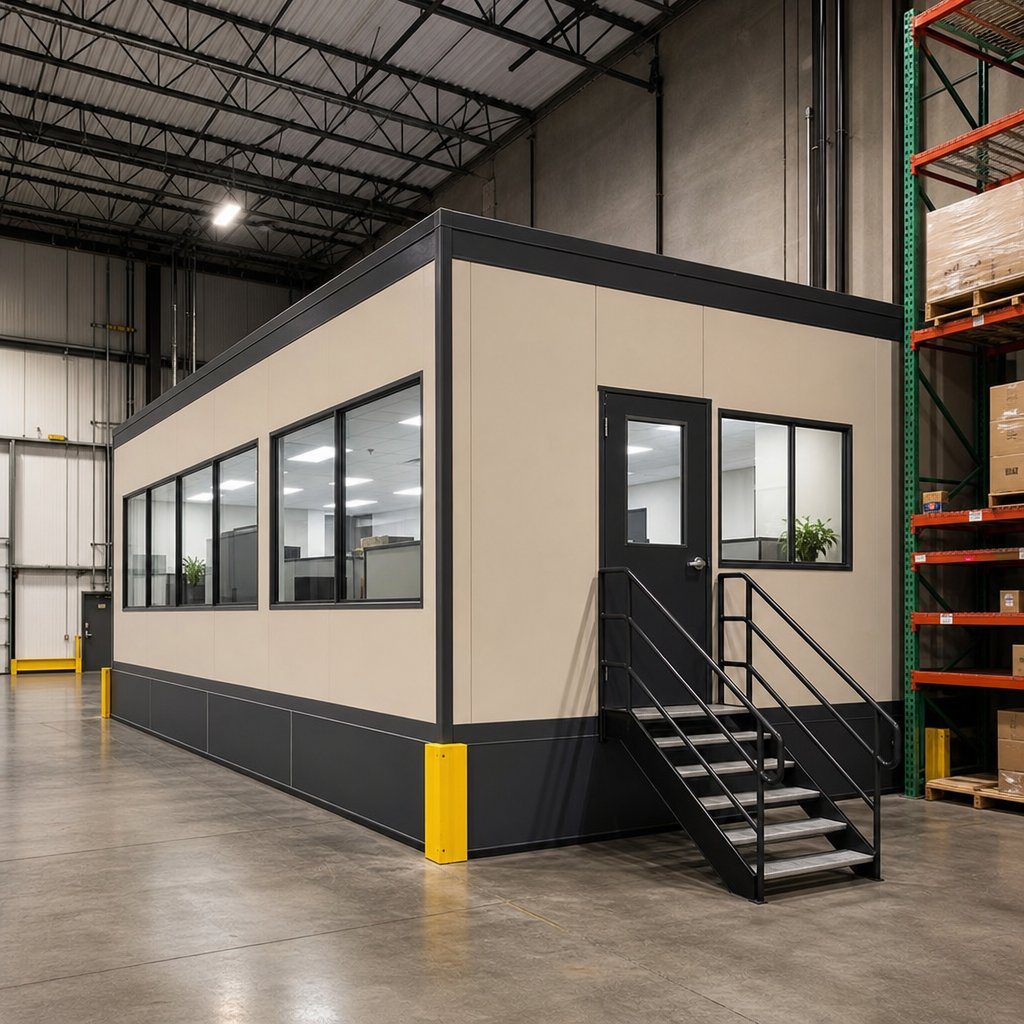
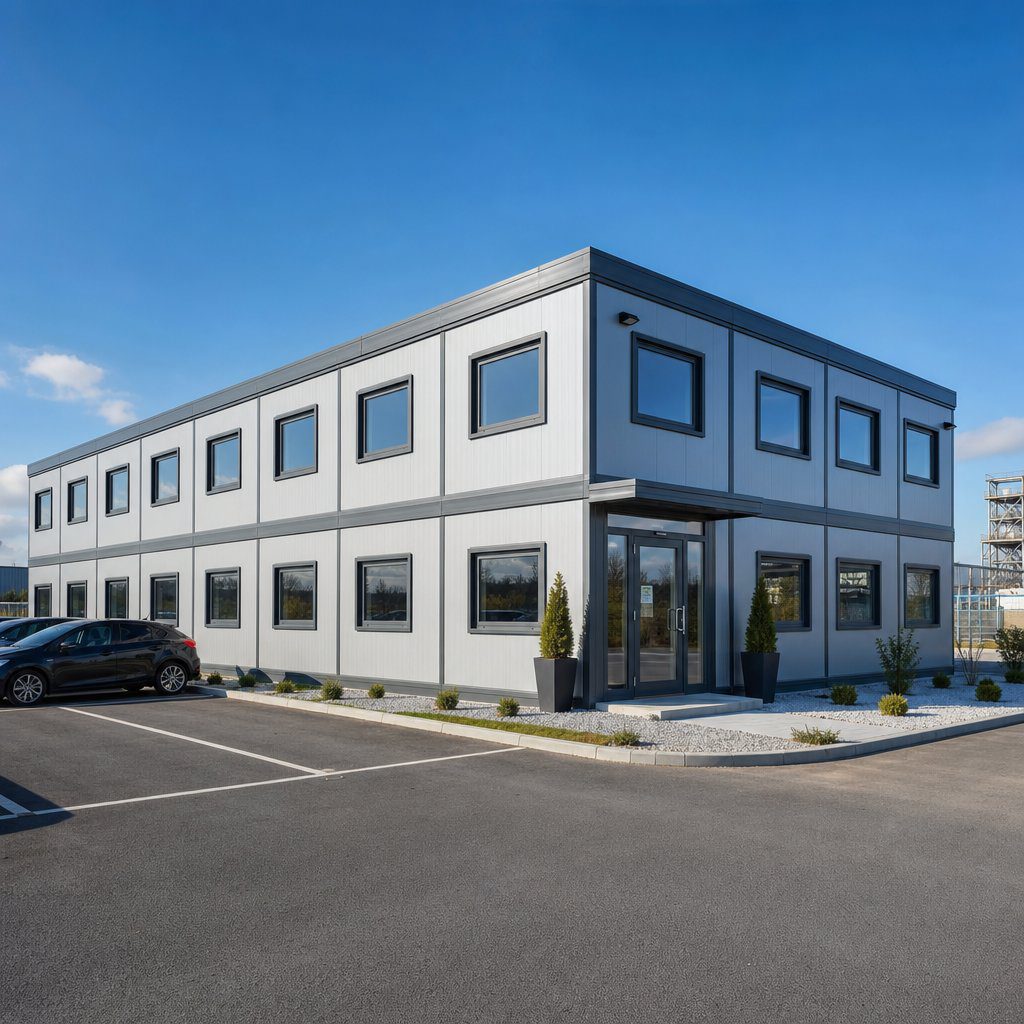
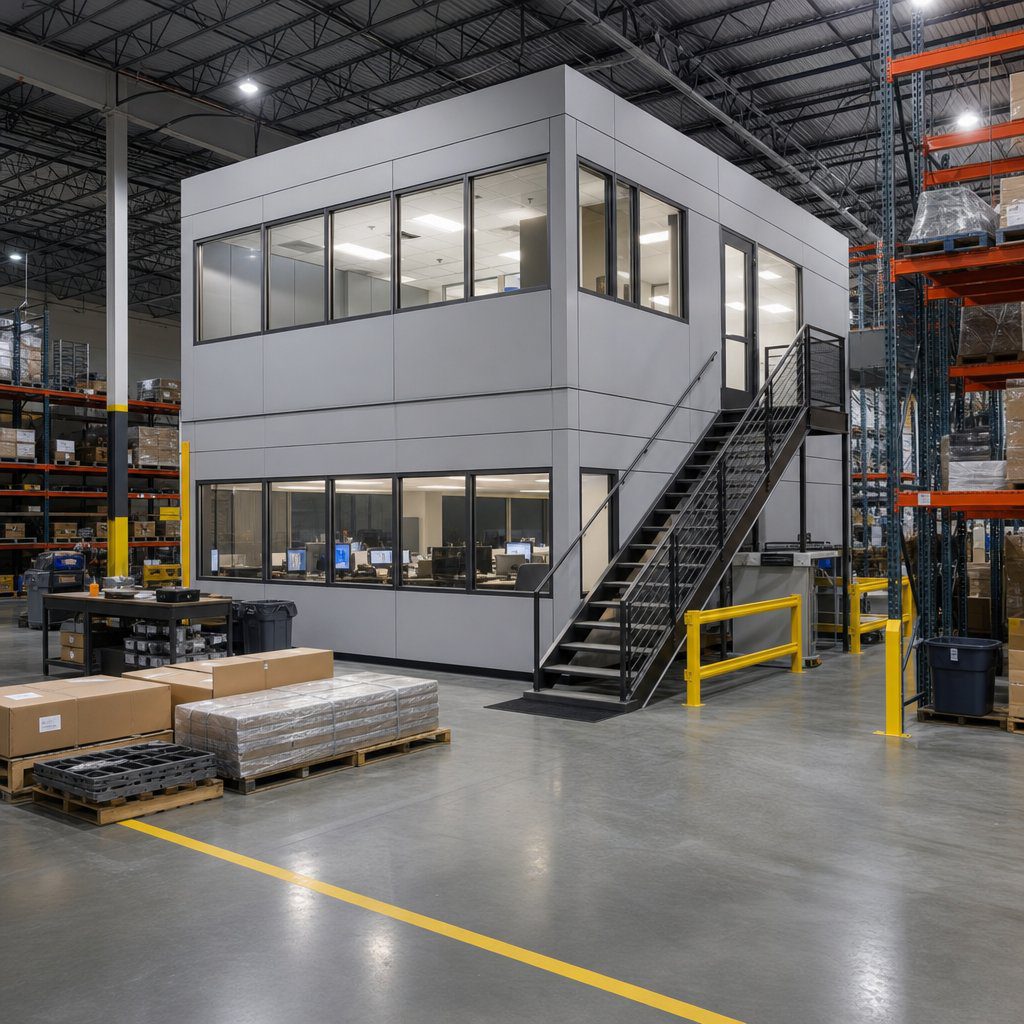
In the warehouse and industrial space, modular buildings include in-plant offices, guard booths, clean rooms, break rooms, equipment enclosures, and two-story office complexes built inside or adjacent to existing facilities. Learn more about modular building options.
What Is Stick-Built Construction?
Stick-built (conventional) construction builds everything on-site from raw materials. Framing, drywall, electrical, plumbing, roofing, and finishing are all performed at the project location by various trade contractors. This is the traditional construction method that most people picture when they think of building a structure.
This guide focuses on cost. If you are still weighing the build method itself, our modular building vs traditional construction guide covers speed, quality and disruption, and the in-plant modular office vs conventional buildout comparison covers offices built inside an existing warehouse or plant.
Cost Breakdown: Modular vs Stick-Built
Material Costs
| Cost Category | Modular Building | Stick-Built Construction |
|---|---|---|
| Waste factor | Lower (factory precision) | Higher (field cutting) |
| Bulk purchasing | Yes (manufacturer volume) | Limited (project-specific) |
| Weather damage risk | Minimal (indoor manufacturing) | Moderate to high |
| Material theft risk | Minimal (factory security) | Moderate (open job site) |
Modular manufacturers buy materials in volume across many projects, which individual contractors rarely match, and factory cutting generates less waste than field cutting on stick-built sites. These savings compound across every component.
Labor Costs
Labor is where modular construction delivers its biggest cost advantage. Factory assembly lines are more efficient than field construction for several reasons:
- No weather delays: Factory workers produce in any weather condition
- Specialized stations: Workers repeat the same tasks daily, building speed and quality
- No travel time: Crews work at one location, not commuting between job sites
- Parallel construction: Site prep happens while the building is manufactured
- Fewer change orders: Factory processes catch issues before they become field problems
| Labor Factor | Modular | Stick-Built |
|---|---|---|
| On-site labor days | Days | Weeks to months |
| Trade coordination | Factory-managed | GC-managed (variable) |
| Quality consistency | High (QC inspections) | Variable (crew-dependent) |
Total Project Cost Comparison
When you combine materials, labor, permits, engineering, and site work, modular construction often costs less in total than equivalent stick-built construction, but the only reliable comparison is two quotes for the same scope. Pricing depends on size, wall height, options and site conditions, so we quote each configuration. Here is what drives the price on common project types:
| Project Type | Main Price Drivers | Where Modular Helps |
|---|---|---|
| In-plant office (12×16 ft) | Wall height, windows, HVAC and electrical scope | Installs in days inside a running plant |
| Two-story office (24×60 ft) | Mezzanine structure, stairs and room count | No second-floor framing or concrete work on site |
| Guard booth (6×8 ft) | Glazing, HVAC and exterior or ballistic rating | Arrives assembled and sets in place |
| Clean room (20×30 ft) | ISO class, HEPA coverage and air handling | Engineered panels and ceiling grid arrive ready to assemble |
| Warehouse break room (16×20 ft) | Plumbing, finishes and occupant count | Built off site while the floor keeps running |
See our detailed modular office building cost guide for more on what drives pricing.
Timeline Comparison
Time is money — and this is where modular construction often delivers the most value. Because site preparation and building manufacturing happen simultaneously, modular projects often take less total time than equivalent stick-built projects.
| Project Phase | Modular | Stick-Built |
|---|---|---|
| Design and engineering | Days to weeks (standard panels) | Weeks (custom drawings) |
| Permitting | Varies by jurisdiction; check with your local building department | Varies by jurisdiction |
| Manufacturing / framing | 4–8 week lead time (factory) | Weeks to months (on-site) |
| Site preparation | Concurrent with manufacturing | Sequential |
| Installation / construction | 1–3 days | Weeks to months |
| Finishing / punchlist | Short (factory-finished panels) | Longer (site-finished) |
| Total project timeline | 4–8 week lead time plus days on site, plus permit time | Several months or more |
For warehouse and industrial applications, this timeline advantage is critical. Every week your expansion project takes is a week of lost productivity, delayed hiring, or deferred revenue. A modular office that is in use within weeks of approved drawings, instead of months, puts your team in the space sooner.
Quality and Durability
A common misconception is that modular buildings are lower quality than stick-built. In reality, modular construction often produces higher quality results because:
- Factory environment: No rain, snow, or humidity damage during construction
- QC checkpoints: Multiple inspection stages during manufacturing
- Structural requirements: Modular units must withstand transportation stresses, so they are often built stronger than site-built equivalents
- Consistent materials: Factory-controlled inventory ensures consistent material quality
- Same building codes: Modular buildings meet the same IBC, OSHA, and local codes as stick-built
When Stick-Built Makes More Sense
Modular is not always the right answer. Stick-built construction can be the better choice when:
- Complex architecture: Unique shapes, curved walls, or custom facades that factory production cannot replicate
- Tight access: Sites where crane access is impossible and large modular sections cannot be delivered
- Integration with existing structures: Renovations or additions that must seamlessly blend with an existing building’s structural system
- Very small projects: A single interior partition wall or minor renovation is cheaper to stick-build than to order modular
- Local labor advantage: In some markets, local contractor competition drives stick-built prices below modular thresholds
When Modular Is the Clear Winner
Modular construction dominates in these scenarios:
- In-plant warehouse offices: The most common modular application — in-plant offices installed inside existing buildings
- Speed is critical: Business needs that cannot wait 6+ months for conventional construction
- Temporary or relocatable needs: Operations that may need to move the building later
- Active facility installations: Minimizing on-site construction disruption in operating warehouses
- Multi-location rollouts: Standardized buildings across multiple sites (guard booths, break rooms)
- Budget certainty: Modular pricing is typically set when drawings are approved; stick-built projects are more exposed to change orders and overruns
Hidden Costs to Consider
Stick-Built Hidden Costs
- Change orders after the contract is signed
- Weather delays (especially in winter construction)
- Material price escalation during long projects
- On-site theft and vandalism
- Productivity loss from construction noise and disruption
- Extended contractor insurance and bonding
Modular Hidden Costs
- Transportation and crane fees for delivery
- Site preparation (concrete pad or foundation)
- Utility connections (electrical, plumbing, HVAC tie-ins)
- Permit fees (same as stick-built)
- Design modification charges for non-standard configurations
Financing and ROI
Modular buildings often qualify for equipment financing rather than construction loans, which can simplify the purchase process. Key financial advantages include:
- Section 179 depreciation: Modular buildings may qualify for accelerated depreciation as equipment
- Lower total financing cost: Shorter project timelines mean less interest during construction
- Faster revenue generation: Earlier occupancy means earlier return on investment
- Residual value: Relocatable modular buildings retain value if business needs change
- Lower insurance during construction: Factory construction reduces on-site liability exposure
Making the Decision: Cost-Benefit Framework
Use this framework to determine which method is right for your project:
- Calculate true total cost — include materials, labor, timeline costs, and disruption costs for both options
- Factor in time value — what does each additional week of construction cost your operation in lost productivity?
- Assess site constraints — can modular sections be delivered and craned into position?
- Consider future flexibility — will you need to relocate, expand, or repurpose the space?
- Get comparable quotes — request bids from both modular manufacturers and general contractors for fair comparison
Frequently Asked Questions
Are modular buildings cheaper than stick-built?
Often, yes. Once materials, labor, timeline, and disruption are counted, modular buildings often cost less in total than equivalent stick-built construction, but the only reliable answer is two quotes for the same scope. The savings increase for larger projects and standardized designs. The biggest savings come from reduced labor costs and shorter construction timelines.
How long do modular buildings last?
Modular buildings built with steel frames and quality materials last 25–50+ years — comparable to stick-built construction. Many modular buildings from the 1980s and 1990s are still in active service today. Longevity depends on material quality, maintenance, and environmental conditions, not the construction method.
Do modular buildings hold their value?
Yes. Permanent modular buildings appreciate with the property like any other structure. Relocatable modular buildings retain value because they can be moved to new locations. This flexibility gives modular buildings a residual value advantage that stick-built structures do not have.
Can modular buildings be customized?
Absolutely. Modern modular buildings offer extensive customization including floor plans, finishes, HVAC systems, electrical layouts, windows, doors, and exterior cladding. The main constraint is that designs should work with modular dimensions (typically 12-foot or 14-foot wide sections) for transportation. Within those parameters, customization is nearly unlimited.
Do modular buildings meet building codes?
Yes. Modular buildings must meet the same International Building Code (IBC), local codes, OSHA requirements, and ADA standards as stick-built construction. They go through the same permitting and inspection process. Factory construction often exceeds code requirements because units must withstand transportation stresses.
What is the biggest modular building you can build?
There is no practical size limit. Multi-story modular buildings exceeding 100,000 sq ft have been constructed for schools, hospitals, and commercial facilities. For industrial applications like warehouse offices, common sizes range from 100 sq ft guard booths to 10,000+ sq ft multi-story office complexes. Larger buildings simply use more modular sections.
Get a Modular Building Quote
Material Handling USA partners with leading modular building manufacturers to deliver in-plant offices, guard booths, clean rooms, and custom modular structures for warehouses and industrial facilities nationwide. Our team handles design, engineering, permitting support, and professional installation.
Call (800) 326-4403 or request a free quote to get started.