Outdoor storage problems usually start small. A few trimmers sit behind the building. A pallet of repair parts stays outside for a week. A contractor leaves a generator in the yard because there’s no room inside. Then one morning a tool is missing, a lock is cut, or rain has worked its way into equipment that should have stayed dry.
For most managers, that’s the point where outdoor storage stops being a convenience issue and becomes an operations issue. Lost tools slow crews down. Disorganized overflow stock wastes labor. Unsecured equipment creates avoidable risk on job sites, campuses, and plant grounds.
That’s one reason demand for secure outdoor storage keeps rising. The United States Industrial Outdoor Storage market was valued at USD 228.3 billion in 2025 and is projected to reach USD 367.2 billion by 2033 according to MetaStat Insight’s United States Industrial Outdoor Storage market report. More outdoor assets means more pressure to protect them properly.
If your team is also thinking about broader site protection, this guide on securing construction sites is a useful outside reference. For buyers focused on theft prevention inside a facility footprint, MH-USA also has a practical page on using a security cage to avoid theft.
Securing Your Outdoor Assets Is More Than a Lock and Key
A manager usually notices the problem after the first loss or weather-related damage. A cut padlock, a missing blower, soaked repair parts, or a crew waiting because the right tool was left outside the enclosure. At that point, the cage is no longer a simple purchase. It is a site project that affects security, daily access, drainage, permitting, and maintenance for years.
A chain link storage cage for outdoor equipment works best as part of that full project cycle. Site conditions decide a lot early. A level concrete pad handles anchoring differently than asphalt or compacted gravel. Local rules may affect placement near fire lanes, property lines, or pedestrian routes. If fuel-powered equipment, batteries, or chemical supplies will be stored nearby, managers also need to check spacing, ventilation, and safety requirements before installation starts.
Security also needs a practical plan. A cage should restrict access without slowing down the people who use it every day. That means choosing the right gate width, lock style, and traffic path for carts, mowers, pallets, or service vehicles. For a closer look at theft prevention inside a facility footprint, see this guide to using a security cage to avoid theft. If your project includes a larger yard, active work zone, or contractor staging area, this outside resource on securing construction sites is also worth reviewing.
Poor planning shows up fast in the field.
Gates sag because the opening was oversized for the post setup. Water sits along the base because no one checked slope before anchoring. Staff leave material outside the cage because the layout does not match how the crew loads and unloads equipment. Those are avoidable mistakes, but only if the cage is treated as an operating system, not a fenced rectangle.
A well-planned cage should do four jobs at once:
- Control access: Limit entry to approved staff and reduce casual theft or after-hours use.
- Support daily work: Fit the actual equipment, carts, and handling methods used on site.
- Hold up outdoors: Match the environment, anchoring surface, and weather exposure.
- Stay serviceable: Allow room to inspect hardware, repair panels, and adjust components over time.
A simple rule applies here. If the crew has to work around the cage instead of through it, the design is wrong.
What Is a Chain Link Storage Cage and Who Uses It
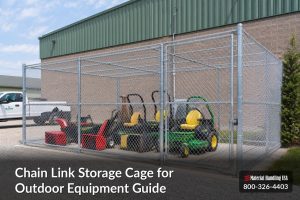
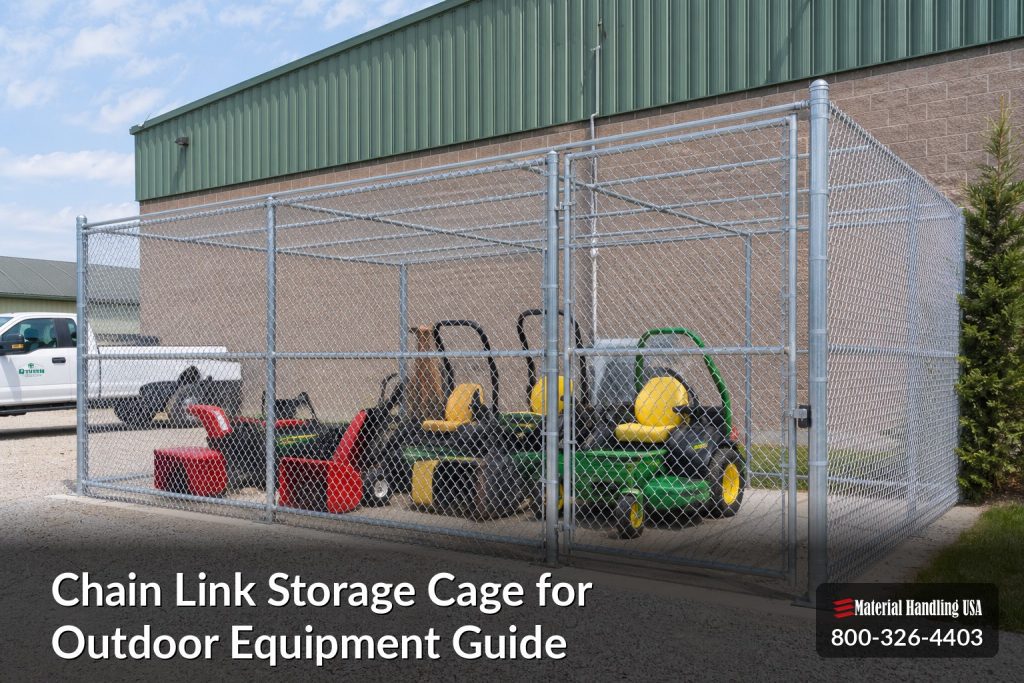
A facilities manager usually starts asking about a chain link storage cage after the same problem shows up a few times. Equipment is left in the yard, access is too loose, and no one has a clean way to separate authorized use from casual borrowing. A chain link storage cage solves that by creating a defined, lockable outdoor storage area built from steel posts, framed chain link panels, and one or more gates.
The main advantage is simple. Staff can see inside without opening the cage, supervisors can check inventory at a glance, and airflow helps reduce the trapped moisture issues you get with fully enclosed storage. That visibility also changes how the project should be planned. If the cage will hold fuel cans, powered equipment, attachments, or maintenance stock, the layout, gate swing, and lock setup need to match daily use from day one.
Who usually installs one
These cages show up in operations that need outdoor security without giving up visibility or speed of access.
- Maintenance departments store tools, repair parts, pressure washers, and seasonal equipment in one controlled area.
- Schools and campuses secure grounds equipment, athletic field supplies, and facility stock that crews need throughout the week.
- Contractors use them for active project storage where crews need fast access but managers still need accountability.
- Warehouses and plants add them for overflow storage when certain equipment can stay outside if access is restricted.
- Municipal and utility teams use them to organize field inventory, attachments, barricades, and service equipment across public works yards.
I usually tell first-time buyers to treat the cage as part of a full storage process, not a standalone product. The right choice depends on what is being stored, who needs access, what surface it will sit on, and whether the site may need to expand later. In some cases, a wire mesh storage enclosure is a better fit when the project calls for tighter control, more modular panel layouts, or indoor-outdoor flexibility.
Comparing Outdoor Storage Cage Options
Not every site needs the same level of weather protection, visibility, or flexibility. That’s why buyers should compare chain link cages against other common storage types before committing.
| Feature | Chain Link Cage | Wire Mesh Cage | Storage Shed | Shipping Container |
|---|---|---|---|---|
| Visibility | High | High | Low | Low |
| Airflow | High | High | Limited | Limited |
| Weather exposure | Open unless roof or cover is added | Open unless roof or cover is added | Better enclosure from weather | Strong enclosure from weather |
| Scalability | Good | Very good | Moderate | Low to moderate |
| Access control | Good with gate and lock options | Good with gate and lock options | Good | Good |
| Installation speed | Fast | Fast | Moderate | Fast if pad is ready |
| Ideal use case | Visible, ventilated outdoor storage | Higher-control modular security areas | General weather-covered storage | Heavy enclosed yard storage |
| Budget range | Varies by size and options | Varies by size and options | Varies by material and build | Varies by condition and transport |
What usually works best
Choose a chain link equipment cage when you need airflow, sightlines, and a layout that can adapt over time.
Choose a shed or container when weather enclosure matters more than visibility.
If your team needs to see inventory at a glance and access it daily, solid-wall storage often creates friction that an open enclosure avoids.
Essential Features for Security and Durability
A cage used outdoors needs more than standard fencing parts. The biggest buying mistakes happen when people focus on footprint first and skip material details, coating quality, and gate hardware.

Mesh, gauge, and finish
High-security cages often use 10-gauge wire mesh, and for outdoor use, hot-dip galvanization reduces oxidation rates by over 95 percent compared to uncoated steel and can support 20+ years of service without significant rust, based on the verified technical data provided for this topic.
That’s the baseline to look for when equipment will sit outside year-round. A weather resistant storage cage should be built for moisture, sun exposure, and changing temperatures, not just basic access control.
Key questions to ask a supplier:
- What gauge is the mesh
- Is the steel hot-dip galvanized
- Is the cage intended for outdoor exposure
- What type of gate frame is included
- How is the base anchored to concrete or asphalt
For buyers comparing perimeter materials more broadly, this article on browse our fencing options offers a simple outside look at different fencing approaches.
Gates and locking methods
The gate is where many outdoor cages succeed or fail. A lockable outdoor equipment cage should match how crews work.
Common choices include:
- Swing gates for simple pedestrian access
- Wider openings when carts, dollies, or pallet jacks need to enter
- Keyed locks for smaller teams
- Keypad or credential-based access when access tracking matters
A narrow gate on a busy maintenance yard usually becomes a daily annoyance. So does a lock that too many people share.
Field lesson: Buyers often overfocus on wall panels and underfocus on the gate. The gate affects daily labor more than almost any other single component.
What doesn’t work well outdoors
A few shortcuts create trouble fast:
- Light-duty mesh that isn’t meant for commercial use
- Ungalvanized steel exposed to rain and humidity
- Improvised latch setups that never fully secure
- Unframed panels in high-use openings
- No thought given to drainage around the base
A secure outdoor storage cage should hold up physically and operationally. If staff can’t lock it quickly or use it without frustration, they’ll work around it.
Planning Your Outdoor Cage Layout and Installation
A lot of outdoor cage projects go sideways before the first panel arrives. The common failure is poor site planning. A cage gets placed where space looked available on paper, then crews find out the gate swings into a drive lane, runoff pools at the base, or the enclosure blocks routine service access.

Start with how the site will actually work
Set the layout around daily use, not just the outside dimensions of the cage. Measure the largest equipment piece, then account for attachments, charging equipment, storage bins, and the space staff need to move safely. If the gear returns wet, muddy, or covered in grass, leave room for cleanup and airflow so the cage does not turn into a cramped holding area.
I usually tell facility managers to walk the route before they finalize anything. Track where equipment comes from, where it gets parked, how it gets locked up, and who needs access during a busy shift. That exercise usually exposes layout problems early.
A solid plan should cover:
- Largest stored item with attachments in place
- Entry and exit path for daily use
- Turning clearance for carts, dollies, or small powered equipment
- Space for future capacity
- Gate swing and latch access without obstruction
For build details that affect layout and installation, review these security cage specifications.
Site conditions, permits, and anchoring
The best location is usually close enough for crews to use without shortcuts, but far enough from traffic lanes, loading activity, and public access points to avoid conflict. Concrete gives the cleanest installation and the most predictable anchoring. Asphalt can work, but it needs a closer look at thickness, condition, and fastening method before the job is approved.
Permitting gets missed more often than it should. Some properties require setback review, landlord approval, utility clearance, or a check against fire access routes. On larger campuses, I have seen projects delayed because the planned cage blocked drainage work or reduced clearance near service equipment. Those are avoidable delays if the site review happens early.
Before installation, confirm:
- Local code or permit requirements
- Property line, easement, and setback limits
- Drainage flow and runoff around the base
- Surface condition and slope
- Clearance for vehicles, pedestrians, and service access
Anchoring deserves careful attention. An outdoor storage cage has to stay square, resist tampering, and hold up under repeated gate use. If your team wants a general reference on installation sequence before meeting with an installer, the XTREME EDEALS fence installation guide gives a useful outside overview.
Good installation planning also saves money later. A cage placed on a poor surface or in the wrong traffic path usually costs more to correct than it would have cost to plan properly at the start.
Your 5-Step Checklist for Choosing the Right Cage
Some buyers know they need an outdoor security cage. Fewer know how to narrow the choices without overbuying or missing key details.

The checklist
- Assess what you’re protecting
List equipment types, quantity, frequency of use, and who needs access. - Review the site
Check surface condition, drainage, exposure to weather, and clearance around the cage. - Define the security level
Decide whether a standard lock is enough or whether controlled access is needed. - Map the layout
Plan gate width, interior organization, and room for future growth. - Request a quote with details
Ask for material specs, anchoring method, lead time, and installation scope.
Quick decision scenarios
- Maintenance team: Choose a fenced storage cage for equipment with wide gate access and clear visibility for daily check-in and check-out.
- School or campus: A lockable cage works well for grounds gear when staff needs visibility without open public access.
- Contractor: A chain link cage for tools and equipment fits sites where layout flexibility matters more than a permanent structure.
- Warehouse overflow: If inventory needs to stay visible and restricted, a chain link storage enclosure usually beats a shed.
- Container versus cage: Pick a container for stronger weather enclosure. Pick a cage for easier viewing, airflow, and frequent access.
The earlier you finalize layout and anchoring details, the easier it is to avoid schedule drift, rework, and site conflicts later.
Conclusion Secure Your Equipment with an Expert Partner
A chain link storage cage for outdoor equipment earns its value over time. Its true test is whether it still fits the site, holds up to weather, and supports daily access six months and six years after installation.
Facility managers usually feel the pressure after the first avoidable loss, damaged tool inventory, or constant hunt for equipment left in the wrong place. A good cage fixes that, but only if the project is handled from start to finish with the site conditions, permit questions, access pattern, and maintenance plan worked out early.
That is the difference between buying a product and setting up a storage system that works in the field. Mesh type, finish, gate width, anchoring, and layout all affect how the enclosure performs after the crew starts using it every day. Miss one of those details and the cage can become a bottleneck, a maintenance issue, or an expensive retrofit.
If you are ready to move ahead, gather your dimensions, site photos, and a clear list of what needs to be stored. Material Handling USA can help review the application, confirm fit, and support quoting for a practical installation plan. Call (800) 326-4403 for project help.
Frequently Asked Questions
Can I get a custom-sized outdoor equipment storage cage
Yes. Custom sizing is common when buyers need to fit around existing pads, wall lines, dumpsters, or service clearances.
Can these cages be installed on asphalt
Often yes, but the surface condition and anchoring method need to be reviewed first.
Are chain link cages good for weather exposure
They work well outdoors when the materials and finish are selected for exterior use, especially galvanized steel.
Can I move the cage later
Some modular systems can be reworked or relocated, but relocation depends on the original anchoring and panel design.
What lock options are available
Common options include keyed locks, padlocks, and controlled access hardware depending on the application.
Do I need a permit
Maybe. Local rules vary, so buyers should check site-specific code and property requirements before install.
How do I know what gate width I need
Start with the largest item or cart that needs to pass through, then add room for safe handling.
What maintenance is required
Inspect the finish, gate alignment, latches, anchors, and base area regularly, especially after severe weather or heavy use.
For project help, product questions, free layouts and designs with no obligation, or a free quote, contact Material Handling USA. You can also email Sales@MH-USA.com, Request a Quote, or Call (800) 326-4403 to discuss a chain link storage cage for outdoor equipment that fits your site.