Clutter usually shows up before a storage plan does. A condo manager sees bikes chained in the wrong spots, holiday boxes stacked in mechanical corners, and residents asking for secure storage that a loose room or an old wire bin cannot provide. An HOA board or apartment owner sees the same thing from a different angle: messy common areas, more complaints, and basement or garage space that sits unused because nobody wants to guess at layout, code issues, or installation.
Tenant storage cages fix that. Done right, they turn leftover square footage into an organized, lockable amenity that residents actually use. This guide covers what the cages are made of, how to size condo storage lockers, how to plan storage cages for apartment buildings and parking garages, and what to confirm with your local code official before you buy. When you are ready to see your own room, the free security cage configurator lets you sketch a layout and request a quote.
Quick answers
- What they are: Lockable enclosures built from welded wire mesh panels, steel posts and framed doors, assigned one per unit.
- Where they go: Basements, storage rooms, and parking garages in apartments, condos and HOAs.
- How to size them: Start with what residents store, then fit sizes to the column grid and aisle space. Mixed sizes usually work better than one size for every unit.
- Codes: Open mesh is common in sprinklered rooms, but your local authority having jurisdiction (AHJ) makes the final call. Confirm before you order.
What Are Tenant Storage Cages and Why Use Them
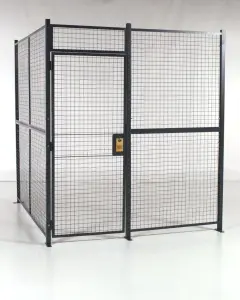
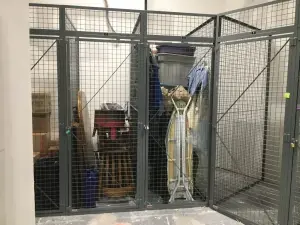
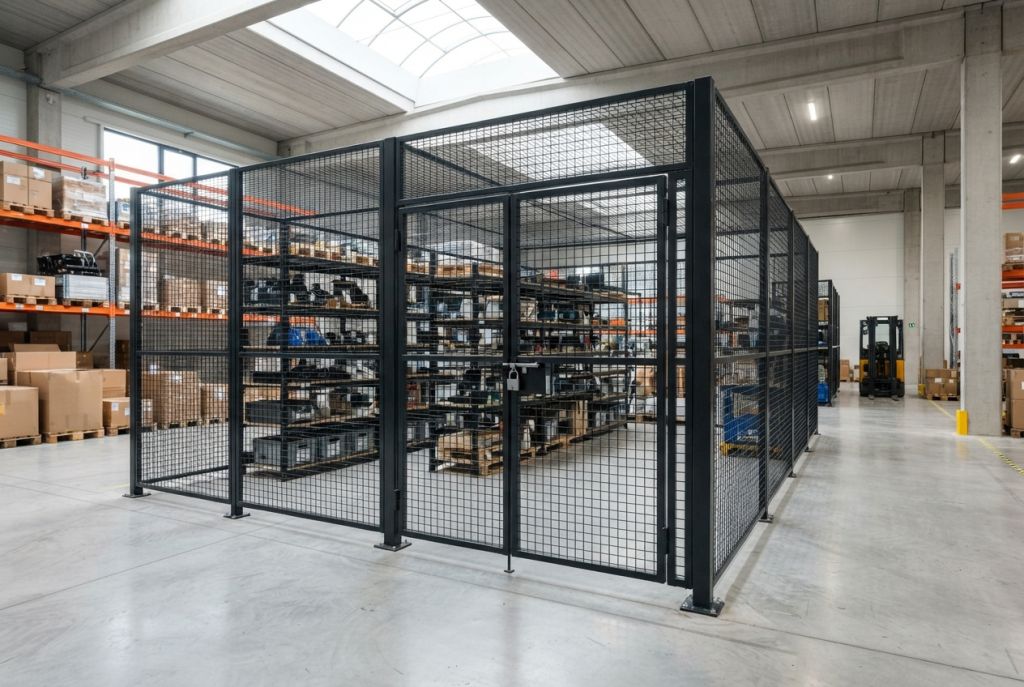
Tenant storage cages are lockable storage enclosures made from modular wire mesh panels and framed doors. In condo and multifamily buildings they are installed in storage rooms, basements, or sections of a parking garage where each unit needs its own defined space.

From an operations view, cages turn leftover area into a clear list of assigned spaces. Each unit has a number, a door, and a lock. Staff can see inside without opening anything, and residents know exactly which space is theirs. That clears hallways, balconies and mechanical rooms, and it gives the building an amenity residents notice.
The open construction is a big reason these systems work in shared residential buildings:
- Open mesh design: Lets light and air move through, keeps sightlines open for staff and cameras, and lets sprinkler water reach stored items (confirm the layout with your AHJ).
- Modular construction: Standard panels and posts fit around columns and odd walls with less field cutting than framed rooms.
- Lockable access: Management can assign storage by unit without building drywall rooms.
See Material Handling USA videos on YouTube
Practical rule: If the space already has sprinklers, ducts, columns and shared access, wire mesh cages are usually easier to fit than enclosed built-in storage.
Wire Mesh Storage Cages: What They Are Made Of
Most people searching for wire mesh storage cages or wire storage cages want to know one thing: will it hold up and keep things secure. The answer depends on a few parts you can check on any quote.
Welded wire mesh vs woven wire
Welded wire mesh is made by welding steel wires at every crossing point, which creates a stiff, flat panel. Because each joint is welded, cutting one wire does not make the panel unravel. Common tenant locker specs use 10-gauge welded wire in 2 in x 1 in or 2 in x 2 in openings. Woven wire (often a diamond pattern) is the classic “military cage” look and is used for heavier walk-in cages. Chain link storage cages are a budget option for large open enclosures, but they are less rigid and less tidy in a resident-facing room. For a side-by-side look, see chain link cages vs wire mesh partitions.
Frames, posts and doors
Mesh panels are set into formed steel angle or channel frames, then bolted to posts that anchor to the slab. Doors are usually hinged with a welded padlock hasp, or prepped for a cylinder lock. Confirm the exact wire gauge, mesh opening, frame size and finish on the submittal drawings rather than assuming. Our wire partition security cage specifications page shows the details to compare.
Security features worth paying for
Security cages for storage are only as secure as their weakest point. These details matter most:
- Ceiling panels: Stop climb-over and reach-over access when cages do not run to the ceiling.
- Tamper-resistant hardware: Carriage bolts or fasteners that cannot be removed from inside a neighbor’s cage.
- Welded hasps: A hasp welded to the frame is harder to pry off than one screwed to the mesh.
- Finish: Powder coat or galvanizing for humid basements and garages.

Condo Storage Locker Size: How to Choose
There is no single standard condo locker size. The right size depends on what residents store, how much floor area you have, and how the room’s columns and doors line up. Use the steps below, then check them against a layout.
How to size condo storage lockers in 6 steps
- List what residents will store. Seasonal boxes, luggage, bikes, skis, strollers, patio furniture. The biggest common item sets your minimum depth or width.
- Measure the longest item. An adult bike is often close to 6 feet long, so a bike locker either needs that much length or a wall hook to hang the bike. Check against the bike storage cages options if bikes are the main need.
- Field measure the room. Record columns, pipes, ducts, lights, sprinkler heads, drains, electrical panels and door swings. Do not size from an old floor plan.
- Set the aisle first. Decide on a comfortable aisle for carrying boxes and opening doors, and confirm any required egress width with your AHJ. Lockers fill the space that is left.
- Pick a size mix. A few larger cages for larger units and more small lockers for studios often fills better than one size for all.
- Choose single-tier or two-tier. Two-tier lockers stack two smaller lockers in the same footprint, which raises the count in tight rooms. Upper lockers suit light, rarely used items.
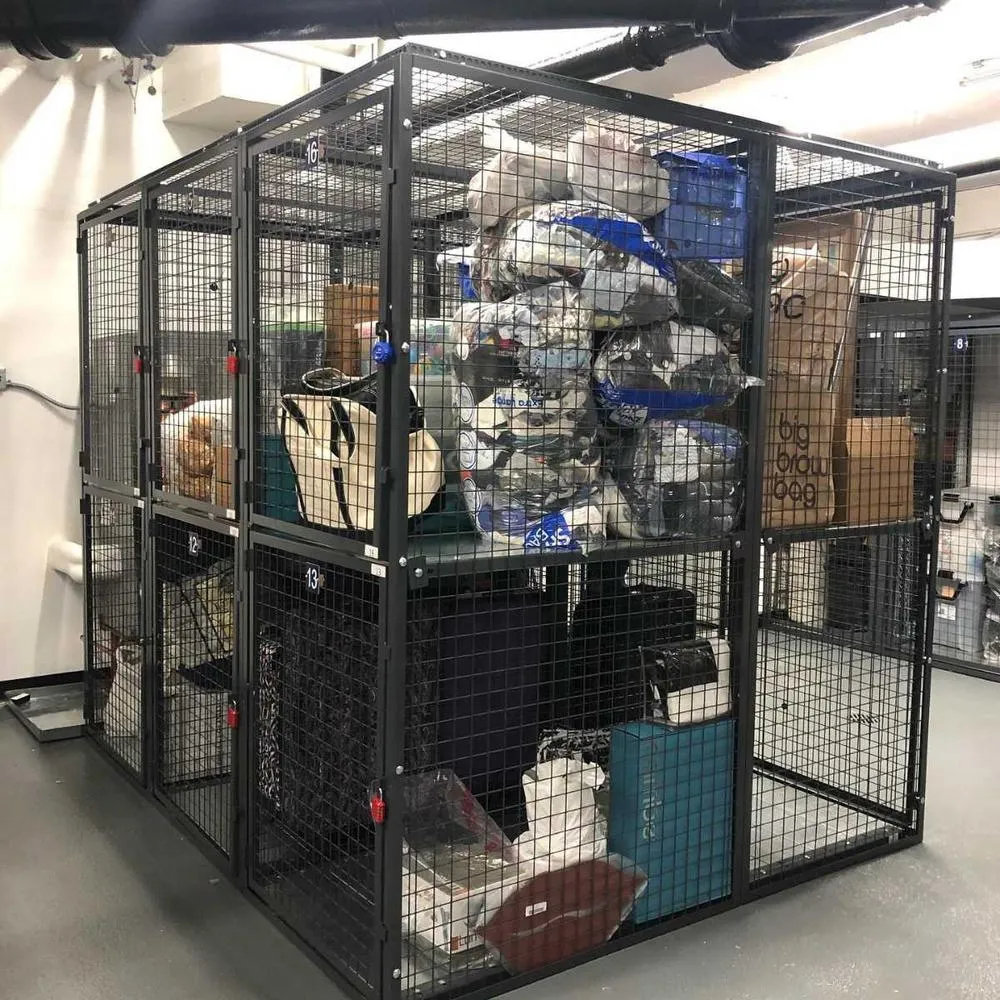
Condo storage locker size guide by use
| What residents store | Locker style that usually fits | Sizing check |
|---|---|---|
| Boxes, luggage, holiday items | Small single-tier or two-tier locker | Fit the largest box stack and a shelf if needed |
| One or two bikes | Deeper single-tier locker or bike cage | Bike length or a hanging hook, plus door clearance |
| Skis, kayaks, long gear | Full-height single-tier locker | Longest item, stored upright or flat |
| Patio furniture, tools, yard gear | Walk-in cage | Room to step inside and close the door |
| Mixed unit sizes in one building | Mix of small, medium and walk-in | Match the count of each size to unit types |
For a wider look at cage dimensions and how to measure, read our storage cage sizes and specifications guide and the security cage sizing and door placement guide. The tenant storage lockers page shows the single-tier, two-tier and walk-in configurations we supply.
Storage Cages for Apartment Buildings
Storage cages for apartments work a little differently than condo cages. In a condo, a cage is often tied to a deeded or assigned unit and changes hands only at resale. In an apartment building, storage cages turn over with leases, so the system has to be easy to reassign, re-lock and keep track of.

What apartment storage cages need that condo cages may not:
- A clear lock policy. Decide if residents bring their own padlock, if management supplies locks, and how lock cuts are handled at move-out.
- Numbering that matches your records. Tie each cage number to the lease or your property software from day one.
- Standard sizes. Repeatable sizes are easier to list, price and reassign than one-off shapes.
- Visibility. Open mesh lets staff spot stored trash, banned items or abandoned belongings without opening every door.
- Controlled room entry. Many buildings lock the storage room itself in addition to each cage. If you also run a package room, our guide to smart locker systems for apartment package rooms covers that side.
Whether you include storage in rent or offer it as a paid add-on, test the plan against your own rent roll and demand. Do not rely on generic revenue claims. Property managers can find more on running these spaces in our apartment and condo storage cages guide for property managers.
Storage Cages for Parking Garages
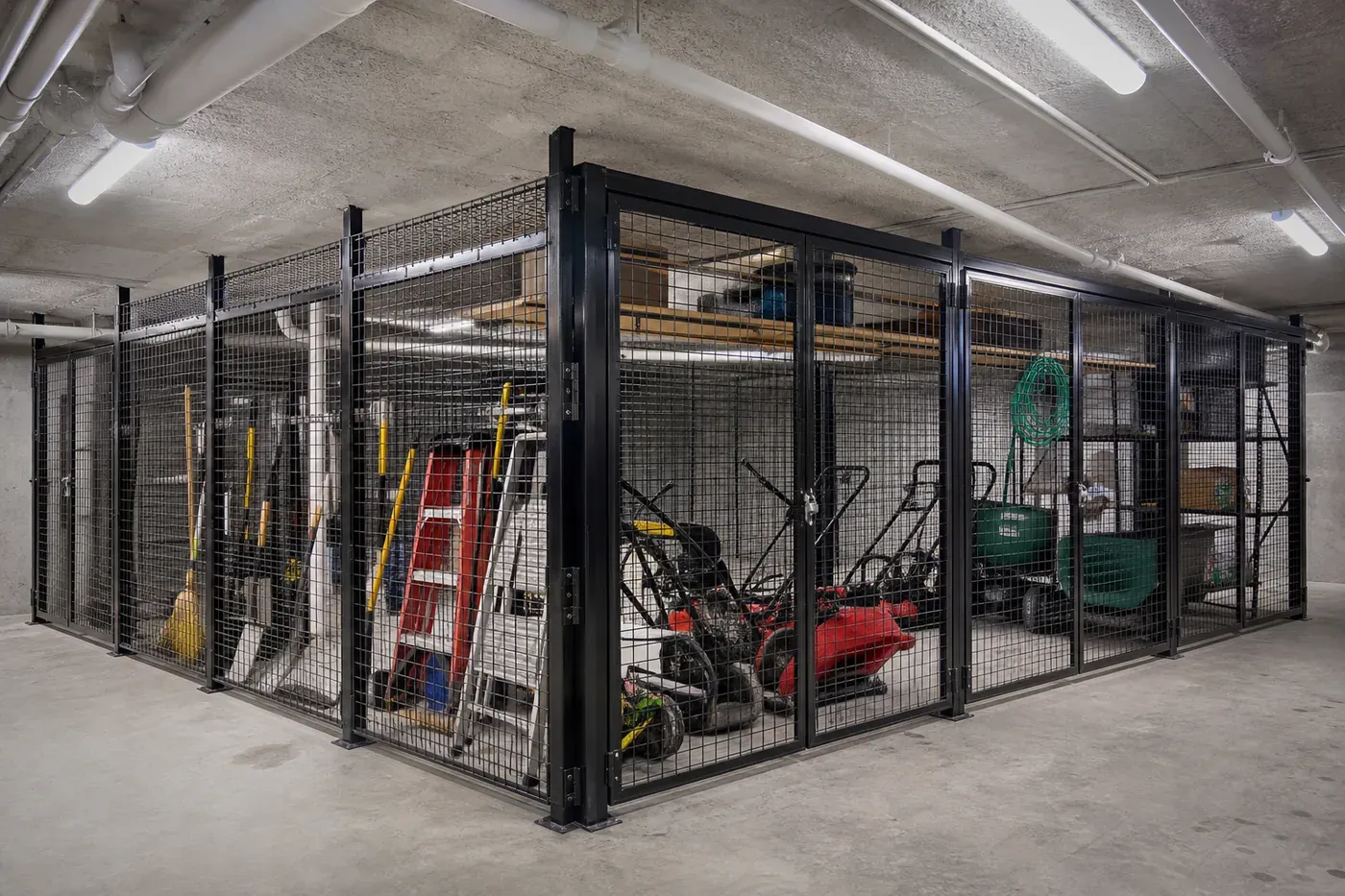
A storage cage for a garage faces conditions a basement room does not. Plan for these before you pick a location:
- Vehicles. Keep cages out of drive aisles and turning paths. Ask about curbs, wheel stops or bollards where a car could back into a cage.
- Moisture and salt. Garages see rain, snowmelt and road salt. A galvanized or durable powder-coated finish holds up better.
- Slab slope and drains. Garage floors slope to drains. Check that anchors and the bottom of the panels clear drains and that doors still swing on a sloped floor.
- Ceiling height and overhead items. Lights, sprinkler heads, pipes and signs often sit low in garages. Mark them before choosing panel height or adding ceiling panels.
- What can be stored. Fuel, propane tanks and other flammables are a common concern in garage storage. Set rules with your board, insurer and AHJ.
- Anchoring. Post-tensioned slabs, which are common in parking structures, need care before drilling. See security cage anchoring and seismic bracing and confirm with the building engineer.
Comparing Condo Storage Solutions: Wire Mesh vs Alternatives
A board making space in a garage or basement is not just picking a product. It is deciding how much assignable space the building can create and how easy that space will be to manage.
| Feature | Wire Mesh Tenant Cage | Solid Storage Locker | Dedicated Storage Room | Modular Partitioned Enclosure |
|---|---|---|---|---|
| Visibility | High | Low | Low from outside | Medium to high depending on panel type |
| Airflow | Excellent | Limited | Varies | Good with mesh panels |
| Sprinkler review | Open mesh is commonly accepted; confirm with your AHJ | Solid tops and walls may need extra review | Treated as a room | Depends on panels |
| Scalability | High | Moderate | Low | High |
| Access control | Padlock, keyed or managed entry options | Built-in lock options | Room door only unless subdivided | Good, especially with controlled entries |
| Install effort | Low to moderate | Moderate | Highest if built out | Moderate |
| Ideal use | Resident-assigned storage in basements and garages | More privacy for smaller items | One shared storage area | Custom rooms and mixed-use layouts |
What usually works best
In most condo retrofits, wire mesh cages give the most usable storage for the least construction. They let managers assign storage by unit, check conditions without opening every enclosure, and keep sprinkler discharge and air movement less blocked than solid builds. That matters in older parking levels and back-of-house rooms where every column, pipe run and ceiling conflict adds cost.
Solid lockers offer more visual privacy, which some residents prefer, but they are harder to inspect and less forgiving in odd footprints. A single shared storage room is easy to create but hard to police, and it often leads to disputes about who stored what. Modular partitioned enclosures make sense when the property needs a larger secured zone for bikes, packages or maintenance stock.
For many associations, the practical middle ground is a wire mesh modular cage system for condo storage rooms. It is flexible enough for phased installation, simple to expand as demand grows, and easy to adapt if the board later uses part of the room for something else. Smaller items can go in wire mesh lockers and cage lockers.
Which setup fits your building
| Your situation | Setup to consider | Why | Watch out for |
|---|---|---|---|
| Condo basement with columns and pipes | Single-tier wire mesh cages in mixed sizes | Panels fit around obstructions | Odd leftover bays that nobody wants |
| Small room, many units | Two-tier lockers | More lockers per square foot | Upper lockers are harder to reach |
| Parking garage stalls or end walls | Galvanized or powder-coated cages with curbs or bollards | Handles moisture and vehicle risk | Slab slope, drains, post-tensioned slabs |
| Apartment building with lease turnover | Standard-size cages with a set lock policy | Easy to reassign and track | Lock cuts and abandoned items at move-out |
| Residents with bikes | Bike cage or deeper lockers with hooks | Gets bikes off balconies and hallways | Door clearance for handlebars |
| Replacing old cages | Modular mesh with repeatable sizes | Consistent look and hardware | Old anchor holes and changed field conditions |
See your room before you price it
Sketch your basement or garage in the security cage configurator, or browse tenant storage lockers for apartments and condos. Prefer to talk it through? Call (800) 326-4403.
Best Practices for Storage Cage Design and Layout
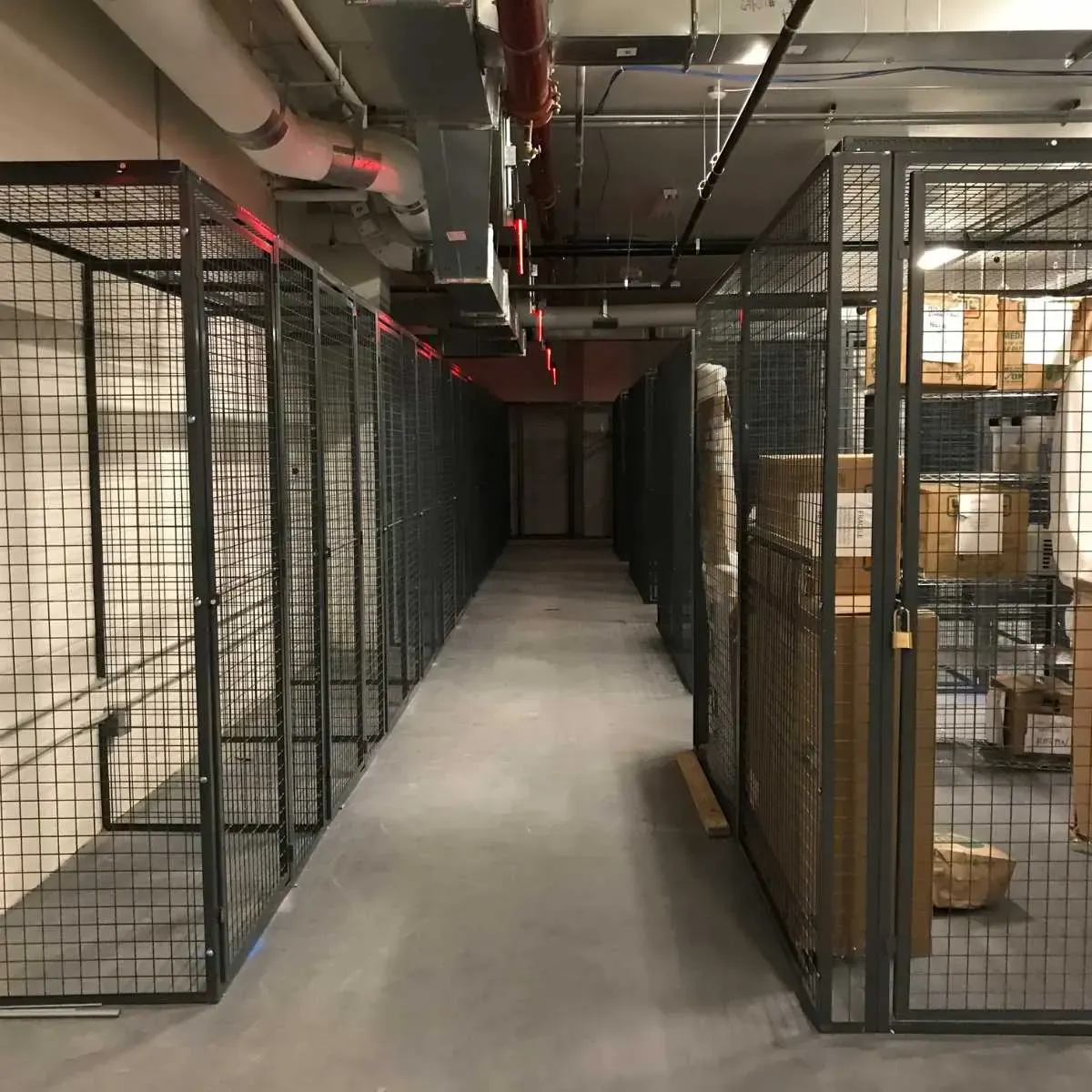
A basement room that looks large on a floor plan can lose a lot of usable area once you account for columns, sprinkler drops, electrical panels, and the space residents need to carry bins or luggage. Good layout work starts with those limits.
Build the plan around the room you actually have
Draft the layout from a field measure, not a clean rectangle on an old PDF. Aisles that look fine on paper can get tight once a door swings open or a pipe drop cuts into a run of panels.
- Column spacing: Set cage widths to work with the structural grid instead of forcing odd leftover bays.
- Aisle width: Leave room for residents carrying totes, strollers or sports gear, and for staff during inspections.
- Door placement: Line up doors so swings do not block the aisle.
- Ceiling obstructions: Check pipes, conduit, ductwork and lights before choosing panel height or adding tops.
- Utility access: Keep valves, cleanouts, electrical gear and house equipment reachable.
- Numbering logic: Match cage numbers to unit records from the start.
Use density carefully
Overpacking the room is a common mistake. Narrow aisles, chopped-up cage shapes and dead-end corners may raise the unit count on paper, but they often make residents unhappy and create more work for staff. A slightly lower count with clean access and standard sizes is usually easier to fill and manage.
Specify the details before pricing
Many boards focus on the cage footprint and leave the details for later, which leads to change orders and mismatched hardware. Define mesh gauge, frame construction, finish, lock method, ceiling panels, and number plates up front so every bid is for the same thing.
Field note: The best storage room is easy to assign, easy to check, and easy to change when the board’s priorities change.
Installation, Codes, and Permitting
A storage cage project usually succeeds or fails before the first panel comes off the truck. The main work is coordinating layout, building limits, code review, resident impact and install timing.

What installers need to check first
Wire mesh systems go in faster than framed construction, but they still need a field review. An uneven slab, a drain in the anchor line, or a low duct can force late changes to door swings and cage heights. Installers also need to know how panels get from the loading area to the room, whether elevators can take the material, and when work can happen without blocking residents or maintenance.
Codes and approvals: confirm with your AHJ
Code review is local, and the authority having jurisdiction (AHJ) has the final say. We do not claim any cage layout meets fire code on its own. Open wire partitions are common in shared residential storage because they keep sightlines open and let air and sprinkler water pass through, but your fire reviewer will look at your specific room. Many buildings were designed to the NFPA 13 sprinkler standard, and your local fire and building codes may add their own rules. Confirm the details with your AHJ before ordering.
Questions that usually come up:
- Sprinkler coverage: Does the layout, and any ceiling panel, block sprinkler discharge?
- Egress and clearances: Are exits, electrical panels, valves, cleanouts and service routes clear?
- Ceiling conditions: Where are beams, piping, conduit and mechanical runs?
- Condo rules and insurance: What can residents store, which locks are allowed, and how are units assigned?
- Attachment method: Do slab anchors, wall ties and any ceiling connections suit the building and local requirements?
Decide early who handles permits, drawings and site checks. Vague responsibility stalls projects. Utah buildings can start with our overview of security cage permits and building code in Utah.
How to Choose a Storage Cage Partner
Projects usually go wrong when a vendor is picked on panel price alone and the layout later wastes space, field dimensions were loose, or the installer ignored how the building operates.
5-step checklist for choosing tenant storage cages
- Assess demand: Unit count, likely uptake and the items residents will store.
- Measure the real space: Columns, piping, drains, electrical gear, ramps and door swings.
- Set the security standard: Mesh gauge, frame, doors, lock prep, numbering and ceiling panels.
- Compare layouts, not just prices: Ask each bidder for a drawing that shows how many cages fit and where.
- Review install and project management: Who handles site checks, drawings, anchors, scheduling and punch list.
Decision scenarios
- Condo basement split into resident storage: Choose a partner who can work around columns and odd walls without wasting space on aisles.
- New multifamily project: Bring storage into design early so assignments, access and finishes are set before turnover.
- HOA replacing old cages: Look for repeatable sizes, matching lock prep and durable numbering.
- Lockers or mesh: Mesh usually wins where visibility, airflow and flexible planning matter more than privacy.
- Garage conversion: Verify slab conditions, moisture and vehicle paths before finalizing the package.
Your Next Step
A storage cage project pays off when it is treated as an operating decision, not just a maintenance item. Start with a real layout, pick sizes that match what residents store, confirm code items with your AHJ, and plan an install that keeps disruption low. Then the cages are easy to manage, easy to reassign, and built to last through years of resident turnover.
Frequently Asked Questions About Tenant Storage Cages
What size should a condo storage locker be?
There is no single standard size. Start with what residents store, measure the longest common item such as a bike, then fit sizes to the room’s columns and aisle. Many buildings use a mix of small, medium and walk-in cages, or two-tier lockers in tight rooms.
Are wire mesh storage cages allowed in sprinklered buildings?
Open wire mesh is common in sprinklered storage rooms because water and air can pass through. Approval still depends on your room, any ceiling panels and local code, so confirm the layout with your authority having jurisdiction (AHJ) before ordering.
Can storage cages be installed in a parking garage?
Yes, if the location is planned around vehicles, moisture, slab slope, drains and overhead lights or sprinklers. Use a durable finish, keep cages out of drive aisles, and check slab type with the building engineer before anchoring.
What is the difference between welded wire mesh and woven wire?
Welded wire mesh has steel wires welded at every crossing, so panels are stiff and will not unravel if one wire is cut. Woven wire, often a diamond pattern, is used for heavier military-style walk-in cages.
Do tenant storage cages need ceiling panels?
Not always. Ceiling panels make sense when cages do not reach the ceiling and climb-over or reach-over access is a concern. Check with your AHJ that panels do not block sprinkler coverage.
Are storage cages for apartments different from condo cages?
The hardware is similar, but apartment cages turn over with leases. Apartment buildings need a clear lock policy, numbering that matches lease records, and standard sizes that are easy to reassign.
Are tenant storage cages better than one shared storage room?
Usually, yes. Individual cages are easier to assign, lock and manage by unit. A shared room often creates confusion over ownership and access.
How do I get a layout and quote for tenant storage cages?
Sketch your room in the Material Handling USA security cage configurator, or call (800) 326-4403 with your room dimensions, unit count and photos of columns, pipes and doors.
Get a Free Layout and Quote
Material Handling USA designs and supplies tenant storage cages for apartments, condos and HOAs. Start with the security cage configurator, see tenant storage locker configurations, call (800) 326-4403, or email Sales@MH-USA.com.
Related Resources
- Tenant Storage Lockers for Apartments
- Security Cage Configurator
- Security Cages
- Owner Security Cages for Condos
- Wire Partition Cages for Tenant Storage in Apartments and Condos
- Chain Link Cages
- Pallet Racking