
Warehouse Shelving Systems
Complete shelving systems for commercial warehouses. Multi-aisle configurations, pick modules, bulk storage zones, and integrated layouts designed to maximize every square foot of your warehouse space.
Talk with a storage specialist. Call (800) 326-4403 or Email Sales@MH-USA.com
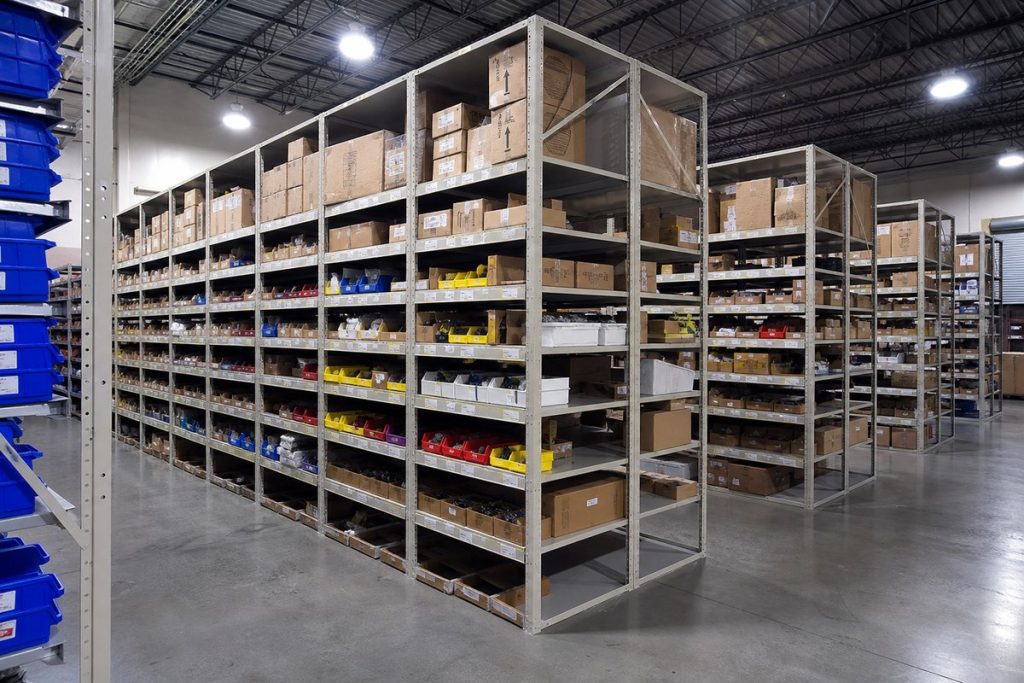
Warehouse Shelving as a System, Not Just a Product
A warehouse shelving system is more than a collection of individual shelving units. It is a designed storage infrastructure where unit placement, aisle widths, shelf configurations, and zone assignments work together to support your warehouse operations — receiving, putaway, storage, picking, packing, and shipping.
Material Handling USA designs warehouse shelving systems that treat the entire facility as an integrated layout. We start with your floor plan, map your inventory profile and workflow, then engineer a shelving system that creates the right storage density, accessibility, and throughput capacity for your operation. The result is a warehouse that works as a system rather than a collection of unrelated shelving units.
Our boltless shelving systems use commercial-grade rivet shelving — single rivet for lighter inventory (350-800 lbs per shelf), double rivet for heavy loads (1,000-2,000 lbs), and wide span configurations for oversized items. Different zones within the same warehouse often use different shelving types, all integrated into a cohesive system.
System Design Approach
Our warehouse shelving system design process addresses the variables that determine warehouse efficiency:
Zone Planning
Divide the warehouse into functional zones: receiving/staging, bulk storage, active pick, returns, packing, and shipping. Each zone gets shelving configurations optimized for its function. Pick zones need maximum locations at ergonomic heights. Bulk zones need maximum volume capacity. Staging zones need flexibility to handle variable daily volume.
Aisle Optimization
Aisle width balances storage density against traffic requirements. Standard pick aisles run 36 to 42 inches for single-worker access. High-traffic aisles need 48+ inches for two-way movement and cart access. Back-to-back shelving rows eliminate wasted aisle space by sharing a common back panel or leaving a minimal gap.
Height Utilization
Most warehouses underutilize vertical space. Standard 8-foot ceilings support 7-foot shelving. 12-foot or higher ceilings allow 10 to 12-foot units that add 30-50% more storage capacity using the same floor space. Upper shelf levels store slow-moving inventory accessed by step ladders or rolling stairs.
Integration with Existing Systems
Warehouse shelving systems often coexist with pallet racking, conveyor systems, workstations, and dock equipment. Our designs account for clearances, traffic paths, and workflow connections between shelving and these other systems.
Types of Warehouse Shelving Systems
Pick Module Systems
Dense shelving arrays organized for order picking. Multiple aisles of boltless shelving with labeled pick locations, bin systems, and optimized shelf heights. Designed for maximum SKU density and minimum pick travel time.
Bulk Storage Systems
Heavy duty shelving for high-volume inventory. Double rivet and wide span units store heavy cartons, cases, and bulk materials. Configured for maximum weight capacity per shelf level and per unit.
Mixed-Use Systems
Most warehouses need different shelving in different areas. Single rivet for light items, double rivet for heavy, wide span for oversized. A designed system specifies the right type for each zone.
Expansion-Ready Systems
Growing operations need systems that scale. We design initial layouts with expansion paths — pre-planned locations for additional rows and bays that add capacity without disrupting existing operations.
Frequently Asked Questions
Our system design includes a CAD floor plan showing all shelving placement, aisle widths, zone designations, and traffic paths. The design specifies shelving types, sizes, and quantities for each zone. We also provide a detailed bill of materials with project pricing.
Typical design turnaround is 3 to 5 business days after we receive your floor plan and inventory information. Complex multi-zone systems for large facilities may take 5 to 10 days. Rush design is available for time-sensitive projects.
Yes. Many warehouse shelving systems combine boltless shelving for hand-picked items with pallet racking for palletized storage. Our designs account for clearances, traffic flow, and replenishment paths between the two systems.
System costs depend on facility size, shelving types, and unit count. Small warehouse systems (20-50 units) typically range from $10,000 to $40,000. Large distribution operations (100-500+ units) range from $50,000 to $500,000+. Contact us for a detailed project quote.
Yes. Our crews install complete warehouse shelving systems including assembly, leveling, anchoring, and alignment of all units. For operational warehouses, we can phase installation to minimize disruption to daily operations.
Get a Complete Warehouse Shelving System Design
Send us your floor plan and inventory details. We will engineer a shelving system optimized for your operation.