
Mobile Shelving & High-Density Storage Systems
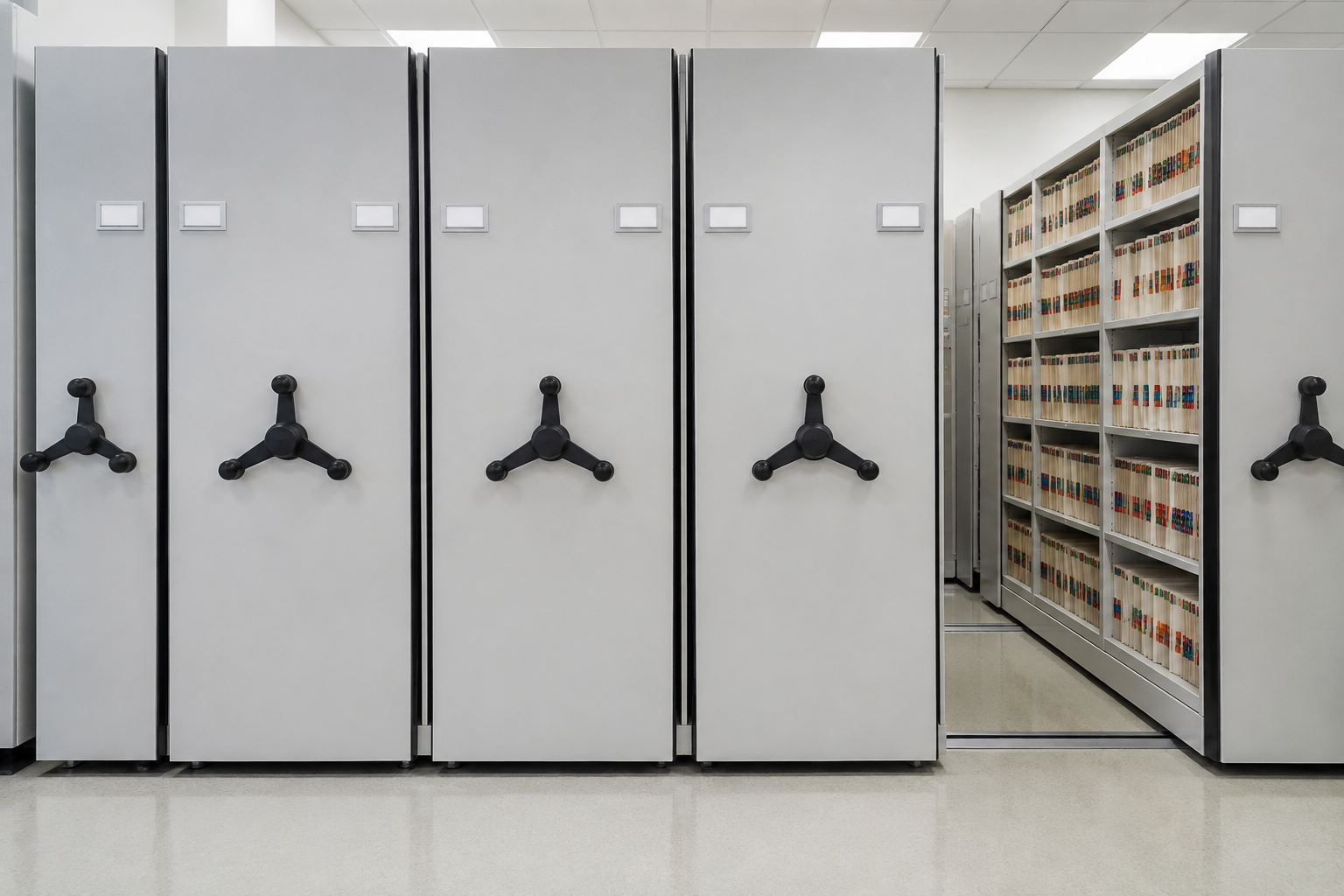
Plan manual, mechanical-assist and powered shelving mounted on mobile carriages that move laterally along fixed tracks or rails. MH-USA analyzes the room, stored material and project constraints before recommending a system.
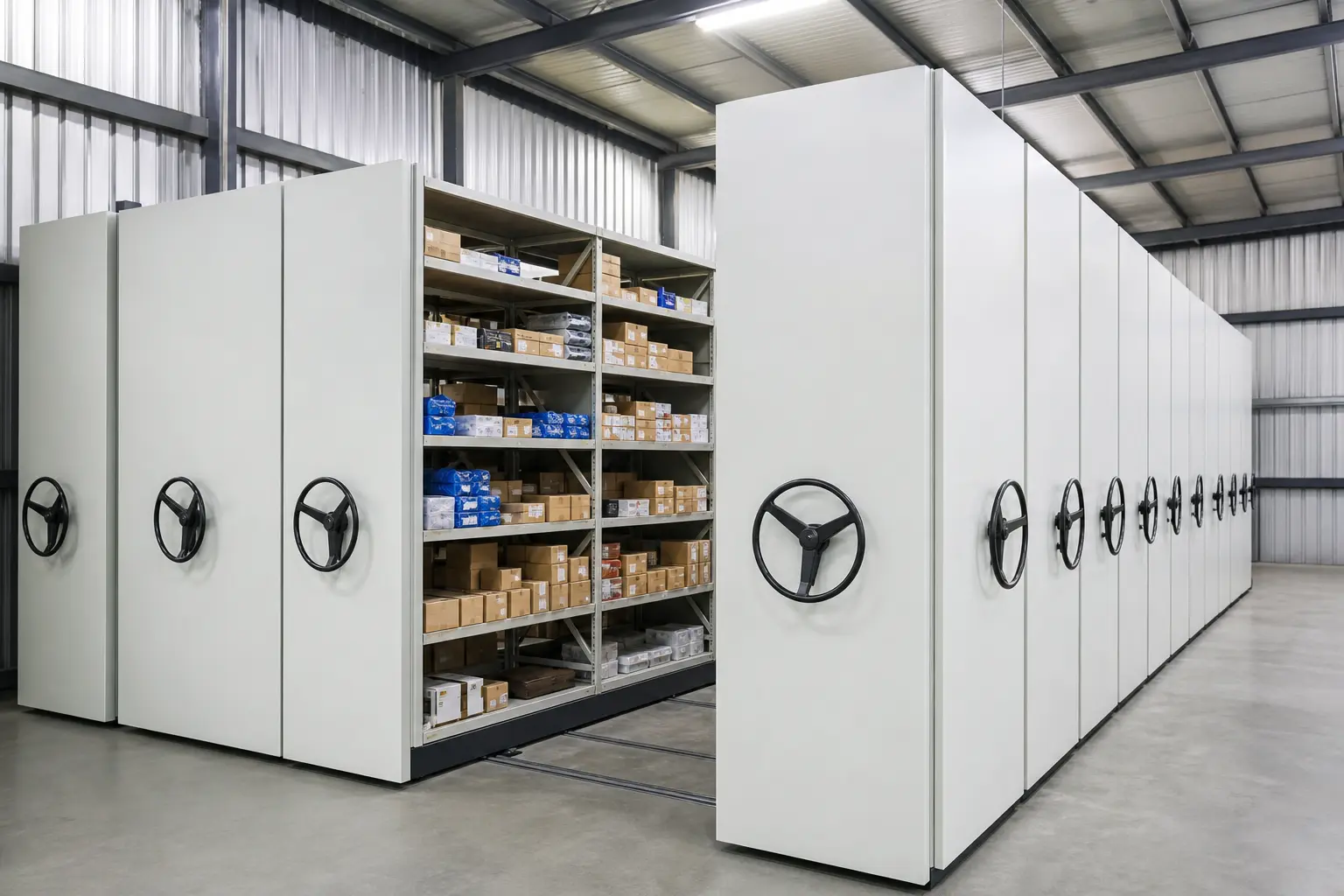
Create Storage Capacity Without Adding More Fixed Aisles
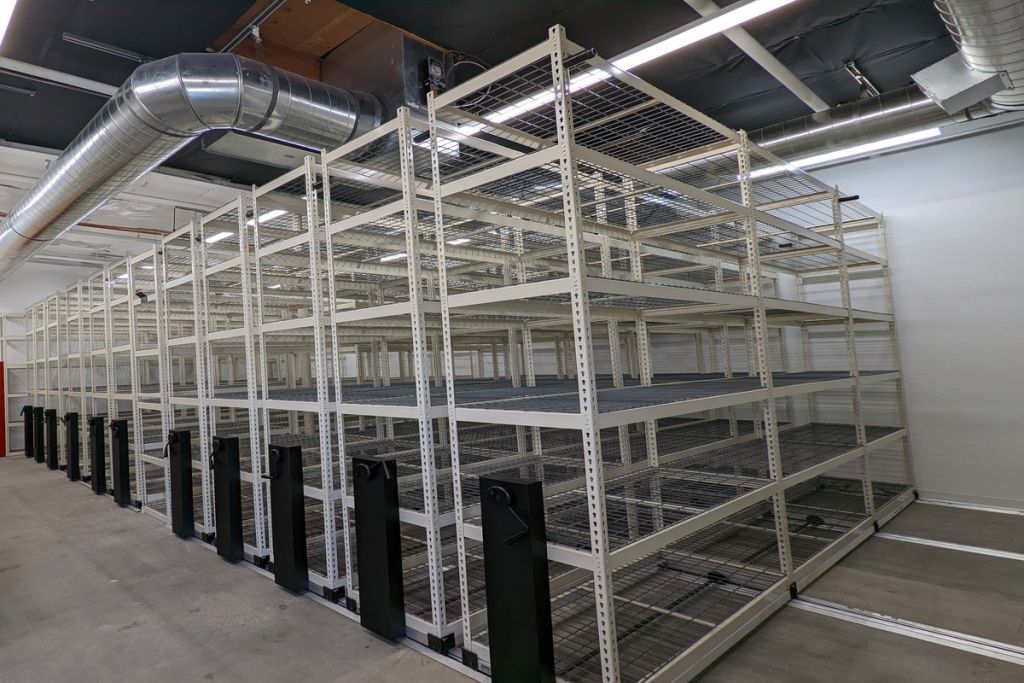
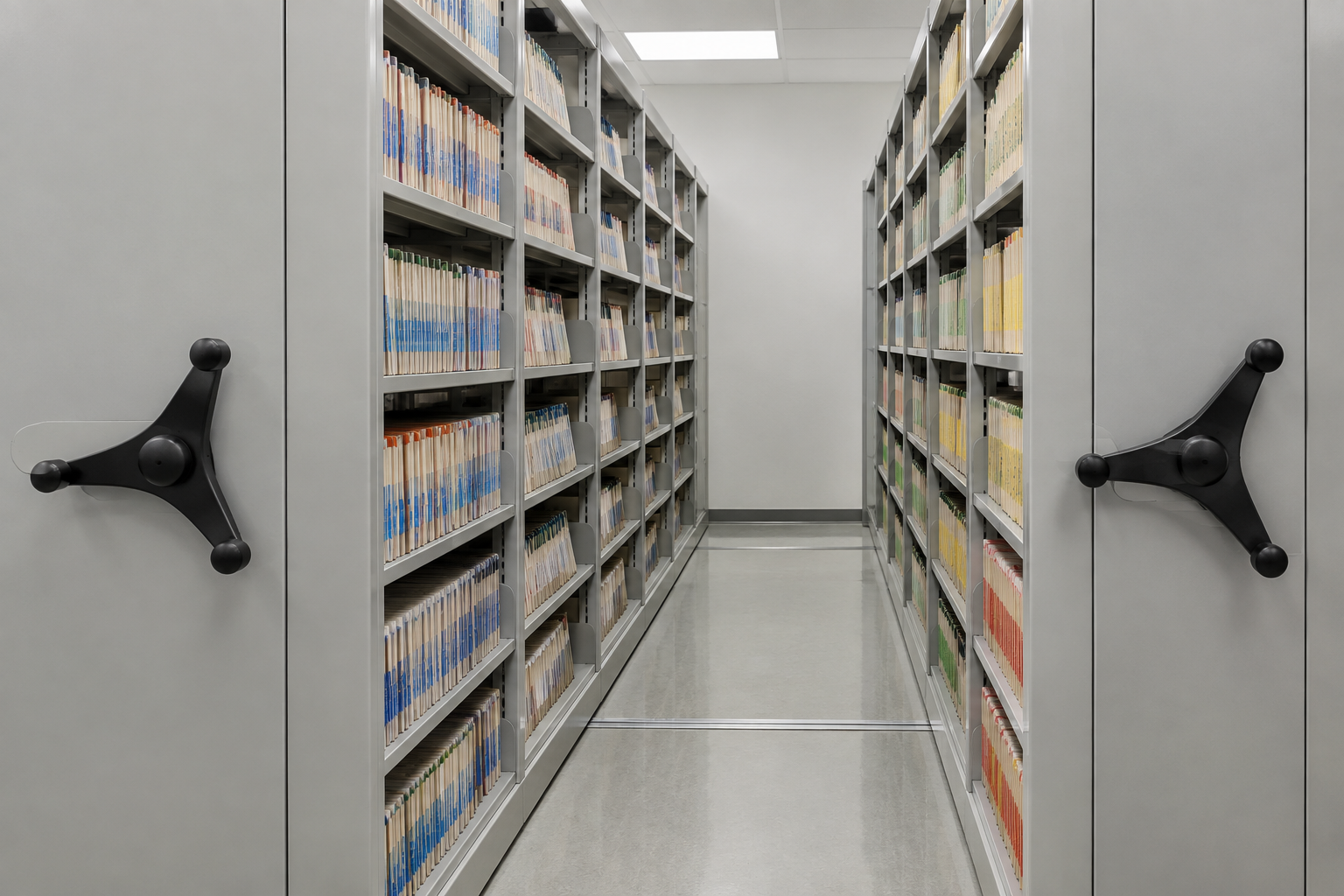
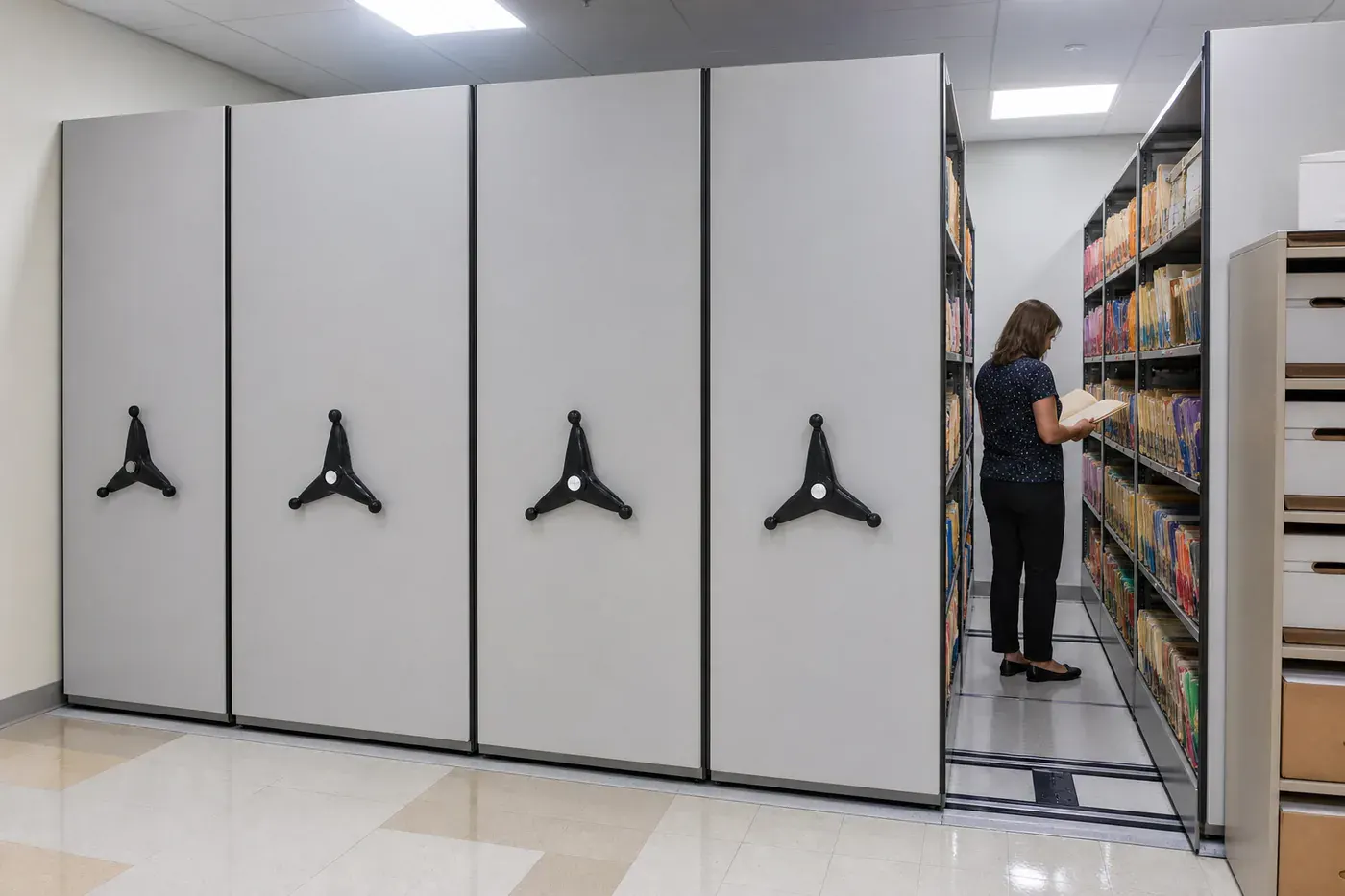
Every static shelving layout spends floor area on permanent aisles. A track-mounted mobile system places shelving or cabinets on carriages that move laterally along fixed rails, allowing rows to compact together and opening an aisle only where access is needed. The opportunity depends on room dimensions, shelf depth, required clear aisle, fixed ranges and project constraints—not a universal percentage.
MH-USA plans track- and rail-mounted systems for museums, libraries, hospitals, evidence rooms, offices, retail stockrooms, government facilities and industrial parts departments—from early space analysis through layout, system selection and installation coordination.
Buyers reach this category under several names. High density shelving, movable shelving, compact shelving and compactor shelving all describe the same track-mounted idea, and high-density file storage is simply the office version of it. The planning question does not change with the vocabulary: how many linear feet of material has to fit, and how many square feet of floor the room can afford to give to open aisles. We work that comparison in square feet of floor area and linear feet of shelf, using your dimensions, so the trade-off is visible before anything is ordered.
- ✓One active access aisle can replace many permanently open aisles
- ✓Same-room and same-capacity layouts are calculated from your dimensions
- ✓Locking end panels and access control for secure material
- ✓Shelving, bins, drawers, racks and art panels on the same carriages
- ✓Free same-room and same-capacity space analysis before pricing

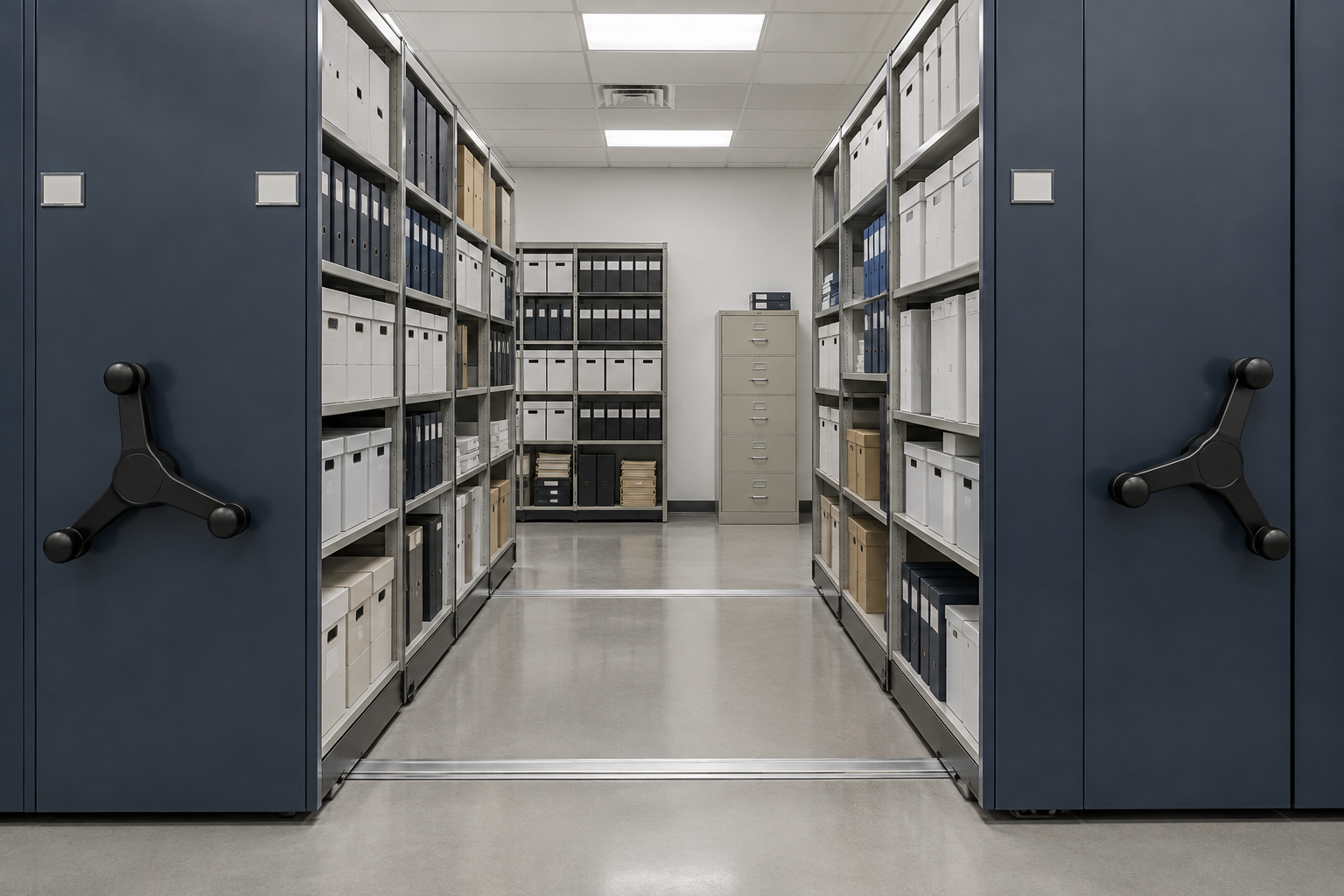
Mobile shelving installed in a municipal records room
Three Drive Types — Which One Fits
The right drive depends on load weight, how often aisles are opened, who operates the system and budget. All three use the same rail-and-carriage principle.

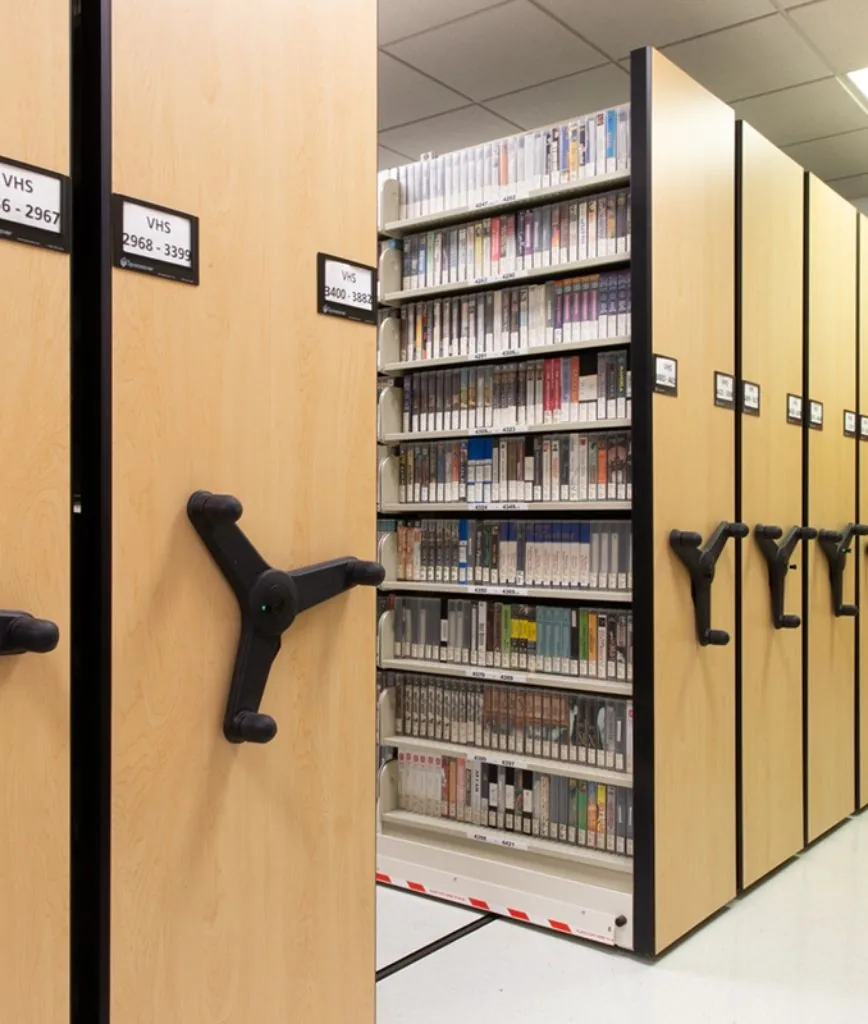

Mobile Shelving Drive Types Compared
The same rail-and-carriage principle drives all three. Use this side-by-side comparison to narrow the option, then open the detail page for specifications and planning guidance.
| Consideration | Powered / Electric | Mechanical Assist | Manual |
|---|---|---|---|
| Aisle activation | Touchpad, remote or barcode — motor moves the range | Geared three-spoke handle (~3:1 advantage) | Direct push on the end panel |
| Operator effort | None — powered movement for every user | Light turning effort, even for heavy ranges | Manual push; best for lighter ranges |
| Typical range size / load | Large systems and the heaviest loads | Mid-to-large ranges and heavier loads | Smaller ranges and lighter loads |
| Electrical / wiring | Requires power and controls | No electrical work | No electrical work |
| Safety controls | Infrared sweeps, floor sensors, aisle lockout | Aisle locks and anti-roll brakes | Aisle locks per manufacturer |
| Best fit | High-traffic, high-density, ADA and ergonomic priorities | Retrofits and budget-conscious high-density projects | File rooms, supply closets, archives, stockrooms |
| Relative cost | Highest — motor, controls, safety package | Moderate | Most economical |
Drive selection is confirmed against manufacturer technical data for the specific range length, load and duty cycle.
How Mobile Shelving Works
- Floor rail system — precision steel rails mount directly to your existing slab, guiding the carriages and spreading load along the rail line. Most buildings need no special floor preparation; rails can be surface-mounted or recessed flush.
- Carriage platform — steel carriages with self-aligning wheels carry one or more shelving sections. Capacity is manufacturer- and configuration-specific and must be checked against current project data.
- Shelving integration — four-post shelving, boltless shelving or specialty storage (bins, drawers, weapon racks, art panels) mounts on the carriages, and existing shelving can often be reused.
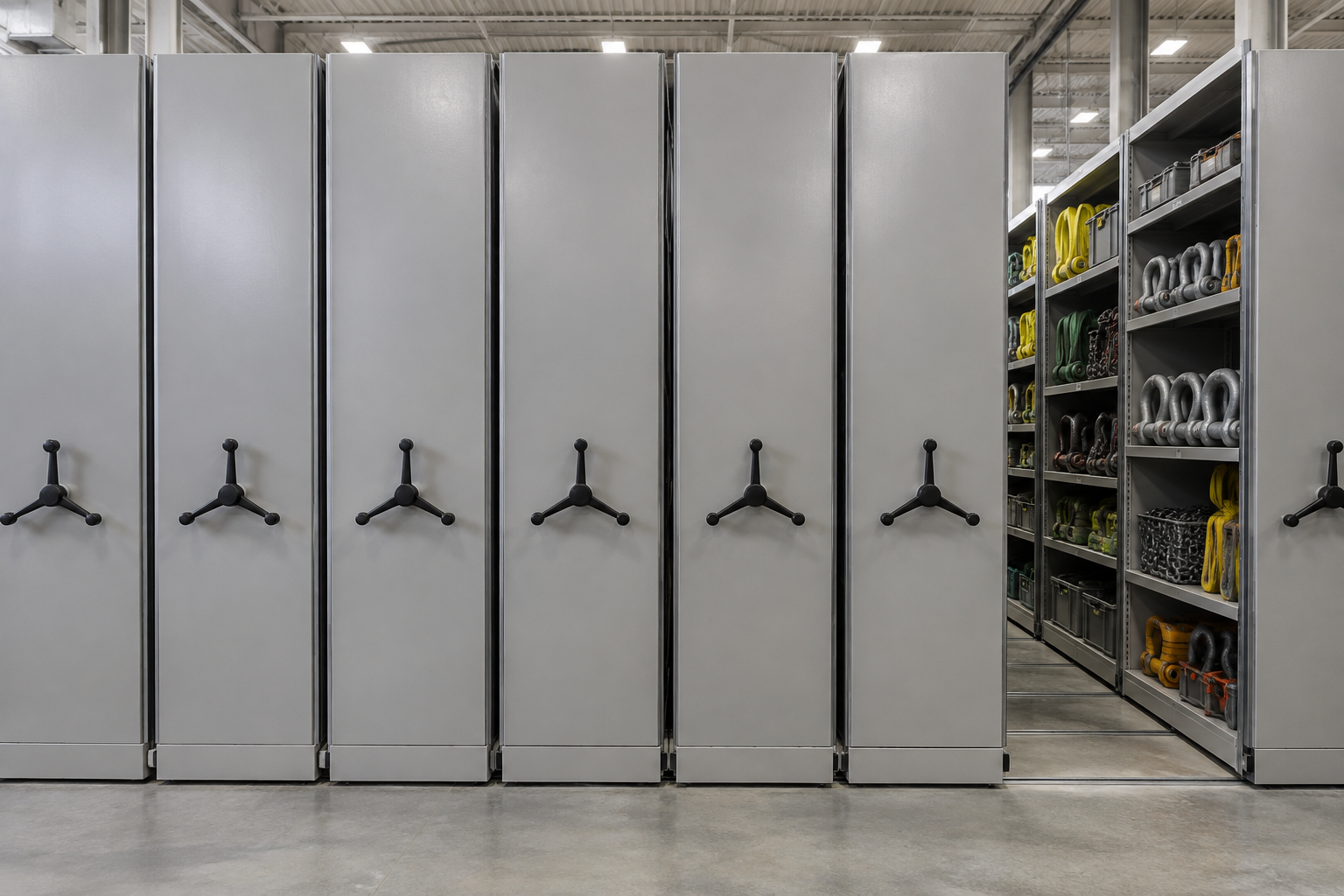
- Aisle access — powered systems open by touchpad, remote or scanner; mechanical systems by geared handle; manual systems by direct push.
- Safety systems — infrared sweeps, floor-level photo eyes and pressure-sensitive entry mats detect people in the aisle and lock the carriages, with full lockout for extended work inside a range.
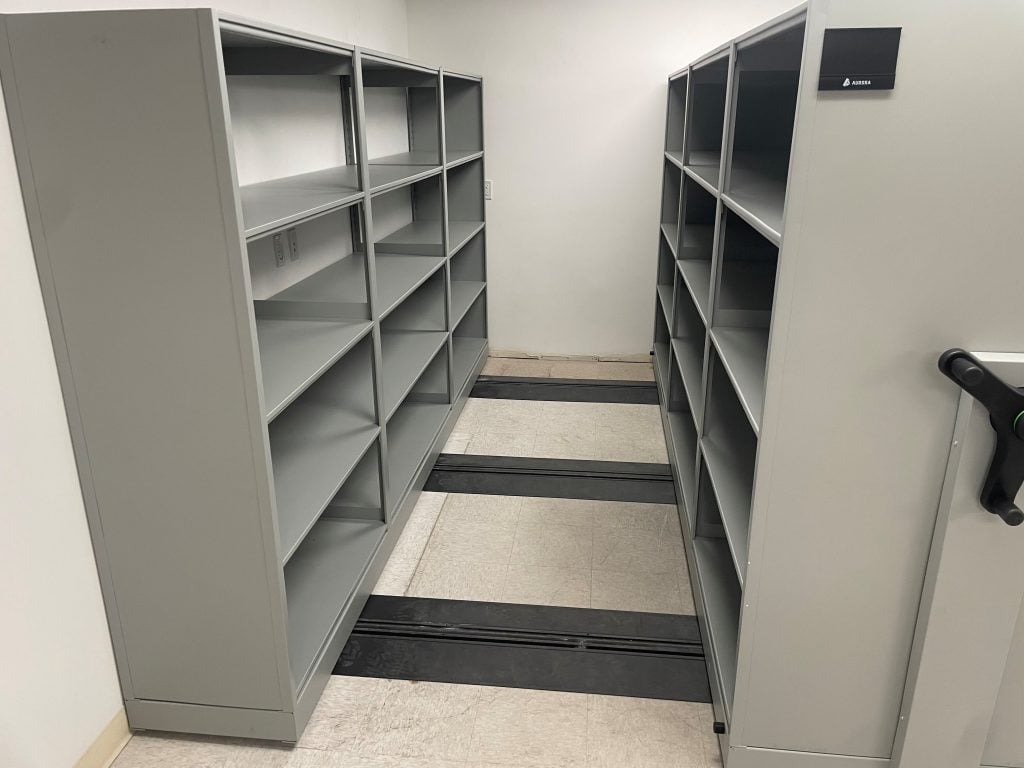
Carriages riding on floor rails with a single aisle opened
How to Evaluate Space and Project Value
A useful business case starts with transparent geometry, then compares the mobile concept with the real alternatives for your facility:
Compare the same room
Compare fixed and mobile layouts using the same room, shelf depth, range length, fixed/perimeter ranges and clear-aisle assumption.
Compare the same capacity
Estimate the footprint needed to hold the current shelving capacity, then test whether reclaimed area can support another operational need.
Measure the real alternative
Document the actual costs and workflow impact of expansion, relocation, offsite storage or repeated handling instead of relying on generic assumptions.
Keep the math visible
Show the ranges, faces, sections, run length and aisle assumptions behind the comparison so the result can be checked and refined.
Validate project-specific ROI
Calculate payback only after the selected system, installed project cost, operating impact and avoided alternative costs are known.
Review what geometry omits
A concept layout still needs review for doors, columns, HVAC, sprinklers, egress, slab conditions, seismic requirements, accessibility and final manufactured dimensions.
Applications and Industries
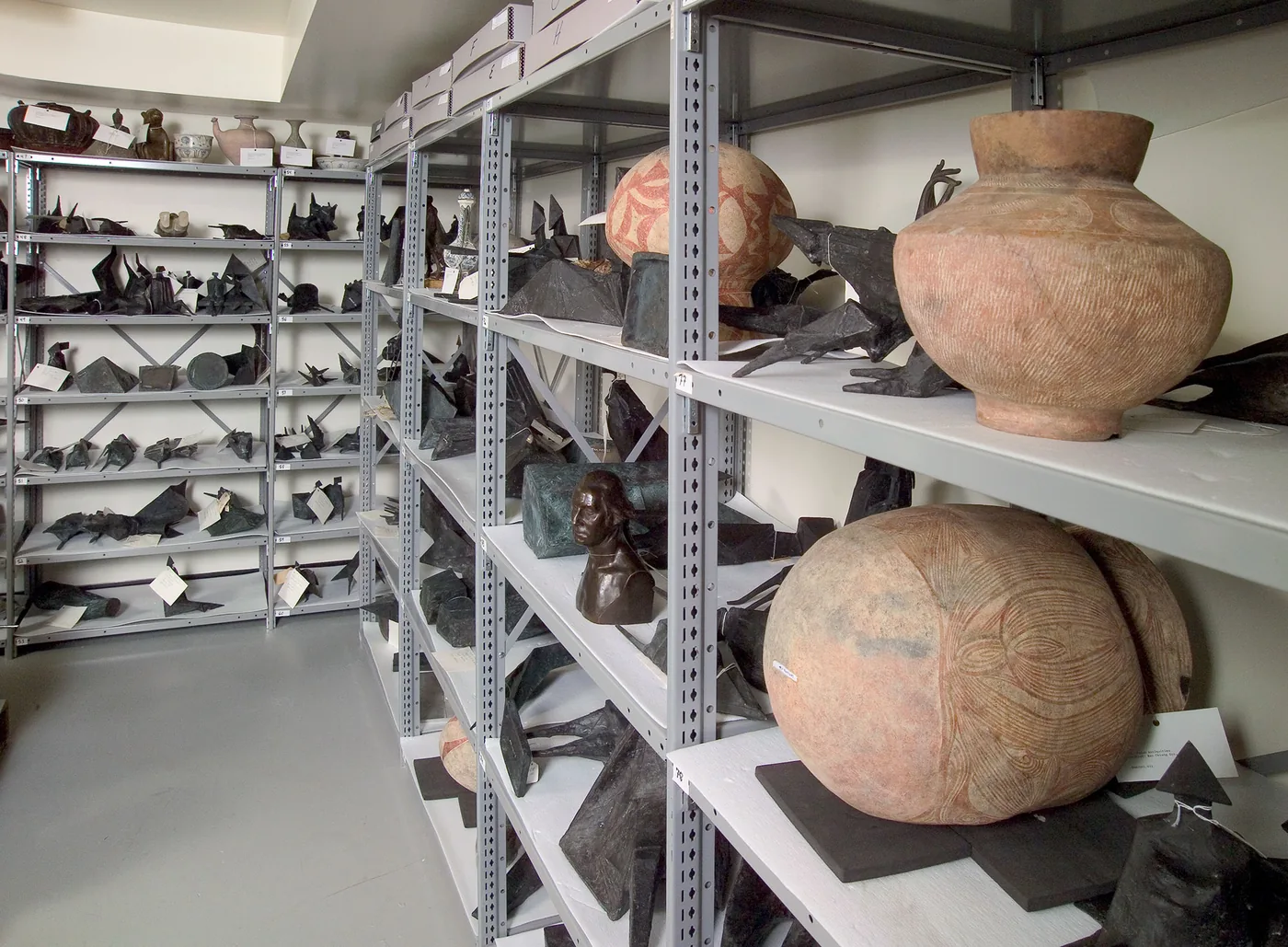
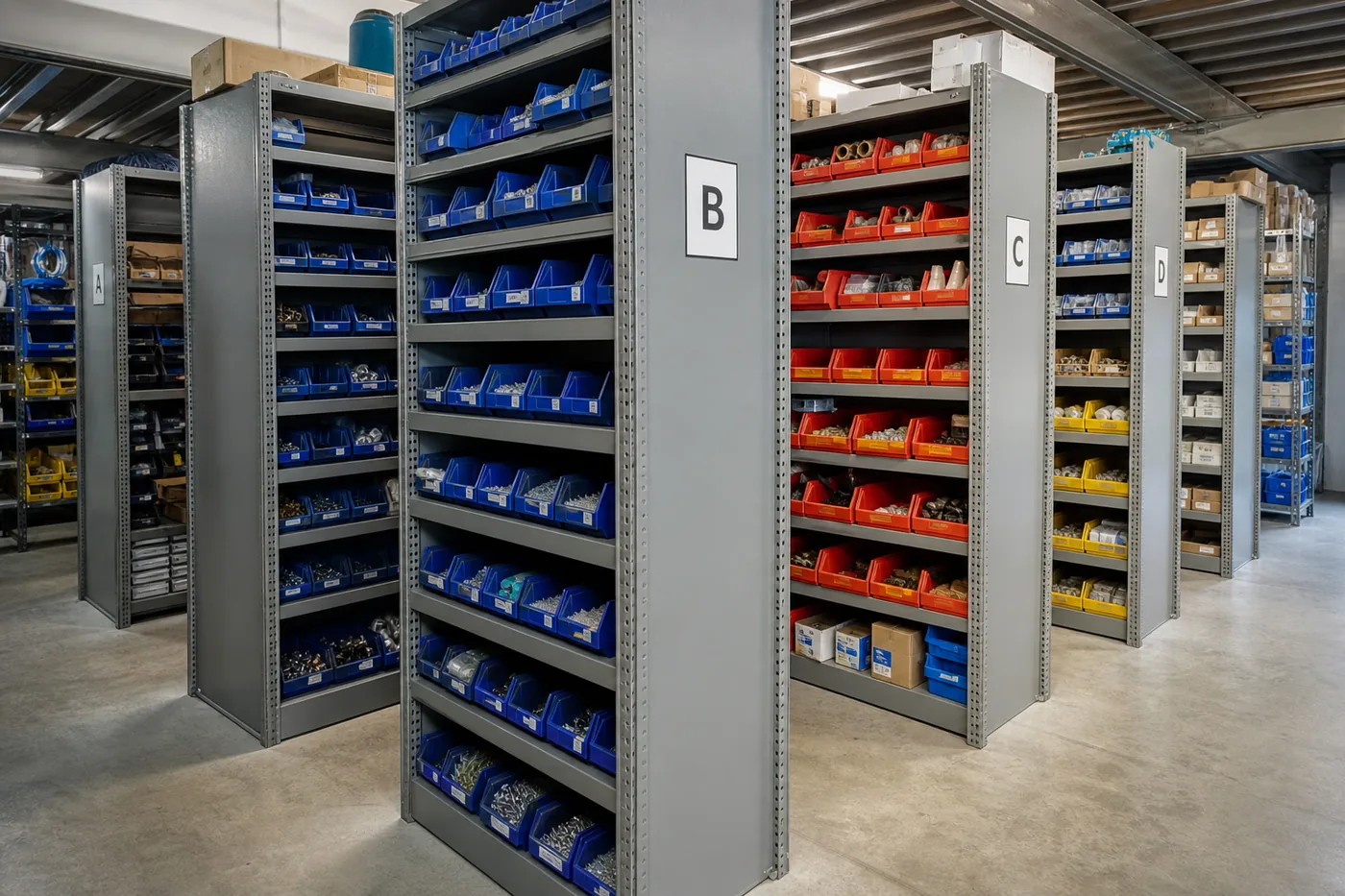
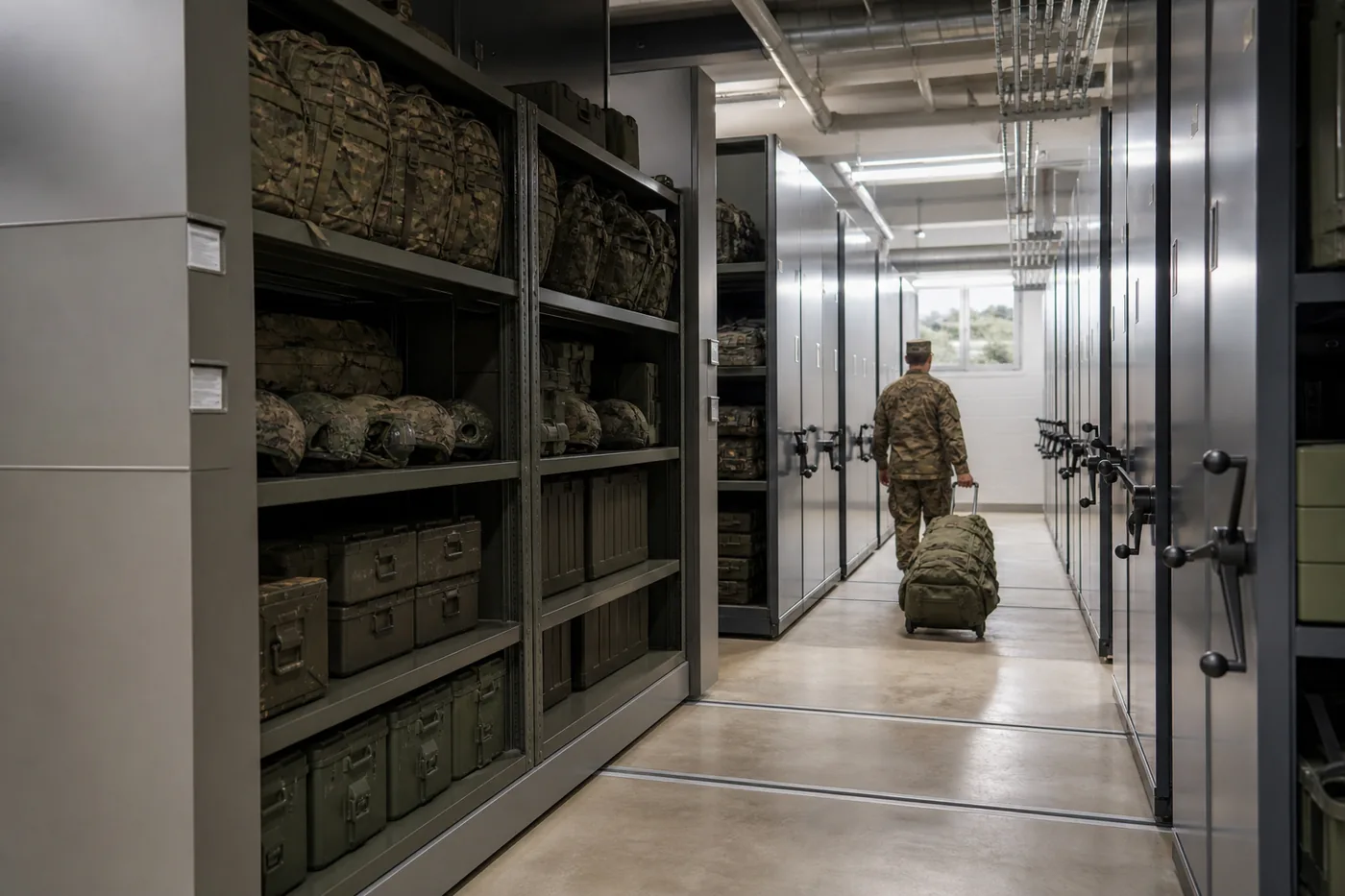
Mobile shelving works anywhere a room has run out of space but the building cannot grow. These are the applications we see most often:


Shelving and Material Options
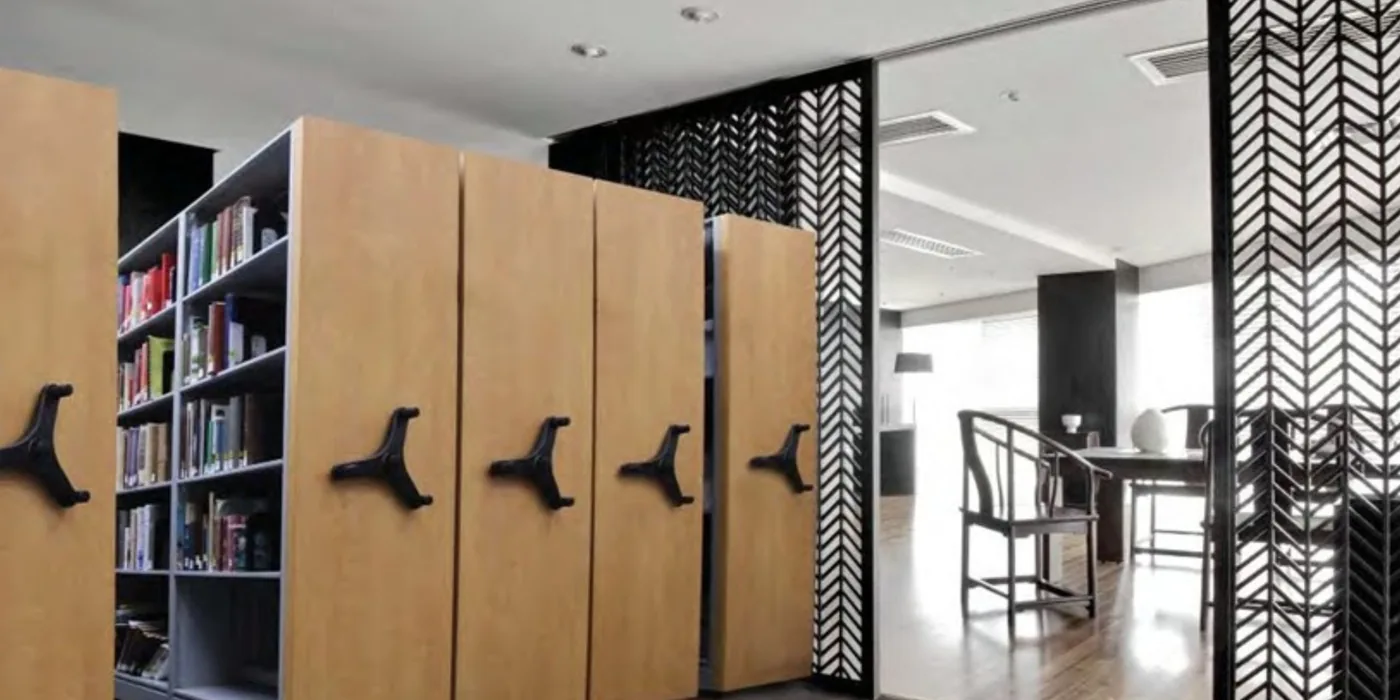
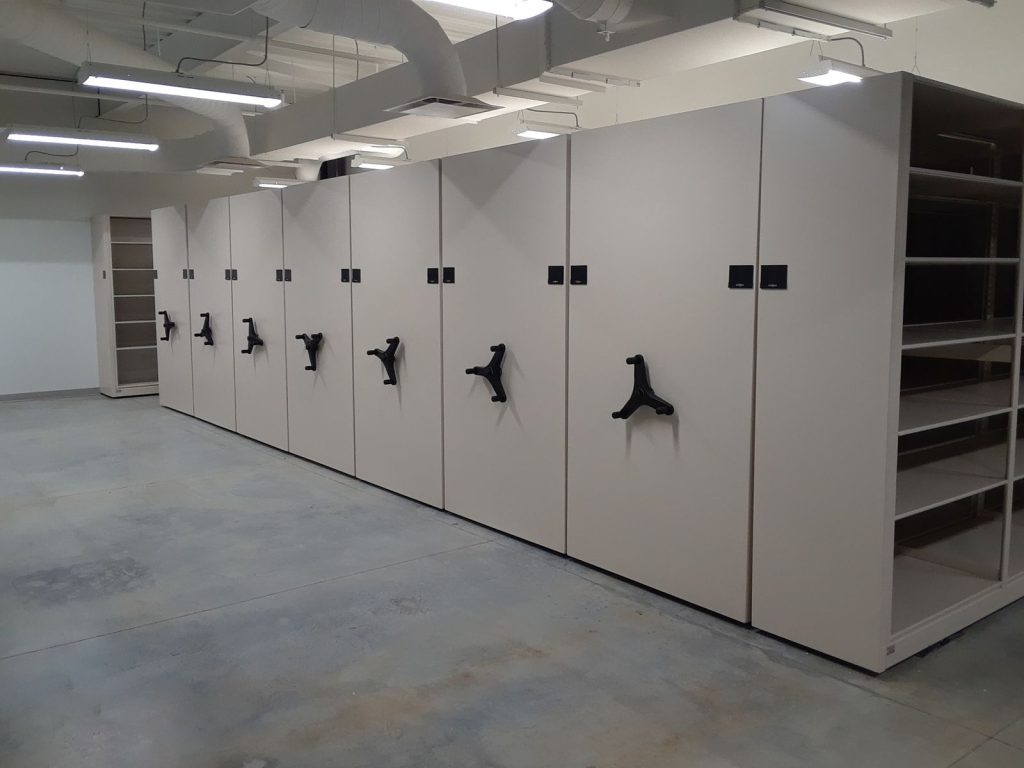
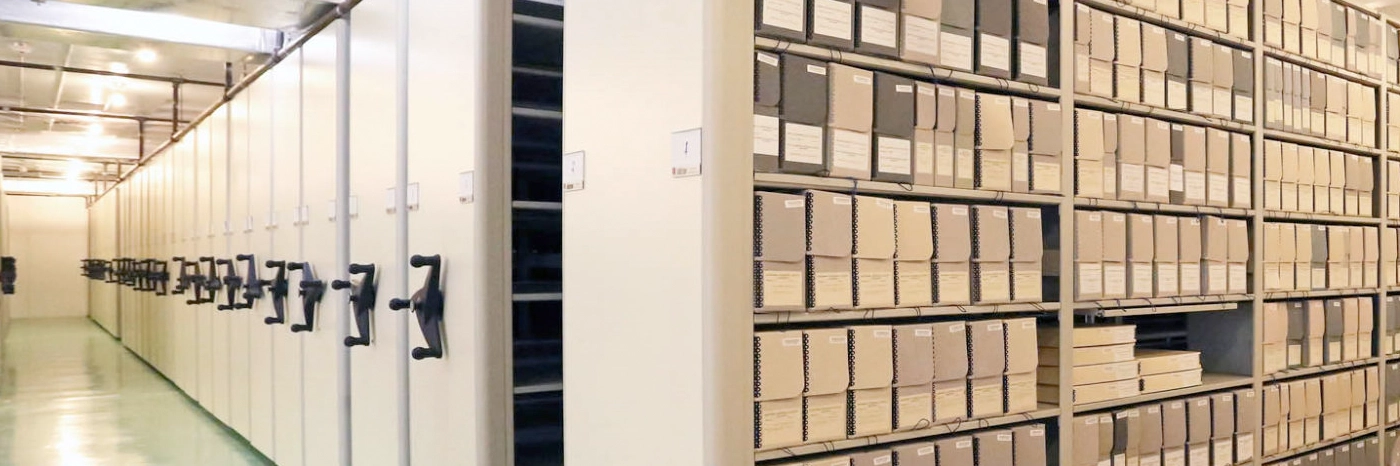
Library mobile shelving with wood-finish end panels
The carriage is the same; what sits on it should match what you store.
- Steel shelving — the workhorse. Highest capacity per shelf, resists deflection under heavy files, parts and equipment, and takes a durable powder-coat finish for warehouse, evidence and industrial rooms.
- Wood-finish end panels and library shelving — used where the system sits in a public space such as a library, reading room or executive floor; steel structure with wood-look panels and trim.
- Wire shelving — open, ventilated and easy to clean for kitchens, clean supply rooms, pharmacies and anywhere airflow or visibility matters.
- Specialty carriers — drawers and bins for small parts, weapon racks for armories, art panels and textile rollers for collections, hanging frames for legal files.
Mobile Shelving Design Decisions
| Decision | What must be confirmed |
|---|---|
| System definition | Shelving or cabinets mounted on carriages that move laterally along fixed floor tracks or rails; carts and shelving on casters are excluded. |
| Drive type | Manual, mechanical-assist or powered/electric based on range length, load, access frequency, controls and manufacturer guidance. |
| Track or rail integration | Surface-mounted, grouted, recessed or other manufacturer-approved approach coordinated with the floor, transitions and finished elevation. |
| Shelving and carriage | Current manufacturer dimensions, allowable loading, fixed/perimeter ranges, accessories and stored-material requirements. |
| Clear aisle and access | Workflow, equipment, accessibility and code requirements reviewed for the actual facility; a planning input is not a compliance determination. |
| Floor and structure | Slab or supporting structure, concentrated loads, levelness, anchorage and seismic requirements reviewed by qualified parties where required. |
| Safety and controls | Manufacturer-specific locks, aisle controls, detection, overrides, operating instructions and owner procedures. |
| Project schedule | Manufacturer, approvals, site readiness, freight, installation phasing and commissioning determine the actual schedule. |
Start with a transparent space comparison
Our free mobile shelving planner compares fixed and track/rail layouts using visible equations and assumptions. Results appear before any contact form, and you can then request a space analysis or upload a floor plan for review.
Our Process
Space assessment
We survey room dimensions, floor condition, ceiling height and existing shelving to establish what the room can hold and what the capacity gain will be.
System design
CAD layouts show rail positions, carriage placement, aisle widths and total capacity, with a before-and-after comparison.
Procurement & fabrication
Once the configuration is approved, we confirm the manufacturing schedule with the selected manufacturer in writing and coordinate delivery logistics around your operation.
Installation & training
Crews install rails, carriages and shelving on the schedule agreed for your site, then train your staff on safe operation and aisle lockout using the manufacturer’s operating instructions.
Installed and supported, not dropped off
Every system we install is anchored and aligned to the manufacturer’s installation instructions, and we hand over the operating instructions together with the manufacturer’s inspection and maintenance schedule. We stay available afterwards for parts, service coordination and reconfiguration.
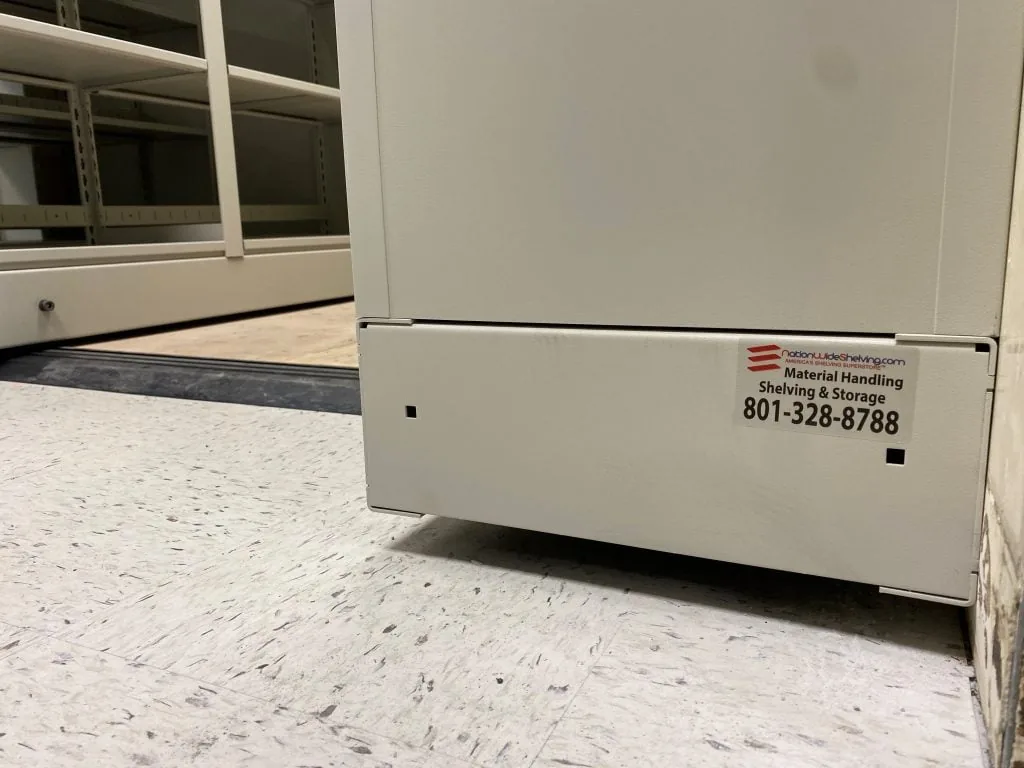
Carriage and rail detail after installation
Compare Mobile Shelving Manufacturers
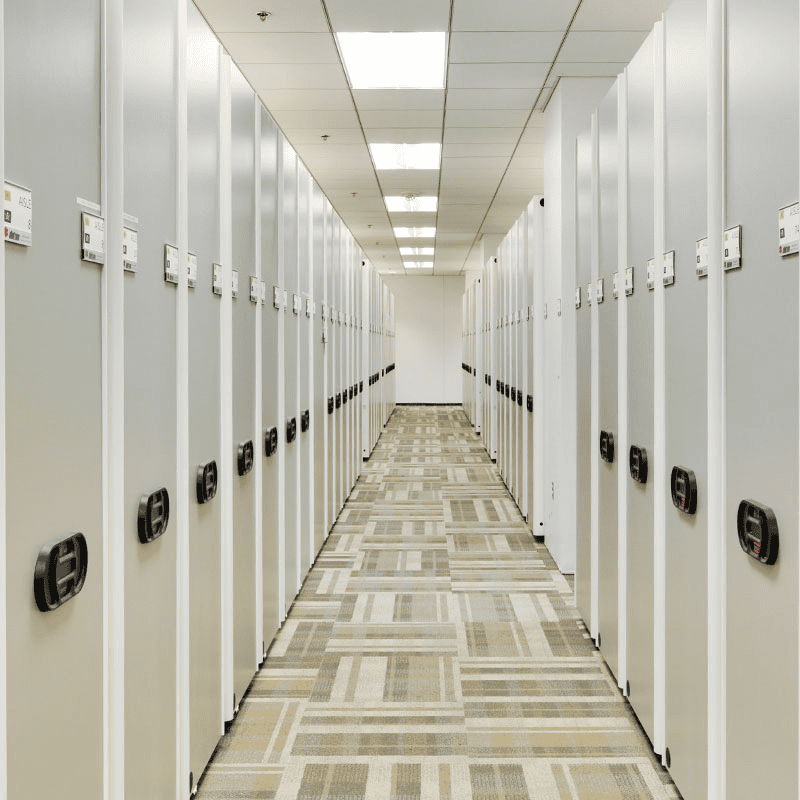
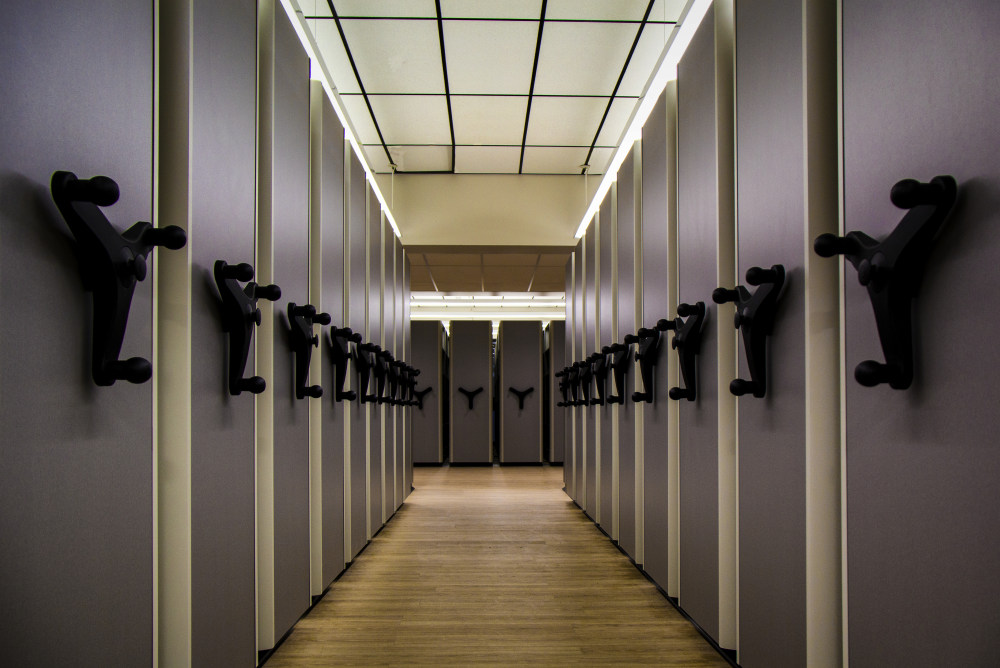
Material Handling USA is an authorized dealer for several high-density mobile shelving manufacturers, so the choice is not about which brand we happen to sell — it is about which carriage, drive and shelving combination fits your room, your loads and who has to operate it. The table below compares the lines we supply, using each manufacturer’s own published model and capacity information. Every brand below is track-mounted: carriages ride rail fixed to the floor and park closed, opening one aisle where someone is working.
| Manufacturer | System / model line | Drive options | Typically the right fit for | Detail page |
|---|---|---|---|---|
| Datum Storage Solutions | MobileTrak5 carriage system, plus TrakSlider and ArtStor | Mechanical-assist or end-panel powered | Records and filing rooms, weapons and secure storage, mixed shelving/cabinet/locker loads on one carriage | Datum Mobile Shelving |
| Spacefile International | SDSm manual, SDS mechanical and SDSe electrically assisted carriages | Manual, mechanical and electrically assisted | Long runs — Spacefile documents system lengths up to 60 ft for SDSe and uprights to 16 ft | Spacefile Mobile Shelving |
| Aurora Storage Products | Quik-Lok four-post shelving carried on Aurora carriages, rail and drives engineered as one system | Mechanical-assist and electric | Records, evidence, library, laboratory and parts storage; CSI-format specs for architects | Aurora Mobile Shelving |
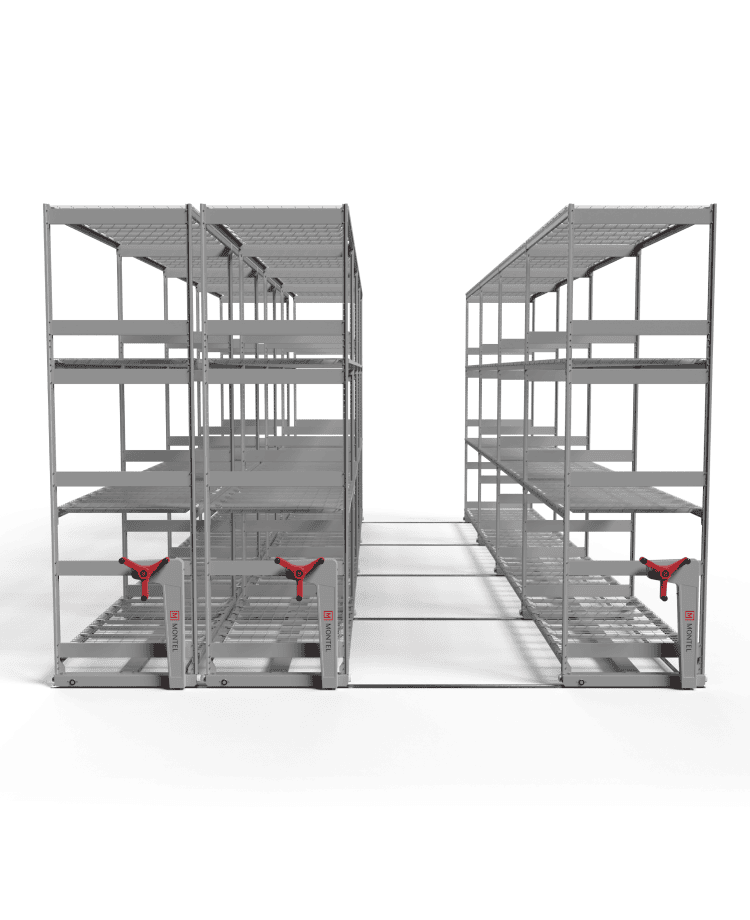
| Montel | BULK&ROLL mobile racking (2.4MA), rated 2,400 lb per wheel channel section | Mechanical-assist (geared handle, no motor) | Bulky light-to-medium loads on racking rather than shelving | Montel Mobile Racking |
| MMI Storage Solutions | MMI mobile shelving on wire-shelf carriages, with melamine, gridwall, pegboard, masonite, dry-erase and acrylic end panel options | Manual and mechanical-assist (geared handle, no powered option) | Retail, warehouse, food service, agriculture/cultivation, dispensary and grocery back-of-house storage | MMI Mobile Shelving |
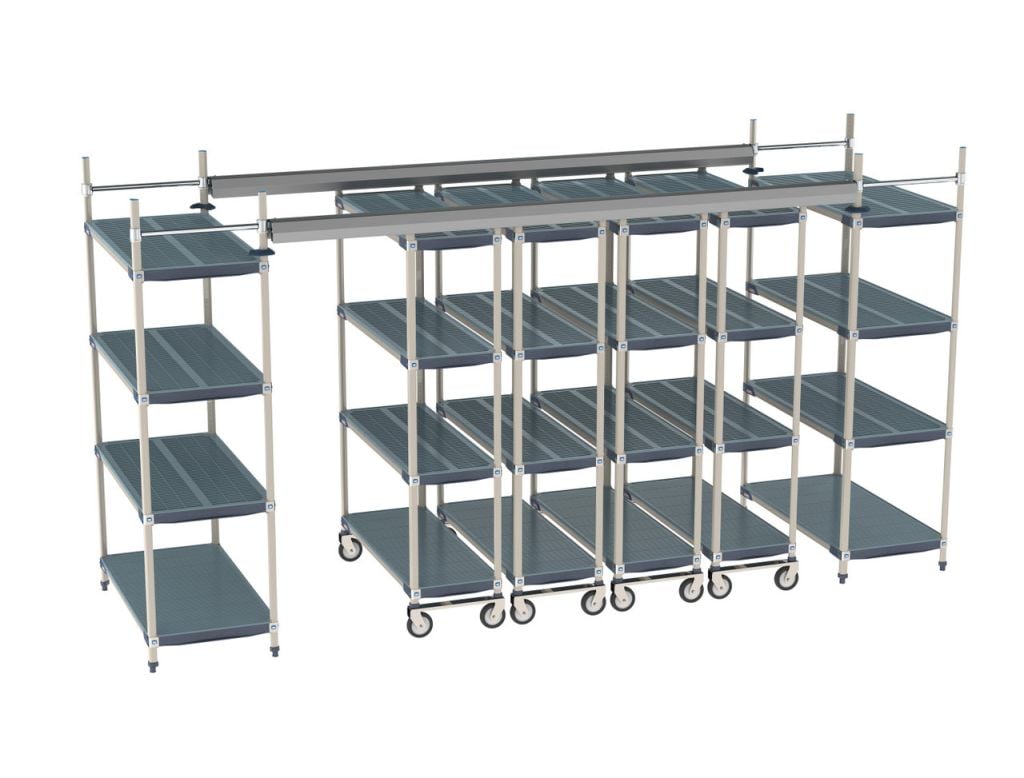
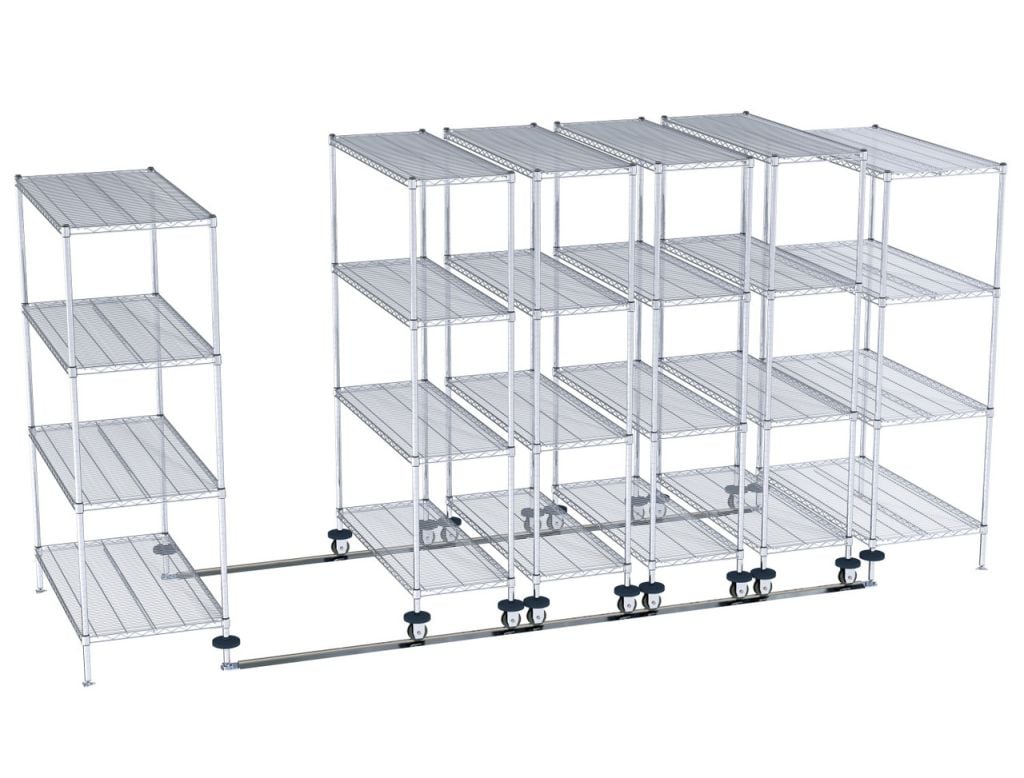
| Metro Top-Track | Overhead-rail carriages fitted with Super Erecta wire or MetroMax polymer shelving | Overhead rail, no drive/power needed | Rooms with uneven or finished floors where no floor-mounted rail or floor prep is wanted | Metro Top-Track |
| Metro qwikTRAK | Floor-rail carriages fitted with Super Erecta wire or MetroMax polymer shelving | Floor-mounted rail, up to 2,000 lb/unit | Higher-load rooms with a flat floor available for rail | Metro qwikTRAK |
Drive type, range length and floor preparation usually decide the outcome long before brand does. If you are unsure which column you belong in, send us the room and we will lay it out — call (800) 326-4403 or request a free space analysis.
Mobile Shelving Case Studies
State government: records storage mobile shelving for the Utah Department of Natural Resources — permanent-retention files, maps and permits consolidated on state contract.
Law enforcement: police evidence storage mobile shelving for the Unified Police Department in Salt Lake County, Utah — our largest evidence-room high-density project.
Newest project: golf bag storage mobile shelving at Logan Country Club in Logan, Utah — how a Cache Valley club replaced fixed bag racks with a single-aisle high-density system.
Retail: retail stockroom mobile shelving in Centerville, Utah — a store build-out that gained a full stockroom of backstock storage on a ramped system, with no new floor construction.
Oil and gas: office file room mobile shelving for an oil and gas company in Midland, Texas — onsite records capacity added without expanding the file room.
Oilfield services: heavy-duty mobile shelving for oilfield tool and parts storage with Milestone Project Services — consolidating tool and parts inventory on a rugged high-density system.
Museum and archives: museum and archives collections mobile shelving in Oxford, North Carolina — a twin-ramp retrofit that added collections storage capacity without cutting a new sub-floor.
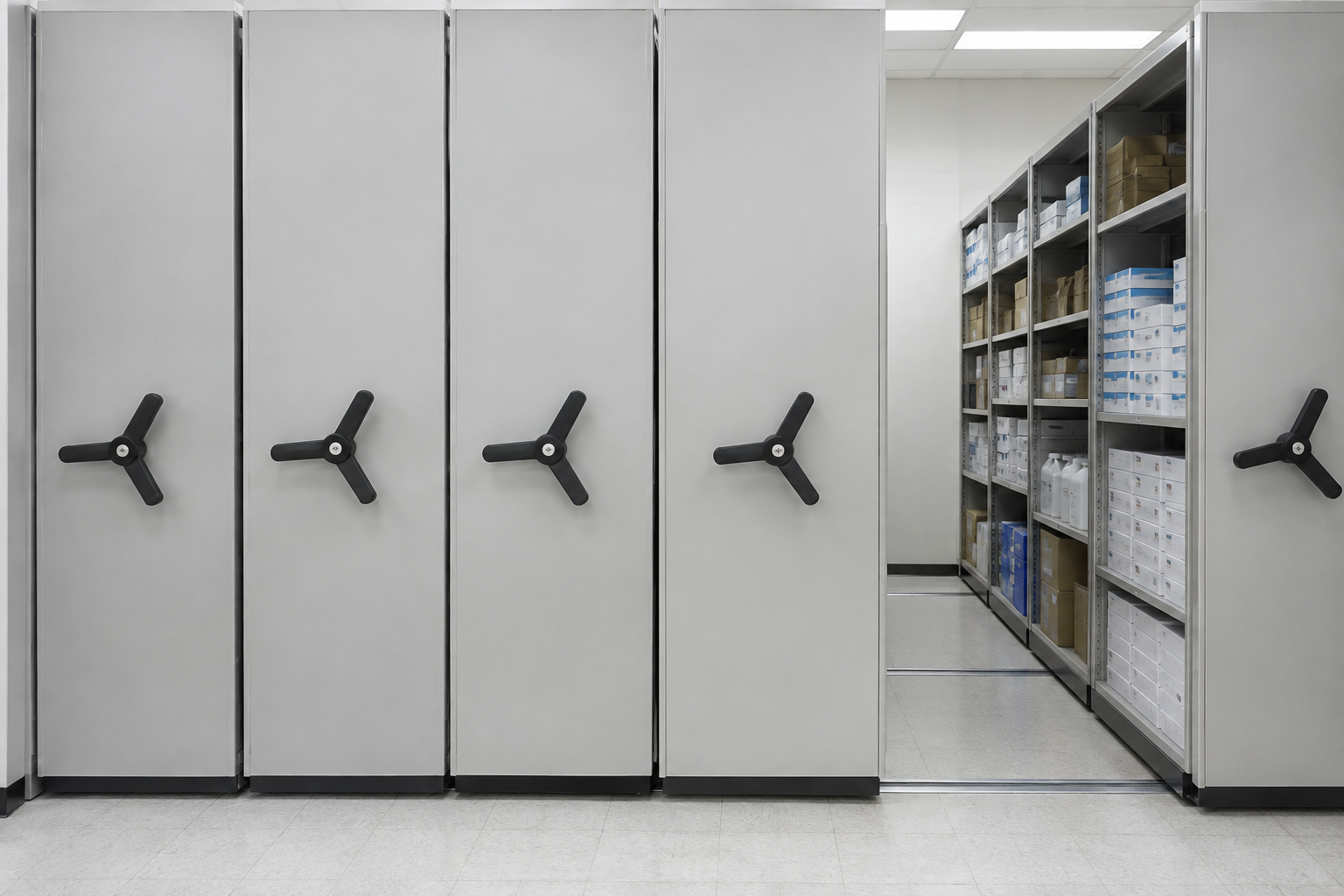
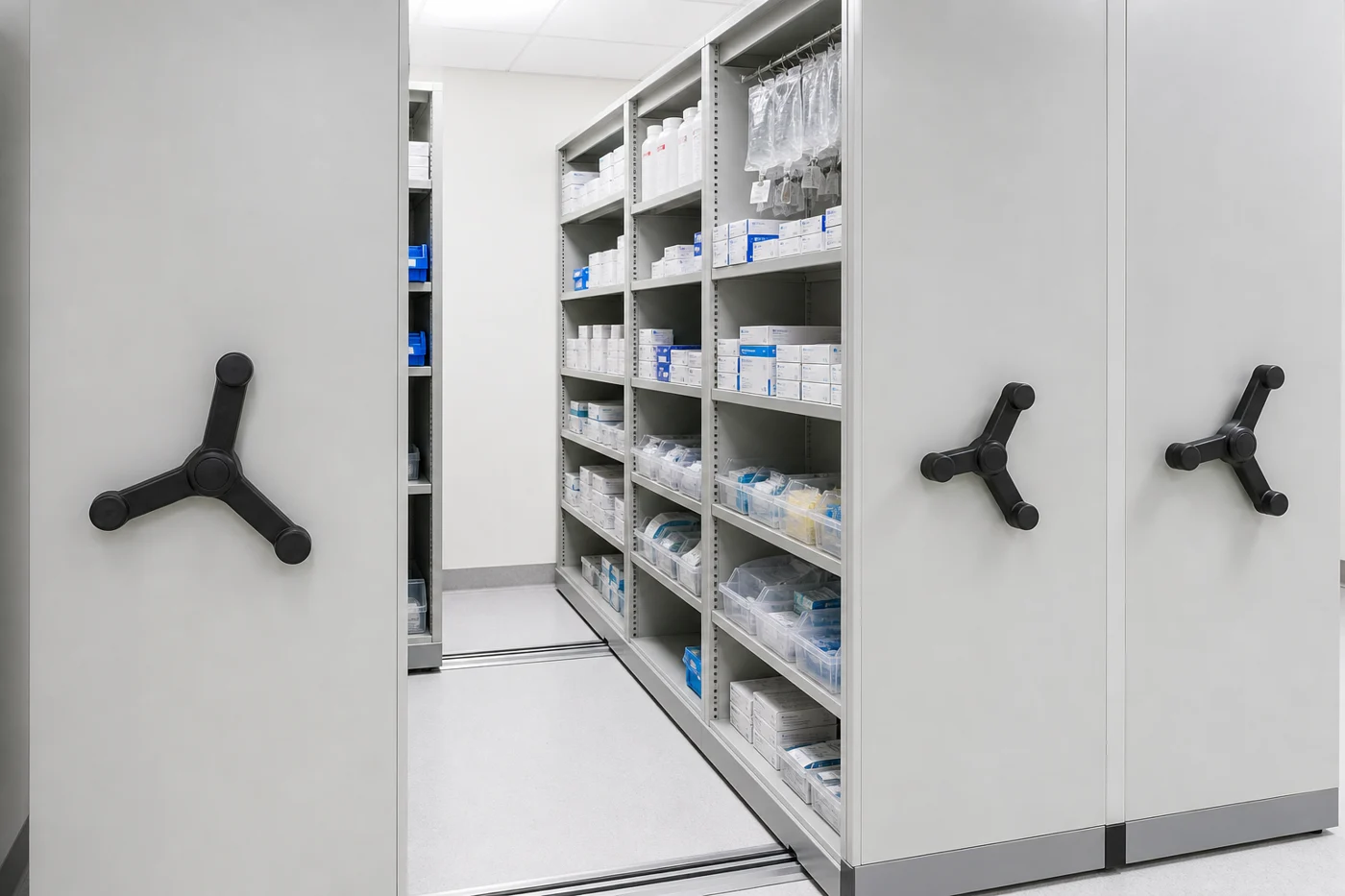
State government: medical supply storage mobile shelving for the Utah Department of Health in Taylorsville, Utah — three rooms fitted with a consistent shelving standard, purchased on the Utah state cooperative contract.
Real installations by Material Handling USA — records rooms, evidence rooms, labs, credit unions, retail and government facilities:
Tall carriages for heavy hardware. LMM built three mobile shelving systems into its Warren, Michigan warehouse, with tall 16’6″ carriages organizing rigging hardware, slings, tools and spare parts. Read the Warren, MI rigging storage case study.
Lubricant inventory, compressed. BP Lubricants USA put bottled and jugged lubricant inventory at its Wayne, New Jersey site onto high-density mobile shelving with a twin ramp, freeing floor space without a sub-floor pour. Read the Wayne, NJ lubricant storage case study.
Retail backroom capacity. Work World put its Redding, California store stockroom on mobile carriages with six shelf levels and a deck between the rails, then repeated the approach at a second California store. Read the Work World retail stockroom case study.
New police headquarters. The Los Banos Police Department in California opened a new headquarters with mechanical-assist mobile shelving in its main storage room, four-post shelving through the building and evidence lockers supplied as one package. Read the Los Banos police storage case study.
Forensic laboratory evidence. The Montana Forensic Science Division added mobile evidence shelving with four shelf levels and solid back panels at its Missoula crime lab. Read the Missoula crime lab case study.
County evidence storage. The El Paso County Sheriff’s Office in Colorado Springs replaced static shelving in its evidence room with a high-density mobile system on a twin ramp, with no sub-floor construction. Read the Colorado Springs evidence storage case study.
Cutting tool and hardware storage. Fetzer Architectural Woodwork organized small, high-turnover cutting tools and assembly hardware in its receiving and storehouse departments with high-density mobile shelving. Read the West Valley City tool and hardware storeroom case study.
Golf bag storage. A private New Jersey country club rebuilt its bag room during a pro shop renovation with two mobile storage systems on surface-mounted rail. Read the Tenafly, NJ golf bag storage case study.
Federal agency records. A U.S. Forest Service facility in Salt Lake City fit its file and records storage into one high-density system with six shelf levels and three dividers per shelf, bought on a federal contract schedule. Read the Salt Lake City federal records case study.
System expansion. A Utah county administration building added carriages, rail and ramp to mobile shelving it already owned instead of replacing it. Read the Heber, Utah mobile shelving expansion case study.
Museum records. A Salt Lake City natural history museum added a closed-door, side-by-side high-density filing system with seven shelf levels for museum records and files. Read the Salt Lake City museum records case study.
Healthcare records. An eye-care clinic near Seattle converted patient chart storage to high-density mobile shelving, five shelf levels with two dividers per shelf on a sub-floor. Read the Burlington, WA patient records case study.
Court and clerk records. A Mississippi city moved its municipal court clerk case files into high-density mobile shelving, seven shelf levels with three dividers per shelf on a twin ramp with no sub-floor. Read the Canton, MS court records case study.
School districts. A Boise, Idaho school district put student records and its curriculum and supply stock into one high-density mobile shelving system, eight shelf levels on a twin ramp with no sub-floor construction. Read the Boise school district case study.
County records. A southern Utah county assessor’s office fitted out the records room in its new county building with high-density mobile shelving on the Utah state contract. Read the Parowan, UT county records case study.
Law firm file rooms. A downtown Salt Lake City law firm replaced the aging mobile shelving in its high-rise file room with a new electric high-density system, installed over a single weekend. Read the Salt Lake City law firm case study.
Election office storage. A Utah city consolidated ballots, voting equipment, precinct supplies, and election records into one organized mobile shelving system inside its existing offices. Read the North Ogden, UT case study.
Museum collections. A Utah state park museum in Blanding converted its collections room to mechanical mobile shelving on a wood-decked sub-floor and reused the shelving it already owned. Read the Blanding, UT museum case study.
Healthcare pharmacy. A community hospital in Globe, Arizona added high-density mobile shelving in its pharmacy storage area with no sub-floor construction. Read the Globe, AZ pharmacy case study.
Laboratory supplies. A research laboratory in North Logan, Utah added and later expanded mechanical mobile shelving for laboratory supply storage. Read the North Logan, UT lab supply case study.
Tool storage. A Salt Lake City public utilities department added mechanical mobile shelving with locking doors for tool storage. Read the Salt Lake City tool storage case study.
Fleet parts. A Utah city added mobile shelving to store auto and truck parts for its municipal fleet. Read the Herriman, UT fleet parts case study.
Tactical gear storage. A Utah law enforcement agency added mobile shelving with a desk area for tactical gear storage. Read the Farmington, UT tactical gear case study.
Auxiliary services storage. A Utah school district relocated and completed a mobile shelving system at its Auxiliary Services Building. Read the West Jordan, UT auxiliary services case study.
Retail stockroom. A Salt Lake City flagship bookstore added mobile shelving for retail stockroom storage. Read the Salt Lake City retail stockroom case study.
Athletics facility storage. A Utah university athletics building added mobile shelving planned into new construction. Read the Ogden, UT athletics facility case study.
School building storage. A Utah high school added mobile shelving across seven rooms for files, music, library and general storage. Read the Logan, UT school building case study.
Administrative office storage. A Utah healthcare office building added mobile shelving for administrative storage during construction. Read the West Valley City, UT office storage case study.
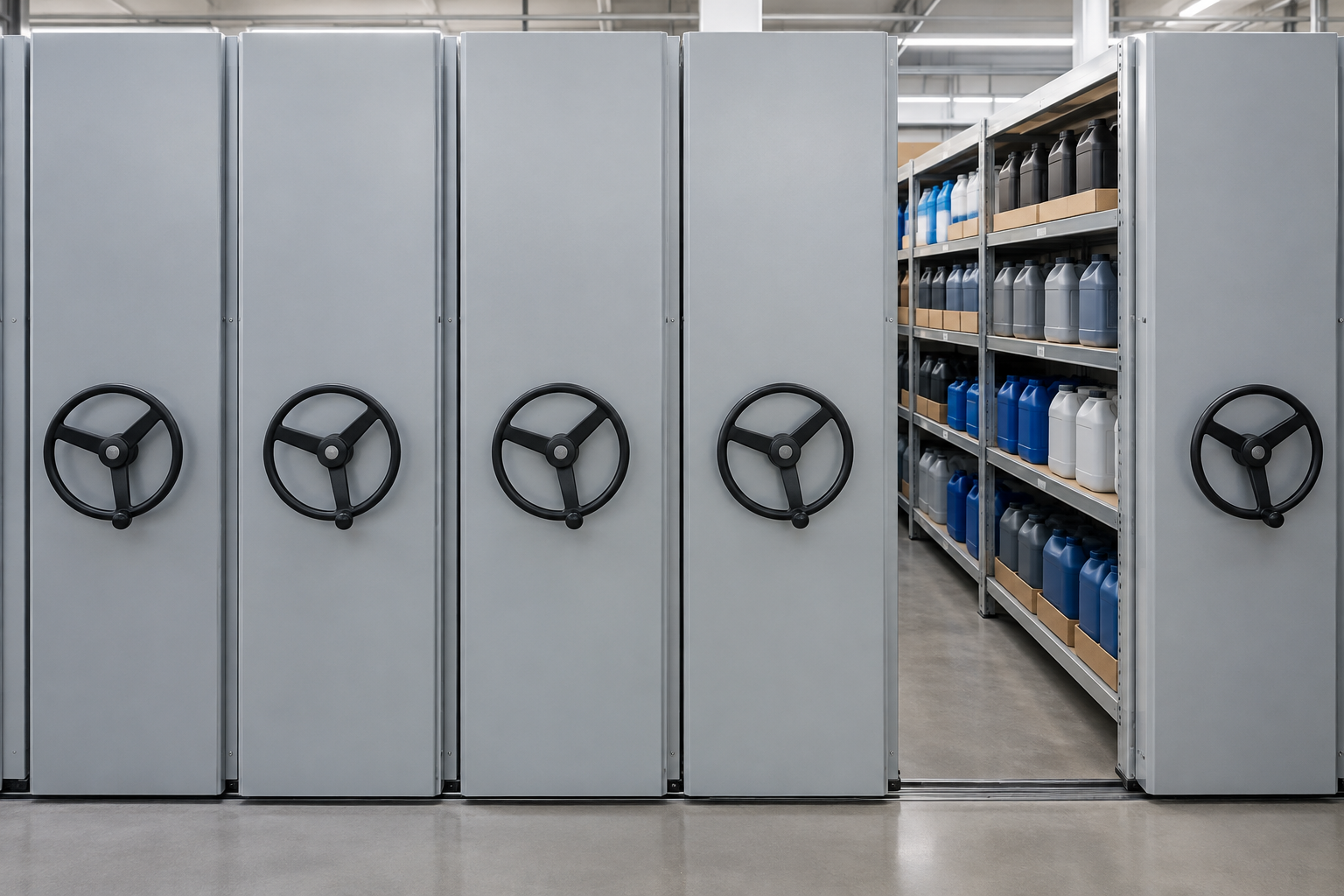
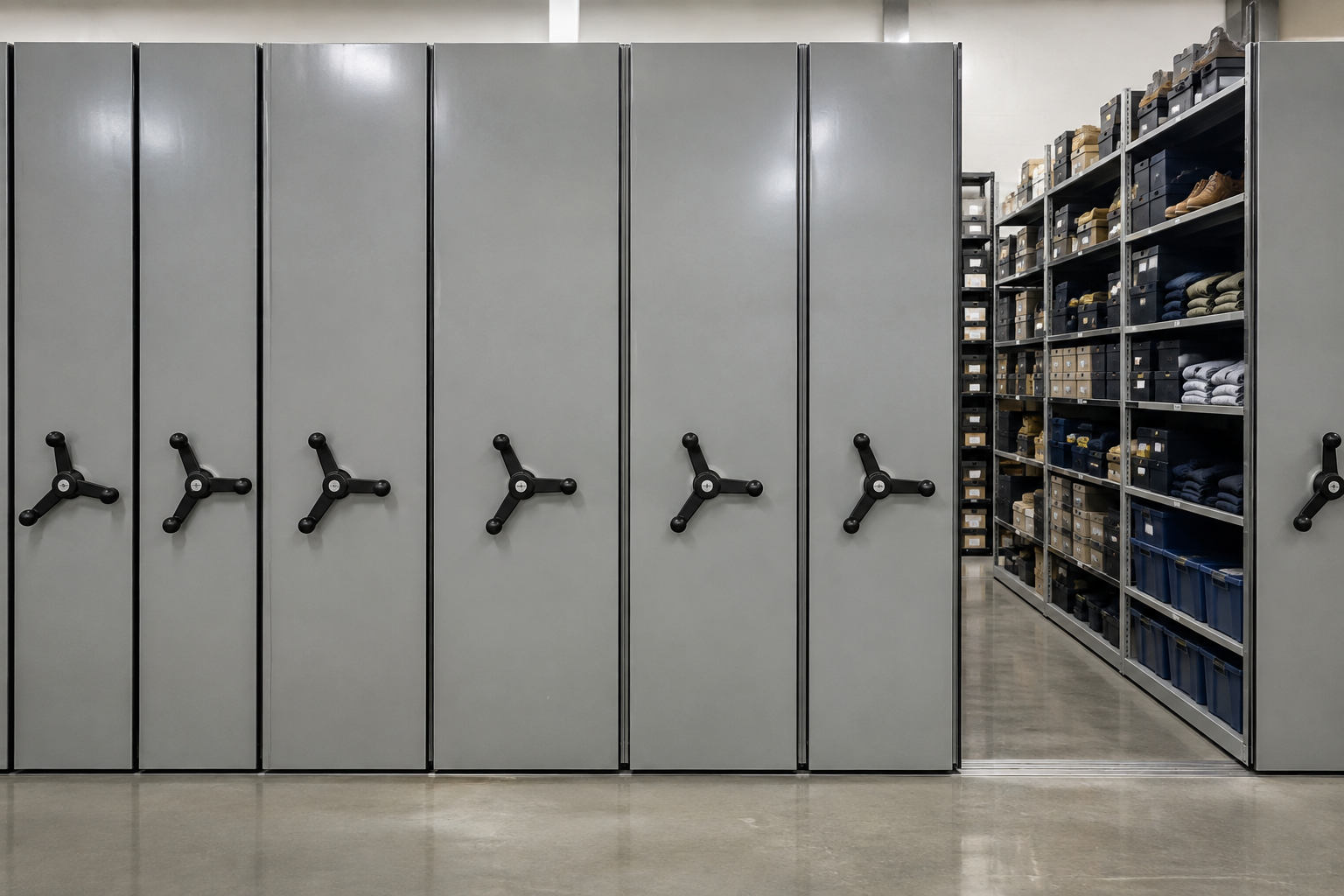

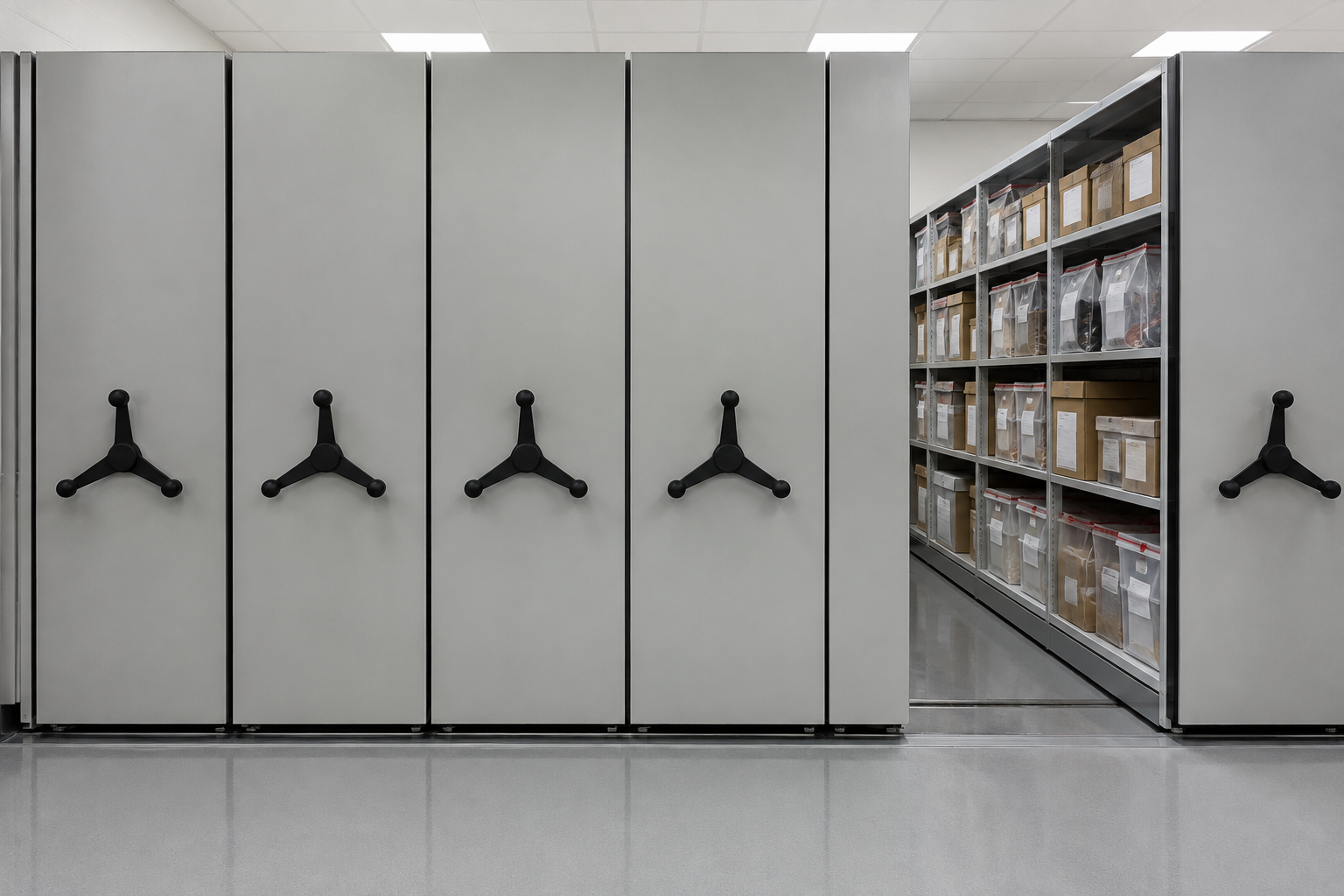
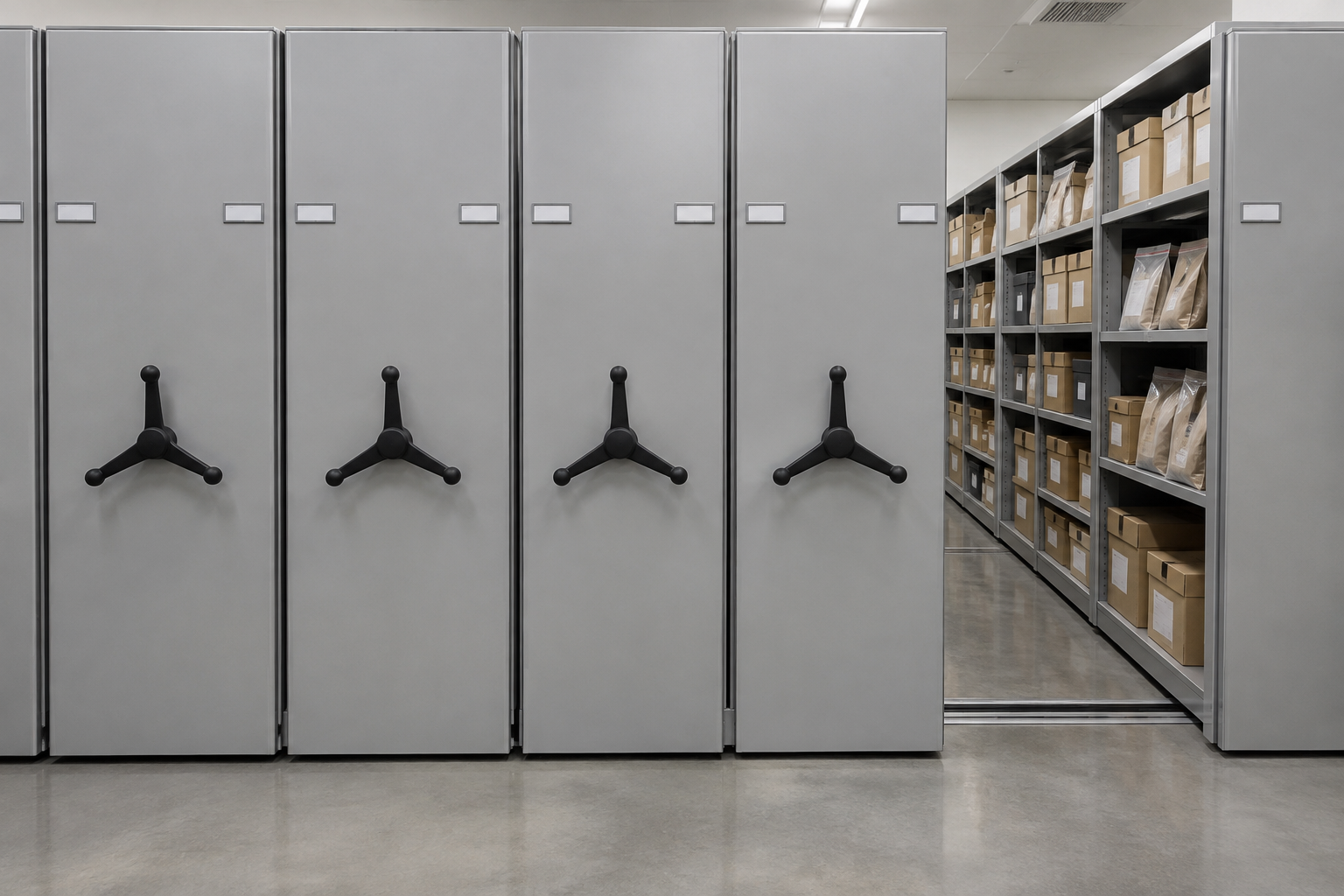
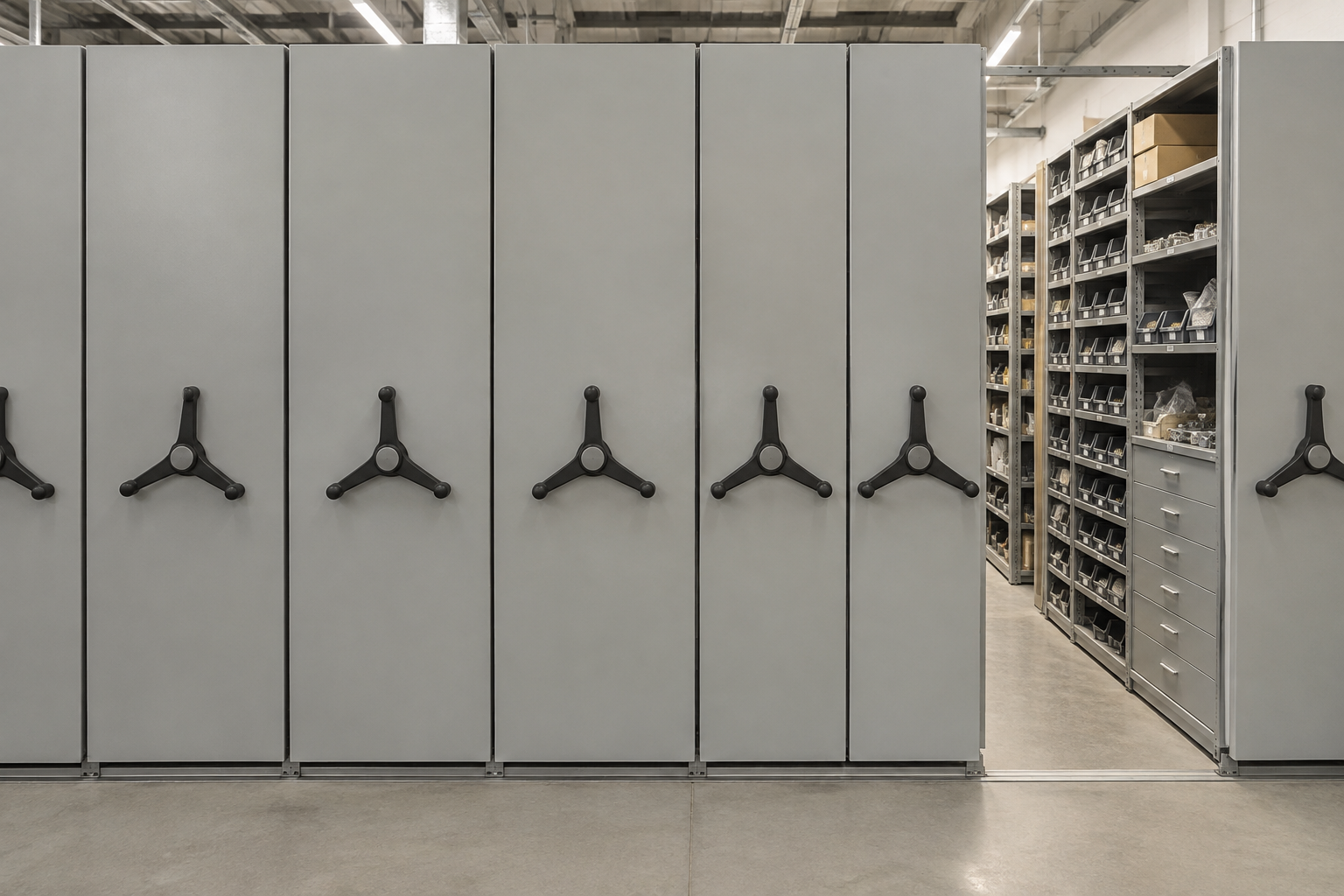
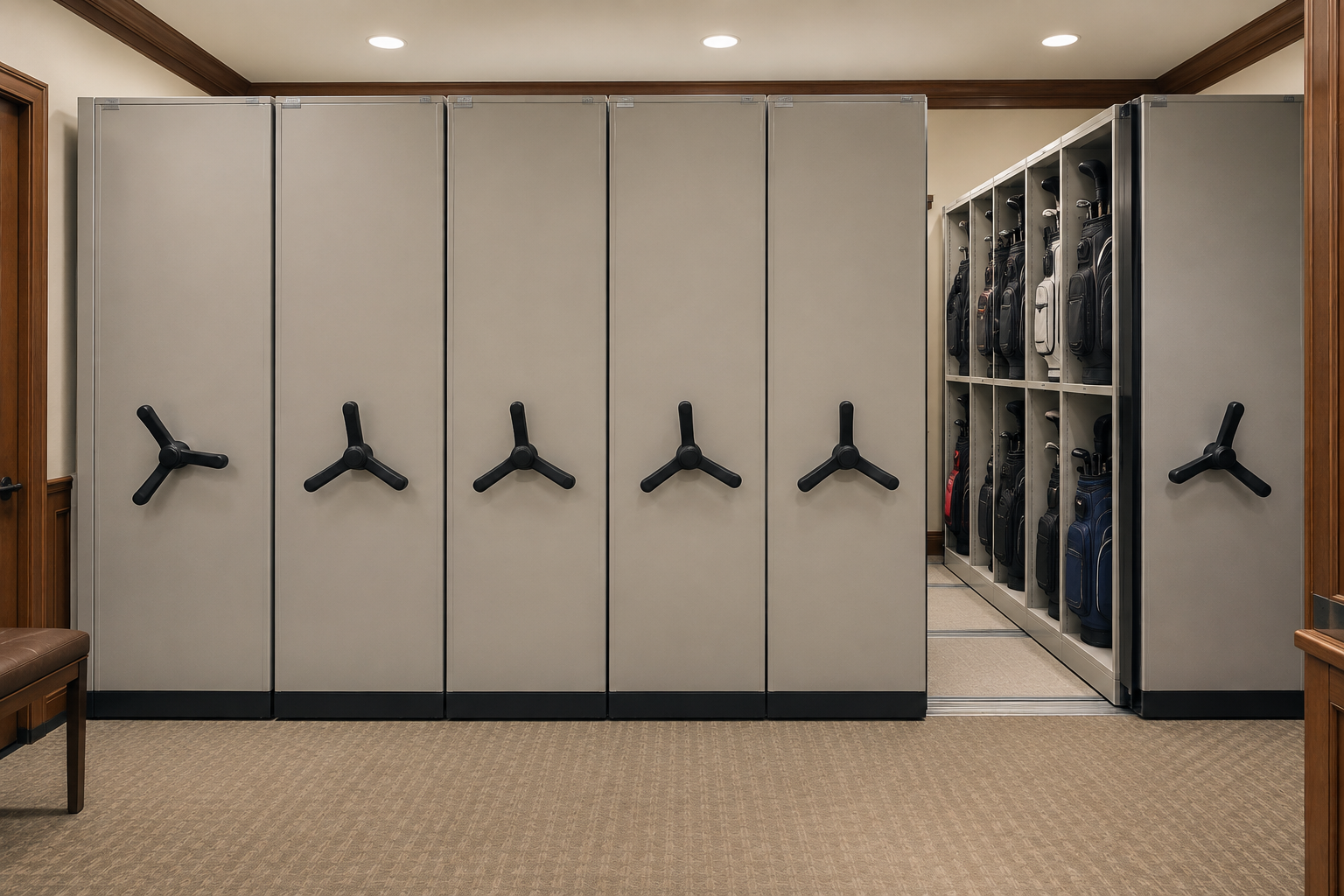
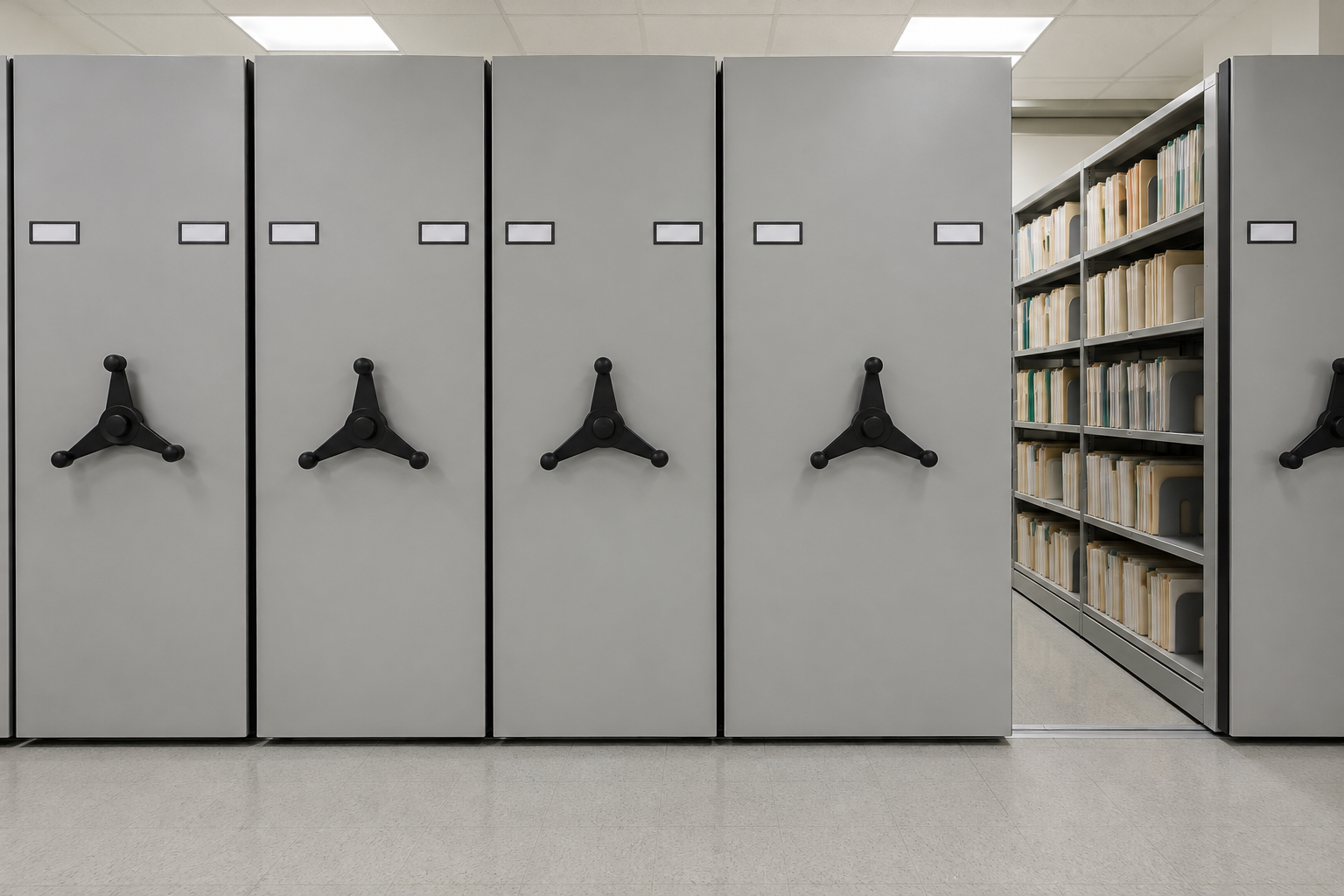
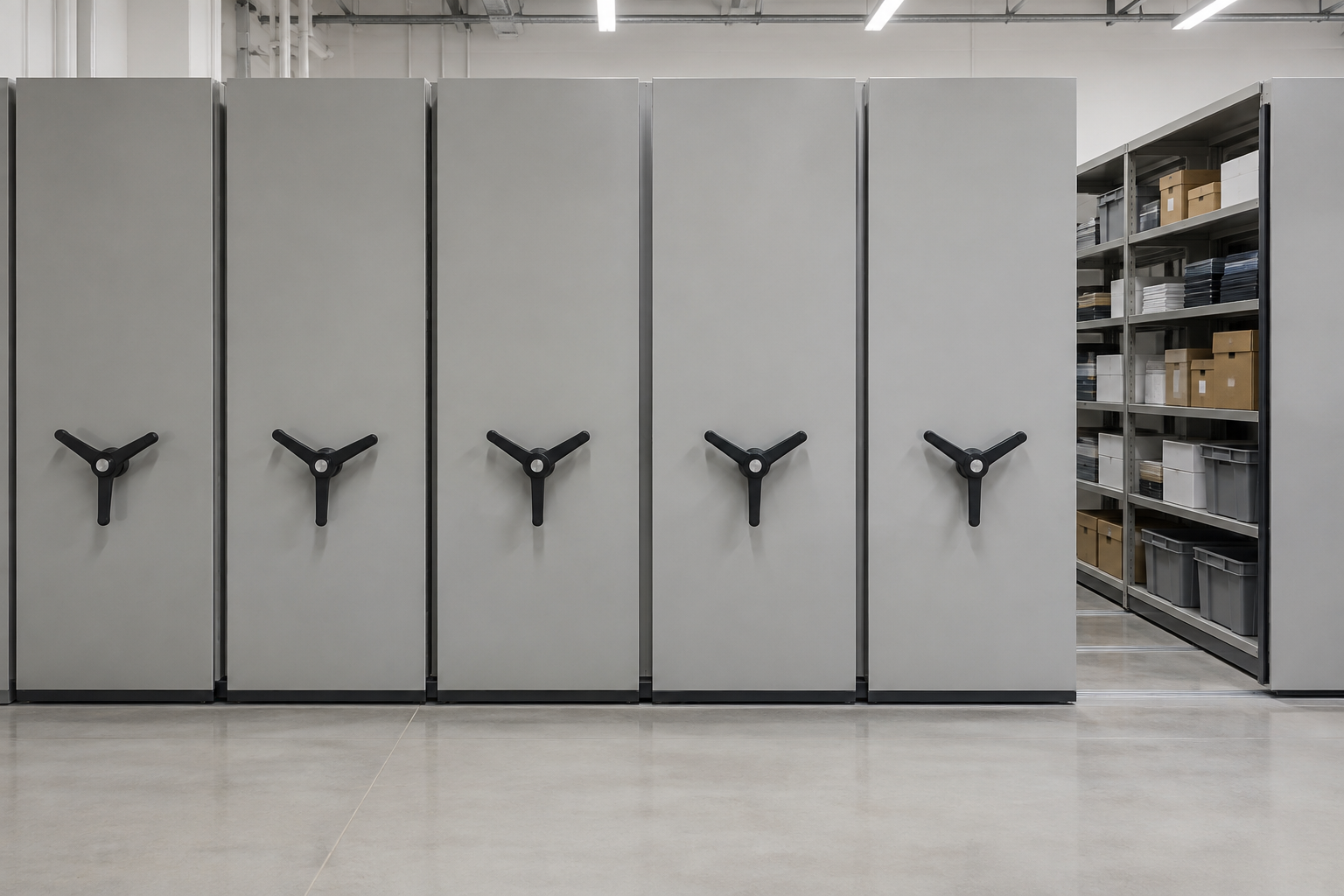
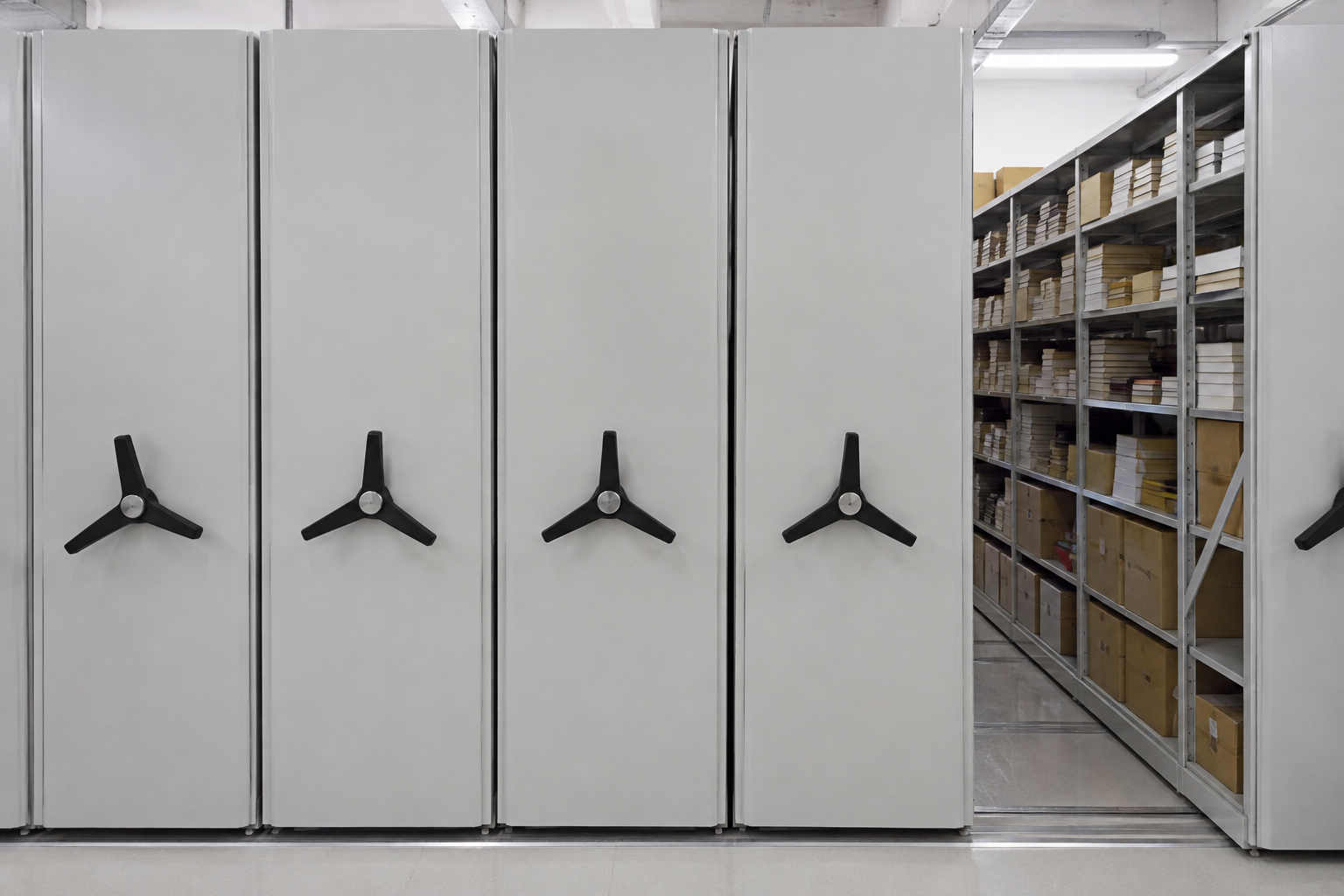
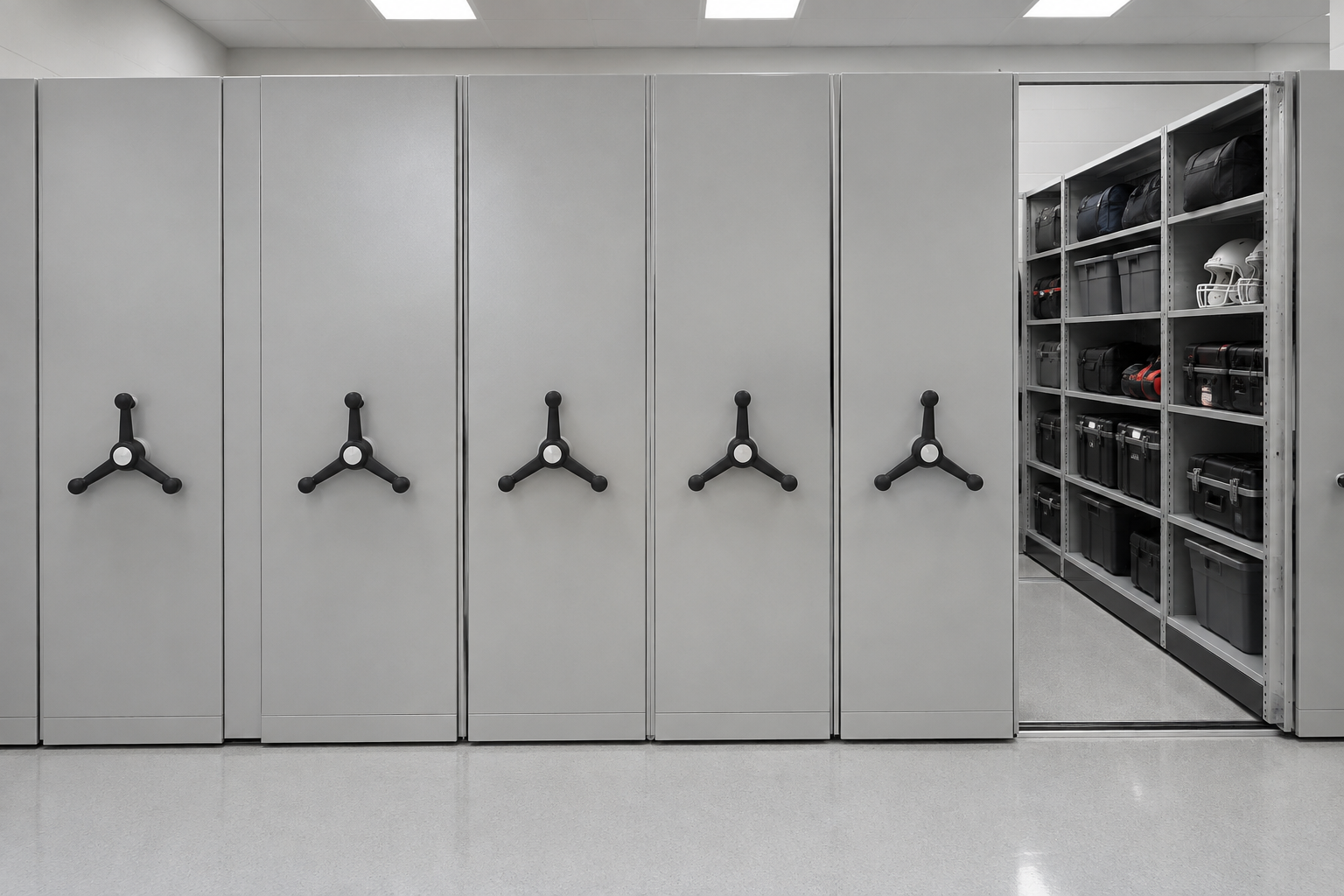
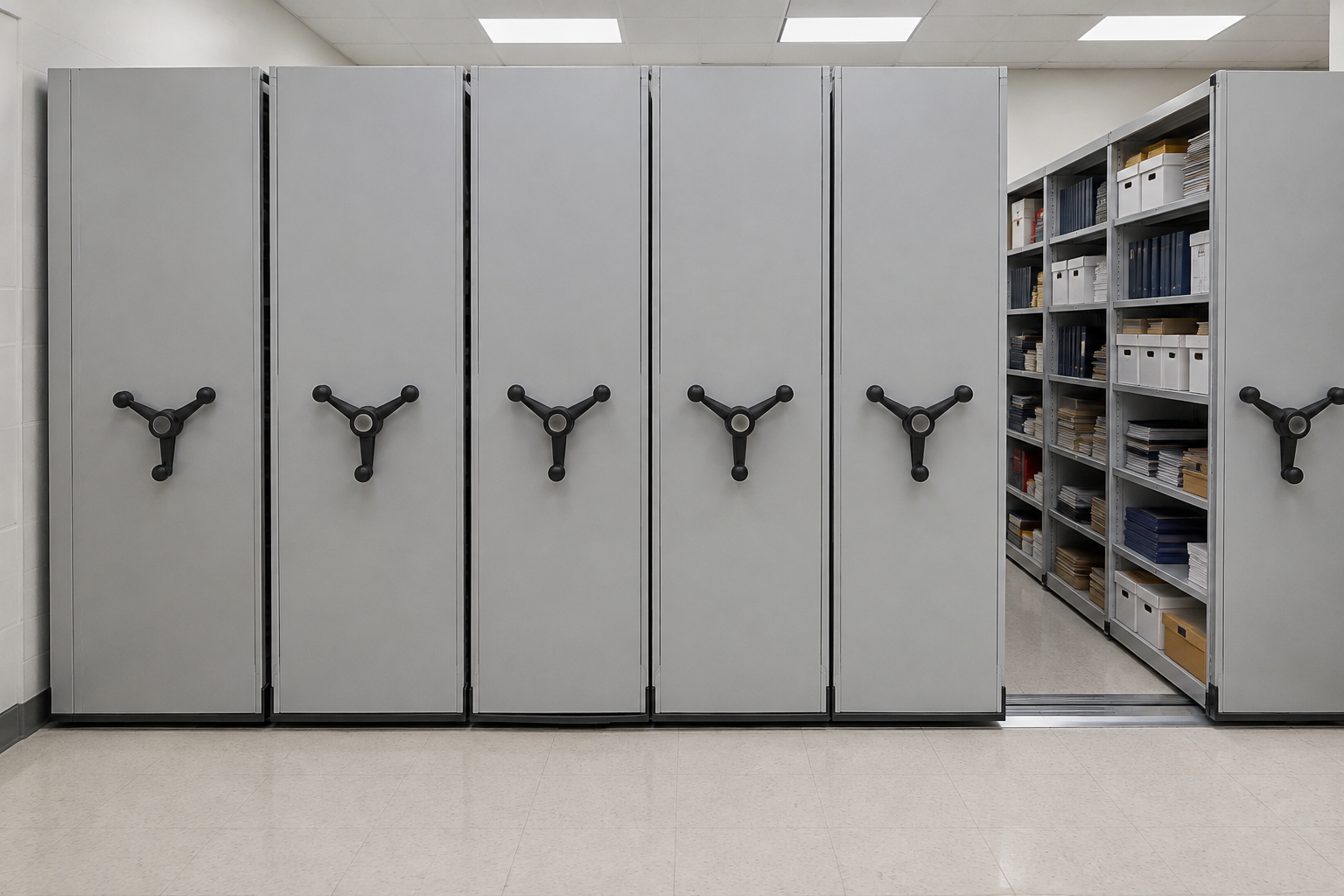
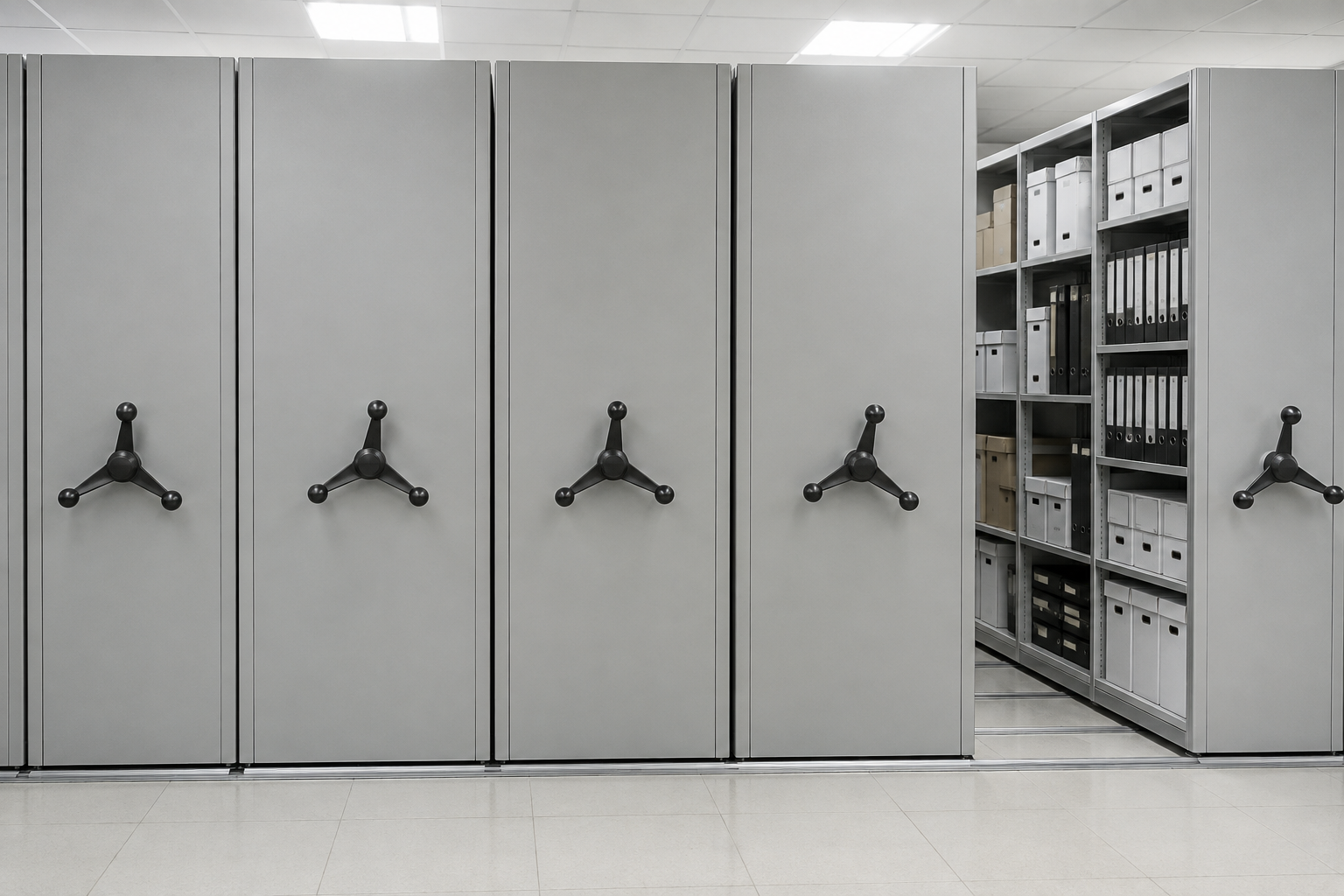
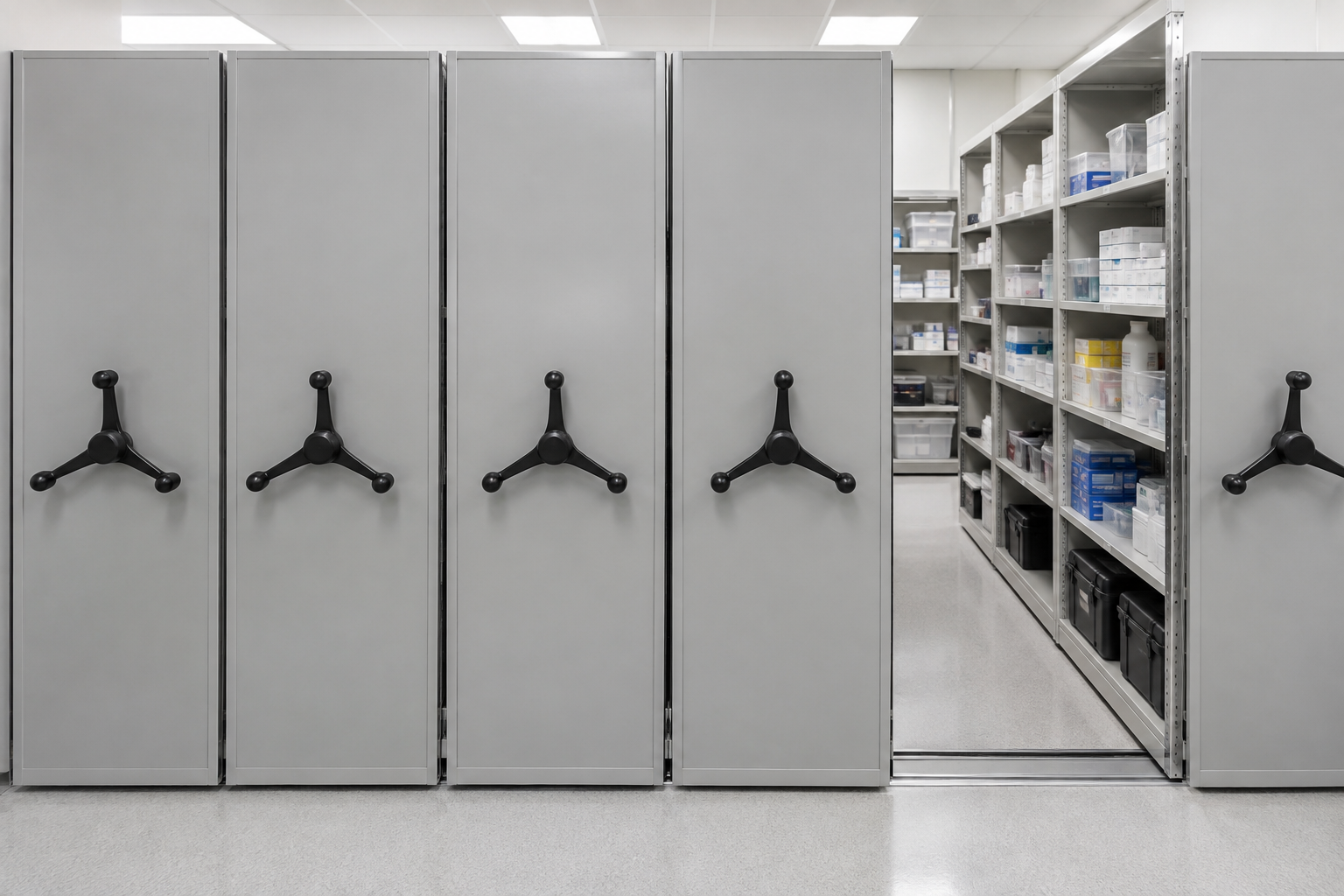

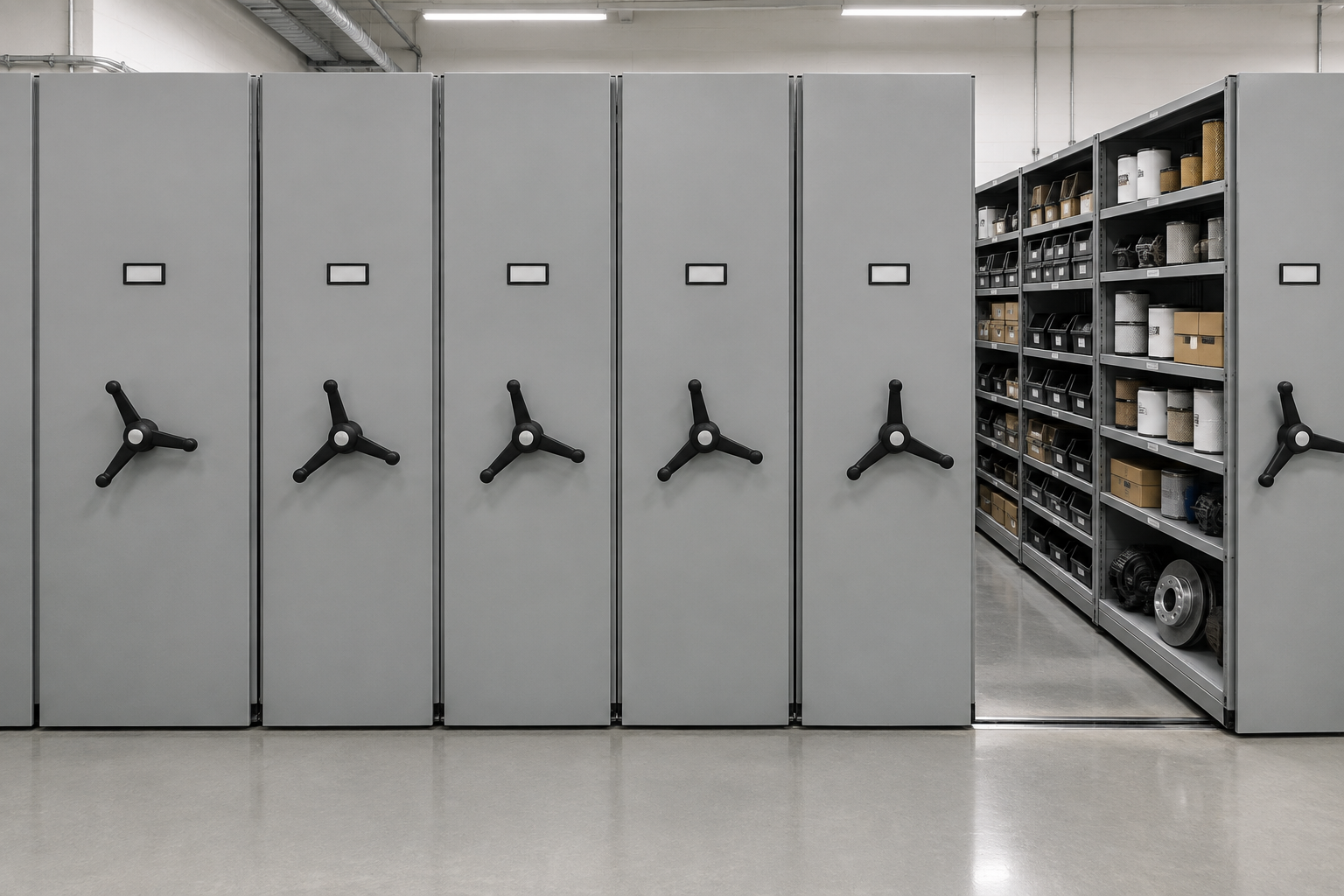
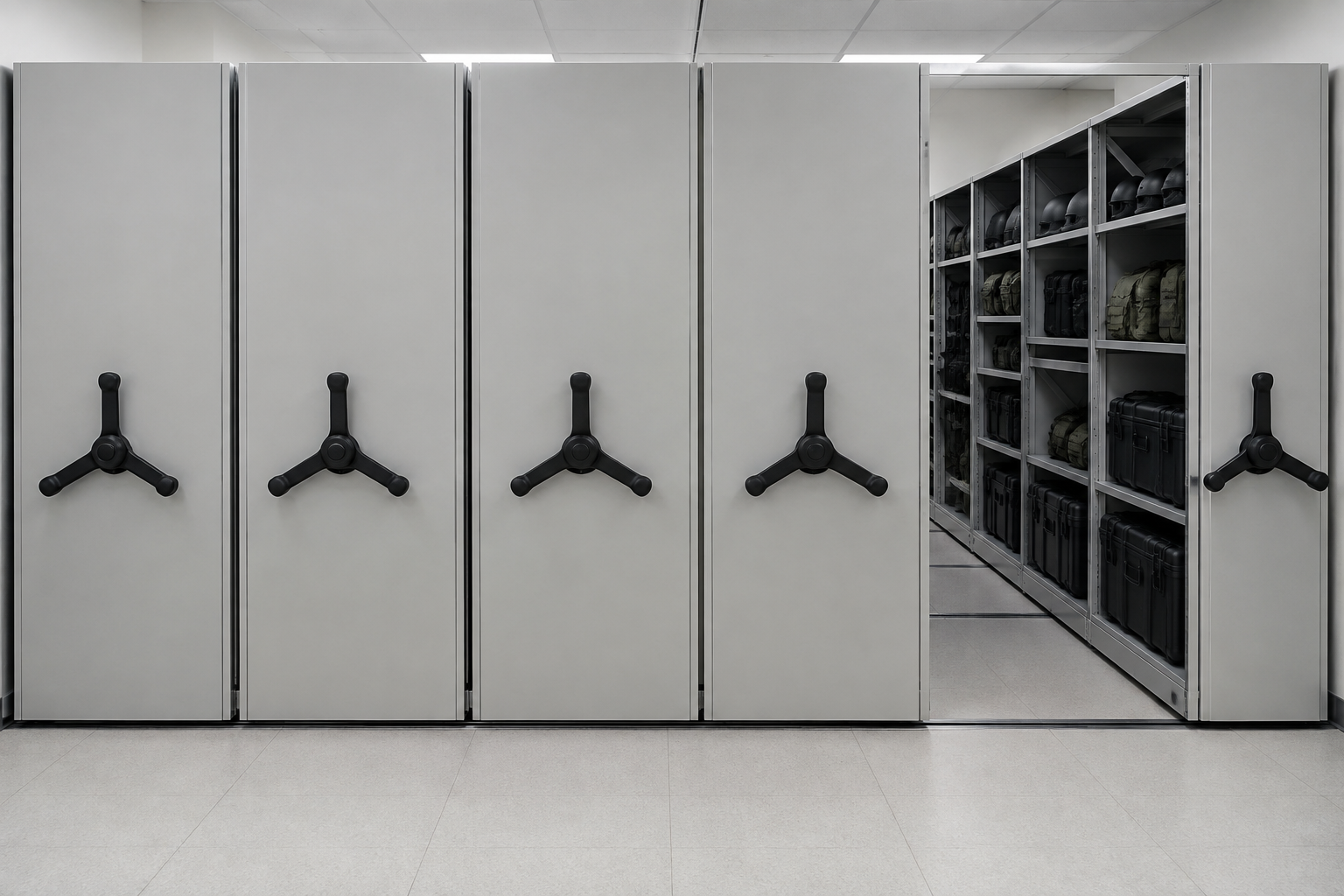
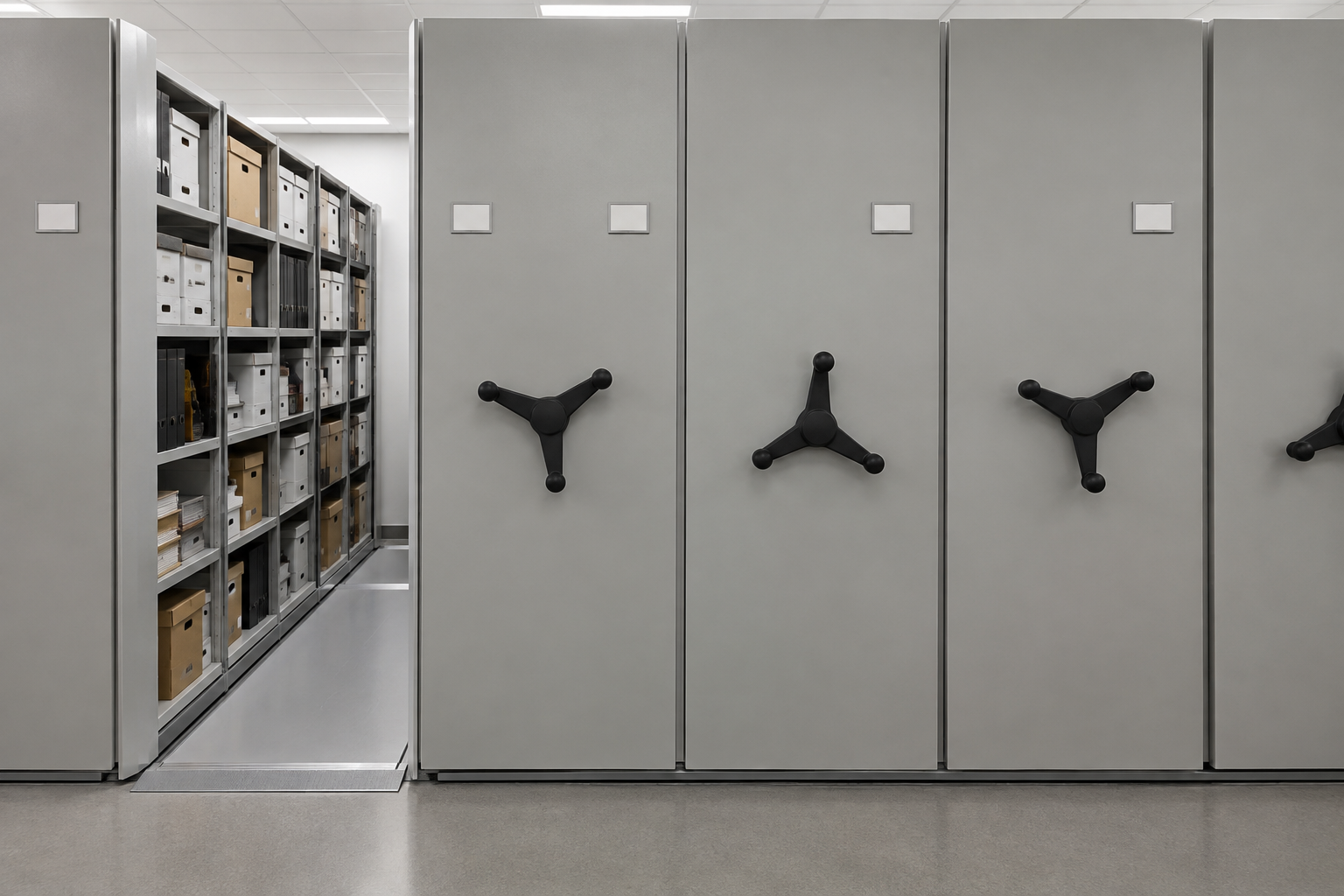


Taylorsville, UT
Oxford, NC
Centerville, UT
Midland, TX
Oilfield services
West Palm Beach, FL
Rexburg, ID
West Jordan, UT
South Jordan, UT
Lehi, UT
Los Angeles, CA
West Jordan, UT
Salt Lake City, UT
Anaheim, CA
Mobile Shelving FAQs
How does a mobile shelving system work?
How much space does mobile shelving save?
How much does mobile shelving cost?
What is the payback period?
What is the weight capacity?
Can mobile shelving be installed on any floor?
Is mobile shelving safe?
Can our existing shelving be reused on mobile carriages?
How long does installation take?
Can the shelving be customized?
Can a system be relocated later?
What maintenance does mobile shelving need?
Do you install mobile shelving in Utah?
Plan Your Mobile Shelving System
Every question that comes up on a high density shelving project has its own reference below — structure and floor, design and selection, procurement, operation, and the applications we plan most often.
Site & Structure
Design & Selection
Procurement & Compliance
Operate & Maintain
Applications
Brands & Manufacturer Resources
Mobile Shelving by Metro Area
Project Case Studies
Get a Free Mobile Shelving Space Analysis
Enter your room dimensions for an immediate fixed-versus-mobile comparison, then send the result or upload a floor plan so MH-USA can review obstructions, workflow and the appropriate track/rail system.
Plan this before you buy
Free planning tools you can use right now — results on screen first, no gate to see them.
- SKU & Inventory Upload AnalyzerUpload a SKU or inventory list and get a storage-method breakdown, cube and footprint estimate, and the questions to settle before you buy.
- Warehouse Opportunity ScannerDiagnose cube utilization, your three-year pallet-position gap and the storage strategies your building and constraints actually allow.
Specifying Mobile Shelving? Architect & Designer Resources
For architects and specification writers, see our mobile shelving specification guide for architects for floor loading, accessible aisle planning, CSI-format guidance, and current CAD/BIM resource requests.
Track-Mounted Mobile Shelving vs. Rolling Shelving on Casters
High-density mobile shelving is a room-planned carriage-and-rail system that compacts multiple shelving rows and opens only the aisle needed for access. It is designed for records, evidence, healthcare, archives, collections, parts and other applications where storage density and controlled access matter.
Rolling shelving units on casters are individual freestanding shelves that can be moved around a stockroom or work area. They do not use floor tracks and do not create the same high-density compact-storage layout. If that portable product is what you need, shop our rolling shelving units on casters. For a track-mounted system, continue with this mobile shelving planning guide or request a free space analysis.
Track-System Products You Can Buy Online
These are stocked top-track components — the small-format, shop-buyable end of the track-mounted family. They are not the engineered records-room systems described above, and they are not caster shelving. Use them for storerooms, labs and supply rooms where a short top-track run does the job; for a room-planned carriage-and-rail system, start with a free space analysis.
 Metro TT10 Top-Track Complete Kit — Super Erecta Pro ShelvesComplete 10 ft. top-track run with 48″ wide Super Erecta Pro shelves, mobile and stationary units and the overhead track hardware.
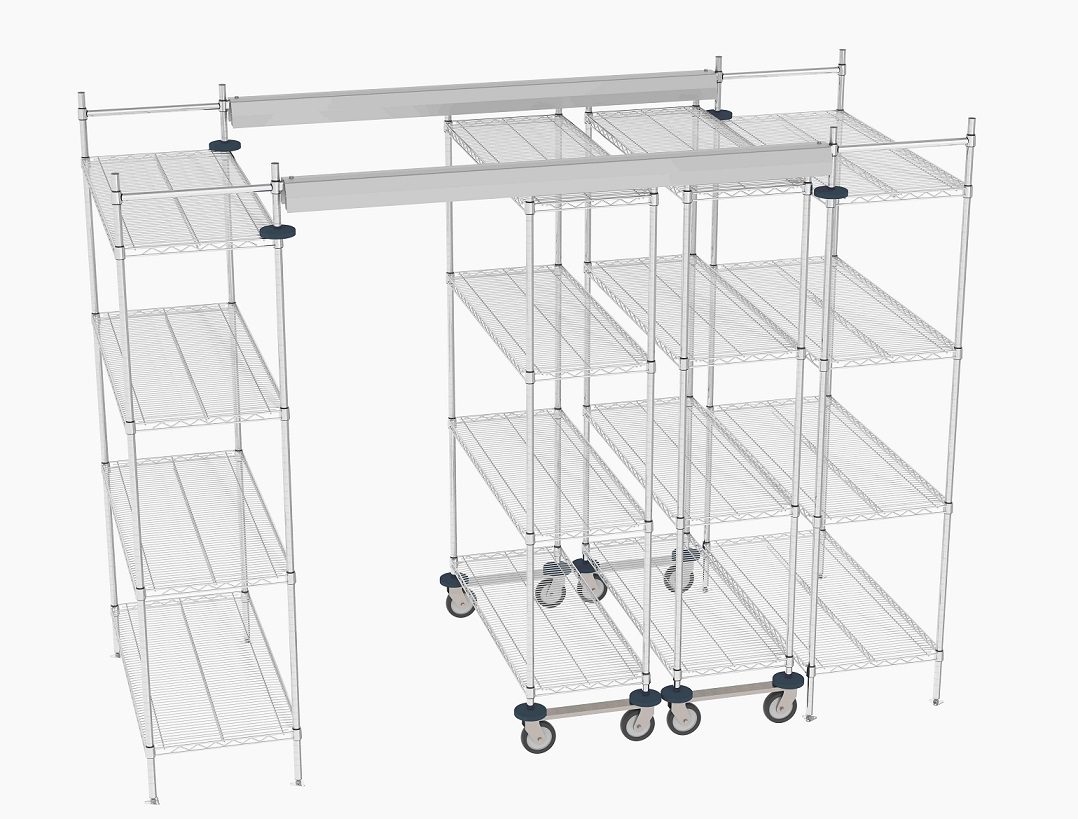 Metro TT10 Top-Track Complete Kit — Chrome Wire ShelvesThe same 10 ft. top-track configuration in 48″ wide chrome wire, for dry storerooms and supply rooms that do not need an epoxy finish.
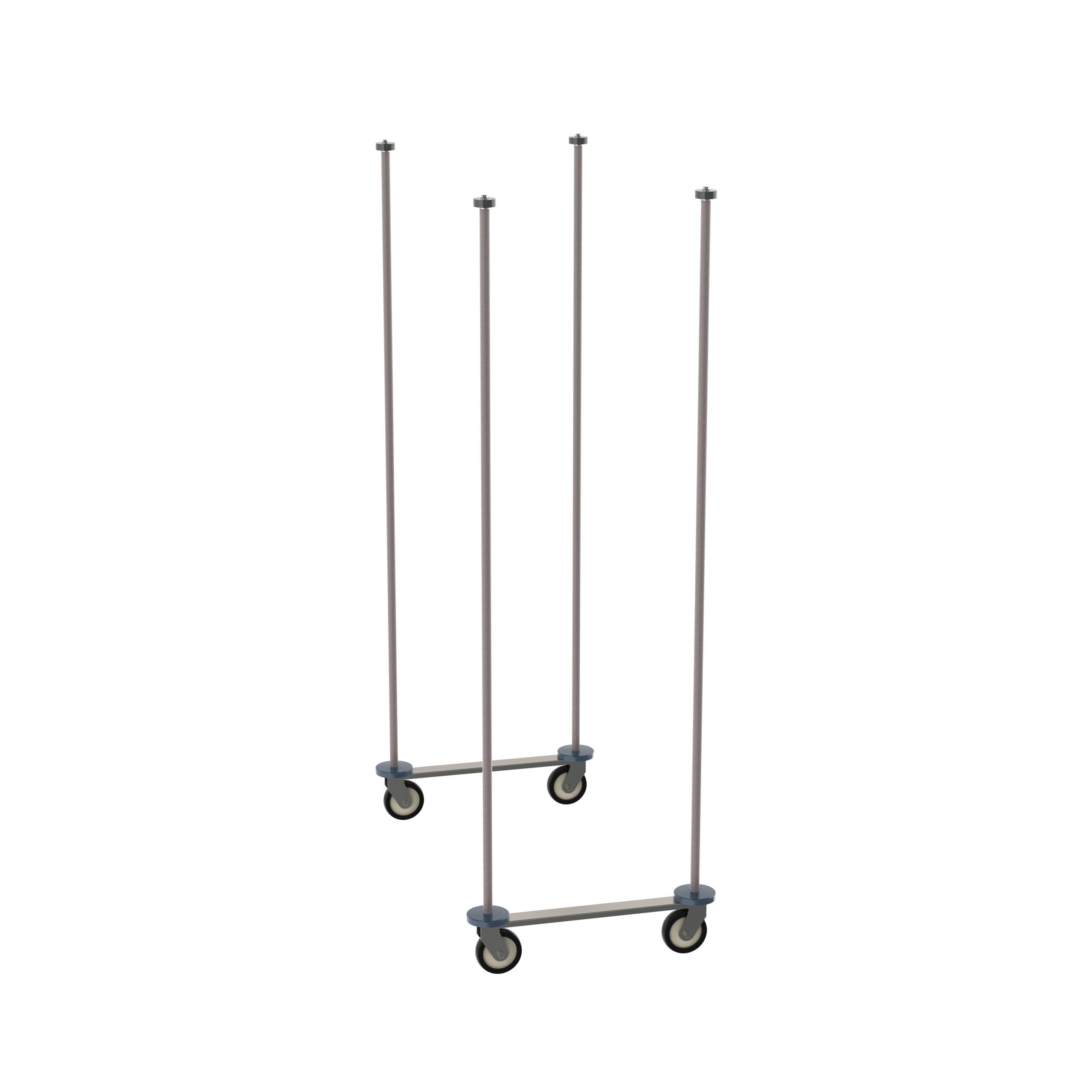 Metro TTM24K4 Top-Track Mobile Unit Kit — 24″ WideAdds one moving unit to an existing top-track run: posts, trolleys and hardware for 24″ wide Super Erecta shelving in Metroseal gray epoxy.
 Metro MQTTE24 Top-Track Stationary End Unit Kit — MetroMaxThe fixed end unit that anchors a top-track run, sized for 24″ wide MetroMax shelving on epoxy-coated steel posts.
Configurations, finishes and availability are shown on each product page. Capacity and fit must be checked against the current manufacturer data for your shelving.
Buying Mobile Shelving Through a GSA Contract
Federal buyers can review our comprehensive list of current high-density mobile shelving GSA contracts. The directory links to a dedicated page for each verified contract holder, with the contract number, current record dates, official GSA source and ordering checks.
For project help, email Sales@mh-usa.com or call (800) 326-4403.
Specifying This for a Construction Project?
High-density mobile shelving fall under CSI MasterFormat Division 10 (Specialties). See our Division 10 Specialty Products page for the full product map, published CSI spec sections, and submittal support.