
Automotive Parts Room Design – Layout & Workflow Optimization
A comprehensive resource for optimizing your dealership or repair shop’s parts department for peak efficiency, accuracy, and profitability.
Talk with a specialist. Call (800) 326-4403 or Email Sales@MH-USA.com
The Engine of Your Service Department
An automotive parts room is more than just a storage area; it is the heart of a dealership’s service and repair operations. Every minute a technician spends waiting for a part is a minute of lost billable time. Every mispicked part leads to rework, delays, and frustrated customers. An efficient, well-organized parts room is a direct driver of profitability and customer satisfaction. However, designing one requires careful consideration of layout, storage equipment, and workflow. This guide provides a detailed framework for a successfulautomotive parts room design, helping you turn your parts department from a cost center into a competitive advantage.
Explore Custom Solutions Today!
Upgrade Your Tool Storage– Invest in an automotive rolling tool cart and transform your workshop into an organized, efficient workspace.
Core Principles of Parts Room Design
From initial layout to final workflow, every choice matters.
1. Layout & Space Planning
A successful design begins with a th or ough analysis of your space and inventory. The goal is to create a logical flow that minimizes travel time for your staff. Start by mapping out key zones: receiving, bulk storage, primary picking (for fast-moving parts), and dispatch. The relationship between these zones is critical. The receiving area should allow for easy unloading and inspection, while the dispatch counter should be conveniently located for technicians.
Inventory analysis is the next step. Use your management system to identify your fastest-moving parts (Group A), medium-movers (Group B), and slow-movers (Group C). Group A parts should be stored in the most accessible locations, close to the dispatch counter, to reduce picking time. Slower-moving and bulk items can be stored in less central areas. Always plan for growth. A good design incorporates flexibility, with space allocated for future inventory expansion and potential changes in your business model.
2. Storage Equipment Selection
Choosing the right equipment is essential for maximizing storage density and accessibility. A mix of storage types is almost always the best solution. Ourcomprehensive guide to storing auto partscovers this in detail.
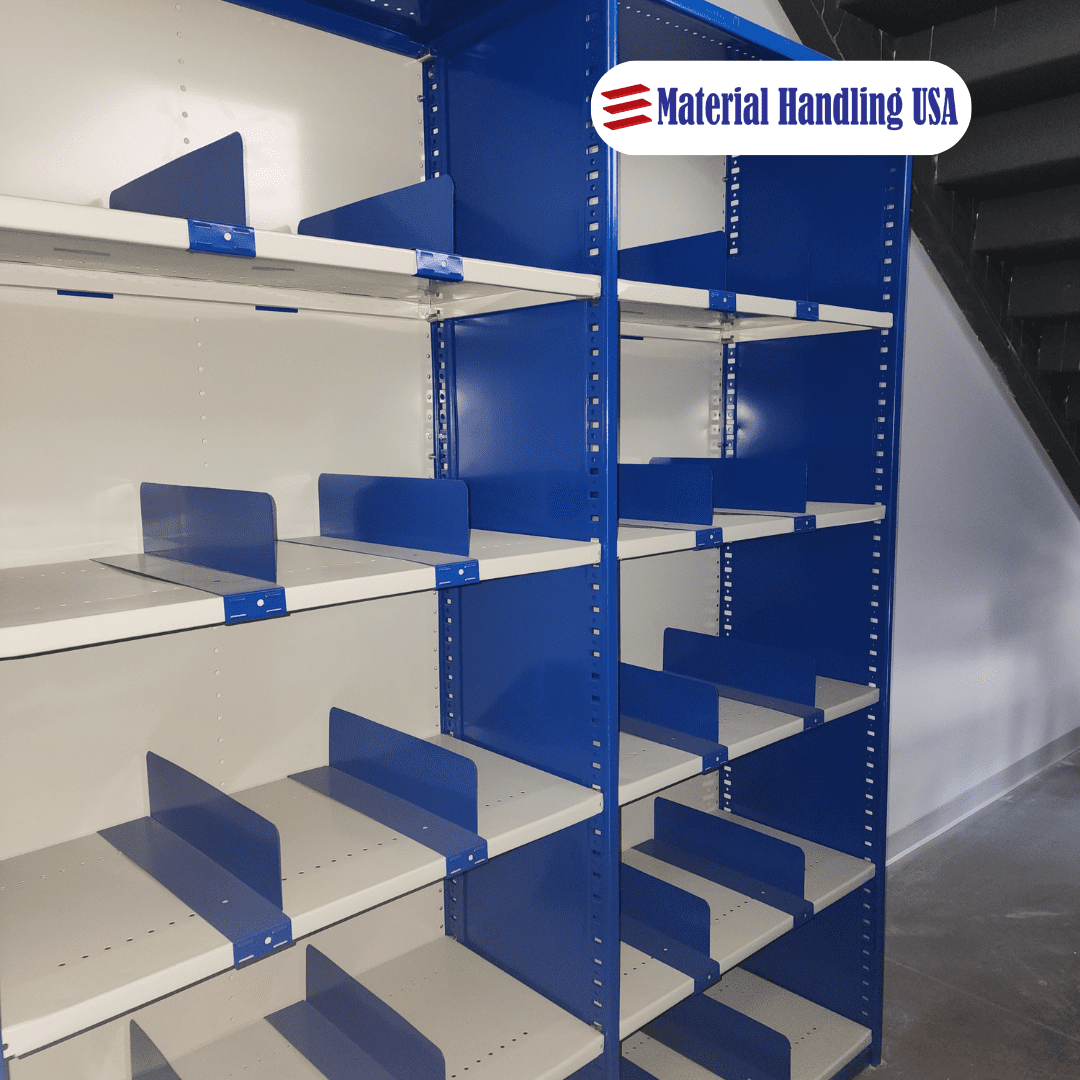
Automotive Shelving:This is the backbone of most parts rooms. Open-style Metro wire shelvingis excellent for visibility and airflow, while solid steel shelving is ideal for heavy or bulky items. Adjustable shelves provide the flexibility to adapt as your inventory changes.
Modular Drawers:For small parts like sensors, fasteners, and electrical components, high-density modular drawers are superior to open bins. They offer up to 70% more storage capacity in the same footprint, keep parts clean, and improve organization and picking accuracy.
Specialized Racking:Awkward items require unique solutions. Dedicatedtire storage systems, hanging racks for exhaust pipes, and cantilever racks for long items like molding are essential for a truly organized space. For maximum density, consider anautomated tire carousel.
3. Workflow Optimization
An efficient workflow minimizes wasted stepsand maximizes productivity. The process should be seamless from receiving to dispatch. When parts arrive, they should be inspected and immediately put away in their designated, clearly labeled location. A dis or ganized receiving area is a common bottleneck.
The picking process must be optimized for speed and accuracy. A well-organized slotting strategy (placing the right parts in the right locations) is key. For technicians, consider implementing a parts request system that allows them to order parts electronically from their bay. This reduces foot traffic and allows parts staff to pick and deliver items efficiently. Providing staff withautomotive rolling tool cartscan further streamline the process of delivering parts directly to the service bays, reducing technician travel time and keeping them focused on repairs.
Ready to Build a High-Performance Parts Room?
Explore our solutionsand see how we have helped other dealerships transform their operations.
The Benefits of a Well-Designed Parts Room
An investment in organization is an investment in profitability.
Increased Technician Productivity
Faster parts retrieval means less downtime for technicians, leading to more completed repair orders per day.
Improved Inventory Accuracy
A logical layout and clear labeling reduce picking err or sand make cycle counting faster, leading to better inventory control.
Maximized Space Utilization
High-density storage solutions like modular drawersand vertical carousels allow you to store more parts in less floor space.
Enhanced Employee Safety
Proper storage of heavy and bulky items, combined with clear aisles, reduces the risk of workplace accidentsand injuries.
FAQs
Tires are bulky and consume valuable floor space. The best solution is to go vertical. Specializedtire storage systemsallow you to store tires safely and densely. For the ultimate in space savingsand efficiency, considerautomated tire storage, such as a Vidir tire carousel. These systems bring the tires directly to the operator, maximizing vertical space and dramatically speeding up retrieval time.
When you cannot expand outwards, you must expand upwardsand increase density. Replace open shelving used for small parts with high-density modular drawer cabinets. This can recover up to 70% of your floor space. Consider installing a mezzanine to add a second level of storage for bulk or slow-moving items. Finally, automated storageand retrieval systems (AS/RS) like vertical lift modules offer the highest possible storage density in a minimal footprint.
The most critical first step is data analysis. Be for e you move a single shelf, you need to understand your inventory. Analyze your sales data to determine your fastandslow-moving parts. Measure your existing inventory to understand the size and quantity of the items you need to store. This data-driven approach ensures that your new design is based on reality, not guesswork. It allows you to select the right equipment and create a layout that truly supports your operational needs.
Related Products & Resources
Ready to Get Started?
Contactour team for a free design consultation and quote.