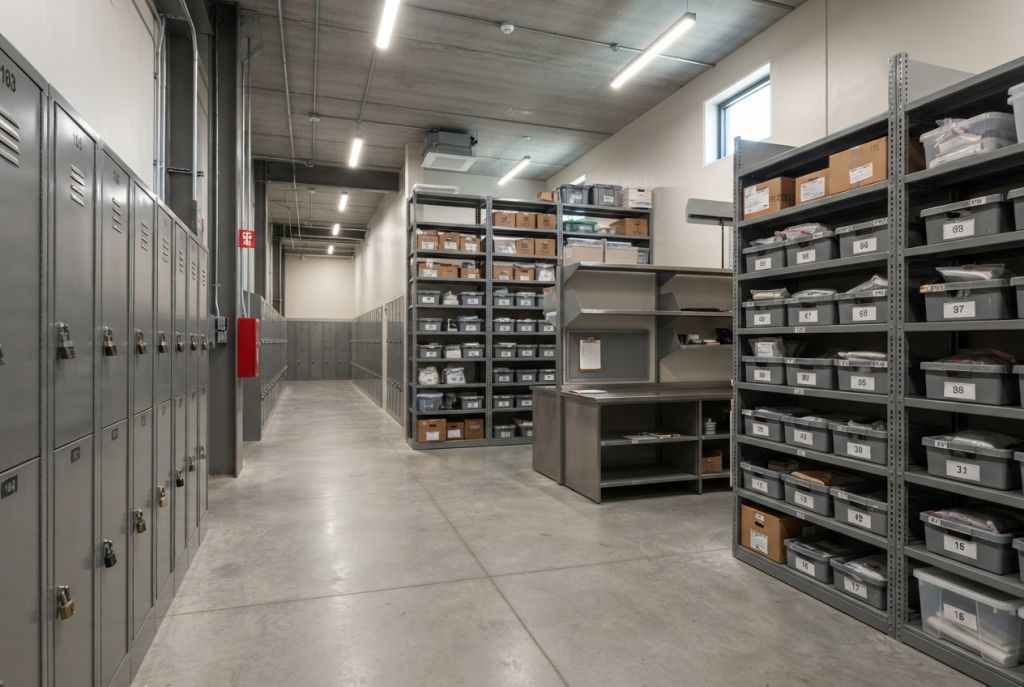
An inmate property storage system has to do more than hold bags. It has to help staff receive belongings, record where they go, keep access controlled, and retrieve the right property at release. This guide helps correctional teams compare property bags, lockers, shelving, storage racks, and mobile systems without assuming one setup fits every facility.
Start with the actual workflow. The best jail property storage system is the one that matches your intake volume, property mix, room shape, staffing, and local policy. It should make the next handoff simple to document.
What an inmate property storage system needs to do
A useful system gives every stored item a clear home and gives staff a repeatable path from intake to release. Policies and recordkeeping requirements vary by agency and jurisdiction, so use the following as planning criteria rather than a substitute for your written procedures.
- Separate property by person: Keep each person’s belongings together or in clearly identified positions.
- Connect the item to a record: The intake inventory, identifier, and storage location should agree.
- Control access: Set who can enter the room, open a locker, move a bag, or change a location.
- Support retrieval: Staff should be able to find property without moving unrelated bags or boxes.
- Handle exceptions: Build a clear path for oversized items, wet items, valuables, and property that needs a different handling process.
Choose the right inmate property storage system
Most correctional facilities combine more than one storage type. The decision table below helps match the system to the job rather than choosing only by the number of compartments.
| Storage option | Best used for | Planning questions |
|---|---|---|
| Property bags on shelving | Flexible, changing volumes of personal belongings | How will bags be sealed, labeled, cleaned, and kept in order? |
| Bins or tote storage | Items that need a reusable rigid container | Will bin size fit the property mix, and can labels be read from the aisle? |
| Inmate property storage lockers | Individually secured or assigned compartments | Who has access, what locking method fits policy, and how will overflow be handled? |
| Inmate property storage racks and shelving | Bag, bin, boxed, or oversized property organized by location | What shelf depth, load, aisle clearance, and label visibility are needed? |
| Mobile shelving | Rooms that need more organized capacity in an existing footprint | How often are items retrieved, and do the floor, egress, and operating needs support a moving aisle? |
| Conveyor or transfer equipment | High-volume intake paths where property repeatedly moves between defined points | Does the workflow truly need a transfer path, and who verifies property at each handoff? |
Inmate property storage bags, bins, and labeling
Inmate property storage bags are a practical choice when the main goal is to keep one person’s belongings together. Clear bags can help staff view contents, while opaque or heavier-duty bags may fit other handling needs. The key is not the bag alone. It is the label and the process around it.
Choose a label format that works from the aisle and ties to the property record. It may include the booking identifier, date, location, and a scannable code if your system uses one. Keep the label placement consistent so staff do not have to search for it. For bags, bins, and boxes, decide in advance how damaged labels, split containers, and partial releases are handled.
Inmate property storage lockers vs. storage racks
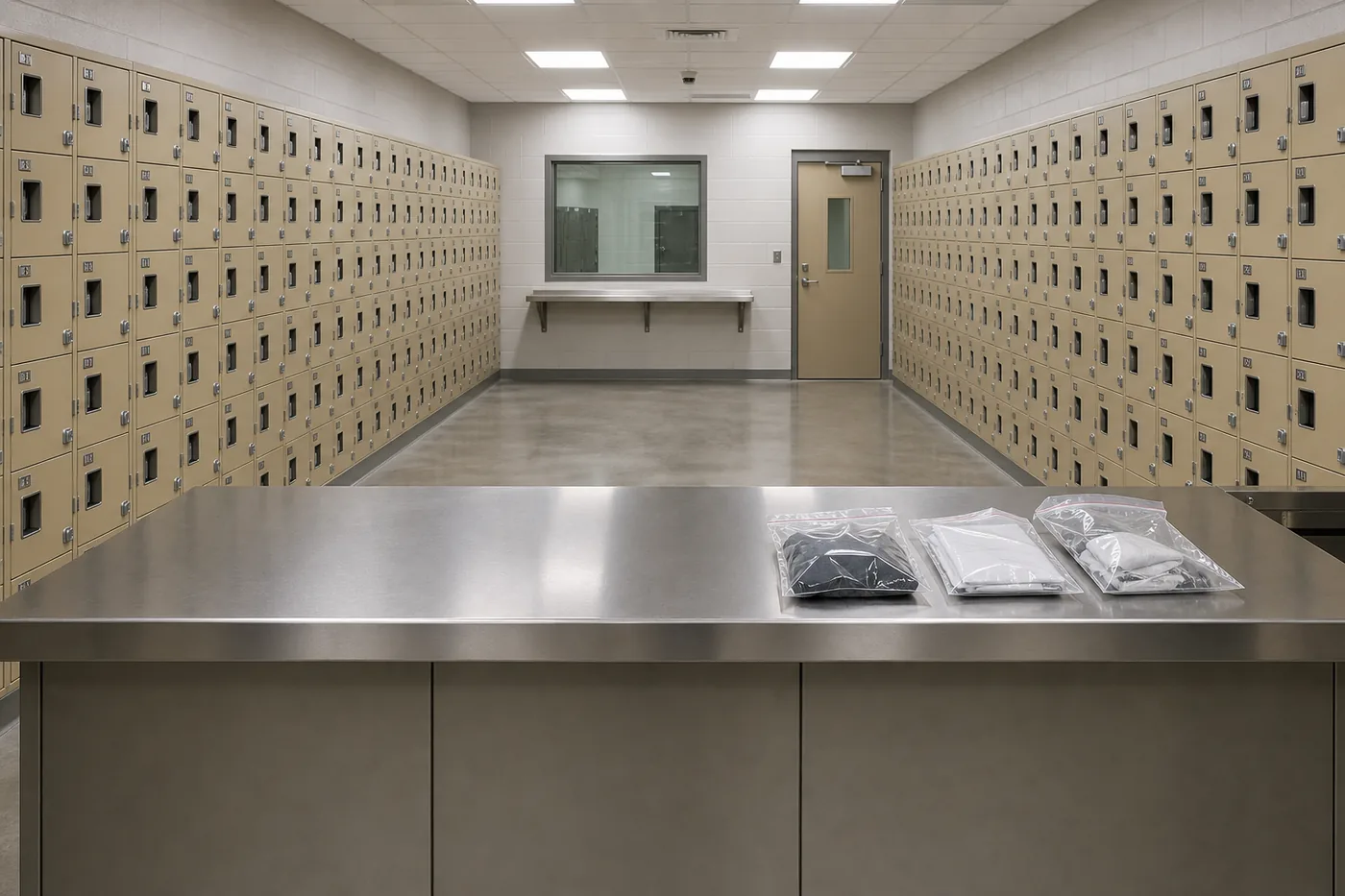
Inmate property storage lockers create dedicated compartments and can make access separation easier to manage. They are a strong fit when the workflow calls for individual locations, controlled access, or temporary holding near intake. Plan for compartment size, overflow, door clearance, locks, and how staff identify an open position.
Inmate property storage racks and shelving are often more flexible for bagged or boxed property. A shelving layout can be adjusted as booking volume and property size change. Use row, bay, shelf, and position labels that a staff member can read quickly. Keep the receiving counter, active storage, release area, and any exception locations distinct so the room does not become one untracked holding area.
For higher-risk property or a restricted section within the room, a secured wire partition or storage cage can create a controlled zone around the equipment. The security approach must match the facility’s policies and physical-security review.
Secure storage for correctional facilities: plan the property room
Secure storage for correctional facilities starts with a simple room plan. Walk the path from intake to storage to release. Identify where staff need a work surface, where property waits, which locations are active, and where a second staff member may need to verify a handoff. Keep general inmate property separate from evidence and from any category governed by a different procedure.
Use these steps to plan an inmate property room:
- Map the workflow: Note each handoff, inventory action, and point where property is temporarily staged.
- Sort the property mix: Group bags, clothing, paperwork, valuables, bulky items, and items needing special handling.
- Set the storage zones: Reserve positions for intake, active storage, release, exceptions, and overflow.
- Choose a location system: Give every rack, locker, shelf, and bin a clear location code that staff can use in the record.
- Review the room before ordering: Confirm aisles, door swings, accessibility, egress, security, cleaning, and future capacity with your facilities team.
Facilities that also manage evidence can review our law enforcement and evidence storage solutions. The page covers planning for secured property-room zones, while this guide focuses on day-to-day inmate property storage.
Inmate record storage and chain of custody
Inmate record storage is part of the storage design, even when records are held in software rather than on a shelf. The physical position should connect to the intake inventory and any access or transfer record your agency requires. Staff should not have to rely on memory to know where property moved.
A good handoff routine identifies the item or container, verifies the location, and records the person and time when your policy calls for it. Set a process for audits, damaged seals, property disputes, and release verification. Use your agency’s written procedures and legal guidance to define retention and documentation requirements.

When to use mobile shelving or an inmate property storage conveyor
Mobile shelving can be useful when fixed shelving leaves too much floor area in permanent aisles and the facility needs more orderly capacity in the same room. It is not automatic. Review the expected property volume, item weights, frequency of access, floor conditions, fire and egress needs, and the safety features appropriate for your staff. A measured layout is the best way to compare a mobile option with fixed inmate property storage racks.
An inmate property storage conveyor is a more specialized choice. It can help when a high-volume intake process repeatedly transfers sealed property between defined stations. It does not replace inventory verification, labeling, or controlled access. If the workflow has many handoffs, map them first and decide whether a conveyor solves a real transfer problem or simply adds another point to manage.
Need a property-room layout?
Use the mobile shelving planner to start a space conversation, or contact Material Handling USA for help comparing lockers, shelving, secured zones, and mobile storage.
Request a correctional property storage quote or call (800) 326-4403.
Frequently asked questions
What is an inmate property storage system?
It is the combination of intake workflow, labeled storage positions, property bags or containers, and access controls used to keep each person’s belongings separated, traceable, and ready to return.
What should be stored in an inmate property room?
The room should hold personal property that is not allowed in housing, along with its inventory record. Evidence, contraband, firearms, and controlled substances should follow their own agency procedures and should not be mixed into general inmate property storage.
Are inmate property storage bags better than bins?
Bags make it easier to keep a person’s belongings together and see what is inside. Bins add a rigid, reusable container. The right choice depends on the item mix, retrieval needs, labeling method, and how the room is cleaned.
When should a jail use lockers instead of shelving?
Use individually secured lockers when separate access or a fixed compartment is the main need. Use shelving with labeled bags or bins when staff need flexible capacity for a changing property volume. Many rooms use both.
Can mobile shelving work in an inmate property room?
It can be a fit when the room needs more capacity but the footprint cannot grow. A layout review should confirm the inventory mix, retrieval frequency, slab condition, egress, and safety requirements before selecting a system.
What records should an inmate property storage system support?
At a minimum, staff need a clear link between the person, the inventory record, and the storage location. Agencies set their own policies for signatures, access logs, photographs, barcode use, retention, and audits.
Do you supply inmate property storage racks and lockers?
Material Handling USA can help evaluate lockers, shelving, secured areas, and mobile storage for a correctional property room. Call (800) 326-4403 to discuss the room and the property you need to store.
Plan your inmate property storage system
Material Handling USA can help correctional teams evaluate inmate property storage bags, lockers, storage racks, security cages, and mobile shelving as part of one practical room plan. Bring the room dimensions, intake workflow, and property mix to the conversation so the system can be matched to the job.
Request a free quote for inmate property storage, email sales@mh-usa.com, or call (800) 326-4403.