When a warehouse team starts talking about ladders, blocked aisles, and hard-to-reach equipment, the problem usually isn't access alone. It's that the building layout no longer matches the work. Warehouse catwalk systems solve that by creating permanent raised paths for picking, maintenance, and crossover travel, but the project only works when design, code review, and installation planning happen together.
Improving Access and Safety with Warehouse Catwalk Systems
A missed photo eye over a live conveyor, a valve tucked above a production line, a pick path that forces people through forklift traffic. Those are the jobs that expose whether a facility has a real access plan or a workaround.
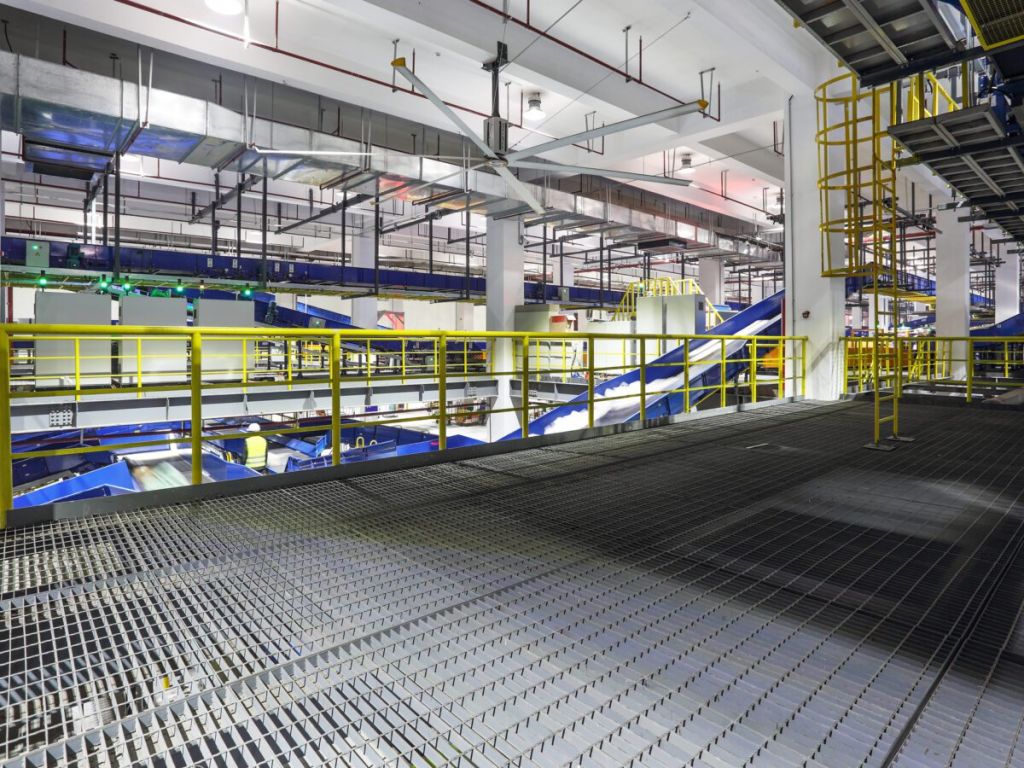
A well-planned catwalk system creates a fixed route above floor activity so staff can reach equipment, storage faces, and service points without dragging ladders into active aisles or shutting down nearby operations. The safety benefit matters, but on real projects the bigger question is whether the catwalk fits the building, the workflow, and the installation window.
That is where many projects get harder than expected. Existing sprinklers, lighting, conduit runs, rack clearances, and conveyor elevations can all force layout changes. Guardrail locations affect usable width. Stair placement can solve one circulation problem and create another. A catwalk that looks right on a concept drawing can still fail in the field if the design team does not check those conflicts early.
Good results usually come from treating the catwalk as part of the facility, not as a stand-alone steel package. Early coordination with operations, maintenance, and safety teams, along with OSHA-compliant warehouse design built into the floorplan, helps prevent redesigns after fabrication starts.
Practical rule: Strong catwalk projects start with the travel path, the access task, and the shutdown plan. Steel selection comes after that.
What Are Warehouse Catwalks and Crossover Platforms
A maintenance tech needs to reach a valve bank above a conveyor. A picker needs access along a rack face without stepping into lift traffic. Those two access problems sound similar, but they usually call for different structures.
A warehouse catwalk is a raised walkway built for pedestrian travel and task access along a defined path. It typically runs beside racking, conveyors, equipment lines, or service points where staff need repeated access above floor level. A crossover platform is built to carry people over an obstruction, such as a conveyor, piping run, or machine zone, so foot traffic can pass from one side to the other without entering a hazard area.
That difference affects more than terminology. It changes span requirements, stair and landing locations, guardrail layout, and the way the structure ties into the building or surrounding equipment. On real projects, the wrong label often leads to the wrong quote.
How these systems are commonly built
Most catwalk and crossover systems use structural steel framing, a deck surface, guardrails, stairs, and landings. The deck choice depends on the job. Bar grating helps where drainage, dust drop-through, or slip resistance matter. Solid plate or other closed decking can make sense where small parts, tools, or debris cannot fall through.
Support conditions vary too. Some catwalks are rack-supported. Others need independent columns because the existing rack, slab, or equipment layout cannot carry the added loads or does not leave enough room for proper connections. That is one of the first field checks I push for, because a concept that works on paper can fall apart once column spacing, sprinkler lines, or conveyor clearances are measured.
Where the term gets confusing
Teams often use "catwalk," "platform," and "mezzanine" interchangeably. In design and estimating, they are not the same. A catwalk is usually narrow and route-based. A crossover platform is focused on passing over something. A mezzanine creates a larger occupied area for storage, workstations, or process support.
If the goal is repeated access along storage or equipment, start with a warehouse catwalk system designed for linear access. If the goal is to create usable floor area above the slab, a different platform category may fit better.
The practical issue is integration. Clearance to overhead utilities, usable width between rails, stair placement, and installation sequence often decide whether the system works well in the building, not just whether the load rating is adequate.
Choosing the Right Elevated Platform
A lot of bad quotes start with the wrong product category. If the team asks for a mezzanine but really needs crossover platforms over conveyors, the design process gets longer than it should.
Platform type comparison
| Platform Type | Best Use Case | Common Design Notes | Key Quote Factors |
|---|---|---|---|
| Catwalk | Linear access along racking, conveyors, or equipment | Narrower path, guardrails, stair access, focused on movement and reach | Path length, width, support method, stair count, rail configuration |
| Crossover platform | Safe crossing over conveyors, piping, or machinery | Usually connects two floor areas across an obstruction | Span, crossing height, landing geometry, traffic pattern, clearance needs |
| Mezzanine | Creating new elevated floor space for storage, work, or support areas | Larger footprint, broader structural scope, may include gates and pallet access | Overall size, load needs, deck type, stairs, gates, column layout |
| Industrial work platform | Task-specific elevated work area for maintenance or operations | Often built around machinery access points | Equipment footprint, exact access points, rail needs, load profile |
| Custom catwalk system | Complex facility layouts with multiple obstructions or special access goals | Built around columns, conveyors, utilities, and traffic lanes | Site conditions, code review, engineered supports, installation constraints |
What usually drives the right choice
If people need to travel beside something, use a catwalk. If they need to cross over something, use a crossover platform. If they need usable raised floor area, think mezzanine first.
Need elevated walkways? Our prefab catwalk systems integrate seamlessly with platforms and mezzanines.
Buyers save time when they describe the workflow before they describe the product. "We need maintenance access over this conveyor" is more useful than "We need a platform."
For facilities that need broader raised floor space as part of the same project, mezzanines may be part of the answer, especially when the catwalk route connects to storage or work areas above grade.
Key Design Factors for Catwalks and Platforms
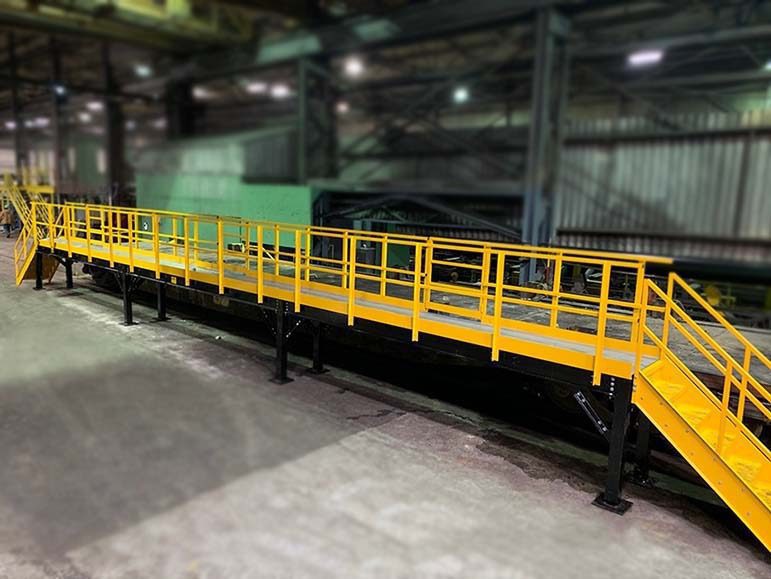
A catwalk that looks fine in plan view can fail in the field fast. The usual trouble spots are not the obvious ones. They are the inches lost to conduit, the stair landing that conflicts with a door swing, or the support location that lands in the middle of an active forklift lane.
Width and geometry
Width should be evaluated as clear, usable walking space. On real projects, that means checking the finished condition, not just the nominal dimension on the approval drawing. Handrails, kick plates, conduit, machine guarding, and structural posts can all reduce the path.
Guidance referenced by Upside Innovations on facility catwalk design notes a minimum clear width target and the need for stair-connected landings to align with stair width. That is a starting point, not the full answer. The better design question is whether the route still works after the surrounding equipment, utilities, and safety features are in place.
Geometry usually decides whether a layout is workable. Tight turns, short landings, and awkward stair approaches slow maintenance access and create avoidable safety issues. In retrofit facilities, I look at travel path, headroom, door clearances, and how a person carries tools through the space before I worry about making the drawing look clean.
Load ratings in plain language
Load rating sets the structural duty of the system. It should reflect actual use, not a generic assumption copied from another project.
A maintenance catwalk often sees light foot traffic most of the time, then a concentrated load from a motor, gearbox, or service cart during shutdown work. A platform near processing or packaging equipment may also need to account for stored parts, toolboxes, and multiple people working in one area. Those are different loading cases, and they should be treated that way during engineering.
A practical review should separate:
- Dead load, the weight of the structure and decking
- Live load, people, tools, and movable items
- Concentrated loads, equipment or materials that apply force in a small area
- Future use creep, where a maintenance platform slowly turns into storage space
That last item causes problems often. If the operations team may stage parts on the platform later, design for that now or restrict the use clearly.
Guardrails and Walking Surfaces
Guardrails and decking need the same level of attention as the frame. OSHA requirements set the baseline for guardrail strength and walking-working surface performance, but project success usually depends on details that are missed during early layout.
Review these conditions before final design:
- Open edges and whether self-closing gates are needed at ladder or stair openings
- Surface traction in wet, oily, dusty, or washdown areas
- Dropped object exposure where people, product, or equipment pass below
- Transitions at stairs, platforms, and equipment access points
- Cleaning and maintenance requirements that affect deck type and railing layout
For early spec work, these mezzanine specifications for decking, railings, and access layout are useful because many of the same design checks apply to catwalks and raised platforms.
Existing conditions and installation constraints
Many projects succeed or fail based on these considerations. Existing columns, sprinkler lines, lighting, ductwork, conveyor supports, and machine envelopes can force changes late in the process. If the facility stays live during installation, sequencing matters just as much as structural design.
Support placement should be coordinated with traffic lanes, slab conditions, and access below. Stair locations should be checked against egress paths and daily workflow. If steel can only be installed during off-hours or shutdown windows, the design should reflect that from the beginning. A system that is easy to fabricate but hard to install is usually the expensive option in practice.
Catwalk Racking Systems and Conveyor Catwalks
Catwalk racking systems and conveyor catwalks solve different access problems. A rack-supported catwalk can create a raised picking route beside multi-level storage. A conveyor catwalk gives maintenance staff a fixed path above or beside conveyor equipment. Both need a layout review that considers the structure below, the travel path, and the work performed from the platform.
When a catwalk works with warehouse racking
A catwalk can be part of a racking system when the project calls for access to higher storage levels. The design team should confirm whether the existing or proposed rack system is intended to support the walkway, where stairs and landings fit, and how people will move product without creating a conflict below. Do not assume a rack can carry a catwalk just because it is nearby. The final support approach belongs in the engineered project review.
For the rack portion of a coordinated layout, start with our pallet rack configurator for warehouse storage layouts. It helps define storage needs before a catwalk route, stair locations, and clear access points are reviewed together.
Planning a conveyor catwalk
A conveyor catwalk should follow the tasks people actually perform. Mark the service points, controls, photo eyes, drives, and areas that need routine access. Then check the route for headroom, guardrail openings, stair approach, overhead utilities, and the floor traffic below. If workers need to cross a conveyor rather than travel alongside it, a crossover platform may be the better fit.
For a warehouse where a catwalk changes pedestrian routes, include it in the broader warehouse design and layout review so racking, conveyor access, forklift lanes, and exits are considered as one plan.
Prefabricated vs Custom Catwalk Systems
A standard catwalk layout can look right on paper and still create trouble once field dimensions, utility clearances, and install windows are checked. That is the real dividing line between prefabricated and custom systems.
When a prefabricated catwalk makes sense
Prefabricated catwalks work well when the geometry is predictable and the path is doing a simple job. If the run is straight, elevations are known, and support locations are easy to place without disrupting equipment or traffic, standardized components usually reduce design time and shorten fabrication.
They are a good fit for:
- Straight access runs along equipment lines
- Simple crossover points between fixed areas
- Repeating layouts across similar bays or process zones
- Projects with clear dimensions and few field conflicts
The trade-off is flexibility. Prefabricated systems are efficient because the parts and connection details are already defined. If the site starts changing after approval, those savings can disappear in field modifications, added support steel, or revised access points.
When custom catwalk design is the safer call
Custom design makes more sense when the catwalk has to fit the building, the operation, and the install sequence at the same time. That often means working around existing conveyors, rack lines, door swings, utilities, restricted anchor locations, or maintenance access that cannot be blocked.
I usually recommend custom layouts for active facilities where shutdown time is limited. In those projects, the hard part is rarely the platform itself. The hard part is fitting stairs, landings, supports, and guardrails into a space that was never planned for them, then installing the system in phases without disrupting production.
Custom work also gives the design team more control over code-driven details such as stair geometry, landing locations, gate placement, and guardrail configuration. If the project has to satisfy local building review or align with broader life-safety requirements, that design freedom matters. For teams reviewing code implications early, Awesim Building Consultants on the BCA is a useful reference point.
A practical rule is simple. Use prefabricated systems where the building allows standardization. Use custom systems where existing conditions, approval requirements, or installation constraints will drive the layout. That choice usually saves more money than forcing a standard platform into a nonstandard warehouse.
Review options with our custom warehouse catwalk systems team before finalizing your access route. Call (800) 326-4403 to discuss the space.
Installation Code and Engineering Considerations
A common failure point shows up after the layout looks finished. The platform fits on paper, the loads check out, and then the field survey finds a sprinkler conflict, a bad anchor slab, or a stair run that cuts through a forklift lane.

Site conditions that derail installs
The projects that slip schedule usually do so because the catwalk was treated as a stand-alone steel package instead of part of an operating building. In existing facilities, the crucial task is fitting the system around what is already there and planning how it will be installed.
Before fabrication is released, confirm four things in the field:
- Overhead clearances for sprinklers, lights, ductwork, conduit, and door travel
- Floor and anchoring conditions including slope, cracks, housekeeping pads, and slab limitations
- Traffic conflicts involving forklifts, carts, pallet staging, and marked pedestrian routes
- Installation access for unloading, lift equipment, crew movement, and staged assembly
Those checks sound basic. They are also where expensive change orders start.
Code review is an integration problem
Code review rarely turns on one issue alone. The catwalk may work structurally and still create problems with egress, guard requirements, sprinkler coverage, or the path people take during an emergency.
I tell clients to review the whole condition together. Stair geometry, landing placement, headroom, fire protection, and existing building constraints affect each other. If one decision changes, two or three others usually follow. Teams that wait to sort this out after approval often end up revising steel, access locations, or installation phasing.
For a broader code reference, Awesim Building Consultants on the BCA gives a useful overview of how building code structure can affect practical design decisions.
Engineering review should happen before ordering
Final engineering should be based on the actual building, intended use, support conditions, and local approval requirements. Generic budgeting is fine early. Final sizing and detailing are not.
That is why provider review matters. Material Handling USA and other catwalk suppliers should be asking for field dimensions, obstruction photos, slab information, and access constraints before a system is finalized. A platform that looks efficient in a drawing package can still be difficult to permit, hard to erect, or disruptive to install if those details are missed.
Your 5 Step Catwalk System Planning Checklist
Most catwalk projects get easier once the team writes down the basics in one place.

Step 1 through Step 3
-
Define the access goal
Decide whether the system is for maintenance, picking, crossover travel, machine access, or mixed use. If the purpose isn't clear, the design won't be either. -
Map the actual path
Trace where people start, where they need to go, and what they must avoid. Include conveyors, columns, doors, utilities, and traffic lanes. -
List what the platform must carry
Don't guess. Identify whether users will carry tools, parts, or inventory, and whether any concentrated loads are expected.
Step 4 and Step 5
-
Choose Access and Protection points
Confirm stair locations, landings, gates, handrails, and any edge conditions that need extra attention. -
Document the site before requesting a quote
Gather dimensions, photos, ceiling conditions, floor notes, and simple sketches. That makes design review faster and pricing more accurate.
The fastest quoting process usually comes from the customer who sends photos, rough dimensions, and a marked-up floor plan instead of a one-line request for "one catwalk."
Questions to Ask Before Requesting a Design
A catwalk project usually gets harder after the first call if the team has not settled a few practical questions first. I see the same pattern often. The requested platform looks simple on paper, then the design has to change because a stair lands in a forklift lane, a support frame blocks equipment access, or local review adds guard, gate, or egress requirements nobody accounted for early.
A useful design conversation starts with operating reality inside the building, not just platform size and load.
Questions that uncover the real scope
Ask these questions internally before you request design work:
-
How will the platform be used
Daily travel, occasional maintenance, parts access, and picking all drive different decisions for width, stair location, gates, and deck layout. -
What building conditions will control the layout
Existing columns, conveyors, ductwork, sprinkler lines, lighting, door swings, rack clearances, and roof height often shape the design more than the open floor area does. -
What areas must stay accessible during and after installation
Teams should identify forklift routes, machine service zones, exits, electrical panels, and any area that cannot be blocked, even for a short install window. -
What could change in the next few years
A platform that fits today's equipment plan can become a problem if a conveyor shifts, a machine grows, or a rack line gets extended. -
Who has to sign off before fabrication
Operations, safety, facilities, engineering, and local code review can each add requirements that affect the final layout, support spacing, and installation sequence.
Decision scenarios that come up often
The right answer depends on how the structure fits the building and the work. A conveyor crossover may only need a short bridge and two stair runs. A machine access platform often needs tighter geometry, controlled gate placement, and clear maintenance swing space. Longer travel routes through warehouse areas can justify a more extended catwalk path, but only if supports, headroom, and traffic conflicts are resolved early.
One of the biggest mistakes is requesting a design before the team decides whether they need access structure, work area, or future expansion capacity. If that question is still open, state it clearly in the request. A good configurator can compare options, but only if the team shares the actual constraints up front.
Planning Your Warehouse Catwalk System with MH-USA
The catwalk itself is only one part of the project. The harder part is fitting that structure into a live building with existing traffic, equipment, safety rules, and installation constraints. That's why the best results usually come from early site review, clear load discussions, and realistic planning around code and sequencing.
Warehouse demand and facility change don't usually slow down while a project waits for redesign. Teams that move earlier through layout review often get cleaner installation windows, fewer field surprises, and better schedule options.
If you're comparing options now, request a catwalk design consultation, ask for a free quote, or contact the team for a no-obligation layout review. For direct help, call 800-326-4403 or email Sales@MH-USA.com. If your project is straightforward, that can speed the path to pricing. If it's complex, it gives your team more time to solve the hard parts before fabrication starts.
Frequently Asked Questions About Industrial Catwalks
What is a warehouse catwalk
A warehouse catwalk is a raised walkway for pedestrian travel and repeated access beside equipment, racking, or service points.
What is the difference between a catwalk and a mezzanine
A catwalk is usually a narrower path for access and movement. A mezzanine is a larger raised floor area for storage, work, or support space.
What is a catwalk racking system
A catwalk racking system combines raised access with storage racking. The final support arrangement and access details should be reviewed for the specific project.
When do I need a conveyor catwalk instead of a crossover platform
Use a conveyor catwalk when people need to travel along or work beside conveyor equipment. Use a crossover platform when the main need is to pass safely from one side of an obstruction to the other.
Is a prefab catwalk always cheaper than a custom catwalk
Not always. Prefabricated components can suit straightforward layouts, but a custom layout may avoid field changes when the site has utilities, traffic conflicts, or unusual access points.
What should I provide for a catwalk installation quote
Provide rough dimensions, photos, a simple layout sketch, intended use, access points, and notes on overhead or floor-level obstructions.
Do catwalk projects need code and engineering review
Final requirements depend on the intended use, building conditions, and local authority. Review engineering, egress, guarding, and fire-protection impacts before fabrication.
What commonly delays warehouse catwalk installation
Missed site conditions, such as overhead obstructions, slab concerns, blocked access, forklift conflicts, and late layout changes, commonly delay installation.
A catwalk project goes better when the layout, load needs, and code issues are sorted out before fabrication begins. If you're planning warehouse catwalk systems, Material Handling USA can help you review the space, compare options, and move toward a workable layout. Request a Quote, Contact Us, or call (800) 326-4403 to discuss your project.