
Vertical Lift Modules (VLMs) — Automated Parts Storage & Retrieval
Vertical Lift Modules deliver automated goods-to-person storage that saves up to 90% of floor space, reduces picking errors by 99%, and increases throughput by 2–3x. Enclosed, secure, and fully automated — VLMs are the gold standard for high-density parts storage in manufacturing, distribution, aerospace, and healthcare.
Talk with a specialist. Call (800) 326-4403 or Email Sales@MH-USA.com
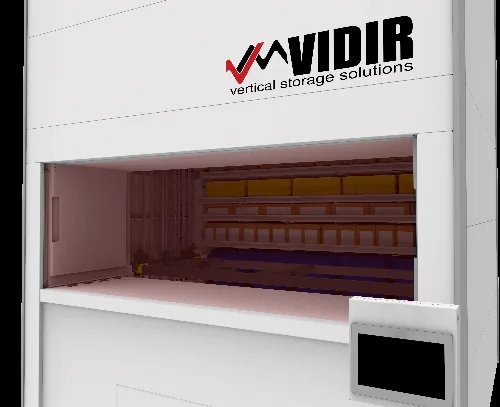
What Is a Vertical Lift Module (VLM)?
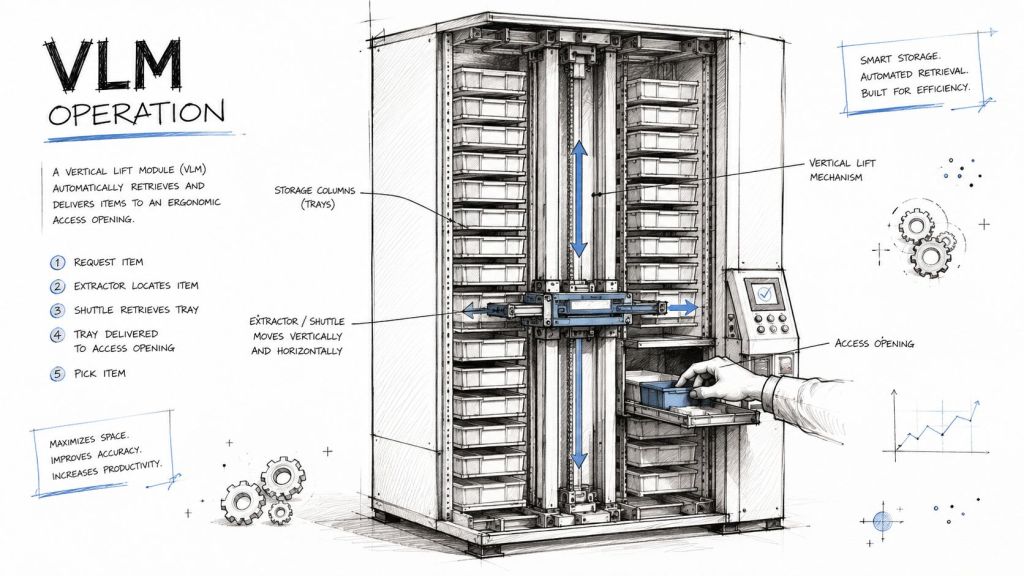
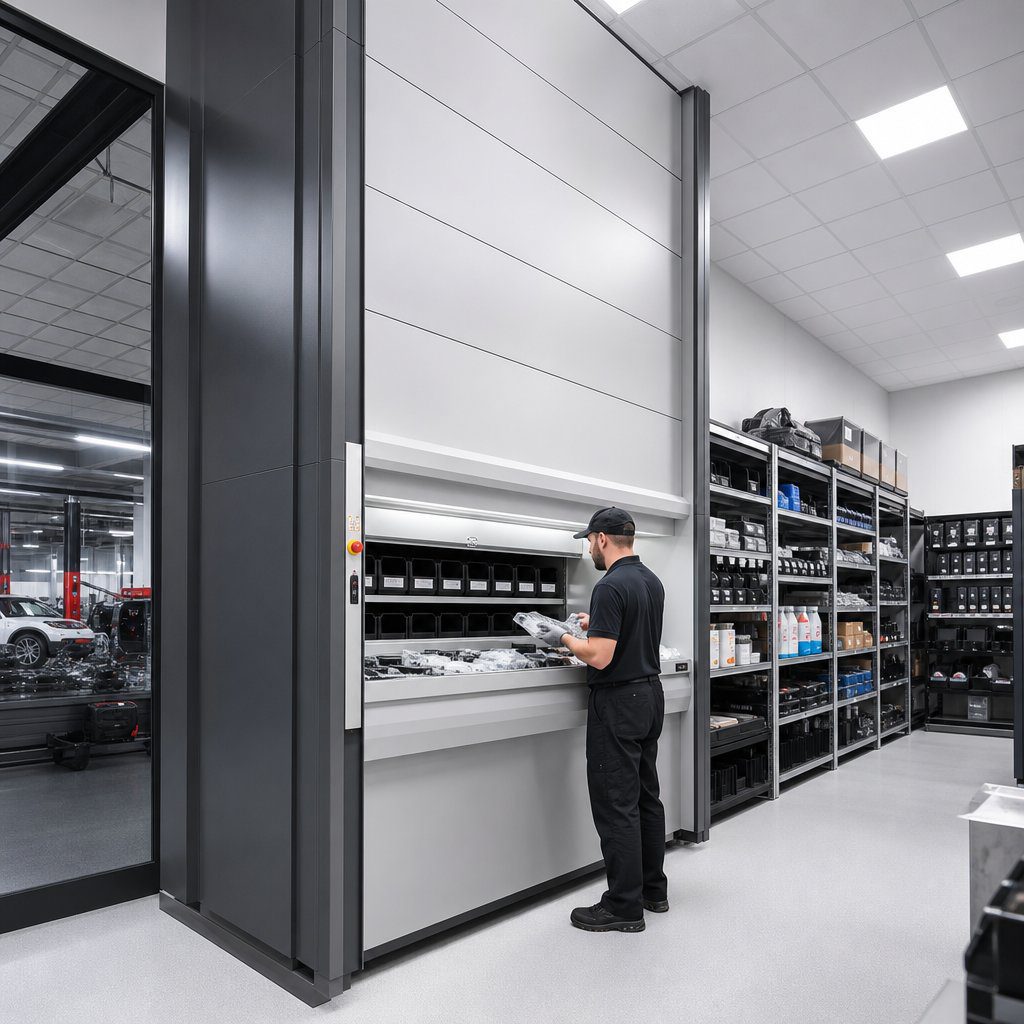
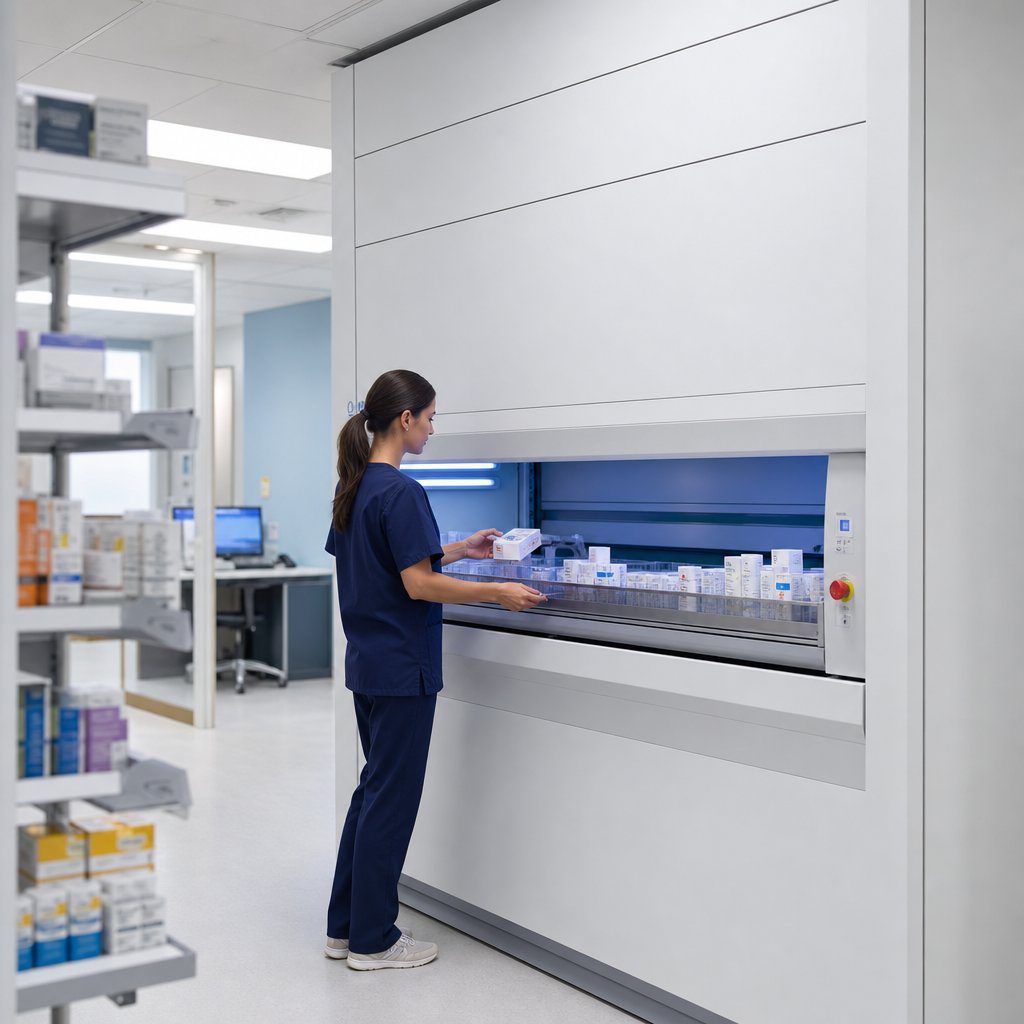
A Vertical Lift Module (VLM) is an enclosed automated storage and retrieval system that uses a computerized inserter/extractor to deliver trays of stored items directly to an ergonomic access opening. The system consists of two parallel columns of trays with an automated inserter/extractor mechanism in the center. When an operator requests an item, the VLM automatically locates the correct tray, extracts it from storage, and delivers it to the operator at a comfortable working height.
Unlike traditional shelving or static cabinets, VLMs dynamically measure the height of items on each tray and store them with minimal wasted vertical space. This dynamic tray height optimization means the VLM automatically adjusts shelf spacing to eliminate dead air space — the number-one cause of wasted cubic footage in conventional storage systems. The result is a dramatically smaller footprint: a single VLM can replace multiple rows of shelving, bins, and cabinets.
VLMs are ideal for environments that require controlled access, environmental protection, and high-density storage — from aerospace MRO parts rooms and pharmaceutical dispensaries to tool cribs and evidence storage rooms. Every VLM from Material Handling USA comes with integrated software for inventory tracking, pick-to-light guidance, and access control.
How Vertical Lift Modules Work — The Goods-to-Person Principle
VLMs operate on the goods-to-person principle, which fundamentally eliminates the time operators spend walking to shelves, searching for items, and bending or climbing to reach storage locations. Here is how the process works step by step:
Step 1 — Item Request: The operator enters a part number, scans a barcode, or selects an item from the VLM’s integrated touchscreen controller. The software locates the exact tray and position where the item is stored.
Step 2 — Automated Retrieval: The inserter/extractor mechanism travels vertically within the unit, locates the correct tray in one of the two storage columns, and extracts it. The mechanism then delivers the tray to the ergonomic access opening at the operator’s working height (typically 30–36 inches).
Step 3 — Pick Confirmation: LED pick-to-light indicators or a laser pointer identifies the exact bin or compartment on the tray where the requested item is located. The operator picks the item and confirms the pick on the touchscreen. The system updates inventory in real time.
Step 4 — Automatic Return: After the operator confirms the pick, the VLM automatically returns the tray to its optimized storage position. Using dynamic height measurement, the system places the tray in the tightest available gap — maximizing storage density with every transaction.
This automated cycle typically takes 15–30 seconds per pick, compared to 2–5 minutes for a manual walk-and-search retrieval from conventional shelving. Over an 8-hour shift, VLMs can increase pick rates from 40–60 lines per hour (manual) to 120–250+ lines per hour.
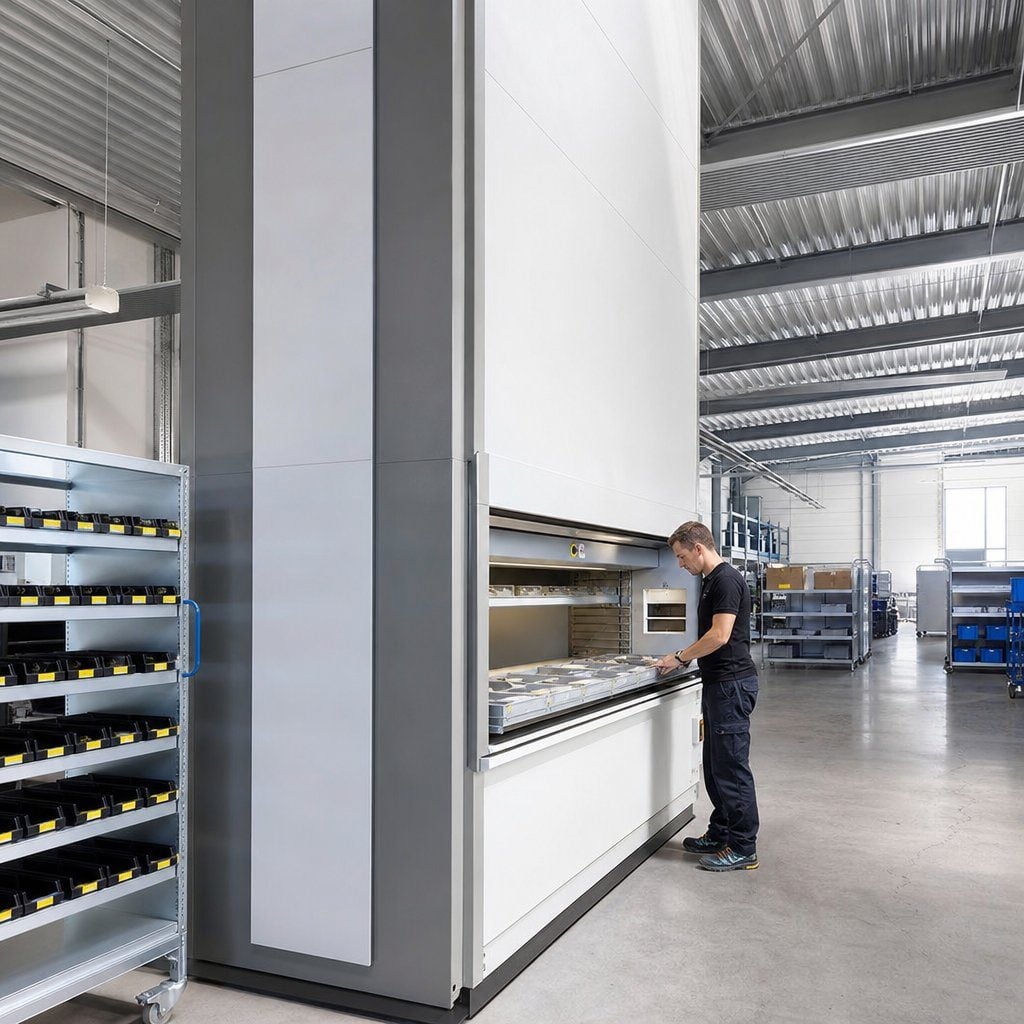
Key Features of Modern Vertical Lift Modules
Today’s VLMs go far beyond simple automated shelving. They are full inventory management platforms with security, software integration, and environmental controls.
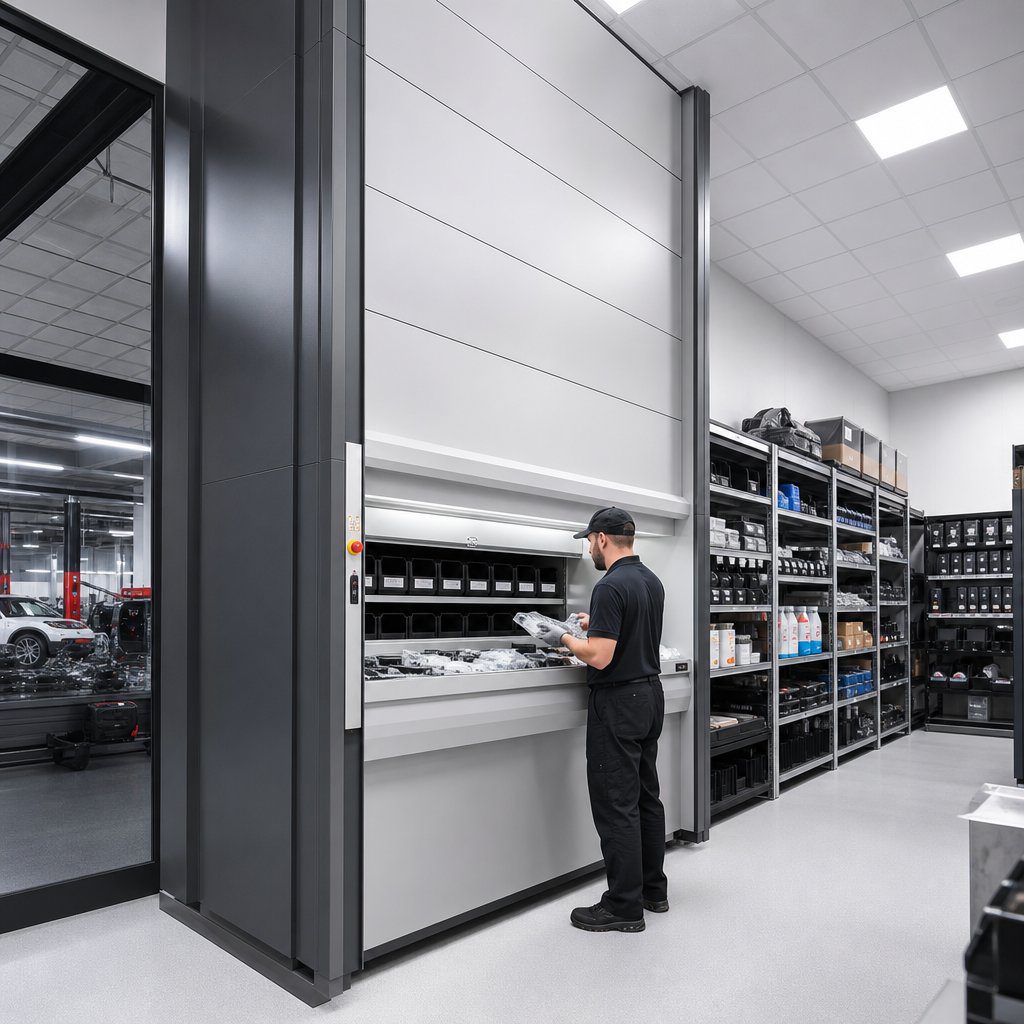
- Enclosed & Secure Storage — All items are stored behind locked panels, accessible only through the access opening. Integration with badge readers, PIN pads, or biometric scanners provides full access control and audit trails.
- Pick-to-Light Technology — LED light bars or laser pointers guide operators to the exact tray position, reducing picking errors to less than 0.1% and eliminating the need for memorized bin locations.
- Real-Time Inventory Tracking — Built-in software tracks every transaction — puts, picks, counts, and adjustments — with timestamps and user IDs. Integrates with ERP, WMS, and MRP systems via API or data export.
- Dynamic Tray Height Optimization — Photoeye sensors measure item height on each tray after every transaction and stores trays in the smallest available gap, maximizing storage density automatically.
- Dual-Access & Multi-Unit Configurations — Units can be configured with front and rear access openings for pass-through workflows, or linked together in banks of 2–8+ units with batch picking software for high-volume operations.
- Environmental Protection — Enclosed design protects stored items from dust, debris, UV light, humidity, and unauthorized handling — critical for sensitive components in aerospace, electronics, and pharmaceutical applications.
- Ergonomic Delivery Height — Items are always delivered to a comfortable working height (typically 30–36 inches), eliminating bending, reaching, and ladder climbing that cause workplace injuries.
VLM Applications by Industry
Vertical Lift Modules serve a wide range of industries where high-density, secure, and organized storage is critical to operations.


VLM Return on Investment — Space, Labor, and Accuracy Savings
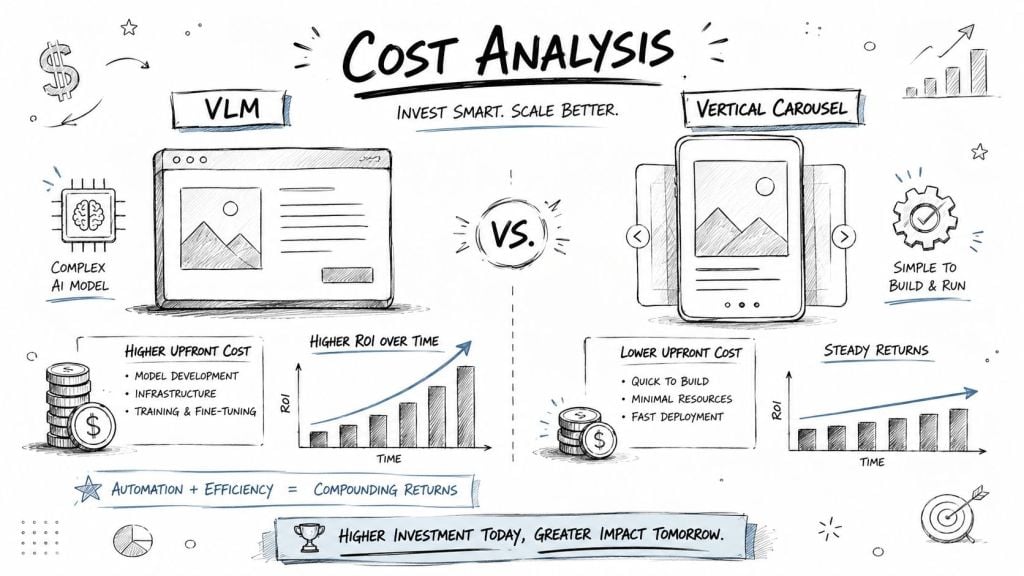
The ROI case for Vertical Lift Modules is compelling and well-documented across industries. Most VLM installations pay for themselves within 12–24 months through a combination of space savings, labor reduction, and error elimination.
Space Savings (Up to 90%): By storing items vertically and dynamically optimizing tray spacing, a single VLM occupying just 100 square feet of floor space can replace 1,000+ square feet of conventional shelving. For facilities paying $8–$25 per square foot annually, this translates to $7,200–$22,500 in recovered space value per VLM per year. In high-cost real estate markets (urban warehouses, cleanrooms, hospitals), the space savings alone can justify the investment.
Labor Reduction (40–75%): Eliminating walk time, search time, and manual counting reduces the labor hours needed for picking, putaway, and cycle counting. A parts room that required 3 full-time clerks with conventional shelving typically needs just 1–1.5 operators with VLMs. At $45,000–$60,000 per year per position, the labor savings are substantial.
Error Reduction (99%+): Pick-to-light technology, barcode verification, and software-guided workflows reduce picking errors from the industry average of 1–3% (manual) to less than 0.1%. For a facility processing 500 picks per day, this eliminates 5–15 daily errors — each of which costs $50–$500 to resolve through returns, rework, or production delays.
Inventory Accuracy: Real-time inventory tracking eliminates the need for annual physical counts and provides instant visibility into stock levels, reorder points, and usage patterns. Many VLM users report inventory accuracy improvements from 85–92% (manual) to 99.5%+ (VLM-managed).
VLM vs. Traditional Shelving vs. Vertical Carousel
See how Vertical Lift Modules compare to conventional storage methods across key performance metrics.
| Feature | Vertical Lift Module (VLM) | Traditional Shelving | Vertical Carousel |
|---|---|---|---|
| Floor Space Required | 100–200 sq ft per unit | 1,000–2,000 sq ft equivalent | 50–150 sq ft per unit |
| Space Savings | Up to 90% | Baseline (0%) | Up to 75% |
| Pick Speed | 120–250+ lines/hr | 40–60 lines/hr | 150–300+ lines/hr |
| Pick Accuracy | 99.9%+ | 97–99% | 99.5%+ |
| Max Tray Capacity | Up to 2,200 lbs per tray | N/A (static shelves) | Up to 800 lbs per carrier |
| Max Unit Height | Up to 46 feet | 6–12 feet typical | Up to 35 feet |
| Inventory Tracking | Integrated software | Manual / barcode | Integrated software |
| Security / Access Control | Fully enclosed, badge/PIN | Open access | Semi-enclosed, badge/PIN |
| Environmental Protection | Dust, UV, humidity sealed | None | Partial enclosure |
| Best For | Heavy parts, high-value items, secure storage | Low-density, infrequent access | High-speed picking, lighter items |
| Typical Cost | $80,000–$200,000+ | $2,000–$10,000 | $40,000–$120,000 |
| Typical ROI Period | 12–24 months | N/A | 12–18 months |
VLM Sizing, Configuration & Installation
Choosing the right VLM starts with understanding your storage requirements: the number of SKUs, item dimensions and weights, daily transaction volume, and available floor space and ceiling height. Material Handling USA’s automated storage specialists perform a free storage analysis that includes a complete inventory profile, workflow assessment, and 3D layout rendering.
Unit Heights: VLMs are available in heights ranging from 10 feet (ideal for low-ceiling environments) to over 46 feet (maximizing high-bay warehouse space). Taller units store more trays but require pit installations or raised access platforms in some configurations.
Tray Sizes: Standard tray widths range from 25 to 160 inches, with depths from 16 to 33 inches. Trays can be divided into compartments using adjustable dividers, custom foam inserts, or modular bin systems to organize small parts.
Weight Capacities: Light-duty VLMs handle 550–880 lbs per tray for small parts and electronics. Heavy-duty models support up to 2,200 lbs per tray for dies, molds, and heavy tooling. Total unit capacities range from 20,000 to over 120,000 lbs.
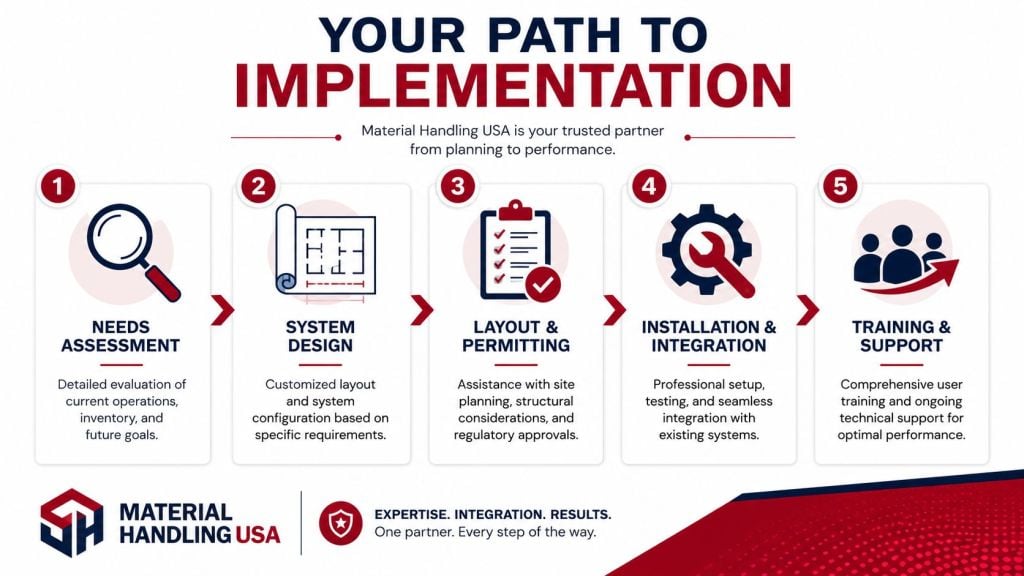
Installation: VLMs are delivered in modular sections and assembled on-site. A typical single-unit installation takes 2–5 days. Multi-unit installations with software integration and ERP connectivity typically require 1–3 weeks. Material Handling USA handles site surveys, permitting, rigging, installation, software configuration, and operator training nationwide.

VLM Software, Technology & Integration Capabilities
Modern VLMs are as much about software as hardware. Integrated inventory management platforms turn your VLM into a complete storage intelligence system.
Inventory Management Software
Every VLM includes a touchscreen controller with built-in inventory management software. Track quantities, bin locations, lot numbers, serial numbers, expiration dates, and reorder points in real time. Generate usage reports, ABC analysis, and inventory valuation summaries on demand. Cloud-based dashboards provide remote visibility into inventory levels across multiple VLM units and locations.
ERP & WMS Integration
VLM software integrates seamlessly with enterprise resource planning systems including SAP, Oracle, Microsoft Dynamics, and Epicor. Warehouse management system connectivity supports Manhattan Associates, Blue Yonder, Fishbowl, and dozens of other WMS platforms. Integration methods include REST API, web services, CSV/XML file exchange, and direct database connectivity. Bi-directional data flow keeps VLM inventory synchronized with your central system in real time.
Pick-to-Light & Put-to-Light
LED light bars mounted at the access opening illuminate the exact tray compartment where the required item is located. Some systems use laser pointers for pinpoint accuracy on large trays with many small compartments. Put-to-light works in reverse for receiving and putaway operations — guiding operators to the correct storage position and confirming correct placement. These visual guidance systems are the primary driver of the 99.9%+ accuracy VLMs achieve.
Access Control & Audit Trails
VLMs support multi-level access control through badge readers, PIN codes, biometric scanners, and network authentication. Each user can be assigned permissions for specific items, trays, or functions. Every transaction is logged with timestamp, user ID, item, quantity, and action type — creating a complete audit trail for compliance reporting, loss prevention, and chain-of-custody documentation in regulated industries.
Related Automated Storage Solutions
Explore our complete range of automated vertical storage systems and industry-specific solutions.
Vertical Carousels
Vertical carousel systems for high-speed goods-to-person retrieval with rotating carriers.
Pallet Rack Systems
Pallet racking solutions for bulk storage, distribution, and warehouse operations.
Tool Crib Storage
Tool crib & die/mold storage with heavy-duty VLM configurations up to 2,200 lbs per tray.
Frequently Asked Questions About Vertical Lift Modules
What is a Vertical Lift Module (VLM) and how does it work?+
How much floor space can a VLM save compared to traditional shelving?+
What industries commonly use Vertical Lift Modules?+
How much weight can a VLM tray hold?+
Can VLMs integrate with our existing ERP or WMS software?+
What is the typical ROI timeline for a Vertical Lift Module?+
How long does VLM installation take?+
What is the difference between a VLM and a vertical carousel?+
Ready to Transform Your Storage with VLM Technology?
Our automated storage specialists will analyze your inventory, design a custom VLM solution, and provide a detailed ROI projection — all at no cost. Call today or request a free consultation.