The right grow room shelving is a strategic decision that directly affects workflow, sanitation, and profitability, not just storage capacity. In commercial cultivation, vertical systems can more than double available cultivation space when shelving is stacked around a central light source, and mobile aisle shelving has been documented to increase storage space by 50%, which is why the best choice usually comes down to balancing density with airflow, cleaning access, and day to day labor flow.
If you're reviewing layouts for a cultivation room, dry room, supply room, or dispensary back room, shelving shouldn't be treated as an afterthought. It changes how staff move, how easily surfaces are cleaned, where utilities land, and how much usable space your operation gets from the lease.
A lot of managers start by asking what type of rack or shelf they need. The better question is whether the shelving supports the way the room needs to operate under real conditions. That means plant access, aisle width, ventilation paths, irrigation clearance, cable routing, and the reality of frequent washdownsand reconfiguration.
If no perfect video is available from the Material Handling USA channel for this topic yet, a strong future video topic would be: How to Plan Grow Room Shelving for Cultivation, Drying, and Back Room Storage.
-
Key takeaway 1: Shelving needs to be planned with airflow, lights, and service access together.
-
Key takeaway 2: Mobile systems help recover floor space, but access patterns matter.
-
Key takeaway 3: The best shelving layout is the one your team can clean, maintain, and use consistently.
-
0:00 Common grow room storage mistakes
-
0:45 Mobile vs static shelving
-
1:30 Planning aislesand access
-
2:15 Moisture and cleanability
-
3:00 Choosing a system for your room type
See more videos on our channel
{“@context”:”https://schema.org”,”@type”:”VideoObject”,”name”:”How to Plan Grow Room Shelving for Cultivation, Drying, and Back Room Storage”,”description”:”Suggested video topic covering grow room shelving, mobile storage, airflow, cleaning, and workflow planning for commercial cannabis facilities.”,”publisher”:{“@type”:”Organization”,”name”:”Material Handling USA”}}
Why Grow Room Shelving Matters in Commercial Cannabis Facilities
Shelving affects output because it affects space use. In controlled environment agriculture, the move from fixed, single level layouts to vertical, multi tier production changed facility planning. Industry guidance notes that vertical grow systems can more than double available cultivation space by stacking square or hexagonal shelves around a central light source, a design that became more practical as cooler LED lighting reduced heat stress in layered plant production. You can review that background in this overview of vertical cannabis grow systems.
That shift matters because commercial facilities aren't all built at the same scale. Cannabis Business Times reported that 22% of growers operated in facilities of 50,000 square feet or more, 13% cultivated canopies smaller than 1,000 square feet, and the median canopy size was 10,000 square feet after noting a previous average canopy size of 34,500 square feet. Those numbers show a market split between smaller footprintsand a smaller number of very large operations, which is exactly why shelving decisions have to match scale and room function. The survey details are covered in Cannabis Business Times facility size reporting.
Practical rule: In a grow facility, shelving is part of the room system. Once you add tiers, you also change lighting, ventilation, access, cleaning time, and maintenance routines.
Shelving is an operating system, not just a fixture
A poor shelving choice creates friction everywhere else. Staff take longer to move trays. Cleaning crews struggle to reach corners. Irrigation lines get crowded. Electrical cords cross walk paths. Inspection access gets tighter.
A well planned system does the opposite:
- Improves usable space by converting dead floor area into organized storage or production zones
- Supports cleaner operations when surfaces, corners, and undersides can be reached
- Protects workflow by keeping supplies, tools, and product where staff need them
- Helps future changes because adjustable shelving can adapt when SOPs, equipment, or room assignments change
Common Storage Challenges in Grow Rooms
Most grow room storage problems aren't caused by a lack of shelving. They're caused by shelving that's installed without enough thought about the room's real use.
Crowded aislesand poor reach
Cannabis Business Times notes that facilities are often designed around 4 foot increments and that at least 4 feet of total aisle access should be considered for efficient room utilization. For shelving, that means depth and aisle width need to be planned together, not separately. The layout guidance appears in The Cultivator's Guide to Grow Room Layout and Design.
When aisles get too tight, storage density may look good on paper but routine work slows down. Staff can't carry trays comfortably. Inspections become awkward. Moving carts around corners becomes a nuisance. In an emergency, narrow paths also reduce safe access.
Airflow blocked by dense rack layouts
Airflow is a core engineering issue in indoor grow shelving. Shelf design has to preserve clearance for lighting, irrigation, ventilation, and equipment because blocked air paths can raise humidity and reduce canopy uniformity. Practical design guidance emphasizes open deck or wire style platforms, enough vertical gap between tiers, and layouts that can be adjusted as plantsand hardware change. That technical point is explained in this indoor grow room shelving guide.
Dense shelving usually doesn't fail on day one. It fails when plants fill in, fans work harder, humidity becomes less consistent, and staff realize the room is harder to service than it looked during install.
Utilities get treated too late
In many retrofit projects, shelving is selected firstand power is figured out later. That creates problems with hanging lights, timer placement, outlet access, and safe cable routing.
Grow room setup guidance notes that lightsand ventilation may run 12 to 18 hours per day, which makes electrical planning part of the shelving decision, especially in tighter indoor spaces. Outlet location, power strips, timer access, and maintenance clearance all need to be considered early. That point is addressed in GrowAce's guide to converting a bedroom into a grow room.
What Types of Grow Room Shelving Are Used
Walk into two cultivation facilities with the same square footage, and shelving choices will usually explain why one room runs clean and the other burns labor. The main categories are static shelving, mobile shelving, and vertical storage. The right choice depends less on product specsand more on how that room is used, who needs access, what has to be cleaned, and how much floor area you can afford to give up.
Static shelving
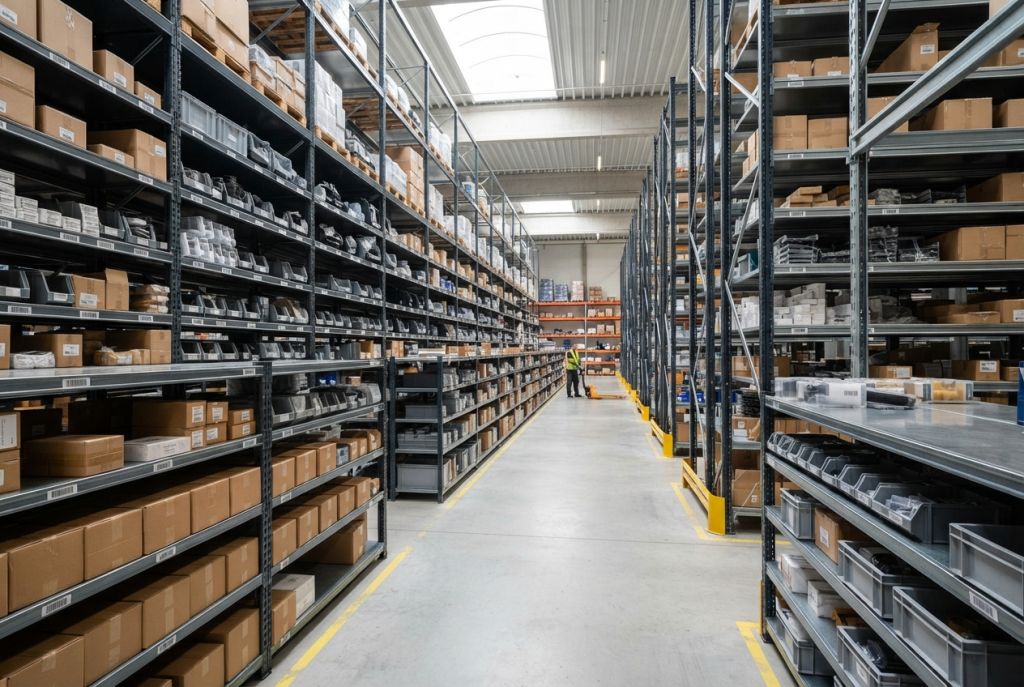
Static shelving stays fixed in place. It is often the practical choice for supply rooms, nutrient storage, hand tools, packaged goods, and other areas where staff need immediate access without waiting for an aisle to open.
Its strength is simplicity. Installation is usually easier, training is minimal, and there are fewer moving parts to maintain. The cost shows up in floor efficiency. Fixed rows lock in aisle space, sotheroom gives up storage capacity from day one. In commercial facilities, that trade-off only makes sense when fast access matters more than density.
Mobile grow room shelving
Mobile grow room shelving places shelving on movable carriages so one working aisle can serve several rows. That makes it a strong fit for cultivation support spaces, inventory rooms, and controlled storage areas where operators need more capacity without expanding the footprint.
The operational upside is straightforward. You can store more in the same room and keep materials better organized. The trade-off is throughput. If several employees need the same zone at the same time, mobile systems can slow traffic and create avoidable handoffs. I usually recommend mobile shelving where access is structured, not constant.
Vertical grow room storage
Vertical grow room storage uses room height as a productive asset. In cultivation, that can mean multi-tier production. In support areas, it usually means storing trays, totes, packaging, dry goods, or small equipment upward instead of across the floor.
This approach can improve output per square foot, but only if the room is designed around it. Reach height, visibility, cleaning access, and safe material handling all need to be worked out early. Teams that stack high without planning those basics usually end up with slower picks, missed sanitation points, and harder inspections.
In practice, many facilities use a mix of all three. Fixed shelving handles quick-access items. Mobile systems increase density in lower-traffic zones. Vertical layouts get more use out of expensive square footage. The best shelving plan is the one that supports workflow, holds up to washdown conditions, and keeps the room inspection-ready without adding labor every week.
Mobile Shelving for Cannabis Cultivation Facilities
Mobile shelving is often the most interesting option because it changes the economics of a room, not just the look of it. In warehouse settings, mobile aisle shelving has been documented to increase storage space by 50%, which helps explain why similar logic has moved into cultivation support and dense storage environments, as noted in the earlier vertical systems discussion.
Where mobile systems fit best
Mobile systems are usually a stronger fit for these areas:
- Supply rooms where irrigation parts, packaged inputs, PPE, and tools need organized high density storage
- Drying and curing support where trays, bins, or materials need secure, efficient placement
- Back of house inventory for labels, jars, cartons, and dispensary support materials
- Records or controlled access storage where fewer aislesand better organization support tighter access control
For operations comparing brandsand configurations, Pipp mobile storage systems are one product category used in cannabis facility planning.
Where mobile systems need caution
Mobile systems aren't ideal for every grow room. If the area has constant in and out traffic from multiple people, fixed shelving may be easier to live with. If the room has uneven floors, drainage complications, or utility conflicts, installation planning becomes more important.
Mobile shelving works best when the room has predictable access patterns. It works less well when every shift treats the space like an open walk through area.
Industrial Shelving for Suppliesand Equipment
Not every room needs a high density mobile system. Industrial shelving is often the better fit for bulk supplies, maintenance parts, cleaning materials, and back stock that staff need to grab quickly.
Good uses for industrial shelving
Industrial shelving earns its keep in support spaces where:
- Frequent picking matters and staff need clear line of sight to stored items
- Loads vary from light cartons to heavier containers or spare parts
- Reconfiguration happens because SKUs, packaging, or SOPs change over time
- Simple cleaning access helps because open construction leaves fewer hidden surfaces
Add ons that improve daily use
The most requested accessories tend to be practical, not flashy:
- Adjustable shelves sotheroom can change with container size or process changes
- Dividersand labels for inventory controland faster picking
- Drip containment in areas exposed to moisture or spills
- Mobile bases when teams need occasional repositioning without a full mobile rail system
For humid rooms, buyers usually look at stainless steel, galvanized steel, or properly coated shelving based on exposure, cleaning methods, weight, and budget. There's no single material that's right for every cultivation operation.
Vertical Storage for Space Savings
Vertical storage creates value when floor area is the bottleneck. It creates headaches when teams forget that height adds labor and service complexity.
What works
Open shelving with enough vertical clearance tends to perform better than tightly packed solid decks in active grow environments. Adjustable heights matter because plants, trays, containers, and support equipment don't stay the same over the life of a room.
If you're planning indoor grow shelving in a compact room, focus on these basics:
- Preserve air paths
- Allow visual inspection
- Keep reach zones realistic
- Plan for cleaning toolsand washdown access
- Coordinate lights, irrigation, and cabling before install
What doesn't work
Problems usually show up when teams chase density without thinking through use:
| Storage option | Best use | Benefits | Planning notes |
|---|---|---|---|
| Static shelving | Fast access supply rooms | Simple access, easy training | Uses more aisle space |
| Mobile shelving | Dense support storage | Better space use, organized retrieval | Needs traffic planning |
| Vertical multi tier shelving | Production or high density storage | Uses building height more effectively | Must protect airflow and service access |
| Wire shelving | Humid or airflow sensitive rooms | Better ventilation and visibility | Needs load review and cleaning plan |
| Solid shelf units | Dry goods or packaging | Flat support for smaller items | Can reduce airflow in active grow spaces |
How to Plan Shelving Around Workflow
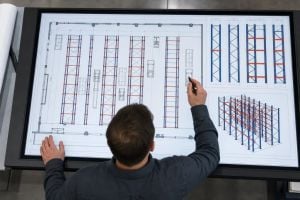
A layout that looks efficient in CAD can still be frustrating on the floor. Workflow planning fixes that.
Start with who uses the room
Map the room around people and tasks:
- Cultivation staff need safe plant or tray access
- Sanitation crews need reach to floors, corners, undersides, and wall lines
- Maintenance teams need clearance for lights, fans, irrigation, and power
- Inventory staff need clear labeling and repeatable put away locations
The more users a room has, the more dangerous it is to over compress storage.
Then map movement
A useful planning sequence is simple:
-
Identify what belongs in the room
Keep only room critical materials there. Everything else should move to another support area. -
Separate active from reserve storage
Daily use items need easier access than backup stock. -
Protect the main work path
Staff shouldn't have to shift carts, step around cords, or open multiple bays to finish a basic task. -
Check cleaning access before finalizing density
If the floor team can't reach behind or under it, the design needs work. -
Review utility conflicts
Shelving should fit around the room's actual services, not an idealized drawing.
Moisture, Cleaning, and Durability Considerations
Humidity, nutrient spills, and routine sanitation change what counts as a good shelving system. In a dry stockroom, many finishes work. In a wet or humid room, cleanability and corrosion resistance move much higher on the list.
Material choices should match exposure
There isn't a universal answer. The right material depends on moisture levels, chemical exposure, cleaning frequency, weight capacity, and your SOPs.
In practice, buyers usually compare:
- Stainless steel for strong corrosion resistance and washdown friendly surfaces
- Galvanized steel where durability mattersand budget is tighter
- Coated shelving when exposure is moderate and the finish is suited to the environment
- Wire shelving when airflow and drainage matter as much as load support
Cleanability is a real operating cost issue
Choose shelf surfacesand layouts that your sanitation team can maintain. Closed corners, tight wall gaps, and inaccessible undersides tend to add labor and increase inconsistency.
If a shelf system saves space but adds cleaning time every day, the room may be less efficient overall.
Security and Access Control Considerations
Cannabis storage needs vary by state, local rules, facility type, license requirements, and internal SOPs. No shelving system should be assumed to satisfy every compliance requirement by itself.
Still, shelving decisions do affect security planning.
Storage layout influences control
A better organized room is easier to supervise. Clear item locations, labeled zones, and defined access paths reduce confusion and support internal controls. In back of house or support spaces, mobile shelving can also reduce open aisle exposure and help limit where staff need to go.
Questions worth asking internally
- Who should access this room
- What needs restricted storage
- How will items be labeled and tracked
- Does the layout support inspectionsand audits
- Can staff retrieve materials without bypassing controls
Security works better when the storage system supports the SOP, not when the SOP is forced to compensate for bad storage design.
5 Step Checklist for Choosing Grow Room Shelving
1. Define the room's job
A cultivation room, dry room, packaging room, and dispensary support area all need different shelving logic. Don't reuse one standard just because it simplifies purchasing.
2. Measure around real constraints
Include drains, doors, power, lights, ducting, hose reach, and service clearance. The room's usable area is what matters, not just its wall to wall dimensions.
3. Decide where density helpsand where it hurts
Use higher density storage in reserve or controlled access spaces. Keep high traffic work zones easier to access.
4. Match materials to cleaning and moisture
Pick finishesand shelf styles based on actual exposure, not assumptions. Review washdown methods, spill risk, and chemical contact.
5. Leave room for change
Use adjustable systems where product mix, workflow, or equipment may change. That's one reason many buyers ask for layout help before they buy.
Decision Scenarios for Different Cannabis Facility Areas
Cultivation rooms
Focus on airflow, lighting clearance, irrigation access, and safe reach. Don't choose the densest option unless the room can still be serviced without crowding.
Supply rooms
This is often where commercial grow room storage gets the fastest return. Inputs, PPE, hand tools, irrigation components, and spare parts usually benefit from industrial or mobile shelving.
Drying areas
Choose layouts that preserve accessand don't create cleaning dead zones. Materialsand finishes should match the room's environmental demandsand SOPs.
Back of house storage
For packaging, jars, labels, cartons, and reserve inventory, mobile systems can reduce wasted aisle space while keeping inventory more organized.
Dispensary support areas
Use shelving that helps staff separate active supplies from reserve stock. Security, labeling, and orderly access usually matter more than maximum density alone.
Questions to Ask Before Requesting a Grow Room Storage Quote
Before you request a design or pricing review, gather answers to these questions:
-
What will the shelving hold
Plants, trays, supplies, packaging, tools, or mixed inventory all require different layouts. -
Which rooms need storage
Cultivation, drying, curing support, maintenance, and dispensary support should be evaluated separately. -
How often do staff access the items
Daily pick locations shouldn't be buried in dense reserve storage. -
What cleaning method is used
Wipe down, washdown, chemical sanitation, and spill exposure all affect material choice. -
What utilities affect the layout
Power, lights, irrigation, drains, and ventilation should be part of the drawing. -
Who needs access
A room used by one trained team can be designed differently from a shared support space.
If you want layout input before buying, Contact Us for a no obligation review, request a quote, call (800) 326-4403, or email Sales@MH-USA.com. Earlier planning usually leads to smoother installs, fewer layout revisions, and less downtime during setup.
FAQ
What is the best grow room shelving for commercial cannabis facilities
The best choice depends on what the room needs to do every day. In a support room, higher-density shelving can reduce floor space tied up in stored inventory. In an active cultivation area, access, airflow, sanitation, and staff movement usually carry more weight than storage density alone.
Can grow room shelving improve yield
Shelving affects yield indirectly through operations. A better layout can reduce handling delays, improve room organization, support cleaning, and keep inputs where crews need them. That matters because workflow problems, cross-traffic, and clutter often create production drag long before anyone notices a plant issue.
Is wire shelving better than solid shelving in grow rooms
Wire shelving is often the better fit where airflow, visibility, and faster cleanup matter. Solid shelves can make sense for packaging, tools, or dry supply storage, but they need more scrutiny in wet or active grow areas where trapped debrisand reduced air movement can become a maintenance problem.
How much aisle space should be planned around grow room shelving
Plan aisle width around the actual task, not just the shelf footprint. Staff need enough room to move carts, reach product safely, clean around uprights, and access utilities without blocking others. If benches, racks, and shelving share the same room, treat aisle planning as an operational decision, not a drafting detail.
Is mobile grow room shelving good for cultivation rooms
Sometimes. Mobile shelving usually makes the most financial sense in controlled-access support spaces, reserve inventory, and rooms where dense storage offsets high building costs. In primary cultivation rooms, the trade-off is tighter access during daily work, so the layout has to support irrigation, cleaning, scouting, and harvest movement without slowing crews down.
What material should be used for indoor grow shelving
Material choice should match moisture exposure, cleaning chemistry, load, and expected service life. Stainless steel holds up well in aggressive cleaning environments but costs more up front. Galvanized or coated steel can be a sound choice when the finish, maintenance plan, and room conditions are aligned.
Do cannabis storage solutions need to meet specific regulations
Yes, but shelving alone does not solve compliance. The system has to fit your facility's access rules, traceability process, sanitation program, and local storage requirements. Good shelving supports compliance readiness by making inventory easier to control, inspect, segregate, and document.
Should I request a layout before buying shelving
Yes. I have seen facilities spend more correcting a poor layout than they would have spent on planning the system correctly the first time. A review before purchase helps catch clearance conflicts, underused vertical space, cleaning obstacles, and storage decisions that can limit future expansion.
Grow room shelving affects labor efficiency, sanitation performance, inventory control, and the actual output you get from each square foot. Facilities that treat shelving as part of the operating system usually make better use of space and spend less time working around avoidable layout problems.
If you're comparing cannabis grow shelves, cultivation shelving, or cannabis storage solutions for a new build or retrofit, this is the stage to review the layout before equipment is ordered. Request a grow room storage quote, Contact Us, call 800-326-4403, or email Sales@MH-USA.com. Early planning usually leads to fewer revisions, cleaner installation sequencing, and lower risk of having to rework the room after startup.