What Is a Tire Carousel and How Does It Work?
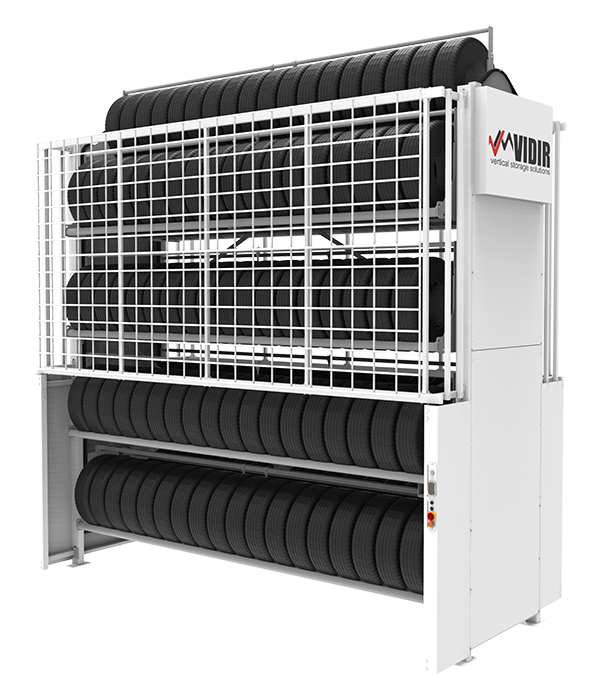
A tire carousel is a motorized vertical storage system built specifically for tires. Instead of spreading inventory across floor-level rows, the carousel stores tires in carriers that travel around a vertical loop. An operator selects the needed location, the system rotates the carrier to the load/unload opening, and the tire arrives at a controlled, ergonomic working height.
Vidir’s Tire Carousel is designed for high-density storage and retrieval. Its carrier uses a three-pipe triangular configuration, with a top limiter bar supporting the tire and helping the operator see which tire diameter fits. Each carrier includes two tire dividers; additional dividers and inserts can be specified when mixed tire sizes need a better fit.
The system is available in three broad platform families:
- T39 — standard configurations for tires up to 28 inches in diameter.
- T45 — standard configurations for tires up to 32 inches in the Vidir brochure; the current product-page filter displays 33 inches. Confirm the final diameter with Vidir when specifying the unit.
- HT54 — heavy-tire configurations for tires up to 44 inches in standard models.
Capacity is not one fixed number: it changes with tire diameter, carrier count, unit height, and width. Vidir literature lists up to 352 tires on a standard carousel, while the brochure’s technical table lists a maximum unit load of 18,000 pounds, maximum load per carrier of 1,000–2,000 pounds, unit imbalance of 1,800–2,500 pounds, and retrieval speed of 21 feet per minute. Those figures are configuration-dependent, so use the final Vidir quotation—not a generic blog estimate—for engineering and ordering.
Why Shops Use Vertical Tire Storage
Recover floor area without adding a building
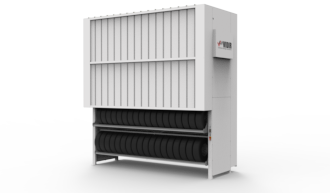
Vidir’s current product page markets up to 70% floor-area recovery, while the older MH-USA-hosted brochure claims up to 80%. The result depends on the comparison, tire mix, aisle allowance, and final layout. The practical planning point is consistent: a vertical carousel uses overhead volume to put more inventory in a smaller floor footprint than rows of open tire racks.
Bring the tire to the operator
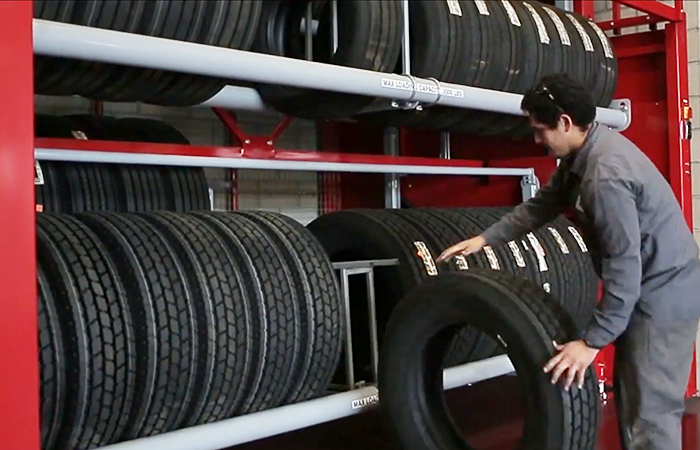
Static storage can force technicians to search, bend, reach, or climb while handling heavy tires. A carousel follows a goods-to-person pattern: the requested carrier rotates to the opening instead of the operator walking through every bay. That can make seasonal changeovers and customer-set retrieval more consistent, while also reducing unnecessary handling.
Keep inventory organized and protected
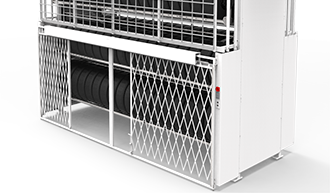
Dedicated carrier positions make it easier to separate customer sets, seasonal inventory, and tire sizes. Tires are stored off the floor, inside a guarded machine envelope, and can be protected further with an optional full enclosure or horizontal security gate. The machine is still a storage system—not a substitute for your own inventory controls, fire-protection design, or facility safety review.
Plan for mixed tire sizes
Tire dividers, carrier inserts, a loading ramp, and a tire lifter are available options. A ramp can help roll tires into and out of the carrier; a lifter is an alternative when tire weight makes manual loading impractical. These options should be selected from the actual tire mix and handling process, not added as generic accessories.
Vidir Tire Carousel Models, Capacities, and Options
Use the platform family as a starting point, not a substitute for a site-specific specification. Vidir’s model tables vary height, width, depth, carrier count, and tire count by configuration. A T39 table example reaches 352 tires; an HT54 example reaches 130 tires. Ceiling height and tire diameter can change the answer substantially.
”’+spec_table+”’
What must be confirmed before ordering
Measure clear ceiling height, available floor footprint, slab and anchoring conditions, tire diameter/width/weight ranges, expected inventory, loading path, operator access, and any enclosure or fire-protection requirements. We can help turn those inputs into a quote, but final structural, electrical, fire, and code approvals remain subject to the project’s qualified professionals and authority having jurisdiction.
Options that change the workflow
Vidir lists a horizontal security gate, tire loading ramp, tire lifter/tire kicker, tire dividers, full enclosure, tire carrier inserts, RAL color changes, and preventive-maintenance packages. The right combination depends on whether the carousel serves a dealership service bay, an independent tire center, a fleet garage, or a higher-volume distribution operation.
How to Plan a Tire Carousel Project
A useful quote starts with the operating facts that determine the machine, not with a desired tire count alone. Before comparing configurations, collect the information below. It makes the first conversation more productive and helps separate a genuine space-saving opportunity from a storage problem better served by static rack.
1. Define the inventory
List the passenger, SUV, light-truck, truck, or specialty tire diameters and approximate weights. Note whether tires are stored with rims, whether customer sets must stay together, and whether the inventory changes sharply by season.
2. Measure the building
Record clear ceiling height, available width and depth, slab or floor conditions, doors, columns, sprinklers, electrical access, and the route used to load tires. A tall machine only creates value when the building can safely accept it.
3. Map the workflow
Estimate daily picks, peak-season volume, receiving and shipping patterns, operator locations, and the largest tire that must be handled. Then compare carousel, static rack, pallet rack, or a combination using the same assumptions.
Also identify the people who need to approve the design. The equipment supplier can provide product and layout information, but a project may still require review by the building owner, structural engineer, electrical contractor, fire-protection professional, safety manager, or authority having jurisdiction. Treat those approvals as part of the project plan rather than assuming a catalog configuration is automatically approved for every building.
Bring these five inputs to the first call
Maximum tire diameter, approximate tire count, clear ceiling height, available footprint, and the way tires move through the shop. With those inputs, we can discuss whether a Vidir Tire Carousel is the right fit and which options are worth pricing.
Vidir Tire Carousel vs. Static Tire Racking
Both systems can be appropriate. The choice should follow the retrieval pattern, available height, inventory volume, budget, and the amount of automation the operation can support.
| Planning question | Vidir Tire Carousel | Static tire rack |
|---|---|---|
| Where does capacity come from? | Vertical machine height and carrier density | Additional floor-level rack rows and aisles |
| How is a tire retrieved? | Carrier rotates to the opening | Operator walks, reaches, bends, or uses material-handling equipment |
| When is it strongest? | High counts, tight floor space, repeatable picking | Lower counts, simple access, or palletized handling |
| What needs planning? | Height, load, footprint, power, access, and options | Rack layout, clearances, loads, anchoring, and aisle design |
For palletized commercial tire storage or operations where tires move in bulk, conventional pallet rack may be the better fit. Review our commercial tire storage racking case study and broader tire storage systems overview before choosing the equipment class.
Where a Tire Carousel Fits
The same machine can support different workflows, but the design conversation changes by application.

Automotive dealerships
Organize seasonal customer sets close to the service workflow without consuming every open bay or back-of-shop aisle.

Independent tire and service centers
Keep frequently handled inventory visible, organized, and reachable without a long manual search through floor stacks.
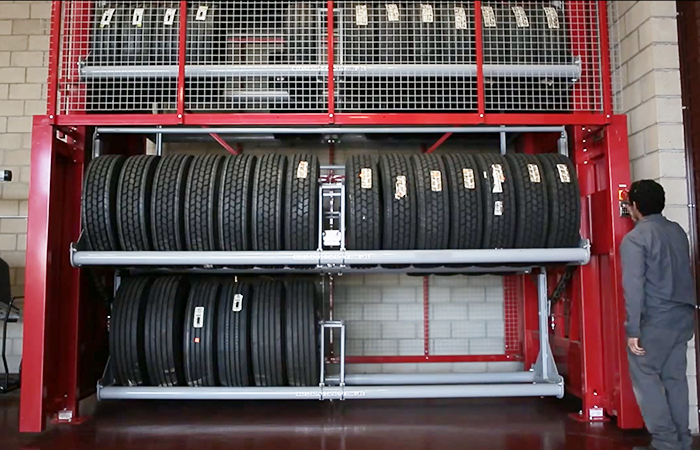
Fleet and municipal garages
Use vertical space for fleet tire inventories while matching the unit and options to the actual tire classes maintained.
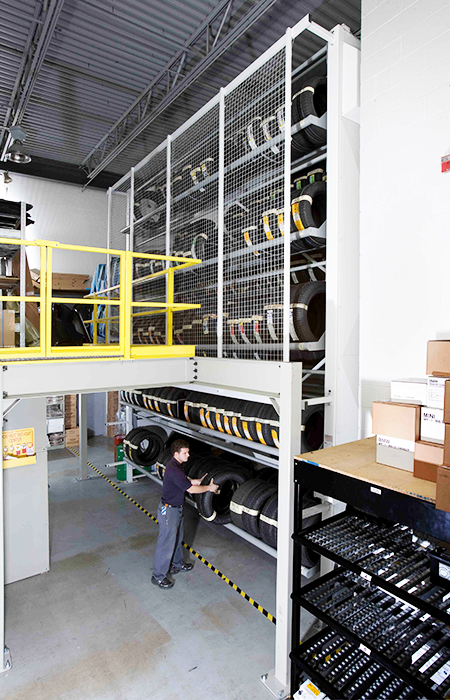
High-volume storage operations
Bank multiple units where inventory density, security, and repeatable retrieval justify a more automated storage process.
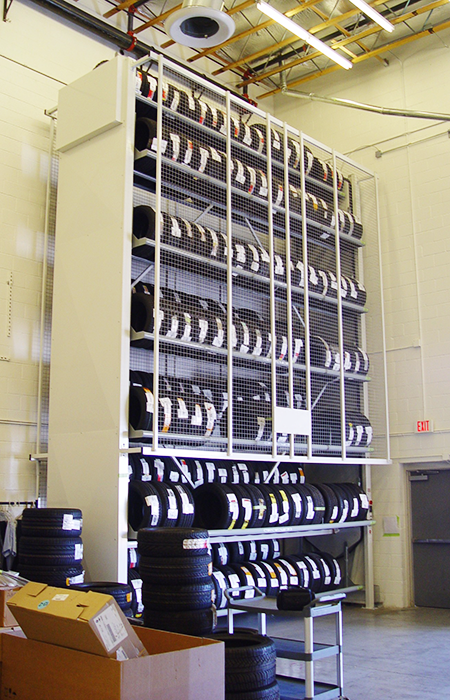
What Retrieval Looks Like in Practice
Start with the tire location or the operator’s established inventory process. The carousel rotates the carrier loop until the requested carrier reaches the opening. The technician loads or unloads at that point, checks the position, and returns the system to service for the next request.
That workflow is valuable when tires are picked individually or in customer sets. It is less compelling when the operation is primarily receiving and shipping full pallets. In every case, the carousel needs a safe loading path, clear operator zone, and a documented process for handling the heaviest tire in the mix.
Vidir’s brochure lists a retrieval speed of 21 feet per minute. Actual time to the requested position depends on where the carrier starts, the unit height, controls, and the operator’s loading/unloading steps. Treat the published speed as a machine specification, not a promise that every request will take the same number of seconds.
Safety, Maintenance, and Facility Coordination
A vertical tire carousel changes how people, inventory, and building systems interact. Before installation, define the operator zone, loading route, emergency access, electrical requirements, and any areas that must remain clear around the machine. The final layout should be reviewed against the equipment documentation and the project’s applicable building, electrical, fire, and workplace-safety requirements.
Fire protection deserves its own conversation. Tires are a specialized commodity, and the storage equipment does not determine the complete fire-protection design. Coordinate rack or carousel placement, sprinkler coverage, clearances, storage height, and local requirements with the project’s fire-protection professional and authority having jurisdiction. Do not treat a published capacity or footprint as an approval for a particular building.
Routine care is part of the ownership plan. Operators should keep the loading area clear, report unusual noise or movement, follow the manufacturer’s operating instructions, and avoid placing a tire in a carrier that does not match its diameter or weight requirements. Vidir also lists preventive-maintenance packages; the right interval depends on duty cycle, environment, and the final configuration.
For facilities with seasonal peaks, document a simple receiving and retrieval process before the first busy season. Label or map carrier positions, define how customer sets are kept together, train operators on the controls and loading aids, and decide who can authorize a service call. Good process design protects the space-saving benefit from being lost to inconsistent inventory handling.
Equipment is only one part of the project
A quote should account for the carousel, delivery, unloading, installation, electrical work, anchoring or slab review, fire-protection coordination, training, and ongoing maintenance. Ask for those project assumptions explicitly so two proposals can be compared on the same basis.
Frequently Asked Questions
How many tires can a Vidir Tire Carousel store?
What is the difference between the T39, T45, and HT54?
Can a tire carousel fit in an existing building?
How fast does a Vidir Tire Carousel retrieve a tire?
What options are available?
How much does a Vidir Tire Carousel cost?
Ready to Plan a More Compact Tire Storage System?
Share your tire mix, ceiling height, inventory count, and available footprint. We’ll help you compare a Vidir Tire Carousel with the other tire-storage approaches that fit your operation.