Selecting the right bus scaffolding system for your maintenance facility is a significant investment decision. This guide walks you through the key factors to consider — from fleet analysis to budget planning — so you get the right system the first time.

Step 1: Analyze Your Fleet
Start with a complete picture of what vehicles you need to maintain:
- Bus types: Transit (40ft, 60ft articulated), school bus (Type A/C/D), shuttle, motorcoach
- Propulsion mix: Diesel, CNG, hybrid, electric/battery-electric
- Rooftop heights: Varies from 8 feet (small shuttles) to 12+ feet (transit buses)
- Fleet size: Determines how many bays you need for maintenance throughput
- Growth projections: Plan for fleet expansion, especially electrification timelines
Step 2: Assess Your Facility
Your building determines what scaffolding configurations are feasible:
- Ceiling height: Need clearance above platforms for standing and guardrails
- Bay dimensions: Length, width, and spacing between service positions
- Floor conditions: Anchor points for scaffold base plates
- Existing infrastructure: Overhead cranes, utilities, drainage systems
- Access patterns: How buses enter/exit bays (drive-through vs. back-in)
Step 3: Determine Your Configuration
Match your needs totheright platform type:
- Single-side platforms: Budget-friendly access to one side of the bus. Good for targeted HVAC maintenance
- Dual-side platforms: Full rooftop access from both sides. Most popular for general maintenance
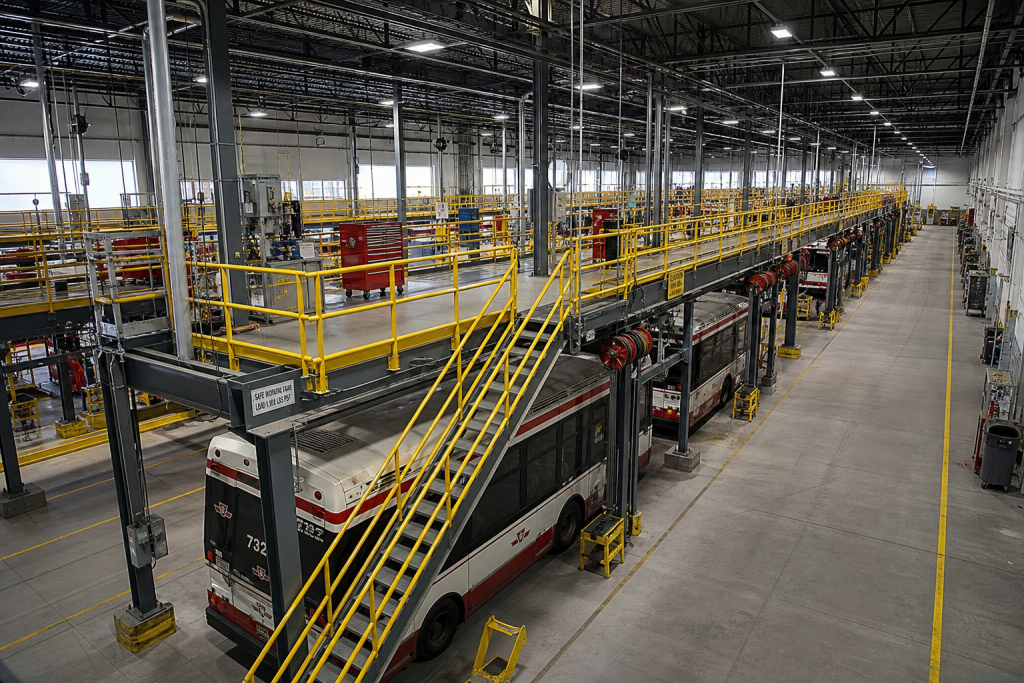
- Full-surround platforms: Complete bus access including front and rear. Best for heavy maintenance and overhauls
- Multi-bay connected systems: Catwalks between bays for high-volume operations
Step 4: Specify Safety Features
All bus scaffolding should include these OSHA-required safety features:
- 42-inch guardrails on all open sidesand ends
- Mid-rails at approximately 21 inches
- 4-inch toe boards along all open edges
- Anti-slip platform decking (serrated grating or expanded metal)
- Stair access with self-closing gates (avoid ladder access)
- Load rating placards posted at access points
For wash bay applications, add corrosion-resistant materialsand enhanced drainage.
Step 5: Plan Your Budget
Bus scaffolding pricing varies widely based on configuration:
- Single-bay, single-side: $8,000–$15,000
- Single-bay, dual-side: $15,000–$30,000
- Multi-bay connected (2-4 bays): $40,000–$80,000
- Large transit authority systems (5+ bays): $75,000–$200,000+
- Installation: Typically 15-25% of equipment cost
Consider phased installation if budget is a constraint. Start with your highest-volume maintenance baysand expand later.
Step 6: Evaluate Vendors
When comparing bus scaffolding vendors, ask these questions:
- Do you provide custom engineering and CAD drawings?
- What materials are used? (galvanized steel vs. painted)
- Is the system modular and expandable?
- Do you handle installation?
- What warranty is included?
- Can you provide references from similar facilities?
- Do you support government procurement processes?
Get Expert Help
Choosing the right bus scaffolding system is easier with expert guidance. Contact Material Handling USA at (800) 326-4403 for a free consultation. We’ll assess your facility, recommend the right configuration, provide CAD drawings, and deliver a detailed quote — all at no cost.
Related Resources
- Security Cages — Explore our complete product line and request a free quote
- Mobile Shelving Systems — Explore our complete product line and request a free quote
- Industrial Mezzanines — Explore our complete product line and request a free quote