
Pallet Racking
Uprights, beams, decking, and accessories — the sizes, capacities, and specifications you need to spec a pallet racking system, plus engineering and installation from a Salt Lake City supplier.

Specify Pallet Racking That Actually Fits Your Loads
Pallet racking is a bolted or clip-together steel structure that stores palletized loads in vertical bays. Get the upright, beam, and decking selection right and the system carries your loads safely for decades. Get it wrong and you end up with bays that will not accept your pallets, beams that deflect, or a rack that fails inspection.
Material Handling USA supplies new pallet racking nationwide from Salt Lake City, and we specify every system against your actual pallet dimensions, load weights, forklift type, and building conditions. This page covers the components and specifications. If you are still deciding which type of system you need, start with our pallet rack systems guide.

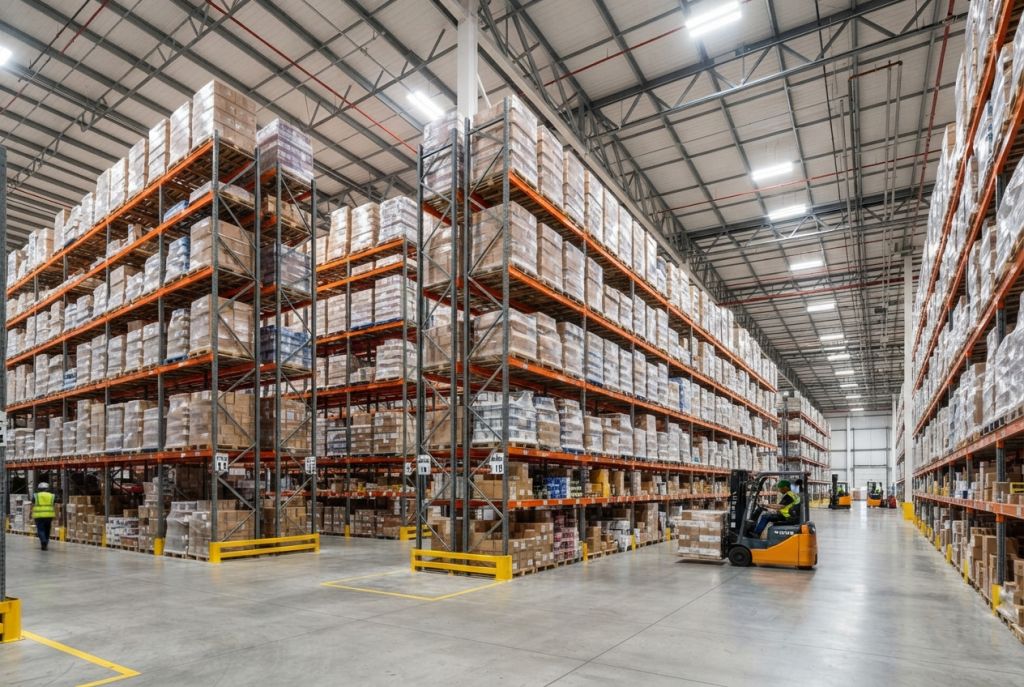
Selective pallet racking — the most common configuration
Pallet Racking Systems
All six of these systems use the same basic components — uprights, beams, and decking or rails. What changes is how deep the storage lanes are and how pallets are loaded and retrieved.
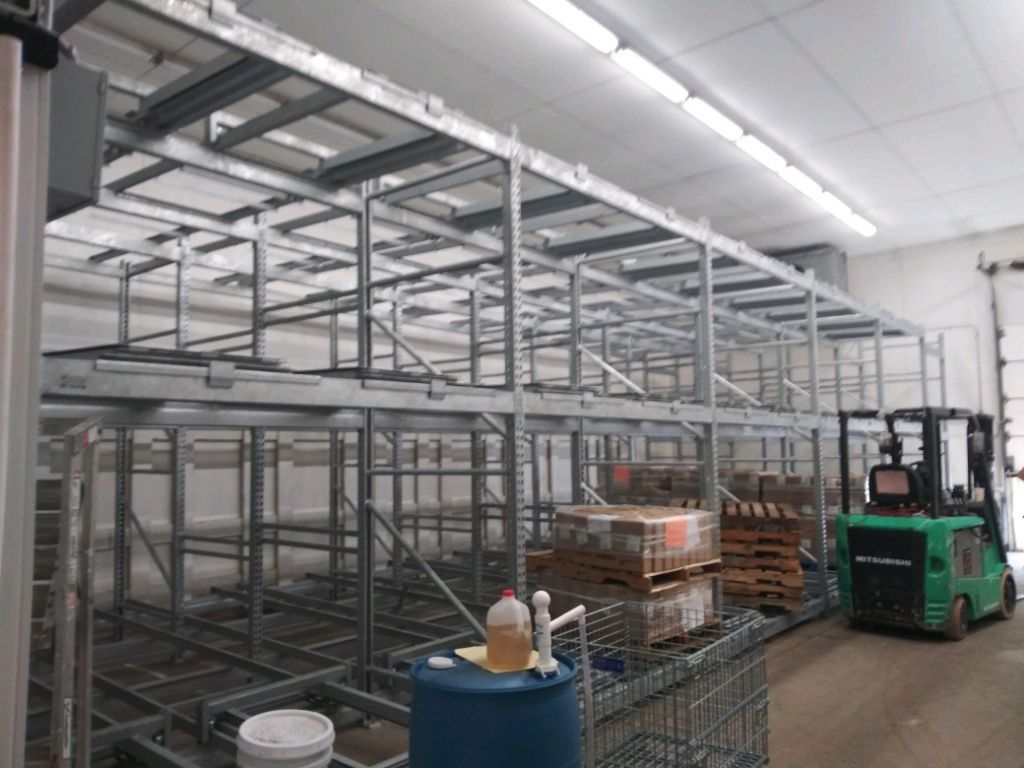
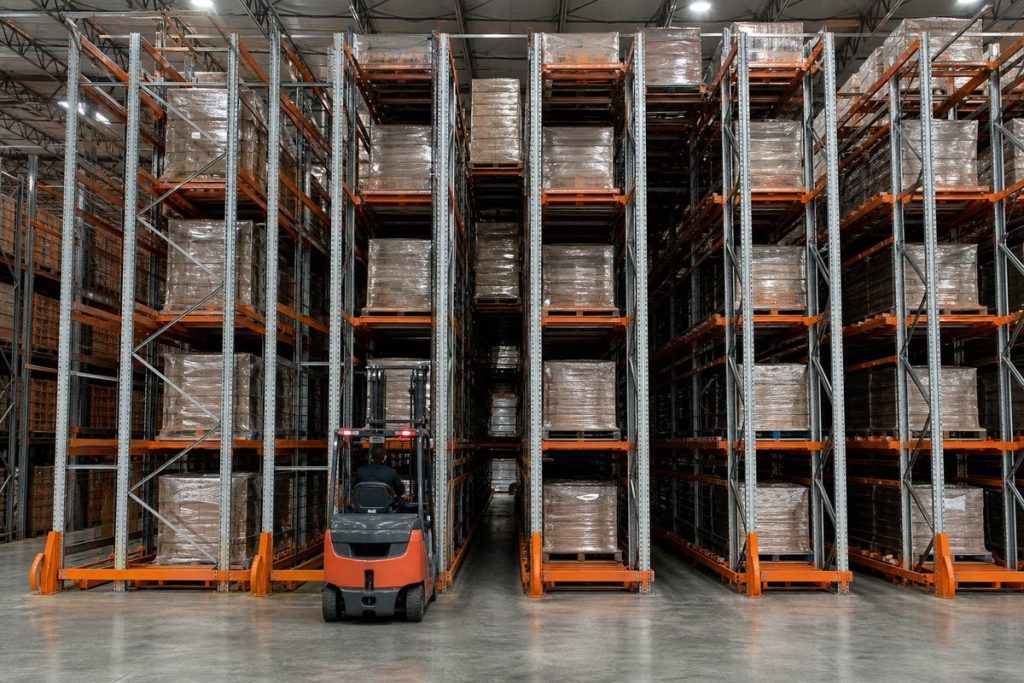
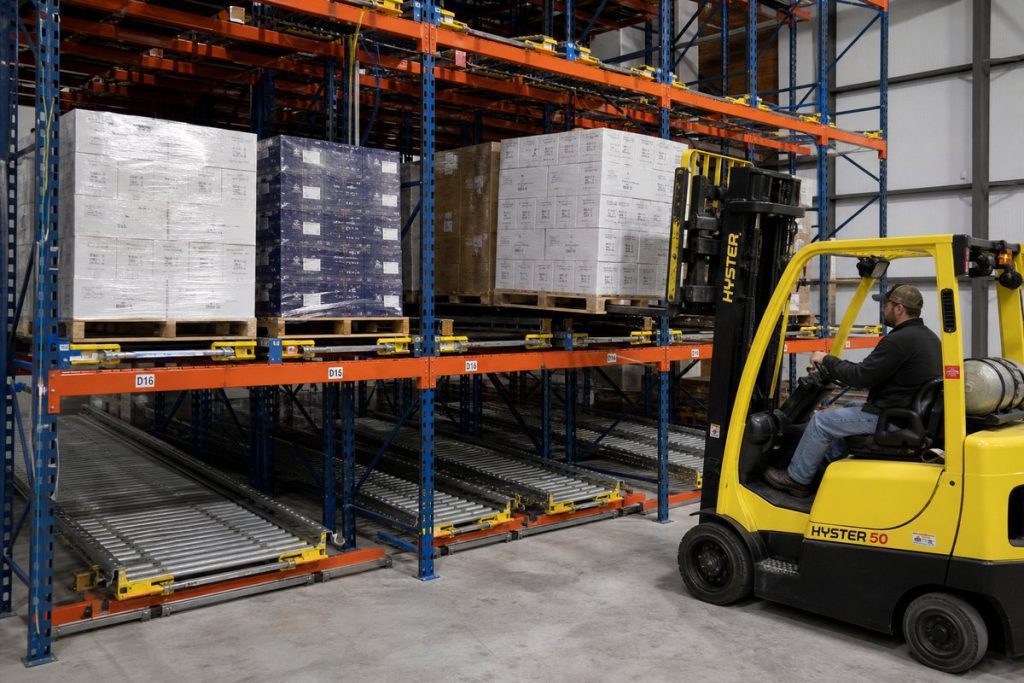
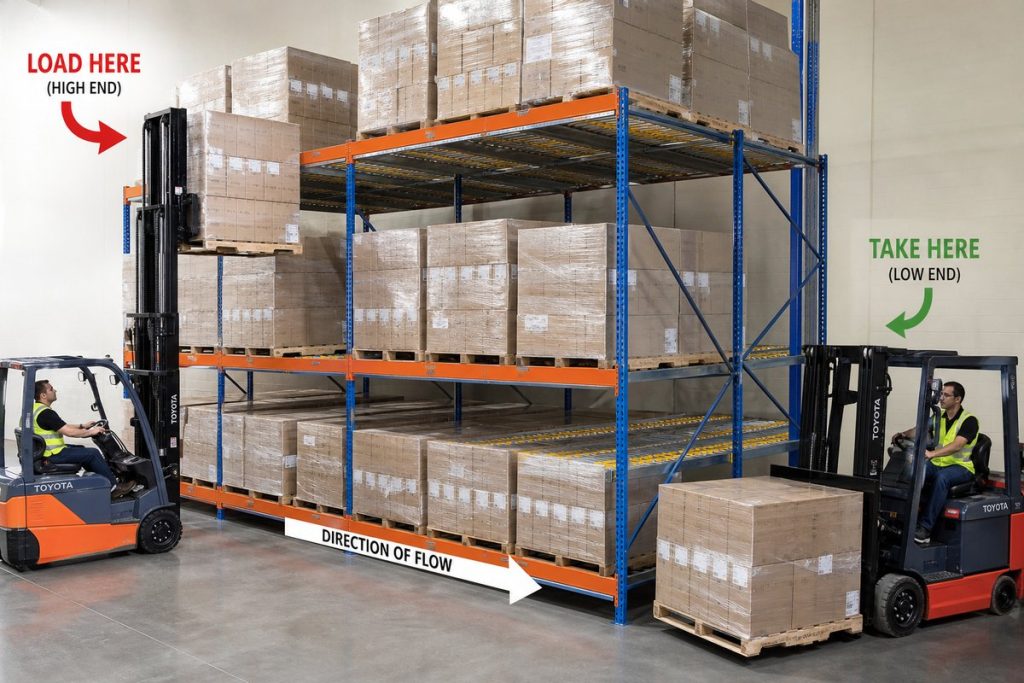
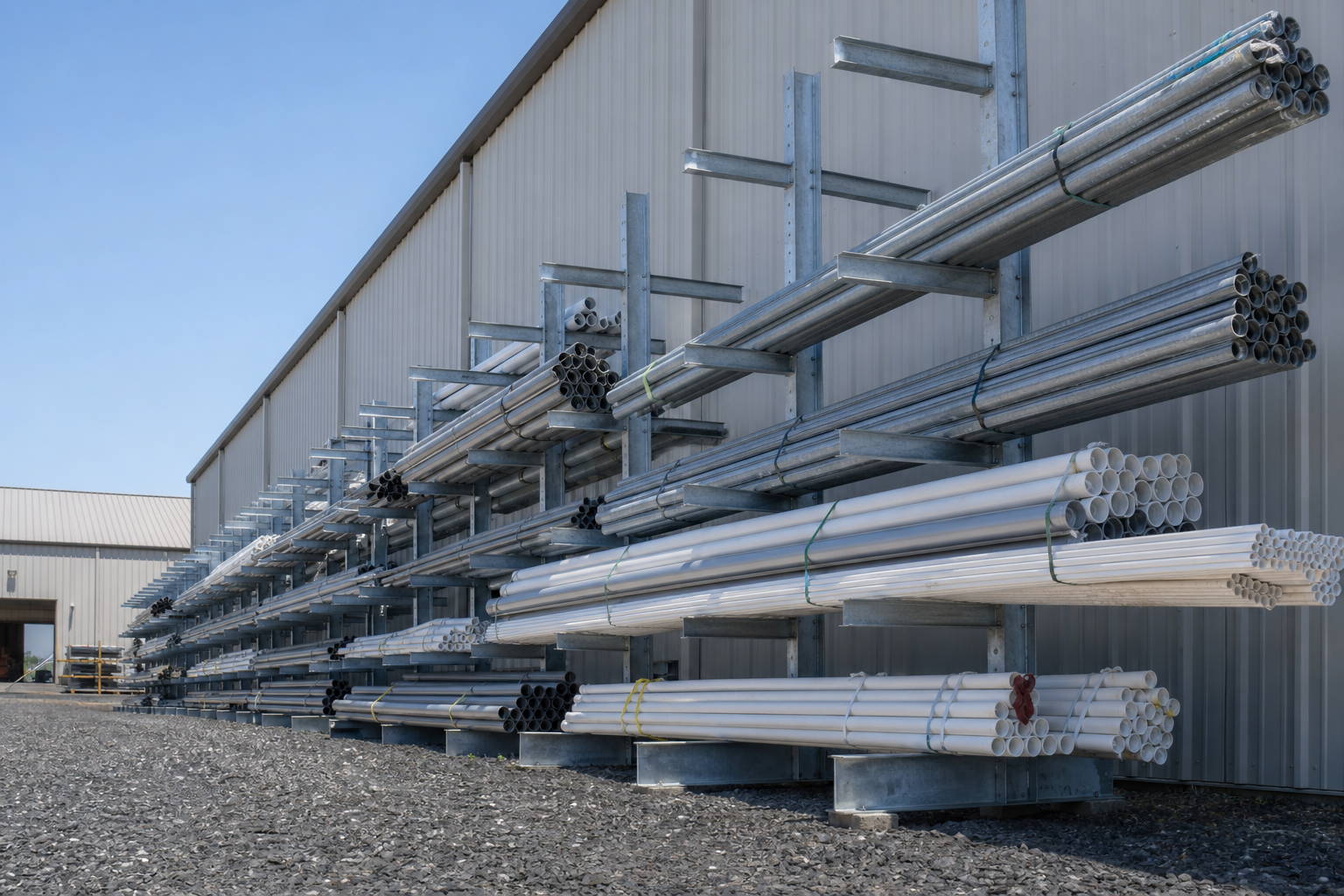
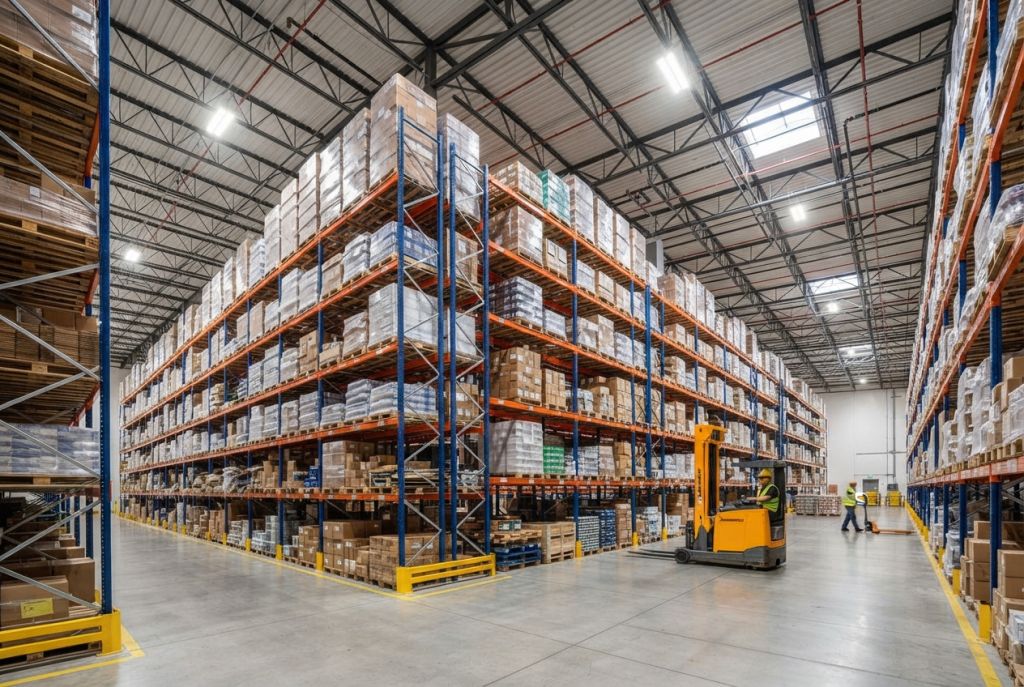
Pallet Racking Components
Upright Frames
Two columns joined by horizontal and diagonal braces, welded into a frame and anchored to the slab. The frame carries the full load of every beam level in the bay, so upright capacity — not beam capacity — is usually the limiting factor.
Horizontal Load Beams
Roll-formed step beams or box beams that hook into the upright column and lock with a safety clip or pin. Step beams have a lip that supports wire decking flush with the top of the beam.
Wire Decking
Welded wire mesh panels that sit on the beams, giving pallets and cartons a continuous surface, letting sprinkler water through, and keeping debris from falling into the aisle below.
Row Spacers & Wall Ties
Tie back-to-back rows together at the correct flue spacing, and tie single rows to the building structure where the layout calls for it.
Footplates & Anchors
Each column sits on a footplate anchored into the concrete. Anchor size, embedment, and slab thickness all factor into the engineering.
Column Protectors & Guards
Bolt-on or wrap-around guards at the base of each upright absorb forklift impact where the vast majority of rack damage happens.
Common Pallet Racking Sizes
These are the sizes we stock and quote most often. Frame depth is normally set about 6″ shallower than the pallet depth so the pallet overhangs the beams front and back; beam length is set to your pallet width plus clearance between and beside loads.
| Component | Common Sizes | Notes |
|---|---|---|
| Upright frame height | 8′, 10′, 12′, 14′, 16′, 18′, 20′, 24′ and taller | Limited by ceiling clearance, sprinkler height, and forklift lift height. |
| Upright frame depth | 36″, 42″, 48″ | 42″ is standard for a 48″-deep GMA pallet. |
| Load beam length | 96″, 108″, 120″, 144″ | 96″ holds two 40″-wide pallets; 108″ holds two 48″-wide pallets with clearance. |
| Beam face height | 3″, 4″, 4.5″, 5″, 6″ | Taller beams carry more load and deflect less over long spans. |
| Wire deck panel | 42″ x 46″, 42″ x 52″, 46″ x 46″ | Sized to the frame depth and the beam spacing in the bay. |
| Anchor bolts | 1/2″ diameter, 3-3/4″ to 4-1/2″ long | Quantity per footplate and embedment come from the rack engineering. |
Capacities always depend on the specific frame, beam, and vertical beam spacing you order. We provide the manufacturer load chart with every quote — never rely on a generic capacity number.
Measure your pallet before you order
The single most common mistake is ordering racking for a 48″ x 40″ GMA pallet and then storing oversized, plastic, or slip-sheeted loads on it. Send us your actual pallet dimensions, load weight, and overhang and we will size the bay around them.
Wire Decking and Deck Options
Most jurisdictions and most insurers want open wire decking rather than solid plywood, because it lets sprinkler water reach the loads below. Wire decking also stops small cartons and debris from dropping into the aisle.
Deck Choices
- Waterfall wire deck — the mesh bends over the front and back beams, locking the deck in place.
- Flush wire deck — sits inside the beams for a level surface, used with step beams.
- Solid steel deck — for small parts and spill containment, where sprinkler rules allow it.
- Pallet supports — cross bars instead of full decking, for pallets only.
- Timber or particle board — lowest cost, but usually restricted by fire code in sprinklered buildings.

Wire decking installed on step beams
Full detail on capacities, mesh patterns, and channel configurations is on our wire decking page.
Safety Accessories and Compliance
- ✓Column protectors and rack guards — absorb forklift impact at the base of the upright, where most damage occurs. Rack guards →
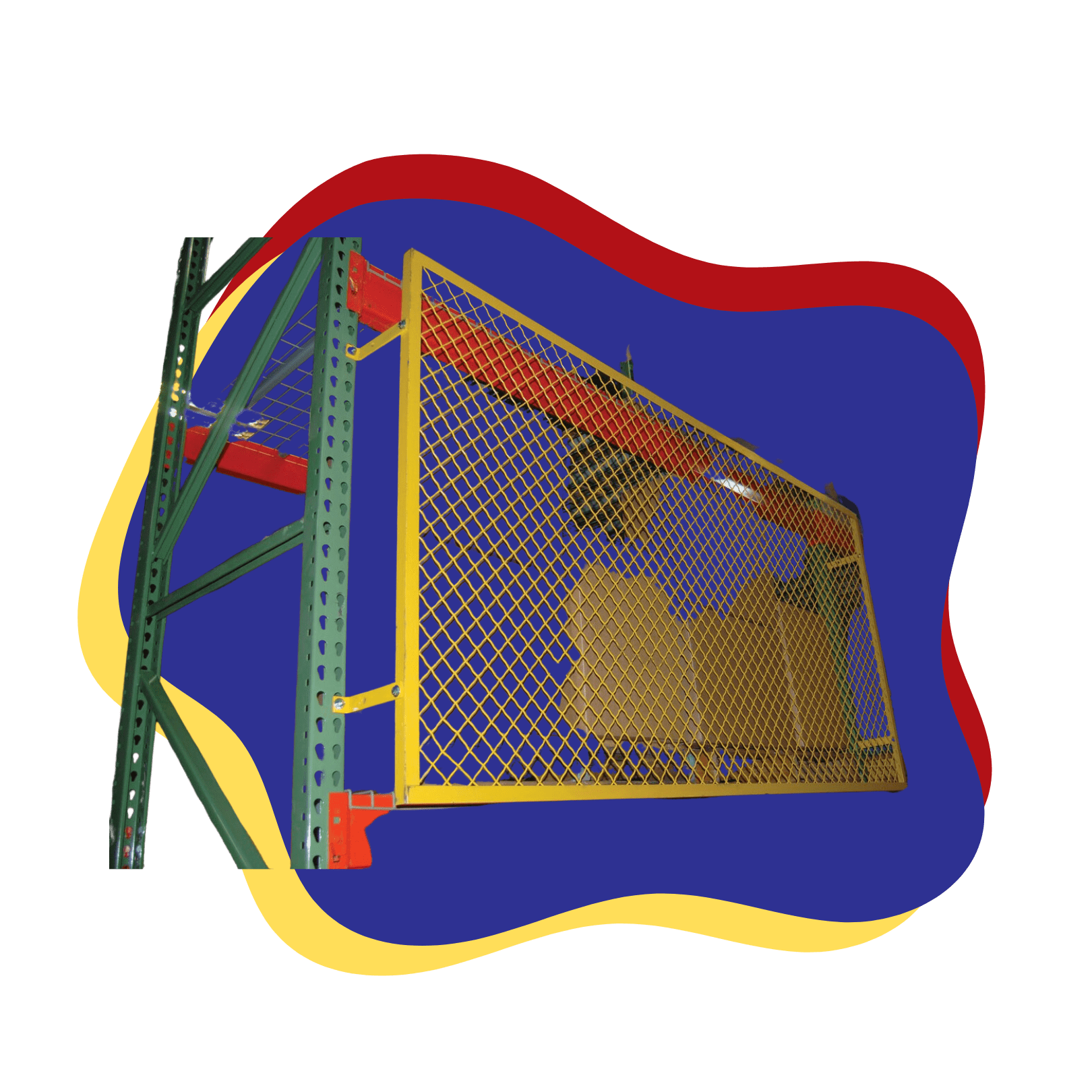
- ✓Rack netting and backing — keeps loads from being pushed out the back of a row into an aisle or work area. Rack backing →
- ✓Safety clips and pins — every beam needs its clip installed; missing clips are one of the most common inspection findings.
- ✓Load capacity signage — post the engineered capacity per bay and per beam level where operators can read it.
- ✓Anchoring — every column anchored per the engineering, with the correct anchor size and embedment. Anchor bolts →
- ✓Annual inspection and repair — damaged uprights get repaired or replaced, not ignored. Rack inspection & repair →
Installation and Project Delivery
Site & Load Review
We collect pallet dimensions, load weights, forklift type, slab thickness, ceiling and sprinkler heights, and your throughput targets.
Layout & Engineering
You get a stamped layout showing aisle widths, bay sizes, flue spacing, capacities, and anchor detail.
Quote & Lead Time
A fixed quote covering racking, decking, accessories, freight, and installation, with the current lead time.
Install & Inspect
Our crews install, anchor, plumb, and level the system, then walk it with you before handoff.
We also tear down, relocate, and reconfigure existing racking. Details on our pallet rack installation page, and cost drivers on the pallet rack cost and pricing page.
Seismic Engineering and Permitting
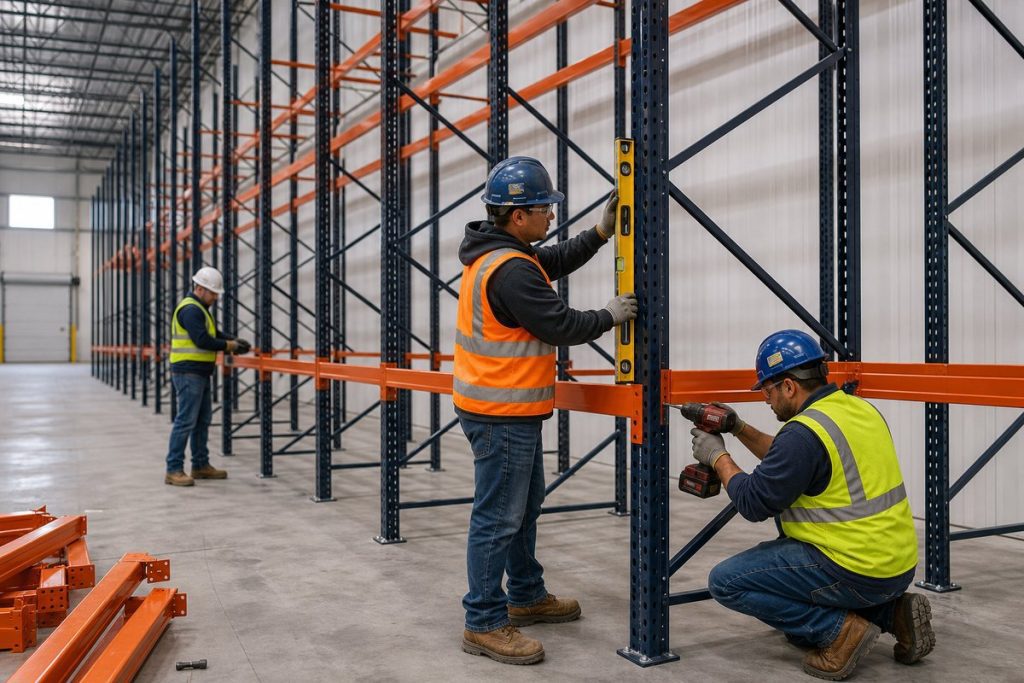
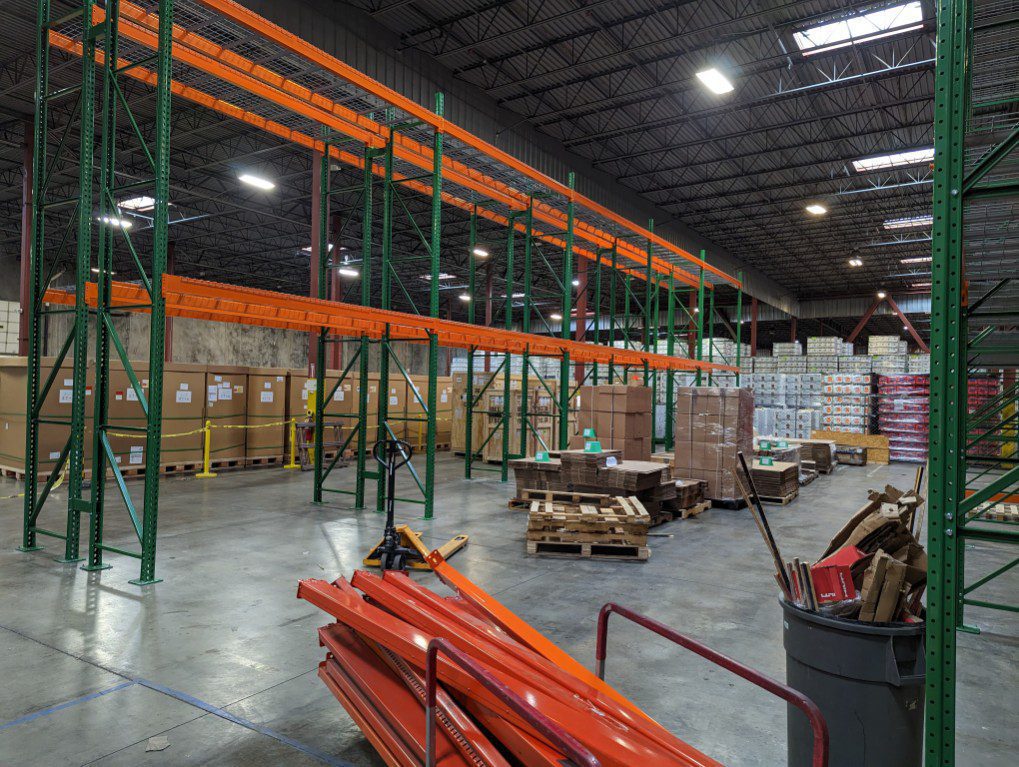
Seismically engineered and anchored pallet racking
Utah and the wider Intermountain West sit in a high seismic design category. Pallet racking over a certain height or load almost always requires stamped engineering and a building permit, and the local authority will want to see anchor detail, base plate sizing, and a seismic calculation for your specific configuration.
We handle the engineering and permit package as part of the project so the rack passes inspection the first time. If you are buying racking for a Utah facility, start with our Utah pallet rack page or Salt Lake City pallet rack page.
Pallet Racking FAQs
What is the difference between pallet racking and pallet rack?
What size pallet racking do I need?
How much weight can pallet racking hold?
Does pallet racking need to be anchored?
Do I need a permit for pallet racking?
Should I buy new or used pallet racking?
Can pallet racking be reconfigured later?
How long does pallet racking take to get?
Related Products & Resources
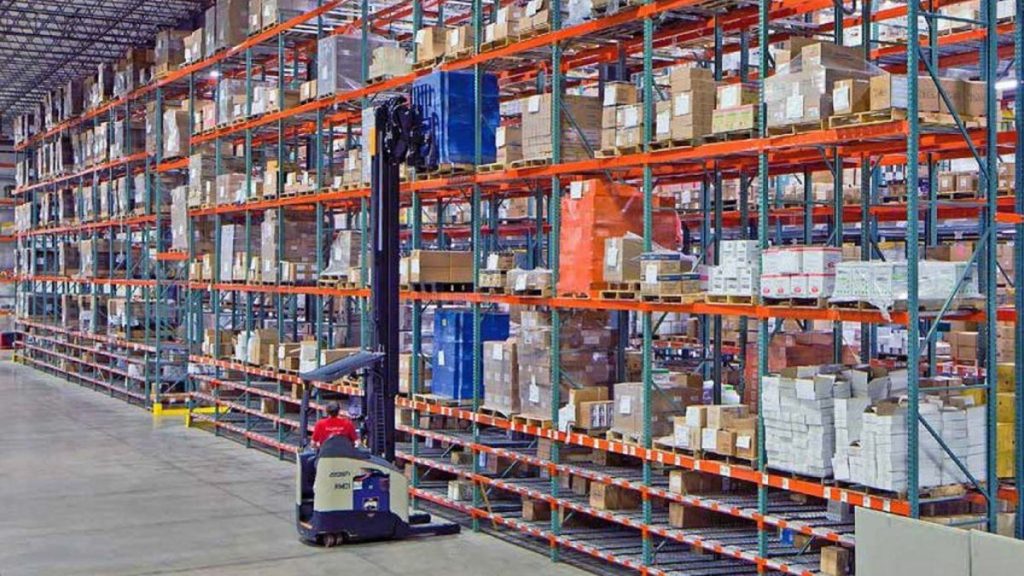



Get Pallet Racking Sized and Quoted
Send us your pallet dimensions, load weights, and building details. We will return an engineered layout, capacities, and a fixed quote.
Plan this before you buy
Free planning tools you can use right now — results on screen first, no gate to see them.
- Rack Damage Photo AssessmentDescribe or photograph rack damage and get a triage severity, the applicable inspection references, and what to isolate before repair.