
ACDI Energy Services: Plan Commercial EV Charging
Commercial EV charging starts with a practical question: who will charge here, and how long will their vehicles stay? A workplace parking area, a visitor destination and a fleet depot have different operating needs. Material Handling USA can help organize your facility requirements and discuss ACDI Energy Services charging equipment as part of a defined project scope.
ACDI's published offering includes electric vehicle charging hardware and charging-management software. This guide focuses on those documented capabilities and the decisions a facility should resolve before requesting a proposal. Equipment selection, electrical capacity, parking layout, connectivity and ongoing operation need to work together. A charger photograph or maximum power figure alone cannot establish the right system for your location.
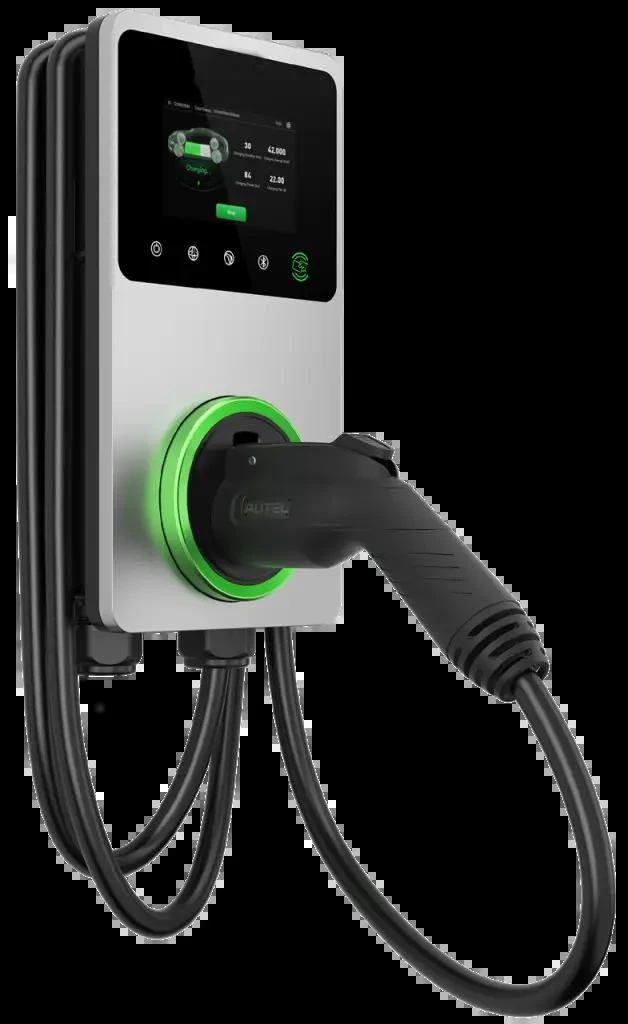
Define the users and charging opportunity

Begin by describing the vehicles and their normal parking patterns. Employees who remain on site for a full shift may have a different charging opportunity from visitors stopping briefly. Fleet vehicles add another consideration: the next departure and the energy needed to complete the assigned work. Separate these groups before comparing equipment.
Record what is known today and what remains an estimate. An employee survey, vehicle list or review of existing parking use can provide a starting point. Avoid treating a general forecast of EV adoption as proof of demand at a particular property. The useful question is how many vehicles are likely to need charging during the same period.
Build a simple operating profile
- Identify employee, visitor, resident or fleet users.
- Record typical arrival, departure and parking duration.
- List known vehicle types and charging connections.
- Estimate simultaneous demand and identify uncertain assumptions.
- Name the person responsible for operating the charging service.
Decide whether spaces will be assigned, shared or available to the public. Discuss what happens when a vehicle finishes charging but remains parked. These operating choices affect signage, communication and the number of usable charging positions, even when the equipment itself is working correctly.
Prepare a short description of the desired service before discussing a model. For example, a workplace may want dependable charging during a shift, while a fleet operation may need a documented departure schedule. These are planning examples, not promises about the output of a particular charger. The supplier should evaluate the proposed equipment against your actual operating profile.
Compare documented charging equipment families
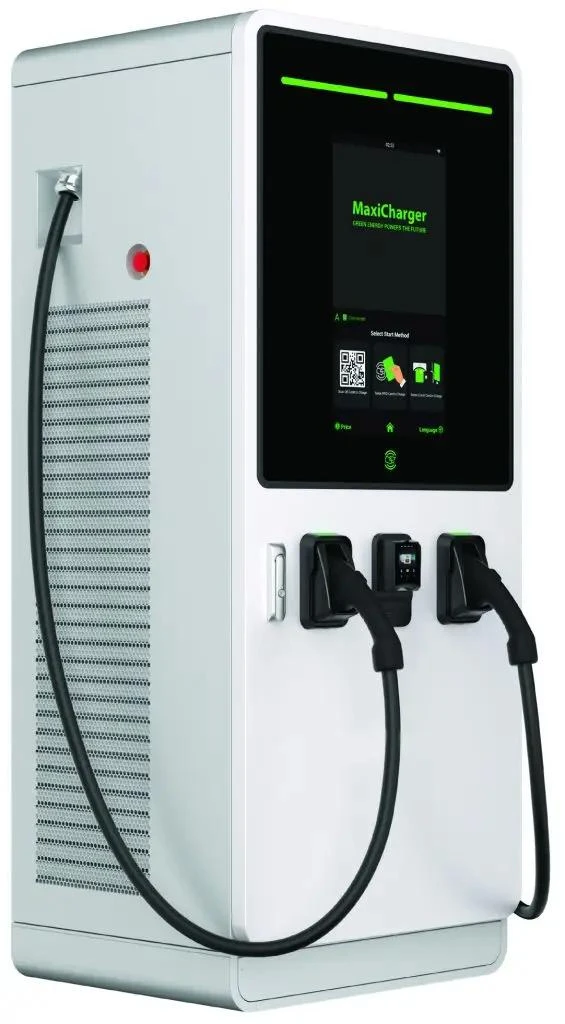
ACDI's published product range includes Autel AC charging equipment and DC charging systems, as well as a Lincoln Electric DC offering. Its listed Autel families include AC Elite Business, AC Pro, AC Ultra, DC Compact and DC Fast. Confirm the exact model, connector configuration and current availability in the proposal.
AC and DC charging should be compared against vehicle capability and available dwell time. Higher advertised output does not mean every vehicle receives that output throughout a session. The vehicle, charging conditions, site power arrangement and selected configuration all influence the result. Request a project-specific explanation of the expected service rather than a universal miles-per-minute claim.
Compare the complete configuration
| Selection item | Information to request |
|---|---|
| Equipment identity | Manufacturer, model and current technical literature |
| Connections | Vehicle compatibility and supplied connector arrangement |
| Charging positions | Number of vehicles served and power-sharing behavior |
| Installation | Mounting, clearances and environmental requirements |
| User interface | Session start, status information and payment options |
Keep AC and DC alternatives in separate proposal lines when their installation scope differs. A lower equipment price can be misleading if the associated electrical work, communications or service requirements are not included in the comparison.
Ask the supplier to identify which features are standard and which depend on an accessory, software service or site configuration. Photos on this page illustrate equipment families; they do not establish that every pictured feature is included in every order. Retain the agreed configuration with the purchasing record so later substitutions can be reviewed against the same requirement.
Review electrical capacity and installation conditions
Supply
Review available electrical capacity.
Routing
Coordinate the site connection path.
Scope
Name each installation responsibility.
Involve the facility's qualified electrical professionals and utility contacts early. Provide the proposed location, intended charging demand and available information about the existing electrical service. The review should establish what can be supported, what additional work is needed and who is responsible for each part of that work.
Do not size a project by multiplying a charger's marketing rating by a guessed number of spaces. A proper electrical design needs the actual equipment, operating assumptions and applicable site requirements. Where power management is proposed, ask how it changes the charging service available during simultaneous use.
Document the site interfaces
Record the electrical source, likely routing, distance to the proposed charging area and any known constraints on excavation or access. Include existing pavement, landscaping, drainage and nearby services. Photographs can explain the setting, but field verification remains necessary before installation details are finalized.
Separate the equipment supply from service upgrades, foundations, trenching, restoration and final connections. A clear responsibility schedule helps prevent a charger from arriving before the site is ready. Identify the approvals and inspections required for the actual project through the responsible local professionals.
Ask for a sequence that includes design review, utility coordination where applicable, site preparation, equipment delivery and commissioning. Do not assume equipment lead time is the same as the complete project timeline. If a dependency is unresolved, record it as an open item with an owner and a decision date.
For phased projects, discuss future expansion during the initial review. Reserve space and consider future routing where appropriate, while distinguishing planned provisions from equipment being purchased now. The objective is a coherent facility plan, not an unsupported promise that any system can expand without additional work.
Plan the parking area around everyday use
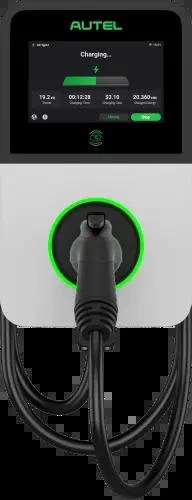
A charging location needs more than an empty parking space. Review how drivers approach, park, connect and leave, and how pedestrians move through the same area. Consider the position of vehicle charging ports and the supplied cable arrangement when reviewing equipment placement with the designer and manufacturer.
Keep the proposed layout connected to the wider property plan. Existing entrances, loading areas, service access and pedestrian routes should remain understandable. Charging spaces near a busy workplace entrance may serve users conveniently, but convenience must be assessed alongside the actual installation and circulation requirements.
Include operations and maintenance access
- Show the charging equipment and intended parking positions.
- Identify pedestrian routes and applicable accessibility requirements.
- Review cable handling and the stored connector position.
- Allow the access required for equipment servicing.
- Include lighting, markings and site operating instructions.
Discuss weather exposure, snow clearing, landscaping and routine cleaning with the people maintaining the property. Equipment selected for an exterior location still needs installation and care consistent with its instructions. A location that is difficult to maintain can create avoidable operational problems after the installation team leaves.
Review the user experience from the driver's perspective. The location, charging rules and route for reporting a problem should be easy to understand. Ask whether visitors need instructions before arrival and whether staff need a separate process for fleet or assigned vehicles.
For a facility entrance project that also includes an occupied booth, our guard shack specification guide covers the building brief. Coordinate the projects where they share services or circulation, while retaining the separate requirements of each system.
Specify software, access and reporting needs
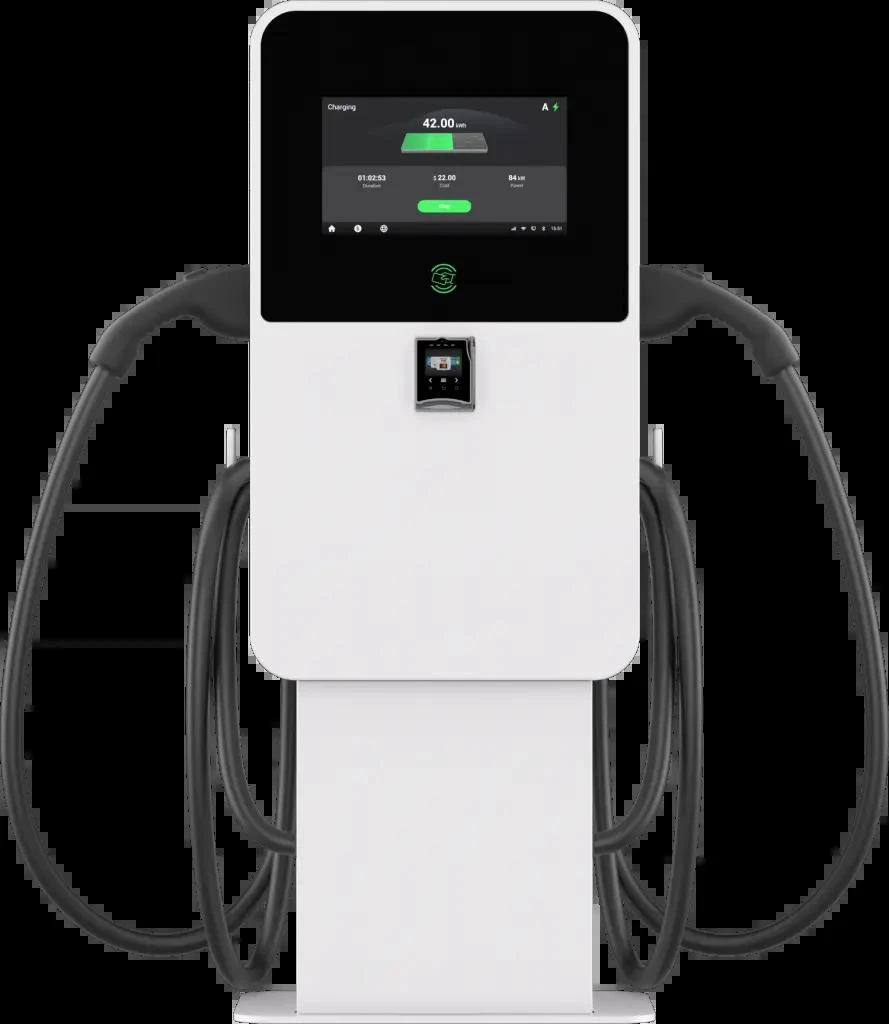
ACDI presents charging-management software alongside its equipment offering. Review the current ACDI Energy software information with the supplier, then identify the functions needed for your site. The proposal should state the platform, included services and any recurring charges rather than referring vaguely to a smart charger.
Decide who can start a session and who can administer the system. Employee-only charging, public access and fleet use may require different account arrangements. Describe the intended operating rules and ask the supplier to demonstrate the relevant workflow for the selected hardware and software combination.
Ask operational questions before purchase
What does a driver see when a session cannot start? Who receives a fault notification? Can the site operator identify an unavailable charging position? What happens when network connectivity is interrupted? These questions should be answered for the proposed configuration, without assuming every product behaves the same way.
List the reports the facility actually needs, such as charging sessions, energy use or availability information. Ask how records can be accessed and which administrator permissions are required. Coordinate account ownership, data access and connectivity with the organization's IT and operating teams.
If charging fees are part of the plan, request a clear description of payment handling, transaction charges and responsibilities. Do not build the financial case around gross charging revenue alone. Electricity costs, service subscriptions, maintenance and the level of real demand all affect the operating result.
Keep the agreed software scope with the equipment schedule. The people receiving the installation should know which functions were purchased, who owns the administrator account and how support is requested after handover.
Compare costs and implementation responsibilities
Equipment
Identify the exact configuration.
Site work
Include installation and restoration.
Operation
Document recurring costs and support.
Evaluate the complete project, including equipment, installation, connectivity, software and ongoing service. Ask each proposal to identify exclusions and assumptions. Two offers for the same number of charging positions may include very different amounts of site work or support.
Distinguish one-time costs from recurring costs. Document expected electricity use using a stated operating scenario, and have the appropriate utility or project specialists explain the applicable rate structure. Avoid presenting a generic payback period as a guaranteed result for your property.
Use a consistent comparison schedule
| Cost or responsibility | Confirm in the proposal |
|---|---|
| Hardware | Exact equipment, mounting and accessories |
| Site work | Electrical work, civil work and restoration |
| Software | Included functions, subscriptions and account setup |
| Commissioning | Testing, activation and user handover |
| Support | Warranty terms, service contacts and response arrangements |
If incentives are being considered, have the responsible program administrator confirm current eligibility, application timing and equipment conditions. Treat unapproved funding as an assumption, not a committed discount. Purchasing equipment before understanding a program's requirements can change the expected economics.
Name the owner of each installation task and the person authorized to approve changes. Agree how unexpected site conditions will be handled. A clear scope makes it easier to compare proposals and prevents informal changes from becoming undocumented commitments during the work.
Prepare for commissioning and ongoing operation
Plan the handover before installation begins. The facility should receive the equipment identity, relevant instructions, agreed configuration and service contacts. Identify who will demonstrate the charging workflow and who will confirm that the delivered system matches the approved scope.
Include representative user scenarios in the commissioning discussion. Review starting and ending a session, accessing the operator interface and reporting a problem. Ask the project team to define the acceptance checks appropriate to the selected equipment and site rather than relying only on whether an indicator light turns on.
Keep a usable operating record
Record charging-position identifiers, administrator ownership, support arrangements and the location of the project documents. Establish who reviews operating concerns and how maintenance information reaches the responsible team. Retain manufacturer instructions so later staff changes do not leave the system dependent on one person's memory.
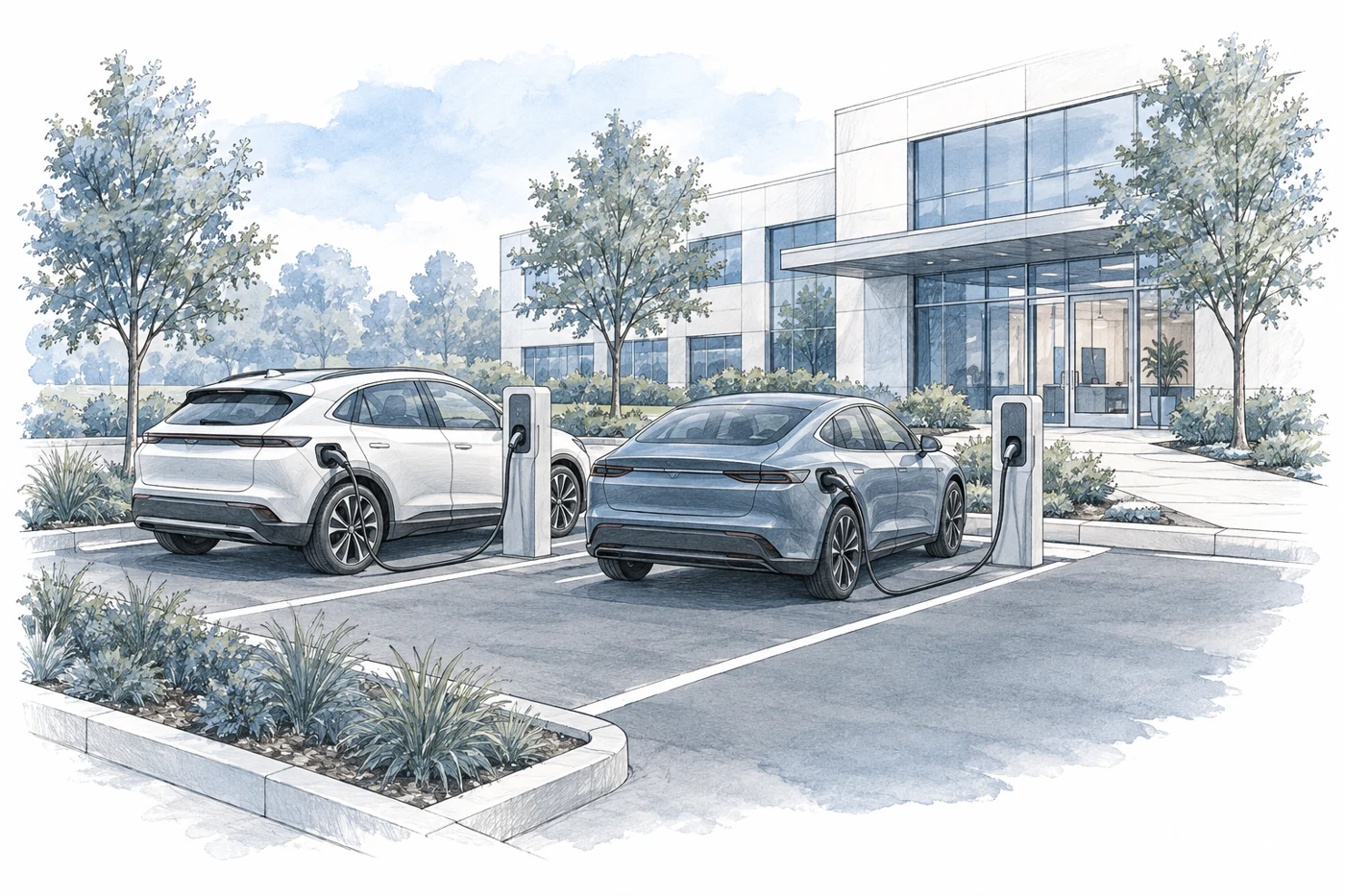
The supporting drawing is an AI-generated planning concept, not an ACDI product specification or a completed MH-USA installation. Actual layouts, electrical work and equipment configurations must come from the reviewed project information.
To begin, send Material Handling USA the site location, photographs, intended users, vehicle information and desired charging schedule. Include known electrical constraints and your expected timing. Contact our team to turn those requirements into a focused discussion of equipment, site work and operating responsibilities.
Frequently asked questions
What does ACDI Energy Services offer?
Its published offering includes EV charging equipment and charging-management software. Confirm the current manufacturer, model and service scope for your project rather than assuming unrelated renewable-energy services are included.
Should our site use AC or DC charging?
Compare the vehicles, parking duration, departure requirements and electrical conditions. The appropriate equipment depends on that operating profile and the reviewed installation scope.
Will every vehicle charge at the advertised maximum power?
No. Vehicle capability, charging conditions, site power and equipment configuration influence the output during a session. Ask for an explanation relevant to the vehicles you intend to serve.
Can charging spaces be reserved for employees?
Describe the intended access policy to the supplier. Confirm how the selected hardware and software support that policy and what account setup or services are required.
Are installation and software included in the equipment price?
They must be stated in the proposal. Request separate equipment, site-work, software and support lines, including recurring charges and exclusions.
What should we provide for an initial discussion?
Share site photographs, intended users, vehicle types, parking duration, known electrical information and desired timing. Identify who will operate the system after installation.
Plan charging around your facility’s needs
Share your application details, photographs and requirements with Material Handling USA to start a focused project discussion.