A Utah food distributor can outgrow a cooler room long before the building feels full. Forklifts start waiting on each other, pallets block airflow, and the freezer becomes a daily puzzle instead of a controlled system. That's usually the point where buyers start researching cold storage pallet racking for Utah food distributors and realize the choice isn't just about fitting more pallets.
The key is matching rack layout to temperature zone, product mix, lift truck movement, and local code. A freezer holding deep reserve inventory needs something different from a mixed refrigerated pick area with frequent turns. If your team wants a layout that supports both storage and workflow, the details matter early.
Who This Guide Helps and What Cold Storage Racking Solves
A typical Utah operation might receive refrigerated product in the morning, move frozen pallets into reserve storage by midday, and build mixed outbound loads before the last truck leaves. The rack system sits in the middle of all of that. If it's wrong, every step gets harder.
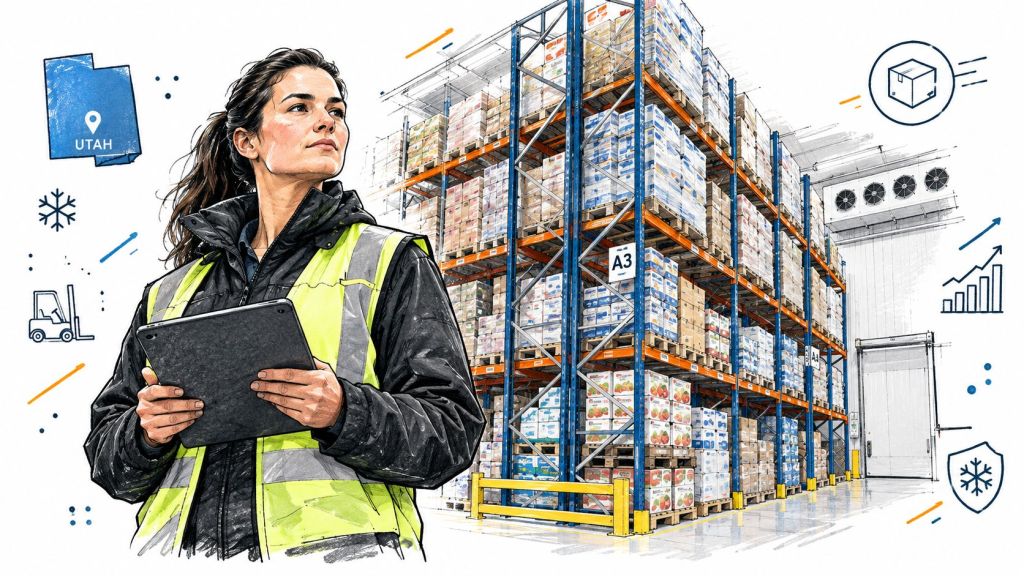
This guide is for Utah facility managers, operations managers, maintenance teams, and procurement buyers who need a practical way to choose racking before they request pricing. It also helps teams that already know they need racks but don't yet know whether selective, drive-in, pushback, or pallet flow makes the most sense.
Racking solves a workflow problem
Cold storage racking isn't generic shelving. It's an operating system for pallets. In a food distribution setting, that system has to support access, density, sanitation, impact resistance, and temperature control at the same time.
Utah's cold-chain footprint is still limited compared with larger distribution states. The 2026 Utah Food Systems Study reported 12 refrigerated warehousing and storage establishments in the state versus 323 general warehousing and storage establishments, and it noted that cold storage is concentrated in urban areas with rural cold-chain capacity absent in production-concentrated counties. That makes layout decisions more important because available cold space can't be treated casually.
Practical rule: In a cold room, every wasted cubic foot is space you still have to refrigerate.
Teams that are also cleaning up purchasing, receiving, and shipment visibility often pair storage redesign with better data flow. For that side of the operation, EDI solutions for logistics can help operations managers think through order, shipment, and inventory coordination across the cold chain.
What buyers usually need next
Most buyers don't need a long list of rack specs first. They need a way to narrow the field and prepare an accurate quote request. That usually starts with the storage zone, pallet pattern, and lift truck path. If you're reviewing options for a freezer or cooler project, cold storage warehouse solutions is a useful next step for layout discussions, free quotes, and no-obligation design help. For an example of how this plays out in practice, see how we handled warehouse racking for a Utah food ingredient manufacturer.
What Utah Food Distributors Typically Store and Handle
Cold food distribution looks simple from the outside. Pallets come in cold and leave cold. Inside the warehouse, the operation is more varied.
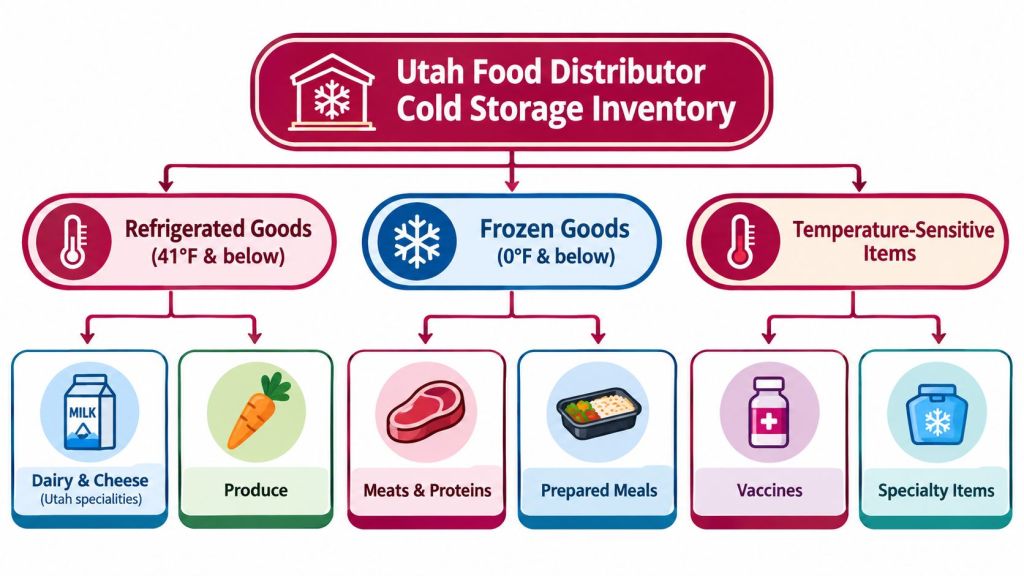
Temperature bands shape the rack choice
Utah food distributors handling refrigerated, potentially hazardous food must keep it at 41°F or below under Utah food safety rules. Frozen storage commonly runs at 0°F or below, while refrigerated storage is commonly kept in the 32°F to 40°F range according to cold-chain warehousing guidance.
Those temperature bands affect more than the refrigeration equipment. They influence aisle behavior, condensation risk, air movement, and how often product is moved. A mixed cooler with frequent picks may need faster access. A deep frozen reserve area may favor density.
What's usually on the pallets
Food distributors often handle a mix of:
- Refrigerated staples such as dairy, produce, prepared foods, and short-hold items
- Frozen goods such as proteins, packaged meals, and long-hold inventory
- Mixed service pallets where outbound orders combine different SKUs and different movement speeds
- Temperature-sensitive items that need tighter handling discipline because repeated moves expose them to door openings and zone changes
One common mistake is choosing racks by product category alone. A pallet of frozen meat in a slow-moving reserve lane and a pallet of frozen prepared meals in a fast-turn shipping pattern may need different storage logic even though both live in a freezer.
Beverage distributors handling cans, bottles, and kegs face a similar mix of load types and rotation needs, just without the temperature-band problem. See beverage distribution pallet racking in Utah for how those loads change rack selection.
Think of the cold room like an expensive refrigerator
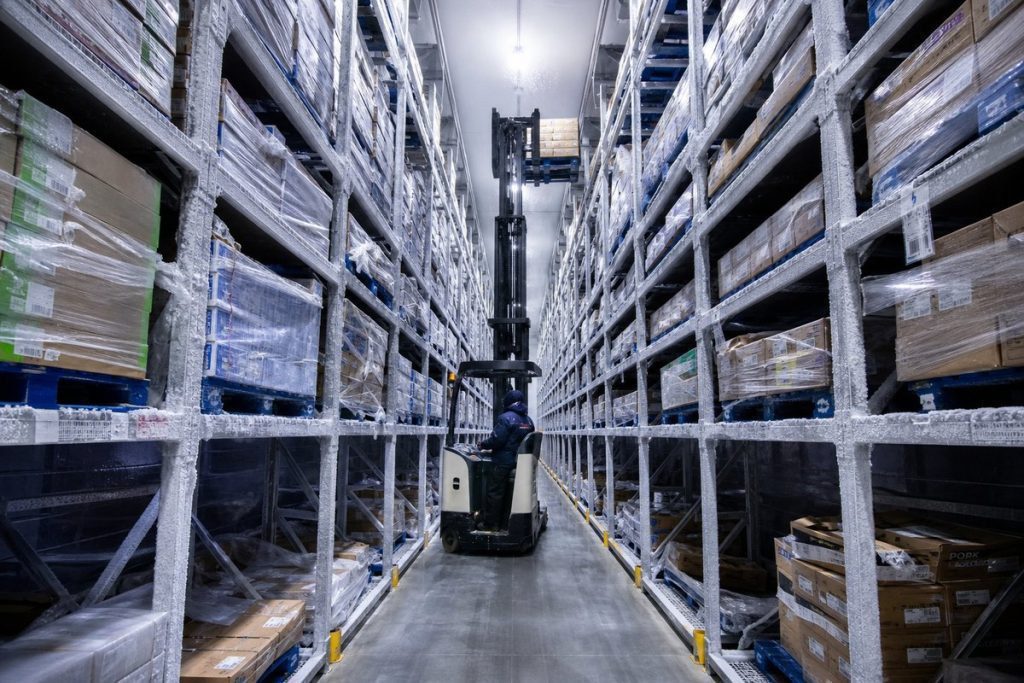
A cooler or freezer is like a very large refrigerator that your forklifts keep opening. When pallets are staged badly, beams are set poorly, or loads block circulation, the room has to work harder.
That's why airflow matters. So does sanitation. Freeze-thaw transitions near doors can change conditions fast, and heavy traffic zones tend to take more abuse than quiet reserve lanes.
A rack system in a cold room should help the refrigeration system do its job, not force it to fight around blocked aisles and crowded pallet faces.
The best starting questions are simple. How many SKUs need direct access? Which pallets sit longest? Which zone gets hit hardest by lift trucks? Those answers usually matter more than a brochure full of generic storage claims.
Equipment Options That Fit Cold Storage and Their Trade Offs
No single rack type wins every cold storage project. The right answer depends on whether you need selectivity, density, FIFO flow, LIFO flow, or a blend.
Four common configurations

Selective pallet rack fits operations that need direct access to many SKUs. It's easy to understand, flexible to re-slot, and useful in cooler pick areas or mixed inventory zones. The trade-off is lower density than deep-lane systems.
Drive-in rack is often used when pallet count matters more than direct access. It can work well in frozen reserve storage with lower turnover and larger blocks of similar product. The trade-off is slower selectivity and more forklift interaction inside the rack structure.
Pushback rack stores pallets several positions deep while keeping loading and unloading from the aisle face. It works well when you want better density than selective but still need faster access than drive-in. The trade-off is that it follows LIFO logic, so it won't fit every product rotation plan.
Pallet flow rack supports FIFO handling and can be useful for perishable goods when flow sequence matters. It can improve lane discipline and access, but layout and pallet consistency become more important.
Technical guidance for cold environments also points to durability concerns. Cold storage racking guidance notes that low temperatures, condensation, and corrosion raise failure risk, so structural steel, corrosion-resistant finishes, and impact-tolerant components are often preferred in busy freezer aisles.
| Configuration | Best For | Density vs Access | Cold Storage Consideration |
|---|---|---|---|
| Selective | High SKU variety and frequent access | Lower density, highest accessibility | Useful where quick picking and slot changes matter |
| Drive-in | Deep reserve storage with similar pallets | Higher density, lower selectivity | Needs strong impact resistance because forklifts enter the rack |
| Pushback | Medium to high density with aisle-face loading | Balanced density and access | Good for cold rooms where aisle efficiency matters |
| Pallet flow | FIFO inventory and lane discipline | High density with controlled flow | Works best when pallet consistency and rotation are important |
Density is only part of the story
Many articles stop at “maximize space.” That's too simple for Utah food distribution. The better question is whether a denser layout reduces refrigerated volume enough to justify slower access, more complex replenishment, or different labor flow.
Buyer check: Ask how each option affects energy per pallet position, replenishment path, and damage exposure. Density alone doesn't tell you whether the operation gets easier.
If you're evaluating the refrigeration side in parallel with the rack layout, this overview on choosing a commercial refrigeration company can help your team organize vendor questions across both systems.
For operations where aisle count is the main pressure point, cold storage mobile racking may also belong in the discussion. It changes access logic, so it needs careful review, but it can be relevant where refrigerated footprint is the limiting factor.
Sizing Layout and Access Considerations to Measure Before You Quote
A Utah distributor can lose a lot of time on a cold storage project before the first upright arrives. The quote looks fine, the footprint looks close, and then the actual room gets in the way. An evaporator hangs lower than expected. A freezer lift truck needs more turning room than the cooler truck. A door swing cuts into staging. The result is a redraw, then a second quote, and sometimes a layout that solves density while raising energy cost per pallet or slowing the daily pick path.
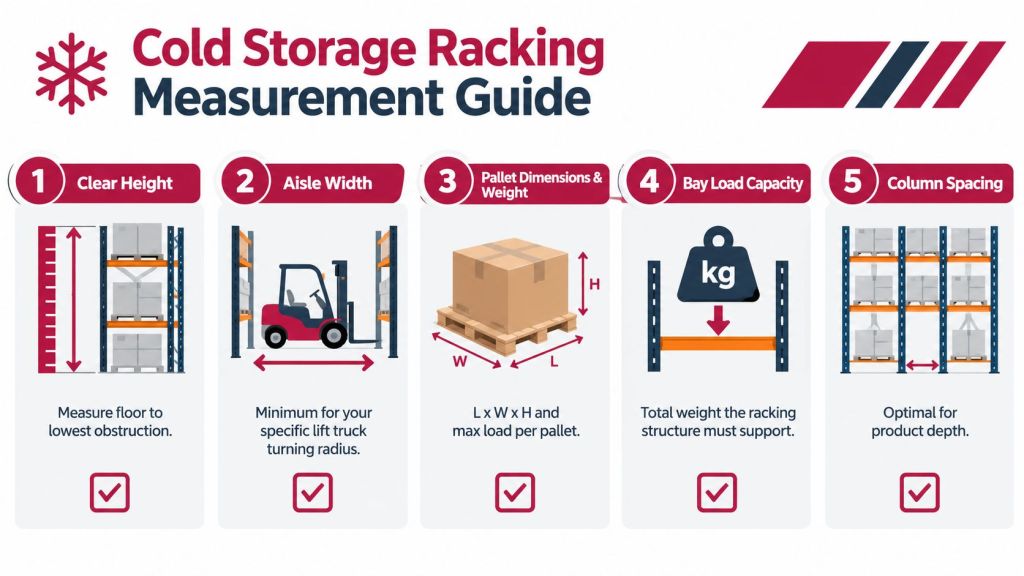
Measure the room as it operates
Use the room in its working condition as your measuring standard. In cold storage, usable space is shaped by the things hanging into it and by the way equipment moves once the room is cold.
Start with clear height from the floor to the lowest obstruction, not the roof deck. In many Utah cooler and freezer rooms, that lowest point is an evaporator, sprinkler line, light fixture, or door hardware. A few inches matter because they can remove an entire beam level.
Then look at access as a movement problem, not just a drawing problem. Forklift turning radius, mast height, battery or propane configuration, and operator visibility all affect aisle width and rack orientation. Freezer travel usually needs more caution than cooler travel, so a layout that seems efficient on paper can create slow turns, hard pallet extraction, or upright impacts once temperatures drop.
What to gather before a layout review
Bring these details into the quote process:
- Clear height: floor to lowest obstruction in each storage zone
- Pallet size and loaded height: include overhang if it's common
- Pallet weight: maximum pallet load, not just the average
- Forklift model and turning needs: especially if freezer and cooler trucks differ
- Door and dock paths: how pallets enter, stage, and leave each room
- Zone conditions: cooler, freezer, or mixed transition areas
- Photos: columns, drains, doors, evaporators, and damaged floor areas
One practical test helps here. Trace your busiest pallet from receiving to putaway and back out to shipping. If that path crosses a doorway bottleneck, blocks a staging area, or forces double handling, the rack layout is working against the operation.
A strong field packet is simple. Dimensions, pallet data, forklift information, and clear photos usually answer more layout questions than a long email chain.
Capacity planning is a volume problem, not just a floor plan problem
Cold rooms are expensive space. Utah distributors often work within smaller refrigerated footprints than they would prefer, so vertical use matters, but only if the top positions are reachable, safe, and worth cooling.
That is why cube matters alongside square footage. Two layouts can occupy the same room and produce very different results. One may support the pallet mix cleanly with open airflow and usable beam elevations. Another may add nominal positions that sit too high for the truck, interfere with product overhang, or create lanes that do not match actual SKU velocity.
Freezer and cooler thresholds also change the decision. In a freezer, each additional refrigerated cubic foot carries a larger operating penalty, so the right question is often energy per pallet position, not raw slot count. In a cooler, access speed may carry more weight if turns are high and replenishment is frequent.
As noted earlier in the article, Utah cold chain planning is often constrained by available refrigerated volume. Apply that same logic inside your building. Show how much cube you use now, where empty air sits today, and whether future growth will come from deeper storage, more SKUs, or faster throughput. That gives the rack supplier enough context to quote a system that fits the room and the workflow.
Code Safety and Site Considerations That Apply in Utah
Cold storage racks in Utah have to do more than hold pallets. They have to work within seismic rules, local site conditions, and the demands of freezer traffic.
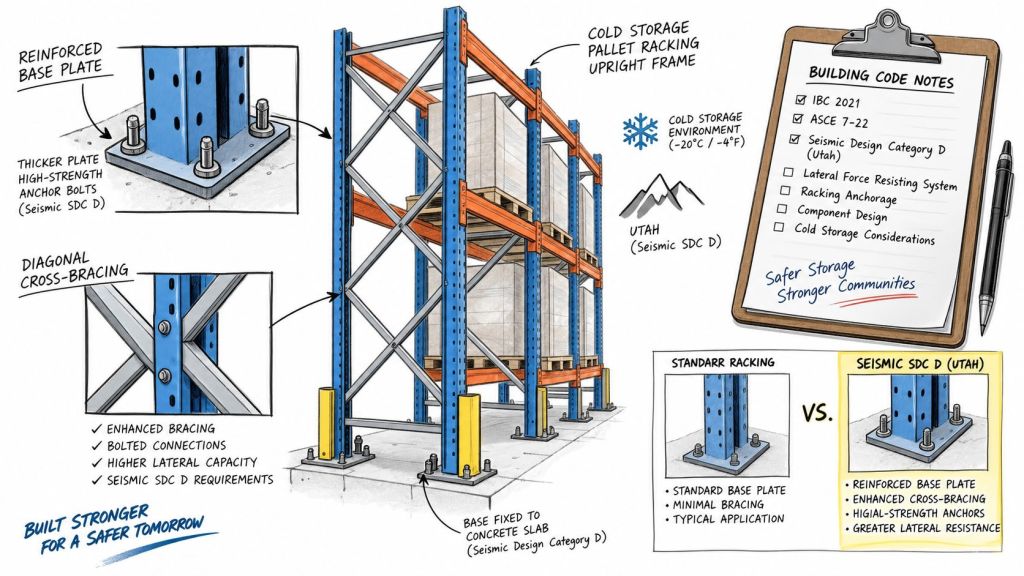
Rack systems are part of the engineered environment
Utah's Wasatch Front is classified as Seismic Design Category D, and pallet rack installations there must meet International Building Code seismic provisions and RMI/ANSI MH16.1 standards, including floor anchorage and engineering calculations when required, according to Utah pallet rack seismic guidance.
That means cold storage racks shouldn't be treated like simple shelving. They function as seismic storage systems. Engineering guidance for steel storage racks notes that effective seismic weight is driven by pallet loading characteristics, and that operators can reduce demand by lowering bay loads or keeping heavier pallets lower in the rack when seismic demands rise, as described in FEMA rack engineering guidance.
What belongs in your engineering conversation
Ask about these items early:
- Upright capacity for the actual pallet weights and elevations
- Beam-to-column connectors suitable for the rack type and loading pattern
- Anchorage details tied to the slab and local code needs
- Row ties and system bracing where required for stability
- Load placement rules so heavy pallets aren't stored carelessly at the highest levels
Heavier pallets lower in the rack can reduce overturning demand. That's a storage rule and an engineering decision at the same time.
Freezer, cooler, and ambient zones are not the same
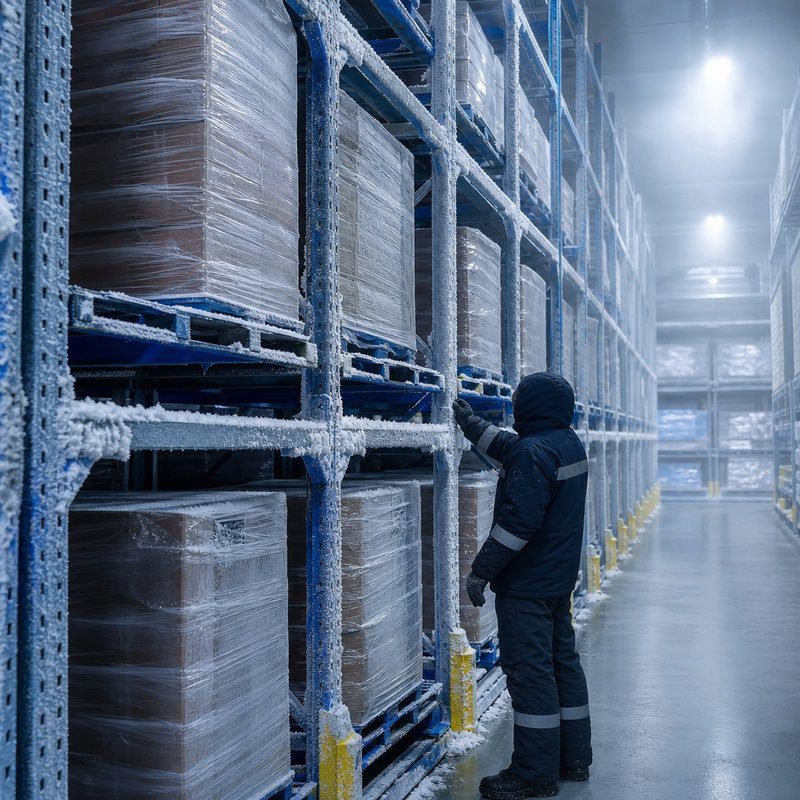
Public listings of Utah cold-storage providers show a mix of frozen, refrigerated, food-grade, and medical-grade handling in the market. That matters because corrosion, impact damage, and sanitation demands change by zone.
A freezer lane with condensation risk and hard forklift use may justify structural rack, corrosion-resistant finishes, and stronger impact protection even if a nearby cooler zone could use a lighter-duty approach. Freeze-thaw transition areas near doors often deserve extra attention because moisture and traffic meet in the same place.
For Utah buyers working around Salt Lake area site conditions, pallet rack in Salt Lake City is a useful local reference point when you're matching system design to code and installation realities.
Installation Lead Time and Service Considerations
A cold storage rack project can look simple on paper and still slow down once real site conditions enter the picture. A Utah distributor may have only a small refrigerated footprint, limited shutdown windows, and a narrow margin for error because every extra cubic foot you cool costs money.
That is why lead time is not just a purchasing question. It is an operating-cost question.
In a freezer, delays can ripple into temporary off-site storage, product moves, or rushed installation during short access windows. In a cooler, the pressure may be lower, but timing still affects how long you run with crowded aisles, partial pallet access, or an inefficient layout that raises energy use per pallet.
What usually changes the schedule
Cold rooms are less forgiving than ambient warehouse space. Crews may need to work around active refrigeration, limited dock access, sanitation rules, and slab conditions that are harder to confirm until the site is reviewed closely.
Rack choice matters too. Common selective components may be available faster than custom-height frames, deep-lane systems, corrosion-resistant finishes, or projects that need stamped seismic engineering for Wasatch Front conditions. The more specialized the system, the more important it is to define the operating zone clearly: freezer, cooler, or a mix of both.
One missed detail can add time. A beam length change, a different pallet overhang, or a slab anchoring revision can shift material needs and installation sequencing.
A smoother path to install
A good process works like staging a trailer before a route. If the pallets are loaded in the right order, the stop goes faster. Rack projects follow the same logic.
- Confirm field conditions with actual room dimensions, door clearances, pallet sizes, and lift-truck data.
- Match the rack system to the temperature zone so finish, protection, and structure fit freezer or cooler use.
- Review engineering and permit needs early for slab anchoring, seismic requirements, and any jurisdiction-specific approvals.
- Plan site prep and access windows around product relocation, refrigeration operation, and installer access.
- Sequence delivery to the room capacity so material does not arrive too early for a tight cold storage footprint.
That sequence helps control two costs at once. It reduces scheduling surprises, and it lowers the chance of ending up with a layout that wastes refrigerated cube or forces extra travel to reach each pallet.
Material Handling USA can provide free layouts, design input, and quotes for this type of project, which gives buyers a way to compare rack options before committing to the final configuration.
Early review usually creates better choices, especially for Utah facilities balancing seismic design, small cold-room footprints, and different freezer versus cooler operating demands. If you want to start that process now, the team at Material Handling USA can provide a free layout review and quote. Just reach out through the site or call (800) 326-4403.
Practical Decision Guide for Different Buyer Scenarios
Some buyers already know their pain point. They just need the most likely rack direction.
Scenario guide
You have many SKUs and frequent picks
Selective rack is often the first place to look. Ask whether the operation needs direct pallet access in most positions or if reserve inventory can move to a denser zone.
You hold deep frozen reserve stock with lower turnover
Drive-in may fit if pallets are similar and lane depth supports the inventory pattern. Check forklift discipline, rack protection, and how often operators need to reach pallets buried in the lane.
Your footprint is tight and refrigerated volume is expensive
Pushback, pallet flow, or mobile concepts may deserve review. The key question is whether reduced aisle count helps enough to offset slower access or more complex replenishment.
You run both cooler and freezer zones
A mixed solution often makes more sense than one rack type everywhere. Separate the fast-access zone from the dense reserve zone and ask where corrosion resistance and impact tolerance matter most.
The best answer is often a combination. Many cold rooms need one system for picking and another for reserve storage.
For local planning and product selection support, the Utah pallet rack hub is a good starting point if your team wants a layout review, free quote, or a direct conversation with a rack specialist.
Frequently Asked Questions About Cold Storage Pallet Racking
What is the difference between selective and drive-in cold storage racking?
Selective rack gives direct access to every pallet position, which helps when you have many SKUs and frequent picks. Drive-in rack lets the forklift enter the rack structure to store pallets several positions deep, which favors dense reserve storage of similar product with lower turnover. The right choice depends on how often you need to reach specific pallets versus how much you need to store in the same footprint.
How cold does a cooler or freezer need to be for food storage in Utah?
Utah food safety rules require potentially hazardous refrigerated food to stay at 41 degrees F or below. Frozen storage commonly runs at 0 degrees F or below, and general refrigerated storage is commonly kept in the 32 to 40 degree F range. Your rack finish, anchorage, and component choices should account for whichever zone the rack sits in.
Do cold storage pallet racks need special engineering in Utah?
Yes. Utah’s Wasatch Front is a high seismic zone, and pallet rack installations there need to meet International Building Code seismic provisions and RMI/ANSI MH16.1 standards, including floor anchorage and engineering calculations when required. Treat a cold storage rack as an engineered structure, not as simple shelving.
How much lead time should we plan for a cold storage racking project?
Lead time depends on how specialized the system is. Common selective components are typically easier to source than custom-height frames, deep-lane systems, corrosion-resistant finishes, or projects that need stamped seismic engineering. Confirm field conditions and rack specifications early so the schedule reflects the actual system, not a generic estimate.
Can we mix rack types in the same cold storage facility?
Yes, and it is common. Many cold rooms use one system for fast-access picking and a different, denser system for reserve storage. Separating the fast-access zone from the reserve zone often works better than forcing a single rack type to handle every part of the operation.
What information should we gather before requesting a cold storage racking quote?
Bring clear height to the lowest obstruction in each zone, pallet size and loaded height, maximum pallet weight, forklift model and turning needs, door and dock paths, zone conditions, and photos of columns, drains, doors, and evaporators. This packet usually answers more layout questions than a long email chain.
Does Material Handling USA offer free layout reviews and quotes for Utah cold storage projects?
Yes. Material Handling USA provides free layouts, design input, and quotes for cold storage racking projects, so you can compare rack options before committing to a final configuration. Call (800) 326-4403 or contact us through the site to start that process.
Conclusion and Next Steps for Your Cold Storage Project
Cold storage pallet racking for Utah food distributors works best when the rack system matches the operation. That means matching pallet access to SKU mix, matching density to refrigerated volume, and matching the structure to Utah seismic and site conditions. A colder room doesn't just need stronger steel. It needs better decisions about airflow, abuse resistance, and how pallets move every day.
Buyers who move this planning work forward sooner usually get a cleaner design process. They also give themselves more time to compare layouts, confirm engineering details, and avoid installation delays that show up when measurements are incomplete or system choices stay too generic for too long.
If you're ready to narrow options, view pallet rack solutions and Contact Us for a free layout review and quote. If you'd rather talk through the application first, Request a Quote or Call (800) 326-4403.
If you're planning cold storage pallet racking for Utah food distributors, Material Handling USA can help you compare configurations, review site measurements, and build a quote around the way your cooler or freezer operates. Reach out for free quotes, no-obligation layouts, and practical guidance that can help you buy online or plan the right system before schedules tighten.
Design it yourself, then get a quote
Use our free online design tools to configure exactly what this article describes, then send the configuration to our team for pricing: