
Material Handling USA · Project solutions
Borroughs Flexi-Bins for Organized Small-Parts Storage
Borroughs Flexi-Bins bring small parts into clearly divided, easy-to-identify locations. Their shallow steel shelving and movable dividers suit a parts counter, maintenance storeroom or organized stock area where many different items need a consistent home. Material Handling USA helps you select a configuration around your inventory, available space and picking routine.
Real installation photographs from Borroughs illustrate the range. Confirm the exact configuration, accessories and current specifications in your quote.
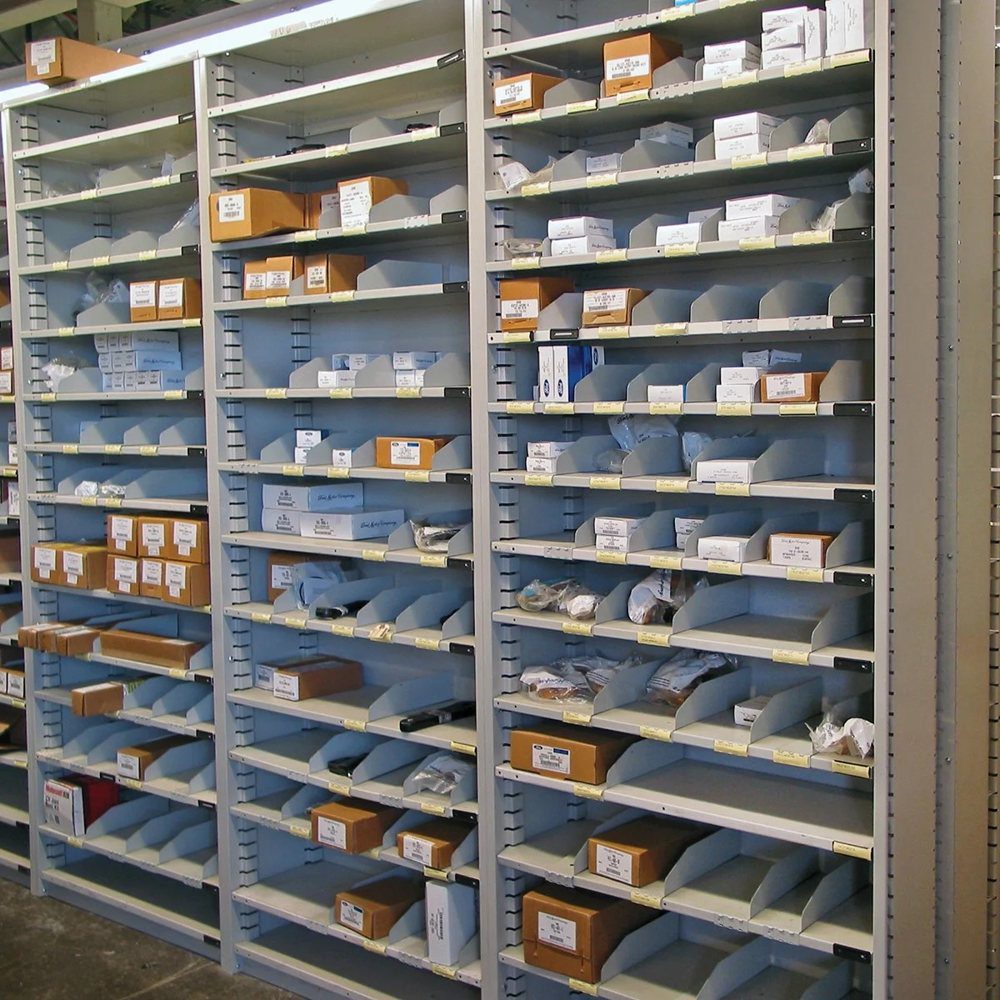
Where Flexi-Bin shelving fits best
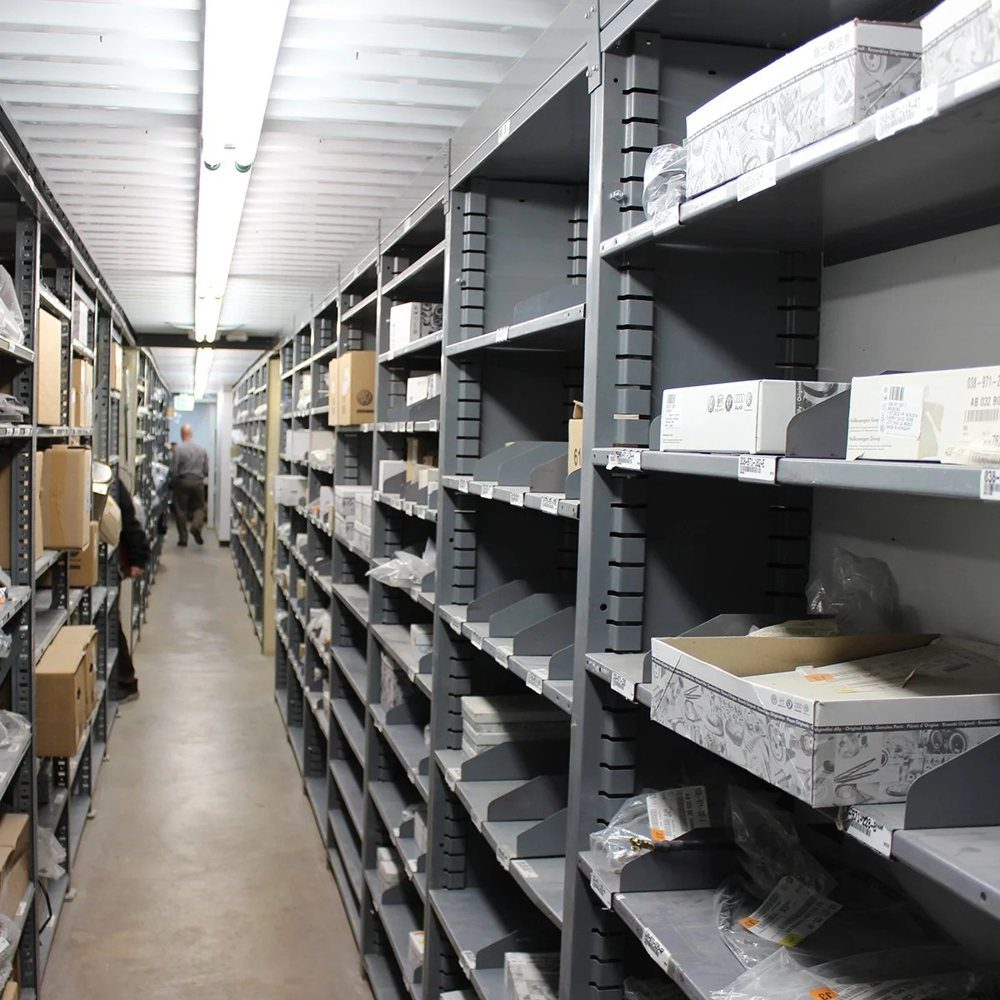
A small-parts storage problem is often a location problem. Similar packages get mixed together, an item has several unofficial homes, or a shelf is so deep that stock disappears behind the front row. Before buying another unit, identify which of those problems is making daily work difficult. A divided storage face can help organize the physical locations, while a clear replenishment procedure keeps them useful.
Borroughs positions Flexi-Bins for small inventory such as automotive parts, hardware, electrical components and boxed goods. The range uses sliding dividers to create compartments across a shelf. Unlike a loose collection of boxes on a deep rack, the arrangement gives each selected item a defined position that can change as the inventory changes.
Match the storage method to the item
Bring representative items to the planning discussion. Record their packaged dimensions, normal quantity, full-location weight and whether they need protection from dust, mixing or unauthorized access. Tiny loose pieces may need a suitable drawer or container; bulky cartons may belong on a different shelf system. A shallow bay should not be treated as a solution for every product in a storeroom.
Think about the person retrieving the item. A parts-counter employee, maintenance technician and retail stock associate may approach the same shelving in different ways. Decide whether the unit serves a staffed counter, an internal issue point or a replenishment area. That decision affects labels, access, nearby staging space and how quickly a location must be recognizable.
For a broader room where aisle area is the main constraint, compare the planning approach with Pipp mobile storage systems. Stationary compartment shelving and mobile storage solve different access problems; a facility may use each in a separate zone.
Compare standard Flexi-Bin configurations

Start with a standard arrangement, then test it against the inventory list. The manufacturer’s preconfigured units below share nominal dimensions of 38 inches wide, 12 inches deep and 84 inches high. These are overall dimensions, not a promise of usable compartment clearance. The product range also lists 96-inch-high frames; do not assume every preconfigured package is supplied in both heights.
| Model | Shelves | Published arrangement |
|---|---|---|
| FB101 | 6 | 7 adjustable openings |
| FB102 | 8 | 9 adjustable openings |
| FB103 | 10 | 11 adjustable openings |
| FB104 | 6 | 21 adjustable openings |
| FB105 | 8 | 41 adjustable openings |
| FB106 | 10 | 51 adjustable openings |
| FB107 | 10 | 43 openings plus 12 drawers |
| FB108 | 17 | 108 drawers |
The table summarizes the Borroughs Flexi-Bin brochure. Shelf adjustment is in 1½-inch increments, and the brochure lists a 150-pound shelf capacity. Verify the selected assembly and loading conditions with the supplier. A shelf rating is not a separate allowance for every compartment or a total-system rating calculated by simply multiplying shelf counts.
Read the model description carefully
More openings are useful only when those openings fit the items. Compare the largest package, the typical replenishment quantity and the access needed to grasp it. A location that barely accepts one carton may become awkward when replenishment arrives. Where drawers are listed, confirm the supplied drawer count and usable dimensions rather than treating them as open shelf positions.
Ask for a marked configuration drawing or schedule with your quote. It should make clear which components are included, what is optional and where a custom arrangement differs from the standard model. This gives purchasing and the installation team the same reference and reduces ambiguity when a package is delivered.
Set up locations around your inventory
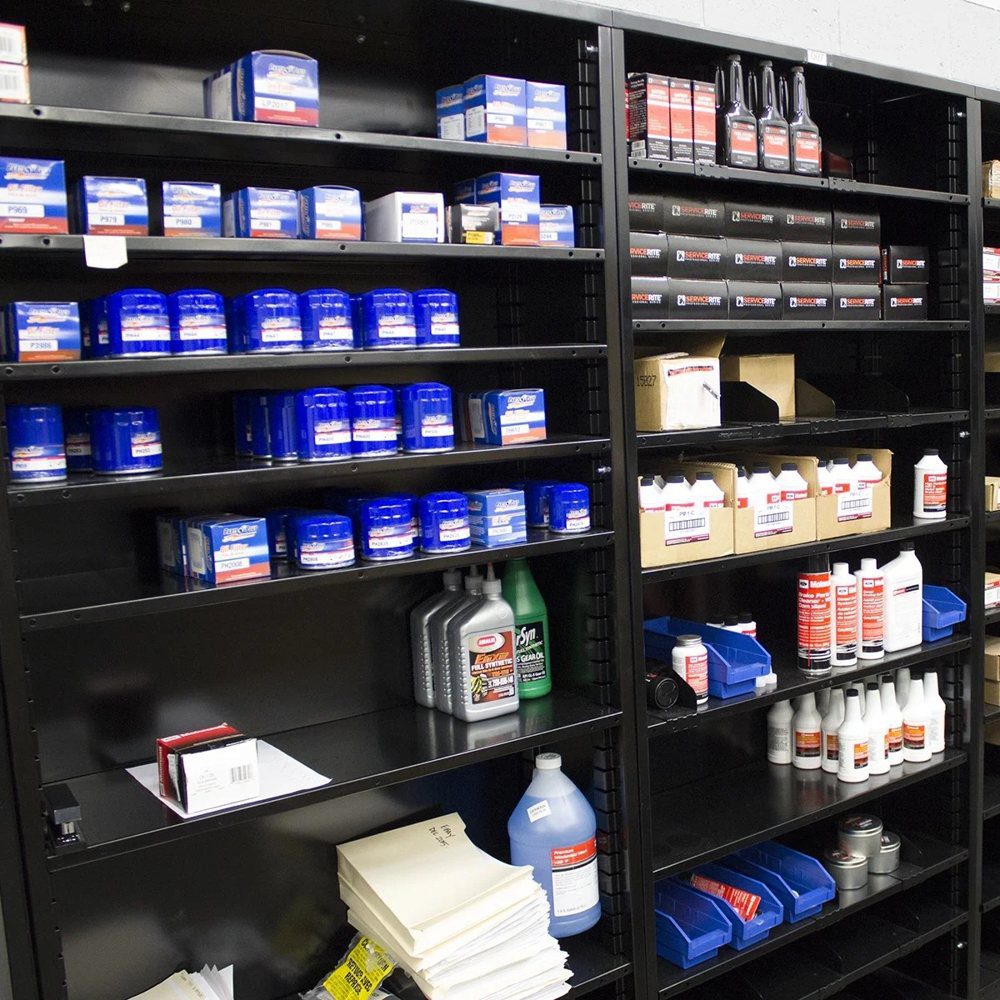
A good location plan begins with the stock file, but it should be checked against real packages. Export the active items, remove obsolete lines and flag those that require special handling. Group by physical fit and working routine before deciding how many compartments to create. Alphabetical or numerical order can be helpful, but it should not place an awkward load in an unsuitable position merely to preserve a sequence.
Use a simple location schedule
- Item: record the part number, description and any visually similar alternatives.
- Space: measure the package and normal quantity held at the location.
- Demand: identify items retrieved repeatedly during a typical shift.
- Weight: review the entire quantity that could occupy the shelf.
- Location: assign a bay, shelf and compartment reference that staff can read consistently.
Trial the proposed arrangement with a sample of fast-moving, slow-moving and unusually shaped items. Ask a person who did not create the plan to find and return them. Their questions reveal where labels or grouping rules are unclear. Revise the plan before producing all the labels or transferring the full inventory.
Leave an intentional method for changes. If a growing product family needs more room, decide whether neighboring locations can move or whether reserve space exists elsewhere. Record each change in the location file and physical labels at the same time. Moving stock without updating its reference can erase the benefit of a tidy storage face.
For facilities supporting a food-quality laboratory, keep maintenance parts and general supplies in their appropriate support area. Our compact food QC lab planning reference discusses how workspace and support storage should be considered separately. Ordinary parts shelving is not purpose-selected chemical storage.
Choose drawers, dividers and labels deliberately
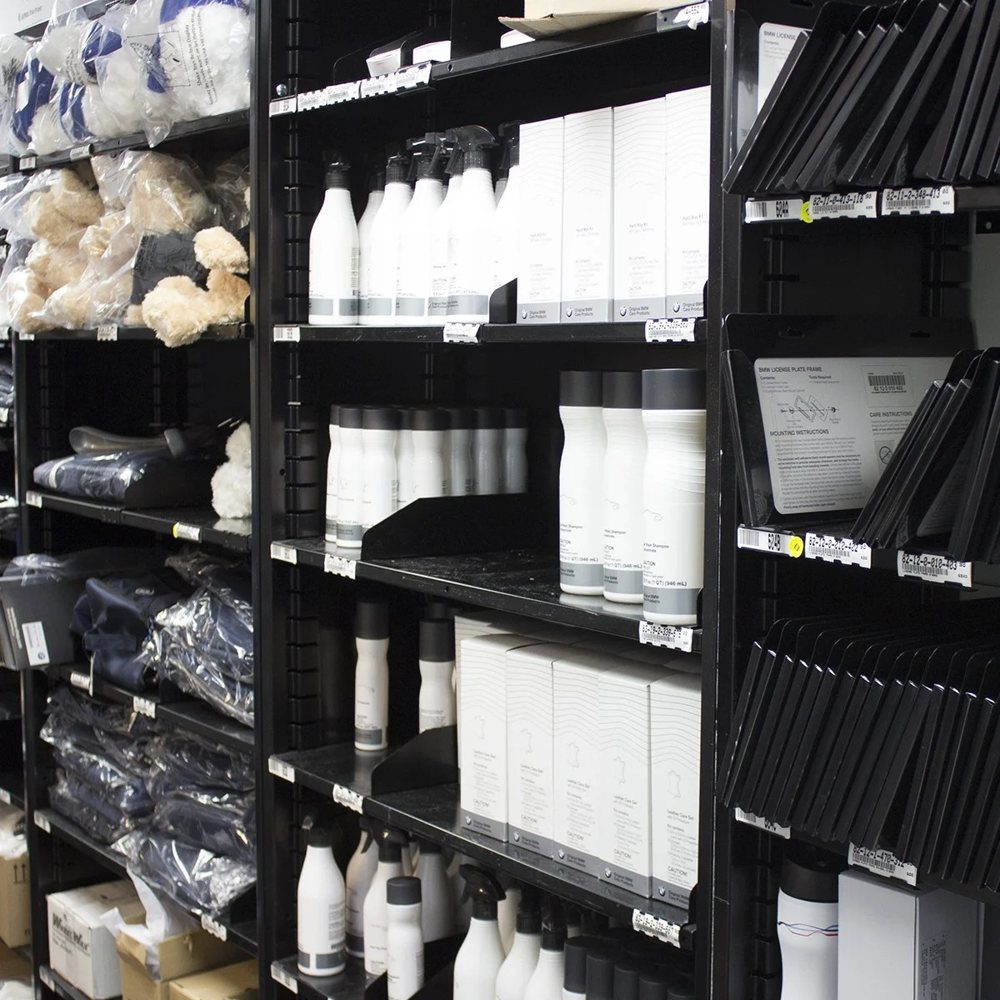
The right accessory resolves a specific handling problem. A divider separates neighboring locations; a drawer can help contain selected loose items; a label holder makes identification more consistent. Ask which problem an accessory is intended to solve, then confirm it belongs to the quoted Flexi-Bin assembly. Components that appear similar across shelving families are not automatically interchangeable.
The manufacturer’s component list includes slide-in shelves, drawers, drawer dividers, label holders, blank labels, trim panels and post foot angles. Its installation guide describes shelf boxes with a backstop and snap-on shelf label holders. Use the current instructions for assembly and adjustment, including the required shelf spacing for the selected accessories.
Make labels useful at the point of work
Use a consistent order for information: location reference, item identifier and short description are a practical starting point. If barcodes are used, test them with the actual scanner, lighting and viewing distance. Check that a neighboring label cannot be mistaken for the intended compartment when the shelf is partly empty or a carton protrudes.
Agree on what happens when a compartment is empty. An empty location may still be assigned to a part awaiting replenishment. Without a clear rule, staff can fill it with unrelated stock and create an inventory discrepancy. A visible location reference and an agreed exception process are more useful than simply adding more labels.
Keep spare labels and approved replacement components in the maintenance plan. A damaged divider or missing label should trigger a straightforward correction. Photograph the completed arrangement and retain the final component schedule, especially where several standard units have been combined into a custom storage wall. That record makes future additions easier to review.
Plan the room, loading and installation together

Measure the complete storage area before drawing rows. Include doors, columns, building services, fire equipment, circulation routes and the space used to receive or stage stock. Shelving width alone does not define the floor area a working storage system needs. Allow for users, carts, open drawers and the movement of replenishment cartons.
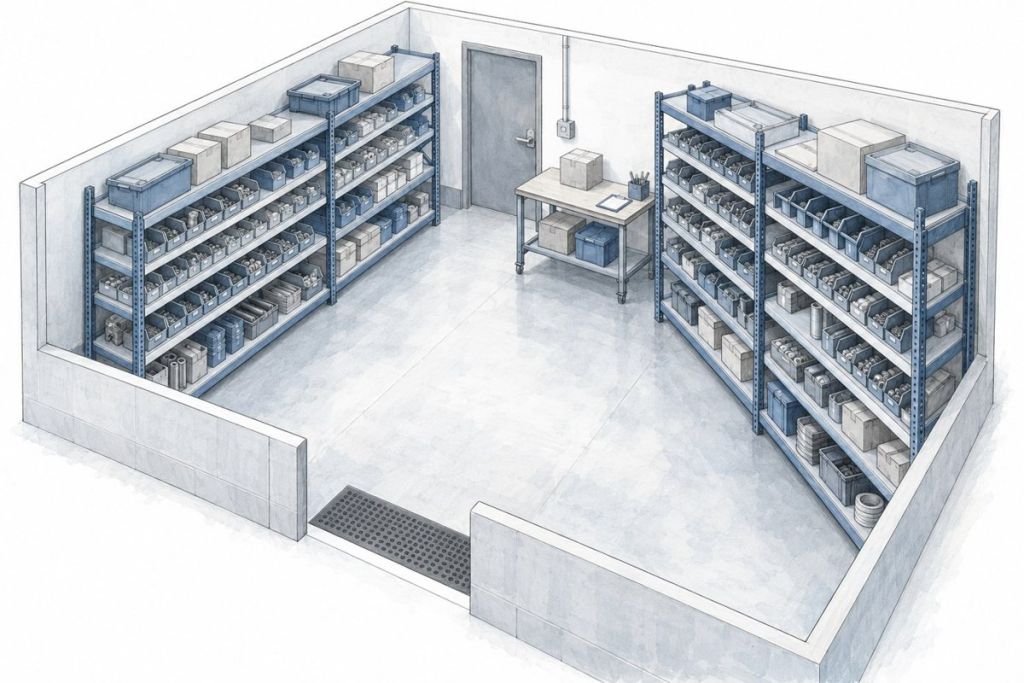
Borroughs shows both stand-alone and back-to-back Flexi-Bin arrangements. Review the proposed row as an installed assembly with the supplier. Do not extrapolate a photograph of a multilevel installation into approval for another building. Any elevated structure, support requirement or site-specific attachment needs its own design review.
Prepare an installation scope
Identify who checks site dimensions, receives the shipment, assembles the units and confirms the final arrangement. Discuss the substrate and required attachment details with the installer. The manufacturer lists a post foot angle for floor anchoring, but that accessory name alone does not specify the correct anchor or attachment for an individual site.
Before assembly, check the shipment against the approved schedule and report missing or damaged components. The Borroughs guide calls for reading the complete instructions and retaining them with the customer. Use those instructions for assembly rather than relying on a short product-page summary. Keep the approved load information available to the people who stock the system.
At handover, check that drawers and dividers operate as intended, labels match the location schedule and circulation areas remain usable. Review how staff will report damage and who is allowed to adjust the layout. Changes to shelf positions, attachments or loading should be assessed against the manufacturer’s requirements rather than made solely to fit an unexpected delivery.
Compare costs using a complete project scope
A useful cost comparison describes the whole storage task. A low unit price can omit the drawers, labels, trim, freight or installation needed for the planned result. Ask each quotation to identify the exact model, quantity, finish and accessory schedule. For an existing system, include photographs and component identification so replacement parts can be checked for compatibility.
Inventory and fit
Send the item list, representative package dimensions, location quantities and expected shelf loads.
Room and access
Include a measured plan, doorway and delivery constraints, nearby work areas and proposed row positions.
Scope and timing
Identify assembly, attachments, labeling, stock transfer and the period when the area can be available.
Compare the number of useful locations, not simply the highest advertised compartment count. A configuration with fewer appropriately sized locations can be more practical than a denser arrangement that forces stock into overflow cartons. Also consider how often replenishment interrupts retrieval and where reserve quantities will remain.
For current product listings, visit the Borroughs storage containers and bins catalog, which includes Flexi-Bin components and preconfigured units. The Borroughs brand catalog provides a broader range comparison. Confirm current availability, package contents and delivered pricing for the specific items you need.
Material Handling USA can help turn the inventory and room information into a reviewable proposal. The final package should state what is supplied, how it is installed and which work remains with your team. Retain that scope with the drawings and manufacturer instructions so future additions can build on a known configuration.
Frequently asked questions
What are the standard Borroughs Flexi-Bin dimensions?
The manufacturer lists frames 38 inches wide and 12 inches deep in 84- and 96-inch heights. The brochure's FB101–FB108 preconfigured units are 84 inches high. Confirm overall and usable dimensions for the exact package in your quote.
How much weight can a Flexi-Bin shelf hold?
The Borroughs brochure lists 150 pounds per shelf. Confirm the applicable configuration and loading conditions with the supplier. This is not a separate capacity for every compartment and does not establish the building floor or total-system capacity.
What is the difference between FB107 and FB108?
The manufacturer lists FB107 with 10 shelves, 43 adjustable openings and 12 drawers. FB108 uses 17 shelves and 108 drawers. Review drawer dimensions and package contents against the actual inventory before selecting either arrangement.
Can compartment sizes be changed?
Sliding dividers allow the width of locations to be adjusted, and the brochure specifies shelf adjustment in 1½-inch increments. Follow the current instructions and confirm accessory clearances when changing a configuration.
Are Flexi-Bins suitable for every type of material?
No. Review item dimensions, weight, containment and any special storage requirements. Ordinary parts shelving should not be treated as chemical, fire-rated or other specialized storage without the appropriate product specification.
What should I send for a Flexi-Bin quote?
Send a measured room plan, inventory dimensions and quantities, expected shelf loads, preferred configurations, required accessories and installation timing. Identify existing components if the project involves matching or expanding a system.