
Laboratories / Complete Laboratory Solutions
Complete Laboratory Solutions: Equipment, Sinks, Shelving & Furniture
One source for lab casework, work surfaces, sinks and fixtures, shelving and storage, fume hoods and snorkel arms, and the benchtop equipment that goes on top — planned, supplied and installed by Material Handling USA from Salt Lake City.
30+
Years of lab projects
6
Solution categories in one bid
5 yr
Casework warranty (Air Master Systems)
2
Free lab design tools
Everything a Working Laboratory Needs, From One Team
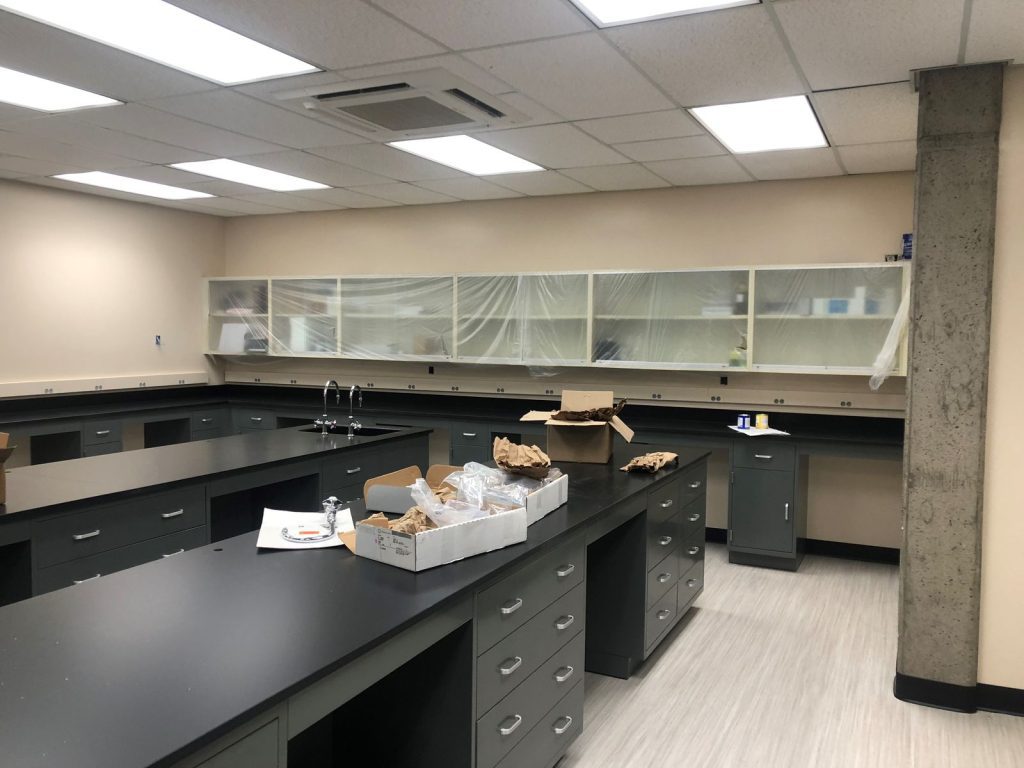
Most laboratory projects go wrong in the gaps between suppliers. The casework arrives before the plumbing rough-in is set, the fume hood needs more exhaust than the mechanical contractor allowed for, the shelving does not clear the service turret, and the benchtop equipment shows up on a bench with no receptacle behind it. Nobody is at fault, and nothing works.
Material Handling USA supplies the whole package instead: layout and equipment planning, casework and bench frames, work surfaces, sinks and service fixtures, ventilation, shelving and storage, benchtop equipment and consumables — then installs it. One submittal set, one delivery schedule, one project manager who owns the sequence.
This page is the hub for that scope. Each section below explains how we specify that part of a lab and links to the detailed page for it, so you can go straight to countertop materials, shelving, ventilation or the design tools.
What’s Included in a Complete Laboratory Solution
Six product families make up almost every lab we build. You can buy them separately, but they are cheaper and far less painful to install when they are engineered together.
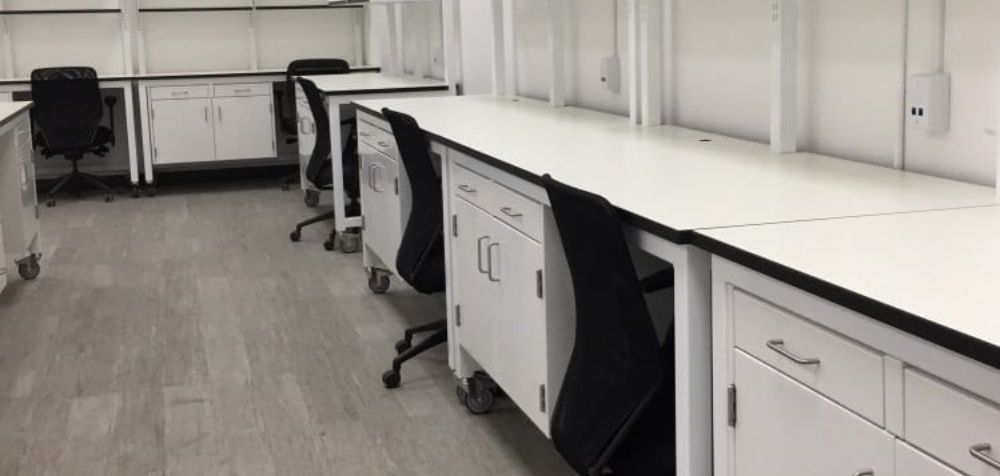 Laboratory Casework & FurniturePainted steel, stainless steel, phenolic and wood casework in base, wall, tall, mobile and hanging configurations, plus flexible bench frames and ADA-compliant units. Specified to the SEFA 8 casework standards and finished in chemical-resistant baked-on epoxy powder coat.
 Sinks, Countertops & FixturesDrop-in epoxy resin sinks, stainless steel single and multi-station sinks, sensor-operated wall-hung hand wash sinks, cup sinks, eyewash and emergency fixtures, and gooseneck service fittings plumbed into the bench.
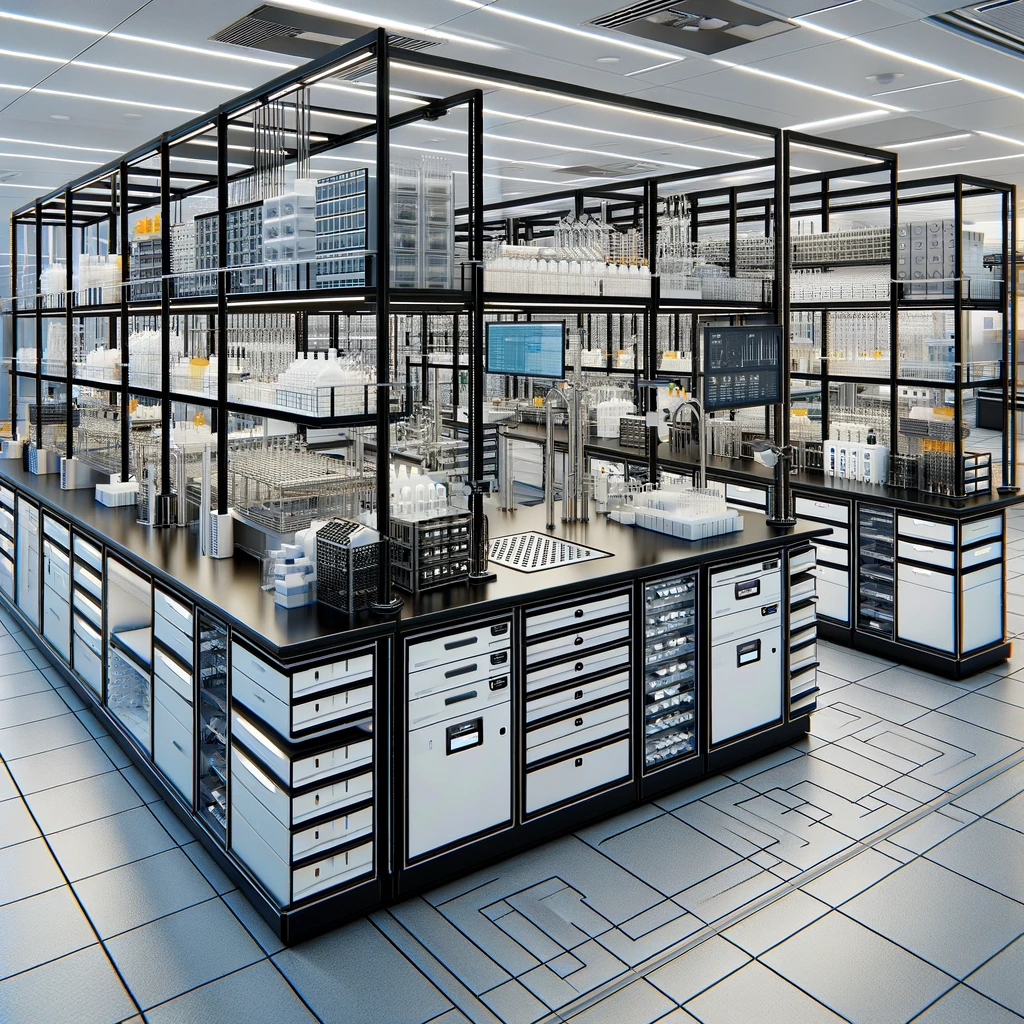 Laboratory Shelving & StorageWall-mounted reagent shelving, chrome and epoxy-coated wire shelving, polymer shelving for wet and cold rooms, mobile high-density carriages for instrument and sample archives, and secure caged units.
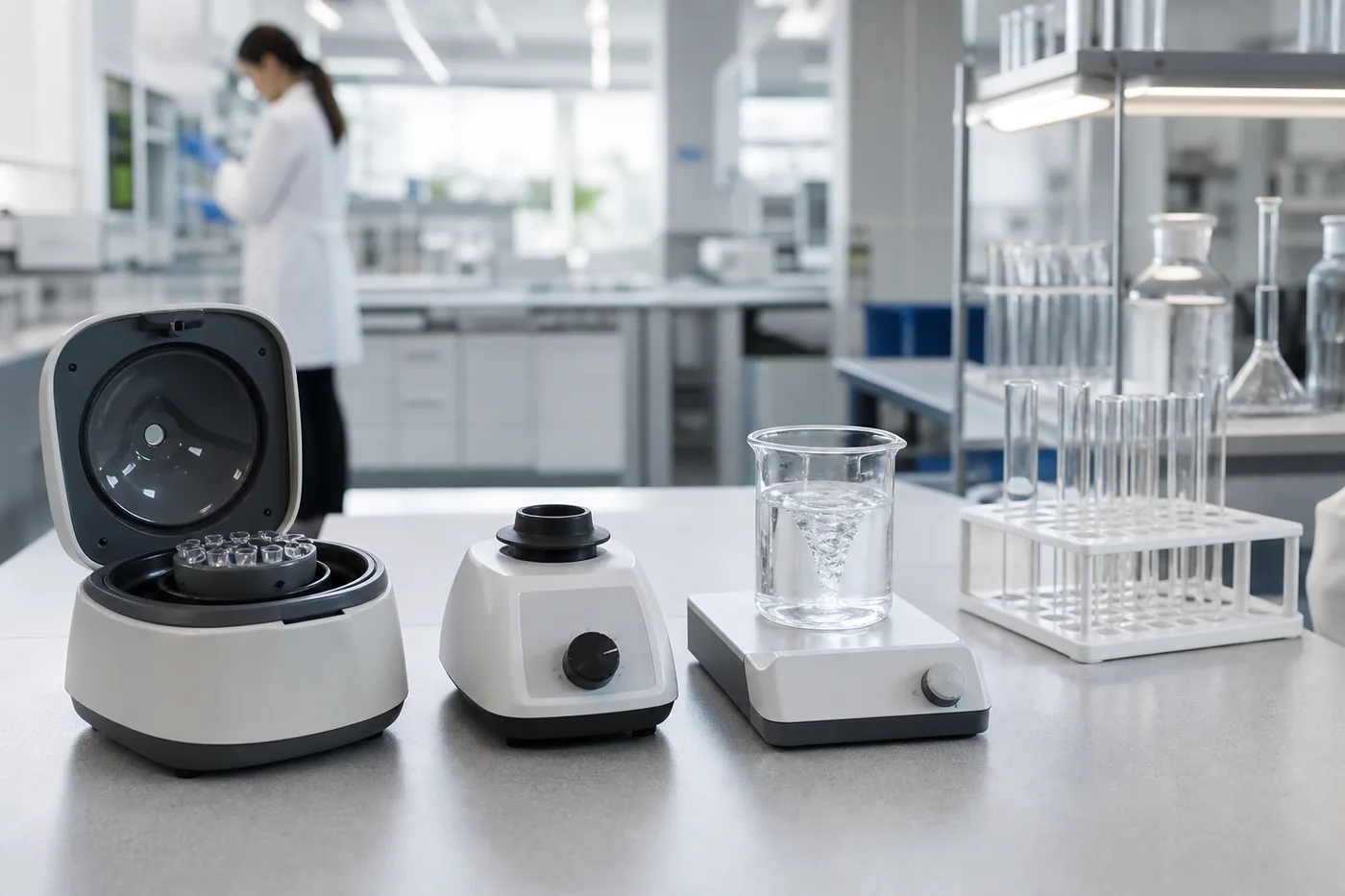 Washers, Incubators, Ovens & Water SystemsGlassware washers, CO₂ and general incubators, drying and vacuum ovens, water baths, shakers, centrifuges, pipettes and laboratory water purification — the benchtop equipment that turns a finished room into a working lab.
 Fume Hoods & Exhaust SnorkelsBench-mount, floor-mount and filtered fume hoods built to UL 1805, plus Nederman BenchTop FX extraction arms in original, ESD/EX and chemical-resistant versions for point-of-source capture at the bench.
 Cleanrooms & Controlled EnvironmentsModular hardwall and softwall cleanrooms, gowning benches, pass-throughs and stainless steel furniture for ISO-classified spaces, sterile compounding and device assembly.
Start with the layout, not the product list
Lay out your benches, hoods, sinks and equipment in our free lab design tools and send the plan straight to our team — we quote against a real layout instead of a description. Or call and we will walk your drawings with you.
Open the Lab Layout Designer Configure a Lab Bench Call (800) 326-4403
Laboratory Casework & Furniture

Casework is the part of the lab you cannot change later without shutting the room down, so it is worth specifying carefully. Our core line comes from Air Master Systems, which designs and manufactures casework, benches and fume hoods in Muskegon, Michigan and carries a five-year warranty.
Painted steel cabinets are available in flush overlay and inset styles as base, wall, tall, hanging and mobile units, finished in a chemical-resistant baked-on epoxy powder coat or zinc plating. Standard construction includes full-depth shelving adjustable in 2″ increments, full-extension ball-bearing drawer slides, double-pan doors and drawer fronts with sound-deadening, and five-knuckle stainless steel hinges.
Almost any standard cabinet can be ordered as mobile — toe-kick removed, 3″ heavy-duty front-locking casters added, with a counter-balance weight so an open drawer will not tip it — or as hanging, with brackets that carry it off a bench frame so the floor stays clear for cleaning and for wheelchair access. A full ADA-compliant line runs from 12″ to 48″ wide and meets the height, depth, clearance and aisle requirements.
Fixed benches or a flexible bench system?
If the science in a room changes every few years, a fixed casework run becomes a liability. Flexible frame systems answer that: Air Master Systems’ Gemini system uses quick-connect fittings, is pre-plumbed with 3/8″ ID flexible PVC hose and pre-wired pigtails, and takes electrical raceways with 20 amp 120 VAC standard, GFCI or USB receptacles on one or both sides. Benches can be single or double sided with up to three plumbing fixtures each, and CAT6 data ports drop into the vertical post.
- Fully welded table construction with a static load capacity of 1,000 lb
- 36″ standard working height, or adjustable from 30″ to 36″
- Widths of 36″, 48″, 60″ and 72″ with the work surface included
- Full-width shelving on benches 48″W and under, half shelving from 60″W up
- Levelers with a fine-adjust foot, or casters with side and rear stretchers for mobile tables
- Epoxy, phenolic or stainless steel work surface on the same frame
Specify the services before the cabinets
The single most common change order on a lab fit-out is adding receptacles, gas or data to a bench after the casework is set. Decide how many outlets, fixtures and data ports each station needs while the bench is still on paper — it is nearly free then and expensive later. Our Lab Bench Designer makes you answer those questions up front.
Work Surfaces: Epoxy, Phenolic, Stainless & More
The top is what actually gets attacked. Match it to the chemistry, the heat and the moisture at that specific station — there is no reason for a whole lab to have one surface.
| Material | Where it belongs | Why it performs | Trade-offs |
|---|---|---|---|
| Epoxy resin | Chemistry, teaching labs, wet benches, fume hood interiors | Monolithic and non-porous, so corrosive chemicals cannot seep in and cause delamination or swelling. Resists heat, discoloration, blistering and cracking. Durcon publishes a heat deflection maximum of 293°F (145°C) and flexural strength of at least 12.6 KPSI to ASTM D790. | Heaviest and most expensive of the resin tops; edges chip if struck hard |
| Phenolic resin | General research, biology, K-12 and university labs, cleanrooms | Lab-grade phenolic with a double-cured acrylic non-porous coating that gives an antibacterial surface, good acid and solvent resistance, and roughly half the weight of epoxy — useful on mobile tables and cantilevered benches. | Lower sustained heat tolerance than epoxy; not for open-flame stations |
| Stainless steel | Sterile and cold rooms, radioisotope work, high-moisture areas, cleanrooms | Air Master Systems fabricates 16-gauge 304 stainless with a #4 smooth grain finish, and 316 stainless for perchloric acid hood tops. Standard depth is 30″ and length is made to your dimension, with rubberized sound-deadening applied underneath. | Shows scratches; not ideal where strong acids are handled openly |
| Plastic laminate | Dry benches, write-up stations, instrument and computer counters | Lowest installed cost and the widest color range. Fine wherever no chemicals, water or heat reach the surface — typically write-up peninsulas and equipment tables. | Not chemical or moisture resistant; edges swell if water gets in |
| Polypropylene | Trace metals, ICP-MS, acid digestion and clean chemistry | Solid polypropylene with welded seams for metal-free work where even epoxy filler could contaminate a sample. Usually paired with polypropylene sinks and casework. | Low heat tolerance; scratches and deforms under point loads |

How work surfaces are tested
Worksurface performance is not a marketing claim — SEFA 3 defines the chemical resistance test, and manufacturers publish results reagent by reagent. Durcon’s epoxy resin data sheet reports heat deflection to ASTM D648 at a maximum of 293°F (145°C), flexural strength to ASTM D790 of at least 12.6 KPSI, and a linear thermal expansion coefficient of 1.2 × 10⁻⁵ in/in°F.
When you send us the reagents used at a station, we pull the published resistance ratings for each candidate surface rather than guessing. If the list includes concentrated nitric or sulfuric acid, perchloric acid or a lot of dry heat, that usually narrows the choice quickly.
Not sure which top your chemistry needs?
Send us the reagent list and the bench dimensions and we will come back with the surface, the edge detail and the installed price — plus the published chemical resistance data behind the recommendation.
Laboratory Sinks, Fixtures & Drainage
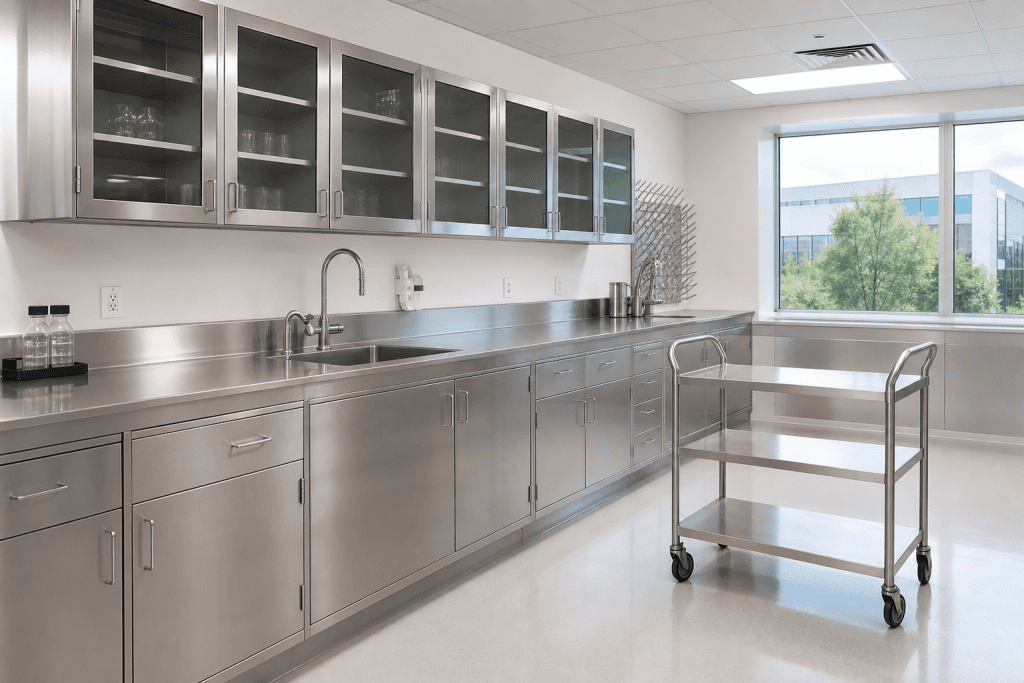
Lab sinks fail for two reasons: the wrong material for the waste stream, or drainage that was never designed for it. An epoxy sink in a metal-free trace analysis lab will contaminate samples; a stainless bowl under an acid digestion bench will pit; and standard PVC drainage under a chemistry sink is a maintenance problem waiting to happen.
We specify the bowl, the fitting and the drainage as one assembly. Air Master Systems supplies work surfaces in stainless steel, epoxy and phenolic resin, all fabricated to your exact dimensions, with sinks matched to the top so the joint does not become a leak path.
| Sink type | Typical application | Construction | Usual fittings |
|---|---|---|---|
| Drop-in epoxy resin sink | Chemistry and teaching benches | Molded epoxy, non-porous, matched to an epoxy top | Acid-resistant drain and trap, overflow, cup sink |
| Undermount epoxy sink | Wet benches where the top must stay seamless | Silicone-bedded under the epoxy top | Deck-mounted gooseneck fitting, remote control valve |
| Stainless steel single bowl | Sterile prep, glass wash, food and beverage QC labs | 16- or 18-gauge 304 stainless, coved corners | Integral drainboard, knee or foot valve |
| Multi-station scrub sink | Clinical, veterinary and surgical prep | Welded stainless with individual bays | Sensor or knee-operated faucets, soap and towel dispensers |
| Wall-hung hand wash sink | Entry and exit hand hygiene, cleanroom gowning rooms | Stainless steel, wall-carried, ADA heights available | Sensor operation, thermostatic mixing valve |
| Polypropylene sink | Trace metal and acid digestion work | Seam-welded polypropylene, metal-free | Polypropylene trap and tailpiece, cup sinks |
| Cup sink | Point drainage in the bench top or fume hood | Epoxy, polypropylene or stainless | Oval or round, deck or top mount |
Emergency fixtures are part of the sink package
Where corrosives are handled, an eyewash or combination eyewash and drench shower has to be reachable within seconds of the bench — and it has to be plumbed, tempered where required and testable. We include emergency fixtures, tempering valves and floor drainage in the lab package so they are not left to the last trade on site.
Laboratory Shelving & Storage
Storage is where labs lose the most usable floor space. These are the systems we specify most often, from consumables at the bench to instrument and sample archives.
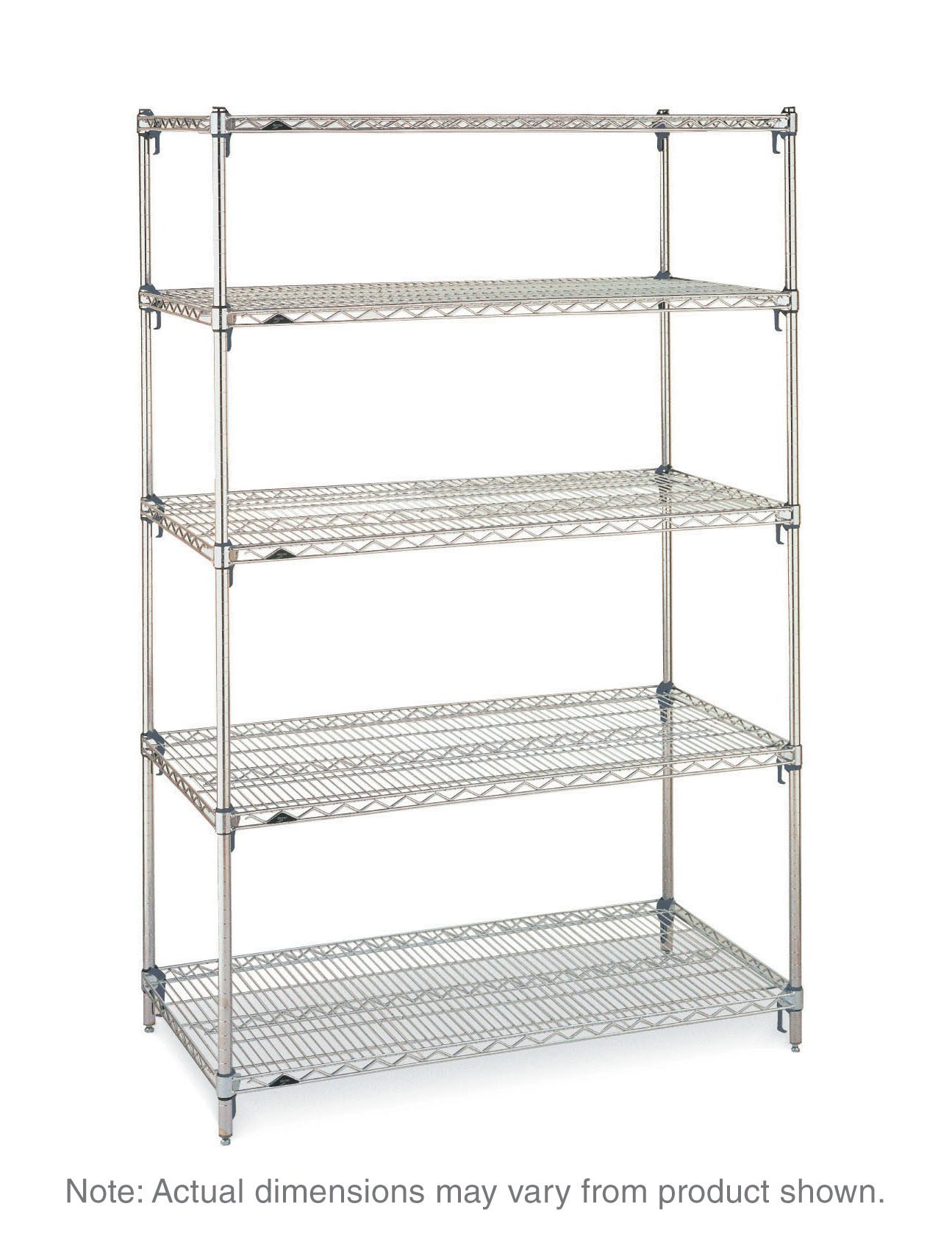 Chrome & Epoxy Wire ShelvingOpen wire shelves let light, air and sprinkler spray through, which is why they are the default for reagent and consumable storage. Adjustable on 1″ increments, chrome for dry rooms and green epoxy-coated for humid, cold or wash-down areas.
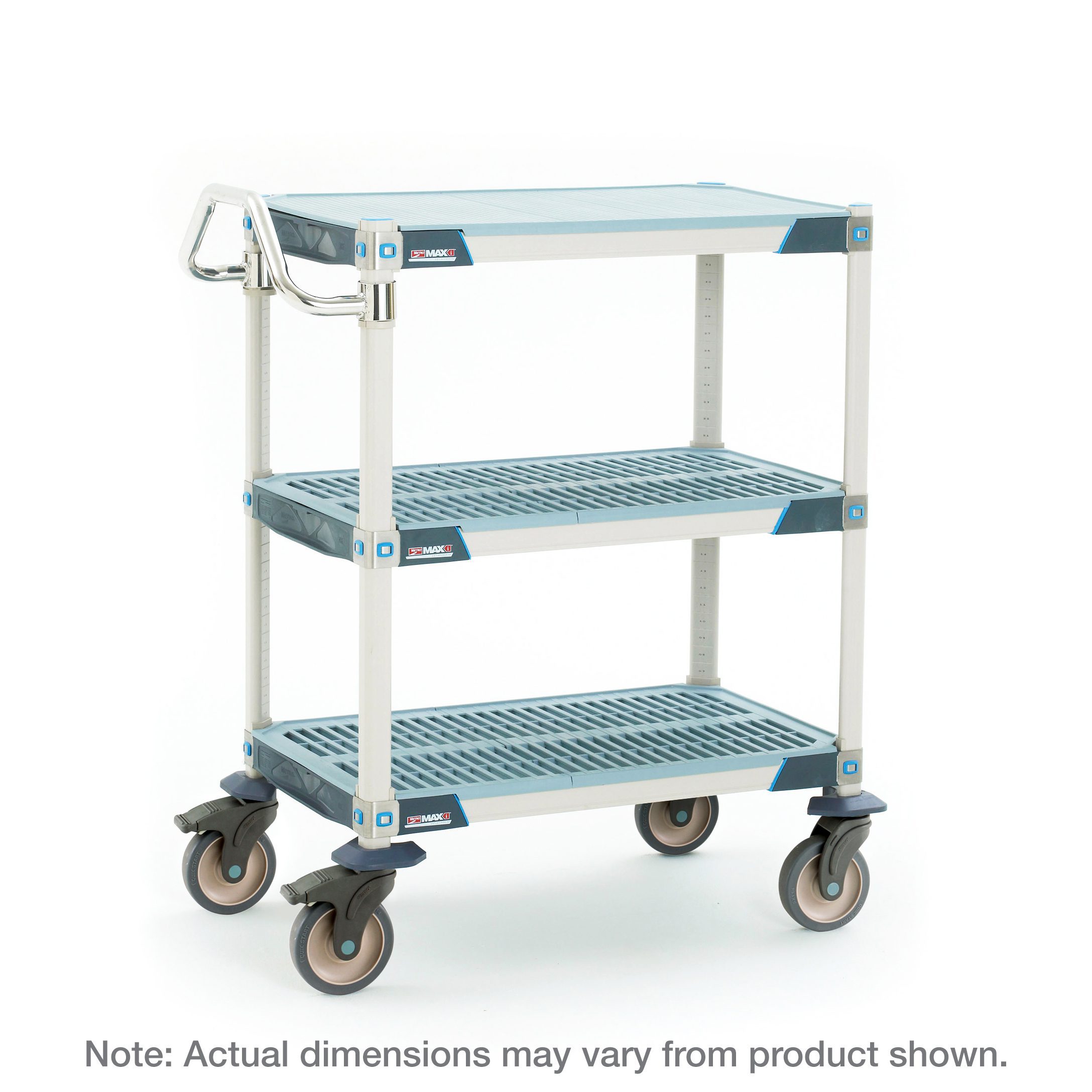 Polymer Shelving & Lab CartsMolded polymer shelves with antimicrobial protection wash down without corroding, so they suit cold rooms, autoclave areas and sample handling. The same platform builds two- and three-shelf utility carts that move specimens and glassware between benches.
 Mobile & Slanted Pick ShelvingCasters and slanted front shelves turn a static bay into a picking face for gloves, tubes, tips and consumables kept at the point of use. Front brakes lock the unit for work at the shelf.
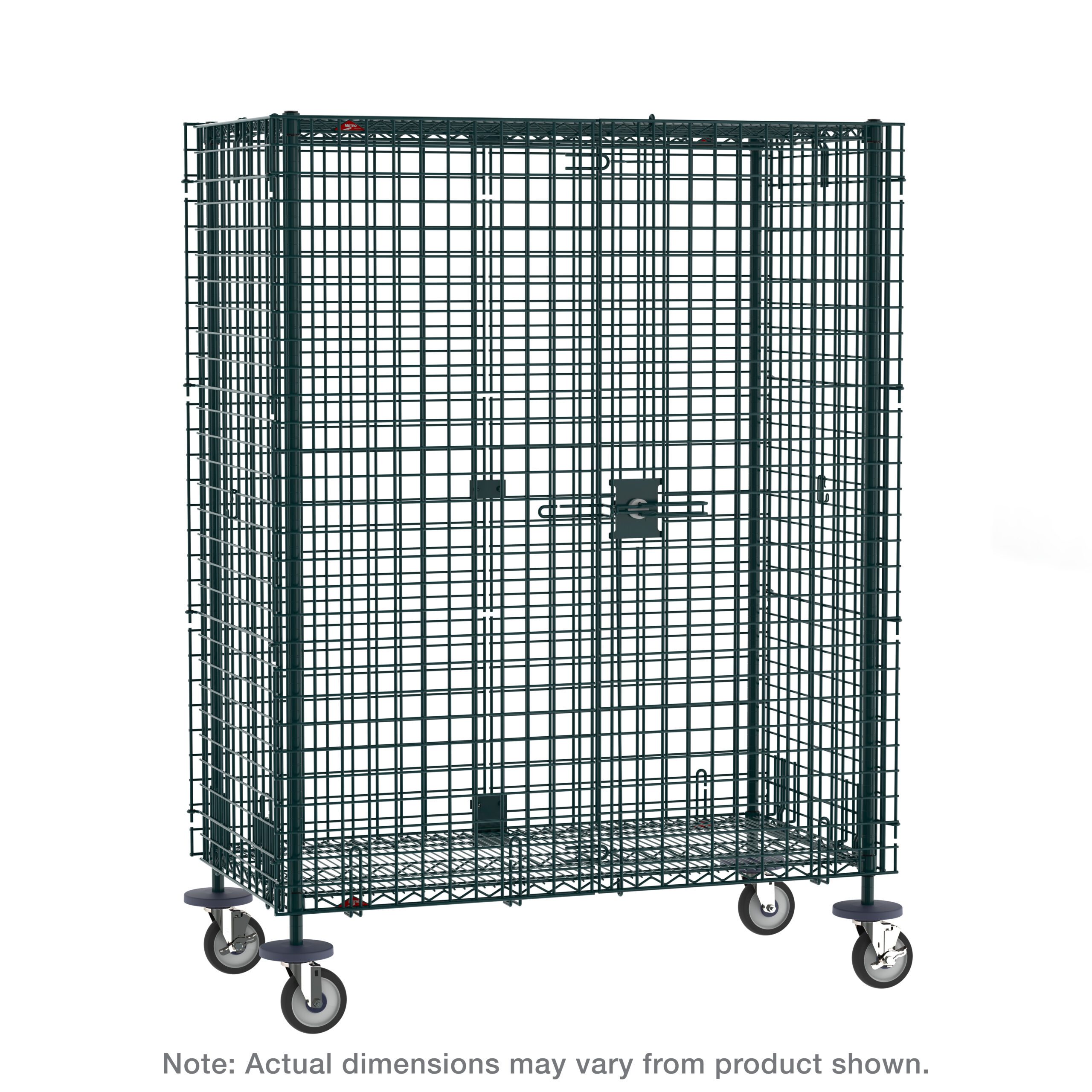 Secure & Controlled StorageEnclosed wire security units with locking doors for controlled substances, standards, reference materials and expensive consumables — the same principle we use on larger forensic evidence storage projects.
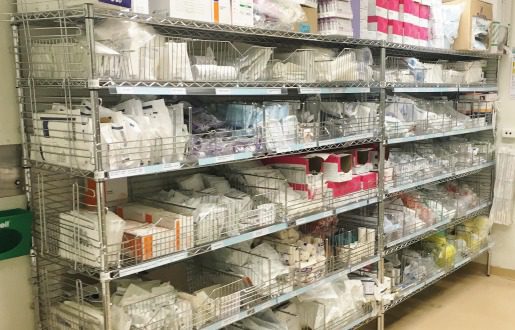 Point-of-Use Consumable ShelvingStocked open shelving next to the bench keeps gloves, tubes, tips and reagents at eye level and off the work surface. Bench-mounted uprights and wall-carried shelves adjust on service panels so plumbing and electrical stay reachable.
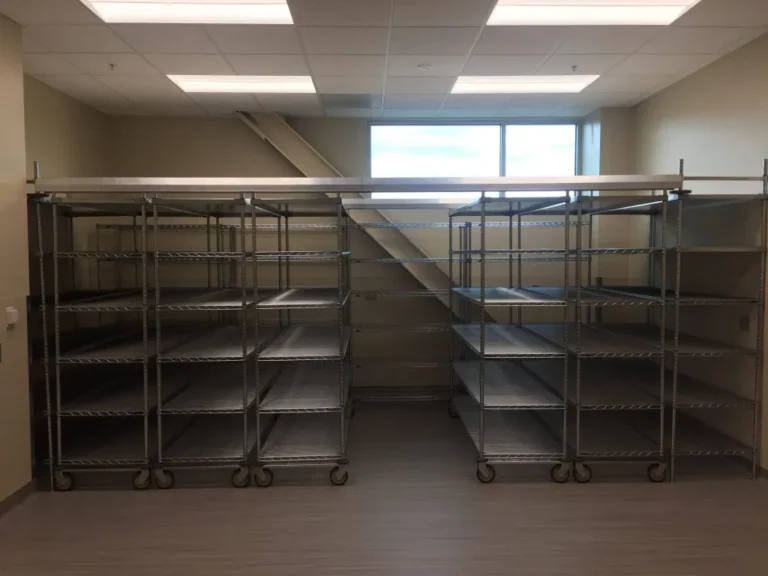 Mobile High-Density CarriagesWhere instrument, slide or sample archives have outgrown the room, shelving on rails removes fixed aisles and typically doubles capacity in the same footprint. See mobile high-density shelving for lab instruments.
Sizing storage honestly
Two rules save more space than any product choice. First, store consumables at the point of use and bulk stock outside the lab — conditioned lab space is the most expensive square footage in the building. Second, count what you actually hold, in linear feet of shelf, before buying anything; most labs discover that a third of their shelving is holding retired equipment and expired reagents.
Running out of room instead of out of bench?
Mobile high-density carriages remove fixed aisles and typically double storage capacity in the same footprint — often the difference between a renovation and a move. Send us the room dimensions and what you need to store.
Request a Storage Quote See Lab Shelving Options Call (800) 326-4403
Washers, Incubators, Ovens, Water Baths & Purification
A finished room is not a working lab. We supply the benchtop equipment for medical, research and pharmaceutical work alongside the furniture, so the utilities behind each instrument are right the first time.
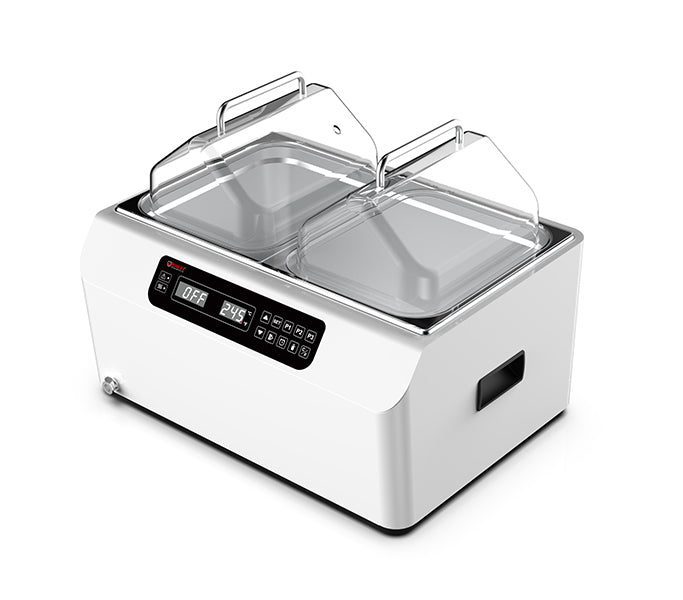 Water Baths, Shakers & OvensDigital water baths, orbital and reciprocating shakers, gravity and forced-air drying ovens and vacuum ovens for sample prep, incubation and drying steps. Sized to the bench space and the service load you actually have.
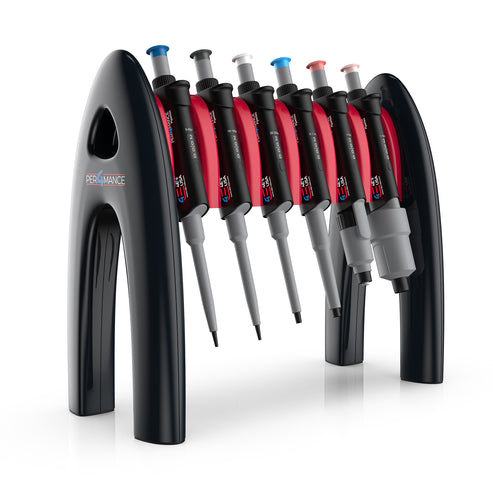 Pipettes, Centrifuges & MixersSingle and multi-channel pipettes, benchtop and micro centrifuges, vortex mixers, hotplate stirrers and homogenizers. We supply the consumables and racks alongside the instrument so a new bench is usable on day one.
 Washers, Incubators & SterilizersUnder-counter and freestanding glassware washers, CO₂ and general-purpose incubators and sterilization equipment for medical, research and pharmaceutical work — the cleaning, disinfection and sterilization chain in one specification.
 Cold Storage & Water PurificationLaboratory refrigerators and freezers, under-counter cold storage for reagents, and Type I, II and III water purification systems sized to your daily draw-off. See our guide to laboratory refrigerators.
Check the service load before the equipment ships
Glassware washers, incubators and purification systems all need something from the building: dedicated circuits, tempered or DI water, a drain at the right height, or clearance for heat rejection. Give us the model list with your layout and we will mark the utility requirements on the drawing before anything is ordered. Browse the full laboratory equipment range, including SciLogex benchtop instruments.
Ventilation: Fume Hoods & Exhaust Snorkels

Laboratories handle hazardous substances, so containment and ventilation are not optional. The practical question is which kind: total enclosure in a hood, or point-of-source capture at the open bench.
An exhaust snorkel is a lightweight extraction arm that removes dust, fumes, sparks and aggressive chemical vapors from a specific spot. The anodized aluminum arm has three adjustable joints, swivels and rotates 360°, and mounts to a wall or a ceiling — including a drop through ceiling tiles in labs with high or dropped ceilings. Each arm ships with a 5.5″ mini hood, the full mounting kit and hardware, and is tied into the general facility HVAC exhaust. They are suited to heat and irritant fumes at the bench — electronics and soldering, 3D printing, histology, IVF work, health services and general lab benches.
A fume hood is what you specify when the process could splash, react or release a serious volume of vapor. Bench mount, floor mount and filtration hoods are manufactured to UL 1805, in constant-volume or variable-volume configurations, with a choice of liners, service fixtures and airflow monitors.
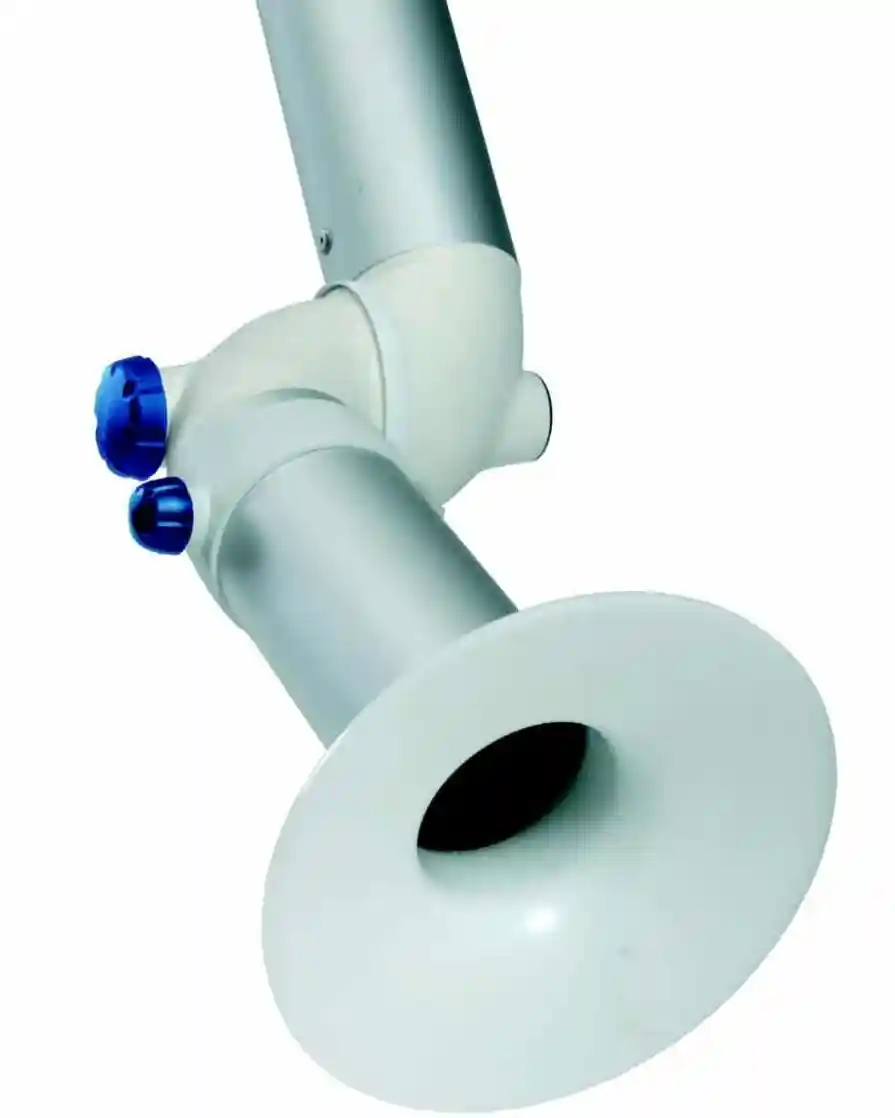 Original Exhaust SnorkelAnodized aluminum arm with three adjustable joints that swivels and rotates 360° and holds position where you leave it. Furnished with a 5.5″ mini hood, wall or ceiling mounting kit and hardware. Ties into the building HVAC exhaust.
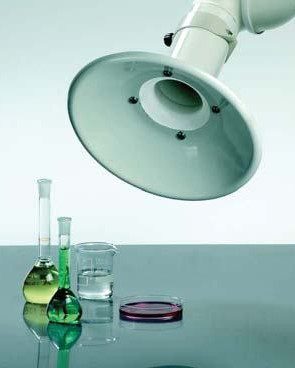 Chemical-Resistant SnorkelThe CES models use chemically resistant materials throughout the airway for aggressive acids and solvents that would attack a standard arm. Same 3″ diameter and mounting options, same working radii of 42.9″ or 57.1″.
 ESD / EX SnorkelStatic-dissipative and explosion-classified versions for electronics assembly, soldering, battery work and any area where a charge or an ignition source is the real hazard.
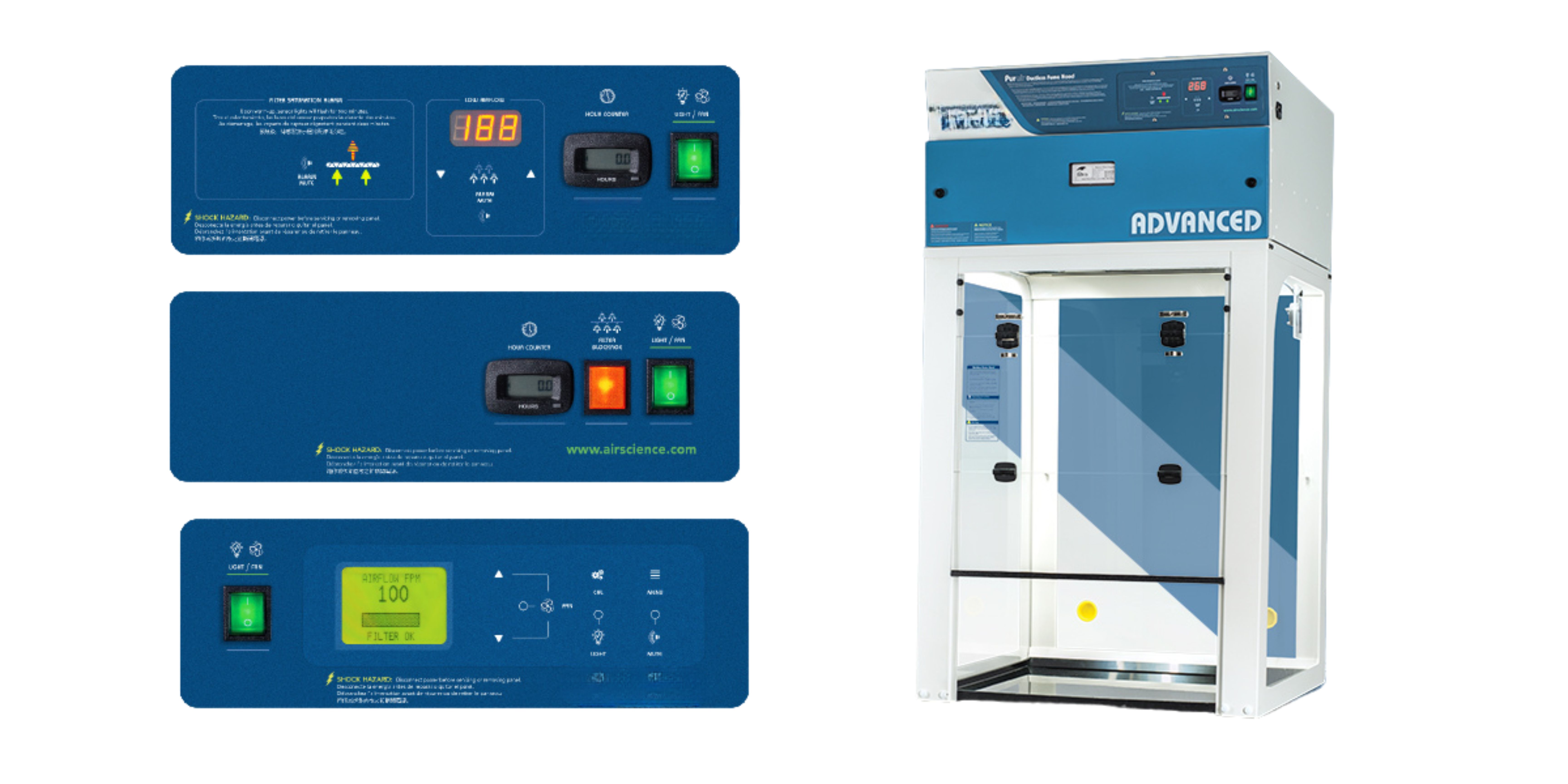 Fume HoodsBench mount, floor mount and filtration hoods manufactured to UL 1805, in CAV or VAV configurations with a choice of liners, service fixtures and airflow monitors. Custom hoods are built when a standard model will not fit the work.
Nederman BenchTop FX Arm Capacities
Arm diameter sets the airflow, and airflow has to be available at the drop. Published capacity ranges for the current generation of Nederman BenchTop arms:
| Arm diameter | Airflow range | Typical work |
|---|---|---|
| FX50 — 2″ (50 mm) | 30–65 cfm (50–110 m³/h) | Soldering, small solvent volumes, single-tube work |
| FX75 — 3″ (75 mm) | 65–140 cfm (110–240 m³/h) | General bench chemistry, sample prep, histology, IVF benches |
| FX100 — 4″ (100 mm) | 120–265 cfm (200–450 m³/h) | Heat, larger open vessels, 3D printing and light industrial fumes |
Snorkel Arm Models & Working Radius
The 3″ arms we stock, with the maximum working radius for each. Every arm accepts the optional hood range in place of the standard 5.5″ mini hood.
| Model | Description | Max. working radius | Specify it for |
|---|---|---|---|
| OES-3 | Original exhaust snorkel, 3″ diameter | 42.9″ (109 cm) | Standard bench and ceiling drops |
| OES-3L | Original exhaust snorkel, long reach | 57.1″ (145 cm) | Deep benches, island benches, high ceilings |
| CES-3 | Chemical-resistant snorkel, 3″ diameter | 42.9″ (109 cm) | Aggressive acids and solvents |
| CES-3L | Chemical-resistant snorkel, long reach | 57.1″ (145 cm) | Aggressive chemistry on deep or island benches |
Adding extraction to an existing bench?
Send us a photo of the bench and the ceiling above it, plus your mechanical drawing if you have one. We will confirm the arm, the mount, the hood and whether your exhaust has the static pressure to carry it — before you buy.
Request a Ventilation Quote Snorkel Specifications Call (800) 326-4403
How a Complete Lab Project Runs
Four stages, and the first one matters most. Nothing gets ordered until the layout, the services and the phasing are agreed.
Assess the work, not the room
We start from what happens at each station — instruments, reagents, sample flow, headcount and what has to keep running during construction. That determines surfaces, ventilation and storage far more than the square footage does.
Lay out and specify
Bench runs, hoods, sinks, storage and equipment are drawn to scale, then specified with material, standard and utility requirements on the submittal. Use the Lab Layout Designer to start this yourself.
Coordinate the trades
Plumbing, electrical, mechanical exhaust and casework get one sequence and one set of dimensions. This is the step that prevents the change orders.
Install and commission
Our installers set casework, tops, sinks and shelving, tie in the ventilation, and hand over a lab that is level, plumb and ready for equipment — phased around your operating schedule.
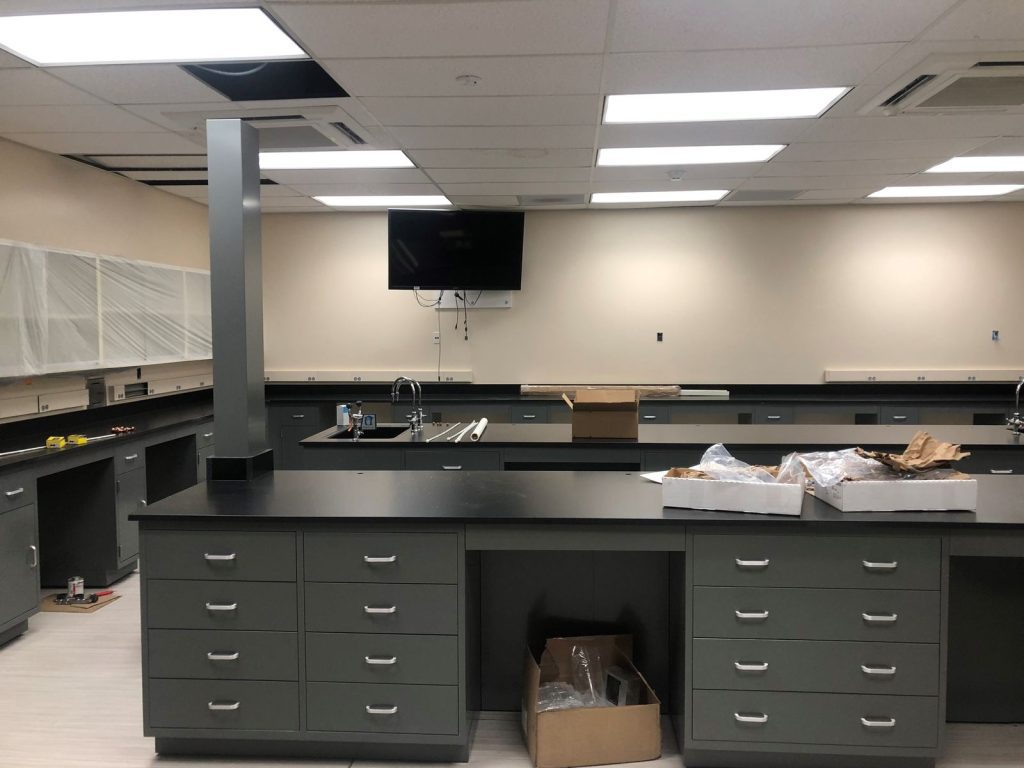
Working in an operating laboratory
Most of our lab work is renovation, not new construction, which means testing continues while we build. We phase bench run by bench run, set temporary work surfaces where analysis cannot pause, and schedule demolition, plumbing tie-ins and anything noisy or dusty for nights, weekends or planned shutdowns.
Tell us which instruments cannot be moved or powered down and we will build the sequence around them. See our laboratory expansion service for how we handle phased growth.
Laboratories We Equip
The product families are the same; the specification is not. What changes between these labs is the work surface, the ventilation strategy and how secure the storage has to be.
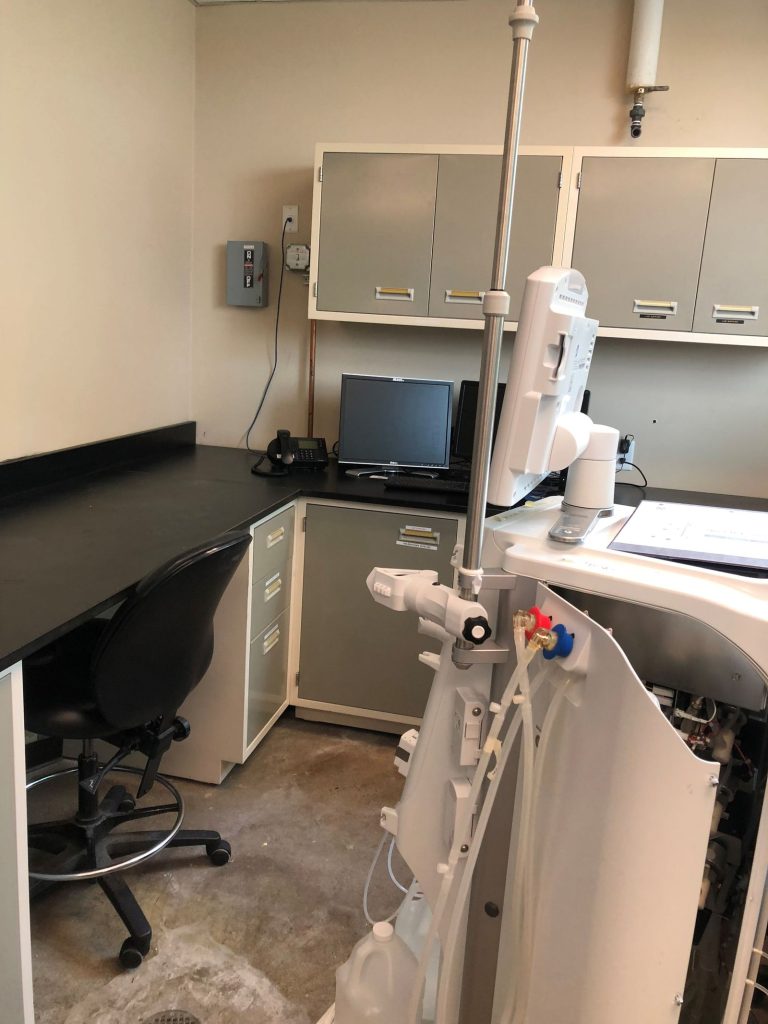 Clinical & Hospital LabsChemistry, hematology and microbiology benches sized around analyzers, with stainless or epoxy tops, hand wash sinks at the door and cold storage under the bench. See medical lab design.
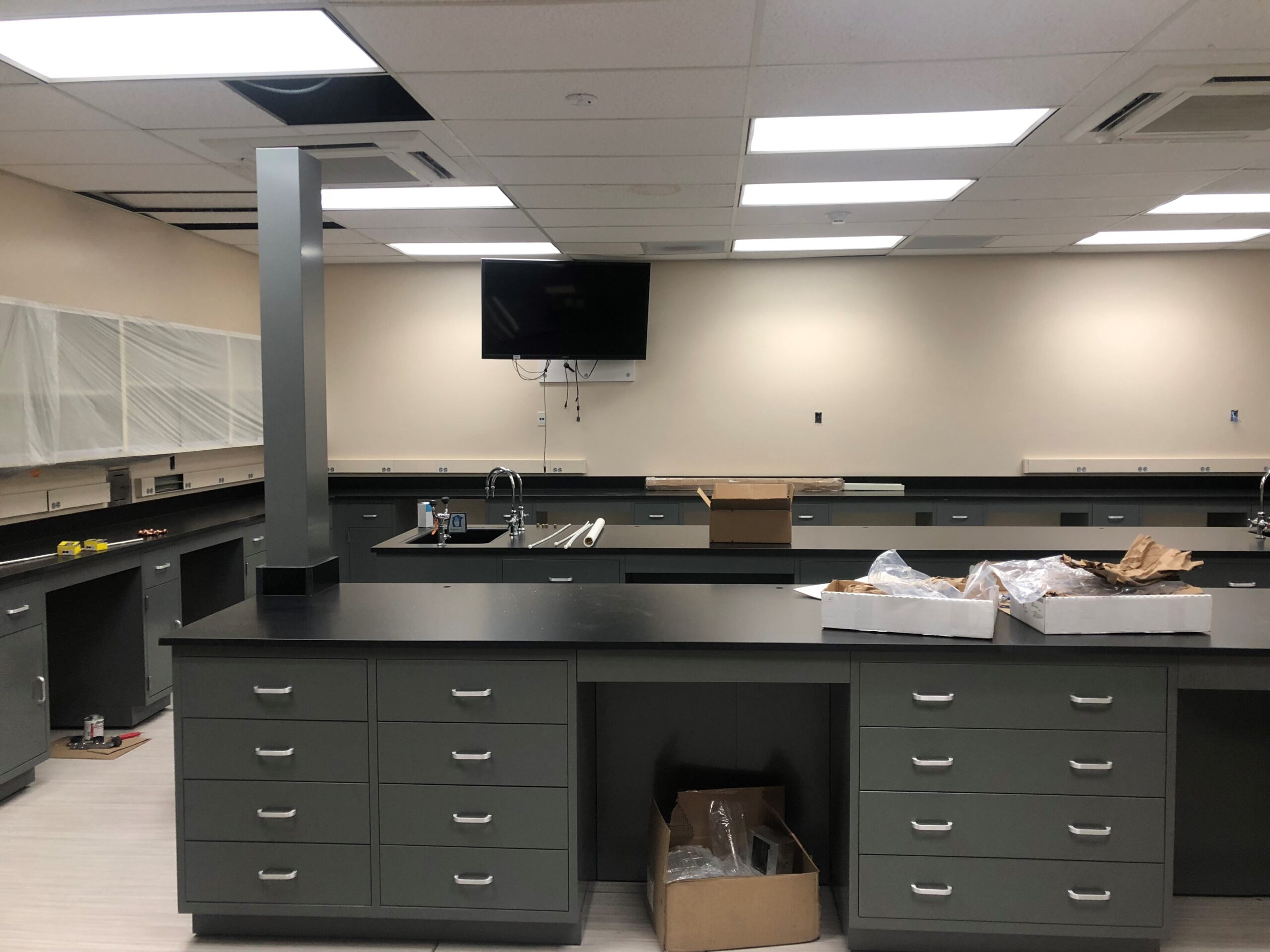 Universities & K-12 Teaching LabsStudent stations built for abuse and turnover: epoxy tops, service turrets, ADA stations and fume hoods on a summer-break schedule. We have done teaching labs from high school chemistry rooms to university research floors.
 Pharma, Biotech & R&DFlexible bench systems on quick-connect services so a layout can be re-configured as programs change, plus cleanroom-compatible stainless furniture for sterile and compounding areas.
 Food, Beverage & Industrial QCStainless steel benches and sinks that survive wash-down and sample residue in QC labs attached to production — distillery, brewery, dairy and food plant labs.
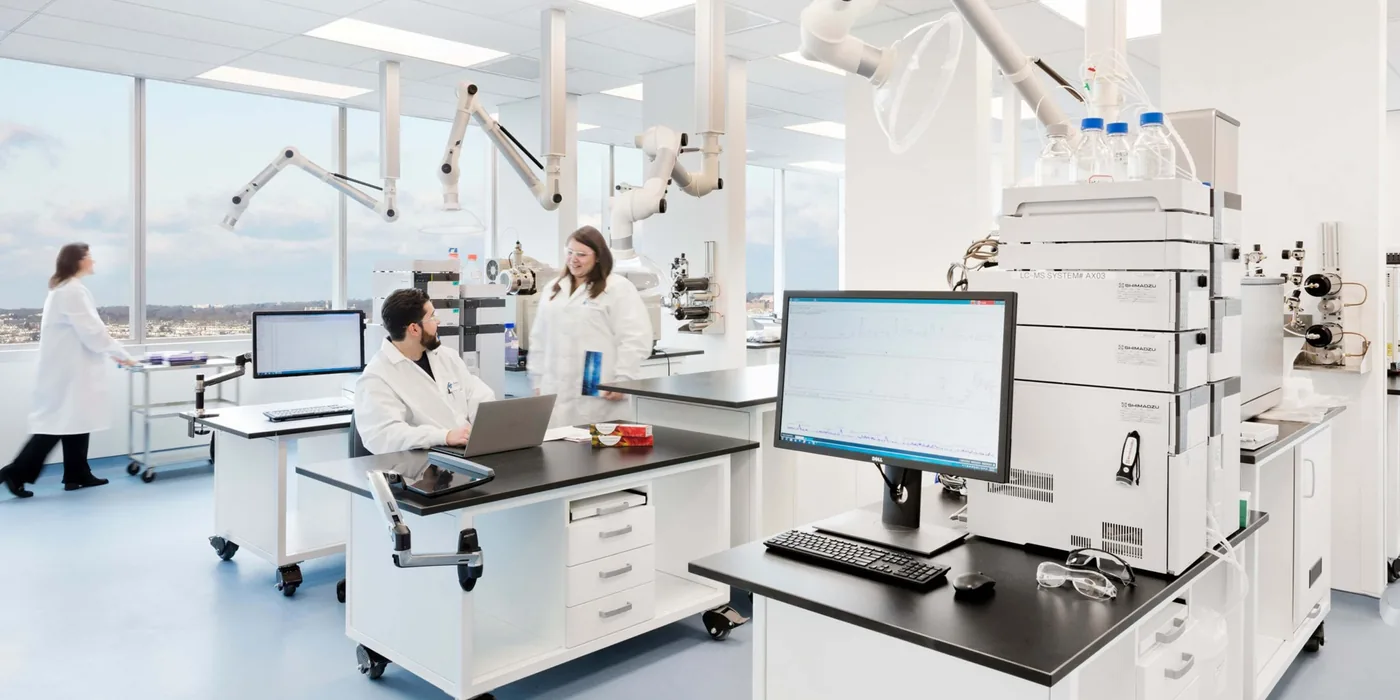 Water & Wastewater Plant LabsCorrosion-resistant casework, acid-resistant drainage and dedicated ventilation for chlorine, acid and reagent handling in plant labs. See water and wastewater plant supplies.
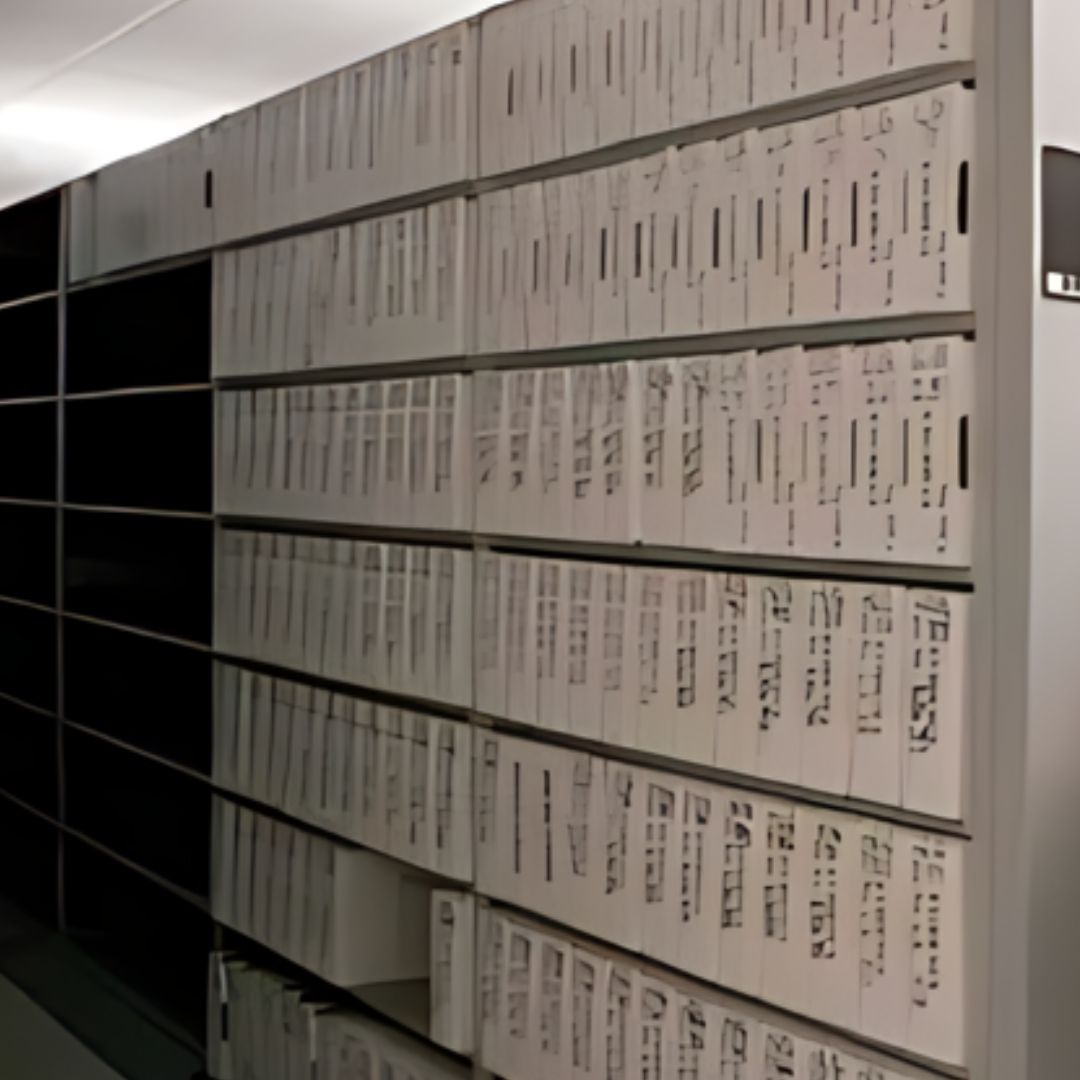 Forensic & Government LabsEvidence-grade secure storage, controlled-access shelving and chain-of-custody layouts alongside the standard bench and ventilation package.
Laboratory Solutions FAQs
What does a “complete laboratory solution” from MH-USA include?
Which laboratory countertop material should I specify?
Do you supply casework that meets SEFA standards?
What is the difference between a fume hood and an exhaust snorkel?
How much airflow does a snorkel arm need?
Can you work around an operating laboratory?
Do you have a tool to lay out a lab bench before I ask for a quote?
Which manufacturers do you represent for laboratory furniture?
Related Laboratory Products & Resources
 Laboratory DesignPlanning, engineering and installation for new laboratories and renovations, from single benches to whole floors.
 Medical Lab DesignClinical and hospital laboratory layouts built around analyzers, workflow and infection control.
 Benchtops in a LabHow epoxy, phenolic, stainless and laminate work surfaces behave in service, and where each belongs.
 Lab Countertop MaterialsA material-by-material comparison for specifying countertops against chemicals, heat and moisture.
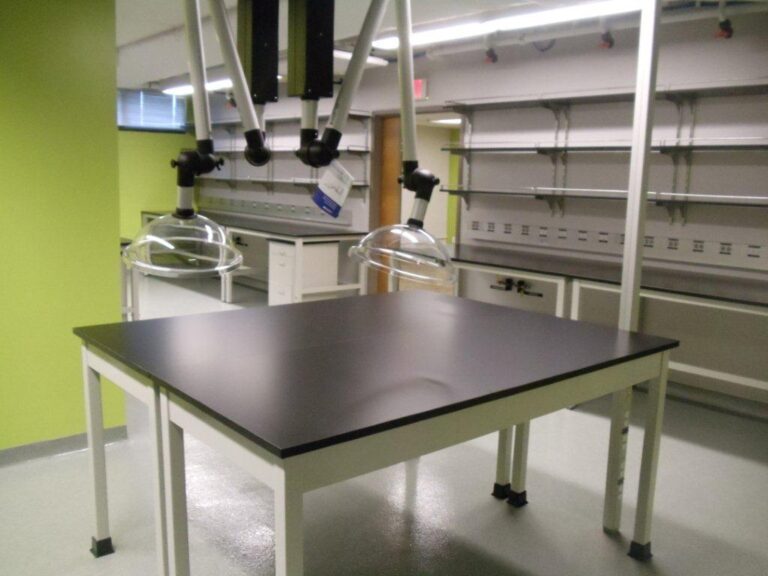 Fume Extraction SystemsSnorkel arms, hoods and ducted extraction for point-of-source fume capture at the bench.
 Lab Bench DesignerConfigure a bench — size, top, cabinets, shelving and services — and send it to us for a quote.
 Lab Layout DesignerArrange benches, hoods, sinks and equipment in your room before anyone quotes the project.
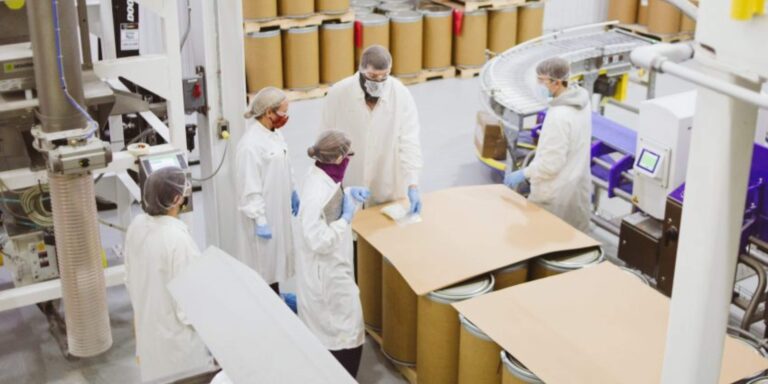 Laboratory Expansion ServicePhased expansions and renovations planned around a lab that has to keep running.
Shop Online at MaterialHandling-USA.com
Need lab consumables, carts, shelving or PPE you can order online today? Our e-commerce store stocks laboratory products with published pricing.
Ready to Equip or Renovate Your Laboratory?
Send us your layout, your reagent list and the instruments that have to keep running. We will come back with casework, work surfaces, sinks, ventilation, shelving and equipment as one coordinated quote — and a phasing plan that keeps your lab working.