
Home › Water & Wastewater › Plant Supplies
Water & Wastewater Plant Supplies
Spill control, chemical storage, maintenance shelving, PPE, lab supplies and MRO consumables for water and wastewater treatment plants — quick-ship online or quoted as a full project.
2-Day
Typical Ship Time
40+
Years Serving Plants
1
Source for Plant & Lab
Free
Layout & Budget Pricing
Everything a Treatment Plant Reorders — and the Projects Behind It
Water and wastewater treatment plants run on two very different purchasing tracks. One is the day-to-day track: absorbents, spill kits, chemical-resistant gloves, sample-bottle bins, wire shelving for the maintenance store, janitorial supplies, packaging. The other is capital work: chemical storage rooms with secondary containment, pallet rack, safety cages, lockers, workbenches, modular control buildings, and complete water-quality lab casework.
Material Handling USA covers both. The fast-turn consumables and equipment ship from our online store, MaterialHandling-USA.com, usually within a couple of days. Engineered storage projects are quoted, laid out and installed by our team, and water-quality lab benches, sinks, casework and fume hoods come from our lab division, Labs USA. Plant-side and lab-side equipment can land on one purchase order and one freight shipment.
What follows is organized the way a plant actually buys: the chemical and spill side first, because that is where inspection risk concentrates; then the maintenance store, because that is where the fastest operational payback is; then safety, PPE and facility consumables; then the compliance lab. Each section notes what ships from stock and what has to be quoted, so you can separate what you can order this week from what belongs in a funding request.
Why plants consolidate with one supplier
Separate vendors for MRO supplies, plant storage and lab furniture means three freight bills, three receiving days and three sets of lead times. Consolidating typically removes several hundred dollars of freight per shipment and one full receiving cycle per project.
Spill Control, Chemical Storage and Containment
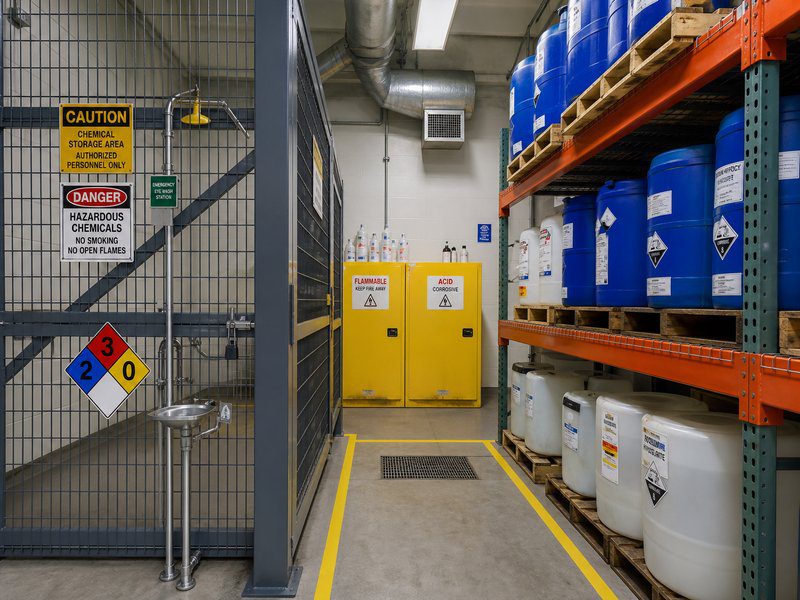
Chemical handling is where treatment plants draw the most inspection attention. Bulk containers stored without adequate secondary containment, and reagent or compressed-gas storage that is not secured or segregated, are the two findings we see most often. Both are corrected with standard equipment rather than construction.
- Spill-containment pallets and berms for 1-, 2- and 4-drum configurations
- Universal and oil-only absorbent pads, rolls, socks and pillows
- Ready-to-deploy spill kits sized for the chemical room and for the truck
- Flammable and corrosive safety cabinets meeting OSHA and NFPA 30 storage requirements
- Poly drums, carboys, funnels and transfer pumps
- Coated and poly shelving that will not corrode under chlorine and polymer handling
Shop Online at MaterialHandling-USA.com
The consumable side of chemical handling ships from our online store, most items within two business days:
Choosing the Right Containment for What You Store
Chemical storage at a treatment plant is rarely one problem. Sodium hypochlorite, polymer, caustic, acid for pH adjustment, laboratory reagents and used oil all behave differently, and the equipment that suits one is often wrong for another. The table below is the shorthand we use when we walk a chemical room with a plant manager.
| What you are storing | Right equipment | What to avoid |
|---|---|---|
| Sodium hypochlorite, polymer, caustic in drums or totes (1–4 drums or a tote) | Poly spill pallet or berm sized to 100% of the largest container, plus poly or coated shelving nearby | Bare steel shelving and painted rack — both corrode fast in this service |
| Acid for pH adjustment (carboys to drums) | Dedicated corrosive safety cabinet, segregated from caustics and oxidizers | Storing acid and caustic on the same shelf or in the same cabinet |
| Laboratory reagents and standards (bottles and cases) | Chemical-resistant lab shelving with lipped edges, near but not on the working bench | Crowding reagents onto the bench where sample work happens |
| Flammables: solvents, fuels, aerosols (cans to drums) | Flammable safety cabinet meeting OSHA 1910.106 and NFPA 30 requirements | General storage cabinets or open shelving in a mechanical room |
| Compressed gas cylinders (2–20 cylinders) | Cylinder racks or cages with chain restraint, segregated by gas type | Loose cylinders leaned against a wall or secured with a single strap |
| Used oil and waste chemicals (drums awaiting pickup) | Containment pallet with drain, funnels with covers, clear waste labeling | Uncovered funnels and unlabeled drums — a common inspection finding |
Two details decide whether a containment setup survives daily use. The first is drainage: a spill pallet with a drain plug and a covered funnel gets emptied and stays usable, while a sealed tray fills with rainwater or wash-down and gets pushed aside. The second is proximity — absorbents and a spill kit stored on the far side of the plant from the drum they are meant to protect will not be used in the first minute of a spill, which is the minute that matters.
None of this requires construction. It is standard equipment, most of it stocked, and correcting a containment gap costs a small fraction of what a repeat finding costs in staff time and documentation.
Maintenance Stores, Shelving and Plant Storage
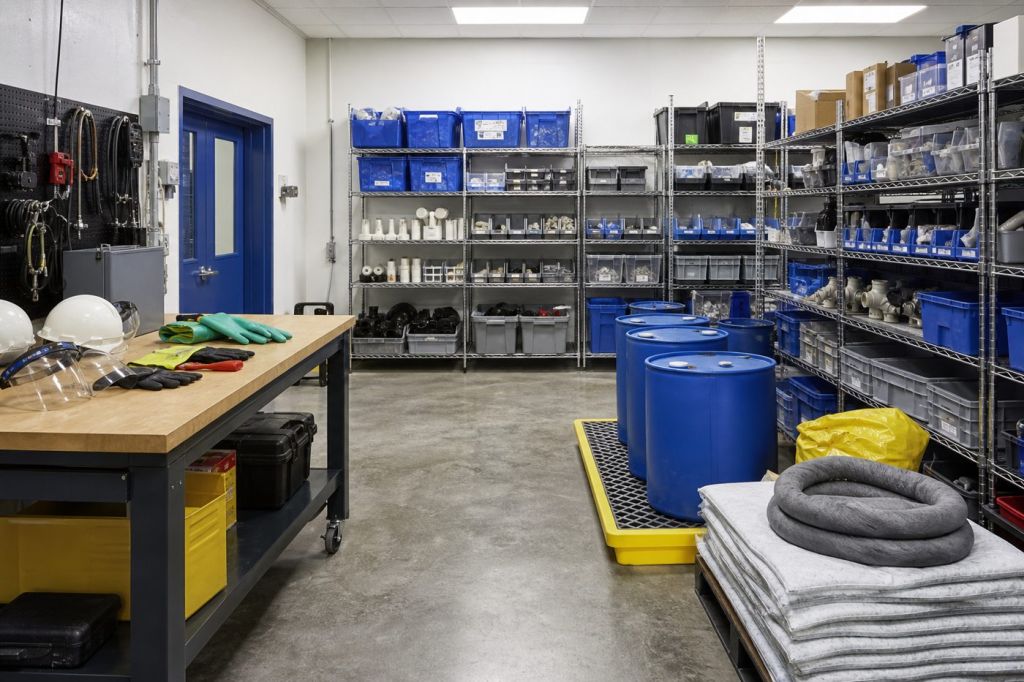
The maintenance store is usually the fastest payback area in a treatment plant. When pumps, seals, valves and motor spares are on labeled shelving with a repeatable location scheme, an unplanned outage stops being a search. When they are not, crews buy duplicates of parts already on site.
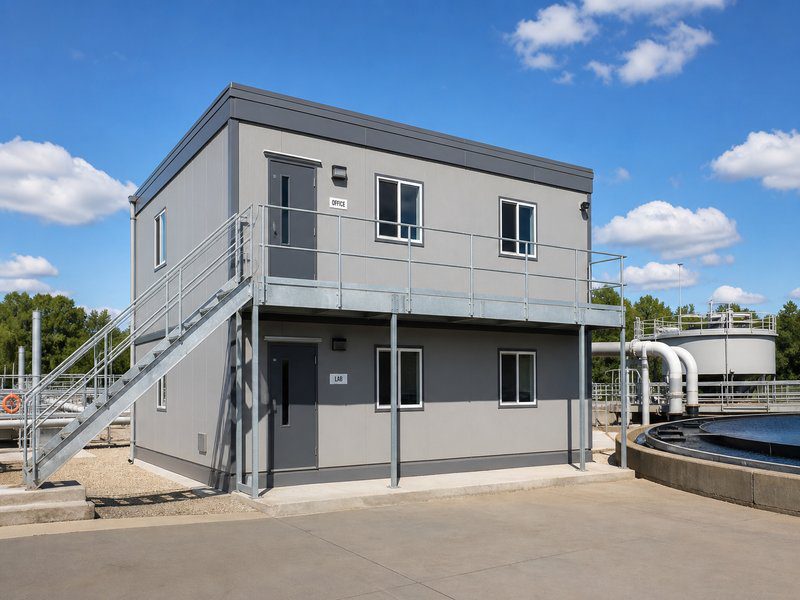
For heavier storage — palletized chemical inventory, pipe and fittings, large spares — see our full water and wastewater storage solutions, which covers pallet rack, cantilever rack, security cages, lockers and modular buildings with installed layouts.
 Wire & Steel ShelvingOpen wire shelving for wash-down areas and closed steel shelving for parts rooms. Adjustable, expandable and matchable to what you already have installed.
 Bins, Totes & Small-Parts StorageStackable bins, divider boxes and louvered panels for seals, fittings, fasteners and instrument spares. Labeled locations make cycle counting realistic.
 Carts, Hand Trucks & MoversMoving drums, sample coolers, tools and equipment between basins, the lab and the shop without a forklift.
How Plants Get the Maintenance Store Under Control
The pattern that works is unglamorous and repeatable. Shelving first, then locations, then labels, then a standing reorder list for the fast movers. Plants that skip straight to buying bins end up with organized clutter.
- Put pumps, seals, valve spares and motor parts on adjustable shelving deep enough for the largest item, not the average item — oversized spares on the floor are what break a location scheme.
- Give every shelf opening a fixed location code and label the opening, not the bin. Bins move; openings do not.
- Keep consumables the crews grab daily — gloves, absorbents, rags, fittings — at waist height near the door, and archive slow-moving spares up high.
- Set a wash-down zone rule: open wire shelving where hoses reach, closed steel where they do not.
- Build a one-page reorder list of the fifteen items you never want to run out of, and put it on a standing monthly order.
We supply the shelving and bins for this work from stock, and where a plant already has shelving installed we can usually match or extend the existing run rather than replacing it — which keeps the store consistent and costs a fraction of a new install.
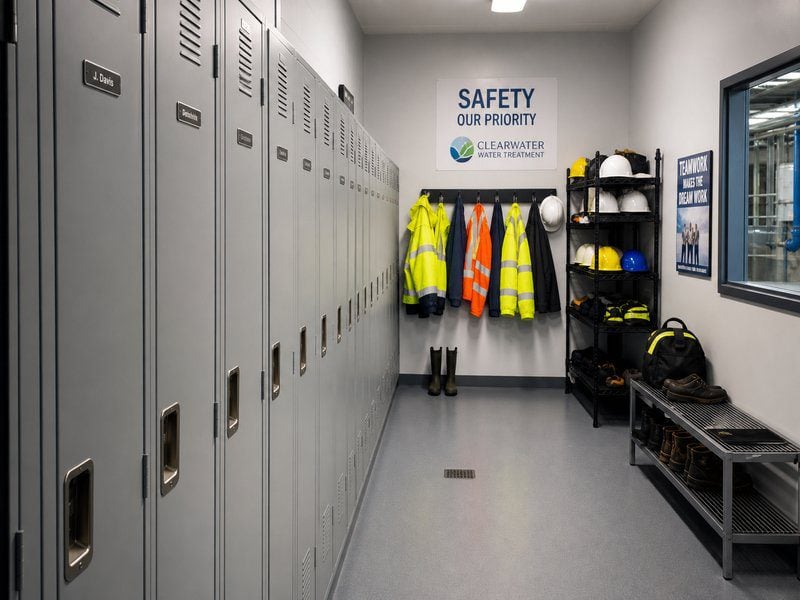
Safety, PPE and Facility Supplies
Shop Online at MaterialHandling-USA.com
Shop these categories directly:
Water-Quality Lab Supplies and Casework
Every treatment plant runs a compliance lab, and most of them are working around furniture installed decades ago: wood tops where they need epoxy or phenolic, sinks that do not drain properly, and fume hoods that no longer hold face velocity.
Consumables and small lab equipment ship from our online store. Bench replacement, chemical-resistant countertops, sinks, casework, fume hoods and sample storage are built and installed by Labs USA, and phased so compliance testing never stops.
The material decision that drives most lab budgets is countertop selection. Epoxy resin handles heavy acid and solvent work and takes heat. Phenolic costs less, weighs far less, and is the right call for benches that mainly see water samples, reagents and routine titrations.
Shop Online at MaterialHandling-USA.com
Lab consumables and small equipment:
Two Ways to Buy
Reorder online
Day-to-day consumables and stocked equipment go through MaterialHandling-USA.com. Most items ship within two business days, and repeat orders take a couple of clicks.
Request a quote
Engineered storage, chemical rooms, cages, lockers, modular buildings and lab casework are quoted by our team. Send a photo and rough dimensions and we return a layout with budget pricing at no cost.
One shipment, one PO
When a project and a supply order overlap, we consolidate them so freight and receiving happen once instead of twice.
Buying on a Municipal or District Budget Cycle
Most of the plants we supply are municipal departments, sanitation districts, water conservancy districts or authorities, and almost none of them can buy capital equipment the week they decide they need it. The work gets funded when someone puts a credible number in front of a board or a city engineer early enough to compete for it.
That is the practical reason we give budget pricing at no cost and with no obligation. A scaled layout and a real number are what turn “the chemical room needs help” into a funded line item. A vague estimate gets deferred another year.
Walk the area
Send photos and rough dimensions, or we visit. Ten minutes of measurement prevents most specification mistakes.
Get a layout and a number
We return a scaled layout with budget pricing that can be dropped straight into a funding request, along with freight and install assumptions stated plainly.
Lock pricing when funding lands
Once the request is approved we hold quoted pricing while the purchase order works through, and schedule install around plant operations rather than the other way around.
Fourth-quarter timing
Lead times on rack, lockers, workbenches and casework typically stretch through the fourth quarter as budget-year orders land across the industry. Anything that needs to be installed before winter is best specified several weeks ahead of that curve.
Who We Supply
Material Handling USA has supplied storage and facility equipment to water and wastewater operations across the Mountain West and nationally for more than four decades — municipal water departments, wastewater reclamation facilities, water conservancy districts, sewer districts, regional water authorities and the contractors who build for them. That work spans everything from a single run of shelving in a pump house to full plant storage packages and installed lab casework.
Because we serve both the plant floor and the compliance lab, we tend to see the whole facility rather than one purchase order. A plant manager solving a chemical containment finding usually also has a lab bench that has outlived its service life and a maintenance store nobody can inventory. Handling all three with one vendor, one layout and one freight shipment is simply less work for the plant.
Frequently Asked Questions
What do water and wastewater plants reorder most often?
How fast do online orders ship?
Can we buy on a purchase order instead of a card?
Do you handle the lab as well as the plant?
What does a chemical storage upgrade usually cost?
Can you match shelving or rack we already have installed?
Which countertop material should a plant lab use?
Do you install, or is it shipped only?
Will you lay out an area before we commit to anything?
Related Pages
Water & Wastewater Storage SolutionsPallet rack, chemical storage, cages, lockers and modular buildings for treatment plants.Water-Quality Lab FurnitureBenches, chemical-resistant countertops, sinks, casework and fume hoods from Labs USA.Shop Plant Supplies OnlineSpill control, PPE, janitorial, packaging, bins and shelving with quick-ship delivery.Need Plant Supplies or a Storage Project Priced?
Send a photo and rough dimensions and we will return a layout with budget pricing at no cost.