
Materials to Consider for Your Lab Countertops
Choose a laboratory work surface by the work it must support. Chemical exposure, cleaning methods, equipment, sinks and fabrication details all matter. A material name is a starting point for comparison, not a complete performance specification.
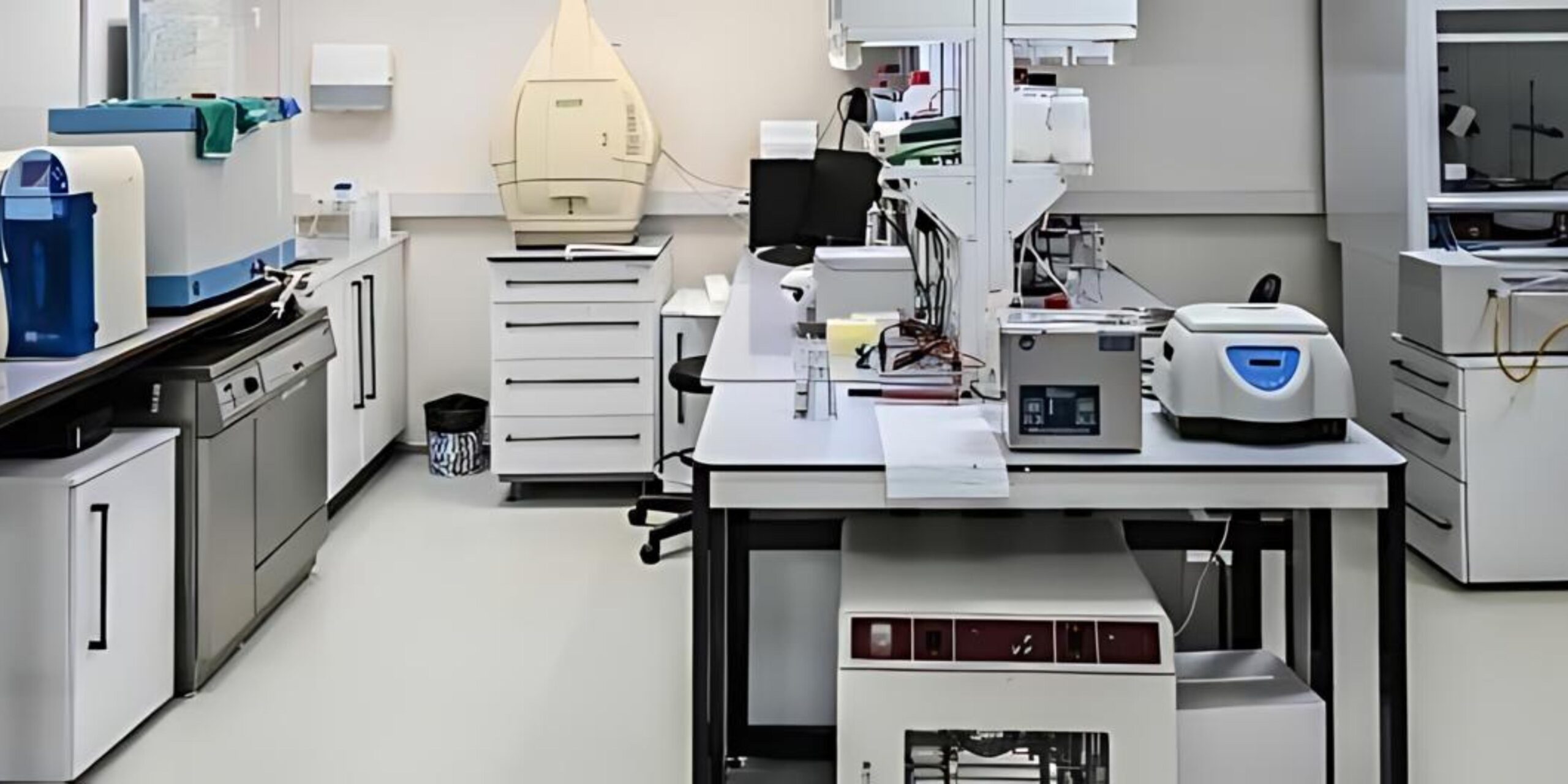
Start with a written use profile
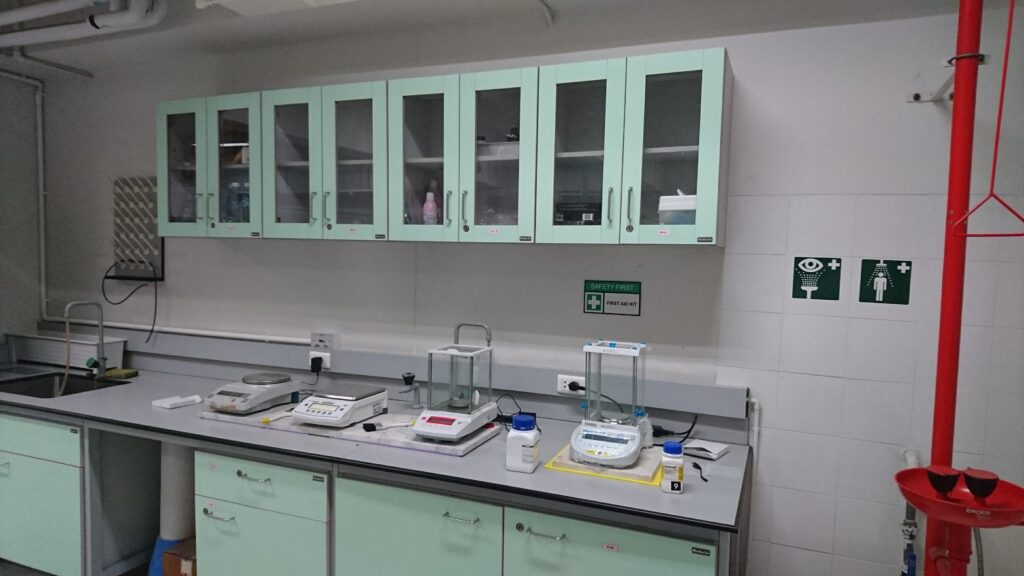
Record what happens on the bench before selecting a finish or color. A surface supporting computers and paperwork has different demands from a sink area or a preparation station. Describe those activities by work zone so the specification does not assume every part of the laboratory performs the same task.
List the substances and cleaning products that may contact each surface. Include concentrations, contact duration and whether exposure is routine or accidental. Provide this information to the supplier for an application review. A broad claim such as chemical resistant cannot answer a specific compatibility question.
Information to gather
- Tasks performed and materials handled.
- Cleaning and decontamination methods.
- Equipment dimensions, weight and operating conditions.
- Sinks, fixtures, cutouts and service connections.
Describe temperature exposure carefully. A warm room, a heated instrument and a hot object placed on the surface are different conditions. Avoid selecting from a generic temperature chart without understanding the test method and the actual proposed product. Ask the equipment and surface suppliers to identify any required interface or support.
Consider how the work could change. If a bench may later support a different process, record that possibility instead of assuming a stronger-sounding material will cover every future use. Defined requirements make the comparison clearer and reduce the temptation to buy features that do not address an actual need.
Photographs are useful for context, but they cannot reliably identify a countertop material or its grade. Keep existing drawings, labels and purchase records where available. If the project involves replacing a damaged surface, our countertop replacement guide can help organize the condition review.
Evaluate phenolic resin as an exact product
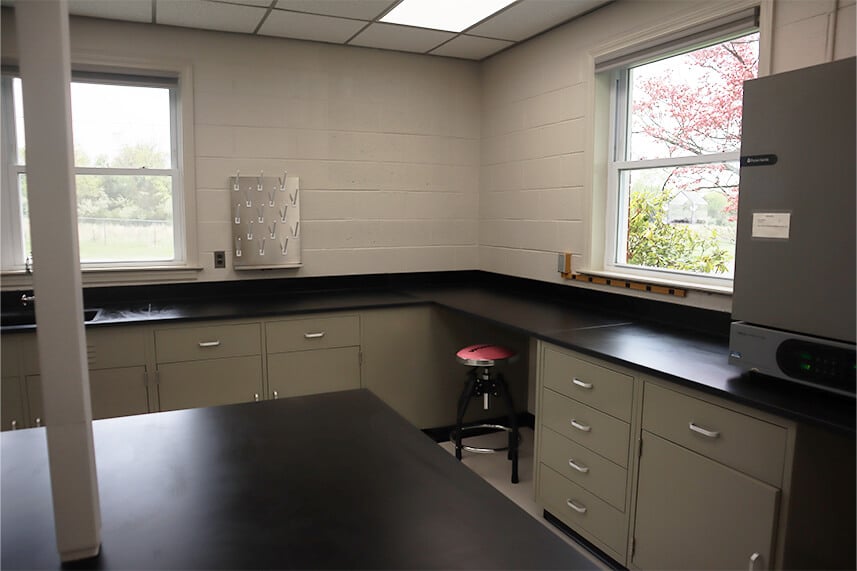
Phenolic work surfaces are an option to discuss for laboratory projects, but the category contains products with different formulations and stated performance. Ask the supplier to identify the exact material being offered, rather than accepting a color sample and a general description as the entire specification.
ICI Scientific lists phenolic among the materials it fabricates for work surfaces and other laboratory applications. This confirms the product family is available through a real laboratory furniture manufacturer. It does not mean every phenolic product is suitable for every chemical, cleaning method or piece of equipment.
Questions for a phenolic proposal
- Which manufacturer and product grade are specified?
- What evidence addresses the planned exposure?
- How are edges, penetrations and sinks fabricated?
- What support and care instructions apply?
Look beyond the top face. The thickness, edge treatment, joints and support arrangement affect how the fabricated work surface fits the project. Ask how any under-mounted fixtures or accessories are accommodated and which dimensions require final verification before manufacture.
Discuss appearance separately from functional suitability. Surface color and finish may help users see particular materials or fit the room design, but neither establishes chemical compatibility. Request a representative sample for visual review while keeping the technical approval tied to the identified product information.
Avoid carrying forward a generic heat limit or a statement that phenolic is maintenance free. Obtain current instructions for the proposed surface and give them to the people responsible for its use and cleaning. A properly documented choice is more useful than an unsupported category-wide promise.
Review epoxy resin and its fabrication details
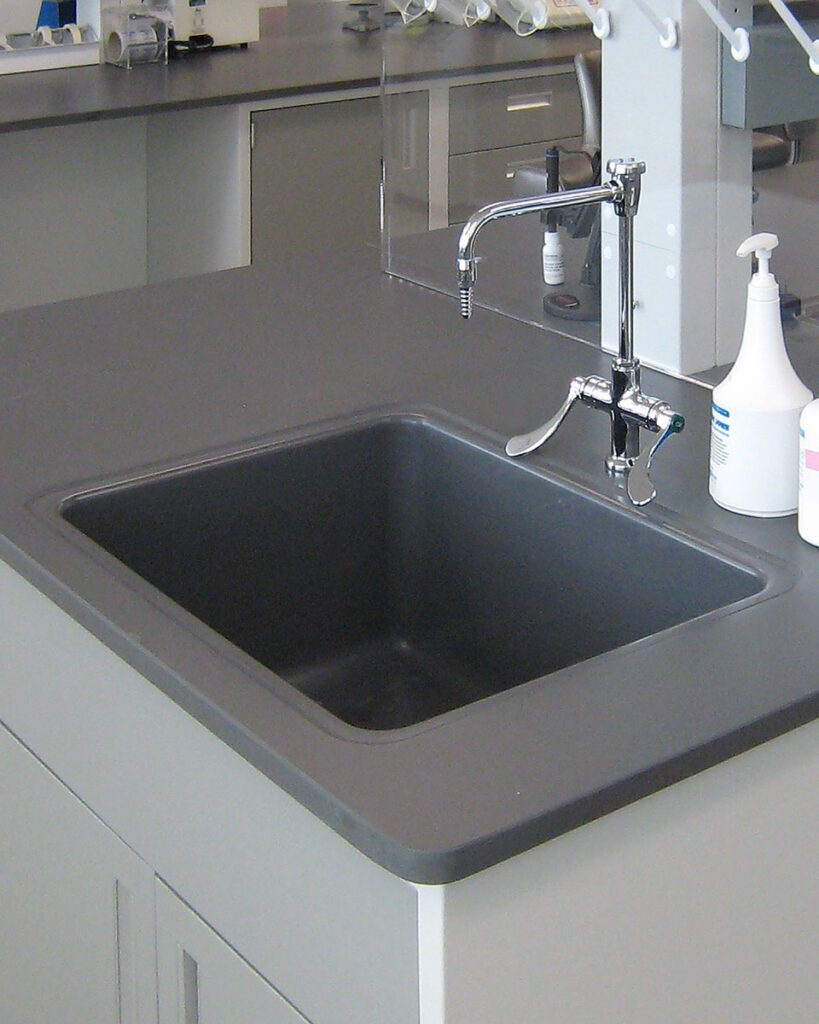
Epoxy-resin work surfaces are another established laboratory option. Review the fabricated arrangement alongside the material itself, including the proposed sink configurations and the way they will be supported. The final selection still needs to match the laboratory’s actual work.
Compare the proposed surface using current manufacturer information. Where test results are supplied, check which product, conditions and evaluation criteria they describe. A result under one exposure should not be extended to an untested condition or treated as a guarantee against every form of damage.
Resolve the interfaces
- Sink type, size and mounting arrangement.
- Fixture locations and penetrations.
- Joints, edges and backsplashes.
- Base cabinets and support requirements.
Consider the installed assembly rather than an isolated slab. A sound work surface still depends on appropriate supports, accurate dimensions and coordinated fixtures. Have equipment loads and any unusual concentrated loads reviewed before finalizing the layout. Do not infer support capacity from the material name.
Review transport and installation access early. Long or heavy fabricated pieces may influence the delivery route, handling plan and joint locations. Identify these constraints before the design is released so installation needs are reflected in the approved fabrication details.
Keep the care instructions with the handover documents. Users should know which cleaning methods the manufacturer permits and how to report damage. Avoid making universal claims about impact, flame resistance or suitability for open-flame work; those questions require evidence for the actual product and intended application.
Specify stainless steel by grade, finish and use
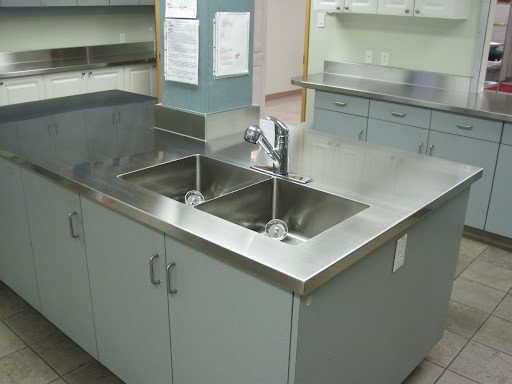
Stainless steel can be considered where the project calls for a metal work surface, integrated fabrication or a particular cleaning arrangement. It should be specified as a complete product, including grade and finish. The word stainless does not mean that every chemical or cleaning method is acceptable.
Ask the fabricator to review the exposure profile and the desired sink, edge and joint details. Confirm how the top is supported and whether equipment introduces concentrated loads, vibration or other requirements. The visible metal face is only one part of the workbench assembly.
Discuss the cleaning routine
- Products and concentrations used for routine cleaning.
- Frequency and duration of wet exposure.
- Required finish and acceptable appearance changes.
- Methods for reporting and evaluating surface damage.
Separate a smooth appearance from a validated laboratory process. A surface can be easy to wipe without establishing that the facility’s cleaning or decontamination method is effective. The laboratory must define those procedures with the appropriate responsible personnel.
Review joints and transitions in the actual layout. A sink area, wall interface and adjacent instrument bench may each require different details. Ask for drawings that show these interfaces so an attractive sample does not conceal an unresolved installation question.
Stainless steel can show scratches and other changes in appearance during use. Discuss the finish and expected care with the supplier instead of promising that the surface will remain unchanged. Obtain guidance for the exact product before specifying abrasive cleaning, repair or refinishing methods.
Distinguish chemical-resistant laminate from general laminate
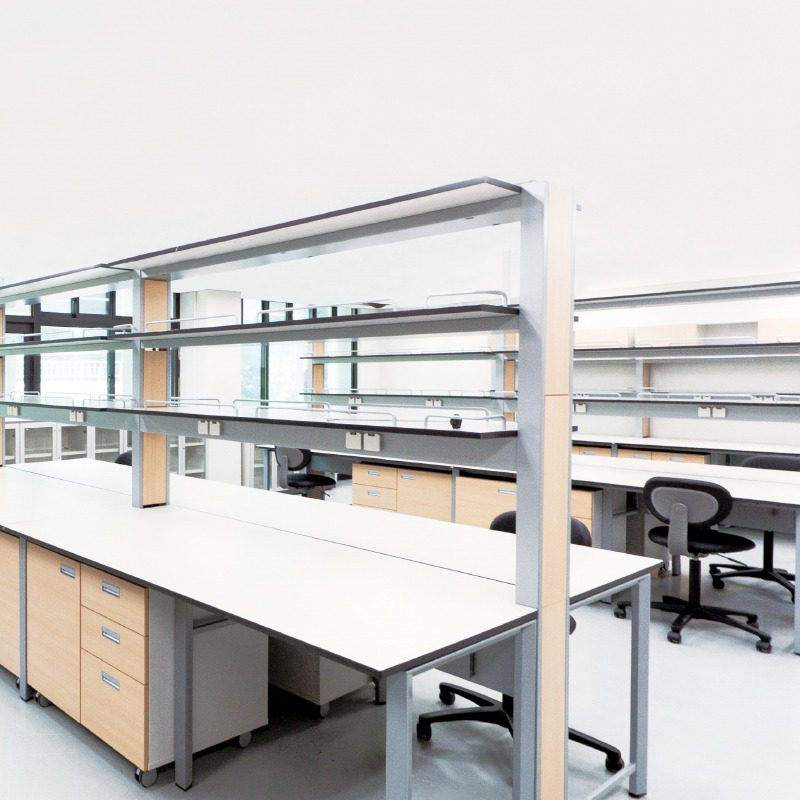
A chemical-resistant laminate should be identified by its specific product and supporting documentation. It should not be treated as interchangeable with every decorative laminate. Likewise, the presence of a resin in a product description does not make different surface categories equivalent.
Ask how the proposed laminate is fabricated, including substrate, edge treatment, seams and penetrations. A performance statement about the exposed face does not automatically describe the behavior of the complete assembly. Wet areas and sink interfaces deserve particular attention in the application review.
Compare the complete specification
- Exact laminate product and grade.
- Relevant chemical test information.
- Substrate and fabrication method.
- Restrictions for heat, moisture and cleaning.
Discuss the operating conditions with the supplier before assuming a laminate is suitable or unsuitable. Some areas have limited exposure and others have repeated contact with aggressive substances. The written use profile helps distinguish those situations without reducing the decision to a simplistic laboratory-type label.
Check whether the proposal includes the same fixtures and support scope as the other material options. A lower surface price may not represent a lower installed cost if the fabrication or base arrangement differs. Compare like requirements and identify exclusions explicitly.
Where appearance matters, review colors and finishes after technical suitability has been addressed. Keep the selected sample associated with the approved product identification so a later substitution does not change the material while preserving only the visual look.
Use general-purpose and specialized surfaces deliberately
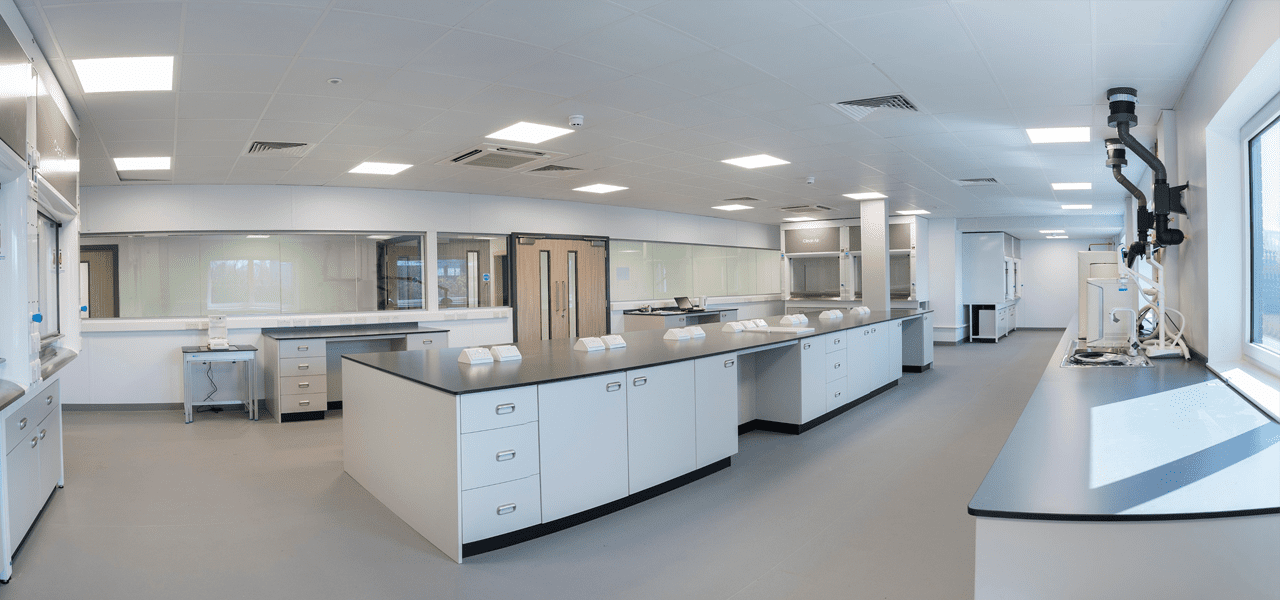
General-purpose laminate may be considered for appropriate support activities such as computer work, documentation or other tasks with a suitable exposure profile. Confirm the exact product and intended use. A room called a laboratory can contain several distinct work zones, each with different requirements.
Specialized surfaces, including those intended for static-sensitive work, need their own selection process. State the system requirement and ask how the proposed work surface fits it. A product label alone does not establish that the whole workstation or operating process meets the laboratory’s needs.
Review mixed-material layouts
- Identify the intended work at each bench.
- Document the selected surface for each zone.
- Coordinate transitions and shared fixtures.
- Provide material-specific care information.
Do not select wood, stone or solid-surface products solely because they are familiar from other environments. If they are being considered, obtain application-specific guidance and fabrication information. Appearance, household experience and broad durability claims are not substitutes for a laboratory use review.
Consider users and equipment together when setting the bench arrangement. Reach, seating, instrument access and service connections can affect the usefulness of a technically suitable top. Material selection should therefore remain connected to the wider furniture and room plan.
For a broader project, bring these decisions into a laboratory assessment. Recording surface requirements alongside storage, equipment and services helps prevent the countertop order from becoming a separate decision that conflicts with the rest of the room.
Turn the comparison into an approved specification
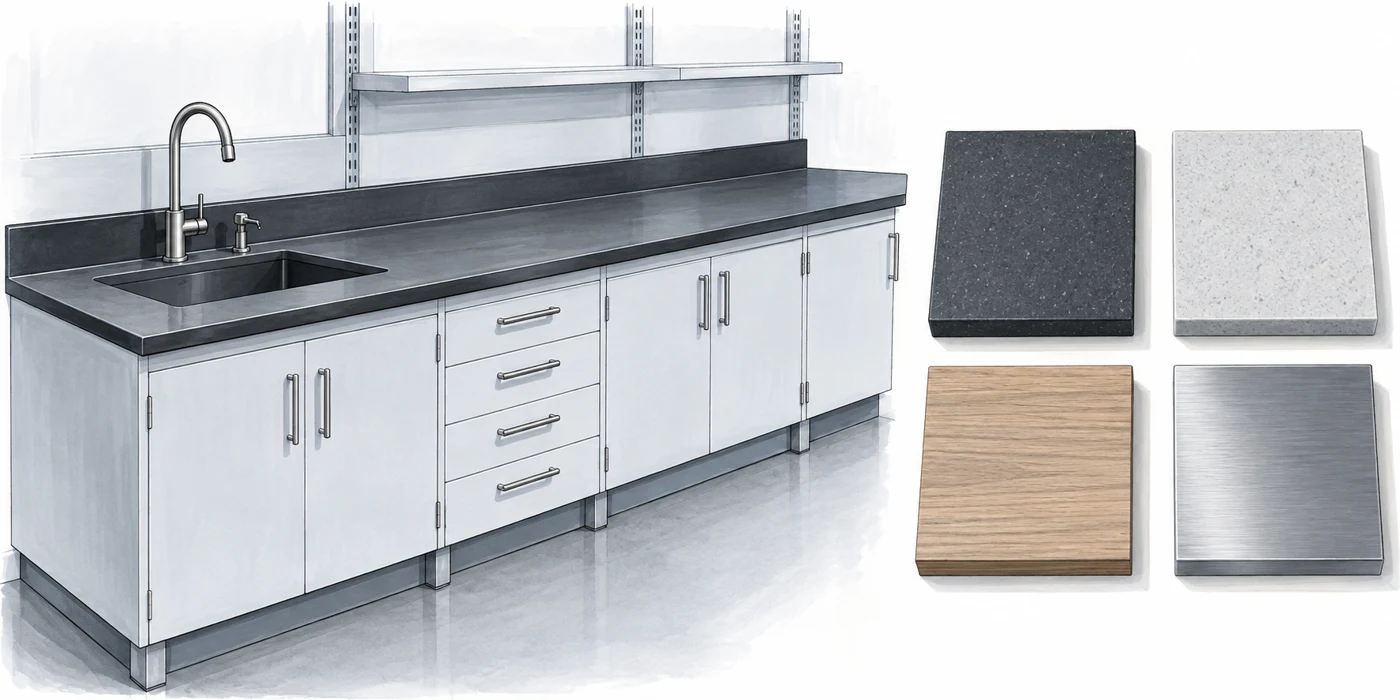
Prepare one brief that every proposed option must answer. Include the use profile, layout, equipment, fixtures, appearance requirements and installation constraints. Ask for the exact surface product, fabrication details, care documents and any conditions that still need confirmation.
The illustration shows a conceptual bench and a selection of surface appearances. It is a planning aid, not a set of product samples or evidence of material performance. Use actual manufacturer samples and documentation to approve the purchase.
Keep the decision traceable
- Record the reason for selecting each material.
- Retain the approved drawing and revision.
- Identify unresolved technical questions.
- Assign installation and acceptance responsibilities.
Before release, check that all proposals use the same dimensions and scope. Confirm who verifies final measurements, provides supports, connects fixtures and releases the area for installation. These interfaces can matter as much as the surface choice.
At handover, provide the instructions for the installed material to laboratory users and cleaning personnel. Retain the product identification so future maintenance questions can be answered accurately. A clear record makes later repairs, extensions and replacements easier to evaluate.
Countertops are one part of a complete lab. See our laboratory furniture overview for benches, casework, countertops, sinks and storage specified for your lab.
Frequently asked questions
Which laboratory countertop material is best?
The best choice depends on the chemicals, cleaning, temperature exposure, equipment and fabrication requirements. Compare exact products against a written use profile rather than ranking broad material families as universally better.
Are all phenolic countertops chemically resistant?
Performance varies by product and exposure. Ask for the proposed grade, manufacturer test information and guidance for the actual chemicals, concentrations and contact conditions. Do not infer suitability from the word phenolic alone.
Can hot equipment sit directly on a countertop?
Confirm the equipment requirements and the exact surface manufacturer’s guidance before deciding. Ambient temperature, direct contact and repeated exposure are different conditions; a general temperature statement does not establish suitability.
Does stainless steel resist every laboratory chemical?
No. Grade, finish, chemical exposure and cleaning method affect suitability. Have the specific application reviewed, including joints and sink details, rather than treating all stainless surfaces as interchangeable.
Can different countertop materials be used in one laboratory?
Yes, a project can consider different materials for different work zones. Document why each is selected and ensure users receive the appropriate care instructions. Coordinate transitions and shared fixtures during fabrication planning.
What should a countertop request include?
Provide the room layout, chemical and cleaning information, equipment details, dimensions, sinks, fixtures and installation constraints. Ask proposals to identify the exact surface, thickness, edge details, supports, documentation and exclusions.
Specify work surfaces around your laboratory
Share your intended use, equipment list and layout. Material Handling USA can help organize material choices, casework and fabrication questions into a clear proposal.